The Philippines will soon drop the Covid-19 test requirements for incoming visitors and the mask-wearing mandate for indoor settings.
This was announced by tourism secretary Christina Garcia Frasco on October 25 in a press briefing, following the Cabinet Meeting with the country’s president Ferdinand R. Marcos, Jr.
Visitors to the Philippines will no longer need to do a Covid-19 test upon arrival
Indoor mask-wearing will still be required on public transport, medical transport and in medical facilities. For the unvaccinated, individuals with comorbidities, and senior citizens, mask-wearing is still highly recommended.
Fully-vaccinated visitors entering the Philippines will be allowed entry into the country without the Covid-19 test requirement, while unvaccinated guests are given the option to take an antigen test 24 hours before travel or upon arrival in the Philippines.
This policy is in line with the president’s vision to facilitate ease of travel and tourist convenience and will supersede the stringent Covid-19 test and quarantine requirements for vaccinated and unvaccinated visitors.
In addition, the Philippines recently announced the removal of the One Health Pass (OHP) to make way for the e-Arrival Cards which aims to simplify the entry procedures for travellers.
As of October 24, 2022, the DoT has recorded 1.8 million visitor arrivals exceeding the 1.7 million projection for the current year.
The biggest bulk of tourists came from the US at 346,806, followed by South Korea with 250,021, and Australia with 85,986.
A potential hike in taxes with effect from January 2022 will adversely affect tourism in the Maldives, and industry players are worried that the change would impact upcoming winter arrivals.
The government has proposed to increase the Tourism Goods and Services Tax (T-GST) to 16 per cent from 12 per cent, which the tourism industry believes will impact the industry greatly, particularly at a time when many other destinations have opened their borders.
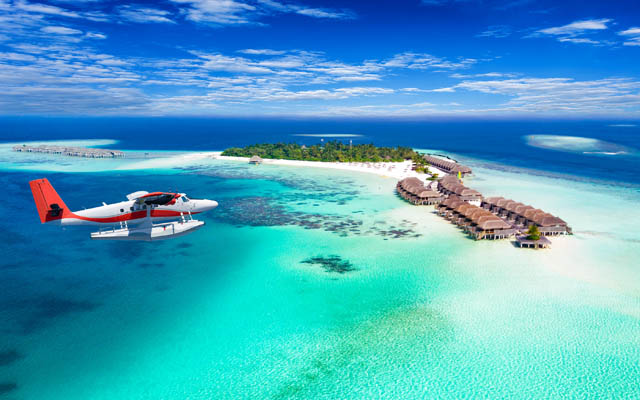
Tourism players are concerned that the potential hike in taxes will impact upcoming arrivals to Maldives
Mohamed Khaleel, CEO of Pulse Resorts and CEO of Manta Air, said: “We are expecting a drop in arrivals as this has a huge impact on businesses (and customers).”
Moreover, this tax hike comes at a time when the disposable incomes of Europeans are down by 30 per cent due to the Ukraine-Russia conflict, noted Khaleel.
“It’s difficult to pass on this cost to tour operators with whom we have signed one- or two-year agreements in advance,” he added.
Current efforts to urge the government to reconsider the tax hike have failed, but the Maldives Association of Travel Agents and Tour Operators (MATATO) has appealed to the Parliament to reconsider the hike stating that it is “reckless and unprecedented”.
To strengthen its case, MATATO conducted a survey about tax hike implications with over 300 tour operator partners from around the world; who are responsible for over 50 per cent of current arrivals to the Maldives.
Survey results were overwhelmingly negative, indicating an unfavourable impact on demand for the Maldives when compared to competing beach destinations such as Bali, Indonesia, and Phuket, Thailand.
The survey also indicated that the proposed tax increase could lead to a drop in tourist arrival by almost 10 per cent in 2023, where costs will largely be borne by Maldivian-owned tourism companies.
A tour operator handling European markets, who declined to be named, said they were expecting a decrease in the number of arrivals from the UK due to the depreciation of the pound sterling owing to an economic crisis there.
“This would also have an impact on the market,” he said. He added that even though India is currently Maldives’ top source market, Indians usually stay only for three to four nights, while Europeans stay for eight to 12 nights.
Australian travellers’ interest in Japan is booming following the Japanese government’s relaxation of border rules to welcome visa-free, individual arrivals from October 11.
According to a recent study by the US-based Internet search engine Google, Japan has become the most searched travel destination on their Australian site, exceeding searches for popular tourist spots such as New Zealand, Thailand and Vietnam, as well as local favourites including Tasmania.
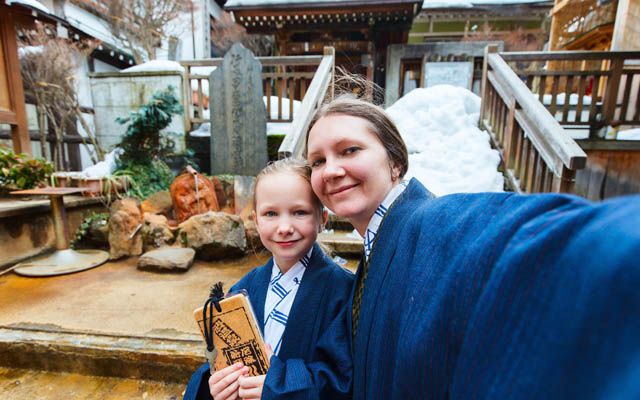
Australians like visiting Japan for its food, nature, sightseeing and experiencing Japanese history and culture
Australia was also one of the top five nations searching for Japan accommodations on Airbnb. According to the US-based online marketplace, most searches for Japan following the Japanese government’s September 23 announcement that border restrictions would be relaxed were from South Korea followed by the US, Hong Kong, Australia and Singapore.
Bookings to Japan are on the rise too, with Australian travel platform Webjet reporting a 322 per cent increase in bookings on their site in the five-day period following September 23.
Most bookings were for ski and snowboarding holidays for the upcoming winter season or the cherry blossom viewing in the spring, although there was also strong demand for departures throughout 2023.
Australia is an important and growing market for Japan. In 2019, 522,000 Australian tourists visited Japan, marking a 13 per cent increase year-on-year and 10 consecutive years of visitor growth, according to the Australian Bureau of Statistics. Also in that year, Japan became the seventh most popular international destination for Australians.
Australian visitors were the top spenders on entertainment in Japan in a 2020 (pre-pandemic) survey by Statista, with per-capita entertainment expenditure totalling 28,020 yen (US$197), followed by Italy (20,620 yen), Spain (19,960 yen) and China (18,290 yen).
Eating Japanese food was Australians’ main motivation for visiting Japan in 2019, with 87 per cent of the votes, followed by enjoying nature, sightseeing and experiencing Japanese history and culture.
Trip.com Group believes that its enormous base of users across China and travel content delivery will enable it to assist travel and tourism partners in maximising recovery potential once China reopens for outbound travel.
Underscoring the strength of the company during his presentation at ITB Asia 2022 last week, Boon Sian Chai, managing director and vice president of international markets with Trip.com Group, said his OTA Ctrip has about five billion app downloads to date.
Chai: people enjoy exchanging experiences during their journey
Illustrating the big spending habits of outbound Chinese travellers, Chai revealed that customers occupying the top tiers of Ctrip’s loyalty programme – with numbers “in hundreds of millions” – typically spend US$9,000 to US$75,000 annually on their trips.
Ninety per cent of outbound Chinese travellers also tend to opt for three- to five-star hotels.
To motivate consumers into travel action, Trip.com also offers Trip Moments, a content creation platform for users to share and discuss their travel experiences.
Chai told TTG Asia that people enjoy exchanging experiences, with Gen Z consumers, in particular, placing greater value on social connections during their journey. As such, he believes that Trip Moments allows Trip.com to differentiate itself from other OTAs and “address the new needs of customers”.
As of end-2021, Gen Z and Gen Y accounted for about 67 per cent of users who book trips online.
Trip.com Group’s success in livestreaming events also allows it to ride on the current shift – trendy technology attracts younger travellers.
One stellar example was a marathon livestreaming event which was featured as part of the group’s 21st anniversary celebration on October 28, 2020, during which chairman and co-founder James Liang hosted a four-hour BOSS Live programme.
Within a single day, the event generated a cumulative transaction volume of more than US$56 million and attracted a total audience of over 19.4 million viewers.
Chai added that the company could replicate this winning strategy in China, as well as other Asian countries going forward – showcasing more destination options when the Chinese can resume international travel.
Cross Hotels & Resorts – an international hotel management company wholly owned by the light Centre Travel Group – has partnered with Singapore-headquartered Trip Affiliates (TA Network) to deliver direct booking services to business channels.
TA Network’s direct booking services for business channels will be a catalyst in improving Cross Hotels’ partnerships with traditional offline travel businesses, enabling the hotel company to focus on driving revenues by providing real-time room availability as well as dynamic and static rates through existing and new distribution channels.
The partnership will help Cross Hotels & Resorts further expand its global customer base
The single open travel ecosystem brings together Asia-Pacific hotels, travel wholesalers, operators and DMCs.
Ho Siang Twang, managing partner, TA Network added that the cloud-based technology solutions provider in the travel and hospitality sector will “help bring multiple advantages in online distribution, including increased direct bookings, reduction in distribution cost, superior inventory management and productivity gains in managing business channels”.
Ratchaya Termsilkanok, vice president strategy and digital transformation, Cross Hotels & Resorts, added: “In addition, TA Network’s new dynamic voucher services give us the option to create the best value packages for our online customers with the added convenience for our customers to redeem and book their preferred accommodation instantly.”
Royal Caribbean International has revealed the first look at Icon of the Seas ahead of its January 2024 debut.
The first Icon Class ship will be the travel industry’s first-of-its-kind combination of the best of every vacation. With Icon of the Seas, every kind of family and adventurer can experience their version of the ultimate family vacation – from beach retreat to resort escape and theme park adventure.
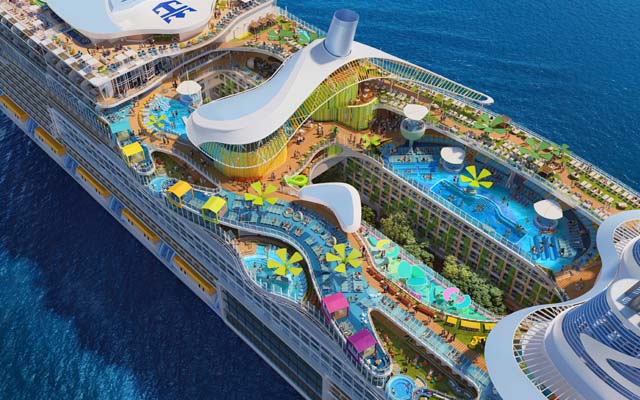
Icon of the Seas features a pool for every mood, each with prime ocean views
Icon of the Seas’ all-encompassing line-up features a variety of firsts and next-level favourites for everyone. There are also five new neighbourhoods – Thrill Island, Chill Island, Surfside, The Hideaway, and Aquadome – on top of the three familiar neighbourhoods and favourites.
The ship boasts the largest waterpark at sea, seven pools including the Royal Bay Pool, the largest pool at sea, and the infinity-edge Cove Pool, entertainment, plus more than 40 new and returning dining, bar and nightlife options, including the Swim & Tonic, the line’s first swim-up bar at sea.
Michael Bayley, president and CEO, Royal Caribbean International said: “Now more than ever, families and friends are prioritising experiences where they can bond and enjoy their own adventures. We set out to create a vacation that makes all that possible in one place for the thrill-seekers, the chill enthusiasts and everyone in between, without compromise.”
In addition, accommodation choices are aplenty: families can opt for the Family Infinite Balcony, Surfside Family Suite, and the three-story Ultimate Family Townhouse; or the brand’s first Sunset Corner Suites for the picturesque views.
The debut of Icon Class will also mark firsts and the next step in Royal Caribbean’s journey toward a clean-energy future, and Icon of the Seas will be the cruise line’s first ship with fuel cell technology and powered by liquefied natural gas. Along with shore power connection and waste heat recovery systems, the new ship will be the cruise line’s most sustainable to date.
Icon of the Seas will sail year-round, seven-night Eastern and Western Caribbean vacations from Miami, with a visit to Royal Caribbean’s private island destination, Perfect Day at CocoCay, The Bahamas. When Icon of the Seas arrives, the cruise line will debut the island’s adults-only oasis, Hideaway Beach. Vacationers will also visit Cozumel, Mexico; Philipsburg, St. Maarten; and Roatan, Honduras.
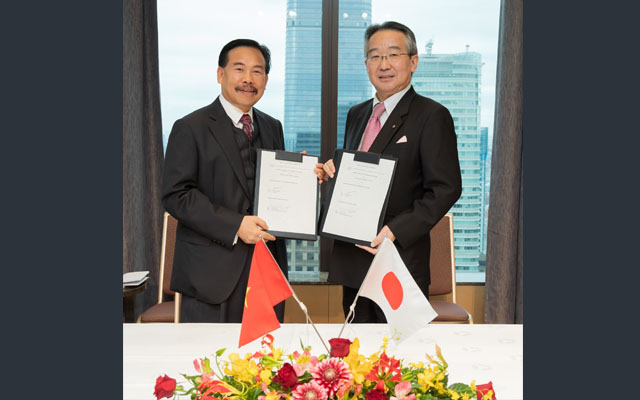
Hotel Okura will open the Okura Resort & Spa Phu Quoc in 2027 at Long Beach on Phu Quoc Island in Vietnam. The property will be managed by Trading Construction Works Organization.
The new hotel features 200 rooms and 65 villas, as well as five dining facilities and lounges, fitness centre, outdoor swimming pool, spa, and event spaces. It is about a 20 minutes’ drive from Phu Quoc International Airport.
Okura Resort & Spa Phu Quoc will open in 2027 and will be managed by Trading Construction Works Organization
Toshihiro Ogita, president, Hotel Okura, said: “We are delighted that the Okura Group will be expanding our brand presence in the resort area. We will continue to develop hotels featuring the Japanese levels of hospitality that only Okura can offer.”
Named by American travel magazines and other publications as one of the “World’s Greatest Islands”, Phu Quoc Island is approximately one hour from Ho Chi Minh City and two hours from Hanoi by air.
Hotel Naru Seoul – MGallery Ambassador, South Korea
South Korea’s first hotel in the MGallery Hotel Collection, Hotel Naru Seoul – MGallery Ambassador, is in close proximity to Incheon International Airport and the central business district.
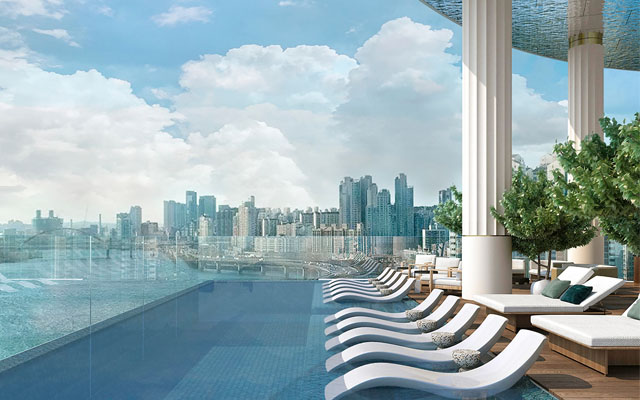
Named after the original name of the area, Maponaru, the 196-key hotel is also a Green Building-certified hotel engineered to leave a minimal carbon footprint. It offer a variety of F&B options, infinity pool, indoor pool, fitness centre, sauna, and flexible event spaces.
Nearby, guests can walk to the Mapo Food Culture Streets and Subway Station, or even go for a run or cycle along the Han river on the Mapo Hangang-Gil trail road.
Novotel Devonport
Novotel Devonport, Australia
Just a stone’s throw from the Spirit of Tasmania terminal is Novotel Devonport boasting a waterfront location overlooking the Mersey River.
With 187 guestrooms and a selection of executive suites, the hotel offers 24-hour room service, fitness centre, meeting room, and direct access to the paranaple convention centre.
Guests can indulge in South-east Asian street-food with a twist at Mr. Good Guy restaurant and bar, which is set to become Devonport’s newest gourmet destination.
Dusit Thani Tianmu Mountain, Hangzhou
Dusit Thani Tianmu Mountain, Hangzhou, China
Dusit Thani Tianmu Mountain, Hangzhou is surrounded by natural beauty in Hangzhou city’s Lin’an District, just 60 minutes by car from the city centre of Hangzhou and a 90-minute drive from Hangzhou Xiaoshan International Airport.
The resort comprises 160 villas and guestrooms on the outskirts of the Tianmu Mountain National Nature Reserve – a UNESCO Biosphere Reserve.
Featuring a Chinese restaurant and an all-day dining restaurant, hotel facilities include a wellness centre, pool, gym, spa and event venues.
Mercure Sydney Martin Place
Mercure Sydney Martin Place, Australia
Mercure Sydney Martin Place is ideally located in the heart of Sydney’s CBD and offers comfort and convenience close to all that the city has to offer.
The 86-room hotel features rooms with kitchenettes, unlimited Wi-Fi, parking and laundry facilities, as well as a 24-hour reception.
Nearby the property are some of Sydney’s major attractions like Martin Place, Pitt Street Mall, Hyde Park and Circular Quay.
Welcome to the Vivarium of the East at the brand-new Amari Kuala Lumpur.
Opened in September 2022, the hotel presents a revitalising atmosphere of vivid greenery, right in the centre of the concrete jungle that is the Malaysian capital.
Designed by the award-winning Blu Water Studio, the interiors of the city-centre hotel drew inspiration from ecology and evolution, or “Ecolution” – to provide visitors a sanctuary to rejuvenate and reawaken their senses.
Located in the heart of Kuala Lumpur central business district on Jalan Bangsar, the hotel offers unparalleled city experiences and conveniences for today’s pragmatic travellers.
It is directly connected to Abdullah Hukum LRT/KTM Station, with easy access to Kuala Lumpur City Centre as well as the many shopping and entertainment hubs within the city. Setia KL Eco City Mall is a five-minute walk away, as are The Gardens Mall and Mid Valley Megamall via a connected bridge walkway.
A partnership between ONYX Hospitality Group, one of the region’s leading hotel management companies and the award-winning property developer S P Setia, the new Amari Kuala Lumpur will also be linked to the soon-to-open Aspire Tower.
Hotel highlights
1 of 5
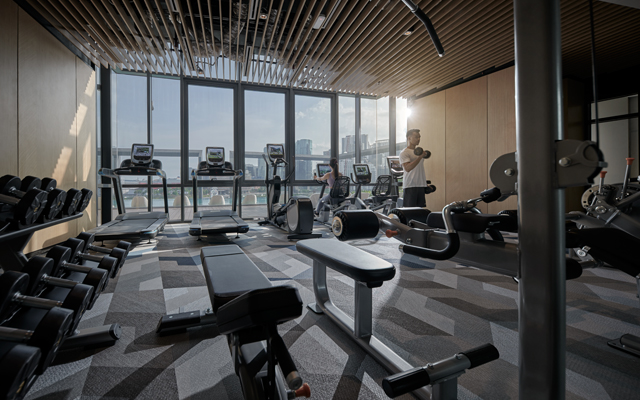
The FIT centre boasts state-of-the-art equipment
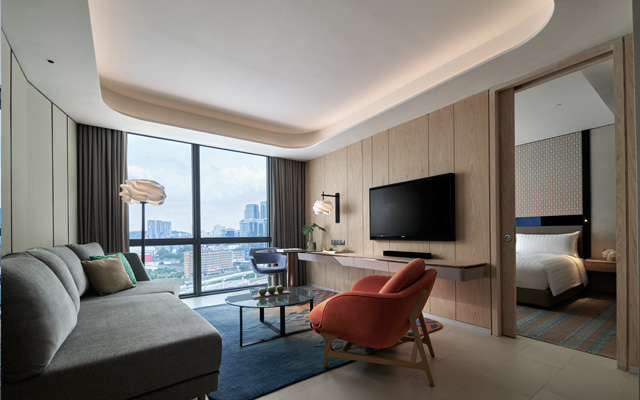
All one-bedroom suites are equipped with a separate living and bedroom area, as well as a spacious bathroom with a walk-in closet and bathtub
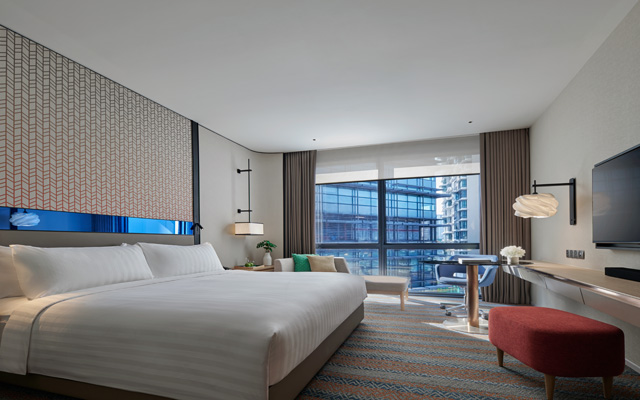
The Club deluxe rooms come with exclusive privileges
The hotel’s restaurant and bar concepts serve up a variety of cuisines infused with local and Thai flavours
The Club deluxe rooms are located on higher floors
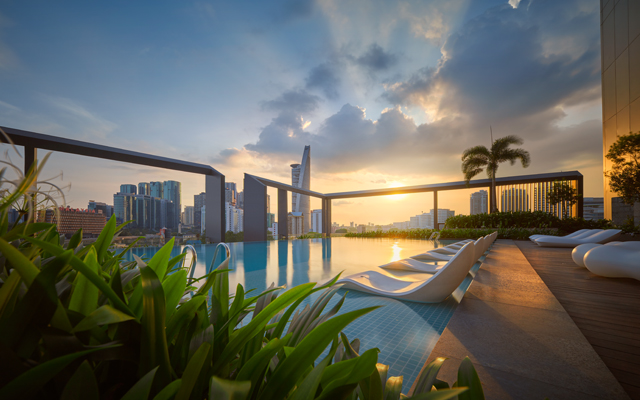
The 252-key hotel houses four splendid dining experiences and impressive facilities, such as an infinity pool overlooking the city skyline and a 24-hour FIT centre featuring state-of-the-art equipment for the ideal workout session.
While chilling at the 20m saltwater pool, guests can also order drinks and the best local and international favourites delivered hot and delicious from the hotel’s Amaya Food Gallery.
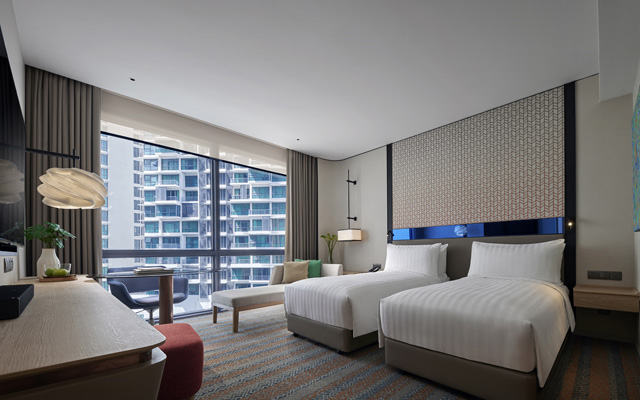
Accommodation ranges from superior room, deluxe room, Club deluxe to Club one-bedroom suite.
The Club deluxe rooms (which are on higher floors) and Club one-bedroom suites both come with exclusive privileges such as complimentary breakfast, laundry and use of meeting rooms, as well as all-day tea and coffee and evening cocktails at Cascade.
All the one-bedroom suites are equipped with a coffee maker machine, separate living and bedroom area and a generously spacious bathroom with a walk-in closet and bathtub.
The hotel’s restaurant and bar concepts include the signature all-day dining Amaya Food Gallery, which is inspired by Asia’s hawker stalls and interactive street foods. It features live cooking stations that serve a variety of cuisines infused with local and Thai flavours.
Refreshing cocktails and drinks can be savoured at Amaya Bar, where al fresco seating is available.
Boasting elegant yet whimsical interiors, Cascade offers a curated range of selected teas and barista coffee, as well as fine pastries to satisfy any hunger pangs.
The Cellar is an exclusive private space for wine lovers, where shelves brim with a wide offering of wines, whisky, brandy, spirits and more.
Amari Kuala Lumpur also provides seven meeting and event spaces on the second floor.
Event organisers can bring light to a corporate event at one of the meeting rooms or keep it personal at the Hoya Business Lounge. Each meeting room is modern and functional in design and stocked with the best multimedia apparatus. Along with the hotel’s copious parking spaces available for guests, organisers will find planning a breeze.
The 220m² ballroom can accommodate up to 200 people and can be adapted to suit any occasion.
Equipped with state-of-the-art technology and natural light from floor-to-ceiling windows, Amari Kuala Lumpur presents the ideal venue with flexible spaces and seating arrangements, as well as a stage tailored for personalised events.
Ready to experience the Amari culture which is a celebration of contemporary Thai and local cuisine, arts, design, architecture, festivities and fun?
Take advantage of the attractive special hotel opening offer here.
To learn more about Amari Kuala Lumpur, visit here.
The Hotel Industry Transformation Map (ITM) 2025 was launched by minister of state for trade and industry and culture, community and youth, Alvin Tan, on October 25 with the aim to create a compelling, innovative, and sustainable hotel industry, supported by a strong local workforce in Singapore.
The roadmap lays out strategies to achieve real value-added growth of 5.9 per cent from 2020 to 2025, and will help future-proof the industry by creating good jobs in emerging areas such as wellness, sustainability, and technology.
The Hotel Industry Transformation Map 2025 lays out strategies to achieve real value-added growth by 2025
Developed by the Singapore Tourism Board (STB) in partnership with the Food Drinks and Allied Workers Union, Singapore Hotel Association (SHA), industry players and other government agencies, the Hotel ITM 2025 was endorsed by the Future Economy Council (FEC) earlier this year.
Since the launch of the first Hotel ITM in 2016, the hotel industry has posted strong growth with average occupancy of 87 per cent and a total workforce of close to 35,000 in 2019. Over 1,400 workers across about 60 hotels benefited from Workforce Singapore (WSG)’s Career Conversion Programme for Hotel Professionals from March 2020 to August 2022.
Tapping on new consumer preferences for sustainable hospitality, digital-enabled experiences, and wellness travel, the hotel industry is well positioned to recover strongly.
Building on the success of the first ITM, strategies to support the next phase of growth and transformation include capturing demand with fresh hotel concepts, driving sustainability as a core strategy, gearing up for the next phase of innovation, and future-proofing the workforce.
“A strong and growing tourism sector needs a vibrant hotel industry. Singapore’s hotels are among the best in the world but they can continue to transform and grow so that Singapore’s tourism sector can capture the next phase of growth. The Hotel ITM 2025 charts a clear vision, and we look forward to working closely with our industry partners on this journey,” said Keith Tan, chief executive, STB.
Kwee Wei-Lin, president, SHA, shared: “Despite the pandemic’s impact on the tourism sector, our hotels have demonstrated remarkable resilience and creativity. Taking full advantage of the downtime, they have successfully piloted innovative experiences, pivoted to new business models, enhanced capabilities, and refurbished their infrastructure. We will continue to work with the government to catalyse new ideas and solutions to achieve the goals of the refreshed ITM.”
Commenting that the Hotel ITM 2025 will better position businesses to seize the emerging opportunities from global tourism trends and sustainability, Low Yen Ling, minister of state for trade and industry and culture, community and youth and FEC lifestyle cluster co-chair added: “This holistic approach will help enhance Singapore’s attraction as a compelling destination for travel, business and leisure.”