TTG Asia
Asia/Singapore Tuesday, 20th January 2026
Page 648

Japan improves domestic travel subsidy to enable wider travel

0

ICAO to take proposals for a single global health passport

0

Proposals for a new one-size-fits-all health passport to enable seamless crossing of borders by travellers will be taken up at a key submit led by International Civil Aviation Organisation (ICAO) in Montreal, Canada this September.

Speaking at a symposium during the UNWTO Global Summit in the Maldives last week, Stefano Baronci, director general of the Airports Council – International Asia Pacific (ACI), said: “While some countries appear to be reluctant towards a common health passport, there is general agreement among many others.”

ICAO keeps the ball rolling on the development of a single health passport

UNWTO secretary general Zurab Pololikashvilli told TTG Asia that the organisation is also involved in this, and has had discussions on the creation of a single health passport.

Health clearance for travel has been fragmented, with countries relying on different travel apps to pre-fill travel and health details for travellers.

In Japan, travellers at airports go through a facial recognition clearance at immigration, and thereafter walk straight to the baggage counter, shared to Yasuhiro Okanishi, Japan’s vice minister for international affairs at the Ministry of Land, Infrastructure, Transport and Tourism. He added that the Japanese were cautious about technology and digitisation of their personal data before the pandemic, but have since embraced this new technology.

Travellers to the Maldives also go through a streamlined process where their personal and travel details are entered into a travel app at the point of departure. Information is then conveyed to immigration in advance, allowing travellers to clear immigration checks quickly on arrival.

While technology advancement has enabled contactless travel today, Maldives tourism minister Abdulla Mausoom cautioned that human interaction remains critical for tourism.

“Digitisation and technology should not take away human engagement. It is important for digitisation to enhance the visitor experience, with human interaction at the core of this connection,” he said.

Travel Spark by TTG puts Gangwon at the centre

0

Loved by domestic and international travellers alike, Gangwon Province in the north-eastern part of South Korea has much to offer, from majestic natural scenery to lively dining and entertainment options.

And as the destination prepares to welcome yet another global sporting heavyweight – the 2024 Youth Winter Olympics, the tourism industry reaps a harvest of fresh winter experiences that will charm visitors in the lead up to the games and beyond.

In a new episode of Travel Spark by TTG, discover how the Gangwon Provincial Government and tourism authority are re-engaging the international travel community and inspiring travel and events.

More Gangwon features are available here and here.

To learn more about the Gangwon 2024 Youth Winter Olympics, visit gangwon2024.org.

The Hermitage, A Tribute Portfolio Hotel, Jakarta

0

Location
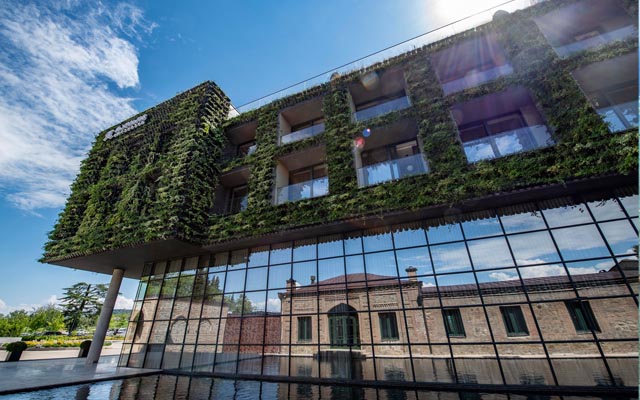
The Hermitage, A Tribute Portfolio Hotel is located in Menteng, an elite neighbourhood in Jakarta’s city centre, and a short drive to the financial district, government offices and entertainment areas. This district is historically rich too, as it used to house the upper-middle-class Indo-Dutch community in the 1910s and was where the first garden suburb was sited in colonial Batavia.

The hotel itself is a heritage building; in 1923 it served as the Dutch colonial telecommunication centre.

Rooms
The hotel retains the Art Deco style of the era, and the century-old main building now contains the lobby, main restaurant and lounge. A nine-storey building in rear, where the guestrooms are, was built to match the architectural and interior style of the main building.

I spent my days in the Junior Suite, a 60m2 space with a separate living area and bedroom. Standing between the bedroom and bathroom was a bath. Overall, the room was cosy, and I enjoyed sitting on the balcony with a cup of tea in the morning while taking in views and sounds of the neighbourhood – particularly of vendors pushing their carts along the street selling fruits, vegetables and food.

My only complaint is that the water in the shower took a while to heat up.

F&B
Dining experiences seem to play a big part in the hotel’s effort to elevate its position to the nest level. The main restaurant, L’Avenue, has been rebranded as the 1928 Restaurant, serving colonial, Peranakan, and Indonesian/pan-Asian cuisines.

Some of the dishes, such as bruine bonen soep (red bean soup), macaroni schotel (macaroni and cheese) and Dutch steak reminded me of my grandmother and her wonderful dishes that once appeared on her dining table. Meanwhile, pindang bandeng (milkfish braised in sweet soy and tamarind sauces) brought me back to my mom’s kitchen.

1928 Restaurant has a new Sunday Brunch, an all-you-can-eat experience featuring generous options and servings of appetisers, mains and desserts as well as a la minute dishes prepared by executive chef Ferdian Tobing. The seafood basket was fresh, the sirloin steak melted in my mouth, and the pasta was creamy.

But the best meal I had during my weekend stay was the ‘taste-test’ dinner that the executive chef prepared for a group of invited guests. Under the creative hands of the chef, favourite Indonesian street foods, like otak-otak (fish cake), mie ayam jamur (chicken and mushroom noodle) and semur daging (beef stew), transformed into upscaled dishes through the use of premium ingredients and stunning presentation. For example, otak-otak was topped with cavier, while wagyu beef and truffle were used instead of beef shank and button mushrooms in the making of the noodle dish.

The nine-course dinner was presented in petite portions. While their appearance were unusual, my taste buds recognised them immediately.

Facilities
The hotel offers experiential activities for guests, such as museum and art
gallery visits, Menteng Historical Guided Walk, and golf tour.

Currently, club benefits are offered to all guests, and perks include daily breakfast for two, Guardian Service (the hotel’s butler service), and all-day coffee and tea which guests can also order to their rooms. Complimentary wine, beer, cocktails and an F&B club menu are available at the club lounge between 18.00 and 20.00. Business services and turn-down gifts every evening are also part of the guest service.

Service
Two days before my arrival, I received a WhatsApp message from my designated guardian, Yohanes, asking for my arrival schedule and offering pre-arrival support. Upon my arrival, I deposited my bag at the hotel’s concierge and Yohanes sent me a message soon after to acknowledge receipt and that it would be sent to my room.

The Guardian Service is new, and aims to help guests handle all in-house activities and hospitality needs.

I appreciate my guardian’s quick and professional responses to all my requests as well as reminders for my upcoming activities. Although most communication was done through text messages, it is good to know I was not talking to a machine.

Verdict
This is a hotel that makes me feel at home away from home.

Number of rooms: 90

Contact details:
Tel: +62 21 31926888
Website: www.marriott.com

Explorar to make landfall on Koh Samui, Koh Phangan

0

Explorar Hotels & Resorts’ ongoing growth strategy in Asia will see the opening of two hotels in Thailand in 4Q2022, with both promising peaceful escapes in an adult-only environment.

The 125-key Explorar Koh Samui offers beachfront rooms, suites and pool villas as accommodation options, alongside an infinity pool with a swim-up bar; The Market all-day dining restaurant that serves up local, authentic and healthy meals; and a lively events, festivals and market nights for guests.

Explorar Koh Samui is one of two properties that Explorar Hotels & Resorts will open in Thailand later this year

The 75-key Explorar Koh Phangan presents guestrooms, suites and villas, as well as The Market restaurant serving regional cuisine made with locally-sourced ingredients, and vibrant events throughout the year aligned with the popular Full Moon party.

Unique to the Explorar brand is The Exchange, a co-working space that offers fast connectivity, charging facilities and premium Starbucks Coffee. The Exchange also serves as a meeting place for guests to socialise and grab a quick bite. A social hour is planned at this venue, during which guests can trade tales with each other or one of Explorars’ crew members.

Niels Huby, co-founder & head of development, Explorar Hotels & Resorts, said there has been “positive interest” in the company’s expansion in South-east Asia.

Tim Sargeant, co-founder & CMO, Explorar Hotels & Resorts, said targeting “millennial travellers via strong social media presence is key to the success of both new Explorar locations”. As such, Explorar has developed The Exchange Community, an online forum on its website where guests can post and share their stories about the best places to find local shops, excursions or off-the-beaten-track experiences to help others plan their trips ahead of arrival.

The two Thai signings join Explorar Treehouses El Nido in the Philippines.

Dusit Thani Hua Hin unveils refreshed wellness draws

0

Indonesia must bulk up on tourism content to better compete: industry leaders

0

Sabah sharpens outfit to advance medical tourism

0

A plan is in the works to establish Sabah Health and Wellness Tourism Council (SHWTC) to market Sabah as a destination for medical tourism.

The pro-tem committee led by Anil Kumar met with the assistant minister of tourism, culture, and environment Joniston Bangkuai on June 13 to discuss the formation of SHWTC. The latter, who chairs the Sabah Tourism Board (STB), has been invited to be the advisor of the Council.

Sabah’s tourism leaders convened on June 13 to discuss the development of medical tourism

Anil said SHWTC will act as a one-stop centre for all matters related to the health paradigm.

“The council aims to provide impetus and focus to place Sabah health and wellness tourism on the world stage,” he said, adding that the state already has the required infrastructures and facilities.

He added that medical tourism will be a “new market” for the state, and will generate “high revenue”.

“We want to collaborate with STB on how we can effectively advertise this area and attract people from neighbouring countries, particularly the BIMP-EAGA region, to seek health and wellness treatment in Sabah,” said Anil.

Joniston gave assurance that the STB would work closely with members of the local medical community to make Sabah a choice of destination for healthcare tourism.

He shared: “Other states, like Penang and Malacca, already have their state healthcare tourism councils, so this move is timely. Accordingly, this is also in line with STB’s efforts to attract high-end travellers.

“We’ve had success in other sectors of tourism, such as rural tourism, and there’s no reason why Sabah can’t do the same in medical tourism.”

Joniston added: “We must work closely together to achieve the goal, develop strategic plans to promote health care services here, and look at prospective target markets, especially when Nusantara (on Borneo island, where Sabah state is also located) is set to become Indonesia’s new capital.”

Joniston suggested that SHWTC consider including representatives from relevant government and private agencies as members.

Meanwhile, Noredah Othman, STB’s CEO, mentioned that the NTO has started promoting medical tourism through the Malaysia Healthcare Travel Council.

Nevertheless, she stated that STB was prepared to get on board with SHWTC to exchange experience and skills to develop a viable package for medical tourism in the state.

“It is essential to have local medical practitioners who can educate our stakeholders, such as hoteliers and tour operators, on the various healthcare options that are available to tourists.

“STB will be happy to collaborate with SHTWC to conduct a workshop for tourism players to increase their awareness on the offerings for medical tourism in the State,” she said.

DOT sows seeds for farm tourism development

0

Sentosa begins massive solar panel deployment as part of green strategy

0

Sentosa Development Corporation (SDC) and Resorts World Sentosa (RWS) are embarking on a large-scale deployment of photovoltaic cells to harness solar energy across 18 sites on the island from June 2022.

This deployment marks the first major renewable energy milestone under the refreshed Sustainable Sentosa strategic roadmap launched in September 2021.

SDC has launched a tender for the installation, marking the first time that rooftops with varying tenures – duration that each rooftop is available for photovoltaic cell installations – are being consolidated into a single tender in Singapore. Comprising seven sites at locations such as Palawan Kidz City, Beach Station, as well as the three Sentosa Line cable car stations, the consolidation will strengthen the tender’s commercial viability, with more spaces activated for solar energy generation. These were selected based on the availability of sufficient sunlight and an unobstructed guest experience.

Solar panels at the 18 new sites can reduce 1,643 tCO2 per year, equivalent to carbon generated by 60,000 hotel room nights

Separately, RWS will begin the installation of new photovoltaic cells this month at 11 sites on its premises including Universal Studios Singapore and Hard Rock Hotel Singapore’s rooftops. RWS already hosts one of the largest solar photovoltaic systems in Singapore’s hospitality sector, and the new installation is part of its Sustainability Master Plan and decarbonisation strategy.

Collectively, the solar panels at the 18 new sites will cover about 2.5 hectares, with a solar capacity of 3.094 megawatt-peak (MWp) that can produce 3,871,500 kilowatt-hours (kWh) of clean energy annually when fully installed by 2023. This will result in an overall reduction of 1,643 tCO2 per year, which is equivalent to the carbon generated by 60,000 hotel room nights.

As part of the Sustainable Sentosa strategic roadmap, SDC is also studying other sources of renewable energy, including tidal energy and waste-to-energy generators as part of long-term strategies to achieve carbon neutrality. Small-scale pilots are currently being explored with the view to scaling these solutions for mass deployment should the trials prove successful. Overall, Sentosa targets to power 10 per cent of the island’s electricity usage through onsite renewable energy by 2030.

Thien Kwee Eng, chief executive officer, SDC, said: “Solar is one of the most viable renewable sources of energy for Sentosa and Singapore. However, one challenge is how precincts can optimise underutilised spaces to harness the potential of solar energy. The deployment of photovoltaic cells across Sentosa’s establishments through a consolidated approach, comprising different rooftops with varying sizes and tenures, is an illustration of how we can collaborate as a business ecosystem to tap on such opportunities. Using this approach, the initiative will take us one step further towards being a sustainable leisure destination with a lower carbon footprint.”

Tan Hee Teck, chief executive officer, RWS, said: “Transitioning to renewable energy is an important means to combat climate change and forms an integral part of RWS’s decarbonisation strategy. Our aim is to accelerate our transition to next generation renewable energy which includes solar, wind, tidal and kinetic energy through applied research and test-bedding at RWS, which will then be adapted for scalability across a variety of environments within our resort. This will all culminate towards RWS’s goal of achieving carbon neutrality by 2030.”