TTG Asia
Asia/Singapore Wednesday, 1st April 2026
Page 5

Star Alliance opens connection centre at Los Angeles airport to support transfers

0

Star Alliance has introduced a new Star Connection Centre at Los Angeles International Airport (LAX), aimed at supporting passengers transferring between member airlines.

The facility is the alliance’s ninth connection centre globally and is located at one of its key transfer hubs. More than 350,000 passengers connect between Star Alliance airlines at LAX each year.

The new Star Connection Centre at Los Angeles International Airport supports passengers transferring between member airlines

The centre is designed to assist passengers with tight connections, particularly when inbound delays risk disrupting onward travel. It uses monitoring systems to identify affected passengers and coordinate assistance to help them reach their next flight.

Dedicated staff track transfer windows and work across member airlines to manage connections. Support may include meeting passengers at arrival gates and guiding them through the airport to departure gates.

Star Alliance has operated connection centres for more than a decade, supporting both passenger and baggage transfers across major hubs. In addition to Los Angeles, centres are located in Brussels, Chicago, Frankfurt and Toronto. Separate baggage-focused facilities operate in Houston, Newark, Washington Dulles and San Francisco.

At LAX, 16 Star Alliance member airlines operate, including Air Canada, Air China, Air New Zealand, ANA, Asiana Airlines, Austrian Airlines, Avianca, Copa Airlines, EVA Air, LOT Polish Airlines, Lufthansa, Singapore Airlines, SWISS, TAP Air Portugal, Turkish Airlines and United Airlines. Together, they operate more than 2,000 weekly flights to over 80 destinations in more than 20 countries.

“Every moment matters when connections are tight, and our goal is to make multi-airline journeys feel seamless,” said Ambar Franco, vice president, customer experience at Star Alliance.

“At Star Connection Centres, our member airlines come together as one to ensure that, regardless of which airline passengers are flying with, they are supported from an Alliance perspective. This is what Star Alliance stands for – delivering a smooth experience across our global network. Our latest Star Connection Centre at LAX will benefit our members and customers alike.”

Savour afternoon tea with Zentis Osaka’s stay package

0

Zentis Osaka, a member of Design Hotels, has introduced the Stay & Savor package, combining a two-night stay with afternoon tea and daily breakfast.

Since opening in 2020, the hotel has focused on design-led accommodation and dining at Upstairz Lounge, Bar & Restaurant. The afternoon tea service is presented on a tiered stand inspired by the hotel’s central staircase, designed by Tara Bernerd & Partners.

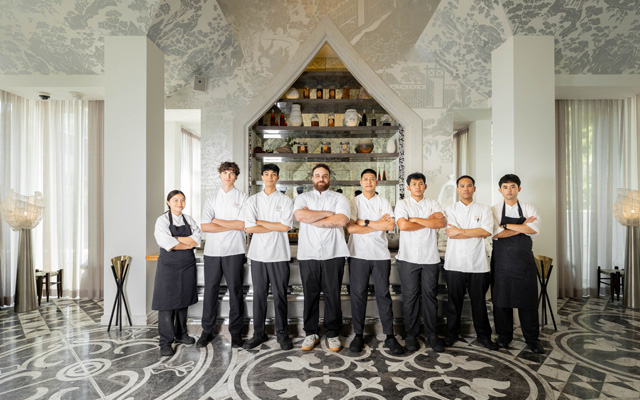
Zentis Osaka’s Stay & Savor package includes a two-night stay, seasonal afternoon tea at Upstairz and daily breakfast

The current seasonal menu, available until May 10, 2026, features a selection of sweets and savoury items. Sweet options include strawberry macaron, mini pavlova, cheesecake and a strawberry-themed dessert. Savoury items include wagyu beef tartare, wholewheat pie with paprika mousse, shrimp fritter and a burrata salad with citrus.

Guests can choose free-flow tea or add a glass of champagne at an additional cost. Afternoon tea is served at Upstairz Lounge, which includes indoor seating and an outdoor terrace.

The package also includes breakfast at Upstairz Restaurant, with a choice of American, vegan or Japanese-style options.

Rooms range from studios to suites, with interiors based on a minimalist Japanese design approach. Shared spaces include a guest lounge and garden terrace.

Rates start from 56,500 yen (US$380) per stay, based on single occupancy. Reservations must be made at least three days in advance.

For more information, visit Zentis Osaka.

Sojern names new president and GM of global destinations

0

AI-powered travel marketing platform, Sojern, has appointed Sylvia Weiler as president and general manager of its global destinations business.

Weiler returns to the company after previously helping build its destinations segment. She most recently served as chief revenue officer at Zartico and has held senior roles at Tripadvisor and Airbnb.

Pessimism rises among South-east Asian travel businesses: ASEANTA survey

0

A recent survey conducted by the ASEAN Tourism Association (ASEANTA) and Pear Anderson has revealed that 48 per cent of South-east Asian travel businesses believe that the prospects for their business in 2Q2026 are worse than they had originally anticipated at the start of the year, due to the US-Israel-Iran war impact.

The report showed that inbound operators in particular were pessimistic about future enquiries, with 74 per cent of inbound travel businesses much gloomier about prospects than at the start of the year, compared to 50 per cent of outbound travel businesses.

Travel businesses expect demand to shift towards South-east Asia, with smaller gains anticipated for East Asia and Europe and Central Asia

Singaporean travel businesses were the most pessimistic overall, with two-thirds (67 per cent) expecting enquiries in 2Q2026 to be worse than what they expected at the start of the year, compared to 64 per cent in Malaysia, 54 per cent in Indonesia, 50 per cent in the Philippines, and 43 per cent in Thailand.

Almost three-quarters (72 per cent) of outbound travel businesses reported at least some postponements and cancellations for trips to the Middle East, 70 per cent to Europe, and 58 per cent to other regions, demonstrating that the impact on travel was beyond connectivity.

As for a potential redirection of outbound travel flows, 64 per cent of businesses believed that South-east Asia would see the benefit, followed by East Asia (47 per cent) and Europe and Central Asia (24 per cent).

Thai travel businesses were the most confident that Europe would see a growth of interest (56 per cent), likely due to the higher number of direct flights to Europe already operating to Thailand, while the Philippines saw a greater chance of travel interest being redirected to domestic (30 per cent).

For inbound travel businesses, 54 per cent have received cancellations for May, with the number sharply decreasing for cancellations received in June (21 per cent), and just three per cent seeing cancellations from October and onwards, a sign that travellers are taking a wait-and-see approach.

Sixty-two per cent of businesses saw some trips postponed or cancelled from Middle Eastern travellers, with a higher number (67 per cent) for travellers from Europe, signalling the significant role that Middle East transit hubs play to facilitate inbound travel into South-east Asia.

Fuel price increases, leading to higher airfares, as well as fuel shortages in general remain of concern for South-east Asian travel businesses, who noted their impact on inbound operations in-destination, and their potential knock-on impact on traveller purchasing power in the medium-term.

Inbound cancellations are highest for May bookings, with a sharp decline in later months as travellers adopt a wait-and-see approach

“The high percentage who believe that travel will be redirected to South-east Asia confirms that we must work together as one ASEAN to support our tourism and travel ecosystem,” said Eddy Soemawilaga, president of ASEANTA.

“Travel businesses commenting on the current situation were quick to point to the overall resilience of the South-east Asian travel industry, and that they believed traveller demand would recover once the situation stabilises.”

“There is no denying that travel businesses, whether outbound or inbound, are suffering at the moment,” stated Hannah Pearson, director at Pear Anderson. “While on the face of it the lack of transit flights to the Middle East is immediately impacting flows both in and out of the region, ASEAN has an opportunity to present itself as an alternative transit hub between Australia and Europe, potentially opening up more direct flight routes – and new opportunities.”

Asia’s tourism industry faces operational challenges as fuel shortage hits

0

The escalating US-Israel-Iran war, which has impacted Middle Eastern energy infrastructure and choked oil exports bound for Asia via the Straits of Hormuz, is bruising Asia’s tourism businesses.

Before the US and Israel’s attacks on Iran on February 28, Brent crude was priced around US$71 a barrel. The price crossed US$112 a barrel on March 23.

Rising fuel prices driven by Middle East tensions are increasing transport costs and disrupting tourism operations in parts of Asia

International Energy Agency chief Fatih Birol said on March 23 at the National Press Club in Canberra, Australia that the ongoing crisis is worse than a combination of the 1970s oil shocks and Russia-Ukraine war.

Birol remarked in his speech that the “global economy is facing a major, major threat today” and noted that Asia-Pacific is facing the brunt of the oil crisis, given its reliance on oil and other crucial products like fertiliser and helium transiting the Strait of Hormuz.

Impact on Thailand
A primary concern is the direct impact on Thai tourism through increased airfares and operating costs, and indirectly through reduced purchasing power, particularly for longhaul and high-income tourists.

The Airlines Association of Thailand (AAT) is now preparing to propose a temporary reduction in the excise tax on jet fuel to help stabilise airfares amid volatile global energy prices. The measure aims to lower airlines’ operating costs and ease the impact on passengers.

The Bangkok Post has observed disrupted taxi services at Thailand’s Suvarnabhumi Airport, where large SUV taxis are reportedly gradually suspending operations, leaving only 2,500 vehicles – out of more than 5,000 – in active service.

Panlop Chayinthu, president of the Suvarnabhumi Taxi Coordination Association, also told the Bangkok Post that drivers are increasingly reluctant to accept long-distance fares, fearing they may run out of fuel en route with no guarantee of being able to refuel.

The Tourism Authority of Thailand on March 20 convened an urgent summit at the Tourism Crisis Monitoring Center to assess the short, medium, and long-term impacts of the ongoing unrest in the Middle East. It emphasised that any relief measures must be carefully calibrated to strike a sustainable balance between the needs of the general public and the service sector. To mitigate the current energy crisis, the agency is prioritising energy-efficient strategies. These include the vigorous promotion of domestic tourism, local conferences, and group travel to reduce energy consumption, alongside campaigns encouraging travellers to explore nearby destinations and discover Thailand’s “hidden gems”. – Anne Somanas

Impact on Cambodia
A shock spike in fuel prices, from 30 to 35 per cent for regular petrol and more than 60 per cent for diesel, coupled with LPG (liquefied petroleum gas) shortages, have led to a surge in service and transportation costs that are impossible for tourism industry players to absorb.

Tourism specialist Nick Ray said: “The fuel spike immediately pushed transport costs up. As DMCs, we have to see if we can raise our prices. If we absorb it all, we will take a big hit. If we pass it onto our partners, they will not be happy as they cannot put that onto the customer at such short notice. So, we have to discuss how to divide the losses. It’s a big shock.”

He added that Cambodia’s tourism landscape is already suffering set-backs due to the closure of the land border with Thailand since mid-2025.

“This is another issue Cambodia did not need,” Ray told TTG Asia, adding that while the situation is difficult to predict, it poses a threat in the medium-term, with longhaul travellers possibly nervous to fly.

Cambodia was heavily impacted by the sudden halt of Qatar, Emirates and Etihad flights, which carry the bulk of the country’s Western markets. According to the country’s State Secretariat of Civil Aviation, Gulf hubs account for approximately 12,960 travellers to Cambodia a week.

“There was a huge problem of cancellations and postponements, and Cambodia is more vulnerable than neighbouring countries, as we just lost three major carriers through the Middle East,” Ray added.

On March 23, the government unveiled measures to conserve fuel, including encouraging non-essential and long-distance travel, switching meetings from offline to online and encouraging energy efficiency. However, it named transport as a fuel priority, among other sectors.

Sinan Thourn, chairman of PATA Cambodia Chapter, said the fuel crisis has had a major impact on travel costs and itinerary planning. “Cost pressures are evident in multiple service areas. Accommodation, food and beverage, guided tours and transport services are experiencing upward pressure from energy, maintenance and supply chain costs.”

He added that transport has been majorly impacted, from domestic flights and intercity buses to van services and road transport for tours.

“This can influence travellers to shorten itineraries or trim optional activities, especially for budget-conscious visitors,” he said.

Sinan said tuk-tuks, taxis, shuttles and tour operators have faced tighter margins as fuel bills rise. “In some cases, operators adjust fares, impose fuel surcharges or reprice popular day trips, which can affect demand, particularly for last-minute bookings,” he said.

“If cost increases outpace what visitors are willing to pay, operators face tighter margins or the need to boost value through quality, unique experiences or differentiated service.” – Marissa Carruthers

Impact on Singapore
The impact on Singapore’s energy access appears to be less severe when compared against its Asian neighbours. Minister-in-charge of energy and science & technology Tan See Leng stated on March 20 that the country does not need to dip into its energy stockpiles of LNG and diesel yet, and assured that supplies are enough to last for months..

However, energy prices are rising. Electricity tariff are expected to hike by 11 per cent in the coming months, prompting Tan to urge prudent use of energy among households and businesses.

In Singapore, fuel prices at the pump have risen from S$2.88 (US$2.25) per litre on February 23 to S$3.47 on March 21, making land transfers pricier.

Local taxi networks ComfortDelGro and GrabCab have both risen fares to help their drivers tide through these challenging times.

ComfortDelGro’s temporary driver fee for online app bookings go straight to its drivers. The driver fee will be S$0.50 for fares below S$15 and S$0.80 for fares of S$15 and above. ComfortDelGro has also committed to absorbing a portion of fuel costs at its pumps.

GrabCab in Singapore will temporarily raise metered taxi fares from March 30 to May 31. The unit fare for GrabCab rides will be raised to S$0.27 from S$0.26. The change would mean an additional S$0.80 on fares for long-distance trips, such as a 30km journey from Woodlands to Changi Airport. The fare increment follows a move to support its drivers with fuel vouchers last week.

Soon-Hwa Wong, chairman of the PATA Singapore Chapter, said: “The fuel crisis is adding immediate cost pressures across Asian tourism. For Singapore as a regional hub, we’re seeing airlines adjust routes and tour operators struggle with pricing stability.”

Wong underscored the severe impact rising fuel prices and energy supply have on the global economy, warning that when “recession sets in, discretionary consumption such as leisure travel will be the first to be curtailed”.

Ryan Low, director at The Traveller DMC, which has operations in both Singapore and Malaysia, said the full impact of fuel cost pressures has yet to filter through to ground operations.

“Some of our transport partners have already adjusted their rates, while others are holding for now but the direction is clear. Rather than wait for the full impact to hit, we’re taking a proactive approach, reviewing our transport cost structures across Singapore and Malaysia, engaging our partner network to understand their forward pricing, and testing our margins so we can make measured adjustments (in time),” Low told TTG Asia.

The Traveller DMC has chosen to keep rates steady for confirmed bookings in the immediate term.

Low added that “appropriate provisions” are built into new contracts to ensure “realistic and sustainable” pricing, so that visitors to Singapore will continue to enjoy a quality destination experience.

PATA’s Wong said near-term support from the government – whether through fuel subsidies or targeted relief for SMEs – will be critical.

TAT aligns with private sector to support tourism during Middle East crisis

0

The Tourism Authority of Thailand (TAT) convened on March 20 for an urgent summit at the Tourism Crisis Monitoring Center to assess the short-, medium- and long-term impacts of the ongoing unrest in the Middle East.

Chaired by TAT governor Thapanee Kiatphaibool, the meeting brought together leaders from 10 major private-sector entities: Tourism Council of Thailand, Airlines Association of Thailand (AAT), Thai Travel Agents Association, Association of Domestic Travel, Association of Thai Travel Agents, Association of Thai Tour Operators, Thai Tourism Promotion Association, Thai Transportation Operators Association, Thai Hotels Association, and Airports of Thailand.

Thailand’s tourism stakeholders met in Bangkok to coordinate response measures amid rising oil prices and Middle East unrest; photo by Thapanee Kiatphaibool/Facebook

Participants exchanged views and proposed measures to enhance adaptability, mitigate business impacts, and establish management guidelines for the Thai tourism sector.

Amid the global crisis, private-sector representatives submitted a formal letter outlining proposed relief measures. A key concern is the surge in global oil prices, which directly affects Thai tourism through higher airfares and operating costs, and indirectly through reduced purchasing power, particularly among longhaul and high-income travellers.

The AAT is preparing to propose a temporary reduction in excise tax on jet fuel to help stabilise airfares amid volatile global energy prices. The measure aims to lower airline operating costs and ease the impact on passengers.

The TAT emphasised that any relief measures must be carefully calibrated to balance the needs of the public and the service sector. To mitigate the current energy pressures, the agency is prioritising energy-efficient strategies, including the promotion of domestic tourism, local conferences and group travel to reduce energy consumption. Campaigns will also encourage travellers to explore nearby destinations and discover Thailand’s “hidden gems”.

The coalition agreed that immediate public-private collaboration is vital. Joint efforts will focus on strategic flight management, targeted regional and domestic tourism promotion, fuel cost controls, and the establishment of a dedicated working group to monitor developments.

Thapanee underscored the agency’s proactive stance.

“While the situation in the Middle East will inevitably impact overall visitor numbers, we are comprehensively managing the situation to minimise these effects,” she stated.

Noting that a swift, one-month best-case resolution is unlikely, she added: “We are currently operating under a base-case scenario. We must actively pursue strategies to offset any losses and continue building robust credibility for our tourism sector.”

Highlighting Thailand’s broader strategic vision, Thapanee said that all agencies are working to identify opportunities.

“We choose to look at the opportunities. As highlighted in our recent campaigns, Thailand is positioning itself as a luxury destination. In the face of any global challenge, we want the world to view Thailand as a space defined by the resilience of its people and its culture. True resilience lies in our capacity to recover swiftly from setbacks, ensuring that our businesses and industry can continue to thrive,” she concluded.

BWH Hotels sets sights on Asia-Pacific as engine for global growth

0

BWH Hotels is doubling down on Asia-Pacific, identifying it as the primary engine for its goal to expand its portfolio to 5,000 properties.

At the 2026 Pan Asia Pacific Regional Conference at the Carlton Hotel Bangkok Sukhumvit on Monday morning, Ron Pohl, president of international operations for BWH Hotels and president of WorldHotels, said: “Our greatest potential lies here in the Asia-Pacific region. We’ve had tremendous success over the years here in Bangkok and, recently, in Vietnam. India has also grown to 36 hotels open, with another 25 hotels in the pipeline. Japan is another emerging market – not for Tokyo, but in the secondary and tertiary markets.”

BWH Hotels’s Ron Pohl outlines Asia-Pacific expansion plans at the Pan Asia Pacific Regional Conference in Bangkok, highlighting demand from younger travellers and emerging markets

Including the Philippines, Australia and New Zealand in the mix, Pohl pointed out that these are the destinations the company has focused on over the past year. Globally, BWH Hotels maintained strong momentum in 2025, opening approximately 120 hotels.

Pohl further highlighted that half of the global population – more than four billion people – resides in Asia-Pacific, with an estimated 80 per cent travelling annually. Hence, the group’s expansion strategy is heavily informed by median age data, which helps pinpoint high-growth markets where younger demographics are shifting the travel landscape.

For instance, while nations such as South Korea and Thailand have median ages of 46 and 41 respectively, India represents a significant opportunity with a median age of just 29. BWH is also strategically monitoring Africa as a future frontier, where the median age stands at 19. These younger demographics, specifically Gen Z and Gen Alpha, are now driving travel decisions 73 per cent of the time and tend to favour experiential travel and authentic, local stays over popular tourist destinations, said Pohl.

Larry Cuculic, president and CEO of BWH Hotels, also shared that the group is targeting a 5,000-hotel milestone, driven by a portfolio of lifestyle and boutique brands. “We will be able to grow with the help of new brands such as Aiden,” he noted, referring to the boutique concept designed to reflect the personality of its specific neighbourhood.

This expansion will be further bolstered by the group’s entry into the US$1 trillion global wellness industry through the upcoming launch of a dedicated glamping brand, designed to meet rising demand for high-end, nature-based retreats.

“Glamping… is glorified camping for the most part, but these are really unique resorts positioned around the world,” Pohl explained. Having already opened the first two in North America, with a third coming in Honduras, he sees “tremendous potential” for the concept globally.

“There are so many remote destinations – in the Outback, on safaris in South Africa, or in Japan – where we can expand these offerings. This is a new type of travel that customers are truly looking for.”

MITE 2026 to showcase new and expanded tourism zones

0

Macao International Travel (Industry) Expo’s 14th edition, taking place from April 10 to 12, will boast several core zones aligned with travel and tourism growth opportunities.

New to MITE 2026 is the Culture and Creativity Hub. Designed to appeal to Gen Z travellers, the hub will feature local cultural and creative IPs familiar to this segment, alongside creative workshops.

MITE 2026 introduces new zones and partnerships as Macau strengthens its position in medical tourism, technology and Asia-Pacific collaboration

Visitors to the Culture and Creativity Hub will also be able to interact with Macao’s tourism mascot, Mak Mak. The mascot will headline a themed photo gallery, while authorised Mak Mak products will be available for purchase on site, supporting a wider rollout of the character.

In line with growing global interest in medical tourism, MITE 2026 will welcome the Macao Medical Center of Peking Union Medical College Hospital (PUMCH), part of The Islands Healthcare Complex, as a first-time exhibitor. The centre will showcase high-end medical equipment to highlight its smart healthcare innovations. It will be joined by other health-related organisations, including the Traditional Chinese Medicine Cultural Experience Museum, the Hengqin Pien Tze Huang Museum, and Guangzhou Pharmaceutical Group.

Further emphasising the importance of medical tourism in Macao’s strategy, MITE 2026 will partner with the Hengqin Economic Development Bureau to organise the Macao-Hengqin Wellness Traveller Forum, held alongside the event. Attendees will also be able to visit health institutions in Macao and Hengqin.

In addition, the Macao University of Tourism Studies, in conjunction with the China Tourism Academy Data Center of the Ministry of Culture and Tourism, will host the 2026 Guangdong-Hong Kong-Macau Greater Bay Area Tourism Development High-Level Forum on October 1 to explore opportunities in the silver economy.

A spotlight on travel technology is also planned. The Tourism Tech Pavilion will bring together companies such as Amap (known as Gaode Map in Greater China), iFlytek and CTM, while the Low-Altitude Economy Pavilion will feature firms including DJI and Yi Aviation, showcasing developments in urban air transport and low-altitude tourism.

The MITE 2026 website will also introduce a real-time chat service and a robot-based media platform, where robots will collaborate with overseas influencers on live streams.

Another highlight is a focus on Asia-Pacific collaboration, with travel agencies launching multi-destination itineraries. A Travel Passport will allow visitors to collect stamps at participating booths for a chance to enter a lucky draw. This initiative coincides with Macao’s hosting of the 13th Asia-Pacific Economic Cooperation Tourism Ministers’ Meeting and the 67th Working Group Meeting.

This regional focus extends to the Asia-Pacific Sustainable Gastronomy Showcase, where food, wine and coffee sections will offer MITE 2026 visitors both tasting and learning experiences.

MITE 2026 will also support global tourism through a collaboration between the Macao Commerce and Investment Promotion Institute and the Macao Government Tourism Office to host the Promotion of China, Spain and Portugal Tourism Products – Corporate Session. The Portugal and Spain pavilions will also return.

Continuing Macao’s investment in halal tourism, MITE 2026 will expand its Silk Road • Halal Products Pavilion to showcase Muslim-friendly facilities. At the same time, the Muslim Tourism Opportunities Networking Salon will provide industry players with insights and case studies on developing this segment.

IHG brings InterContinental brand back to Manila after 15 years

0

IHG Hotels & Resorts has signed an agreement to bring the InterContinental brand back to Manila with a new hotel scheduled to open in 2032.

The 212-room InterContinental Manila will be located in Bonifacio Global City (BGC), a 240-hectare business district in Metro Manila. The development marks the brand’s return to the Philippine capital more than 15 years after its previous property closed.

An InterContinental hotel will return to Manila in 2032 with a new property planned in Bonifacio Global City

BGC has developed into one of the city’s main commercial areas, housing the Philippine Stock Exchange, multinational companies and residential developments.

The hotel is expected to include an all-day dining restaurant, a specialty restaurant and bar, as well as meeting and event spaces including a ballroom and function rooms. Other facilities will include a health club, spa and an outdoor swimming pool.

IHG is partnering with Keyland Corporation, Philippine Realty and Holdings Corporation and Greenhills Properties on the project. The companies are involved in property development across Metro Manila, including residential and commercial projects in areas such as Makati, Ortigas and Bonifacio Global City.

InterContinental Manila will join a global portfolio of more than 240 InterContinental hotels and resorts. The brand also has additional projects in the pipeline in the Philippines and other markets.

“Reintroducing InterContinental to Manila is a wonderful milestone, and a perfect fit for the city with strong long-term fundamentals and increasing demand for luxury travel,” said Vivek Bhalla, managing director, South East Asia and Korea, IHG Hotels & Resorts.

Choice Hotels’ Ascend Collection reaches 500 properties with further openings planned

0

Choice Hotels International’s Ascend Collection has reached 500 properties following recent openings in the US, including The Harrison Hotel in Hollywood, Florida, and The Gould Hotel in Seneca Falls, New York.

The brand, positioned as an upscale soft brand, continues to expand with a pipeline of 70 properties as of March 2026. Planned openings include locations in Flagstaff, Arizona, Anaheim, California and Miami, Florida, as well as The Ellen in Port Pirie, South Australia.

Ascend Collection now includes 500 properties, with recent openings in the US and further expansion planned globally; SSAW Boutique Hotel Yangzhou, pictured

Ascend Collection has also grown its presence in Asia-Pacific, where it currently includes 83 properties. The expansion reflects increased interest from hotel owners in flexible models that allow independent properties to retain their identity while accessing global distribution and technology platforms.

Choice Hotels said demand for independent and experience-led accommodation remains strong, supporting continued development activity. In Asia-Pacific, the company has expanded through distribution agreements and brand growth initiatives aimed at both single-property and multi-unit owners.

Recent developments in the international portfolio include a distribution and master franchise agreement with SSAW Hotels & Resorts in China, adding more than 9,500 rooms. The brand has also entered Poland, expanded in Québec with six additional properties, and plans to open a hotel in Kenya’s Maasai Mara National Reserve. In Latin America, Ascend Collection has opened its first property in Chile.

Many Ascend Collection hotels participate in the Choice Privileges programme, which allows members to earn and redeem points across more than 7,000 properties in 46 countries and territories.

“The performance and compelling value proposition of our soft brands continue to resonate with both developers and guests,” said Mark Shalala, senior vice president, development, Upscale Brands, Choice Hotels International.

“The Ascend Collection is well positioned to capture demand, support owner success, and maintain a leading position in the dynamic and growing soft brand category.”