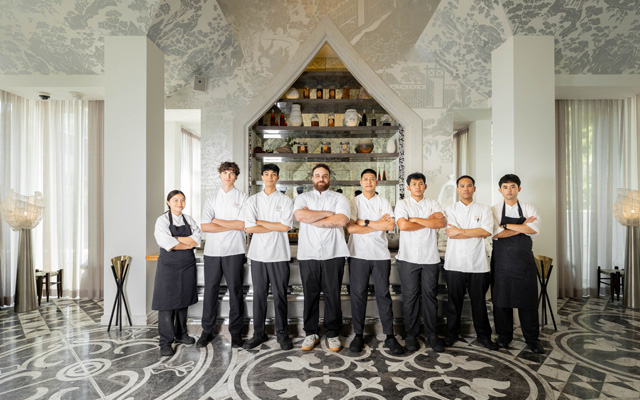
Chameleon Strategies and CrescentRating have launched the Asia Pacific Outbound Traveler Handbook 2026, a market intelligence report covering 26 outbound travel markets across Asia-Pacific and the Gulf region.
The publication was unveiled at the Halal in Travel Global Summit in Singapore and is aimed at destination marketers, tourism boards, airlines, tour operators and travel trade professionals seeking insights into changing travel behaviour across key source markets.
Bahardeen said common values, faith-based requirements and travel behaviours unite Muslim travellers globally and underpin the growth of Muslim-friendly travel
The report examines markets including Saudi Arabia, Singapore, Malaysia, Thailand, Vietnam, Indonesia, India, Japan, South Korea, Australia and New Zealand, among others. According to the editors, each chapter focuses on the travel characteristics and demand drivers of a specific market, with the aim of helping destinations better understand evolving traveller preferences.
The launch comes amid continued changes in the global travel environment, including geopolitical developments, airspace disruptions and shifts in consumer behaviour. The report argues that destination strategies increasingly require market-specific insights rather than relying solely on aggregate arrival figures.
One section highlights Saudi Arabia as a growing outbound market, noting longer average international stays and increasing demand for experience-led travel. The report also examines the diversity of Muslim travel markets and the importance of balancing shared faith-based needs with country-specific cultural preferences.
The handbook is accompanied by the launch of AsiaTravelTrends.com, a platform dedicated to Asian outbound travel intelligence, research and market analysis. The platform will host future editions of the report, industry articles and data on outbound travel trends.
Jens Thraenhart, CEO of Chameleon Strategies and co-editor of the report, said: “Tourism posted a post-pandemic record in 2025. In the same season, the corridors, costs, and politics that produced that record were being rewritten underneath it. I call the space between those two realities the Next Tourism Order.”
Fazal Bahardeen, CEO of CrescentRating and co-editor of the report, added: “The shared values, faith-based needs, and core behaviours of Muslim travellers form an incredibly powerful, unifying bond across borders. This collective identity is the absolute foundation of Muslim-friendly travel.”
Water World Ocean Park Hong Kong is launching Canton Beats, a retro Cantopop-themed DJ water party that will run on selected weekends from July 4 to August 30, 2026.
The event forms part of Beat The Summer, a seasonal programme that brings a 1980s-inspired Hong Kong theme to the water park alongside its slides, wave pools and attractions.
Canton Beats brings retro Cantopop, guest DJs and evening entertainment to Water World Ocean Park Hong Kong on selected weekends this summer
Taking place at Horizon Cove, Canton Beats will feature DJ sets, Cantopop remixes, lighting effects and evening entertainment in a waterfront setting.
The opening weekends will feature guest DJs from across Asia, including DJ Sura from South Korea on July 4, DJ Amber Na from Malaysia on July 5, DJ Kixon on July 11 and DJ SunB from South Korea on July 12.
Running every Saturday and Sunday, except August 22, Canton Beats combines classic Cantopop songs, contemporary remixes and a retro Hong Kong-inspired atmosphere.
Tickets are priced from HK$272 (US$35) and are available through the Water World Ocean Park Hong Kong website.
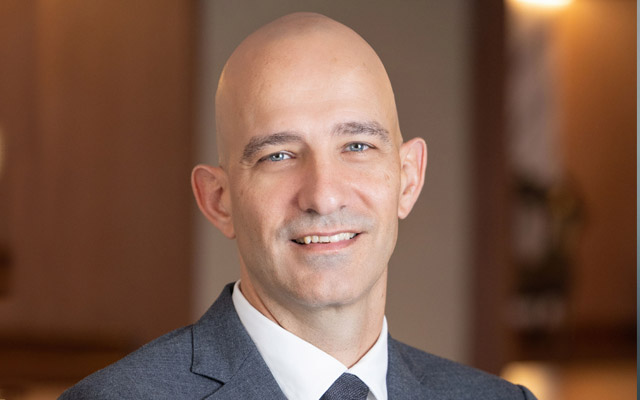
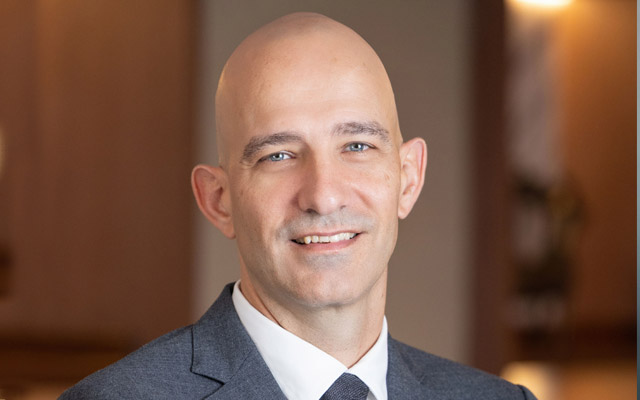
Dinesh Varatharajoo has been appointed executive assistant manager of rooms at The Ritz-Carlton, Millenia Singapore.
He joins from Singapore Marriott Tang Plaza Hotel, where he most recently served as director of rooms.
Previously, he held leadership roles at Capella Singapore and The Westin Singapore, and began his career with the Ritz-Carlton brand at The Ritz-Carlton, Millenia Singapore as executive club and butler supervisor.
In a bid to drive quality destination experiences that are aligned with the diverse interests of international travellers, Beijing has presented 10 new scenarios for visitors, with programmes highlighting the Chinese capital’s historic depth, cultural richness, and modern vibrancy.
The new experiences were introduced at the 2026 Beijing Inbound Tourism Development Conference and Beijing International Cultural Tourism Consumption Expo held earlier this month.
Trade delegates visit the BAIC Off-Road Vehicle Smart Factory during a post-conference familiarisation tour showcasing Beijing’s innovation and tourism offerings
The 10 new destination tracks recommend photography experiences in the Palace Museum or Beihai Park, visits to the Beijing Enamel Factory for an introduction to an intangible cultural heritage handicraft, visits to Z’an TCM for a taste of traditional Chinese medicine and a wellness experience, performing arts, and more.
Sima Hong, vice mayor of the People’s Government of Beijing Municipality, said the move to present 10 new destination tracks is coupled with increased destination promotions through tradeshow presence and collaboration with travel agents.
“It’s also vital for us to improve language services, payment gateways and transportation to allow visitors to explore Beijing safely and joyfully,” added Sima.
The new experiences were introduced to trade delegates through a five-day fam tour. Participant Moon Tang, senior manager of study tour at Hong Kong-based Charming Holidays, said she was impressed by the Beijing Automotive Group (BAIC) Off-Road Vehicle Smart Factory, which showcased Beijing’s smart technology achievements, and the 798 Art District, where she found “potential trade partners for future collaboration”.
Besides the fam tour, the 2026 Beijing Inbound Tourism Development Conference and Beijing International Cultural Tourism Consumption Expo also conducted a B2B business matching session to help establish business opportunities that will position Beijing as a preferred tourism destination among international travel trade buyers.
Angel Zhang, deputy general manager of Beijing Manchuqu Culture Communication Co, which specialises in business travel and in-depth local tours, sees an opportunity to impress international travel trade buyers with her company’s tailor-made itineraries that are presented by tour guides who are fluent in languages such as Arabic and Spanish.
“Although Beijing stresses smart travel with digital mobility, nothing beats the human touch (which we can offer through) insightful cultural tours delivered by experts,” said Zhang.
Zhou Zhen-ping, general manager of Beijing Jinhua International Travel Agency, is encouraged that the government is also offering incentives to help local agents attract quality visitors.
Investments into sharpening Beijing’s tourism strengths are also showing up in the private sector.
EasyGo China came online last year to offer 40 self-guided routes across 13 cities in China, with 10 languages accessible to foreign visitors. It aims to address the shortage of tour guides for in‑depth tours. Come July, EasyGo China will roll out bookable experiences, such as tea art and cycling, and 48-hour light medical care spanning dentistry and traditional Chinese medicine.
The Peninsula Beijing has refreshed its Academy programme this month, which invites guests to engage meaningfully with the city. An example of an Academy activity is an architecture and landscape tour of the Summer Palace imperial gardens with an expert guide, followed by afternoon tea service in a serene and secluded setting.
Beijing Badaling Culture Tourism Group has recently elevated its popular night tours with immersive cultural performances and light shows on the main shopping street between April 30 and October 6 this year.
Beijing has seen a growing number of inbound footfalls – 5.48 million in 2025, up 39 per cent year-on-year – thanks to its 240-hour visa-free transit programme as well as simplified immigration procedure at airports, improved payment gateways and transportation to key attractions.
Cathay Pacific Airways told TTG Asia that the 240-hour visa-free transit programme has further reinforced Hong Kong’s strategic role as an international aviation hub connecting China with the world.
A spokesperson with the airline said: “We look forward to deepening cooperation with the Beijing Municipal Bureau of Culture and Tourism in areas such as market development, joint promotion and product design. Together, we aim to create tailored products and services for inbound travellers, attracting more international visitors to travel via Hong Kong to Beijing.”
Beijing is set to extend its 240-hour visa-free transit programme until the end of 2027 – much to the delight of inbound players like Jean Xu, director of product management of Beijing Zhong Hang Travel Services. Xu sees the visa extension as a business boost – especially for sightseeing and study tours from Europe, the US and South-east Asia, as these markets value convenience.
Onyx Hospitality Group is investing in talent development and leadership programmes as part of its strategy to support long-term growth across Asia-Pacific.
The hospitality company said its people-first approach focuses on building leadership capabilities, strengthening service standards and preparing employees for future roles as it expands its presence across the region.
Saranya Watanasirisuk says people development remains central to Onyx Hospitality Group’s long-term growth strategy
Central to the strategy is Onyx Academy, the company’s learning and development platform, which supports leadership training, succession planning and talent development. The academy is designed to align employee development with the group’s long-term business objectives.
Key initiatives include the General Manager Development Programme (GM Track), which develops current and future hotel general managers and was recognised as Best Management Training Programme at the EXA: Employee Experience Awards 2025.
The NextYou Initiative supports succession planning and leadership development for high-potential employees, earning the Best Career Development Programme award at the EXA Awards.
In addition, Onyx Hospitality Group continues to invest in human resources capability through its HR Leadership Enhancement Programme, which aims to position HR teams as strategic business partners. The initiative was recognised with the Best In-House Certification Programme award.
The company said it is also focusing on organisational culture, service excellence and sustainability through programmes designed to support employee well-being, operational standards and responsible business practices. Its Sustainably Crafted Hospitality initiative received the Best ESG Programme award at the EXA Awards.
Most recently, Onyx Hospitality Group received the Asia’s Top HR Leaders 2026 award and was recognised as a Best Place to Work in Thailand 2026 and Best Place to Work in Southeast Asia 2026.
Saranya Watanasirisuk, senior vice president of human resources at Onyx Hospitality Group, said: “Investing in people is the most important investment for any hospitality business because our people are the ones who create exceptional experiences for guests and serve as the driving force behind sustainable organisational growth.
“Onyx Hospitality Group will continue to strengthen talent capabilities and build a future-ready organisation while contributing to the advancement of Thailand’s and Asia-Pacific’s hospitality industry.”
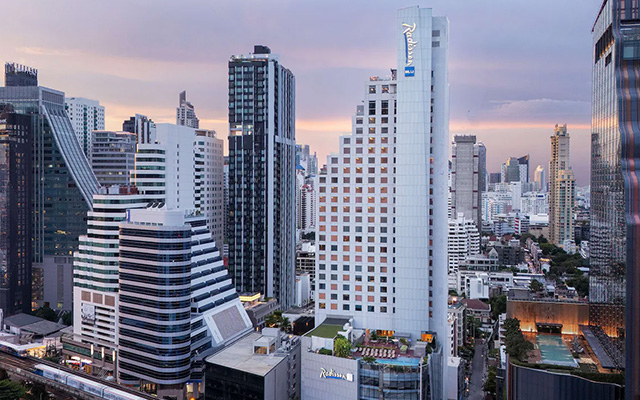
Radisson Hotel Group (RHG) plans to double its South-east Asia portfolio over the next five years as it seeks to better align its regional presence with growing demand from key source markets.
Armand Steinmeyer, the group’s vice president of development for South-east Asia, said the company sees significant room for expansion in the region. RHG currently has nearly 100 properties across Asia-Pacific, comprising 41 operating hotels and 48 under development, but its footprint remains smaller than in Europe, India and China.
Radisson Hotel Group plans to accelerate growth in South-east Asia, with Thailand among its priority expansion markets; photo by Radisson Hotel Group
“We want to double our portfolio here within the next five years. Our current distribution in South-east Asia is insufficient regarding the demand we receive from our key feeder markets, including Europe, the Middle East, India, and China, where Radisson already maintains a very strong presence, and neighbouring South-east Asian countries, such as Indonesia and Malaysia,” Steinmeyer said.
The company’s growth strategy is focused on strengthening brand relevance in local markets while capturing increasing intra-regional demand.
“We see South-east Asia as an integrated region. While global travel is significant, intra-regional travel will become the key tourism demographic of the future as the region sits at a crossroad between India and China,” he added.
In Thailand, where Radisson currently operates nine properties, including five in Bangkok and four in Phuket, the group is targeting expansion in Bangkok’s Sukhumvit and riverside districts, as well as resort destinations such as Phuket, Krabi, Hua Hin and Hat Yai.
The company is also preparing to introduce the Radisson Collection brand in Thailand, targeting luxury heritage properties through both branded and affiliated models.
Across the wider region, Radisson’s next phase of growth will focus on building a network of properties in major gateway cities.
“These strategic urban hubs serve a dual purpose. They immediately capture inbound demand from primary global feeder markets. Crucially, these major metropolitan areas also provide the concentrated talent pools necessary to recruit and train a workforce,” Steinmeyer said.
The company also sees hotel conversions as an important avenue for growth.
“Brands are organic and should never be fixed in stone. An existing hotel allows us to creatively reposition the asset and add value, providing an opportunity to showcase how a brand can breathe new life into a conversion,” he explained.
Steinmeyer remains optimistic about the region’s development prospects, citing the mix of established and emerging markets across South-east Asia.
“South-east Asia is one of the most exciting regions, because it’s fast-growing and diverse. Not only is the ownership very diverse; there are institutional funds, frontier markets, and established markets all in one place. There’s not many markets that can cover so much breadth of experience in so few kilometres,” he concluded.
Greytt has launched the inaugural Greytt 50, a new independent ranking of hotels for travellers aged 50 and above, with Banyan Tree Kuala Lumpur taking the top spot.
Compiled by Singapore-based travel technology company Greytt, the ranking evaluated 28,000 four- and five-star hotels across 63 Asia-Pacific cities using the company’s Greytt Score benchmark. Hotels were assessed across 50 criteria, including wellness facilities, room comfort, bathroom design, lighting, accessibility, service and on-site navigation.
The Greytt 50 benchmark evaluates hotels across 50 criteria, from wellness facilities to accessibility and room comfort
Banyan Tree Kuala Lumpur achieved a score of 94.1, followed by The St Regis Mumbai with 93.0 and Sofitel Krabi Phokeethra Golf & Spa Resort with 92.4.
According to the report, the top-ranked hotels scored within a narrow five per cent range, reflecting a high degree of consistency among leading properties. Wellness emerged as a key differentiator, with 39 of the top 50 hotels achieving full marks in the wellness and leisure category. Thirty properties also received perfect scores for quiet and relaxing environments.
Thailand and India accounted for more than half of the hotels featured in the ranking, while Indonesia, Vietnam and Malaysia were also strongly represented.
Greytt said the ranking was developed in response to the growing importance of the over-50 travel segment. By 2050, the global population aged 60 and above is expected to exceed two billion, while travellers aged over 50 are projected to account for US$1.9 trillion in travel spending by 2030.
The rankings are based on independent assessments and audits combined with analysis of publicly available digital information. According to Greytt, hotels cannot pay to be assessed, included or ranked.
Preethi Sanjeevi, CEO and co-founder of Greytt, said: “For too long, the travel industry has treated the over-50 traveller as an afterthought – assuming they want grab rails and early dinners rather than the wellness, design and service excellence that every traveller deserves. The Greytt Score changes that. Our aim is to give travellers a clear, objective signal and the industry a meaningful bar to rise to.”
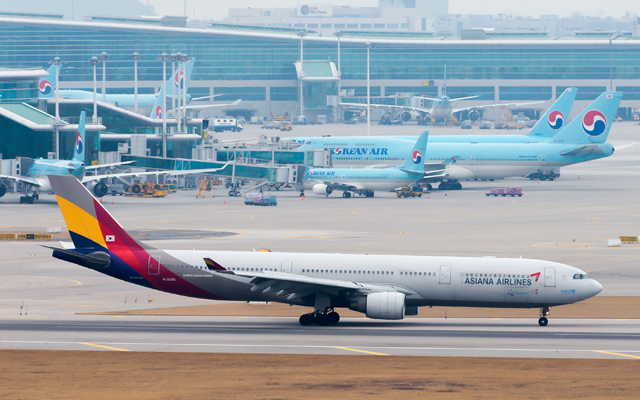
South Korean airline, Asiana Airlines, will leave the Star Alliance network on December 16 as it prepares to merge with Korean Air the following day.
According to a press statement by Star Alliance, the network and Asiana Airlines will work closely to ensure a seamless and coordinated experience for customers in the lead-up to the airline’s exit. Customers enrolled in any Star Alliance member airlines’ frequent flyer programme may continue to earn miles on Asiana Airlines-operated flights departing on or before October 15, 2026.
Asiana Airlines and Korean Air are set to merge on December 17, 2026, following Asiana’s departure from Star Alliance
Customers may also continue to redeem miles for Star Alliance award tickets and upgrades on Asiana Airlines for travel completed on or before December 16, 2026, subject to the redemption policies and timelines of their respective frequent flyer programme.
Additionally, Star Alliance Gold and Silver status customers may continue to enjoy alliance status benefits, including priority services, when travelling on Asiana Airlines until December 16, 2026. Star Alliance Gold customers may also continue to enjoy lounge access, including at eligible Asiana Airlines lounges when travelling on the Star Alliance network.
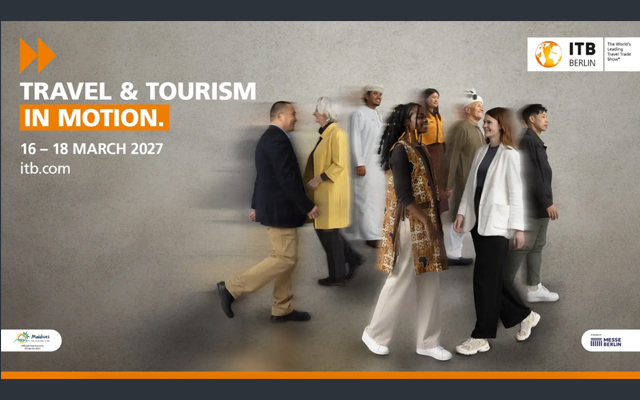
ITB Berlin has launched a new campaign for its 2027 edition under the theme Travel & Tourism in Motion, reflecting changes across the global travel industry.
The tradeshow will take place in Berlin from March 16-18, 2027, bringing together tourism businesses, destinations and industry stakeholders from around the world.
ITB Berlin’s new campaign highlights the evolving nature of the global tourism industry
Developed in partnership with communications agency Rupp, the campaign focuses on changing travel behaviour, new mobility solutions, technological developments and evolving economic and social conditions that are reshaping tourism.
According to ITB Berlin, the initiative positions the event as a platform for industry dialogue, business development and discussion of future trends. The campaign includes a new visual identity created during ITB Berlin 2026 using exhibitors and visitors from the event, representing the diversity of the international tourism sector.
Each exhibition segment of ITB Berlin will also receive its own campaign visual featuring the in Motion tagline.
ITB Berlin has also opened exhibitor registration for the 2027 event, with early registration opportunities available for companies and destinations seeking exhibition space.
The organisers confirmed that the 2027 edition will take place on revised dates. The one-off adjustment was made to avoid a clash with Eid al-Fitr, allowing Muslim exhibitors and visitors to participate throughout the event following the end of Ramadan.
Deborah Rothe, director of ITB Berlin, said: “Tourism is much more than just travel. It is a driver of economic development, innovation and international networking. The industry is always in motion, and it is precisely this dynamism that ITB Berlin brings to the fore.
“It is where key players come together to forge new ideas, analyse global trends and help shape the future of travel.”




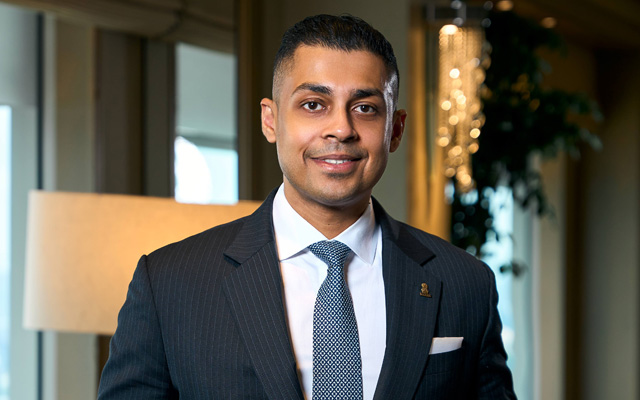
 Previously, he held leadership roles at Capella Singapore and The Westin Singapore, and began his career with the Ritz-Carlton brand at The Ritz-Carlton, Millenia Singapore as executive club and butler supervisor.


 A Marriott veteran since 2001, he has held leadership roles across Thailand, Hong Kong, Indonesia and South Korea.