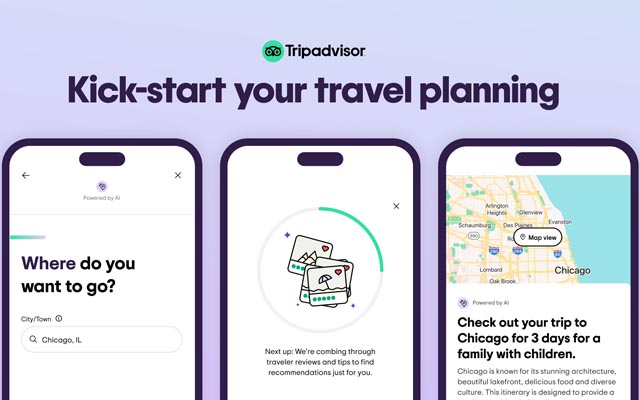
Tripadvisor has upgraded its core trip planning product, Trips, with the introduction of a new AI-powered travel itinerary generator.
This new feature (currently in public beta) creates personalised travel itineraries utilising OpenAI’s generative AI technology. It leverages human insights from over a billion reviews and opinions of the more than eight million businesses listed on Tripadvisor, delivering reliable, trustworthy guidance from its community of real travellers.
Trips will utilise AI technology to create personalised travel itineraries
Tripadvisor’s president and CEO, Matt Goldberg, said: “By harnessing the power of generative AI, we can begin to fully unlock the potential of our platform’s unparalleled review and traveller intent data, allowing us to offer truly unique travel guidance to our members.”
To create an itinerary using AI, travellers are prompted to enter their destination and travel dates, travelling companions, and the types of activities they are interested in. In just a few seconds, they are presented with a personalised, day-by-day itinerary, which they can save, edit, and share with other parties in their travel group.
Travellers will also have opportunities to engage and interact with Tripadvisor’s travel guidance content – from reviews and opinions, to experiences and photos from the community. Travellers can save all content they interact with to a Trip as they build their travel plans.
“We know our community is passionate about trip planning, so we wanted to thoughtfully build something that would enhance that experience, not replace it,” added Sanjay Raman, chief product officer at Tripadvisor.
“Personalised results and recommendations from fellow travellers are two of the most important elements of the planning process and generative AI has helped us bring them together in a way we think will be really compelling for travellers.”
Over the coming months, Tripadvisor will continue to upgrade Trip, improving the personalisation of AI-powered itineraries and expanding the suite of travel planning tools.
During the beta phase, the AI feature will only be accessible to users in the US via desktop and mobile web, with a focus primarily on experience, attraction, and dining recommendations. Tripadvisor plans to make the feature available in more markets and on native app platforms as the beta progresses.
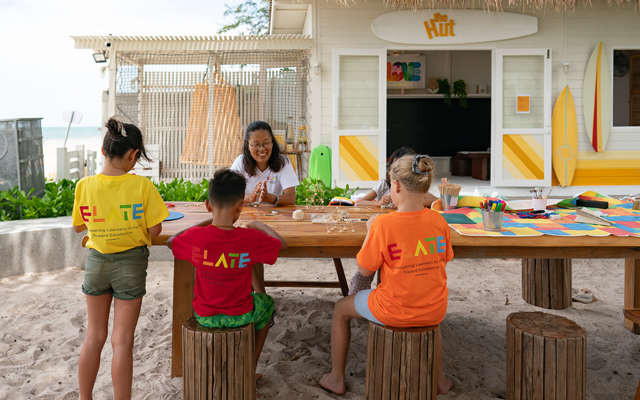
Kids staying at The Standard, Hua Hin will get to enjoy extra play time while learning at the new kid’s playroom, The Hut.
The Hut will feature all sorts of fun games and activities, from an extensive art and craft station and playboards to building blocks. There will also be weekly-changing supervised activities held each Saturday in partnership with Elate, a progressive learning institute based in Bangkok that offers a personalised STEAM curricular.
Plenty of fun learning activities await kids at the new playroom, The Hut
Youngsters can look forward to beach buggy races, sandcastle and beach house building sessions, kite and tote bag design classes, planet-naming games, and other wild and whimsical activities.
The Standard, Hua Hin is now offering the Are You Kidding? stay package priced from 7,999 baht (US$234) that includes accommodation in the Corner Family Room, F&B discounts, a VIP kid’s arrival experience with activity pack, playtime at The Hut, daily breakfast, free dining for kids, and more.
The Hut is open daily from 09.00 till 18.00. The Elate sessions are for children aged five to 12 years old and priced at 850 baht per child.
Queensland has designated 2023 to be the Year of Accessible Tourism, part of the Towards Tourism 2032 strategy to provide better destination experiences for visitors of all abilities, as well as provide legacy outcomes – including built infrastructure and skills development for tourism operators – across the state in preparation for Brisbane Olympics 2032.
Annastacia Palaszczuk, premier of Queensland, said: “Almost one in five people have a disability and spend about A$8 billion (US$5.2 billion) on tourism services annually. Dedicating 2023 to The Year of Accessible Tourism will drive change and create opportunities for both industry and travellers and create a legacy our state can be proud of.”
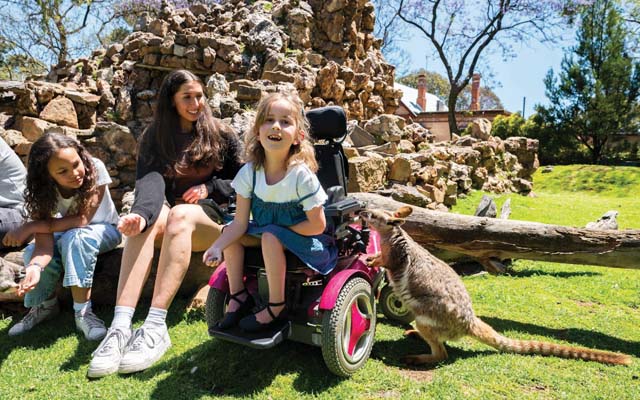
Get up close with the animals at the Adelaide Zoo (Photo: Tourism Australia)
The strategy gets A$12 million in government funding, of which A$1 million has been designated to raising awareness of accessibility needs and services, another A$1 million to promoting accessible Queensland visitor experiences, and the remaining A$10 million is set aside for the Accessible Tourism Fund for small and medium businesses to build infrastructure and install technology to assist travellers with an impairment.
Queensland’s minister for tourism, innovation and sport and minister assisting the premier on Olympics and Paralympics sport and engagement, Stirling Hinchliffe, said: “These grants will support upgrades of accessible visitor infrastructure and technology that will further enhance Queensland’s reputation as an all-abilities destination of choice. More and more people with a disability and their families are looking for travel options that can cater to their needs.
“We want this year to be the transformation that creates an enduring legacy for Queensland as an inclusive, world-class visitor destination.”
The Accessible Tourism in Queensland project is already operational in Brisbane, the Gold and Sunshine Coasts, Fraser Coast, North and Far North and Outback Queensland.
Differently-abled visitors are able to experience Gold Coast beaches, with Burleigh Beach offering accessible beach matting, mobi-chairs and beach wheelchairs; explore underground lava tubes at Undara Volcanic National Park; and get up close to marine life on the Great Barrier Reef on a day cruise to the floating platform at Agincourt Reef which has a chairlift for easy water access.
Moreover, as part of Queensland’s submission to the International Olympic Committee in mid-2021, the state is committed to promoting greater inclusion, diversity and accessibility in the planning and delivery of the Brisbane 2032 Olympic and Paralympic Games.
Initial strategies include enhancing accessibility through urban planning and accessible tourism by embedding universal design principles in regional plans to enhance urban amenity and public transport solutions, and increasing career pathways by partnering with the industry to create new and innovative jobs for people with a disability while encouraging business owners to embrace inclusion.
Although Queensland may be leading the charge, other states including Tasmania, Northern Territory, and Western Australia are not far behind.
Sarah Clark, CEO of Tourism Tasmania, stated: “The accessible tourism market is fast-growing, and in Tasmania, there is an increasing understanding and appreciation of travellers’ diverse needs and desires. It’s a journey, and we’ve made some great progress.
“With accessibility forming part of the Tasmanian tourism industry’s positive impact agenda, Tasmania’s attractions, experiences and accommodation offerings are increasingly able to cater to accessibility needs and provide more information about how their tourism offering is inclusive for everyone.”
Walking in the National Botanic Gardens in Canberra (Photo: Tourism Australia)
Moreover, Tasmania has partnered with Vacayit to provide 50 in-depth audio guides about its restaurants, farm stays, distilleries, cruises, markets, festivals and heritage sites on the free Vacayit app. Produced for blind and low-vision travellers, the guides combine rich sensory descriptions and engaging storytelling with helpful travel advice. These can also be read as transcripts for people who are deaf or hard of hearing.
Tasmania’s spectacular tracts of nature, evident from its 19 national parks, can be enjoyed by travellers of all abilities. Motorised wheelchairs and scooters are already permitted on tracks like the Russell Falls track in Mount Field National Park, and Cradle Mountain Rainforest Walk. Some parks also offer all-terrain TrailRider wheelchairs for complimentary hire (though bookings are required in advance), enabling travellers to explore more rugged tracks.
However, to make tourism more accessible across the entire industry, Tony Quarmby, executive director marketing at Tourism NT, said: “It needs to become a part of every business’ DNA. There shouldn’t be a special place on a website or a standalone accessible itinerary – it should be integrated into everything that tourism businesses do and put forward to the consumer.”
Input is also obtained from the community. For example, Tourism NT’s sample five-day itinerary in the Top End was created with the assistance of Sarah Skopellos, a manual wheelchair user and disability advocate who has lived in Darwin for 30 years. Another five-day itinerary in the Red Centre was created with the help of Justine Petrick, who has experience as a carer for an immediate family member with wheelchair needs, and vast knowledge of the National Disability Insurance Scheme and aged care system.
“Our goal at Tourism NT is not to have accessibility as a standalone pillar but rather a part of everyday operations for NT tourism businesses. It goes another level in understanding the guests’ needs and also their expectations; whether that be accessibility needs, sustainability concerns or ethical practices; it’s about tailoring each interaction with our customer,” added Quarmby.
That is why the latest Northern Territory attractions have been built with accessible tourism in mind.
These include Wintjiru Wiru by Voyages Indigenous Tourism as well as Light Towers in Kings Canyon Resort. Other tourism products that have long provided accessible tours include wildlife encounters such as Crocosaurus Cove in Darwin, Outback Tour Services’ Uluru tours, and Ramada Suites by Wyndham Zen Quarter Darwin, which has a ramp access to the deck and a hoist for getting in and out of the water.
Tourism Western Australia’s managing director, Carolyn Turnbull, added: “Accessible tourism has always been a priority, and we have undergone an accessible tourism strategy that was developed and finalised last year.
“More importantly, that will be at the forefront of our 10-year visitor economy strategy, which is currently being developed; it will be a big part of our strategic platform moving forward.”
Passenger Terminal Amsterdam has come out to clear the air following yesterday’s news reports on the city moving to ban cruises from calling at the central terminal: it is business as usual.
News reports emerged July 21 evening across mainstream and trade media that the Amsterdam’s city council had approved a proposal banning cruise ships as part of the city’s latest move to clamp down on over-tourism.
Passenger Terminal Amsterdam remains open to cruise ships
A spokesperson for Amsterdam deputy mayor Hester van Buren, who has responsibility for the city’s port, told the media that discussions are now underway on how to implement this decision.
Ilana Rooderkerk, the local leader of the socially progressive D66 party, which introduced the motion, said “polluting cruise is not in line with Amsterdam’s sustainable ambitions” and claimed that cruise ships run against the city’s “task of combating mass tourism”.
According to a BBC news report, Rooderkerk recently compared cruise tourists to a type of “plague of locusts” descending all at once on the city.
In response to the city council’s statements, Passenger Terminal Amsterdam has issued its own. It said: “We have taken note of the council’s call that they do not see any room for sea cruises in the city of the future at the current location. There is no administrative response or proposal yet on how to address this call. There is certainly NOT an immediate closure of the terminal. We continue our business as usual.”
A spokesperson from Cruise Lines International Association (CLIA) also told TTG Asia that despite the news reports, cruises have not been banned from Amsterdam.
“The port and Passenger Terminal Amsterdam have already pledged to undertake investments worth millions of euros in port infrastructure and shoreside electricity for the long-term. There have been discussions on its relocation outside the city centre which started back in 2016 and which are still ongoing,” said the CLIA spokesperson.
The CLIA spokesperson added: “We are working with the authorities to accommodate the views expressed by Council members while continuing to support the communities that benefit from cruise tourism. Of the more than 21 million visitors that Amsterdam receives each year, around one per cent arrive by cruise ship, with cruise tourism contributing around 105 million euros to the city annually.”
BWH Hotels has appointed Joelle Park to the role of senior vice president and chief marketing officer. She will lead the company’s global marketing, brand strategy, and communications, including oversight of the company’s loyalty programmes.
With over two decades of marketing experience, she brings an extensive background in hospitality marketing, spearheading customer-centric programs with a proven track record of success.
She recently served as vice president, global enterprise and cross brand marketing at Hilton.
The Philippines has reached its three million international visitor arrivals mark as of July 19, as reported by the Department of Tourism (DoT) on Wednesday.
The latest data from DoT recorded a total of 3,000,079 international visitor arrivals from January 1 to July 19 this year.
From January 1 to July 19, the Philippines saw over three million international visitor arrivals; Manila Bay, pictured
Of the figures, 91.36 per cent are foreign tourists, while the remaining 8.64 per cent are Filipinos living overseas.
The top five source markets of foreign arrivals to the Philippines are from South Korea, the US, Australia, Japan and Canada. Other international visitors hailed from China, Taiwan, the UK, Singapore and Malaysia.
In addition, the country’s inbound tourism receipts from January 1 to June 30 reached 502.02 per cent higher than the tourism revenue generated from the same period last year.
“Tourism provides employment and livelihood to millions of Filipinos. We are grateful for the renewed interest worldwide in the Philippines which offers a multitude of reasons to love travel across our islands,” said tourism secretary Christina Garcia Frasco.
Tokyo Haneda International Airport’s Terminal 2 (T2) facility has reopened after a hiatus of more than three years due to the Covid-19 pandemic.
T2 was solely a domestic flight hub until March 29, 2020 when its use was expanded to include international flights to accommodate more flights in and out of Japan as well as to improve transit between international and domestic flights. Less than two weeks later, however, on April 11, its international lobbies were shuttered in response to the growing coronavirus outbreak and resultant drop in global travel.
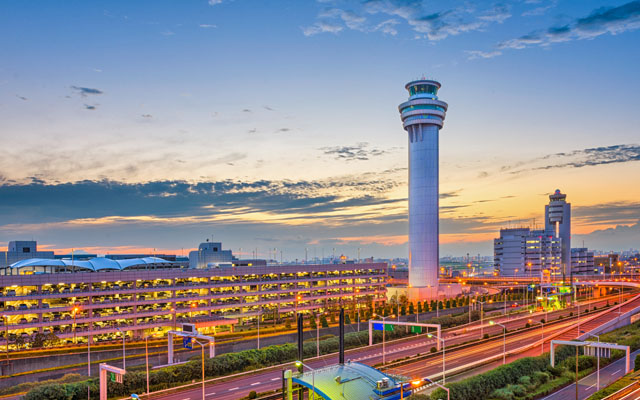
Tokyo Haneda International Airport has reopened after a hiatus of over three years
Now, T2 will be capable of handling up to 30 international departures per day.
All Nippon Airways (ANA) welcomed the reopening, noting that it will ease the strain on Terminal 3 (T3) – which handles only international flights – amid Japan’s rapid inbound tourism recovery and during the busy summer vacation season. ANA’s international flights to and from T3 alone are expected to recover to pre-pandemic levels by the end of July.
ANA will initially operate five flights a day from T2 to Hong Kong, Shanghai, Taipei and London between 0.500 and 13.00. The airline plans to increase the number of flights at the terminal at the end of 2023 while continuing to operate international flights from T3.
Speaking of the reopening, ANA president Shinichi Inoue said: “We have finally resumed operations (at T2) as we are moving out of the Covid-19 pandemic. Recovery of demand for international flights is clear and the facility will play a key role in Japan’s economic recovery.”
ANA staff servicing the first departure from T2 on July 19 held celebratory banners and greeted about 800 passengers as they departed for Hong Kong, Shanghai, Taipei and London on five flights.
Japan Airlines will continue operating international flights from T3.
The Thai court on June 15 dismissed Minor International’s legal action against Marriott International related to the JW Marriott Resort & Spa but Minor says it will continue to pursue the case in other jurisdictions.
Marriott said the court held that there was no wrongdoing by it, and no breach of Thai law. All of Minor’s claims against Marriott were dismissed, according to the US chain.
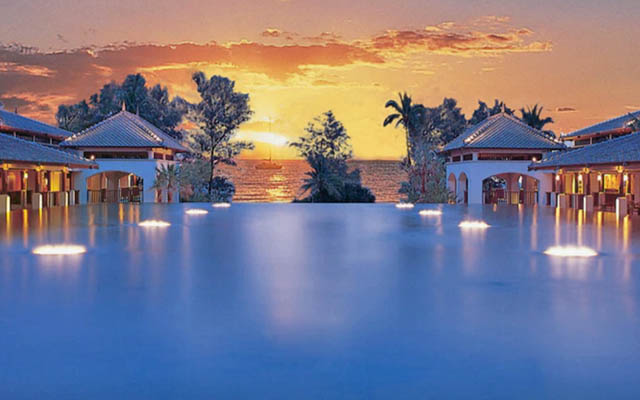
Minor International will continue to pursue the case against Marriott International; JW Marriott Phuket Resort & Spa, pictured (Photo: Marriott Bonvoy)
A statement from Marriott in Asia-Pacific said: “Marriott International welcomes the decision of the Thai Court and looks forward to continuing to work in close partnership with hotel owners to operate properties that deliver excellent experiences for guests, as well as providing opportunities for career growth to its 18,000 associates in Thailand.
“The company looks forward to maintaining its focus on delivering exceptional customer service at the JW Marriott Phuket Resort & Spa, and across its extensive portfolio of hotels worldwide, working in partnership with hotel owners to deliver memorable experiences for valued guests.”
Minor’s CEO Dillip Rajakarier said the court’s decision is “a temporary setback” and that it will continue to pursue the case until it reaches “a fair outcome”.
“The decision was made on technical grounds and we will shortly file our appeal to challenge it. Moreover, the judgment also gives us important insight into the Thai court’s considerations and will guide our further Thai law claims against Marriott,” said Rajakarier.
“We are committed to holding Marriott accountable for its behaviours and actions. We will continue to fight for full accountability and to insist on full transparency by Marriott in the interest of hotel owners throughout the Marriott system worldwide.”
Minor is claiming damages of 571 million baht (US$17 million). Allegations include Marriott’s failure to protect owner’s interest and that Marriott is enriching itself “through non-transparent license fee arrangements, supplier rebates and use of monies in the Marriott loyalty programme fund”.
The Bangkok-based chain first filed the lawsuit against Marriott and its Thai subsidiary Luxury Hotels & Resorts in July 2019. In 2020, Marriott succeeded in getting the case to be moved to Singapore for arbitration, as per the arbitration clause in the management agreement.
Minor fought back and won the right for the case to be transferred to the Thai court. In TTG Asia’s article on this published in April last year, Minor’s chief commercial officer & general counsel Steve Chojnacki said moving the case to Thailand was “extremely important to us”.
He said: “Marriott clearly wants to avoid Thai court, but we strongly feel that this is the appropriate forum to hear Thai law claims relating to a business that operates in Thailand.”
According to Rajakarier, Minor is fully confident of its long-term strategy and is hopeful for a better resolution.
India’s airport services aggregator DreamFolks and Plaza Premium Group (PPG) have partnered to include over 340 Plaza Premium Lounges in over 70 major international airports into the DreamFolks global lounge network, offering an enhanced travel experience to its members worldwide starting July 24.
This collaboration will facilitate extensive coverage of Plaza Premium Lounges across four continents including key travel hubs such as Australia, Canada, the UK, Hong Kong, Florida, Brazil, Italy, Indonesia, Malaysia, Singapore, Dubai, Saudi Arabia, Jordan and more.
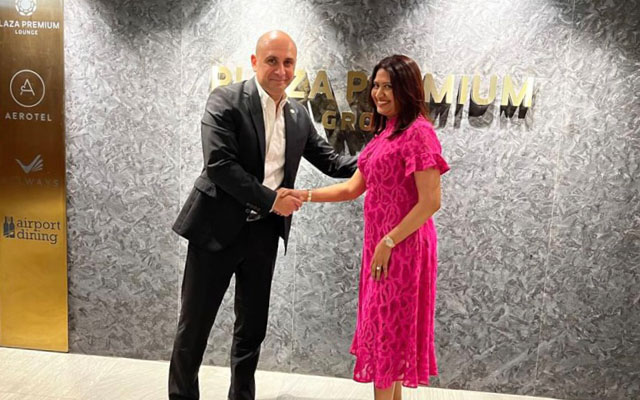
Plaza Premium Group’s Bora Isbulan and Dreamfolks Services’ Liberatha Kallat
With the inclusion of Plaza Premium Lounges, DreamFolks’ global touch points will increase to over 1,700. This expanded network will offer members unparalleled access to premium lounges across key travel destinations worldwide, ensuring a seamless and comfortable travel experience.
Liberatha Kallat, chairperson & managing director, Dreamfolks Services, said: “The strategic collaboration marks an important step towards enhancing the global travel experience for all. With increased lounge coverage and access to an extensive network of touchpoints, travellers can look forward to enjoying unparalleled comfort and hospitality at key travel locations worldwide.”
Bora Isbulan, deputy-CEO, PPG, commented: “India is one of the biggest fastest outbound markets in Asia (and) this strategic collaboration enables PPG to further its mission to make travel better by curating unique airport hospitality solutions to travellers to meet the evolving needs of Indian travellers.
“Through this collaboration, we can tap into DreamFolks’ extensive exposure and deep understanding of India’s travel market and consumers, while also leveraging PPG’s strong global network and expertise in airport hospitality to introduce innovative products and services to the Indian market more effectively.”
Location
The 18-villa resort sits snugly at the foot of Kep National Park’s gentle slopes, providing a tranquil oasis in the midst of nature. It sits a five-minute drive from the centre of the sleepy town, beachfront area and crab market, and has easy access to trails that snake through the 66.64km² national park.
Accommodation
I stayed in one of 18 twin- and double-bed villas that are dotted around well-manicured tropical gardens bursting with colour. Minimalist but chic in design, each comes with double or twin beds, a desk area and fridge. A separate bathroom boasts a standalone shower. Rust-coloured tiles complement white walls, wooden beams and thatched roofs. Plus, an outdoor seating area provides the perfect camp to soak up the serene scenery and sounds of jungle life.
Maniltoa
1 of 3
Villas
Villa interior
Restaurant and pool
F&B
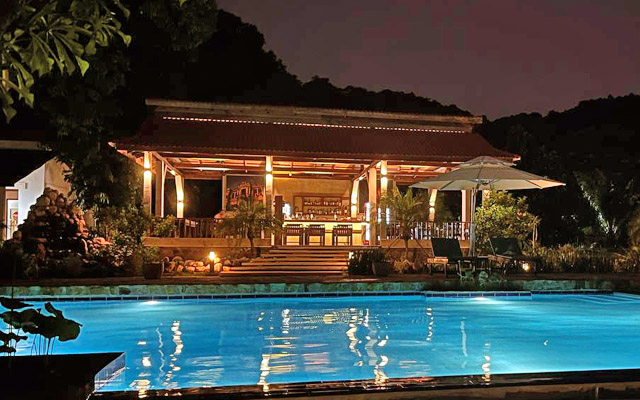
Maniltoa is a foodie’s dream. Overlooking the swimming pool sits an open-air restaurant with vistas that sweep to the sea. Here, a mouth-watering menu sees fine French and Khmer cuisine collide. Each dish uses a blend of local ingredients, while tapping into Kep’s coastal location – so seafood features heavily. Creative culinary offerings include jackfruit burrata, Mekong lobster, fresh wild Kep prawns, and barracuda fresh from the market. Each is perfectly plated to the quality you’d expect at an upmarket Parisian restaurant, at a fraction of the price.
Facilities
In fitting with the tone of Kep, Maniltoa embodies the ultimate in relaxation. A large swimming pool takes centre stage, flanked by sun loungers and parasols. It is possible to arrange for motorbike rental, and staff are on hand to organise activities in the area, including sailing, day trips to nearby Rabbit Island and excursions to world-famous Kampot pepper farms.
Service
Cambodia is famed for its warm hospitality, and that’s exactly what you receive here, where smiles abound and staff are attentive. When we mentioned we were mulling a trip to the nearby crab market for lunch, they offered to head there themselves and then cooked up a crab salad fit for royalty.
Verdict
Maniltoa is perfect for couples, friends and families seeking a short, tranquil break away from it all surrounded by nature on the Cambodian coast.




 She recently served as vice president, global enterprise and cross brand marketing at Hilton.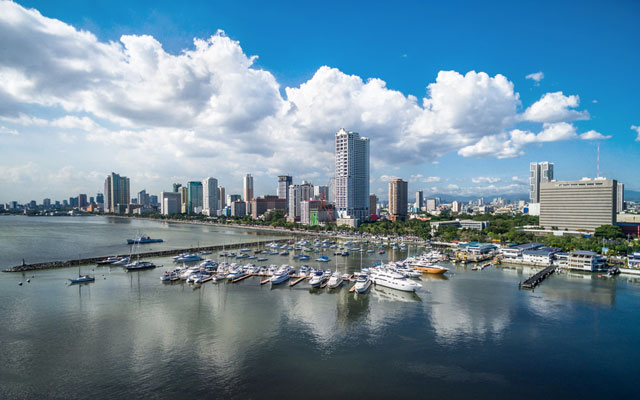
 Location