Megaworld Hotels and Resorts has named Art Boncato Jr as group general manager. Boncato used to be executive vice president and chief operating officer of World Trade Center Metro Manila.
Joe Fijardo is now general manager of 1,500-key Grand Westside Hotel Manila which is opening in June. Oliver Esguerra replaced Fijardo as general manager of Kingsford Hotel Manila.
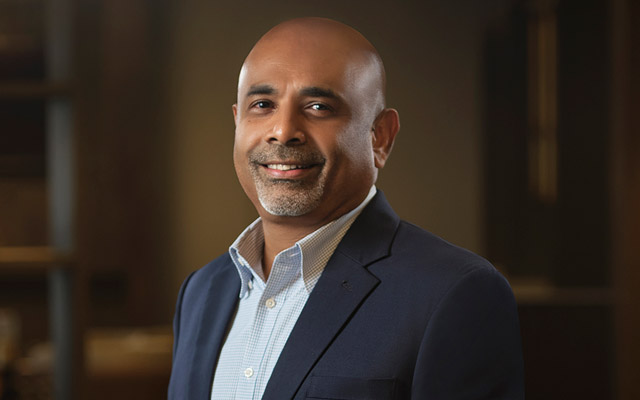
Art Boncato Jr
Maia Israel has taken over from Elmar Lima as general manager of Belmont Boracay. She worked under various capacities in Song Saa Private Island in Cambodia, Courtyard by Marriott Philippines, Laucala Island in Fiji and Radisson Blu Fiji.
The first phase development of Indonesia’s new National Capital City (IKN) is on target and president Joko Widodo is expected to inaugurate it on August 17, which is also Indonesia’s independence day, according to IKN Authority.
IKN’s phase one comprises basic infrastructure, the presidential palace and various buildings, which are now 75 per cent completed at an investment of 49.6 trillion rupiah (US$3.2 billion).
Leadership from the Ministry of Tourism and Creative Economy and Ministry of Communications and Information grace the press conference for the National Capital City
Speaking at the Development of Tourism and Creative Economic Sector at IKN media briefing, Sandiaga Uno, minister of tourism and creative economy, said six hotels were currently under construction, including a mid-scale property, The Vasanta Hotel by Sirius Surya Sentosa (Vasanta Group), and an upscale Nusantara Hotel by the Nusantara Consortium, with an investment value of 20 trillion rupiah. Both are scheduled to open later in August.
Pakuwon Nusantara Abadi is developing Pakuwon Nusantara Area, a super-block project comprising a shopping centre, condominium, and three hotels, with an investment of five trillion rupiah. The hotels, which will open in stages, will bear The Westin, Four Points, and Tribute Portfolio brands.
In the meantime, ARCS House Wisata Indonesia is investing around 300 billion rupiah in the development of an upscale Jambuluwuk Nusantara Hotel, which will have around 200 rooms.
Sandiaga expected more investments to come for economy and budget properties.
He added that tourism and creative economic development at IKN will be sustainable.
He remarked: “We will encourage accommodation developments to blend more with (the surrounding) tropical forest. Later, there will be more glamping facilities, cabins, and facilities related to ecotourism.”
The ecotourism concept is suitable for IKN in maintaining the environment and protecting forested areas, of which 75 per cent will remain and the rest cleared for facilities, he explained.
“There are interesting tourist villages and attractions to be developed around IKN, such as Mentawir Tourism Village, Pampang Cultural Village, Balikpapan Botanical Gardens, Tanah Merah Beach, and Bangkirai Hill,” he shared, adding that a tourism information centre, food kiosks, plazas and other supporting facilities will also be built with the government’s Special Allocation Fund.
“We want to strengthen the tourism destination governance network involving the city of Balikpapan and Kutai Kertanegara Regency.”
Liberalising visa policy, like what many destinations have done, will help the Philippines bring back the Chinese market which had reduced sharply in recent years, opined Rene Reyes, tourism attaché at the Philippine Tourism Office Shanghai, adding that a visa upon arrival “will surely help us to attract more Chinese visitors”.
Destinations that reinstated friendly visa policies, including e-visa and visa-on-arrival, have benefitted from a faster tourism recovery rate compared to others.
To bring back the Chinese market to the Philippines, friendly visa policies need to be implemented
Reyes pointed out that countries like Singapore, Malaysia and Thailand had already offered visa-free entry for Chinese tourists, while the Chinese government had eased up flight permits.
In mid-2023, the Philippines trialled an e-visa facility for Chinese nationals and had plans to implement it for the Indian market later that year. However, the latter is now halted for improvements and no date has been set for its resumption.
China is the Philippines’ second top tourist market, with a record 1.7 million visitors in 2019, dropping to 263,836 in 2023 according to the Department of Tourism statistics.
In the first two months of this year, tourists from China reached 85,876 or 6.99 per cent of the total foreign arrivals, a far third from top source market South Korea with 28.50 per cent market share and the US with 15.93 per cent.
Last year, the Philippines hosted certain business events with a delegation from China among them: World Food Expo in Manila, Cebu and Davao; Silkroad Philippines 2023: The Best of China at the World Trade Center Metro Manila; PackPrintPlas Philippines 2023 at SMX Convention Center; Philippines Apparel and Textile Show, Philippines Sports Show and The Asia International E-commerce Expo at SMX Convention Center Manila.
Reyes said: “(The) China market will remain the biggest outbound market in the world and this will also be true for the MICE industry. (Recovery) may be slow now – especially for the incentive travel, which was big before – but this will soon pick up and we need to prepare for this.”
The Marriott portfolio of hotels and resorts is witnessing an increase in leisure segment bookings across its properties in Malaysia and Indonesia.
Ramesh Jackson, area vice president for Indonesia and Malaysia at Marriott International, expressed optimism about the growth prospects in 2024, noting that 1Q2024 outperformed the same period in 2019 for both countries. The surge in demand is driven by both domestic and international markets.
Jackson: travellers are willing to dedicate their time to support causes they believe in
Jackson highlighted the preferences of young holidaymakers, emphasising their desire for authentic and meaningful experiences, stating “they are willing to dedicate their time to support causes they believe in”.
In response to this trend, Marriott Bonvoy offers the Good Travel programme, which enables guests to make a positive impact on the destinations they visit through environmental protection, community engagement, and marine conservation initiatives.
One notable initiative is the partnership between Marriott International, Sungai Watch, Bali NextGen Business Council, and the local community for the Big Clean Up project in the Baturiti area of North Bali on March 15. Over 100 volunteers participated in clearing plastics and other debris from Bali’s forests, preventing potential pollution of nearby Beratan Lake.
With the rise of millennial and Gen Z travellers, Jackson stressed the growing importance of digital and social media marketing to directly target these demographics.
He also noted the increasing popularity of bleisure travel among visitors to Malaysia and Indonesia.
Jackson explained: “While these travellers extend their stays to experience local culture, they are also mindful of their environmental impact and seek properties that prioritise sustainability.”
Moreover, Ramesh observed a shift in priorities among intra-ASEAN and Chinese business travellers towards sustainability. They now enquire about the carbon footprint of properties and their sourcing of locally produced food, reflecting a heightened awareness of environmental concerns compared to pre-pandemic times.
Capital A, parent company of AirAsia, has teamed up with both Ant International and Trip.com Group – the former will explore the integration of local payments methods and services to Capital A’s platforms, while the latter will see a collaboration across multiple business lines, from flights to accommodation, attractions and tickets, car-hailing, and payments.
The first partnership covers collaborative initiatives between Ant International’s Alipay+ cross-border payment, marketing and digitalisation technology solutions, payment orchestration services, and other business segments, and flagship businesses under Capital A, including AirAsia, the one-stop travel platform AirAsia MOVE, and finance app BigPay.
Capital A and Ant International aim to provide seamless financial services and affordable travel experiences to customers worldwide
AirAsia MOVE will work with Ant International to integrate Alipay+ e-wallets as payment options within the app’s payment flows, and explore the use of various Wallet Tech including super app related solutions as well as developing a mini programme within Alipay+ ecosystem.
In addition, AirAsia MOVE will leverage Ant International’s user base to promote AirAsia MOVE’s services through targeted promotions, exclusive deals for Alipay+ partner wallet users, and cross platform visibility for AirAsia MOVE’s services within the Alipay+ ecosystem. Both companies will also work on joint marketing opportunities and sponsorship opportunities for events such as UEFA Euro 2024, as well as to promote sustainability initiatives such as advancing global digital inclusion, cultivating digital talent and promotion of sustainable travel programmes.
In the meantime, its airlines entity AirAsia will leverage Ant International’s Airline Controller orchestration solution to drive payment efficiency, work with Ant International to enable acceptance of payment methods for online, offline and in-flight checkout.
Capital A’s CEO Tony Fernandes said: “This partnership promises to accelerate our collective mission of providing seamless financial services and affordable travel experiences to our customers worldwide.”
“By leveraging Ant International’s innovative digital technology solutions and Capital A’s robust global ecosystem, we can bring more seamless services and diversified growth pathways for consumers and businesses in the region and beyond,” added Yang Peng, CEO of Ant International.
As for the partnership with Trip.com Group, both organisations will work together to elevate the level of service quality and improve the quality of products offered to their customers, including collaborations between Trip.com Group and AirAsia’s customer service teams. TripLink will provide AirAsia Aviation Group with payment solutions in the meantime, enabling AirAsia to optimise cost efficiencies and provide better value to its customers.
Jane Sun, CEO, Trip.com Group, commented that this collaboration is an affirmation of the positive outcomes seen since the initial agreement signed in 2020 and that Trip.com Group “is excited to leverage this competency as we work with Capital A to empower our users and enhance their travel experience”.
Fernandes added: “Our collaboration extends beyond promoting AirAsia flights and ancillary on Trip.com Group’s platforms. AirAsia’s inventory and growth plans are focused on China and getting Trip.com Group’s customer base into South-east Asia, while AirAsia MOVE will collaborate on Trip.com Group hotel inventory and offer MOVE activities, tickets, and ride collaborations for Trip.com Group users.”
To mark its fifth year, Singapore-based hospitality firm, Ascott has rolled out a refreshed brand promise for its global loyalty platform, Ascott Star Rewards (ASR) from April 1, offering its members more privileges, experiences, and greater value.
The refreshed ASR programme is built on three pillars: boldness, innovation, and a penchant for experimentation. Underscored by the tagline Stay Rewarded, the brand refresh is showcased through a year-long series of elevated member experiences that includes the all-new Ascott Privilege Signatures, enhanced membership privileges, and greater stay value –full 24-hour stays from time of check-in and 48-hour room guarantee will be launched with the refreshed ASR programme.
The refreshed Ascott Star Rewards will offer members more privileges, experiences, and greater value
The expanded suite of benefits also includes priority check-in, milestone rewards, airport lounge access, and ASR members will even be able to access exclusive global events as part of the Ascott Privilege Signatures programme, which include major sporting highlights such as motorsport and tennis championships, alongside local experiences planned in key cities around the world.
Moreover, ASR members will be able to earn frequent flyer miles on all eligible direct bookings made via DiscoverASR.com, Discover ASR mobile app as well as via email or phone through Ascott’s key airline partnerships from 2Q2024. Tours and activities will also be available and bookable via ASR platforms, providing members with a seamless booking and travel planning journey. Additionally, members will be able to earn ASR points for these purchases of tours and activities while planning their itineraries.
The Discover ASR mobile app has also been enhanced, with added benefits such as increased app-exclusive offers tailored to search patterns, selection of stay preferences to support sustainability, as well as the ease of digital room keys.
ASR achieved its highest ever room revenue from ASR members in FY2023 at over S$342 million (US$252.8 million), surpassing that of FY2022 by almost 63 per cent.
This was from its 350 participating properties across 14 brands, where repeat stay revenue from ASR members constituted more than 60 per cent.
Ascott also welcomed a record one million new ASR members last year. More than 90 per cent of Ascott’s direct web and mobile app bookings were made by ASR members, contributing to the channel’s surge in booking revenue by over 40 per cent, compared to 2022.
Building on the strong momentum, Ascott anticipates yet another stellar year for ASR in 2024, with 1Q2024 already registering a 25 per cent year-on-year uplift in member revenue.
Ascott’s chief commercial officer, Tan Bee Leng, said: “(With) a record number of properties onboarded onto the ASR programme last year, which included the successful integration of the newly acquired Oakwood portfolio into Ascott’s operational framework, Ascott was able to provide higher value offerings and more choices, across brands and geographies, to our ASR members.
“With the refreshed ASR brand promise Stay Rewarded, we want to reward our guests for their stays at Ascott’s properties worldwide, with elevated experiences and enhanced membership privileges. We also want our guests to stay rewarded with a sense of satisfaction and fulfilment that comes from staying loyal to a trusted brand like Ascott.”
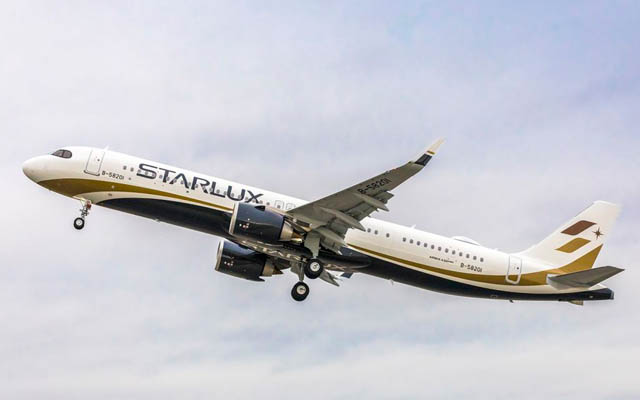
Taiwan-based luxury carrier Starlux Airlines will launch non-stop flights from Seattle to Taipei from August 16.
The new service will fly from Seattle-Tacoma International Airport to Taiwan Taoyuan International Airport three times a week, and will be operated on an Airbus A350 that offers four First Class seats, 26 Business Class seats, 36 Premium Economy seats, and 240 Economy seats.
Starlux Airlines will fly direct from Seattle to Taipei starting August 16
This marks the airline’s third US gateway after Los Angeles and San Francisco, offering US travellers direct flights to Taipei and seamless connectivity to 21 Asian destinations.
In addition, Seattle-Tacoma International Airport is also the hub of Starlux’s partner Alaska Airlines, enabling travellers bound for Asia to easily transfer upon arrival at Seattle-Tacoma International Airport.
PATA is now accepting submissions for the PATA Face of the Future Award 2024, an initiative that focuses on human capital development while emphasising the values of sustainability and social responsibility within the Asia-Pacific tourism industry and beyond
This annual award seeks to recognise an exceptional ‘rising star’ in the industry. All recipients of this prestigious award have exhibited initiative and leadership in the advancement of tourism as well as demonstrating commitment to the sustainable development of the Asia-Pacific travel industry in line with PATA’s mission.
PATA Face of the Future 2023 winner Sangeetha Liyanapathirana of Cinnamon Hotels & Resorts, Sri Lanka
The PATA Face of the Future 2024 will receive full sponsorship to participate and be recognised at PATA Travel Mart 2024. Furthermore, the winner will be granted a speaking opportunity at the PATA Youth Symposium and a seat on the PATA Board to represent the PATA youth community. Other benefits include global media exposure via PATA’s far-reaching communication channels; the opportunity to build their profile as a mentor for the PATA Youth Mentorship Programme; one post on PATA Blog about their passion and journey to success; and more.
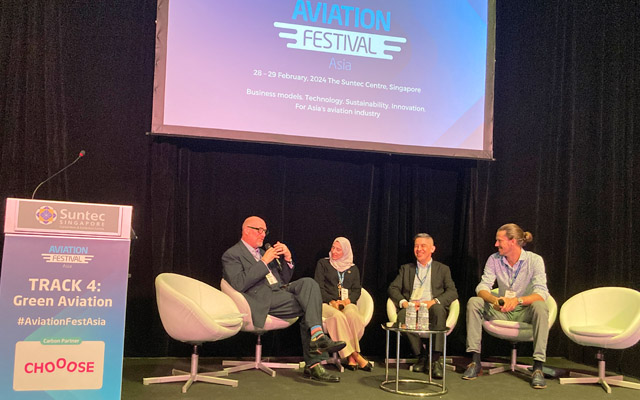
The roadmap to net zero carbon emissions can be achieved through aircraft technology development; operations and infrastructure improvements; market-based measures and offsets; and the use of sustainable aviation fuel (SAF), opined Cebu Pacific chief strategy officer, corporate strategy office, Alex Reyes during the recent Aviation Festival Asia (AFA) held in Singapore.
Referring to them as the four levers in an implementable strategy, Reyes commented that “climate action is imperative as extreme weather is a top risk that presents a material crisis on a global scale as well as for the aviation sector”.
From left: Torbjorn Karlsson, Rahimah Ali, Alex Reyes, and Philipp Bonkatz (Photo: Caroline Boey)
Averting climate overshoot beyond the 1.5°C threshold requires net zero carbon emissions by 2050, and while the industry has integrated all the four levers into its strategy and operations, there is much to be done.
Speaking at the green aviation track of the AFA, Reyes said fleet modernisation with new engine option transition is already taking place at Cebu Pacific, where 43 per cent of its fleet is the Airbus A320neo and the goal is to fly an all-new neo fleet by 2028.
Separately, the airline is studying the use of e-aircraft and propulsion battery technology on short-range domestic sectors of an hour or so, to make up around 10 to 20 per cent of its network.
Cebu Pacific is collaborating with original equipment manufacturers and leading innovators on low-carbon and/or zero-emission technologies and the roadmap also requires fuel efficiency best practices, fight plan optimisation and electrification of ground transport and common support equipment, he added.
Other initiatives include carbon removal through nature, and capacity building for Carbon Offsetting and Reduction Scheme for International Aviation – stakeholder engagement is also being stepped up.
As for SAF, the supply network has to be expanded so that its use can be integrated into operations and government policies for its adoption must be adopted.
While younger consumers are willing to pay for green initiatives, Reyes noted a mindset change was needed among older passengers.
He said Singapore mandating SAF use for departing flights from 2026 – and travellers having to pay more for air tickets to support the use of greener jet fuel – is a step in the right direction.
Following the presentation at the panel discussion, Rahimah Ali, group head of sustainability, Malaysia Airlines (MAS), opined that SAF use, now only at 0.1 per cent, can become a crucial lever in the medium- and long-term with innovation and technology.
She said MAS and Petronas, Malaysia’s global energy company, need to be the “first movers” in the country when it comes to SAF.
While airlines are committed, not everyone is ready, opined Philipp Bonkatz, general manager, Singapore, Malaysia and Brunei, Lufthansa Group.
He said the industry is fragmented, but more and more are driving towards the goals of SAF use reaching 60 per cent by 2050 and a 2030 timeline for certification.
Bonkatz commented: “There is hardly international regulation in the region… and while 30 per cent of airlines are prepared to spend more, only a smaller number are doing something.”
He agreed there must be commitment from all stakeholders – consumers, government and the industry, a sentiment echoed at other AFA sessions.
Moderator Torbjorn Karlsson, senior client partner, Korn Ferry, pointed out airlines need to make it easier for passengers to be able to opt in to pay for carbon offsetting, while Rahimah noted that MAS was seeing sustainability support from passengers in western markets like Australia, the UK and the US.
Bio fuels already exist, Bonkatz observed, and shared that Swiss students are testing solar fuel and other types of e-fuel.
He is confident that there are resources to bankroll start-ups to come up with solutions but they have to be “safe” and “affordable”, and that is why it is taking so long for them to be “certifiable”.
The panellists said the awareness of and “call to arms” on SAF and other green technologies inside and outside the industry can be considered an achievement so far.
China’s Ministry of Foreign Affairs on March 29 warned citizens of challenging travel conditions to the US due to a spike in cases where Chinese students and company employees were subjected to “unwarranted interrogations and harassment” by US airport law enforcement officers.
China’s travel advisory for citizens entering the US urges safety precautions and preparation for “various unexpected situations”, detailed a South China Morning Post news report.
More Chinese travellers are being subjected to unwarranted interrogations and harassment at US airports
The ministry and the Chinese embassy and consulates in the US have lodged a solemn representation to the US.
Since November 2023, at least eight Chinese students with valid documents have been searched, interrogated or sent back from Washington Dulles International Airport alone, according to a tally by Chinese media.
A biological sciences PhD candidate has also claimed to have been subjected to a body search, eight hours in an interrogation room, and 12 hours in solitary confinement before being deported by officials at Dulles airport in December last year. She was due to return to the US to continue her studies.
These incidents appear to be a setback in the pledge by both countries to facilitate educational and other exchanges in recent months. In November, while on a visit to the US, Chinese president Xi Jinping said China would invite 50,000 young Americans to study in the next five years.


















The first phase development of Indonesia’s new National Capital City (IKN) is on target and president Joko Widodo is expected to inaugurate it on August 17, which is also Indonesia’s independence day, according to IKN Authority.
IKN’s phase one comprises basic infrastructure, the presidential palace and various buildings, which are now 75 per cent completed at an investment of 49.6 trillion rupiah (US$3.2 billion).
Speaking at the Development of Tourism and Creative Economic Sector at IKN media briefing, Sandiaga Uno, minister of tourism and creative economy, said six hotels were currently under construction, including a mid-scale property, The Vasanta Hotel by Sirius Surya Sentosa (Vasanta Group), and an upscale Nusantara Hotel by the Nusantara Consortium, with an investment value of 20 trillion rupiah. Both are scheduled to open later in August.
Pakuwon Nusantara Abadi is developing Pakuwon Nusantara Area, a super-block project comprising a shopping centre, condominium, and three hotels, with an investment of five trillion rupiah. The hotels, which will open in stages, will bear The Westin, Four Points, and Tribute Portfolio brands.
In the meantime, ARCS House Wisata Indonesia is investing around 300 billion rupiah in the development of an upscale Jambuluwuk Nusantara Hotel, which will have around 200 rooms.
Sandiaga expected more investments to come for economy and budget properties.
He added that tourism and creative economic development at IKN will be sustainable.
He remarked: “We will encourage accommodation developments to blend more with (the surrounding) tropical forest. Later, there will be more glamping facilities, cabins, and facilities related to ecotourism.”
The ecotourism concept is suitable for IKN in maintaining the environment and protecting forested areas, of which 75 per cent will remain and the rest cleared for facilities, he explained.
“There are interesting tourist villages and attractions to be developed around IKN, such as Mentawir Tourism Village, Pampang Cultural Village, Balikpapan Botanical Gardens, Tanah Merah Beach, and Bangkirai Hill,” he shared, adding that a tourism information centre, food kiosks, plazas and other supporting facilities will also be built with the government’s Special Allocation Fund.
“We want to strengthen the tourism destination governance network involving the city of Balikpapan and Kutai Kertanegara Regency.”