


Celebrate Songkran with Marriott Bonvoy

Marriott Bonvoy’s hotels and resorts have revealed a series of exclusive dining offers, activities and value-added benefits for travellers who book premium rooms, suites and villas under the Stay Elevated, Stay Elite campaign during Songkran, the iconic Thai New Year water festival.
In Bangkok, the Maha Songkran World Water Festival extravaganza will take place from April 11 to 15 with celebrations and parades across the city. Moxy Bangkok Ratchaprasong will have a special F&B offer while Courtyard by Marriott Bangkok’s Mahachai Coconut Ice Cream promotion at MoMo Café will sweeten up the festivities from April 12 to 16.
Le Méridien Bangkok sets the scene for fun-filled festivities with an outdoor Songkran Party, mini foam party and a choice of Thai delights (April 13-15); The Athenee Hotel, a Luxury Collection Hotel, Bangkok will serve up Khao Chae while The St Regis Bangkok will treat diners to a six-course Discovery set menu at VIU (April 12-15).
Guests who stay at Chiang Mai Marriott Hotel can enjoy auspicious Song Nam Phra activities at 11 temples across the city from throughout April, plus the lively Water War in Chiang Mai on April 13. Alternatively, at Le Méridien Chiang Rai Resort, travellers can discover the Paweni Pi Mai in Chiang Rai, or head to the banks of the Mekong River for the Chiang Saen Songkran Festival.
In Phuket, highlights include The Patong Festival on the Beach, with cultural traditions of Songkran being embraced in Phuket’s Old Town – accommodation options here are Four Points by Sheraton Phuket Patong Beach Resort, Courtyard by Marriott Phuket, Patong Beach Resort and Courtyard by Marriott Phuket Town.
Families and friends who want to escape the city can enjoy Songkran by the sea can check out beachfront properties like Sheraton Hua Hin Resort & Spa, Rayong Marriott Resort & Spa, W Samui and Vana Belle, A Luxury Collection Resort, Koh Samui.
To enjoy the festivities for longer, travellers can head to Pattaya and stay at Courtyard by Marriott North Pattaya or Renaissance Pattaya Resort & Spa.
For more information, visit Marriott Bonvoy.
New hotels: Five Luxe, Amora Brisbane and more
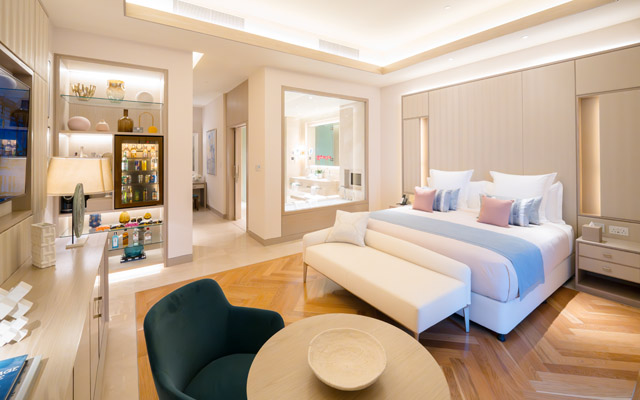
Five Luxe, the UAE
With vistas of the Arabian Gulf and landmarks, Ain Dubai and Palm Jumeirah, the newly-opened Five Luxe in Dubai features 222 hotel rooms and suites, alongside 276 lavish residences for celebrations.
The hotel offers facilities like restaurants, bars, swimming pool, spa and gym.
For poolside social gatherings, the property has pool party rooms ranging from one to four bedrooms, each with its own private pool – there are also wellness suites such as the Ultimate Spa Suite with XL Pool which boasts its own spa, hot tub, sauna, and steam room.
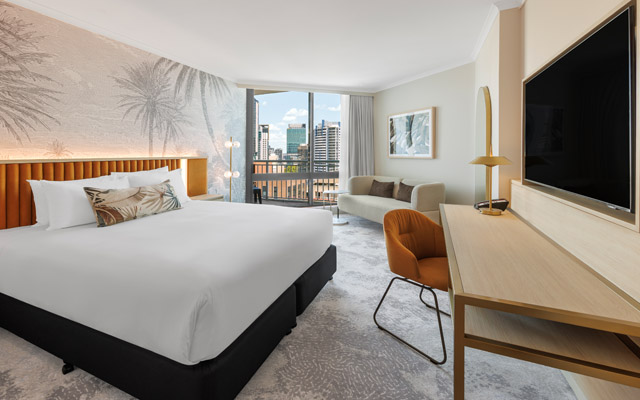
Amora Brisbane, Australia
Amora Brisbane offers 296 keys and features a restaurant, lobby bar, café, outdoor pool and deck, fitness studio, sauna, and 11 refurbished conference and events spaces spanning 1,148m².
Located in the prime CBD area, Amora Brisbane is a short stroll from Central Railway Station, The Queen St Mall, Treasury Casino and Suncorp Stadium. It is also a five-minute drive to the entertainment precincts of Howard Smith Wharves and Fortitude Valley, and 15 minutes by car to the Brisbane Convention and Exhibition Centre.
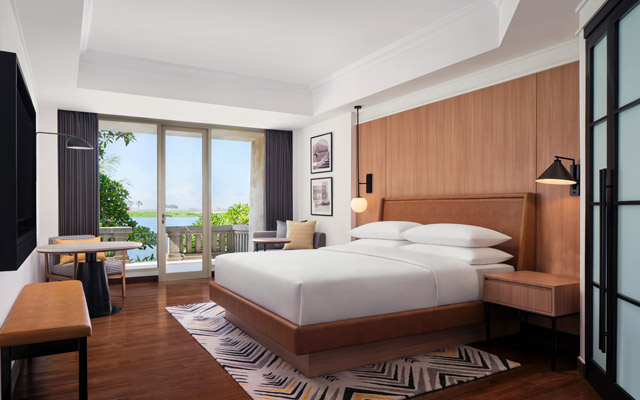
Sheraton Jakarta Soekarno Hatta Airport, Indonesia
The 227-room Sheraton Jakarta Soekarno Hatta Airport offers facilities such as restaurants, bars, three swimming pools, fitness centre, social workspace, ballroom, and six meeting rooms.
Situated within the vicinity of Soekarno-Hatta International Airport, the hotel is a five-minute drive from Cengkareng Golf Club and Soewarna Business Park, and 30 minutes away from Pantai Indah Kapuk, the hub of entertainment, leisure, shopping and culinary experiences.
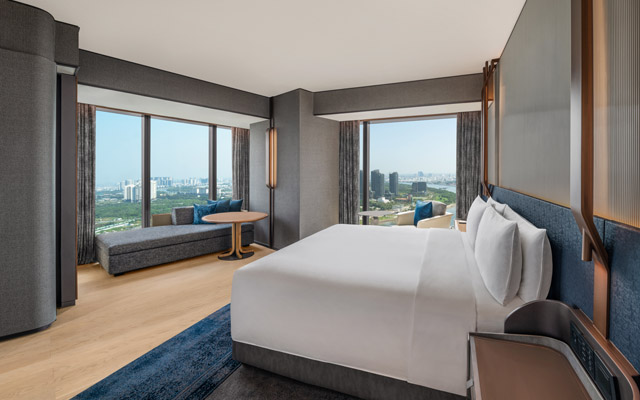
Hilton Saigon, Vietnam
Hilton Saigon is nestled in the vibrant financial and residential hub of Ho Chi Minh City, and features 228 guestrooms and suites with views of the Saigon River.
The hotel also has restaurants, a spa, pool, fitness centre, lounge, and F&B options. For events, there is a pillar-less ballroom and meeting rooms available.
Just 30 minutes away from the Tan Son Nhat Airport, the hotel is surrounded by cultural and historical landmarks such as the Saigon Notre Dame Cathedral, the Saigon Central Post Office, and the Saigon Opera House, all within walking distance from the hotel.
TAT, Michelin to push new destinations through food tourism
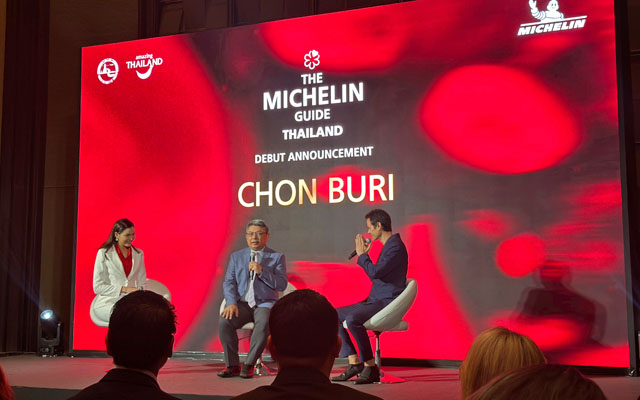
The Thai province of Chonburi has been selected as the “new city debut” in the Michelin Guide Thailand for 2025, as the Tourism Authority of Thailand (TAT) continues its work to market destinations through food.
Thapanee Kiatphaibool, governor of TAT said at today’s press conference that both the NTO and Michelin Guide have worked together for more than seven years to promote the value of the food industry in Thailand tourism, as well as drive the economic growth of the country.
“Today’s (announcement) marks another milestone in promoting the soft power of food that will help make Thai tourism experience more meaningful and valuable,” said Thapanee.
Since 2019, Michelin Guide Thailand has announced at least one new city or area of focus annually, including Phuket, Phang-Nga, Chiang Mai, Ayutthaya, Nakhon Ratchasima, Ubon Ratchathani, Udon Thani, Khon Kaen, Koh Samui and the Surat Thani mainland.
Chonburi, already a popular destination with local foodies, includes cities like Pattaya, Sriracha – famed as the origin of Sriracha sauce – and the navy port of Sattahip.
TAT’s deputy governor for marketing communications, Nithee Seeprae, expressed hope that the Michelin collaboration would help to stimulate the economy in Thailand’s secondary destinations.
“We can already see how when famous chefs open their restaurants in Thailand, it drives tourism here. We hope that this collaboration could boost tourism to Chonburi up to 20 per cent,” he shared.
Food blogger and KOL Mark Wiens highlighted seafood as the main draw of the province and said that he hopes the designation of Michelin restaurants will help to draw tourism into local communities throughout the province and help their signature dishes to be more widely known and recognised.
“Tourists currently know Pattaya, but not much about the greater province of Chonburi – it would be great to be able to recognise more areas of (the province),” he opined, adding that the incentive to drive a few hours to a famous restaurant can also lead to travellers booking longer stays for explorations in the area.
Singapore grows concert tourism appeal with new plug-and-play venue

Singapore’s growing popularity as a concert destination among music promotors is expected to level up with the opening of Arena@Expo, a new 6,700-seat multipurpose, ready-to-use concert hall that joins Singapore Expo’s cluster of event venues.
Soft-launched in January this year and presented to an exclusive group of music promotors and producers last week, Arena@Expo has already worked up strong interest in the marketplace, thanks to its capacity and plug-and-play capability filling a sweet spot in Singapore’s concert infrastructure.

Arena@Expo packs in a Grand Stage, a production console, and a flexible space that can be configured for up to 6,700 seats or a blended setup with standing pen for 2,500 tiered seats and 4,200 standing. It can also cater to smaller shows with hundreds of people in the audience.
Concert producers are supported by high-quality basic audio and visual technology on site, which are included in the flat-fee venue rental, with half-hall and full-hall options. They are free to supplement their production and event management needs through either Arena@Expo’s partner vendors, or their own preferred ones.
Quality back-of-house infrastructure is also provided, such as comfortable and well-designed hospitality suites for artists. Come May, Arena@Expo will unveil new ticketing and merchandise booths at the front of the venue.
According to Ng Sim Lim, vice president, sales with Constellar, the organisation that manages Singapore Expo, Arena@Expo is now almost half-way to its 2024 target of 25 to 30 shows. These concerts are scheduled to perform throughout the year, and are from a variety of music promoters, across different genres of music and languages.
“Music promotors liked what they saw, and that sparked off positive word-of-mouth,” said Ng, who pointed out that prior to Arena@Expo, Singapore did not have a suitable venue for concerts attracting 5,000 to 7,000 attendees.
“We are able to attract regional artists who have good fan base and are still building up their following,” said Ng.
The new venue has so far welcomed concerts by American singer-songwriter, Melanie Martinez; Lebanese-Swedish singer-songwriter and music producer, Maher Zain; and South Korean idol, Kyuhyun. Come May 11, the venue will host Japanese rock band Radwimps.
As most of these concerts are planned for weekends, Arena@Expo intends to build up weekday content through smaller music promoters and associations that support local artists looking for an opportunity to perform.
Ng believes that Arena@Expo is a valuable addition to Singapore’s venue offerings, especially as the country grows its reputation as a “mecca for artists (and) a destination that (music promotors) must include as a stop in Asia”.
Recent A-lister concerts, such as those put up by Taylor Swift and Coldplay, have positively impacted Singapore’s concert and music industry, and highlighted the city-state’s hardware and supporting functions necessary for high quality performances, opined Ng.
“Singapore Expo works with the hospitality industry to position Singapore as an ideal destination for hosting and attending concerts. We are not just a space for rental; we have a partnership programme with many commercial entities, from production companies to hotels. This partnership programme brings convenience and preferential rates to music promotors, and help them recognise that Singapore is a supportive destination with lots of options,” he elaborated.
Ng has observed a trend among artists to avoid “multiple stops” in a single region, preferring instead “a location that they are very comfortable with and can attract their fans from around the region”.
“They make their (concert tour) decision based on more than just the venue; other supporting functions must be in place. For example, Singapore’s accessibility from anywhere in the world certainly helps promotors to pick Singapore as a destination for regional or world tours,” he noted.
Hotel 101 targets 25-country expansion with standardised room model
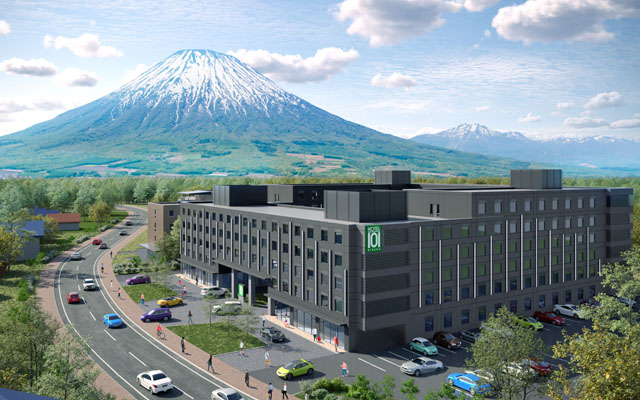
Hotel 101 recently set up its global headquarters in Singapore, on the back of its new land acquisitions in Niseko, Madrid, and Los Angeles over the past few months.
The hospitality company – a subsidiary of Filipino company DoubleDragon founded by fast food tycoons Tony Tan Caktiong and Edgar Injap Sia II – currently has 11 Hotel 101s in the Philippines. Two are operational, while the rest are under construction or in the pipeline.
As to why Singapore was chosen for its headquarters, Hotel 101’s CEO Hannah Yulo-Luccini explained: “In addition to Singapore being one of the 25 countries that Hotel 101 aims to be in within the next three years, the major financial and economic hub in Asia has a growing pool of experienced international talent that we need to develop the ideal management team to help us achieve Hotel 101’s expansion plans.
“Its location and world-renowned airport also make it an extremely convenient hub for our team to fly out of to oversee our various developments and sales hubs globally.”
Travel is very much on the cards, because in addition to Singapore, Hotel 101 ambitious plan is to plant a flag in 25 countries over the next three years. Target locations in Asia-Pacific include India, China, Thailand, Malaysia, Vietnam, Indonesia, Cambodia, Bangladesh, South Korea and Australia. Further afield, Hotel 101 is targeting to open in the UK, the UAE, Canada, Turkey, Italy, Germany, France, and Switzerland. The global vision is to accumulate a portfolio of one million Hotel 101 rooms in 101 countries before 2050.
This ambitious plan is possible, only because all Hotel 101s around the world will be three-star, have around 500 keys each, and feature a standard 21m2 room, making it easily exportable, described Yulo-Luccini to TTG Asia during a networking dinner in Singapore earlier in March. She likened the room standardisation to the same way that fast food chains standardise their one iconic burger, and how budget airlines sell the same standard economy seat.
By having that many keys, it also allows Hotel 101 to price its rooms lower than its three-star competitors, yet be able to offer typical four-star amenities such as a restaurant, swimming pool, and gym.
The property’s first Hotel 101 location in Niseko, Japan, came about as the company acquired a 1.1-hectare prime property in the heart of Hirafu during the pandemic. Currently under construction is a 482-key property, where facilities will include an all-day diner, convenience store, fitness centre, business centre, and function rooms. Being in Niseko, it will also have a ski locker, sauna, hot mineral water bath and indoor swimming pools.
Yulo-Luccini elaborated: “A typical room will come with prefabricated toilets, and standardised flat pack furniture and a single type of bulb in the whole building. Our guests will know what to expect wherever they may be. For hotel owners, Hotel 101 will be efficient to build, maintain, and operate, which will result in room rates up to 30 per cent cheaper versus any other hotel chain in its category in any country.”
Besides the templated approach, the hotel chain prides itself on its micro-owner approach, where an individual can own a hotel room, or several, akin to a condo-hotel. The fragmentising of ownership generates the first round of revenue to fund Hotel 101’s rapid expansion plans.
For now, most of the global expansion plans are expected to be via joint ventures with developers abroad, or through licensing or franchising.
“Each unit that is sold will bring (initial) revenue to Hotel 101. Once the hotel is completed, the hotel unit will generate recurring revenues. Rising interest rates globally have opened up a lot of opportunities for expansion in prime locations across popular destinations that would have previously not been accessible to a new hotel developer,” she noted.
Radisson Red hotel to open in Laos capital
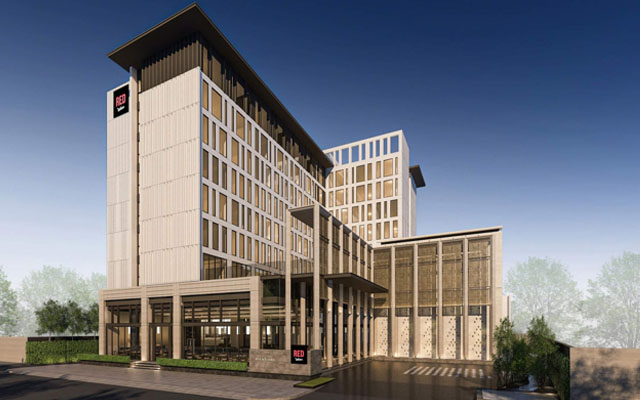
Radisson Hotel Group (RHG) has signed with La Vie Hotels & Resorts to introduce its Radisson Red brand in Vientiane, Laos.
The new hotel expands upon the signing of a Master Collaboration Agreement with La Vie Hotels & Resorts to incorporate over 30 hotels into RHG’s portfolio over the next 10 years.
Projected to open its doors in 4Q2024, Radisson Red Vientiane is a new-build property in the heart of the city, surrounded by government offices, shops, markets and restaurants, and just a short distance from the Mekong River waterfront.
This upper upscale lifestyle hotel will offer 145 rooms and suites, including a collection of Pool Access Rooms. Facilities comprise a swimming pool, pool bar, restaurant, fitness centre, business lounge, two ballrooms and meeting venues.
Vientiane’s Wattay International Airport is just 15 minutes’ drive from Radisson Red Vientiane, and the city’s rail terminal offers high-speed train services to China and, in future, to Thailand.
David Nguyen, managing director, Indochina and strategic partnerships, RHG, said: “Radisson Hotel Group’s entry into another South-east Asian capital city is an important moment for our company, as we accelerate our expansion strategy in Asia-Pacific. Our contemporary Radisson Red brand is the perfect fit for this up-and-coming destination, which is attracting a rising number of business and leisure travellers.”
La Vie Hotels and Resorts’ head of South and South-east Asia, Shankar Sreekumar, added: “We are thrilled to build on our partnership to launch the first Radisson Red hotel in Laos. The investment going into Laos at the moment is impressive and Radisson Red will be a welcome addition to the city, bringing an internationally recognised brand to the centre of town. We’re confident Radisson Red Vientiane will become a new icon and leading destination for guests when they travel to Laos.”
Strong earthquake hits Taiwan’s coast

Taiwan has been hit with a 7.4 earthquake just off its shore this morning – the strongest quake to hit the island in 25 years.
The quake hit at 07.58 at a depth of 15.5km just off the eastern coast of Taiwan, according to Taiwan’s Central Weather Administration, knocking out power in several parts of the city. Tsunami warnings issued earlier for the islands of southern Japan and the Philippines have also been lifted.

The Taipei city government has not received any reports of damage, and the city’s MRT was up and running soon after.
Taiwan’s high speed rail operator said no damage or injuries were reported on its trains, but added that trains will be delayed while it carries out inspections; while Taipei residents have been advised to check for any gas leaks.
Taipei’s Central Weather Administration’s Seismology Centre has warned that earthquakes with magnitude of 6.5 to 7 may still occur in three days.
Meanwhile, neighbouring countries Japan and the Philippines have also been affected.
Japan issued an evacuation advisory for the coastal areas of the southern prefecture of Okinawa. The Japan Meteorological Agency placed the quake magnitude at 7.5, with reports of a 30cm tsunami that reached Yonaguni island under two hours after the quake hit Taiwan’s coast.
At press time, no casualties or damage have been reported in Japan and the tsunami warnings for Japan have been downgraded to an advisory. Flights, which were temporarily suspended at Okinawa’s main airport, have now resumed.
Philippine residents across the provinces of Batanes Group of Islands, Cagayan, Ilocos Norte and Isabela have been urged to evacuate to higher ground; while in mainland China, it was reported that the quake was felt in Shanghai, Fuzhou, Xiamen, Quanzhou and Ningde in China’s Fujian province.
Korean Air to operate seasonal charter to Taichung

Korean Air will operate seasonal charter services between Seoul Incheon and Taichung, Taiwan from May 2 to June 29.
Flights on the Seoul Incheon-Taichung route will operate three times a week, on Tuesdays, Thursdays and Saturdays.

The route will be served by a Boeing 737-8, configured with 146 seats, eight in Prestige class and 138 in Economy class.
Sichuan Airlines, China Southern Airlines fly to Kuala Lumpur
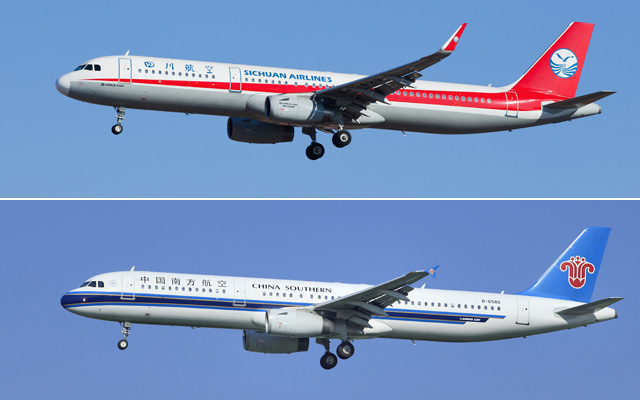
Both Sichuan Airlines and China Southern Airlines now operate direct flights to Kuala Lumpur in Malaysia.
Sichuan Airlines will depart from Chengdu to Kuala Lumpur, while China Southern Airlines flies from Shenzhen to Kuala Lumpur.
Both new routes from Chengdu and Shenzhen operate daily on Airbus A321 at a seating capacity of 192 and Airbus A320neo at a seating capacity of 165 respectively.






SriLankan Airlines will soon receive four A330 aircraft under a leasing arrangement with two suppliers from Ireland, ORIX Aviation and Aergo Capital, a government minister told reporters on Tuesday.
“Under these contracts, ORIX Aviation will provide two aircraft on a monthly lease of US$360,000 for six years, while Aergo Capital will lease two aircraft on a monthly fee of US$365,000 for eight years,” minister and cabinet spokesman Bandula Gunawardene said, after cabinet approval was given to the move.
In mid-February, SriLankan Airlines chairman Ashok Pathirage said the airline has contracted for three A320s, one of which has already been received. Additionally, the airline has received offers for six A330s and hopes of finalising these acquisitions by the end of the year.
The fleet expansion of the national carrier is of vital importance to the airline as the current fleet consists of 17 aircraft, of which three are grounded.
The government is seeking an investor for the cash-strapped airline, though running at an operating profit is saddled with a huge debt which the authorities hope to absorb once a foreign investor enters the scene.
The airline chief has said they were managing the number of destinations they operate by reducing some of it due to a shortage of aircraft – these routes will be restored once the new aircraft arrive.
He said the national carrier stopped its services to Muscat, Oman and will be suspending its services to Beijing, China from this week. The airline operates to 126 destinations in 61 countries (including codeshare operations).
Meanwhile, a pilot project of visa-free entry for travellers from seven countries which was introduced in October/November last year and due to end in March 2024 has been extended to April 30, stated tourism minister Harin Fernando. He said a final decision on the pilot project and whether to make it a permanent feature would be taken into consideration in the coming weeks.
Visa-free entry is available to travellers from key generating markets, such as India, China, Russia, Malaysia, Japan, Indonesia, and Thailand.