


WTTC reveals 24th Global Summit theme and line-up

This year’s WTTC Global Summit aims to be a game-changer, setting the course for a dynamic and sustainable future in Travel & Tourism, when industry trailblazers and international government officials from across the globe converge in Perth (Boorloo) from October 8 to 10.
Under the theme Ancient Land: New Perspectives, the Global Summit will spotlight Australia’s rich cultural heritage and natural wonders, emphasising innovation and sustainable growth.

Hosted by Tourism Western Australia (TWA), the 24th edition will welcome top leaders from the world’s leading Travel & Tourism businesses as speakers, including renowned wildlife conservationist and TV presenter Robert Irwin, son of Steve Irwin.
Top business leaders set to speak include Greg O’Hara, Certares founder and senior managing director and WTTC chair; TripAdvisor CEO Matt Goldberg; American Express travel president Audrey Hendley; Diriyah Company group CEO Jerry Inzerillo; JTB corp chair of the board Hiroyuki Takahashi; and Intrepid Travel CEO James Thornton, among many others.
The event will bring together government representatives from around the world, offering a platform for industry leaders and officials to exchange insights, discuss best practices, and explore innovative strategies to drive the resilience and growth of the Travel & Tourism industry.
“The leading industrialists in Travel & Tourism who are shaping our sector and countries’ economies will be at WTTC’s Summit in Perth. Their insights and leadership are crucial as we shape the future of Travel & Tourism,” shared Julia Simpson, president & CEO of WTTC.
“Western Australia, with its stunning natural beauty and deep commitment to sustainability and cultural diversity, is the perfect backdrop for this event. Hosting the Global Summit in Perth enables us to pioneer new ideas for tourism while honouring the rich traditions and ancient heritage of the land.”
PATA announces Gold Award 2024 winners

PATA has revealed the winners of the 2024 PATA Gold Awards, with Hong Kong Tourism Board selected as the Grand Title Winner in the Marketing category for its Hello Hong Kong Recovery Campaign and Intrepid DMC Nepal as Grand Title Winner in the Sustainability and Social Responsibility category for its More Intrepid Women for Nepal campaign.
TTG Asia Media was also named the Business Article winner under the Marketing category for TTGmice’s Going green story, authored by Caroline Boey and Karen Yue.

This year’s 20 winners across two broad categories, namely Marketing, and Sustainability & Social Responsibility, were selected from over 100 entries submitted by 47 travel and tourism organisations and individuals.
The winners will be celebrated at the upcoming PATA Travel Mart 2024, to be held at the Queen Sirikit National Convention Center in Bangkok, Thailand on August 28. In addition, all winning entries will be featured in the 2024 PATA Gold Awards booklet, to be published in August, and throughout PATA Travel Mart 2024.
Since its inception in 1984, the PATA Gold Awards honour organisations and individuals for their achievements and commitment to advancing tourism, and is sponsored by the Macao Government Tourism Office (MGTO), marking 29 consecutive years of collaboration.
PATA CEO Noor Ahmad Hamid said: “We have witnessed tourism professionals putting more creativity and passion into their work to enhance the tourism economy. I would like to extend my gratitude to all the applicants and judges who have dedicate their time and efforts into making the PATA Gold Awards a possibility.”
Aviation roundup: Scoot, Qantas and more


Scoot to launch flights to Subang
Scoot has introduced a new flight route to Subang, Malaysia, effective September 1.
The new daily flights, to be operated on Scoot’s Airbus A320 aircraft, will provide customers with an alternative option to travel between Kuala Lumpur and Singapore, and beyond to the rest of Scoot’s network.
Booking for flights to and from Subang are now available.
Flight schedules are subject to government and regulatory approvals or changes.

Qantas takes off for Paris
Qantas has introduced flights to Paris with its new Perth-Paris service.
The route will cut around three hours off the current fastest travel time between the two cities and is the longest non-stop flight to France from anywhere in the world.
Flights will initially operate four times per week over the busy European summer and Olympic and Paralympics before moving to three services per week from mid-August.
The new service will be operated on the airline’s Boeing 787-9 Dreamliner which has been specially designed for longhaul travel, with all passengers benefitting from large windows, high cabin humidity and mood lighting.

AirAsia to add two new routes to Ningbo from Malaysia
AirAsia is launching two new routes from Kuala Lumpur and Kota Kinabalu to Ningbo, in Zhejiang province. This marks the airline’s 17th destination in China, operated by AirAsia Malaysia.
Travellers can fly directly from Kuala Lumpur to Ningbo starting August 1, or from Kota Kinabalu to Ningbo from August 2. Both services will operate three times a week.
Judd Rabbidge helms as GM of Avani+ Fares Maldives Resort
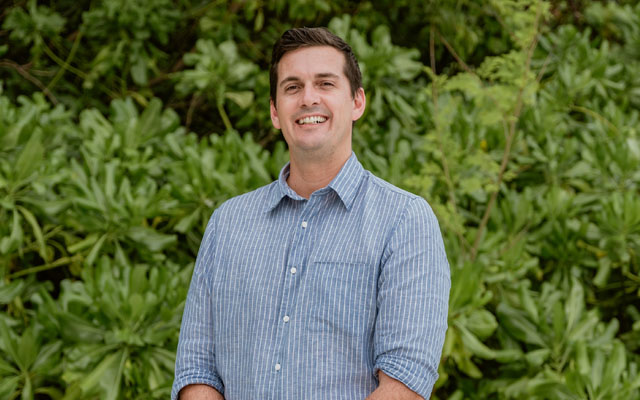
Minor Hotels has appointed Judd Rabbidge as the new general manager of Avani+ Fares Maldives Resort.
 An Australian national, he brings a wealth of experience to his first general manager posting. Most recently, he served as the hotel manager at W Sydney, overseeing the pre-opening phase of the world’s largest W Hotel.
Discova welcomes Nicoline Dolman as regional contracting leader

Nicoline Dolman has been appointed as Discova’s regional contracting leader.
She will lead the contracting team in Asia to deliver a market product range for the region that drives business growth.
 Based in Bali and originally from the Netherlands, Dolman brings a wealth of experience and knowledge from working in the hospitality and travel industry for well over a decade.
Cebu’s tourism falters, experts call for the broadening of target markets

Cebu in the Philippines faces calls to diversify its tourism offerings after a disappointing year, according to industry experts.
At the recent Philippine Tourism and Hotel Investment Summit 2024 organised by the Philippine Hotel Owners Association (PHOA), an STR presentation revealed that while Cebu’s hotel rates boomed this year, it is still lacking in inbound demand.
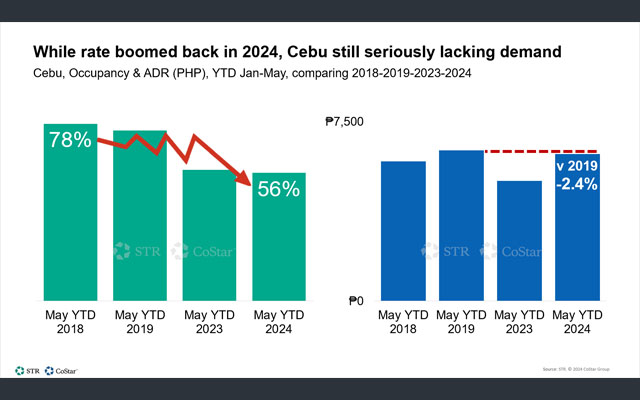
STR senior director Asia Pacific, Jesper Palmqvist, further explained that occupancy rates were down to 56 per cent year-to-date in May, a big drop from the 78 per cent in 2018.
“Even if rates are back to historic levels, there’s just not enough international or domestic travellers – it’s a competitive reality as well in South-east Asia, with Phuket and Bali, for instance, growing quickly.”
Addressing the issue, Palmqvist said “diversity is key”, not just for Cebu but for the Philippines. “There is no one single market that replaces the Chinese market,” he opined.
China used to be Cebu’s biggest and the country’s second biggest inbound market, but instead of easing visa restrictions to encourage this market to return, the Philippine government further tightened its visa policies for Chinese visitors.
Palmqvist noted there are clear instances in South-east Asia showing that relaxing visas for Chinese helped tourism levels, as well as airlift, return fairly quickly. He pointed out there seems to be a deeper issue, as the country is missing the mark on its tourism priorities.
Concurring, C9 Hotelworks managing director Bill Barnett said that for Cebu, “it’s a lot about airlift and visas – you cannot stay there if you cannot get there”.
He emphasised: “The Philippines tends to brush off alternative markets like Russia, India and the Middle East… as they want Americans and Europeans.
“The issue is visa agreements – and the Philippine government is asleep at the wheel of tourism. They need to diversify the tourist mix, (which is) a big issue for legacy markets like Baguio, Cebu, and Boracay.”
Standard International’s The Manner brand promises refined luxury

New York-headquartered hospitality company Standard International was recently at ILTM Asia Pacific 2024 to launch its latest luxury brand, The Manner.
When asked why there was a need to develop a new concept, instead of expanding its current portfolio, Amar Lalvani, the executive chairman of Standard International told TTG Asia: “We believe there is a next generation of luxury guest that is looking for something different than what is out there today. This guest values privacy, discretion and intimacy versus the overt trappings and often intrusive service style that comes from traditional luxury experiences.”

He pointed out that The Standard Hotels are distinctly different, and are “vibrant, entertainment destinations that are social hubs for their communities”, while The Manner will be focused on “refined and intimate guest experiences”, akin to staying in a chic, well-connected friend’s home.
“The brand will sit at the intersection of a private residence, a member’s club, and a hotel. There are times when our guests are looking for a more refined, intimate experience and that is what The Manner provides. I find this very much true for myself when I travel, where the same person can have different needs and desires depending on the circumstances,” Lalvani noted.
Set to open in September 2024, the first Manner-branded property will be located in New York’s SoHo, and will be a conversion of an existing hotel. All infrastructure will be upgraded, and the entirely new aesthetic has been done in collaboration with Hannes Peer, a renowned architect, artist and interior designer from Milan who specialises in high-end residential design. The Manner in SoHo is his first hotel project.
The company, which Thailand real estate luxury developer Sansiri owns a 62 per cent stake, has no immediate plans to bring The Manner to Asia-Pacific, although there are “many destinations” where a Manner property could call home.
Lalvani pointed out: “Given that luxury hotels in Asia tend to be quite traditional, The Manner would stand apart in what we offer our guests; but for now, we are extremely focused on our first Manner in SoHo, to make it as incredible as possible. I have no doubt that if we do that, the rest will follow.”
Standard International was also at ILTM Asia Pacific to promote their new-build property in Singapore – The Standard, Singapore.
Mai Timblick, chief creative officer, Standard International, told TTG Asia: “The Standard, Singapore will have touchpoints throughout that will underscore the property’s vibrant intersection of East and West.”
The eight-storey, 143-key property will boast a residential feel reflecting the surrounding neighbourhood in Orange Grove, and feature a tiered courtyard and greenery at the pool, as well as the brand’s first-ever Japanese izakaya restaurant. It is slated to open by the end of this year.
Stakeholders from Cebu to woo Singapore in upcoming travel sales mission

A private sector-driven travel sales mission to Singapore is scheduled from August 26 to 28 this year, an initiative spearheaded by the Hotel, Resort & Restaurant Association of Cebu (HRRAC) and the Cebu Association of Tour Operation Specialists (CATOS).
The three-day mission will involve interactive sessions with top-producing travel agents, MICE and leisure organisers, and tour wholesalers in Singapore. The highlight of the mission will be a full-day product presentation and B2B session in a vibrant travel mart atmosphere.

The mission aims to showcase Cebu’s diverse offerings, including its pristine beaches, vibrant dive sites, adventurous activities, culinary delights, and rich cultural heritage. Special focus will be placed on Cebu’s new attractions, high-tech convention centres, and integrated entertainment resorts, all designed to appeal to Singapore’s robust family leisure and MICE market.
The cities of Cebu, Mandaue, and Lapu-Lapu, along with the Department of Tourism Region 7, have been invited to support and participate in this sales mission. This collaboration aims to strengthen Cebu’s tourism appeal and establish it as a premier destination for Singaporean travellers.
Selrahco Management and Consultancy president and CEO, Charles Lim, who is assisting the sales mission, said they have also reached out to Mactan Cebu International Airport as it is the hub for tourists to Cebu and the gateway to most destinations in the Visayas and Mindanao, including Boracay, Siargao, Davao, Bacolod and Iloilo.
A Singaporean who was at one time the Special Tourism Envoy for ASEAN under the presidency of Gloria Macapagal Arroyo, Lim settled down in Cebu over 25 years ago after working for Singapore Airlines – the first foreign airline that started a regular commercial flight linking Singapore to Cebu 34 years ago.
“Singapore is a big potential market for Cebu. It is currently the biggest source of our arrivals from South-east Asia and we hope to build it up further,” explained Alfred Reyes, president of HRRAC.
“There are three airlines operating no less than 21 flights a week as of today between our two cities,” added Reyes. “That speaks a lot by itself. We need to further promote our destination to the Singaporeans.”
CATOS president Alice Quiblatin shared: “The Cebu product of sun and sand, diving and adventure, food and shopping has always been an attraction, based firmly on our heritage and culture.
“Today, we have several new products from theme parks to convention facilities and an integrated entertainment resort. This opens up more markets for us and we know Singapore’s family leisure and MICE market is very strong.”
IHG Hotels & Resorts expands in Sydney with two rebranded properties

IHG Hotels & Resorts has added two Crowne Plaza hotels to its Sydney premium estate portfolio, following an agreement with Frank and Wade Huang of Star Millennium.
Two well-loved hotels at Sydney Airport and Macquarie Park will be rebranded as Crowne Plaza Sydney Airport and Crowne Plaza Macquarie Park, respectively.

Holiday Inn Sydney Airport will be rebranded as Crowne Plaza Sydney Airport in September 2024. The 252 guestrooms have undergone refurbishment in 2022 and are already at a Crowne Plaza standard, while the lobby and restaurant will be updated to complete its transition into the premium segment.
Meanwhile, the 196-room Crowne Plaza Macquarie Park is set to open in early 2025, transitioning from the Courtyard by Marriott to the Crowne Plaza brand. This rebranding will include a comprehensive refurbishment of the lobby and guestrooms.
The hotels will move to franchise, with Star Millennium appointing Trilogy Hotels to operate both hotels.
Cameron Burke, director of development at IHG Hotels & Resorts, commented: “It’s exciting to see the Crowne Plaza brand continue to go from strength to strength, building on its reputation as one of the world’s best known and loved premium hotel brands among corporate and leisure travellers alike. We look forward to further strengthening our wonderful partnership with Frank and Wade in the coming years.”
“Crowne Plaza Macquarie Park will set a new standard for quality in the Macquarie Park business precinct, and Crowne Plaza Sydney Airport will enhance its legacy as a Holiday Inn by delivering a premium guest experience,” added Wade Huang, director of Star Millennium.
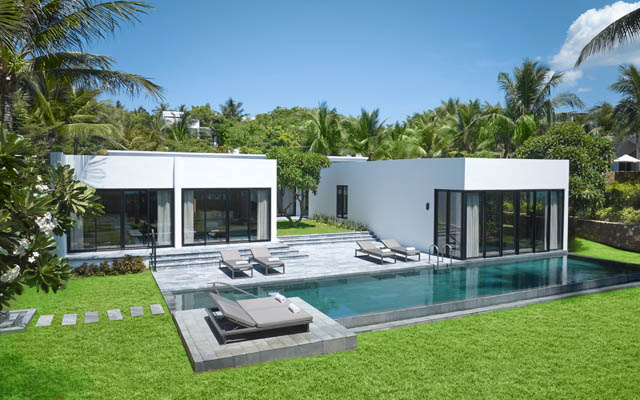
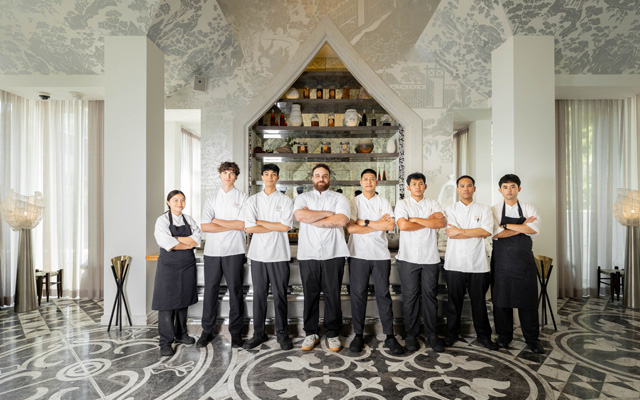






Small Luxury Hotels of the World (SLH) has teamed up with The MRS Group of Hotels, a leading Indian hospitality group known for its boutique hotels, as a move to expand into the vibrant Indian subcontinent.
This partnership allows The MRS Group of Hotels to leverage SLH’s global distribution network and marketing capabilities, showcasing their unique offerings to an international audience.
The MRS Group of Hotels currently encompasses brands such as Suryagarh in Jaisalmer, Narendra Bhawan in Bikaner, and Mary Budden Estate in Binsar, all three of which will join SLH’s collection. Each hotel serves as a gateway to India’s heritage, offering thoughtfully designed experiences that authentically reflect the character of their locations.
In addition, Hilton Honors members can now earn and redeem points for SLH stays and enjoy exclusive benefits, including free Wi-Fi and a guaranteed member discount – Gold and Diamond members will enjoy space-available room upgrades and continental breakfast for up to two guests.
Karan Singh Vaid, president of The MRS Group of Hotels, shared: “This alliance not only highlights our dedication to reimagining hospitality in India but also amplifies our mission to offer travellers thoughtfully designed experiences that are rooted in our rich heritage and distinctive service.”
“The MRS Group of Hotels’ brand philosophy aligns perfectly with our conscious travel journey towards sustainability and conservation. We are looking forward to sharing their bespoke experiences through our story-telling channels and global distribution networks,” added Mark Wong, senior vice president Asia Pacific of SLH.