Thailand’s Tourism Authority (TAT) will join forces with local media entity and event organiser Cloud and Ground – publisher of Read The Cloud online magazine & host of the Thailand Coffee Fest – to hold the Amazing Green Fest, the country’s first B2C sustainable travel fair.
To be held at Siam Paragon from August 15 to 18, the event targets Thai locals and long-term foreign residents and will be a sustainable domestic tourism showcase.
TAT’s Thapanee Kiatphaibool speaking during a panel at the Amazing Green Fest press event hosted at Sivatel Bangkok on July 18 (Photo: Anne Somanas)
Changnoi Kunchorn Na Ayutthaya, managing director of Cloud and Ground, emphasised the festival’s role in fostering a sustainable travel community and that anyone from “seasoned eco-travellers to those just starting their green journey” are encouraged to participate.
TAT governor Thapanee Kiatphaibool noted: “For the longhaul market, sustainability is crucial and determines the future of Thailand’s tourism industry. In two years, the EU’s Corporate Sustainability Due Diligence Directive (CSDDD) legislative framework will be enforced.”
Homegrown initiatives like the TAT Star awards and CF-Hotels provide Thai entrepreneurs – especially small and medium businesses – springboards and foundational understanding to build towards international standards like the GTSC and Travelife Sustainability Certification, which will help them synchronize with the CSDDD.
According to Kiatphaibool, the TAT aims to have 80 per cent of Thai tourism businesses achieve at least three Sustainable Tourism Goals (STGs) under the TAT Star awards by 2027.
“Before we can welcome green tourists, we need to be green ourselves. The Amazing Green Fest builds on these initiatives, showcasing entrepreneurs who have adopted sustainable practices, and going one step further to educate Thai travellers themselves about responsible tourism in order to foster a sense of global environmental stewardship,” she stated.
Kiatphaibool also shared that the TAT will leverage the festival to launch the green Amazing Thailand rebranding – a recolouring of the famed pink logo into a green logo with leaves – which will focus on promoting sustainable tourism experiences.
The four-day festival will also showcase a new sustainability emphasis in the Thailand Tourism Awards, which turns 15 this year. Additionally, trash from the festival will be sorted meticulously and recycled to reduce environmental impact.
Let’s talk about your new opening, Nora Beach Club.
It’s a new model – no one else in Phuket has done this, at least not to my knowledge. We put a beach club right in the precinct of the hotel in Bangtao, an area with many beach clubs. However, Nora is the closest one to Laguna, and it’s doing well. Initially, I was concerned about potential conflicts because beach clubs can be noisy, which might disturb guests who come to relax. So, we toned it down and focused more on family-friendly dining, creating a beach club restaurant vibe. This approach has been successful. We’re still in the process of completing the second phase of development ahead of the next high season.
Can you tell us more about your social media strategy?
Everyone checks out places through social media first. Thai people typically use Facebook, others use Instagram, and the Chinese use TikTok and Weibo. So, we need to be present on all these channels. We’ve realised that our target audience is generally millennials, aged 20 to 40. They come to take photos but often don’t spend as much as older guests who have families and order bottles of wine, which significantly boosts revenue.
Thus, we focus more on catering to families and the older generation.
We’ve invested in social media to attract external customers to our F&B outlets. Historically, restaurants in hotels were seen as pricey, deterring some guests. By promoting our F&B outlets as standalone entities, we’ve increased awareness and attracted more external guests. This has worked well, especially for our beach club, with a significant portion of revenue coming from local residents and expats.
You’ve mentioned Amora’s family-focus in the past.
That’s right – even though I am a second-generation owner, I don’t consider myself to be targeting millennials or developing a millennial brand. Amora’s core has always been (about) trustworthy corporate hospitality. We’ve transitioned towards leisure, especially in Phuket, where leisure dominates the market. Family travel is the best form of leisure, particularly for Asian markets. They travel collectively, which means more rooms and on-site spending.
Our model promotes eight hours of sleep, eight hours of F&B, and eight hours of activities, like football, volleyball, archery, Muay Thai, and yoga – we provide these activities onsite, to ensure guests spend more time at the resort, because the longer they stay in the hotel, the more they spend.
What type of revenue distribution do you aim for in your hotel?
Luxury hotels can usually aim to achieve a 50/50 or 60/40 split between room revenue and F&B. Budget hotels should focus more on room revenue, around 90-95 per cent, due to the lower payroll costs for chefs and wait staff. We’re upscale, targeting a 70/30 or 60/40 split, including conferencing. Today’s travellers view hotels as integral to their destination experience, so we’re aiming to provide upscale yet accessible offerings, not entirely luxury.
Can you tell me more about the recent Brisbane opening?
We bought the property in 2020 during the Covid-19 pandemic. After quarantine ended, we spent around A$30 million (US$19.99 million) on rebranding and renovation, including rooms, conference centres, pools, restaurants, bars, and the lobby. The grand opening was in February.
Brisbane is an emerging market, especially with the upcoming 2032 Olympics, which has significantly boosted asset values.
We’ve heard you’re opening a new corporate office, with a vision towards doubling your hotel portfolio from six to 12 hotels over the next five years. Why now for a corporate office, and why have you chosen Sydney?
I come from an investment banking background. Starting a corporate office and hiring key professionals in operations, F&B, and financial control fosters innovation – these executives bring different areas of expertise. By sharing ideas, we bring different perspectives to the table, leading to innovative solutions and a fresh energy within the company.
Sydney is home to key members of our team, including our vice president and director of culinary, and it’s our flagship property. It made sense to establish our corporate office where most of our team is located, ensuring effective collaboration and management.
Can you tell us what are the challenges and opportunities of being an independent hotel brand? Where does your new guest recognition programme come into play?
Independent hotels can offer personalised service, making guests feel valued. However, the challenge lies in distribution, as big brands have extensive networks. We aim to overcome this by focusing on high-quality guests and strategic partnerships.
We have a membership programme offering discounted rates, but a full-fledged loyalty programme will come once we scale up to 10 to 12 hotels. Our current focus is on personalised service, knowing our guests’ preferences before they arrive to enhance their experience.
Finally, you’ve told us that you see opportunities to create synergy between the South-east Asia and Australia markets.
There’s a big opportunity for Southeast Asia-Australia tourism. South-east Asian travellers to Australia are fewer than to Europe, but many Australians also vacation in South-east Asia. Building this connection is key, especially since most South-east Asian visitors are first-timers who explore multiple cities. This untapped market is what excites us.
However, domestic travel remains the main revenue driver in Australia (usually 70 to 80 per cent). While South-east Asian tourism offers diversification, a strong domestic market provides stability, as seen in Australia’s quicker Covid recovery compared to Thailand.
Wyndham Hotels & Resorts has teamed up with Goldstone Holdings for the new Wyndham Semporna Resort, which is expected to open in 2026.
Located on the eastern coast of Sabah, Malaysia, Wyndham Semporna Resort will feature 188 overwater villas, each equipped with modern amenities including a bathtub, sun loungers, direct sea access, and more.
Wyndham Semporna Resort aims to provide travellers with a unique ocean view villa experience
The resort will feature infinity pools, a variety of dining options, including an oceanfront dining hall, and gym. Guests can enjoy activities like snorkelling, diving, island hopping, hiking and indulge in local food.
Tang Yong Chew JP, executive chairman of Goldstone Holdings commented: “We’re dedicated to turning Semporna into a top-tier destination, comparable to the Maldives. Wyndham Semporna Resort will be the first internationally branded resort in the city of Semporna and the first large-scale overwater villa property developed in Semporna.”
“The Wyndham Semporna Resort is set to become a premier destination in the area due to its unique hotel design which offers guests a tranquil getaway in Sabah, known for its sprawling coastline, secluded tropical islands and pristine rainforests,” added Matt Holmes, vice president of development for Southeast Asia Pacific Rim, Wyndham Hotels & Resorts.
While Sri Lanka has scrapped plans to sell a stake in its national carrier, SriLankan Airlines, after foreign offers it sought didn’t meet up to expectations, government officials say they are pursuing an alternate route which still includes attracting investors to the debt-ridden airline.
“We are looking at an alternate proposal which would still be under the previous plan to invite investors. It’s sensitive at the moment but we hope to announce the new plan in two to three weeks,” said a source close to the negotiating team.
Sri Lanka is still working to attract investors for SriLankan Airlines
On Thursday, the government said it had dropped plans to sell a minority stake of 49 per cent of SriLankan Airlines, after none of the bidding entities that expressed interest in it was deemed “worthy”.
“Instead, the airline will undergo restructuring under an alternate plan,” stated Sri Lankan minister of ports, shipping and aviation Nimal Siripala de Silva. However, he did not share what the alternate proposal was.
“We are not going to sell SriLankan Airlines but restructure it. According to Sri Lankan law, only 49 per cent of the airline’s shares can be given to a non-Sri Lankan entity – but there is minimal interest in the world for that.”
The airline reported an operating profit of 43.4 billion rupees (US$143 million) from April 1, 2022 to March 31, 2023 but has suffered a net, carry forward loss of 71 billion rupees. The airline flies to 114 destinations in 62 countries, has a staff of 6,000 and has relied on government financial support to sustain the carrier.
In October last year, the government called for offers to bail out the struggling airline and there were six bids, none of which included an international carrier.
In 1998, Dubai’s Emirates bought a 43.6 per cent stake in SriLankan Airlines together with a 10-year management concession but opted out of renewing the contract in 2008 due to disagreement with local authorities.
Aviation analysts said the lack of a clean balance sheet is one of the reasons why the airline is not attracting any positive offers. One analyst said: “Investors want their money ploughed into the airline instead of settling a government loan.”
Another expert, who was involved in the 1998 part-sale to Emirates, said the problem in finding a suitable partner is the timing and uncertainty of the call for offers.
He noted: “Sri Lanka is heading for a series of elections starting with the Presidential election in September/October 2024 and investors are unsure what the situation would be if a new president is elected. Furthermore, Sri Lanka’s economic woes have also created uncertainty.”
An acute economic crisis in 2022 which saw a shortage of foreign exchange led to long queues for fuel, cooking gas and essential items, forcing the authorities to seek an IMF bailout package.
“The government also needs to provide a proper risk assessment to potential investors so that they know in advance what they are getting into in making a positive bid. The amount of debt and the profitable routes and non-profitable routes have to be clearly expressed and whether these unprofitable routes would be shed; these are all questions that have to be answered,” the aviation expert, who declined to be named, said.
Location
What an enviable address La Clef Champs-Élysées Paris by The Crest Collection has! It stands along Avenue des Champs-Elysées, counting some of Europe’s top luxury fashion houses among its neighbours, and is just a 10-minute sashay to Arc de Triomphe. While this is a district frequented by crowds of eager shoppers and curious photographers, the luxury hotel happens to be on the quieter side of the avenue, where premium apartments are, thus providing guests with a more serene environment.
Accommodation
There are 70 keys across six room types on offer. Options start from 23m² Superior Rooms and go right up to the cream of the crop Duplex Montmartre – Terrace and Duplex Toits de Paris – Terrace at 52m² and 56m² respectively.
The property welcomes both transient travellers as well as long-stay guests, and its room inventory is flexible enough to cater well to both segments. Superior and Deluxe Rooms provide all the comforts sought by travellers, while the Executive Studios, One-bedroom Apartments and Duplex are equipped with a full kitchen and greater space for those intending to settle in a little longer in the French capital.
Larger families are catered to with Deluxe Room and One-bedroom Apartment combinations.
The Executive Studio was my home for a night. An elegant room dressed in cream and gold, and draped in plush fabrics, large windows let in the summer rays, while a vase of fresh blooms – white roses, purple hydrangeas, yellow carnations, and more – adds a certain lived-in warmth to the room.
As much as it is beautiful, it is also a functional room. An enormous TV, framed in silver and placed over a fireplace, masquerades as a mirror that enhances the perception of space and light in the room. The bathroom provides sensible lighting and provision of ample drawers, shelves and surface areas. The kitchen is thoughtfully equipped with an induction stove, microwave, grill, toaster, glassware, crockery, cutlery, utensils, and more should one desire to have a MasterChef moment.
F&B
The breakfast salon in the basement is an energetic space designed by French fashion designer Christian Lacroix, who is known for his exuberant ideas. Here, sustenance comes in the form of fresh juices, warm madeleines and croissants, cheese selection, wholesome grains and yogurt, and more.
The other dining establishment on property is Imperial Treasure Fine Chinese Cuisine and Liu Ling Bar, both located on the ground level. It is recognised as one of the best fine-dining Chinese restaurants in Champs-Élysées. Liu Ling Bar offers a stylish venues for guests to enjoy creative cocktails with fairy-tale names as well as a range of spirits from all over the world.
La Clef Champs-Élysées Paris by The Crest Collection
1 of 5
Deluxe suite
Garden
Reception
Lobby
Breakfast room
Facilities
The Crest Collection contains properties with unique heritage stories and which portray the golden era of their destination – so proclaims its corporate website. True to this brand identity, La Clef Champs-Élysées Paris by The Crest Collection has an impressive tale to tell.
The building was built by the Hennessy family in 1907, and much of its original grandeur has been lovingly and carefully conserved, restored and incorporated into the hotel design today.
The elaborate floral wall moulding that tops the lobby harks back to the old days, when the space was the driveway for arriving horses and carriages. Even the marble stairs and wrought iron rails are a beautiful remnant of the past.
Its refurbishment by Studio Jean-Philippe Nuel was tastefully done, so much so you get a strong sense of its glamorous past along with modern luxuries. Take for instance its co-working space. Tucked next to the grand winding stairs and lit by draping pendant lights, this facility could well pass off as a reading room for ladies in bustle skirts and ornate hats – until you spot the modern invention called the printer in the corner.
Besides the co-working space, the hotel also offers a well-equipped gym and launderette.
Service
Check-in and attention at breakfast was swift with a smile.
Verdict
I love hotels with a backstory, and this one comes with beautiful conserved features that whisk me back in time. Bonus points for its excellent access to shopping and Michelin-starred dining temptations.
What led to such a stellar performance in 2023?
The whole rebound and recovery of travel after years of restraint definitely helped us.
However, we need to go back further, to Covid times, when we did not have to close a lot of our properties because of our apartment-style product and flex-hybrid business model. This business model demonstrated its agility during the pandemic, and got us a lot of validation from third-party owners. They saw how well this type of lodging can perform in both challenging and good times.
As a result, we had better signings during the pandemic and continue to see record signings, which meant record openings.
The other reason for Ascott’s top performance was our conversion signings. Owners, who appreciated our agility, asked if we could convert their property to one of our brands, so as to benefit from our flex-hybrid business model.
With conversions, we don’t need to build (a property) from scratch. Existing properties are faster to turn around and take to market.
We studied our brands to identify those that are best for the conversion play, and Citadines was one of them. Citadines is now one of our fastest growing brands. It is conversion-friendly, given that it carries very distinct brand signatures that are easier to make happen in both new and existing properties.
Then, we came up with The Collection brands (The Unlimited Collection and The Crest Collection), which are suited for higher-end properties.
The Collection brands allow owners with premium boutique properties to come to us and benefit from our flex-hybrid business model.
We were able to convert a lot of properties (to these brands) in a very short time, sometimes within a month of taking over the property.
What are Citadines’ distinct brand signatures, and why are these easy to implement?
Traditionally, when we look at hotel brands, we tend to focus on the hardware. Coming out of Covid, we embarked on the Brand360 exercise to bring our focus beyond hardware and onto the comprehensive brand experience.
The exercise involved the hardware team, which is made up of project, design, technical people, and also the software team, which comprises people dealing in operations, communications, branding, and so on.
One of the brand experiences that we created for Citadines is the For the Love of Coffee programme. Citadines is an urban city brand and is present in all the key gateway cities. We believe that every city has its own coffee culture, and our guests – many of whom are business travellers who cannot get through their day without coffee – can experience city living through the local brew.
Such experiences are not hardware-based, which makes it easier for us to inject into new properties. .
How many Citadines are there?
As this brand originated in France, we have a substantial number in Europe. These are first generation Citadines.
After Ascott acquired the brand (in June 2004), the concept was spread across the world. There are now more than 200 Citadines properties globally.
Fifty-four properties, or more than a quarter of the Citadines portfolio, are in China. Within South-east Asia specifically, the Philippines is where most of our Citadines properties are located, with a total of 18 properties, both operating and in the pipeline.
Our new generation Citadines are opening in cities like Amsterdam, Vienna, Sydney and Singapore.
Citadines does very well in locations with a business profile.
The brand is evolving and properties are taking shape based on their location and needs of their clientele. Some Citadines offer onsite F&B while others have just a grab-and-go kiosk. That’s the flexibility we offer.
The Robertson House by The Crest Collection in Singapore
Which of your brands, besides Citadines, are fast growing, and in which locations?
The Crest Collection is a special one. It was concentrated in France but we took it to Asia. The first to open in Asia was The Grand Mansion Menteng in Jakarta. The Robertson House in Singapore followed next, along with The George Penang in Malaysia.
These were all signed and opened within months because they were already so beautiful. We were able to immediately bring them into our network to sell. Because of that, The Crest Collection is able to gain a lot of attention from owners. We are going to convert The Cavendish London and one of our Citadines in Paris into The Crest Collection, and we have signed one in Bucharest.
The Crest Collection is exciting because every property is different. We harness the building as well as its location to deliver a unique guest experience.
Oakwood is thriving too, and is a huge contributor to our record earnings. When we acquired the whole portfolio, we boosted our inventory and that had an immediate impact on our earnings. Oakwood was to us a very good acquisition, with synergies that we were able to harness. We only had to enhance the brand and highlight its unique points.
In Oakwood’s case, the brand focuses on blended travel – the combination of business and leisure, where it takes care of its guests by providing a comfortable environment for rest and work. Owners appreciate Oakwood’s focus on blended travel, which is how people are preferring to travel post-lockdown, so we are able to sign on new properties very fast.
We are bringing more apartment-styled lodging to tourist destinations, like Oakwood Suites Chongli in China’s snow mountains, because it helps us with our loyalty programme.
A lot of our customers are traditionally what we call corporate people. When they earn points from stays during business trips, they hope to use it on their personal travel. We want to give them more options to spend their points with us.
Getting more into the tourist areas is a change in Ascott’s playbook, isn’t it?
Yes, we are a little bit of the new-kid-on-the-block in this tourism space! Traditionally, we have been more apartment-type, more long-stay focused; we are the market leader in this very corporate-focused segment.
Now, we are seeking opportunities to expand our portfolio in tourist destinations, so as to play in the wider hotel space.
To do so, we need a debut party, to tell owners that they can also bring their hotel or resort properties to Ascott, not just their apartment-type real estate, and to tell travellers that they can now spend their loyalty points on a resort stay. It is all about education.
We have a large team of hunters (business development personnel) going out to make sure everybody knows Ascott is here for the party.
How big is your hunting team?
Almost every region has its own team, and we have a special army just for the lyf brand because the product and concept are new, and the target market is slightly different (from our other brands).
lyf customers like to socialise and do activities together, and are drawn to experiences, so properties are designed differently, with a lot more common spaces, for example. The vibe across lyf properties may be the same, but space and design differ from hotel to hotel.
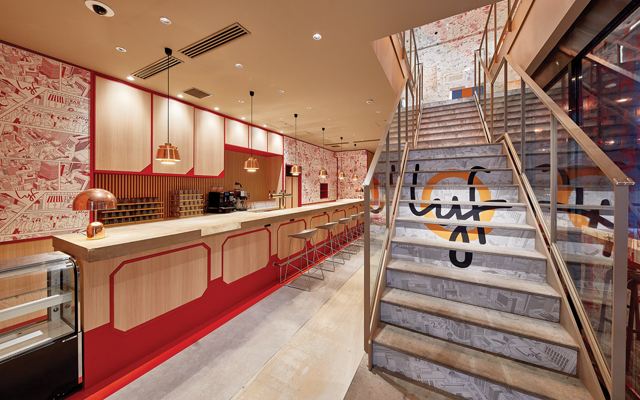
I remember your first lyf – lyf Funan Singapore, which opened in 2019. Very fun and young.
It is doing well for a home-grown brand and product that we created ourselves. lyf challenges the mindset of owners. Some owners want to have different types of products, not the traditional hotel or apartment, and are prepared to be adventurous. This brand appeals to them.
What lyf openings are planned?
lyf Ginza Tokyo (opened November 2023) is our first lyf-branded property in Tokyo. We will soon open another lyf in Shibuya.
I must say that Japan is an important destination for us; we have almost all our brands in Japan.
Beyond Japan, lyf is also opening in Bondi Junction, Sydney; Gambetta in Paris; Ostend in Frankfurt; Canggu in Bali; Penang and Kuala Lumpur in Malaysia; among many others.
New kids on the block for Ascott include lyf Ginza Tokyo in Japan, pictured
Are there certain brands that work best for Ascott’s presence in tourist destinations?
When we identify a project with the owner, we will consider its location, hardware, and potential clientele. For a location that is more suited for families, we will recommend brands like Somerset. For locations likely to attract blended travellers, we will recommend Oakwood.
Oakwood Suites Chongli is a good case study of our entry into more tourist destinations. The location is popular with business travellers, but it is also known as one of the host cities of the Beijing 2022 Olympic Winter Games and has beautiful snow mountains. We know that business travellers would likely extend for business, or be joined by their family.
In this case, Oakwood is an ideal brand due to its blended travel positioning as well as its strong F&B offering. One of Oakwood’s brand signatures is the comfort-food-inspired programme, All You Knead Is Comfort, where activities such as cooking classes and seasonal pop-ups are conducted.
Are the brands and properties launched in 2023 a reflection of travel trends and travellers’ lodging preferences?
Definitely! The Crest Collection, for example, is doing very well because of the growing desire among travellers for luxurious experiences that are not run-of-the-mill.
At the same time, there are more and more unique assets coming in. From the owners’ perspective, they want to ensure operators of their assets can give them a new personality.
With The Crest Collection or The Unlimited Collection, which will soon announce a brand refresh, we can design very special and luxurious experiential spaces for guests.
Let’s talk about Ascott’s 40th anniversary this year. How is the company marking the occasion?
We want a debut party, like I said earlier, to tell the market that we are here and prepared to give you a full accommodation solution, whether you are an owner, investor or customer. We want to talk about who we have become and who we are going to be. We want to change people’s mindset of Ascott.
Hence, our celebration is themed Ascott Unlimited.
To owners and investors, we want to say that we can bring them unlimited opportunities; we will design something that works, with a whole spectrum of brands and different market positioning to target different customers.
To our customers, we want to invite them to book with us and show them our unlimited choices for business, leisure, wellness, or whatever they are travelling for.
We want to communicate with our people (staff) too, to tell them that they have unlimited opportunities to grow with the company.
Meanwhile, embracing this Ascott Unlimited concept is our Unlimited Good idea that advocates for growth with responsibility. When we speak to owners, we encourage them to have sustainable buildings and suggest features that are friendlier to the environment.
When we speak to our customers, we share with them our conservation efforts.
How does Ascott see its role in the industry changing in the next four decades?
We have been advocating very strongly the concept of tech-forward hospitality. We have the benefit of being younger than a lot of other hospitality firms, so we are in a good position to build technology systems, from the front-end to the back-end.
We are one of the first to embrace cloud technology in our operations, and remain agile with our technology infrastructure, allowing us to embrace new ways of business. It helps that we have a very tech-savvy CEO, who is supportive of our efforts to push ourselves on this front.
Through some of the new announcements we have made, you will see how tech-friendly we are and how we are prepared to try a lot of what we call the new world type of technology.
Take generative AI for example; we are one of the first – if not the first – to have generative AI chatbots answering questions from our customers, allowing us to take a load off our call centres.
Most of the questions customers have are not sophisticated – they usually have just one simple question, but have to wait in line for attention. Our generative AI chatbots tackled some 20,000 calls within the first three months of activation.
I see a lot of good in generative AI. It is getting harder to get good people, so generative AI can help us get some things done while leaving real people to handle the more important tasks.
My team is now using generative AI to create advertising and marketing campaigns. Some that you see online are produced by AI, some by real people. I want to encourage them to use new technology, so I created a competition between human-generated creative assets versus AI-generated ones. We put both to the test, and see which one converts customers better.
So fun! When did you start doing this, and who’s winning so far?
We started this project last year. Creative assets by Team Human are more favoured by our audience, but Team AI works very fast – if this asset is not getting the attention needed, AI can pivot and do something different immediately.
Overall, Team AI performs better with its many assets and in terms of productivity. However, when comparing asset to asset, Team Human gets more engagements.
That’s good news for humans!
Well, yes! We are still doing this with our social posts. We are upholding this tech-forward mindset as a company through courses and workshops for our people.
One last question – what targets has the company set for the team this year, after coming from such a high in 2023?
Two things – one, revenue; two, brands.
Revenue is key, but not just in absolute revenue. We want quality revenue too. If we did 155 this year compared to 100 last year, but everybody else is earning 300, that is not quality revenue.
Next, brands. We have refreshed all our brands and need to make sure all our stakeholders understand what we have done. Brand advocacy, brand understanding, and brand appreciation are all important. Our Ascott Star Rewards loyalty programme is related to this. People are not loyal to loyalty programmes; they are loyal to brands.
So, while we are strengthening our brands and getting people to try us for the first time and be acquainted with Ascott, we are also giving our highest-tier members – those who really spend with us – special experiences.
As part of our Ascott Unlimited 40th anniversary celebrations, we launched Ascott Privilege Signatures, a club that offers exclusive events to members.
We will continue to announce new things throughout the year as part of our anniversary celebrations.
The Tourism Authority of Thailand (TAT) has designated 2025 an “Amazing Thailand Grand Tourism Year”, targeting a 7.5 per cent increase in tourism revenue compared to 2024, striving to exceed its all-time-high of 39 million foreign visitors and propel over 205 million domestic trips, boosting the number of seven-digit markets to 13 in 2025.
TAT’s 29 branches worldwide will work together to tap global subcultures with high disposable income, and 23 markets with potential to drive over 80 per cent of the income from international tourists.
TAT’s Thapanee Kiatpaibool unveiled an ambitious marketing directive that aims to break previous records (Photo: Anne Somanas)
“Strategies include leveraging Thailand’s newfound popularity as a filming destination to draw fandoms, promoting active outdoor experiences to new generations from the US and Canada, and targeting high-spending lifestyle travellers, such as DINKs (double income, no kids) demographics and LGBTQ+ communities, particularly from Germany and Switzerland,” shared TAT governor Thapanee Kiatphaibool.
Wellness tourism will be a focal point for Russian visitors, and luxury travel services will be marketed to Arab tourists, along with efforts to attract repeat visitors with “deep knowledge of Thailand” who are inclined towards longer trips of 12-18 days, potentially generating up to 30 per cent of inbound revenue.
The shorthaul market revival strategy features a two-pronged approach: attracting younger travellers and leveraging technology for content marketing.
“Since 2019, Thailand’s shorthaul markets have experienced double-digit growth, with the exception of China. We will create a new image of Thailand, especially for younger travellers, to ensure they return in the future – especially for the Chinese, Japanese, Taiwan and Hong Kong markets,” shared Kiatphaibool.
She added: “We will create a memorable image of the country for our ‘future customers’, including children travelling with their parents, by creating travel experiences that align with the interests and activities of the younger generation. Partnerships with international schools and educational institutions in Thailand will also be promoted.”
Kiatphaibool emphasised other dynamic strategies like leveraging content marketing in the beauty and lifestyle niches for Chinese women, partnerships with local malls for South-east Asia shopping enthusiasts; targeting high-income Malaysians and Chinese with extended overland tours, fly and drive groups from Singapore, rail and caravan trips from southern China to northern Thailand; and celebrating 50 years of China relations through diverse exchanges and special promotions like Nihao Month and special deals for Chinese passport holders.
“We will host activities at the government-to-government, business-to-business, and people-to-people levels between the two countries,” stated Kiatphaibool.
The TAT is equally committed to stimulating domestic travel by boosting domestic seat capacity and flight routes, along with the launch of the Tiew Tan Tee Sook Tan Tee (Immediate Happiness from Immediate Travel) campaign designed to inspire spontaneous travel among locals.
“We will cater to high-spending domestic niches like pet owners by promoting pet-friendly accommodations and the LGBTQIA+ community with inclusive travel options. Additionally, showcasing local festival experiences year-round aims to attract Thai outbound travellers to travel domestically instead,” said Kiatphaibool.
The Association of Indonesian Travel Agents (ASTINDO) has formed an inbound and domestic division to strengthen inbound and domestic performances and increase the business of its members.
Led by seasoned industry professional Heben Ezer, the division is now focusing on product development, with Jakarta tour packages as its pilot project.
JakASTember.co is partnering Kereta Api Indonesia to introduce rail tours to Java (Photo: Ramadhan Noval)
The development of the Jakarta project comes after a series of roadshows held by ASTINDO and the Jakarta tourism office, where five travel agents who participated in the roadshow agreed to create a consortium called JakASTember.co.
Speaking to TTG Asia, Heben said: “Jakarta has a lot to offer in terms of history, entertainment, festivals, culinary delights and more. As such, the city is more than just a hub – it is the centre of everything, and this strong appeal must be promoted.”
The newly launched JakAstember.co has various tour packages available, such as daily tours in Jakarta, urban city tours, sports and entertainment tours, as well as wellness packages. “Many people think that wellness is (available only) in Bali. In fact, the wellness research centre of Indonesia is in Jakarta, and what we offer (to visitors) is experiencing the best wellness treatment with the experts,” added Heben.
For example, the Etnowellness Nusantara package offers treatments with the Etnaprana concept, a massage technique developed by the Indonesia Wellness Spa Professional Association that is based on the heritage of traditional Indonesian tribes, such as Betawi, Batak and Bugis.
Fenny Rumondang, director of Sida Travel and one of the JakASTember.co founders, said that there was also a stem cell and secretome package – the consortium is in collaboration with Kalbe Farma, the first and only pharmaceutical industry that has a stem cell research and production laboratory, as well as several clinics and hospitals in Jakarta.
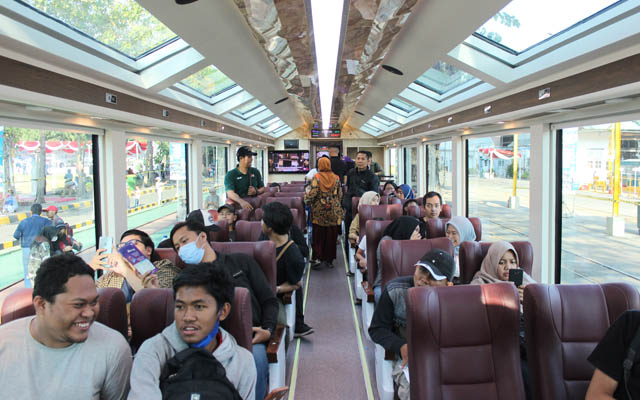
Furthermore, JakASTember.co is working with the Kereta Api Indonesia railway company to create an overland Java trip via trains. It plans to design ready-made Java packages with stopovers at major cities like Bandung, Cirebon, Semarang, Yogyakarta, and Surabaya, as well as tailor-made packages.
The consortium is also in discussion with Pelayaran National Indonesia, the national sea transportation service, to come up with cruise packages.
Singapore, Hong Kong, and Australia are among the regions affected by a global IT outage impacting airlines and businesses.
The disruption, linked to Microsoft’s Windows and cybersecurity firm CrowdStrike, is causing delays and a shift to manual check-in processes at airports.
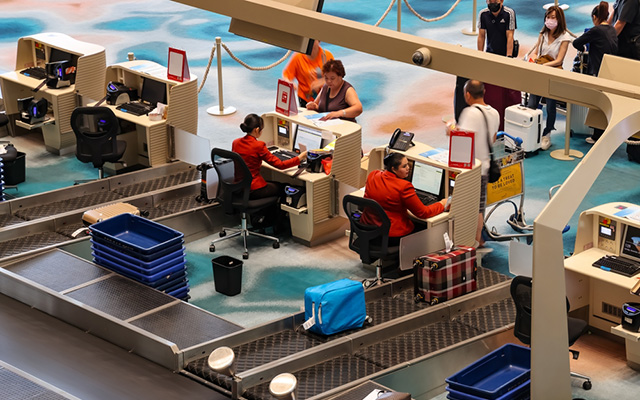
Check-in counters at Changi Airport’s Terminal 2
At Singapore’s Changi Airport, check-in for some airlines is being handled manually by airport staff, who are prioritising those with upcoming flights. Long queues were reported at Terminal 1 for Scoot flights, as self check-in machines were unavailable. To ease the wait, passengers are being offered snacks and water.
Hong Kong’s Cathay Pacific airline has also reported issues with self-service check-in facilities at Hong Kong International Airport. Passengers are advised to check in online or via the mobile app and get their boarding pass before heading to the airport.
Over in Malaysia, passengers at Kota Kinabalu International Airport in Sabah are reportedly facing difficulties checking in luggage for AirAsia flights. Additionally, the live feed of the stock exchange in Malaysia, Bursa Malaysia KLCI, is currently disrupted.
Travellers in Melbourne and Sydney are also facing delays due to the global IT issue. Some airlines at both airports are experiencing disruptions to their check-in procedures. Passengers flying out of these airports are advised to allow extra time for check-in and to contact their airline directly for the latest flight status information.
Sydney Airport has also activated contingency plans, deploying additional staff to terminals to assist with the increased passenger flow.
Cardamom Tented Camp ecolodge in Cambodia has launched its own beer with the tagline Your Beer Keeps the Forest Standing, where profits go towards conservation work at Botum Sakor National Park.
The Cardamom Mountains Steam beer, now available at the ecolodge, help fund the conservation work of 16 forest rangers who protect 18,000 hectares of surrounding lowland evergreen forest in Cambodia’s largest national park.
Cardamom Tented Camp takes profits from beer sales and guest stays to fund conservation work at Botum Sakor National Park
Since opening in 2017, the camp has operated with the slogan Your Stay Keeps the Forest Standing. Camp manager Allan Michaud shared: “Now it’s the turn of beer drinkers to take one for the team and do their bit for conservation.”
The hybrid Steam beer was selected by Michaud after tasting sessions with Yuki Aotani, founder of Flowers microbrewery in Phnom Penh. The slightly hoppy beer – already a hit with camp guests – is 5.2 per cent strong and sells in 330ml bottles for US$4.50 at the lodge’s small riverside restaurant – the Steam beers sold at the camp are in previously used 330ml bottles given to the brewery by the camp.
Each month a percentage of income from beer sales and guest stays help forest rangers reduce illegal poaching, land grabs and riverbank sand dredging. This summer the camp added two new Wildlife Alliance forest rangers bringing the total to 16 now on patrol.
Cardamom Tented Camp also sells locally made Ibis beer – profits from which are used to protect the rare Ibis bird in Cambodia – and craft beers made by the Stonehead brewery, also in Phnom Penh.
With illegal hunting down by a factor of about 90 per cent over the last seven years or so, sightings of rare wildlife such as Asian elephants, silver langurs, smooth-coated otters and leopard cats have increased in the lowland forest around Cardamom Tented Camp.
Keeping it local is important for Michaud, who said: “With local Khmer dishes also on our menu, we make it easy for our guests to enjoy food and drink that reflect the best of Cambodia.
“Almost everything we do at the camp helps conservation of the forest and supports local suppliers.”




 Let’s talk about your new opening, Nora Beach Club.


 Location


 What led to such a stellar performance in 2023?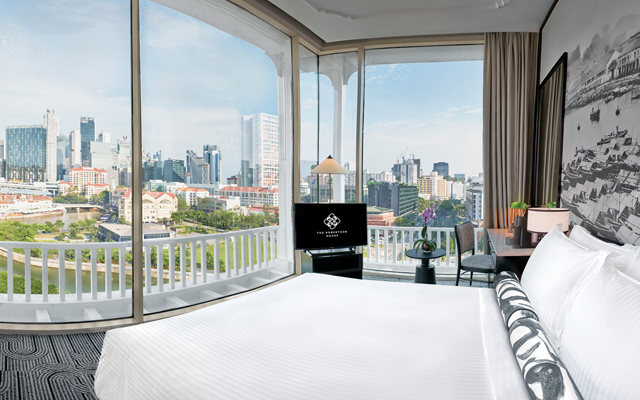




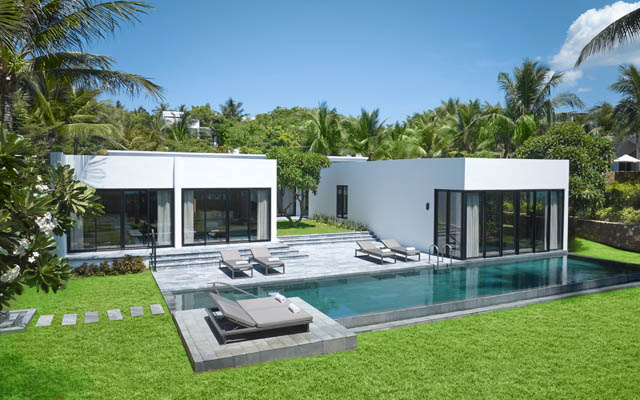






Wyndham Hotels & Resorts has teamed up with Goldstone Holdings for the new Wyndham Semporna Resort, which is expected to open in 2026.
Located on the eastern coast of Sabah, Malaysia, Wyndham Semporna Resort will feature 188 overwater villas, each equipped with modern amenities including a bathtub, sun loungers, direct sea access, and more.
The resort will feature infinity pools, a variety of dining options, including an oceanfront dining hall, and gym. Guests can enjoy activities like snorkelling, diving, island hopping, hiking and indulge in local food.
Tang Yong Chew JP, executive chairman of Goldstone Holdings commented: “We’re dedicated to turning Semporna into a top-tier destination, comparable to the Maldives. Wyndham Semporna Resort will be the first internationally branded resort in the city of Semporna and the first large-scale overwater villa property developed in Semporna.”
“The Wyndham Semporna Resort is set to become a premier destination in the area due to its unique hotel design which offers guests a tranquil getaway in Sabah, known for its sprawling coastline, secluded tropical islands and pristine rainforests,” added Matt Holmes, vice president of development for Southeast Asia Pacific Rim, Wyndham Hotels & Resorts.