TTG Asia
Asia/Singapore Thursday, 12th February 2026
Page 1942

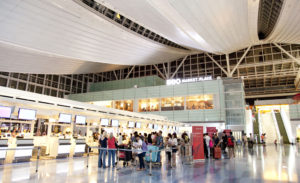
Terminals of the future

0

Mobile biometric carts, cloud technology and facial recognition systems aim to make the airport passenger experience less of a hassle. Sim Kok Chwee takes a look at new ideas in airport design and planning

15-oct-airports

Every flight for a traveller begins and ends with an airport experience and the quality of that experience has the potential to make or break the trip. Memories of yesteryear when one could breeze through all the formalities and board a plane are just distant memories as travellers today brave long queues at immigration and cumbersome security screening.

The post-9/11 airport landscape has seen added layers of security and long snaking queues at immigration and customs clearance, turning checkpoints into choke points. The impacts are felt not only by airlines which have to deploy staff to “extricate and expedite” passengers on flights that are departing shortly, but also the retail and dining concessionaires as every minute that travellers are stuck in a queue is a minute not spent browsing the retail outlets or dining at an F&B venue.

Frost & Sullivan’s Global Airport Passenger Screening Market report indicated that a slew of new technologies such as portal scanners, biometric collection devices and pre-clearance based on background investigations will transform the passenger screening process and result in unobtrusive screening. The investment in such technologies is hefty, estimated at US$1.4 billion in 2014 and increasing slightly to US$1.6 billion in 2020.

Frost & Sullivan’s senior industry analyst, John Hernandez, said: “One solution could be to supply passengers with alternate venues and automated tools to pre-screen them before they arrive at the airport.”

Identification of high-risk passengers prior to their arrival at the airport is a key element in improving security and airports are also considering innovative technologies capable of screening large numbers of passengers quickly and accurately.

Near field communication (NFC)
Many airlines and airports today work with 2D QR-coded boarding passes sent to mobile devices but there is an inherent distrust in this system as boarding passes can be forwarded, duplicated and manipulated. And when this code is not recognised or retrieved, travellers will need to have their identity verified and their boarding passes printed. This is a time-consuming process.

A short-range communication system using wireless technology that connects two devices, NFC got off to an uncertain start but momentum has been gained since 2005.

SITA and Orange have entered into a partnership to roll out a SIM-based solution that loads the boarding pass into a travel wallet in the traveller’s mobile phone at the end of a counter or kiosk check-in. This can then be used to tap into a device that grants access to lounges and boarding gates. There is no need for any mobile phone applications, boarding pass or data connectivity. This even works when the mobile phone is turned off.

In 2014, SITA and Orange partnered Air France to put Touch&Pass on a six-month trial at Toulouse-Blagnac Airport, where selected passengers with NFC-enabled smartphones flying between Toulouse and Paris Orly were able to pass through airport checkpoints by tapping their phones against dedicated readers. A previous trial was also conducted at Nice Airport. The system being trialed conformed to standards from IATA and GSMA (which represents the interest of mobile operators worldwide).

Meanwhile, NFC is already in use at Sydney, Melbourne and Brisbane airports where passengers with Android devices can download content from digital screens while waiting to board their flights.

IATA Checkpoint of the Future (CoF)
Goals of the IATA CoF initiative are pivoted towards strengthening security, increasing operational efficiency, improving passenger experience through the reduction of queue and waiting times, and the use of technology for a less invasive and disruptive search.

CoF entered its concept definition stage in 2012 where the regulatory requirements, policies, operational scenarios and technologies used were considered. The development of CoF has since included the participation of Airports Council International and specific targets were contained in the CoF2014 blueprint, with a further CoF2017 blueprint as the next objective.

By 2020, when the CoF2020 blueprint is reached, it is envisaged that “the passenger will be able to flow through the security checkpoint without interruption unless the advanced technology identifies a potential threat”. Each passenger will be assigned a level of security screening based on states of departure and arrival through real-time bilateral risk assessments.

Changi Airport’s Terminal 4
15-oct-changi-airport-rolls-out-fast-check-in-with-sia-silkair_hires

Singapore’s Changi Airport is one of the world’s more progressive airports with a proven track record of building capacity ahead of demand. It is currently operating at more than 80 per cent of its designed capacity of 66 million passengers per annum.

In 2017, Terminal 4 (T4) will be opened with a capacity for 16 million passengers annually. Six airlines – Cathay Pacific, Korean Air, Vietnam Airlines, AirAsia, Indonesia AirAsia and Thai AirAsia – will migrate to this new terminal. In 2014, these airlines collectively carried seven million passengers.

The development of T4 has presented Singapore with the opportunity to implement its Fast and Seamless Travel (FAST) initiative, which is anchored by a suite of self-service and automated options from check-in and baggage handling to immigration clearance and boarding.

FAST is supplemented by biometric facial recognition technology to eliminate the current need for manual identity verification at a minimum of five touchpoints. In a major shift in concept, a centralised and more efficient security screening system will be introduced at T4, a change from T1, T2 and T3 where security screening takes place at each boarding gate.

Changi Airport Group’s executive vice-president, Yam Kum Weng, said: “With T4’s emphasis on innovation and productivity, passengers can expect passage through the various touchpoints to be smoother and stress-free, giving them more time to enjoy the facilities and wide array of shopping and dining options.”

Biocarts at Japanese airports

Passengers arriving at Japanese airports in the future (possibly sometime after 2017) could see relief at the immigration hall. The increase in foreign visitors in recent years has resulted in longer queues and the Justice Ministry is seeking an allocation for “biocarts” in the fiscal 2016 budget. These are mobile stations that capture passport information, a visitor’s mugshot and fingerprint, which will be digitally transmitted to the immigration desk.

The time a visitor spends at the desk could be reduced by half, according to a senior Justice Ministry official. From January to June 2015, the longest waiting time for immigration was 36 minutes at Osaka Kansai, 20 minutes at Tokyo Narita,  and 24 minutes at Tokyo Haneda and Nagoya Chubu.

“Cloud” over Perth Airport
As part of Perth Airport’s AU$1 billion (US$714 million) investment in “an overall transformation of infrastructure”, it has signed an agreement with Amadeus to introduce ACUS (Airport Common Use Service).

This cloud-based technology makes use of application virtualisation that allows passenger processing systems to be accessed and deployed anywhere on demand, and on platforms ranging from desktops to laptops, tablets and other mobile devices. Passengers may be checked-in and their boarding passes printed from any location. The same devices can handle passenger processing for multiple airlines at the same time.

Concierge on the ground and in the air
SabreSonic CSS is offering airlines and airports its Mobile Concierge mobile check-in solution that promises to bring check-in agents from behind their counters to become roving customer service agents.

Working on mobile devices, agents can check in passengers, print boarding passes and baggage tags while at the same time provide a more personalised service. The system is also able to identify when a high-value customer has entered the airport vicinity and requires check-in.

The integration of a credit card and passport reader facilitates the capture of passenger information and ancillary purchases. The end result of the implementation of this technology is the reduction of passenger queueing and reduced costs by saving time and allowing ground staff to be more efficient. This system can also be further expanded to identify and deliver additional services for high-value customers in the airports and airplane cabin.

Privacy concerns, security of personal information and state security dictate that the roll-out of most such evolving technologies will take time. Until then, there are steps that airports and travellers can take to mitigate the bottlenecks and frustrations at security check points.

These include standardisation of requirements and processes at airports around the world; sign-posting security requirements a distance ahead of security checkpoints; and providing space for travellers to remove all necessary items before joining security screening queues.

Travellers can also do their bit by minimising the amount of metallic jewellery and accessories worn, and keeping mobile devices such as laptops and tablets more accessible as these must be taken out of hand luggage during security screenings.

Aviareps’ chairman and CEO Michael Gaebler noted that today’s travellers are much more connected and Asian airports are ahead of their European counterparts in providing Wi-Fi connection. With airports turning into mega malls in many cities, Gaebler feels that passengers will greatly appreciate high ceilings with more natural light and, most importantly, quiet zones.

Thankfully, there are airports in the Asia-Pacific region that already have light and airy terminals, themed gardens, quiet snoozing corners and spa facilities with swimming pools. Travellers at Incheon Airport can even gain hands-on experience in Korean arts and crafts, and witness a royal procession as it weaves through the terminal several times a day.

Indeed, the already pampered traveller’s airport experience is all set for a game-changing revolution in the coming decade. Hub airports and those aspiring to be one will have to make that big leap in mindset and investment to offer a more pleasant experience from kerbside to aerobridge and vice versa.

This column is brought to you by TravelRave, Asia’s premier travel and tourism week offering a dynamic platform for business leaders and industry professionals to convene and share insights on pertinent issues and key trends in the travel industry. The events, co-located in Singapore under the auspices of the Singapore Tourism Board (which also organises the Asia Travel Leaders Summit), will be held from October 19-23.

This article was first published in TTG Asia, October 16, 2015 issue, on page 15. To read more, please view our digital edition or click here to subscribe.

All you need is love

0

A small hotel buy can translate into something bigger. Raini Hamdi reports from Liverpool, where Millennium & Copthorne (M&C)’s acquisition of the world’s only Beatles-inspired hotel has been completed

15-oct-dewey-and-aloysius-079

The price of £13.8 million (US$21 million) which M&C paid for the Hard Days Night Hotel (HDNH) in Liverpool is seen as ‘small change’ for its executive chairman Kwek Leng Beng, but expectations of the value the hotel can bring to M&C, and to Liverpool, are not as puny.

The chain believes the hotel can be even more profitable but, more than that, it has gained a unique marketing instrument that it can use to drum up awareness of its 24 hotels in Britain and Europe. And Imagine, in the future there could be other HDNHs in places where The Beatles has a following. That’s practically everywhere.

Aloysius Lee, CEO of M&C, is already toying with two travel trade functions in New York and Singapore hinging on HDNH to promote M&C hotels. He is also persuading Asian tour operators to launch a London and Liverpool itinerary. The drive between the two cities is a long three hours, but the pain can be lessened for Asian clients especially with a stop at the Bicester Designer Outlet Village located halfway through the journey, he said.

Lee needs the international market to fill the hotel during weekdays, when occupancy languishes, while weekends are a full house thanks to the domestic market.

Liverpool’s Lord Mayor, Tony Conception, hopes M&C will be successful in bringing more Asian visitors to Liverpool. The city has shed its poor image and has been regenerating itself since 2008, when it was conferred the European Capital of Culture status, he said.

A £1 billion shopping mall, One Liverpool, has opened. So has an exhibition centre on the waterfront with a capacity for 6,000 pax. Next door are a convention centre and a concert arena. Hotel roomcount has tripled to 7,700 today, from 2,300 in 2008. A partnership among the City Council, police and emergency services to keep the city centre and the night-time economy safe has helped Liverpool earn a Citysafe certification by an independent body year after year, said Conception.

Things are looking up or, as Lee put it, “are coming to a tipping point” for Liverpool, part of a region George Osborne called the “Northern Powerhouse”. The Chancellor, in China recently, opened a pitch book on more than £24 billion of investment opportunities in the region.

And Liverpool can do with continued growth. The City Council has racked up a debt of some £20 million from the reconstruction since 2008 while unemployment rates are still high, City of Liverpool statistics show.

Come together
An estimated 600,000 people each year visit Liverpool to retrace the footsteps of the Fab Four: John Lennon, Paul McCartney, George Harrison and Ringo Starr. They go to Beatles Story, the world’s largest permanent exhibition devoted to the lives and times of The Beatles; on a Magical Mystery Tour in a psychedelic bus that stops at world-famous Beatles sites from Penny Lane to Strawberry Field; to the Cavern Club where The Beatles had played nearly 300 times; to the International Beatleweek Festival, the biggest Come Together in the world featuring over 200 bands from across the globe.

Said Dave Jones, owner of the Cavern Club: “It was obvious to me back in the 80s, when tourism was first included in the economic planning, that Liverpool’s USP was Beatles by a mile, followed by sports, beautiful buildings, museums, maritime history, etc. But people weren’t going to come just to look at buildings; there had to be something global, and which no other city could claim birthrights to. For me, it’s a no-brainer: why waste time selling cathedrals when you’ve got brand Beatles?”

Strangely though, no one had thought to come up with a Beatles-themed hotel until Tony Criss, who acquired the lease on a heritage building next to the Cavern Club in 2006, developed HDNH from scratch and opened the hotel in 2008. Criss put it up in the market last March; it was speculated Marriott’s Autograph Collection was in talks with him in 2013 but nothing came of it. One look at the hotel and Kwek was sold, closing the deal in under two hours and paying more than the reported asking price of £11 million for the 113 years left on the hotel’s lease.

Fundamentally, HDNH is a stylish design hotel that looks brand new and has the wherewithals to please the modern leisure and business traveller. It rests easily in the lifestyle category – the current rage of hotel chains which are scared to lose out on the New Gen. A night’s stay shows it is neither a tacky theme hotel nor a Beatles museum hotel that takes itself too seriously. On the contrary, it gives the sense it is paying homage to a legend in subtle, creative ways and, being in the birthplace of The Beatles, achieves a sense of place that many hotels can only dream about.

“When we opened, we called ourselves a Beatles-themed hotel and that was a mistake. People think theme hotels are tacky; trying to convince them we’re a serious hotel is a challenge. That’s why we call ourselves a Beatles-inspired hotel,” said general manager Michael Dewey. “No matter how much you tell them how stylish it is, they’ve got to cross the threshold to believe it.”

In the seven years of operation, many did. “We compete with other brands such as Hilton and Crowne Plaza and outperformed them on all three measures, not that often on occupancies but always on rates and RevPAR. And we did that as an independent, i.e., without M&C, and without affiliations or alliances, but with brand Beatles,” said Dewey, who claimed an AOR of 78 per cent and an ARR of £89 in a year, 80 per cent leisure and 20 per cent corporate.

The city’s AOR rose to 75.5 per cent last year from 71.2 per cent in 2013, while RevPAR rose to £46.33 in 2014 from £41 in 2013.

Americans are HDNH’s biggest foreign market, and there is a sprinkling of Asian customers. Visit Liverpool data shows 62 per cent of visitors are domestic and 38 per cent are international, mainly from Ireland, Spain, Australia, America and France. While Liverpool continues to see growth in domestic arrivals and visitors from France and America, those from Japan, Ireland, Spain and Germany are continuing to decline. The smaller Asian markets such as the Philippines, Indonesia and Hong Kong are also on a decline.

The entry of an international chain with Asian roots is akin to Here Comes the Sun for HDNH and Liverpool.

Said Dewey: “My market is everywhere, as everywhere in the world there are Beatles fans. But as an independent, we don’t have loads of money. And that’s why M&C suddenly gives us an international platform. I can’t see us doing anything but grow from strength to strength. We will be the busiest hotel, and there will be an increase in international customers.”

The big question, however, is whether The Beatles continues to resonate with younger travellers. Dewey said: “If you’re a Beatles fan, you’re 65 years old plus, easily. But the generation span that loves the songs ranges from 12 years old to … old. Just take the Magical Mystery Tour and you’ll see how extraordinary the age span is.”

Julia Baird, John Lennon’s sister, told TTG Asia: “It’s less and less about The Beatles per se, or each individual in it. It’s more and more about the music. Why do people study Beethoven? Because the music is wonderful and it transcends geographic boundaries – many Chinese are studying it and are excellent at it. Beatles is going that way. The music lives on.”

As for what she would hope M&C would do with HDNH, Baird said: “Not change things too much. Not put the Millennium stamp on it. That would be a mistake. It is its own brand. You’ve got a format here and it really works, you wouldn’t have bought it if it didn’t.

“May be you could repeat it in New York, Tokyo, Shanghai or Beijing but don’t change it. I’m sure there’s a market for this everywhere.” In other words, Let It Be.

This article was first published in TTG Asia, October 16, 2015 issue, on page ,4. To read more, please view our digital edition or click here to subscribe.

Bangkok Airways links Phuket and Hat Yai with new daily service

0

bangkok-airways-links-phuket-and-hat-yai-with-new-daily-serviceCredit: Bangkok Airways

BANGKOK Airways has launched a new service between Phuket and Hat Yai, Thailand. The daily flight will be operated on an ATR72-500/600 with 70 economy class seats.

The plane from Phuket will leave at 07.25 and arrive at Hat Yai at 08.30, while the return flight will depart Hat Yai at 09.10 and arrive in Phuket at 10.15.

The airline currently operates several other routes from Phuket to other destinations in Thailand such as Bangkok (eight flights daily), Chiang Mai (one flight daily), Samui (four flights daily) and U-tapao, Pattaya (one flight daily).

InterContinental Manila to close down after 46 years in operation

0

intercontinental-manila-to-close-down-after-46-years-in-operationCredit: InterContinental Manila

AFTER 46 years of existence, InterContinental Manila will be shutting down this year-end. The hotel has become a casualty of plans to transform the entrance of Ayala Center Makati, where it sits, into a modern gateway of mixed-use developments.

The closure is timed with the termination of the hotel management contract between owner AyalaLand Hotels and Resorts Corp (AHRC) and InterContinental Hotels Group (IHG).

“IHG continues to manage AHRC’s other property in Makati, Holiday Inn and Suites Makati. We remain focused on our growth in the Philippines and look forward to further opportunities with the group,” said Leanne Harwood, vice president, operations, South-east Asia, IHG.

Michael Alexis Legaspi, COO, AHRC, said that all InterContinental Manila’s regular employees were first informed of the closure and given ample support and assistance.

“We express our deep appreciation to our hotel colleagues and assure them that we are looking after their welfare, and we will assist them in making the transition as smooth as possible,” Legaspi said.

Ctrip links arms with Singapore’s BeMyGuest to enhance Asian inventory

0

ctrip-links-arms-with-singapores-bemyguest-to-enhance-asian-inventoryScreenshot of Ctrip’s website featuring a cycling tour. Credit: Ctrip

CTRIP has partnered Singapore-based BeMyGuest to integrate the latter’s application programming interface (API) for Asian activities and tours, making it the first API to be fully integrated into the Chinese OTA’s website and mobile app.

Ctrip’s customers will be able to access BeMyGuest’s more than 10,000-strong inventory in over 600 destinations across Asia inclusive of attractions, day tours, activities, private tours and local experiences.

Pan Fei, CEO, integrated business of things to do (TTD) and activities, said: “The API integration is in line with Ctrip’s expansion into activities and tours. TTD has seen peaks of 10,000 bookings per day since its launch in mid-2014.”

Over 60 per cent of all Ctrip’s bookings last year were made on a mobile devices. The company introduced WeChat payments and mobile Wi-Fi access with global coverage to outbound Chinese tourists in the same year, which currently commands over 30 per cent market share.

Clement Wong, CEO at BeMyGuest, said: “Our API is multi-platform enabled and offers dynamic pricing as well as geolocation targeting. It is available in English and Mandarin, with other Asian languages to be rolled out in 2016. Customer service support is available 365 days a year.”

Carnival Corp to steer Carnival, Aida cruise brands into China

0

carnival-corp-to-steer-carnival-aida-cruise-brands-into-chinaCredit: Carnival Corporation

HOT on the heels of Norwegian Cruise Line announcing its first-ever ship for Chinese cruisers, Miami-based Carnival Corporation has also revealed plans to deploy two additional brands – Carnival Cruise Lines and Aida Cruises – in China in 2017, joining sisters Costa Cruises and Princess Cruises in the Chinese market.

Announcing the move at the 10th Annual China Cruise Shipping and International Cruise Expo (CCS10) in Shanghai, Arnold Donald, CEO of Carnival, said: “As we execute our multi-brand growth strategy in China, we are emphasising choice and variety in our offerings to match the different tastes and preferences of Chinese travellers.”

Christine Duffy, president of Carnival Cruise Line, added: “With cruise demand rapidly increasing in China and our ability to work in partnership with other Carnival Corporation brands to leverage our collective experience and scale, it provides an outstanding opportunity for Carnival Cruise Line to enter the Chinese market.”

This announcement comes in the wake of recent news of expansion into the Chinese market in 2016 and 2017 by the company.

With the addition of Carnival Cruise Line and AIDA Cruises brands, Carnival Corporation will be operating four cruise brands in the Chinese market. Further details on plans for each respective brand to enter the Chinese market in 2017 will be announced.

Carnival is also exploring potential joint ventures with China State Shipbuilding Corporation (CSSC) and China Merchants Group (CMG) to accelerate the growth of the overall cruise industry in China, including the possibility of building new ships, launching a domestic cruise brand, and supporting port and infrastructure development.

[Sponsored Post] IT&CMA and CTW Asia-Pacific 2015 keynote speaker

0

30 distinguished speakers fronted 20 MICE, events intelligence, corporate travel and association management knowledge sessions during the three-day event from 29 September to 1 October in Bangkok.

Headlining this education front with the Keynote Session was Gary Grimmer, CEO of GainingEdge, one of the most well-known Australian-based consultancy firms in the business. With over 30 years’ experience in the convention industry, Grimmer is widely regarded as the industry ‘who’s who’.

sponsored-post-itcma-and-ctw-asia-pacific-2015-keynote-speaker

In an exclusive 4-part video released in partnership with International Meetings Review (IMR), Grimmer explains why the business events sector is a determining factor in global connectivity, trade and intellectual engagement, and how the industry has to redefine its role beyond tourism – in trade, economic development and the building of association-led connections.

Global Connectivity
https://www.youtube.com/watch?v=SDlgC9maibk&feature=youtu.be

DMO Inertia
https://www.youtube.com/watch?v=dSDdVVvWYHI&feature=youtu.be

Association Development – How Singapore Became Association Central
https://www.youtube.com/watch?v=D5DzepnHIBk&feature=youtu.be

Building Blocks to A Knowledge and Creative Society
https://www.youtube.com/watch?v=jnhYnW_osb0&feature=youtu.be

Other ready interviews featuring IT&CMA and CTW Asia-Pacific 2015 delegates include:

  • Organiser, Darren Ng, Managing Director of TTG Asia Media
  • Host Committee Partner, Nopparat Maythaveekulchai, President of Thailand Convention & Exhibition Bureau
  • Industry Partner, Dee Suvimol, ASEAN Secretariat
  • Exhibitor/Sponsor, Maureen O’Crowley, Executive Director, MICE Division of Seoul Tourism Organization
  • Exhibitor/ Sponsor, Domingo Ramon C Enerio III, Chief Operating Officer of Tourism Promotions Board Philippines
  • Exhibitor, Ian Stazicker, Group Marketing Director of Value Retail China
  • Exhibitor, Christophe Verstraete, Executive Director of euromic
  • Exhibitor, Anja Loetscher, Director of Geneva Convention Bureau
  • Exhibitor, Paul Counihan, Cluster Director, Sales & Marketing of Anantara
  • MICE Buyer, Lt. Col Akbar A. Shareef, Chairman and CEO of Rakaposhi Tours Pte Ltd
  • MICE Buyer, Rich Wise, President of Wise Incentives
  • Association Buyer, Daniel Wood, President of World Freestyle Football Federation
  • Sponsor, Craig Ryan, Managing Director APAC of Oakwood Worldwide
  • Sponsor, Jastina Balen, Director, Group Branding and Communications of Frasers Hospitality
  • Corporate Travel Manager, Kishore Rames. Travel Manager, Asia Pacific of National Oilwell Varco
  • Industry speaker, Alvan Aiau, Vice President Global Sales of Carlson Wagonlit Travel
  • Industry speaker, Noor Ahmad Hamid, Regional Director Asia Pacific of ICCA

To watch their interviews and more, please click here:
IT&CMA videos | CTW Asia-Pacific videos

Starwood dangles more rewards for SPG Pro loyalty programme

0

starwood-dangles-more-rewards-for-spg-pro-loyalty-programmeCredit: W Singapore – Sentosa Cove

STARWOOD Hotels & Resorts yesterday celebrated the first year anniversary of SPG Pro, its loyalty programme for meeting and travel professionals, with the launch of the SPG Pro Double Double promotion.

The offer enables members to earn double Starpoints and double eligible nights towards elite status on meetings and events booked through December 31, 2015, for arrivals by December 31, 2016.

The promotion also sees the roll-out of a US$2 million global media campaign designed to recognise and excite existing members as well as attract new ones.

During the promotional period, registered members can earn two Starpoints for every US$3 of eligible revenue spent on qualifying meetings or events, and reach elite status faster by earning two eligible nights for every 20 consumed group room nights.

Kirschner Travel Manila delves deeper into marine wildlife tours

0

kirschner-travel-manila-delves-deeper-into-marine-wildlife-toursTubbataha Reef. Credit: 123rf

KIRSCHNER Travel Manila has launched customised tours for those interested in marine wildlife such as dugongs, whale sharks, rays and giant turtles that abound in various parts of the Philippines.

What sets these tours apart from other packages is the uncompromising respect for the animals and their environment. “My main concern is ensuring the tours do not harm these threatened species and their habitat,” AA Yaptinchay, general manager, Kirschner Travel told TTG Asia e-Daily.

One of the few marine wildlife experts in the country, Yaptinchay has been involved in tourism development and marine conservation for over 20 years. He chose Donsol in Sorsogon and Tubbataha Reef and Busuanga in Palawan to launch the initial tours.

“I’m connected to those sites personally through my conservation work, so I am quite familiar with the operators, guides and how the sites are being managed. These are sites which value conservation of the marine environment,” he explained.

Yaptinchay believes that marine tourism is now ripe for development, as the Philippine Department of Tourism “has taken solid steps in wildlife to regulate interaction with marine wildlife”.

As well, an increasingly mature visitor profile seeking quality over quantity will make such tours feasible. He added: “These days, people are seeking better, more unique experiences, with costs being secondary.”

SIA to revive direct US flights with ultra-long-range A350

0

sia-to-revive-direct-us-flights-with-ultra-long-range-a350Computer-generated image of the A350-900ULR in Singapore Airlines’ livery. Credit: Singapore Airlines

SINGAPORE Airlines, in partnership with Airbus, will be the first to launch a new ultra-long-range variant of the Airbus A350 aircraft, allowing the resumption of non-stop flights between Singapore and the US.

The national carrier currently has 67 A350-900s on firm order plus 16 purchase options. With the new agreement, seven of the planes will be upgraded to the A350-900ULR, which has a range of 8,700 nautical miles.

Deliveries of the A350-900ULR are scheduled to take place in 2018, enabling the re-launch of the world’s longest commercial passenger route, with an expected flight time of 19 hours, between Singapore and both Los Angeles and New York. The service stopped in 2013 when the A340-500s being used on the route were retired.

The aircraft will be fitted with all-new cabin products which are currently under development, while non-stop flights between Singapore and other cities in the US are also under consideration.

“Our customers have been asking us to restart non-stop Singapore-US flights and we are pleased that Airbus was able to offer the right aircraft to do so in a commercially viable manner,” said Goh Choon Phong, CEO of Singapore Airlines.