TTG Asia
Asia/Singapore Sunday, 14th December 2025
Page 1797

Curious encounters in Sri Lanka

0

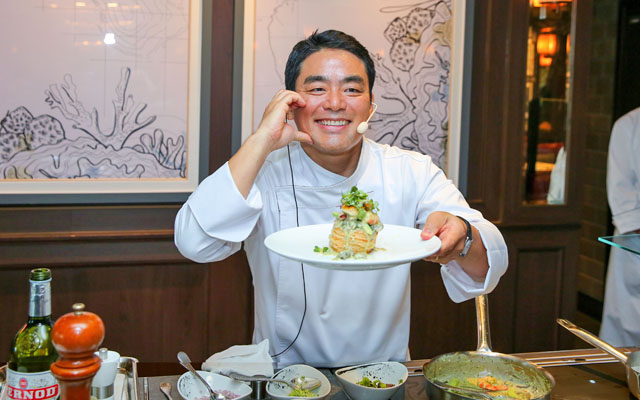
27-may-rukmankan_sivaloganathan_trekuriousWHO Rukmankan Sivaloganathan (below), co-founder and CEO of Trekurious.com, an experiential travel and lifestyle company based in Sri Lanka, was formerly a well-paid banker but felt that “something was missing” in his previous job.

During a visit to Hindu temple ruins in Cambodia on a group tour, the assigned guide fell ill and was quickly replaced on-site by an archaeologist who gave the visitors a whole new paradigm on Cambodian culture, history and their way of life.

“This was my eureka moment,” he recalled.

In his current role, Rukmankan leads Trekurious.com in its strategy, product and business development, and seeks to fill the many gaps in the high-end travel market.

WHAT Trekurious.com offers a wide range of experiences to travellers. Instead of tour guides, the company arranges for meetings with architects, historians, authors and sportspersons who play hosts for the duration of the tour.

“We find a great experience, curate it by putting it together, find a good host, structure it, test it, trial it and then take it online,” Rukmankan elaborated.

Interested parties select the experience or activity on the website and make a booking. A confirmation email will then be sent with all the necessary information.

Examples of tours include a Dodgy Bar Tour of Colombo, where a local will take visitors through the city’s oldest watering holes and relate quirky facts relating to the origins and history of each bar while sipping on local beers.

Travellers can also try their hand at making traditional Sri Lankan masks – from the carving and whittling to the painting and decoration.

They could also visit a restaurant and learn how to cook Sri Lankan food from a chef, enjoy the dishes and leave with detailed recipes to recreate them at home.

WHY Sivaloganathan believes that travellers today are discerning and prefer an active holiday that provides a variety of experiences, instead of a group tour package with standard offerings.

He has also observed that once a visitor has had a unique experience, they eventually return for more, becoming repeat customers.

27-may-visit-to-an-art-gallery-part-of-the-experience-travel-events-conducted-by-trekurious_cmyk

TARGET Trekurious.com has two business models: travel experiences and lifestyle experiences. The first category usually comprises middle-aged travellers who hail from the UK, the US, Australia and India. The second category caters mostly to 20- to 50-year-old Sri Lankans and expats.

Since opening in 2013, the company has hosted hundreds of foreign and local travellers on many curated travel experiences.

In addition to its B2C component, the company also sells B2B packages through DMCs keen on enriching their itineraries with hosted events. To date, the company has dealt with six DMCs in Sri Lanka and has conducted 30 experiences through them.

This article was first published in TTG Asia, May 6, 2016 issue, on page 13. To read more, please view our digital edition or click here to subscribe.

Female power

0

How Seoul is enticing female travellers with the promise of safety and Korean dramas

27-may-femalepower

Seoul has long had a reputation for meeting the needs and desires of female travellers, but after a disappointing 2015 for South Korea’s tourism sector as a whole, the trade is once again keen to flaunt its positives to attract more ladies.

While the MERS outbreak last year slowed international visits by some 50 per cent during the June and July period, said Eric Funtowicz, director of sales and marketing for AccorHotels Korea, the company was quick to remedy the situation by leveraging its relationships with agencies and wholesalers to introduce promotions and special offers for the leisure segment.

Despite increasing competition from a growing hotel supply, 2016 already looks better than last year, added Funtowicz, with female travellers keen to return.

“South Korea definitely has strong assets for this segment of travellers as it is one of the safest destinations worldwide. It has easy international access, good public transportation, attractive touristic and cultural points of interest, shopping opportunities, an active nightlife and international dining venues,” he pointed out.

Also aiding Seoul’s appeal to women travellers is the availability of spas of high standards throughout the city.

For instance, Hotel Shilla has teamed up with French cosmetics brand Guerlain for its spa, where a dozen professional therapists iron out kinks picked up during the day’s exertions.

The signature treatment at W Hotel’s Away Spa is a total body massage and scrub with lavender flower buds and warm salt, while the elegant spa at Four Seasons Hotel Seoul makes use of traditional Korean therapies.

A number of hotels have also instituted ladies-only floors in their properties, including Lotte Hotel Seoul, Best Western Premier Kukdo and Hotel SkyPark Myeongdong.

“Our location in Itaewon is one of the main reasons why female guests chose our hotel,” said Jordan Yoo, sales executive, Imperial Palace Boutique Hotel told TTG Asia. “This area has some of the best nightlife in Seoul, all within walking distance, and women like that it is so safe.”

With Korean popular culture a significant export, the city is welcoming women looking to visit locations in their favourite films or drama series, and to attend concerts by K-pop bands.

The city’s landmarks are also proving popular, such as the royal palaces, the Seoul Tower on Mount Nam, and Noryangjin Fish Market. The market has become a must-see destination for Chinese tourists, with more than 1,000 visitors daily, in part because the location features in the soap opera My Love from the Star, which has a large following in China.

“Malling” has entered the Korean language thanks to the number of malls in Seoul. Parnas Mall and the COEX Mall in Gangnam have both reported a dramatic rise in foreign visitors, while the Yeouido IFC Mall is the largest in the country.

This article was first published in TTG Asia, May 6, 2016 issue, on page 23. To read more, please view our digital edition or click here to subscribe.

Premier Inn makes Indonesian debut in Surabaya

0

superior_room_premier_inn__surabaya

UK’s largest budget hotel chain Premier Inn has rolled out its expansion strategy in South-east Asia by launching its first Indonesian hotel in Surabaya, with further growth planned for the country as well as more openings in Thailand and Singapore.

The 129-room Premier Inn is located a five-minute drive from Juanda International Airport, close to the city centre and attractions such as the Surabaya Night Carnival Theme Park.

President and managing director at Premier Inn International, Ratnesh Verma, said: “We’re confident that our new hotel will set a definitive benchmark in our hospitality sector for Surabaya, and become the preferred choice for value conscious travellers.”

Premier Inn is targeting 50 hotels by 2020 outside its UK home base, where it currently operates over 700 hotels and more than 60,000 rooms.

Asian luxury market to sprint faster than Europe’s

0

asian-tourists-rodeo-drive

Tourists on Rodeo Drive, Beverly Hills, upscale shopping and dining district in California, US

ASIA-PACIFIC’s luxury travel market will see faster overall growth than Europe’s from 2011-2025, according to a new Amadeus report featuring data from Tourism Economics.

North America and Western Europe accounts for 64 per cent of global outbound luxury trips, but the Compound Annual Growth Rate (CAGR) in luxury outbound trips for Asia-Pacific from 2011-2025, projected at 6.3 per cent will be higher than Europe’s (5.3 per cent).

Leading the region are India and China, with a CAGR of 12.8 per cent and 12.2 per cent respectively. India’s projected growth in luxury travel is the highest of the 25 countries explored in the report and presents great potential for luxury travel investment over the coming decade.

The report further finds that growth in luxury travel will outpace overall travel, spurred on by consumers’ desire for life experiences. Over the next 10 years, the growth rate in outbound luxury trips is projected at 6.2 per cent, almost a third greater than overall travel (4.8 per cent).

“The Asian luxury travel market is one to watch. It presents a lucrative opportunity for travel players but will not be an easy one to crack. Asian luxury travellers have a unique set of motivations and needs – truly understanding what drives their travel behaviour will be critical for travel providers looking to tap into that segment,” said Hazem Hussein, executive vice president, airline commercial, Amadeus Asia Pacific.

Berlin aims to be European gateway for Asian visitors

0

berlin-brandenburg-gate

Berlin’s iconic Brandenburg Gate

TOURISM agency visitBerlin is boosting ties with travel trade partners here and positioning Berlin as the gateway to central Europe.

Ralf Ostendorf, director market management, visitBerlin, said: “Berlin is easier to sell to Asian travellers when combined with Prague, Vienna and Budapest because central Europe is still regarded as (undiscovered) and is very interesting for travellers.”

Ostendorf concedes that while north Asia and South-east Asia are still small markets that only contributed 3.2 per cent of total arrivals in Berlin last year, there is a lot of potential for growth, particularly from China, South Korea, Indonesia, Malaysia, Singapore, Thailand, Vietnam and the Philippines.

He said: “We are taking it step by step, working with the local trade in Asia to understand market needs before reaching out to consumers. In a more mature market such as China, we are already (involved in) B2C activities and social media outreach.”

As well, visitBerlin hopes to increase the length of stay of Asian travellers, averaging three days presently, by promoting the city as a cultural attraction that is worth visiting any time of the year.

It is also banking on the opening of the new Berlin Brandenburg Airport to improve air connectivity between Berlin and Asia.

The project has however, been plagued by delays, and opening dates had been pushed back five times thus far, with 2H2017 given as the latest estimated opening period. Meanwhile, Frankfurt and Munich serve as gateways into Germany for longhaul flights from Asia.

A buyer, Abdul Rahman Mohamed, deputy general manager channel management at Mayflower Acme Tours based in Kuala Lumpur, said: “Germany is increasingly becoming a mono destination for corporate incentive travel where a visit to Berlin is a must.

“Leisure travellers from Malaysia travelling longhaul to Europe will always want to cover as many countries as possible, and our eight-day packages covering Berlin, Prague, Vienna and Budapest sell well.”

Agents urged to bring clients back to Nepal

0

durbar-square-of-kathmandu-april-2016

Durbar square in Kathmandu, Nepal a year after the 7.8-magnitude earthquake

ASIAN travel agents are being urged to bring clients back to Nepal, with the government drumming the message, ‘Safe, visit, enjoy and help Nepal’.

Nepal commemorated a year of the 7.8-magnitude Nepal earthquake that struck an area between the capital Kathmandu and the city of Pokhara on April 25, and in Singapore recently to correct misconceptions about safety or lack of infrastructure, Nepal ambassador to Thailand, Singapore, Brunei and Laos, Khaga Nath Adhikari, said: “The airport was safe even on April 26 last year. More than 90 per cent of hotels in Kathmandu were safe and only three trekking routes were affected.

“The government has done two things: put photos of how damaged temples or monuments looked before the earthquake, so tourists could compare them with what they see today. If they are risky, the government forbids them from entering. It’s the same with trekking routes – if they are dangerous the government would not allow visitors on them – there is no way we want to risk the lives of tourists.”

Half of arrivals to Nepal is for holiday, and another 12.5 per cent each is for trekking and mountaineering, and pilgrimage, 2014 data from the Ministry of Culture, Tourism and Civil Aviation shows. With more than 750 monuments and monasteries destroyed by the earthquake, which claimed nearly 9,000 lives, along with concerns over safety and state of infrastructure such as hotels and roads, visitors have kept away. Nepal’s top markets in 2014 were India, China, the US, Sri Lanka (taking Thailand’s spot in 2013) and the UK.

When asked why tourists should return now, Adhikari said visitors would still be able to enjoy Nepal’s diverse attractions, be it culture, adventure, religious tours, etc, and while doing so they would be helping Nepal. “When Nepal people see tourists, we will feel we are not alone or isolated,” he said.

Adhikari expects Nepal arrivals to be back to 2014 level of 790,118 visitors by the end of this year or next.

Surreal Destinations Singapore recently brought a group of four people, three of them expats, from Singapore at their own request to Nepal. It intends to organise a CSR campaign to educate and create awareness of Nepal, tentatively in the last quarter.

Nikko bows out of Bali while Hilton debuts

0

conrad-bali

Conrad Bali

GRAND Nikko Bali is bowing out after being part of the furniture in Nusa Dua, making way for a Hilton hotel effective December 1.

This will be the first Hilton-branded hotel in Bali and the third Hilton Worldwide hotel on the island after Conrad Bali and Hilton Garden Inn Bali Ngurah Rai Airport.

Said Guy Phillips, senior vice president development, Asia and Australasia, Hilton Worldwide: “In partnership with P.T. Caterison Sukses, the Hilton Bali will be a strong addition to our portfolio.”

Hilton Bali will offer 389 rooms and 19 one-, two- and three-bedroom villas with beachfront, ocean or garden views. There will be five F&B outlets, meeting and banquet facilities spanning 3,737m2 and other beachfront, cliff-top and poolside venues. The hotel will have four inter-connected swimming pools, a children’s lagoon, three tennis courts, a fitness centre and a kids’ club.

Changing market mix rattles Thai agents

0

charoen-wangananont

Charoen Wangananont, ATTA president. Photo credit: ATTA/Facebook

SIGNIFICANT drops in international arrivals from some source markets in the first quarter have rattled the Association of Thai Travel Agents (ATTA), although business sentiments among Thai travel agents remain satisfactory.

ATTA president Charoen Wangananont said the domestic political situation and unfavourable economy in some markets, particularly Russia and Scandinavia, are repelling their travellers from Thailand.

According to ATTA numbers as of April 30, arrivals from Scandinavia last month totalled 4,286, down 43 per cent since end-2015, while the number of Russian tourists in the same period had fallen by 30 per cent to 107,305.

Agents have been relying more on Chinese arrivals instead, but that too comes with its own set of problems, added Charoen.

Tourists from China grew 71.14 per cent year-on-year to almost eight million arrivals in 2015, accounting for 26.55 per cent of total international arrivals in Thailand last year.

However, the competition for a slice of the pie has also resulted in conflicts with local people caused by some ill-mannered Chinese visitors, illegal tour guides and cheaply-priced travel packages.

In Q2, Charoen expects international arrivals in Thailand to rise 10 per cent year-on-year, compared with a 17 per cent growth seen in Q1, due to a high base during the same period last year.

By Sarun Saelee

– Rate quandary and the quest for high-yield clientele, read our Thailand report, TTG Asia, June 3 issue

Last-minute bookings 23 per cent cheaper, says HRS

0

tobias_ragge_a40a7018_final

Tobias Ragge, HRS’ CEO

SAME-DAY hotel bookings are on average 23 per cent cheaper than rooms booked in advance, according to a longitudinal study conducted by corporate reservations platform HRS.

An analysis of its corporate customers revealed that 58 per cent of them tend to make accommodation bookings up to two weeks in advance while 32 per cent book far in advance of more than 14 days.

The study stated: “In exchange for the early booking and the feeling of security, they have to accept room prices that are, on average, 10 per cent higher than short-term bookings. Last-minute bookers are able to secure rates that are, on average, the least expensive, paying almost a quarter less than those who plan ahead.”

It added that most of HRS’ last-minute bookings are made through mobile devices.

Said HRS CEO Tobias Ragge: “Mobile is the current trend and it will define the future of the travel industry. Even today, 40 per cent of all search queries we receive on our portal are made through smartphones and tablets.”

The report warns that there are exceptions to this phenomenon, such as during peak seasons caused by large-scale events, where room availability is made scarce, thus inflating room prices.

NATAS president gets re-elected despite rivalry

0

mr-devinder-ohri1

Devinder Ohri, NATAS president

THE National Association of Travel Agents Singapore (NATAS) has appointed Devinder Ohri as its president for a second term.

Ohri, along with 10 other elected office-bearers that jointly form the NATAS Executive Committee, will serve from now till 2018, when the next election is to be held.

The committee sees six new members, including Steven Ler as deputy president, Albert Hong as secretary-general and Simon Er as treasurer.

According to a NATAS statement, four of the committee positions were contested by a rival team but Ohri’s administration managed to hold onto them “with an average margin of 66 per cent of the valid votes cast”.

Commenting on the internal rivalry put up by members presumably from those who set up the Travel Revolution fair, Ohri said: “Healthy competition in free and fairly contested elections is good for any democratic association because it ensures renewal as we mature and move forward.”