TTG Asia
Asia/Singapore Wednesday, 8th April 2026
Page 1756

Onyx expands into Australia with Melbourne property

0

shama-luxe-aurora-melbourne-central

Onyx Hospitality Group is set to open its first property in Australia with the signing of the Shama Luxe Aurora Melbourne Central.

The 252-unit serviced apartment will be located within the 92-storey mixed use Aurora Melbourne Central development from floors 10 to 32. Construction of the property is scheduled for completion in the second half of 2019.

On-site facilities include a restaurant, executive lounge, swimming pool and fitness centre.

Onyx has a portfolio of 10 operating Shama properties in China, Hong Kong and Thailand, with eight additional Shama properties under development in locations such as China and Malaysia.

Messe Berlin affirms Singapore as ITB Asia’s host destination

0

itb-asia-opening
ITB Asia 2016 opened yesterday morning at Marina Bay Sands, with Singapore minister for trade and industry (industry) S Iswaran (centre) as the guest of honour

Messe Berlin (Singapore), organisers of ITB Asia, has decided to stay put in Singapore for the next few years, said Martin Buck, Messe Berlin’s senior vice president.

An MoU to affirm this commitment was signed between Messe Berlin (Singapore) and the Singapore Tourism Board (STB) yesterday.

He elaborated: “Singapore as a city still offers the convenience when it comes to organising a tradeshow – be it the availability of hotels, and convenient access to both airport and tradeshow location.

“We’ve enjoyed a constructive and fruitful cooperation with STB for almost a decade, and it’s obvious we don’t have a reason to leave the city.”

When asked about future editions of the tradeshow and what it might hold for both buyers and exhibitors, Buck told TTG Asia that they were working on a matching process to create situations where appointments will bear a higher likelihood that deals will be struck.

“This is based on a steadily improving matchmaking system which tries to include more relevant information about what a buyer wants, and what an exhibitor has to offer. This strategy – which is more of a steady improvement process rather than a dramatic change of the format itself – is one that we will continue over the years to come,” he added.

As for the inaugural ITB China happening next year in May, Buck explained that the event would focus exclusively on Chinese buyers there, making it unique.

He shared: “We have already done up agreements with five of the biggest Chinese online tour operators such as Ctrip, Alitrip and Tuniu to bring their buyers to our show.”

Long-term prospects a draw for hotels in China

0

shanghai-skyline
Skyline of Shanghai, China

Despite the massive injection of hotel rooms across many Chinese cities in recent years, China remains an attractive market for international hospitality companies looking to intensify their reach in this vast market.

Pan Pacific Hotels Group (PPHG), for instance, will debut Pan Pacific Beijing in 1H2017 while Amara Hotels & Resorts will launch the Amara Signature Shanghai early next year.

Acknowledging China’s saturated market, PPHG’s CEO Bernold Schroeder chalked up the current oversupply in some cities to the building boom during the lead-up to mega events such as the 2008 Beijing Olympics and the 2010 Shanghai World Expo.

“Today, there are 2.4 million hotel rooms in China, just half of that in the US. However, China’s population is four times larger than that of the US, and with robust growth projected in domestic and international travel, there is still room for expansion in the long run.”

He added: “As a company however, we are investing for the long-term. China is a huge, emerging market which at the same time is fragmented, with global hotel brands being relatively lesser-known. This presents an opportunity for smaller hotel groups such as PPHG to strengthen our brand presence in China.”

“Brand recognition” is also an important factor driving Mövenpick Hotels & Resorts’ development strategy in China, said Asia senior vice president Andrew Langdon.

As China is typically among the top five feeder markets for the group’s resorts in Asia, the presence of Mövenpick properties in tier-one Chinese cities will influence Chinese outbound travellers’ choice of stay abroad, he informed.

Amid slowing international arrivals and intense competition in China, Dawn Teo, director of strategic planning and corporate development of Amara Holdings, still sees China as “an attractive destination with great market potential”.

“While China’s (recent) growth story is muted, its GDP growth of over six per cent is still enviable compared to the rest of the world,” said Teo. “The total demand from both international and domestic travellers will outpace the current supply. We expect China to be among the fastest-growing hotel sectors.”

Meanwhile, the fierce competition in China’s first-tier cities has also led hotel groups to shift their expansion focus to secondary and tertiary cities.

InterContinental Hotels Group (IHG) has over 222 hotels in its China pipeline, of which more than 90 per cent will be located are in second-, third- and fourth-tier cities, according to Kent Sun, chief development officer, IHG Greater China.

He said: “These cities still have vast available areas for developing new hotel projects. Many local governments and developers are looking to build landmark structures to boost their (respective) city’s image and reputation which has provided good opportunities for us to expand our portfolio in China.”

China’s secondary and tertiary cities are also of “particular interest” to Hilton, Asia-Pacific president Martin Rinck told TTG Asia. “This is owing to the significant gap between existing hotel supply and the exponential increase in demand – particularly in popular leisure destinations such as Yunnan, Guangdong, Shaanxi and Sichuan,” he added.

Likewise, resort destinations in second- and third-tier cities are attractive to IHG. Said Sun: “Their booming prospects are backed by favourable government policies including more public holidays, annual leave encouragement and a boost in domestic consumption.”

Tourism investment rises in SE Asia

0

david-scowsill
David Scowsill

Tourism will likely remain a bright spot for South-east Asia in the coming years, with forecast investment to total US$782 billion, accounting for 7.4 per cent of total investment in the region in the next decade, said World Travel & Tourism Council (WTTC) president/CEO David Scowsill.

However, some South-east Asian countries are notably lagging in terms of infrastructure development to meet the needs of estimated tourism growth rates of 6.2 per cent per annum until 2026, he added.

Citing WTTC’s latest Travel & Tourism Investment in ASEAN report, Thailand is classified as ‘future focus critical’, as investment spend has fallen significantly since its 2006-2007 peak while tourism demand has spiked in recent years.

Infrastructure is also constrained in Myanmar, Cambodia and the Philippines and forecast investment does not meet the needs of future demand. Vietnam and Laos, in comparison, are faring better with infrastructure improving in tandem with growth prospects.

On a more positive note, investment in Malaysia and Brunei are well balanced while Singapore and Indonesia stand out in being able to roll out infrastructure ahead of demand.

This varying performance of South-east Asian countries in future tourism and travel preparedness also reflects the fragmented pace of development that long characterises the region.

When asked if the current economic slowdown in parts of Asia would impede tourism growth, Scowsill remarked: “Technically we have been in recession for the past seven to eight years… Travelling has become part of people’s psyche and they are unlikely to cut back on travels.”

Also working in the region’s favour, besides its strengths in culture diversity and price competitiveness, is the perception of South-east Asia as a “safe destination”, especially when compared with Europe which suffered a string of terror attacks in the last 18 months, Scowsill pointed out.

Asian travellers shift interest to ‘less sensitive’ European cities

0

europe-globe

Recent terror incidents in a number of popular European destinations, such as France, Belgium and Germany, have dented overall Asian interest in the region and created new favourites on travellers’ wish list.

Ganesh Rao, general manager of Ascon Holidays in Hyderabad, said Europe bookings we’re down 40 per cent due to a mix of terror threats, a softer economy and visa issues. Demand has shifted to Australia and New Zealand where “the NTOs have been proactive (in supporting the trade)”, he remarked.

Demand for Europe slipped 20 per cent for Baywatch Chennai since six months ago. A recent survey by the Japan Association of Travel Agents also found that outbound sales for Europe fell while Asia and Oceania numbers rose.

HIS Co’s team leader of Kanto regional sales, Atsushi Okamoto, said “sales are not good”, while Nippon Express Travel spokesperson Kazuya Fujinaga observed a stronger client preference for nearby Asian destinations. Both declined to quantify the slip in bookings.

Also bemoaning “flatlined” business to Europe this year is Jonathan Tran, managing director of Lac Hong Voyages in Vietnam. “I don’t expect bookings to improve for 2017 unless airlines dish out huge discounts,” he said.

For some Asian buyers at ITB Asia, Turkey has turned out to be the biggest European loser.

“Turkey was our best-selling destination but we had at least three groups cancelling their trips there this year after the terror attacks,” said Farisyah Yaakub, Best Star Travel Malaysia’s director of marketing and product development.

Ahmad Mahadzir Shaffirin, vice president of Malaysia’s Konsortium Sepang, also reported many cancellations and postponements for Turkey this year, besides a “general weaker demand for Europe”.

For Amaresh Tiwari, managing director of India’s A T Seasons & Vacations, Turkey’s location next to troubled Syria had unsettled his clients, although they had maintained their love for France and Belgium.

However, Asian travellers are not giving the whole of Europe a wide berth. Instead, demand has simply shifted away from trouble spots to cities that are perceived to be safer.

Baywatch CEO Manish Kriplani said: “Travellers are avoiding sensitive (destinations) and are now picking Spain and Switzerland as well as cities such as Prague and Budapest.”

The Balkans has gained favour among Farisyah’s clients, while Rao noted that Paris and Swiss cities are still considered “a must” for his clients’ incentive programmes and that interest in Greece is up.

The shift in choice destinations within the region has helped Dynasty Travel Singapore to avoid a downturn in Europe bookings. According to spokesperson Alicia Seah, Western Europe’s loss was Northern and Eastern Europe’s gain, and Europe is still the company’s top destination with a 35 per cent share in overall sales revenue.

Chan Brothers Travel Singapore observed a 30 per cent YOY growth in UK booking in 1H2016, and keener demand for “less mainstream destinations like Iceland and Scandinavia”, said spokesperson Joyce Tan.

Also offering a positive view on the situation, Robin Yap, Asia president, The Travel Corporation, said: “Travel to Europe is still growing from Asia, partly due to the attractive exchange rate and various airfare promotions. Following the incidents in Europe, our web searches returned to pre-attack levels very quickly. People still want to travel, but to different parts of Europe.”


Asia’s first travel wholesale alliance formed

0

trip-affiliates-network

Asia’s first travel wholesale alliance, Trip Affiliates Network, has been formed.

The alliance’s first members, and who have been integrated on a single distribution platform already available in the market, includes Westminster Travel, CN Booking, Bayu Buana, Aviation Services, Dragon Travel, InterAsia, Hotel Bank, Holiday Tours and Ark Travel Express.

Many more members are in the pipeline, according to the network’s co-founder Tan Huck Khim, who is also executive director of Travel Prologue, which developed the integrated technology solution for the alliance.

“There is a spiderweb of loose consortiums in Asia but there is no one to bring them all together,” said Tan, when asked for the impetus behind the network’s formation, adding that travel agents all face the same global competition and that banding together allows for economies of scale to come into play.

“Our aim is to provide top players in the travel industry with a single platform to share content across borders and agencies, and enable the delivery of good content and competitive wholesale pricing across Asia to travellers.”

The process for the alliance’s formation first begun when Tan and his co-founders went on a roadshow earlier in May to meet with potential partners in countries such as Indonesia, Hong Kong, Malaysia and the Philippines. It then snowballed into a full blown alliance after initial partners introduced more potential partners and sub-agents wanting to join.

“Not much convincing was needed to get members onboard. We have a long pipeline and will expand further once this phase is completed,” said Tan. “There is no limit to the number of alliance members.”

He believes small and medium sized agencies are driving most of the demand for the alliance’s formation and that the benefit of getting locally contracted rates for agencies without a presence in a certain market is definitely one of the key advantages for members.

With the combined content of its founding members, the alliance now boasts over 50,000 exclusive, directly negotiated hotel contracts and more than 150 airline relationships in the region, on top of a global stock of aggregated hotels and airlines inventory.

Tan hopes Trip Affiliates Network can one day match the scale of Travel Leaders Group in the US and The Travel Network Group in Europe.

AEC can help Singapore events build delegate numbers: Liu

0

edward-liu
Edward Liu

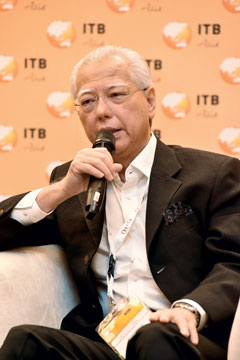
THE formation of the ASEAN Economic Community (AEC) last year will boost the appeal of Singapore as a hub for business events looking to attract South-east Asians, but more support can be provided to fully leverage this “immense opportunity”, according to CEMS’ group managing director, Edward Liu.

Elaborating to TTGmice e-Weekly, Liu who was speaking at the MICE in Asia panel session at ITB Asia today, said: “When we run our tradeshows in Singapore, many exhibitors lament that Singapore is such a small market. But with AEC, we have moved from being just a country of about five million people to a hub of over 600 million.”

As such, Liu urged organisers to utilise this advantageous position while promoting their tradeshows to international counterparts.

He said: “Our challenge now is how to position our tradeshows that will attract firstly exhibitors, then buyers. While we want to continue pushing Singapore as a centre of the MICE industry, my take is that organisers are much more pragmatic and frankly most of them have gone into other places like Indonesia in a big way.

“Hence, we have got to be aware and continue to raise the profile of our shows and make use of technology to reach our target audience to bring them to Singapore,” he added.

When asked what type of support is needed, Liu said: “If the Singapore Tourism Board (STB) can give us more funding then we can certainly host more regional visitors to Singapore, which can enhance our positioning. Also, the STB can mobilise their regional offices to promote our events to raise further awareness.

“On our part, we will ensure that we create content that will appeal and engage both Singaporeans and South-east Asian trade visitors, and structure our programme accordingly so they will have a reason to come to Singapore,” concluded Liu.

Three CVBs join ICCA as Association Relations Partners

0

THAILAND Convention & Exhibition Bureau, Monaco Convention Bureau and Tourism New Zealand have signed up as new ICCA Association Relations Partners.

They join others such as FIEXPO, which signed up as a regional Association Relations Partner for Latin America in 2015.

This is in lieu of ICCA’s inaugural Strategic Plan, where one of its key goals is to bring international associations more closely into ICCA’s global community for the international association meetings industry.

The newly-launched Association Relations Partnership is a collaborative programme designed to help ICCA deliver a programme of new activities and online services that will strengthen its relationship with international associations.

As well, the partnership model allows ICCA tradeshow and destination marketing members worldwide to strengthen their own ties and raise their profile within the international association community.

Jakarta to host inaugural Indonesia Dental Exhibition & Conference

0

idec-signing-ceremony2
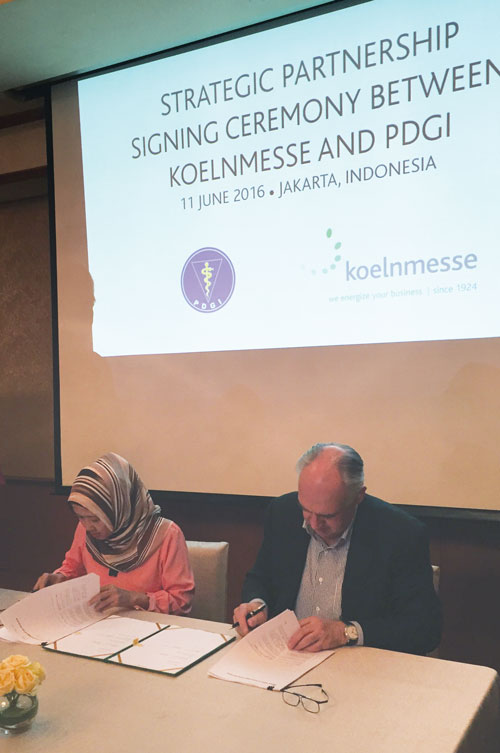
The signing ceremony

KOELNMESSE, Persatuan Dokter Gigi Indonesia (Indonesian Dental Association) and PEO Traya Eksibisi Internasional have signed an agreement to jointly stage the first Indonesia Dental Exhibition & Conference.

On why Koelnmesse decided to stage a dental event in Indonesia, managing director Mathias Kuepper said: “Indonesia’s healthcare industry is expected to grow by up to 20 per cent yearly, which points to an emerging need for a platform for dental professionals to learn more about well-established and effective technologies, research and skills.”

Farichah Hanum, president of Persatuan Dokter Gigi Indonesia, added: “Indonesia has over 27,000 dentists nationwide, who face unique challenges in their daily practice. The city of Jakarta, with over 5,000 dentists, was chosen to host this new event because it is the central business and travel hub for Indonesia.”

The event will take place in Jakarta from September 15-17, 2017.

It will be held every odd year, alternating with IDEM Singapore, a regional dental exhibition and conference that caters to the South-east Asian market. In contrast with IDEM Singapore, the Indonesia Dental Exhibition & Conference will offer an extensive trade exhibition, localised educational programme, and provide a platform for manufacturers keen on penetrating the emerging Indonesian market.

Luxembourg updates MICE marketing, aims for better Asian air access

0

luxembourg-cityscape
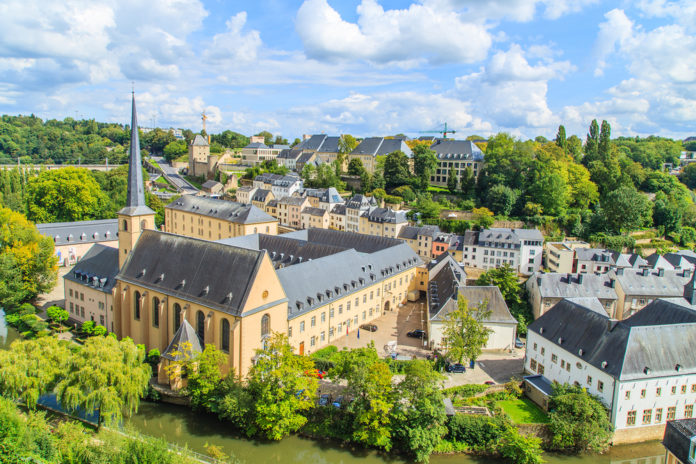
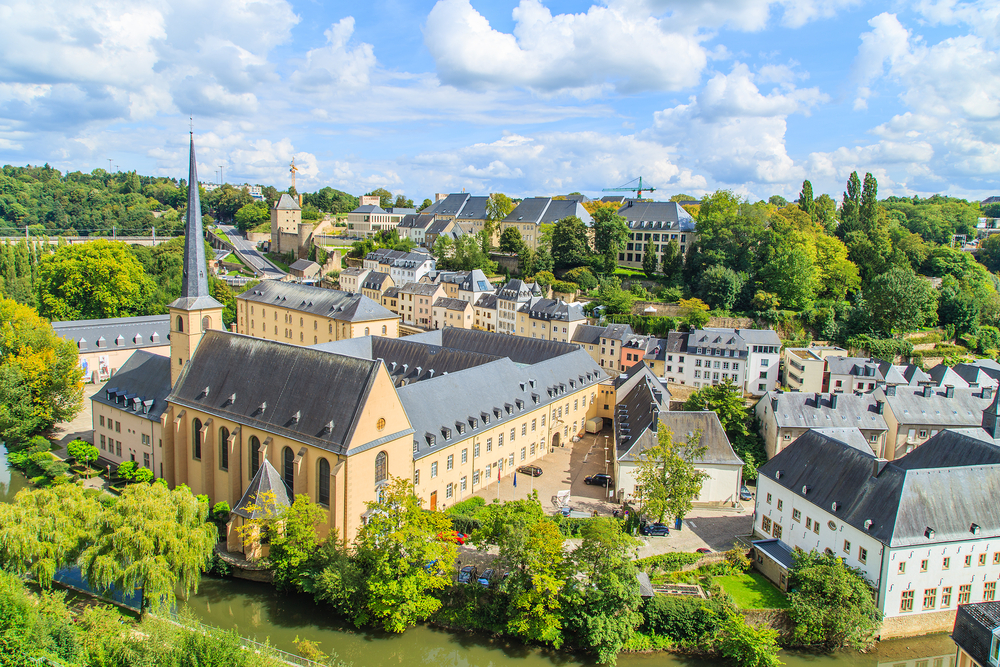
Luxembourg cityscape

FINANCIAL hub Luxembourg has just completed a two-year programme to reinvent its image with a new logo – one that shows the destination is at the crossroads of Europe – and the tagline Let’s Make it Happen.

Ricky Wohl, director general of tourism, Ministry of the Economy, The Grand Duchy of Luxembourg, said the reimaging process, which was based on feedback from stakeholders, resulted in highlighting three values of the destination – dynamic, open and reliable.

In reaching out to Asia, the ministry is looking to partner China’s HNA Group to operate charter flights from Hainan, and is in talks with Japan Airlines and All Nippon Airways to consider operating direct flights.

Luxair, Luxembourg’s national airline, does not offer direct flights from Asia, although being a partner in Lufthansa’s Miles & More loyalty programme and as a Star Alliance member opens up access to key Asian gateways through the latter’s network.

Wohl added: “The government has also created the public-private sector MICE Cluster think tank comprising hotels, DMCs, venues, etc to unite the industry, generate ideas to promote Luxembourg as a MICE destination and create a one-stop shop.

“A MICE Ambassador programme, green meetings and a subvention policy are part of the action plan and we will be targeting association and federation meetings in industries such as biotech, logistics, automotive, information and communications technology and space mining in 2017.”

The Luxembourg Convention and Exhibition Bureau was set up in 1989 and Wohl said the destination is well suited for meetings of between 1,000 and 2,000 delegates.

Luxembourg houses the administrative offices of the European Parliament, and the Council of the EU meets regularly in the city.