TTG Asia
Asia/Singapore Tuesday, 13th January 2026
Page 1740

Correction: Philippine Department of Tourism rocked by major staff shake-up

0

In our August 24 report, Philippine Department of Tourism rocked by major staff shake-up, we incorrectly said Falconi Millar has replaced Domingo Ramon Enerio III as chief operating officer of the Tourism Promotion Board (TPB), the DoT’s marketing arm.

In fact, no replacement has been made.

Meanwhile, Joji (Joselito) Gregorio has been designated by the TPB as its officer-in-charge effective September 2.

Indonesia’s Panorama broadens search for target markets

0

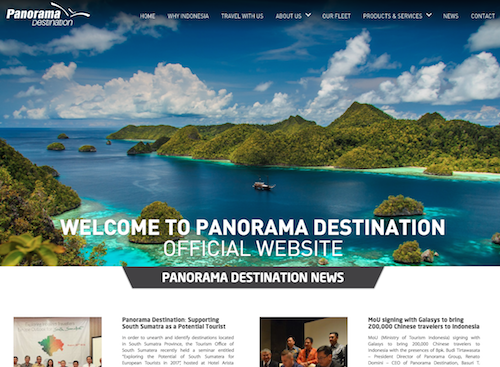
panorama-destination

PANORAMA Destination, the inbound arm of Indonesia-based Panorama Group, is taking on a global market strategy to expand beyond its traditional Europe core.

Budi Tirtawisata, group CEO of Panorama Group, said the company needs to “gain momentum to drive (more) inbound business”, especially as the Indonesian government has embarked on aggressive international marketing efforts to meet its ambitious target of 20 million arrivals by 2019.

Renato Domini, CEO of Panorama Destination, said: “Europe has been our strongest market, with the majority (of business) coming from France and The Netherlands.

“We definitely need to diversify and expand our (customer base) and need people on the ground to help us (penetrate into) the markets,” he added.

To realise this, Panorama Destination this year created a new business development director role in charge of central and south Asia and the Middle East at its Jakarta head office.

Panorama Destination has also appointed representatives in Vietnam, China, India, the Middle East, the US and Australia, which are deemed potential growth markets for the DMC.

India, for example, contributed five per cent of total business to the company and Domini seeks to grow the market to at least 10 per cent with new representatives appointed in Delhi and Mumbai.

The company, which already has a market in Canada, wants to expand into the US too.

“There is a growing number of airlines flying between the US and Asia and Garuda Indonesia plans to open services there too, so we see opportunities there,” Domini explained.

Apart from appointing representatives, Panorama Destination also revamped and tailored its products to suit different market preferences.

“Panorama used to have a programme called Shocking Offers, which were popular with the European and Canadian markets,” he said.

“We are launching similar programmes with some adjustments in India.”

These itineraries are shorter, spanning three to five nights, compared with seven to 12 nights’ programmes sold to Panorama’s European customers.

In China, Panorama is targeting the end users and FITs, rolling out experiential programmes such as cooking classes and farming activities to entice a new generation of Chinese travellers.

“We work closely with the Ministry of Tourism, supporting fam trips and sponsoring film making in Bali,” added Domini.

Meanwhile, Panorama Destination has also hired Mandarin-speaking staff at its head office.

Domini further stated the company will soon launch its Agent Portal, with products and packages available for its international business partners.


Myanmar e-visa scheme extended to land checkpoints

0

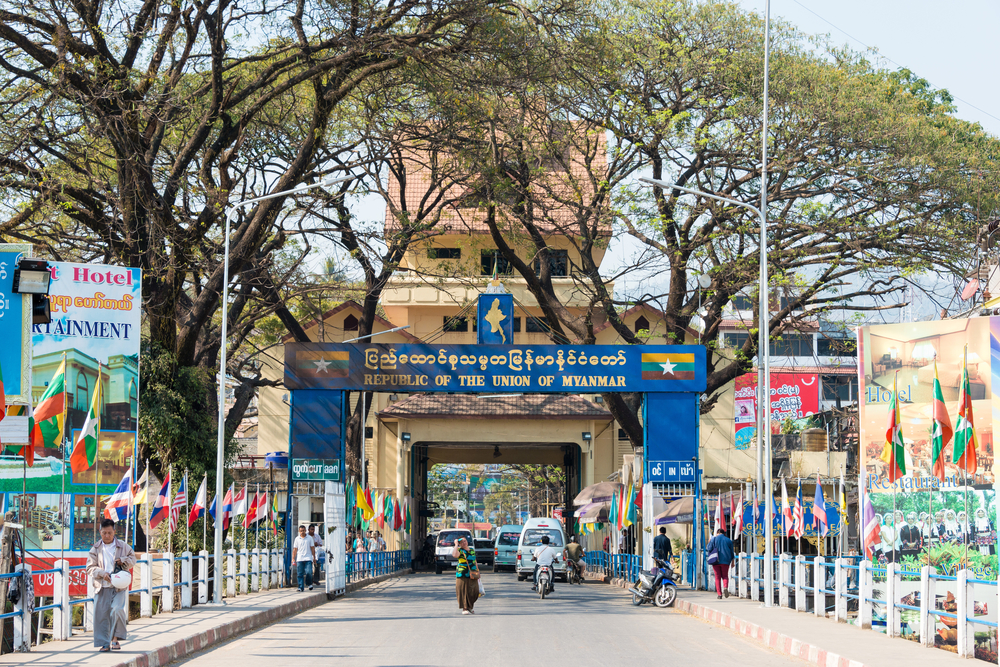
tachileik-border-crossingTachileik border crossing

MYANMAR has extended e-visa entry to three land checkpoints on the Thai border.

Since September 1, foreigners accessing Myanmar from a list of 100 countries at Tachileik, Myawaddy and Kawthaung border crossings were allowed to enter using e-visas.

Previously, visitors could only enter with e-visas at Yangon, Mandalay and Nay Pyi Taw international airports.

Edwin Briels, general manager at Khiri Myanmar, said: “Myanmar is becoming more accessible, seen as less dangerous and is more open. The land border e-visa helps with this and contributes towards getting more people to the country.”

E-visas cost US$50 for a 28-day leisure pass and US$70 for a 70-day business pass, which can be paid for online. The processing period is three days.

However, it is feared the high cost in comparison to neighbouring countries may put some leisure travellers off.

Lee Sheridan, general manager of PEAK Myanmar, said: “While this should certainly encourage more travellers to visit Myanmar, if you look at the cost for a family of four, it starts to get expensive.”

In comparison, a visa obtained at a Myanmar embassy costs US$20.

It is hoped that if successful, the scheme will be rolled out at more land crossings.

Chinese traffic to Malaysia recovering from MH370 declines

0

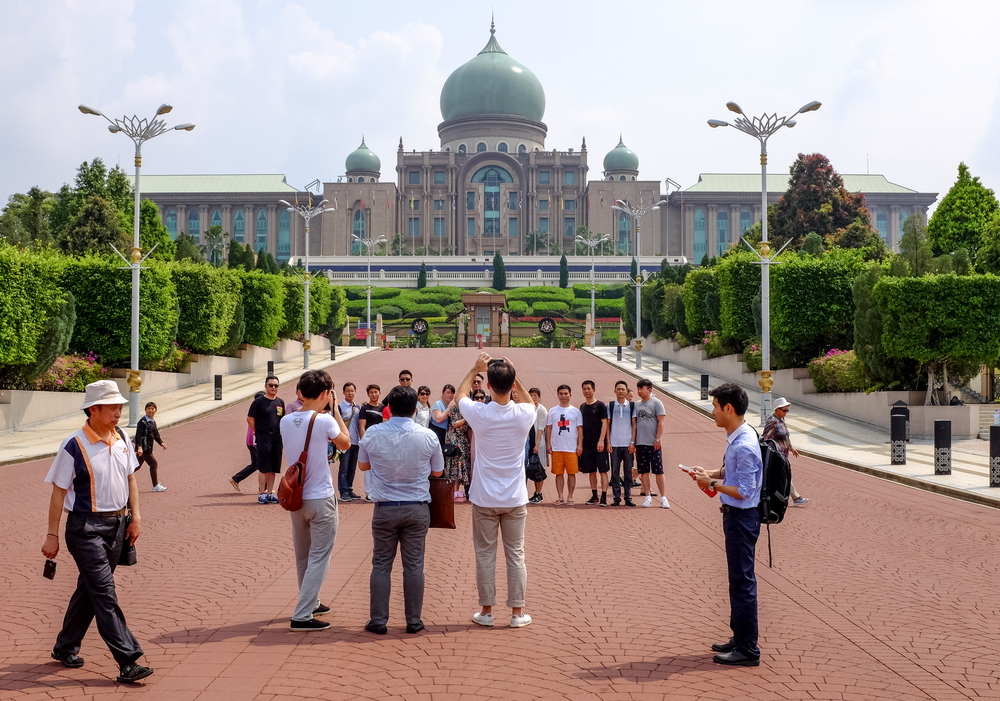
chinese-tourist-malaysia-1Group of Chinese tourists taking photographs in front of the prime minister’s office in Putrajaya, Malaysia


TWO years after the disappearance of Malaysia Airlines flight MH370 in March 2014, the inbound Chinese market to Malaysia is finally showing strong signs of recovery, with 1H2016 recording a 32.1 per cent year-on-year growth in Chinese arrivals.

Mint Leong, deputy president 2 at Malaysian Inbound Tourism Association (MITA), said the market has returned to the levels of three to four years ago, crediting the combined efforts of Tourism Malaysia and the private sector to shore up Chinese arrivals following the MH370 incident.

“The recovery of Malaysia as well as the marketing efforts from players from all three countries (Malaysia, Singapore and Thailand) have helped the promotions of group series tours,” said Leong, who recorded a 60 per cent year-on-year surge in demand for series combinations in 1H2016.

Likewise, Jason Ow Yeang, managing director of Columbia Leisure, has seen a 40 per cent hike for both Chinese group series tours combining Thailand, Singapore and Malaysia as well as Singapore-Malaysia tours in 1H2016.

He said: “These series tours in South-east Asia are very popular, especially for first timers from China travelling abroad for the first time.”

Chinese demand for group series tours to Malaysia was so overwhelming at the start of the summer holidays in July that MITA had to request for temporary Mandarin-speaking tour guide licences from the Ministry of Tourism and Culture.

The government approved 50 temporary licences from August 5 to October 15, the first time that has happened since the MH370 incident.

Strong growth from China is expected to continue for the rest of the year, especially as the new e-visa facility – reducing the visa application time from one week to one working day – launched in March this year has boosted Chinese outbound interest to Malaysia.

The e-visa facility has led to a 10 per cent uptick in group and FIT travel to Malaysia for the March-August 2016 period, Benjamin LP Yip, general manager for inbound and outbound at CITS Guangdong, told TTG Asia e-Daily.

Forward bookings to Malaysia for the upcoming Golden Week Holidays in October are also looking strong, he added.

Leveraging AirAsia’s new daily Guangzhou-Johor Bahru service launched on May 29, Iskandar Regional Development Authority (IRDA) is keen to attract niche segments from southern China, including educational and health tourism.

Said Mohammad Rosly Md Selamat, senior vice president, economic intelligence (tourism) at IRDA: “We’re also collaborating with Tourism Johor and the private sector to do more intensive marketing in Guangzhou and the surrounding cities to attract more leisure traffic for short holiday breaks, especially during their long weekends.”

PATA to launch new youth membership category in 2017

0

mario-hardy-ceo-pata-dec-2014
Mario Hardy

PATA may be a grand 65 years old this year, but the association is eager to put youth at the core of its engagement efforts in the coming months.

The Bangkok-based association will officially launch the Young Tourism Professional (YTP) individual membership category for industry members in January 2017.

“The introduction of the YTP category is something that has been discussed for quite some time,” said Mario Hardy, CEO of PATA. “We have identified a gap in the industry – young tourism professionals wish to have a voice and with the introduction of this new category they will.”

He added: “The challenge was that we didn’t have the necessary CRM in place to allow online registration. This is being developed and will be ready later this year.”

Open to tourism practitioners aged between 16-35 years old, the YTP membership will provide a platform for professional development, knowledge sharing and networking opportunities with industry leaders. The annual membership fee is US$50.

This youth focus aligns with the UN General Assembly’s declaring 2017 as the International Year of Sustainable Tourism for Development, and will see PATA developing a blueprint for youth-oriented activities throughout the year in order to develop and implement effective training platforms for YTPs’ career progression and skills enhancement.

Playing a key role in PATA’s commitment and advocacy for YTP will be the 63 educational institution members across 25 countries and the 15 PATA Student Chapters comprising more than 700 members, providing “important grassroot links to the world of academia and tomorrow’s tourism leaders”, stated Hardy.

“We had one new student chapter set up earlier this year in the Philippines at Far Eastern University,” he shared.

Expanding membership is key to PATA’s growth, as the association welcomed 178 new members in 2015 and expects an even bigger figure to join this year.

Hardy told TTG Asia: “The growth primarily came from our Industry Category of membership, with many tour operators, travel agencies and travel technology companies joining to increase their knowledge and reach in Asia.”

The rising global interest in Asian outbound travel has enabled PATA to spread its wings farther to Macedonia, Abu Dhabi, Ras Al Khaimah, Zimbabwe and several provinces in China earlier this year, in addition to the Balkans – Slovenia, Serbia and Montenegro – in 2015.

Under Hardy’s helm, PATA’s thought leadership has evolved to place a greater emphasis on lesser-known destinations, with Legazpi in the Philippines’ Albay Province and Thailand’s Chiang Rai selected to host the PATA New Tourism Frontiers Forum (NTFF) and the Adventure Travel and Responsible Tourism Conference and Mart respectively earlier this year, while the upcoming NTFF in Cox’s Bazaar, Bangladesh in November.

“We sincerely believe that the best way for our industry to experience a lesser-known destination isn’t in a conference room talking about it, but to be in the field exploring it,” Hardy remarked.

Philippine travel trade resilient after Davao bombing

0

davao-pin-map

LAST Friday’s bombing in Davao’s Roxas night market is an isolated case and the destination – which has carved a reputation as one of the country’s safest – will be resilient, according to the travel trade.

The bombing in Philippine president Rodrigo Duterte’s hometown, which has claimed 14 lives and injured 68 others, has led to some MICE and hotel booking cancellations in Davao and other areas in Mindanao, as well as security tightening throughout the country.

Blue Horizons Travel and Tours general manager Gregor Zajc said last night he was expecting some cancellations but is hopeful that the blast will have no lingering impact on Davao’s tourism.

Philippine Travel Agencies Association (PTAA) president Michelle Victoria, who arrived from Batanes yesterday, said there’s now high security alert on arrival at Ninoy Aquino International Airport (NAIA) and travellers have to arrive four hours in advance before the domestic flight.

“Hopefully the Davao blast is an isolated case,” said Victoria.

At least five countries have issued travel advisories following the Davao blast.

The general manager of an upmarket hotel in Mindanao said 50 room nights have been cancelled since Monday and a business delegation might reset its meeting. Even corporate travel is affected, he said.

The Davao Tourism Association (DATA) has also thrown its support behind Duterte’s administration. “(DATA) members stand together amid any challenge and remain optimistic that tourism in Davao and in the Philippines will continue to improve,” stated the association.

Meanwhile, tourism secretary Wanda Teo assured tourists that Davao remains a safe place for visitors and residents. “The quick and professional response and action of our police, armed forces and security group shows that Davao is well-prepared for contingencies, including isolated attacks like this bombing,” she said.

Teo is also confident that Duterte and the nation’s security forces are more than capable of bringing the perpetrators to justice, managing the aftermath and in preventing further attacks.

Cruise booking portal Halong Hub goes live

0

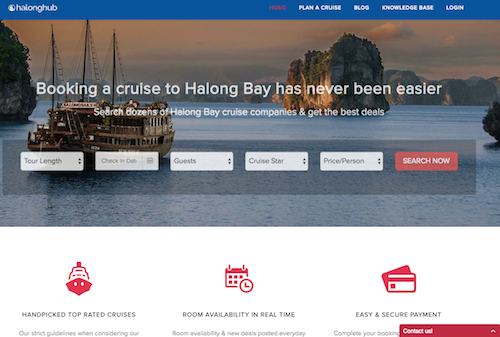
halong-hub

A WEBSITE dedicated to cruises on Vietnam’s Halong Bay has gone live.

Newly-launched Halong Hub allows users to book cruise tours aggregated from selected cruise companies that sail upon the popular UNESCO World Heritage Site.

“Working in the tourism industry in our country, we realised that there are many issues for travellers wishing to visit beautiful destinations like Halong Bay,” said DK Long, co-founder of Halong Hub.

“Dishonest agents and various local companies do not always offer the highest quality of service. Visitors are frustrated by bad tour agents, overcharging and inadequate quality of service.”

Long added: “By connecting all cruise companies through one single system and maintaining a close working relationship with all of them, we ensure that we are able to offer travellers the highest standards and a truly memorable experience, for the right reasons, and most importantly for the right price.”

Halong Hub’s website boasts features such as a live chat system, daily updated inventory and deals, secure payment options and searching for cruise itineraries by length, dates, price and number of stars.

The company currently has offices in Hanoi and Ho Chi Minh City.

Japanese agency explores wellness tours for senior travellers

0

senior-asian-travellers-500

A TOUR agency in Japan has teamed up with a university to come up with tours specifically to help senior travellers improve their wellbeing and even ward off dementia.

Tokyo-based Club Tourism International is working with Tohoku University’s Institute of Development, Ageing and Cancer on a three-year study that will monitor the impact of travel on people aged 60 or older. The study began in July with a group of Club Tourism customers.

“We built the hypothesis that a person who travels often has a higher subjective wellbeing and a higher ability to cope with stress and cognitive brain functions than a person who travels less often,” said Mitsuharu Nojima, general manager of the department at Club Tourism overseeing the project.

“If we are able to scientifically prove that travelling has a positive impact on the brain and cognitive functions, we will have demonstrated that travel is beneficial in preventing dementia and extending healthy life expectancy.”

A preliminary survey suggested that the more frequently an older person travelled, the more likely they were to have a positive outlook on their lives.

“In parallel with the research, we are planning to provide tours, courses and events designed to promote ‘travelling and brain health’ for our senior customers,” Nojima added.

Set up in 1980, Club Tourism provides group and cultural tours both within Japan and abroad, with the majority of its customers older travellers.

Four Points by Sheraton plots massive growth in Indonesia

0

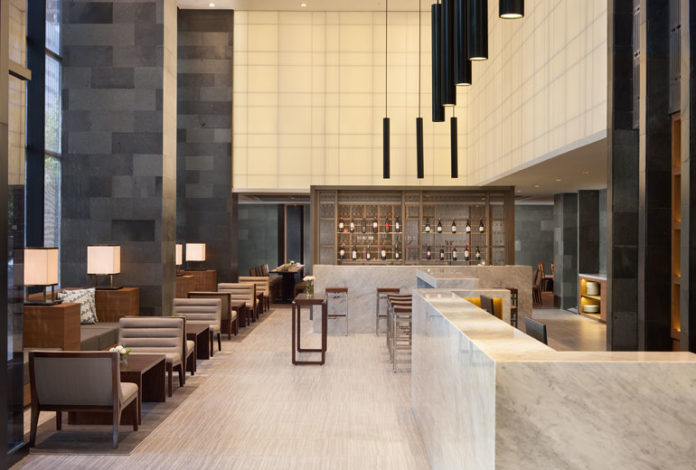
four-points-by-sheraton-jakarta-thamrinFour Points by Sheraton Jakarta, Thamrin

FOUR Points by Sheraton, part of Starwood Hotels & Resorts Worldwide, is expanding rapidly in Indonesia.

In just over a year, the mid-scale brand has erected six properties in key destinations including Surabaya, Bandung, Makassar, Bali and most recently Jakarta with the opening of the 164-room Four Points by Sheraton Jakarta, Thamrin on August 15.

The next phase for the brand in Indonesia will include a property in Manado in 2017, and one in Bintan and another in Bali both in 2018.

Vincent Ong, senior director, brand management, Starwood Hotels & Resorts Asia Pacific said in a statement: “We are proud of the immense growth of the (brand) across Asia-Pacific and especially in Indonesia in recent times.

“Indonesia features our strongest footprint of the brand across South-east Asia and we are confident with its uncomplicated and honest brand positioning, the demand will continue to accelerate.”

Commenting on the speed at which properties are coming out of the pipeline, Hazel Ooi, manager, brand management, Asia Pacific at Starwood Hotels & Resorts Worldwide, said: “The Indonesian government is looking into doubling the number of arrivals to the country by 2019 and they would need more hotels and we see the opportunity to enter the market.

“We also see there is a huge growth of the middle class and the Four Points by Sheraton brand fits into the middle class.”

Ooi was in Jakarta last Thursday together with the management teams of the six properties in Indonesia to introduce the lineup to local media for the first time.

Four Points by Sheraton now has 50 hotels operating in Asia-Pacific and is expanding its portfolio of rooms by 60 per cent in the next five years.

Swiss boosts seat capacity on Singapore-Zurich route

0

swiss-b777Swiss’ Boeing 777-300ER

SWISS International Air Lines will be deploying the 340-seater Boeing 777-300ER – the company’s flagship aircraft – on the Singapore-Zurich route.

This is an increase of 121 seats, or approximately 55 per cent, when compared to the A340-300 currently used. The carrier, while maintaining daily flights from Singapore to Zurich, will utilise the Boeing 777-300ER only thrice-weekly, while the rest of the services will be operated using an Airbus A340-300.

The airline plans to deploy the Boeing 777-300ER on all flights between the two countries by March 2017.

Explaining the move, Aditya Khullar, head of Swiss International Air Lines South-east Asia & Pacific, said: “In the first six months of 2016, there’s been a five per cent growth in tourism from Singapore to Switzerland. Malaysia and Indonesia also have double-digit growth.”

Despite flying to eight cities in Asia, Khullar stated that their focus is currently on three destinations – Bangkok, Hong Kong and Singapore. Swiss currently flies the Boeing 777-300ER on its Bangkok and Hong Kong routes as well.

“Rather than open new destinations, we’re growing the capacity of these particular destinations. Our strategy for now in Asia is to consolidate where we already are, and then grow those markets,” he said.

When asked if the Boeing 777-300ER will be rolled out eventually to the rest of its Asian destinations, Khullar said: “We’ve taken delivery of six out of nine 777s, the rest of which will arrive over the next two years.

“For the remaining 777s, we don’t have exact destinations for them yet. But it will (probably not be deployed to) New Delhi and Mumbai, as these two cities are only an eight-hour flight from Zurich.”

Markus Binkert, chief commercial officer of Swiss, added: “Routes that might get the split-fleet of Boeing 777-300ERs and A340-300s will be Japan or the two Chinese destinations (Shanghai and Beijing).”

Regardless, Binkert said that the carrier will “monitor the network and capacity, and see if there is a need to deploy a 777”.

In addition, Swiss and the Lufthansa Group have also signed a codeshare agreement with Singapore Airlines earlier this year.

Said Khullar: “We’re waiting for our antitrust immunities to come through in these markets, but we’ve already started collaborating on codeshares across South-east Asia, Australia and New Zealand (to expand our network).”