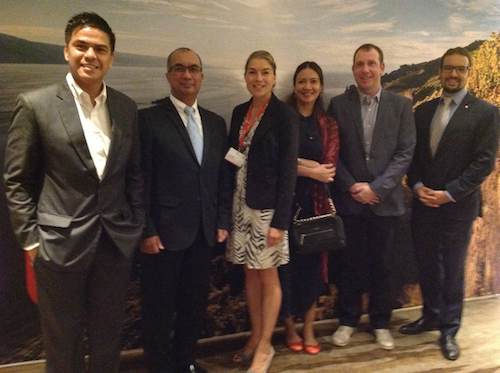
(From left) JP Cabalza, managing director, Cencorp Travel; Edwin Villanueva, general manager, Light Miles Travel; Tanja Dubas, head of sales and marketing, Lausanne Tourism and Convention Bureau; Shan Dioquino David, president/general manager, Corporate International Travel and Tours; Gregor Zajc, general manager, Blue Horizons Travel and Tours; Ivan Breiter, Switzerland Tourism, director of South-east Asia
A GROWING number of Swiss tourism organisations are taking a fresh look at South-east Asia, a prime source market for Switzerland.
Asians are staying longer, coming in bigger groups and offer huge potential for FIT, family and incentive travel, said Ivan Breiter, Switzerland Tourism director for South-east Asia, during a roadshow by Vaud Lake Geneva Region that made its way to the Philippines for the first time.
Breiter said the matured markets of Singapore and Malaysia are stable while Thailand is seeing huge growth. Indonesia and Vietnam meanwhile are seeing slight increments.
He added that the Philippines is one of the fastest-growing markets, having surged over 300 per cent in overnight stays during the past three years. Growth is expected to be sustained as the Swiss embassy in Manila has reduced the visa processing period from five days to between two to three days.
Francois Michel, vice president and marketing director, Vaud Lake Geneva Region, said they have included the Philippines in this year’s South-east Asia roadshow as it is its fourth biggest South-east Asian source market with high growth potential.
Coming to Manila for the first time too are representatives from Lausanne Tourism, newly-opened Royal Savoy hotel in Lausanne, Montreux-Vevey Tourism, Clinique La Prairie in Montreux, and Highlights Lake Geneva Region.
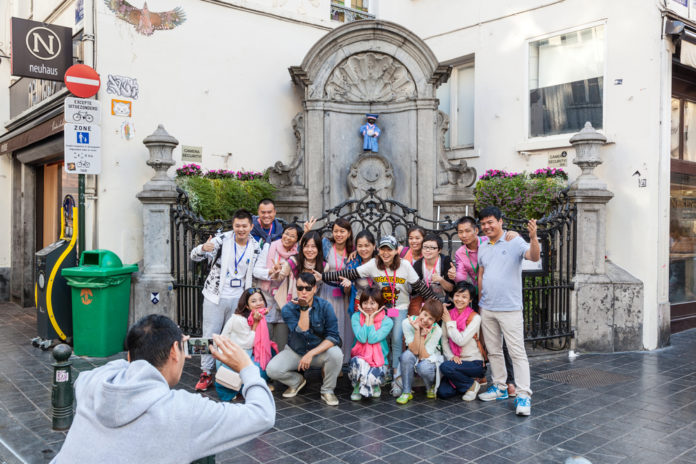
Chinese tourists taking a picture at the Manneken Pis statue in Brussels, Belgium
THE European Tour Operators Association (ETOA) has thrown its support behind the designation of 2018 as the EU-China Year for Tourism.
Said ETOA CEO Tom Jenkins: “China remains one of the most important future markets for European tourism, and that there is a designated year for tourism co-operation is of course to be welcomed.
“How Chinese visitors are welcomed and accommodated, how their expectations can be met is one of the central topics that the industry has to address: this initiative will help them do so.”
Added European Travel Commission (ETC) executive director Eduardo Santander: “The EU-China Tourism Year is a great opportunity for the European tourism industry to explore the Chinese market, but also learn how to attract Chinese visitors and offer them the best experience.”
A first meeting with EU tourism stakeholders on the 2018 EU-China Tourism Year programme will take place in the ETC headquarters in Brussels this month, while a discussion with a high level Chinese delegation is scheduled for October 25 in Beijing.
European destinations drew 10.1 million Chinese visitors in 2015, accounting for a 13 per cent share of all outbound travel from China.
The EU-China Year for Tourism was first declared by Jean-Claude Juncker, president of the European Commission and Li Keqiang, premier of the state council of China, at the opening of the EU-China summit on July 12.
JTB has teamed up with a technology firm and a delivery service to provide foreign visitors with luggage-free travel.
With an eye on the 40 million overseas tourists who are expected to arrive in Japan in 2020, JTB is working with Panasonic and Yamato Holdings to make it easier for visitors to travel within Japan without having to worry about their baggage.
To date, tourists who wish to send their luggage ahead of them have encountered difficulties, primarily because parcel delivery companies require a lot of paperwork, all in Japanese.
The companies have combined to overcome that hurdle by enabling travellers to provide information in advance on the hotels where they will be on staying each evening of their trip.
After arriving in Japan, the new arrivals drop their luggage off at a counter at the airport, where the bags are then delivered to their hotel. When they check out, the luggage is again picked up and sent on to the next destination. The cost for transporting an item of luggage will depend on its weight and size.
Travellers are able to update or alter destinations via a website.
A two-month trial period commenced on September 1 and the companies intend to launch the full service by the end of March 2017.
At present, six hotels in Tokyo are taking part, but the consortium aims to extend the service to 5,000 hotels with links to JTB across Japan by 2020.
THE independent tour operator widely regarded as the pioneer in opening up the Asian market to Spanish tourists, Catai Tours, has reached an agreement to be taken over by one of the country’s most vertically-integrated travel groups.
“It will bring with it the continuity of the strategy and philosophy of Catai, and the integration of the human team in our global set up,” said a statement issued by buyers Barcelo Viajes.
Catai sends clients to more than 120 countries worldwide, but remains best known in the Spanish travel trade as a specialist in handling tailor-made journeys and packages to Asia.
Barcelo declined to comment on the future positioning of Catai before the deal is approved by authorities. “It was only agreed last week and it is too early to say more at this stage,” said its marketing director Mar Fernandez.
But Catai director general Fernando Sanchez stressed the company’s role as a longhaul specialist was what had interested Barcelo and that it would continue as such following the takeover.
“Catai was a pioneer in sending travellers to Asian countries in the ‘80s and our operations in that continent have grown year-on-year. It is in Asia where we started and where we have more than 35 years of experience,” added Sanchez.
“We will continue to stay on top of new markets and new routes for traditional destinations, as one of the things we bank on is innovation. Our philosophy and way of working is not going to change and Asia will continue to be a key market for us.”
Visa-free travel into Indonesia has increased tourist footfalls alongside illegal tour guiding.
A year since Indonesia expanded its visa-free policy to 169 countries, the move has brought a mixed bag of results for the country, drawing an increase of foreign visitors as well as a spike in illegal tour guiding at the same time.
Publishing figures on the outcome of the visa-free policy, Indonesia Directorate General of Immigration revealed that the country received nearly seven million international arrivals between June 2015 and June 2016.
Of these, 15 countries – including ASEAN member countries which have had visa-free entry into Indonesia for many years – remain the biggest contributor to the country by far, accounting for 4.1 million arrivals. The 144 new countries that received the visa-free facility contributed just 2.9 million arrivals, while 10 countries did not contribute any arrival.
As well, visitor arrivals from China to Indonesia hiked 24.4 per cent in 1H2016 to reach 685,074. Bali, in particular, has been at the receiving end of the Chinese influx.
The dramatic growth shows that the aggressive marketing and promotions targeted at the China market, together with visa-free access, have been effective.
However, along with the gain in Chinese visitor arrivals is an increase in violation of the visa-free policy too, invoking industry members’ concern especially of visitors overstaying or engaging in illegal guiding activities.
Eddy Sunyoto, managing director of Terimakasih Indonesia Tours and Travel, and head of international promotion of the Association of the Indonesian Tours and Travel Agencies (ASITA), said: “There are a number of cases in Bali where we found ‘freelance’ Chinese guides offering services at the airport or the hotels.
“Our ASITA member lost a group of Chinese tourists to an unofficial guide who approached them to offer his service during breakfast. The hotel informed our member that the so-called guide was also a guest at the hotel.”
But ‘freelance’ guides are not a new phenomenon. Rudiana, WITA Tour’s director of sales and marketing, said: “Even before the visa-free access was granted to the Chinese, we had already experienced losing group tour members (several times).
“I understand the government’s efforts to make it easy for travellers to come, but for the China market I would suggest that visa-free facility be revoked,” he commented, echoing member of parliament Charles Honoris’ call to review the visa-free facility for selected countries.
Rudiana suggested an alternative: “I think online visa is quite convenient for travellers and the immigration office will have a record of them.”
On the other hand, Eddy does not see merit in revoking the facility to Chinese visitors: “We cannot just lift a facility that we have just given. Where is our dignity?
“When Indonesia decided to afford 169 countries visa-free facilities, we should had taken all the precautions to eliminate negative impacts. Now, the immigration office must work harder,” he remarked.
Arief Yahya, Indonesian minister of tourism, has played down the concerns over illegal guiding.
He said: “We do not need to worry about the visa-free policy. Malaysia and Thailand have given the facilities to more than 150 countries before we did and (no one made a fuss). (Instead) they have enjoyed the healthy growth of travel arrivals.”
This article was first published in TTG Asia September 2016 issue. To read more, please view our digital edition or click here to subscribe.
Transport architect Mark Wolfe explains how the modern airport is evolving and why airports of the future will resemble a multi-nodal city. Plus, a look at travel agents’ favourite airports
The modern airport is no longer just a place to catch a plane, but also a destination in its own right and a catalyst for future economic competitiveness.
Functionally, very little has changed. Processes of dealing with passengers and bags remain largely the same but have become automated as technology has developed. However, I suspect that newer technologies will see some of these processes disappear completely in the next five to 10 years.
Airports are becoming more diverse and activated by other non-aviation uses, and the future airport will likely become a new transport-orientated precinct of a modern multi-nodal city.
For example, Frankfurt’s ambitious Airport City vision involved the development of the inter-modal property, The Squaire. In 2012, international financial services giant KPMG moved its European headquarters into a 40,000m2 space at The Squaire. KPMG already had an existing office in the UK near to London City Airport and a big office in the Netherlands close to Amsterdam Schiphol Airport.
The other obvious difference today is driven by security. In existing airports and terminals, more onerous security requirements have impacted operations and physical space – older terminals didn’t have to consider modern screening technologies.
It’s clear that consideration of the passenger experience has resulted in a different design approach, not just in the terminal. For the Terminal 4 project at Melbourne Airport, one of the key drivers was passenger safety, so we designed a pedestrianised precinct that eliminated vehicles, and ground transport was dealt with in the lower levels of the multilevel car park.
Why change is necessary
Change is necessary because the aviation business is a dynamic one. It is a marginal business that can be impacted by a range of factors from the price of oil to climatic events such as ash clouds. As such, there has been continuous pressure from airlines for airports to reduce charges and those airports have also needed to investigate other non-aeronautical revenue opportunities.
Originally, airports were purely and simply about catching a plane. Retail was then introduced as another revenue stream. As the aeronautical business remains fairly stable, airport owners and operators are looking for new revenue streams. The airport as a transport oriented precinct of a modern multi-nodal city is the logical next step in the evolution of the airport.
While airports traditionally had to consider only people moving from the carpark or train to the terminal, in a more diverse precinct that might contain commercial offices. For instance, we need to think about an employee going from the carpark via the crèche to the office, to a nearby gym at lunch time and maybe even to the terminal to do some shopping.
That translates into the need to think outside traditional car-based journeys and consider a variety of movement and connection systems that include walking and cycle sharing, for instance.
Who stands out today?
Some of the larger airport hubs in Asia such as Singapore’s Changi (see below), Hong Kong International Airport and Incheon in South Korea stand out, as do Frankfurt airport in Germany and Schipol in the Netherlands.
The key points are connectivity and a diverse range of facilities – everything from retail outlets and restaurants to cinemas, gardens, recreation facilities and playgrounds. And they are really pushing for the idea of the airport as a destination in its own right. In Singapore, many locals will spend time at Changi even if they are not boarding a flight.
I think our design for the new Terminal 4 at Melbourne is also a good example of a terminal designed to suit the industry at this point in time. It is not an architectural statement but a modest, flexible terminal building with 100 per cent self-service check-in concourse and a diverse retail, food and beverage offers that showcase a range of local brands.
Mark Wolfe is principal at Hassell, a global design practice with a strong portfolio of projects in the travel and tourism industry, including airports, convention centres, hotels and transforming precincts.
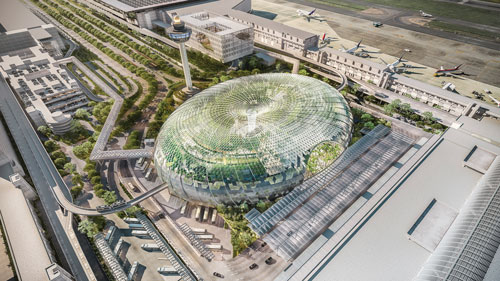
Changi’s prized Jewel
Picture by Jewel Changi Airport Devt
Come early 2019, the debut of the Jewel Changi Airport will see the launch of an impressive steel-and-glass architecture integrating airport facilities, retail and leisure outlets, and a hotel, further cementing Changi’s reputation as one of the world’s best aviation hubs and positioning itself as a key player amid intensifying global competition.
The glass-and-steel complex will feature five storeys above ground and five basement levels, with a 134,000m² gross floor area that will be used for retail, airport operations, attractions and a hotel. Centrepiece attractions will be a 40m-high waterfall within a lush five-storey indoor garden.
Philip Yim, CEO of Jewel Changi Airport Development, is confident that Jewel’s distinctive dome-shaped facade will make it an “iconic landmark and signature destination”, drawing international travellers to visit Changi Airport and Singapore, and boosting Singapore’s appeal as a stopover point for travellers.
“The concept for Jewel’s design stems from an extension of Singapore’s reputation as a City in a Garden. It is also a juxtaposition where a park and a marketplace are situated side by side,” said Yim.
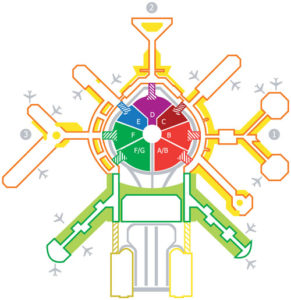
When completed, Jewel will connect the three existing terminals and Changi Airport MRT. There will be facilities dedicated to the fly-cruise and fly-coach passenger segments to smoothen the travel experience.
Meanwhile, the new Terminal 4 will be completed in 2017 while Terminal 1 will also be expanded to allow more space for the arrival hall, baggage claim areas and taxi bays.
NEPAL’s tourism is making good recovery progress more than a year after the devastating earthquake in April 2015, with 1H2016 seeing a 15 per cent increase in arrivals over the corresponding period in 2015, according to delegates interviewed at PATA Travel Mart 2016.
Subodh Thapa, a representative of Chitwan National Park, described 2015 as a “rough year” and said gaps left by the international market after the earthquake were filled by domestic tourism.
However, this year, the national park has seen recovery in Nepal’s regional markets of India and China. He expects that demand from Europe would also pick up later this year.
“There is no fear among tourists (to visit Nepal). We have seen a lot of FITs,” he said.
Likewise, Sanjay Mathema, president at Kathmandu-based Travel World Experiences, is optimistic about the destination’s recovery, having seen encouraging signs from the incentive market, especially the automobile, electronics, medical and insurance sectors.
He anticipates even better results in the months to come. “All our tour operators have put Nepal back in their brochures since early this year in preparation for the peak travel season (from October to March).”
Moreover, hotel brands including Hilton and Four Seasons opening in Nepal next year reflect investor confidence in the destination, noted Shradha Shrestha, senior officer, brand promotion and corporate marketing at Nepal Tourism Board (NTB).
Potentially helping Nepal get back on its feet is the upcoming Visit Nepal Year 2018 campaign, the first major push for international tourism and part of a 10-year National Tourism Strategic Action Plan.
The campaign will be a collaborative effort between public and private sectors to drive international arrivals past the one million mark, 400,000 more than this year’s target.
Deepak Raj Joshi, CEO of NTB, said the campaign will highlight Nepal’s different facets such as culture and festivals to break the perception that it is an extreme adventure destination, in hopes of attracting the family segment.
Depak added that the government is also looking at integrating trekking and mountaineering permits in a single system.
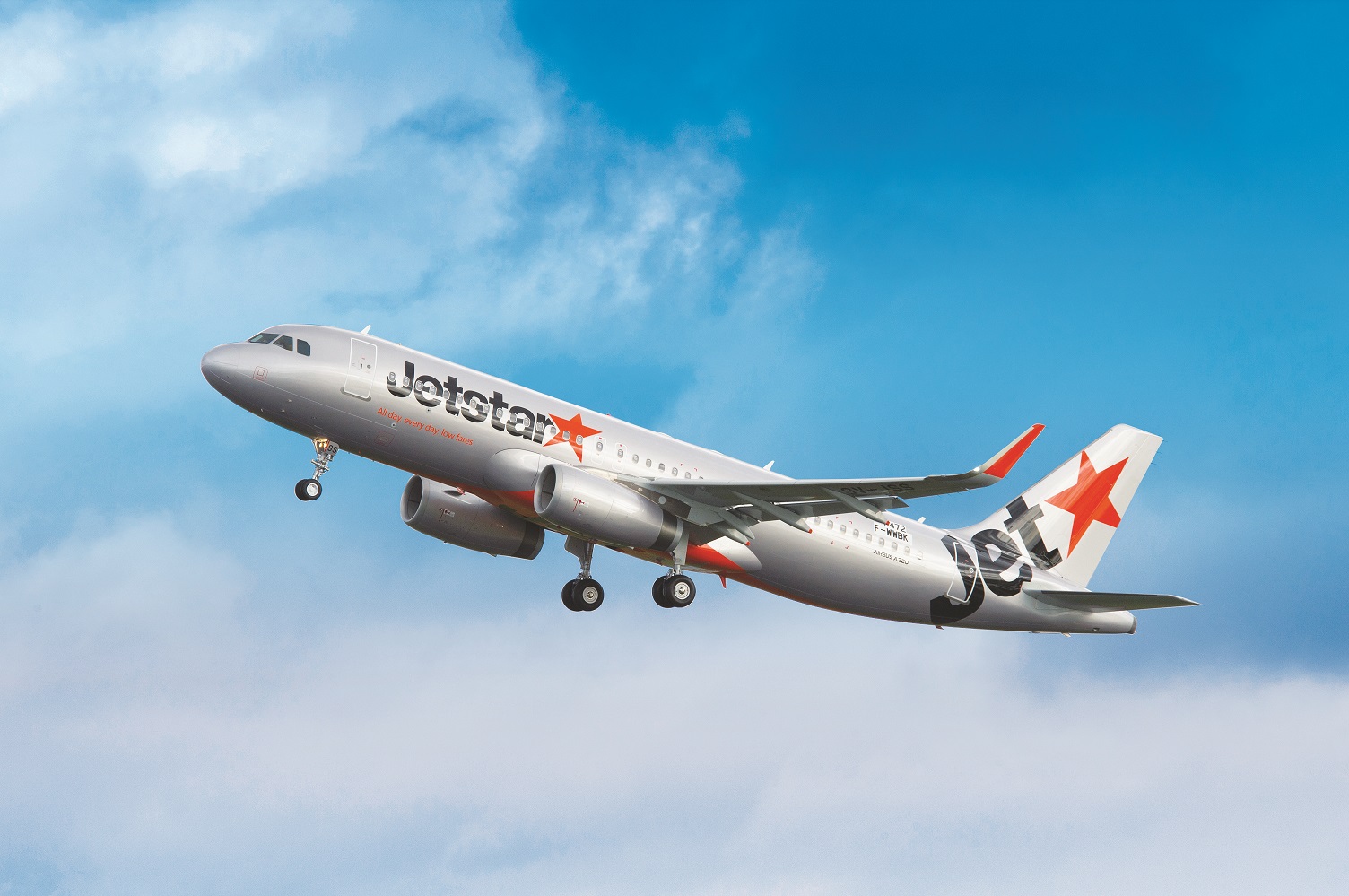
JETSTAR has unveiled FlexiBiz, an add-on which provides business travellers greater flexibility with their flight plans.
The upgrade allows business travellers to move their flight earlier or later for free on the same day of travel, take extra carry-on baggage (7kg) and select an upfront seat at no extra charge. Those who cancel their flights will also be entitled to a credit voucher refund that is valid towards a new booking within six months of issue.
Corporates who are signed up on Jetstar’s Business Hub can choose to include FlexBiz with their ticket purchases at an introductory price of S$32 (US$25). The ancillary product is currently only available directly through Jetstar’s website.
Barathan Pasupathi, CEO of Jetstar Asia, said the airline was responding to feedback from a new segment of business travellers in Asia, who preferred to reduce travel costs and paired value and flexibility at an affordable price.
“Asia is experiencing a savvy generation of cost-conscious corporate travellers who prefer to fly without the frills but are often required to make changes to their flights on the day of travel. The new FlexiBiz product provides these business travellers with much more flexibility and a few other on-board extras at a good price point,” he said.
Pasupathi added that the airline is expecting strong demand especially from SMEs.
“On some of our peak hour flights to Kuala Lumpur, Bangkok, Jakarta, Manila, Yangon and Hong Kong, a significant number of customers are budget-savvy business travellers. We want to grow this segment further by offering a fare tailored to their needs.”
Mimi Hudoyo (centre), all smiles with her award. Credit: Joen Damayanti
TTG Asia Luxury has clinched its first award through a feature-length article in the December 2015 issue, The New Glamorous, written by senior editors Mimi Hudoyo and Raini Hamdi.
The story wins a PATA Gold Award for Travel Journalism – Industry Business Article, which was presented at the PATA Travel Mart in Jakarta last week.
It studied how and why the old luxury of grand hotels, first-class air travel and limousine rides is simply not enough to satisfy a new breed of customers, and the extent to which the industry goes to provide out-of-the-world experiences for wealthy folks seeking deeper fulfilment in their travels.
The article can be viewed on pages 10-13 on TTG Asia Luxury’s e-book here.
TTG Asia Luxury is currently bi-annual and is directly overseen by Raini, who launched the publication in 2013. It is distributed to buyers of premium travel and luxury meetings in Asia-Pacific and gains an international read through an online presence on the ttgasia.com platform.
In another win for TTG Asia Publishing, S Puvaneswary, TTG Asia’s editor-Malaysia and Brunei, recently took home an award for Business Events Journalism Excellence, Print/Online, given by the Sarawak Convention Bureau.
She won the prize for an article published on TTGassociations in April 2015, titled Watching And Waiting, which was a profile of Ravi Chandran, congress president of the 24th Asian & Oceanic Congress of Obstetrics and Gynaecology, a convention held in Sarawak last year.
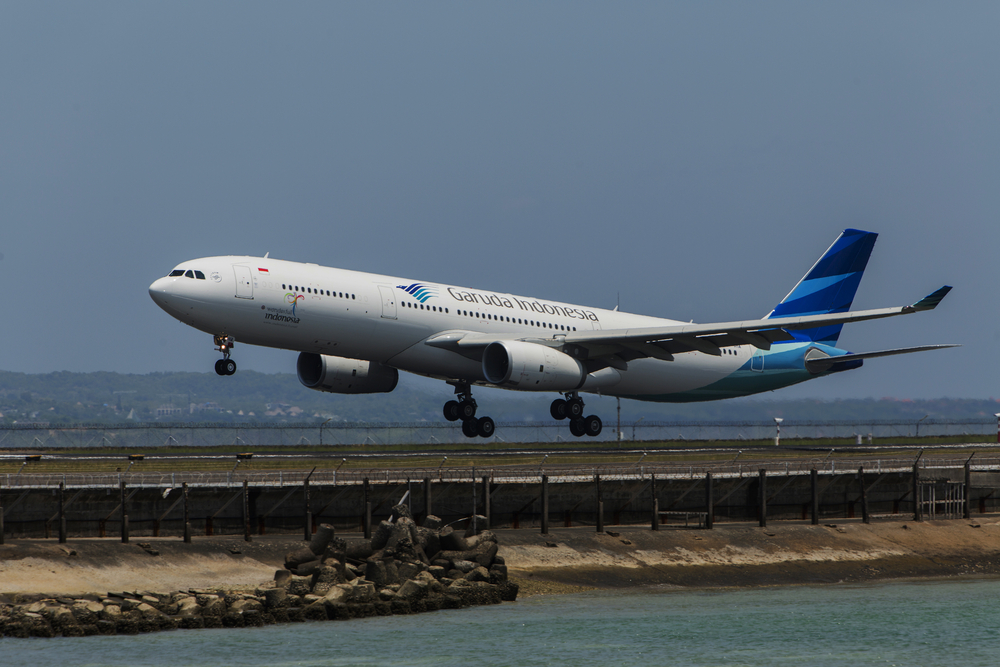
INDONESIA’s national carrier is planning to re-launch flights to the US via a transit in Japan after a safety ban imposed by the US Federal Aviation Administration (FAA) lasting nearly a decade was lifted in August.
Garuda Indonesia is hoping to begin operations as soon as next year, pending preparatory work and a transit permit approval from Japan.
“Our plan to re-operate the US flight service is expected to strengthen Garuda’s position as a global aviation player, (especially now) with the upgraded rating from FAA which recognises Indonesia’s aviation safety and security standard,” said Benny Butarbutar, vice president of corporate communications at Garuda Indonesia.
He added that a Boeing 777-300ER will likely ply the route and transit at Narita International Airport before heading to the city of Los Angeles or New York, the two cities Garuda regards as having the highest market potential.
Japan currently grants fifth freedom rights to Indonesian carriers, which allows Garuda to pick up passengers in Japan before flying to the US.
Since 2014, Garuda has served Indonesian travellers flying to the US via a codeshare agreement with Delta Airlines.
Delta flies to Los Angeles and Seattle from Haneda Airport and is a member of the SkyTeam airline alliance, the same as Garuda.


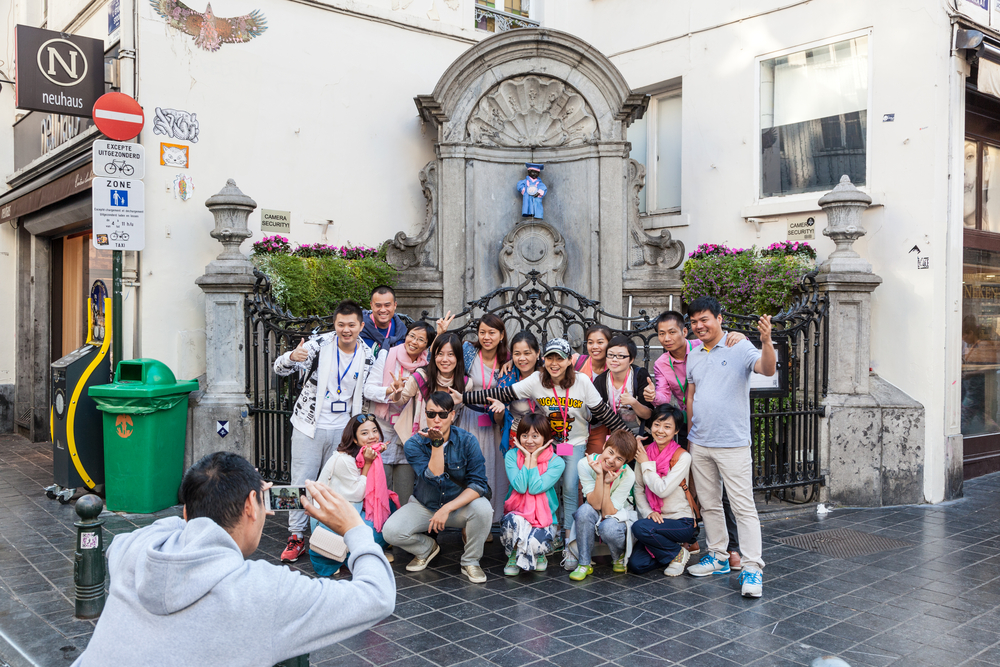 Chinese tourists taking a picture at the Manneken Pis statue in Brussels, Belgium







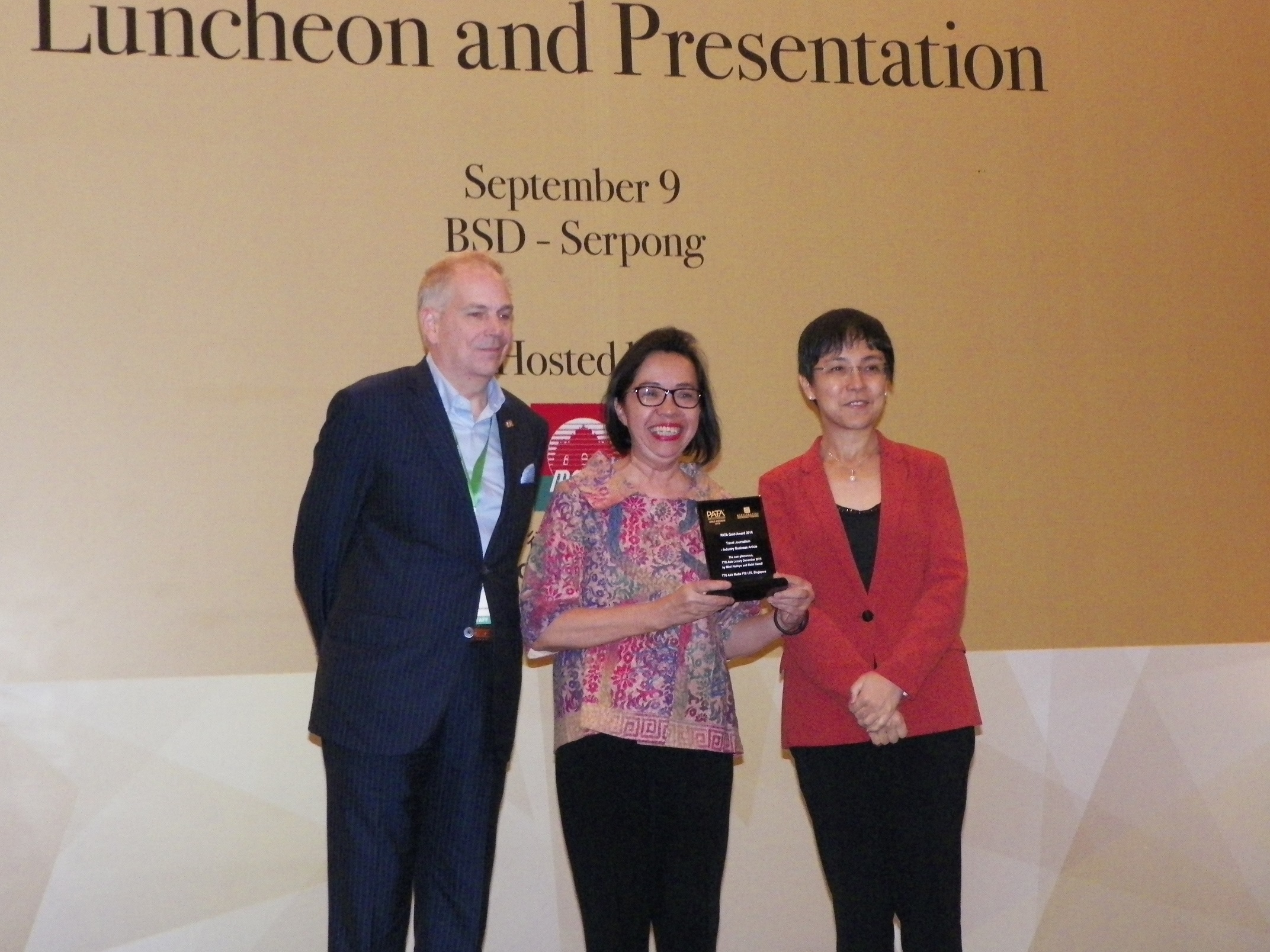 Mimi Hudoyo (centre), all smiles with her award. Credit: Joen Damayanti