TTG Asia
Asia/Singapore Tuesday, 30th December 2025
Page 1670

Mono itineraries in SE Asia on the rise among longhaul travellers

0

angkor-wat
Angkor Wat, Cambodia

Longhaul buyers interviewed at the ATF TRAVEX are reporting growing demand for mono destinations in South-east Asia, which has long been perceived as a bloc. From wanting to visit numerous countries at one go, travellers are now focusing on one country for the entirety of their trip.

M Zaki, president of RZ Travels California, said: “I have noticed this trend growing over the last couple of months, propelled by the strengthening of the US dollar, which makes the region affordable.

“Also, hotels are giving incentives such as pay-three-stay-five-nights and more. Some hotels in Thailand are even offering free massages.”

Roy Davis, director of UK-based World Discovery, concurred: “The big change in the market is that there used to be multi-country tours, where people see the highlights and move on. Now they prefer to go to one country and see it in more depth.”

Davis added that such travellers prefer not to rush around, and instead choose to fully immerse themselves in the culture, food and sights of one destination. For him, Thailand and Cambodia are selling well as mono destinations for 2017.

However, Zaki pointed out that the demand for mono destinations usually stem from FIT travellers or repeat visitors.

Shirish N Trivedi, president of Travel Leaders in Baltimore, said travel shows on TV about South-east Asia in the US have drawn curiosity from travellers, especially those aged 20 to 50.

He elaborated: “In the past, the norm was to bundle two or three destinations for a 10- to 14-day holiday. Now, there is increased demand from FIT clients who want to spend 10 to 12 days in a single destination to learn more about the local culture and its people. This trend has emerged over the past 12 months.”

Shirish says Cambodia and Myanmar are hot as “little is known about these destinations”.

“If you’ve not been to Thailand before, for example, and you want to see the country entirely, you stay there and move within the country. For travellers who want to get involved and give something back, they will usually stay put in one country,” concluded Petra Schickling, managing director of Germany-based Herget Representation & Networking. – Additional report from Rachel AJ Lee

Tours shaken up by trips sharing economy

0

matt-masson-buffalo-tours2
Masson: take a lot for new players to disrupt tour operations

Asian tour operators are reinventing tours and strengthening capabilities as bigger players like Airbnb foray into their territory.

Airbnb claimed 500 experiences in 12 cities worldwide at launch last mid-November and, although only Japan is among the dozen, tour operators recognise it’s just a matter of time before more Asian experiences will be offered and big players like Google enter the travel business.

Currently, the trip-sharing economy, which has birthed local players such as Vietnam’s Triip.me, Singapore’s KKday and Thailand’s Local Alike, has yet to disrupt tour operators’ business. But Niels Steeman, Asian Trails e-commerce and marketing manager, expects it to “create a rumble”, just as vacation rentals has disrupted the hotel sector.

“Looking at the roll-out plans of Airbnb Trips, the focus is more on Europe, the US and South America, but Asia will soon be on their radar,” he said.

And just as in home sharing, there will be such issues as licensing and safety standards. Added Steeman: “What worries us is, as soon as you operate tours, hosts become tour operators and in many countries (where Asian Trails Group operates), you need to have an appropriate licence to be a guide or a tour operator.

“Another big issue is the insurance coverage of the organisers, should anything happen. At Asian Trails, we offer immersive local trips that are off-the-beaten track, but with the security of operating fully licensed and fully insured operations.”

Matt Masson, managing director of Buffalo Tours Singapore, believes it would take a lot for new players to disrupt tour operations. “There’s a lot of attention in the tours and activities space. That’s the strong ground of tour operators and DMCs.

“But I think, specifically with Airbnb, it’s a big challenge from letting out a spare room to actually committing to giving a half- or full-day, some even two or three days. A lot of training needs to go into that to deliver the kind of experience DMCs deliver. I know the amount of effort we put in – guide training, driver training and audits to make sure all our experiences are safe. There’s a lot of intelligence behind and it will take other players time to build up that knowledge,” said Masson.

In the last three to four years, Buffalo Tours has reinvented the meaning of a tour guide – from just someone who stands on the bus and gives historical facts to “real-life” people, be it a restaurant owner or a curator of an art gallery who takes clients behind the scenes.

It launched the Local Life range of tours in 2014, featuring tours that connect clients with local communities and a low environmental footprint. A lot of these tours are done on foot, bicycle or other forms of public transport. It also launched the Essence range, which offers more private touring in 2015, and Masterclass last year, designed to give customers even more experiential moments.

Being on the ground, knowing the hidden places, and having local contacts, “is where DMCs can control that experience better than an OTA,” said Masson.

Steeman foresees that in the near future, Airbnb too will recognise this, become more “lenient” and add DMCs to their platform.

Asian Trails has also reinvented tours by developing the Explore Asia programmes to deliver out-of-the-ordinary tours for couples, families and those seeking new roads in existing destinations. “The market demand (not Airbnb) constantly pushes us to deliver something new,” he said.

As to why a customer would still want to book a tour through a retail agency who gets the tour from the tour operator, when he can now book direct on the trip-sharing economy, Steeman said: “The online B2C/C2C travel segment remains a very fragmented segment. Customers need to go to various sites to get a total package, spending a lot of time and effort searching for the right deal.”

Masson also pointed out other reasons: “Security is one. You are buying from a trusted party who has met local regulations. That sounds old-fashioned but there will be cases in the next few years of online companies delivering a sub-standard service and not meeting expectations. That security of going to a trusted player still remains regardless of the generation.

“And most tour operators will evolve. They have been in the business for years and kept up with the trends,” Masson concluded.

Le Meridien Kuala Lumpur welcomes new GM

0

Michael Delargy has been appointed general manager for Le Méridien Kuala Lumpur, and will be responsible for the strategic direction, guest satisfaction and day-to-day operations of the newly renovated hotel.

Prior to joining Le Méridien Kuala Lumpur, Delargy spent three years as general manager of The Westin Nanjing, China.

Michael_Delargy

An Ireland native, Delargy has over 20 years of international hospitality management experience, primarily in Asia, Africa and the Middle East.

India’s cash crunch casts long shadow on outbound travel

0

india-demonitisation-banned-notes

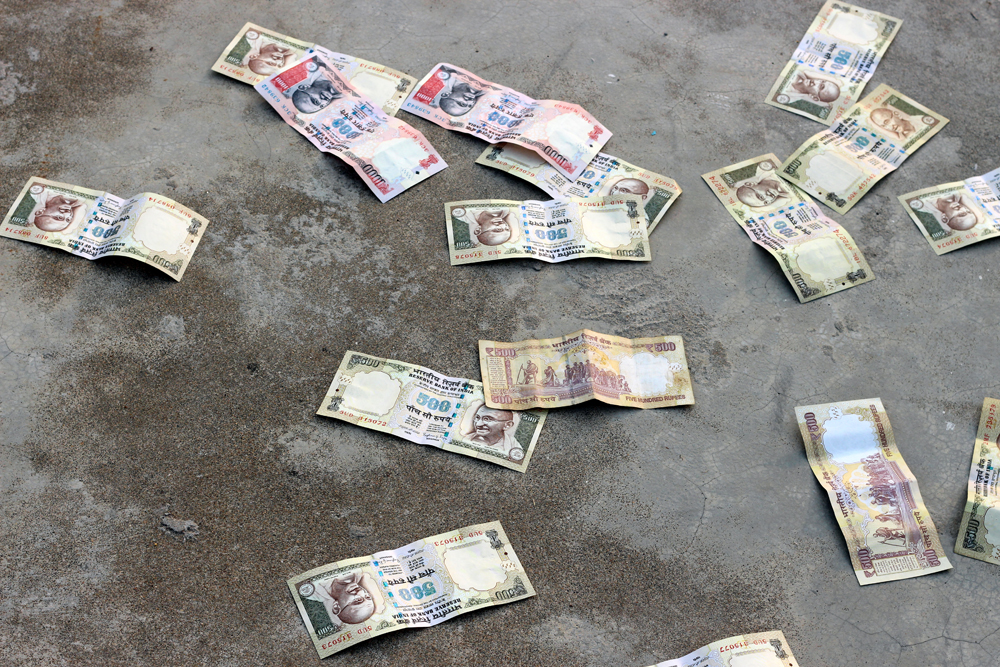
India’s surprise demonetisation of its Rs500 (US$7.35) and Rs1,000 bills in November 2016 has rattled the travel trade, as inbound and outbound travellers grapple with a cash crisis that sees no respite in sight.

The sudden move by the Indian government to crack down on corruption, counterfeit currency and black money has effectively made 85 per cent of India’s cash illegal tender overnight while the circulation of the new Rs500 rupee and Rs2,000 bank notes have lagged behind demand.

The liquidity crunch has badly hit Indian outbound sector. Hitank Shah, Gujarat’s chapter chairman of Travel Agents Federation of India (TAFI), said: “Demonetisation has affected travel industry adversely with business down by 30 to 40 per cent.”

To address the issue, the Gujarat chapter has inked a MoU with a private bank to facilitate travel loans for customers of TAFI members. “We expect the move will help to boost business of our members who are fledgling post demonetisation,” added Shah.

Ashwani Sharma, CEO, Sheraton Travels, said: “In the mean time, outbound tourism is suffering from the demonetisation move. The leisure market especially has not taken the announcement positively.”

For the recent year-end travel season, Rakshit Desai, managing director at India’s FCM Travel Solutions, saw Indian travellers cancelling their longhaul plans to destinations such as the US and Europe in favour for countries nearer home.

The ripple effects of India’s demonetisation move are also felt in South-east Asia. Malaysian inbound agents have been caught in a bind over this, with Andy Yow, director of sales and marketing at Vivanta by Taj – Rebak Island Langkawi, seeing a 10 per cent year-on-year drop in bookings from India in November and December 2016.

Leisure tourists from India have also shortened their stay to two nights from three nights, added Yow, which he attributes to travellers exercising greater caution in spending amid the current cash crunch.

“Our business was badly hit during the Indian peak travel season in November and December 2016. We were down around 30 per cent year-on-year,” said Arokia Das, senior manager at Luxury Tours Malaysia, who still expects a 20 per cent year-on-year drop in 1Q2017 business.

He noted: “Three-star hotel packages are currently selling better than four- and five-star properties. Indian holidaymakers are being thrifty as they don’t know how long this issue will persist.

“We are trying to make up for the revenue shortfall by intensifying efforts to get more regional business. There is a host of air connectivity options from LCCs linking South-east Asia’s capital and secondary cities to Kuala Lumpur.

“However, yield is minimal compared with the Indian market who purchases fully loaded tour packages. South-east Asian travellers prefer to sightsee and move on their own, rather than rely on a travel agent.”

Another Malaysian inbound agent, Nanda Kumar, managing director at Hidden Asia Travel & Tours, said Indian FITs business was down 40 per cent during the peak travel season in December while five incentive travel groups from India had postponed their trips in December 2016 to 1Q2017 due to payment issues.

Kumar told TTG Asia that Hidden Asia has since extended credit terms for some Indian business partners from 30 days to 60 days, and he hopes the demonetisation storm will pass before the Indian peak summer travel season starts in April. – Additional report from Rohit Kaul

Sewing SE Asia’s rich tapestry for ATF

0

sewing-combined-atf

Fuchsia Lane, a womenswear label, took on a bold challenge by Singapore Tourism Board to design a shirt for ministers and heads of state attending ATF 2017.

Designer Vivienne Ong-Lin and her team spent a month visiting the Peranakan museum and shophouses, talking to artisans and poring over historical books for research and inspiration.

The result was a shirt with a simple Mandarin collar, sleeves piped with batik trim and simple embroidery of orchid blossoms and buds on the left side of the front yolk. For female ministers, soft crepe scarves in lilac and with rich embroidery were created.

With over 1,800 embroidered orchids, 500 hand-sewn buttons, 400 hours in the making for 38 distinguished ministers and heads of state, this is one outfit to cherish and keep.

MICE, a new darling for ASEAN

0

bitec-thailand-mice
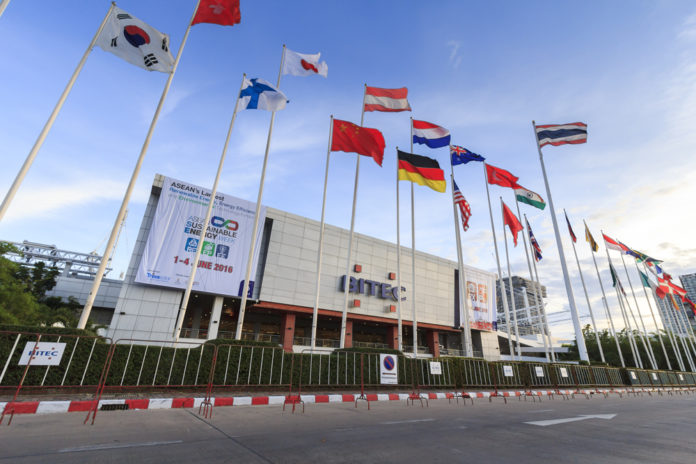
Bangkok International Trade & Exhibition Centre

The MICE industry is finally getting its attention at the regional level, with ASEAN member states placing increasing attention and rolling out concerted efforts to develop the sector further.

Wiparat Tharateerapab, director, government and corporate affairs department, Thailand Convention & Exhibition Bureau (TCEB), said: “In the past, ASEAN governments are more focused on leisure tourism (but) there are many hotels and venues with events facilities, and many players in the MICE value chain.”

Nichapa Yoswee, TCEB’s director of MICE capabilities development department, told TTG Asia: “The existing Thailand MICE Venue Standard (TMVS), adapted from international ISO quality standards, is used to incentivise MICE operators to upgrade themselves. It already sees more than 400 meeting rooms certified in Thailand.”

TMVS covers three categories – meeting rooms, exhibition venues and event events – with the meeting rooms standard being further divided into three groups of hotels and resorts, convention centres and public facilities.

Thailand, as the ASEAN lead coordinator for MICE venues, will remodel TMVS for use at the regional level as the new ASEAN MICE Venue Standard (AVMS). According to Nichapa, the 45th Meeting of ASEAN NTOs at ATF will see the adoption of AVMS’ final version (in the category of meeting rooms in hotels) as well as its Audit and Certification Manual. ASEAN NTOs will discuss whether to expand the certification to exhibition venues or event venues next.

Following an audit training in March, auditors from each ASEAN member state will then nominate certified venues in their country for the first AVMS Awards at ATF 2018.

Nichapa hopes to get at least 10 nominees from each country.

ATF 2018 will also see the launch of a MICE Forum, which will feature seminars and a small exhibition, according to Wiparat.

Meanwhile, Indonesia Ministry of Tourism, as the coordinator for Mutual Recognition Arrangement on Tourism Professional (MRA-TPA), has drawn up proposals to adopt and incorporate MICE competency standards at the ASEAN level. Ani Insani, director, tourism institutional relations at the Ministry of Tourism, said the standards will ensure the same experience at any 10 ASEAN countries.

The Philippines has also devoted more attention to MICE. Said Baby de Luna-Landan, who helms the MICE department at the Tourism Promotion Board: “MICE and Events Tourism is (one of the priorities) of the National Tourism Development Plan of the Philippine Department of Tourism.”

To stay competitive, Singapore Tourism Board’s Business Events in Singapore fund has been expanded to support industry-driven business development initiatives and provide funding for local association members to start lobbying activities prior to biding for events. STB also recently collaborated with CNN, Bloomberg and other online platforms to establish Singapore as a premier MICE hub anchored on thought leadership and business opportunities.

On the other hand, Manivong Sounh, director general of Laos’ Tourism Marketing Department, says going niche is the way for the country to pursue its MICE ambitions. “We do not have the capacity or resources to cater to big events (so) we will focus on small-scale events and develop the relevant skills and knowledge,” he said.

Lending a hand to Laos’ MICE plans is the 2017 Mekong Tourism Forum (MTF), which will be organised by Mekong Tourism Coordinating Office (MCTO) in Luang Prabang this June. Said Jens Thraenhart, executive director of MCTO: “We wanted to look at how smaller destinations can compete with cities for big events, so we came up with the answer of (showcasing) experiential events at MTF.”

VietJet now connects Ho Chi Minh City to Taichung

0

inaugural-flight-connecting-ho-chi-minh-city-and-taichung
Inaugural flight connecting Ho Chi Minh City and Taichung

VietJet has launched its fifth route to Taiwan, linking Ho Chi Minh City with Taichung, on January 15.

The airline now has the most routes connecting Vietnam and Taiwan, and serves more destinations in Taiwan than any other budget airline.

The new service will operate four-times weekly flights on Monday, Wednesday, Friday and Sunday. The 3.5-hour flight will depart from Ho Chi Minh City at 10.25 and arrive at Taichung Airport at 14.45. The return leg will depart at 15.45 and arrive in Ho Chi Minh City at 18.00.

Located on the western side of Central Taiwan, Taichung is Taiwan’s third largest city. Besides being a key business hub, the city also provides a gateway for exploring the island’s mountains and outdoor offerings.

Raffles Hotel Singapore marks 130 years with heritage tours

0

raffles_hotel_singapore

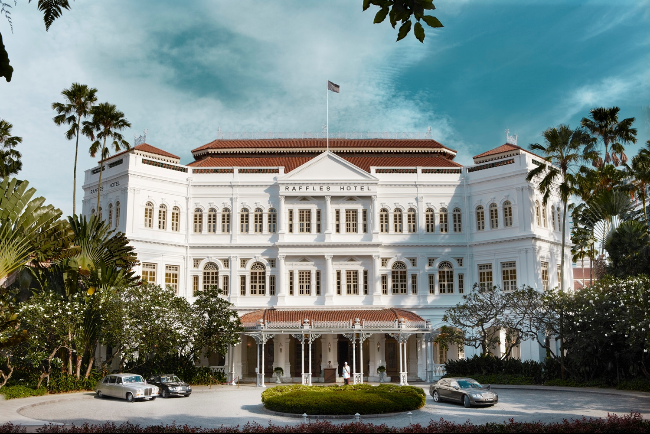
The five-star Raffles Hotel Singapore has rolled out a number of special events and offers to celebrate its 130th anniversary this year.

From February to August 2017, guides from the National Heritage Board will be on hand to conduct a 45-minute Walk of Fame History Tours on the premises. Costing S$20 (US$14) per person, tours will take place every first Saturday of the month at three timings (10.00, 14.00 and 17.00). Tickets can be bought from the Raffles Gift Shop.

As well, the hotel is offering special packages and organising a gala dinner in 3Q2017 to mark its 130th anniversary.

Declared a National Monument by the Singapore government in 1987, Raffles Hotel Singapore will soon embark on a restoration programme that will be carried out in three phases. Restoration is scheduled for completion in mid-2018.

Fears of UK sales slump ‘deeply unfounded’

0

city-hall-promenade-in-london
City Hall and promenade in London

Despite the pound sterling taking a beating against major currencies, forward bookings from the UK market to South-east Asia are ahead of figures at the same time last year, allaying fears of a UK sales slump post-Brexit.

ForwardKeys CEO, Olivier Jager, said: “Looking at the UK bookings for travel to South-east Asia in 1H2017, we observe that leisure and group bookings to Malaysia are currently more than 80 per cent ahead of the equivalent time last year. Bookings to Indonesia for the same period in the same segments are currently more than 50 per cent ahead.”

This peak winter season from January to March is also something to write home about, a check with UK tour operators shows. Darren Lancaster, director One World – Travel Sales & Marketing, said many UK operators are reporting stronger business, with some even expecting the peak booking period will lead to their best-ever summer arrivals in 2017.

“People in the UK are still happy to spend money on leisure activities, including overseas holidays. They believe they work hard and therefore deserve to treat themselves. This shows that the fears of a post-Brexit UK sales slump are deeply unfounded,” Lancaster said.

David Carlaw, head of longhaul product at Premier Holidays, has not seen any Brexit impact on winter booking patterns so far and tipped that destinations outside Europe might well see a demand spike as travellers decide to opt for destinations farther afield than traditional European resorts.

Lancaster added that Asia, already unrivalled in offering exceptional value, “now looks even better versus the European and Caribbean/North America destinations”.

Tour operators said this is an opportunity for ASEAN NTOs to target a bigger share of the UK market, warning against complacency amid stiff destination marketing competition.

Carlaw said destinations with the most proactive NTOs and airlines will come up tops. “Thailand is our number one seller, for example,” he said.

Lancaster pointed to airlines’ role: “Vietnam will continue to grow with VN flights switched to Heathrow on newer planes, and the ‘city and beach’ FIT market to central Vietnam via Danang will increase steadily on the back of direct flights from Bangkok.

“Similarly Qatar’s new route into Krabi will develop growth in the south of Thailand. Bali is also doing well as the traditional ‘bottleneck’ when flying via Singapore is now eased with more indirect flights via the Middle East, plus Garuda’s service from Heathrow via Jakarta.”

Amid the prevalent optimism, David Kevan, director of Chic Locations, warned against “perennial blue skies thinking”, as British holidaymakers will now exercise more frugality in their decision making.

“Clients used to travelling in the winter will not suddenly switch to summer, but they will consider March rather than February if there is a rate reduction – typically this happens in Phuket, for example. Repeat clients will find the garden view just as attractive as the ocean view, but a free upgrade would be kindly accepted,” he said.

First seed planted for Singapore’s Mandai nature precinct project

0

mph-ground-seeding-event-_-planting-of-tree-sapling-small
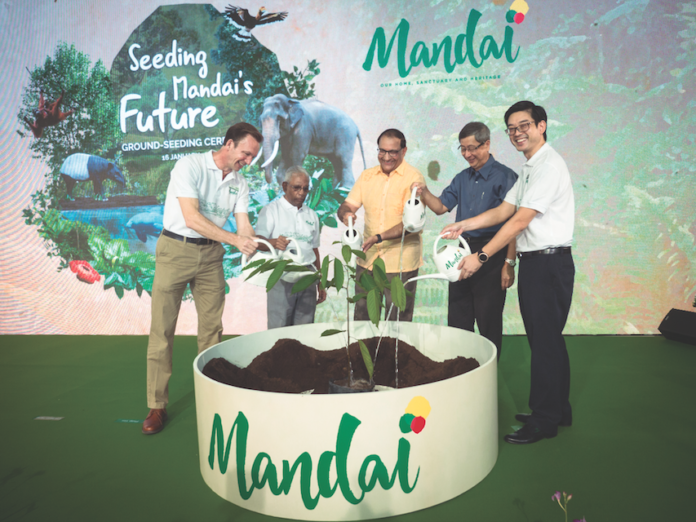
(From left) Mandai Park Holdings’ Mike Barclay and S Dhanabalan, Ministry of Trade and Industry Singapore’s S Iswaran, Temasek Holdings’ Lim Boon Heng and Mandai Park Holdings’ Philip Yim

A ground-seeding ceremony on Monday, attended by Singapore’s minister for trade and industry (industry), S Iswaran, has marked the launch of Mandai Park Holdings’ (MPH) Mandai rejuvenation project.

MPH will be augmenting the existing Singapore Zoo, River Safari and Night Safari in Singapore’s north with the addition of a new Bird Park (by 2020), a Rainforest Park (by 2021), a nature-themed indoor attraction and eco-accommodation options.

“Reviews and discussions on Mandai’s rejuvenation have been going on for several years with various stakeholders. With the necessary government approvals now obtained, we are delighted to mark this milestone with our partners today”, said MPH chairman, S Dhanabalan.

Mike Barclay, CEO of Mandai Park Holdings, said: “With the attractive public spaces and more opportunities to stay overnight, we hope to encourage families and groups of friends to spend more time enjoying and appreciating Mandai’s wildlife offerings.”

The future Mandai nature precinct will be connected by enhanced public spaces, walking trails and boardwalks along the edge of the Upper Seletar Reservoir, using impacted land outside the Central Catchment Nature Reserve and part of Mandai’s three existing nature parks. Development will be completed in phases.