TTG Asia
Asia/Singapore Tuesday, 19th May 2026
Page 1628

Wyndham to spin off hotel business

0

Wyndham Worldwide, which operate brands such as Travelodge, Ramada and Days Inn, has announced plans to spin off its hotel business and combine its timeshare businesses, a strategic move to allow the two separate companies to focus on their core business and growth opportunities.

Wyndham Hotel Group, based in Parsippany, will become a new publicly traded pure-play hotel company; while Wyndham Vacation Ownership, with headquarters in Orlando, Florida, will be combined with Wyndham Destination Network, home to RCI, the world’s largest timeshare exchange company.


The two public companies intend to enter into long-term exclusive license agreements to retain their affiliation with Wyndham Rewards, as well as continued collaboration on key inventory sharing and customer cross-sell initiatives.

The transaction is expected to be completed in 1H2018. The corporate names of the post-spin public companies have not yet been decided.

Following the separation, both companies will have significant scale and leadership positions within their industries, strong cash flows, rich portfolios of brands, and existing relationships in place to drive attractive growth and shareholder value.

The transaction will be effected through a pro rata distribution of the new hotel company’s stock to existing shareholders.

The two companies will have separate boards of directors, both of which will be helmed by Wyndham Worldwide CEO and chairman Stephen Holmes as non-executive chairman.

Wyndham Hotel Group CEO Geoff Ballotti and Wyndham Vacation Ownership CEO Michael Brown will each continue to lead the respective companies as president and CEO, and Gail Mandel, CEO of Wyndham Destination Network, will also retain his post.

Work underway to alleviate Kyoto’s ‘tourism pollution’

0
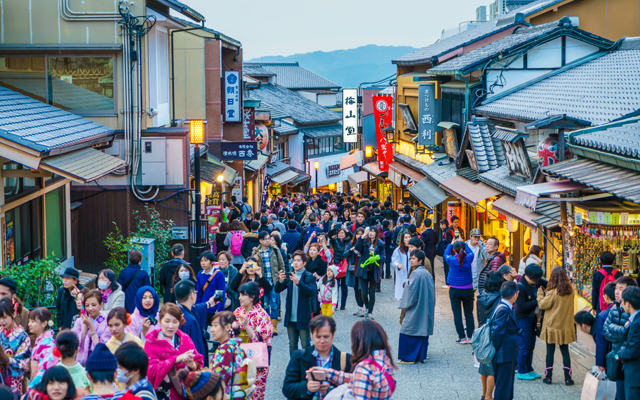
Kyoto Kiyomizu Temple

Tourism officials in Kyoto are implementing initiatives to address complaints about tourist overcrowding, termed by local media as “pollution by tourism”.

Over 56.8 million tourists visited the city in calendar 2015, a record high, spending nearly one trillion yen (US$9.12 billion).

Kyoto Kiyomizu Temple

However, the vast tourist volume is putting pressure on transport infrastructure, while demand for accommodation has led owners of vacant properties to lease out properties – often illegally – according to Shuhei Akahoshi, managing director of the city’s Department of Conventions & Tourism.

Moreover, foreign tourists are often unaware of local customs such as separating trash, hence creating friction with some locals.

The city’s tourism authorities have taken measures to reduce discord.”We have several ongoing advertising campaigns that promote better manners among tourists. We partnered TripAdvisor to release a guide on this and regularly release information on etiquette online and in tourist information magazines,” Akahoshi said.

He added that the city is dispersing crowds by promoting events beyond peak hours and popular parts of the city as well as encouraging visits in the less-congested months of January, May and June.

Matthew Stevens, conventions and conferences specialist, Kyoto Convention and Visitors Bureau, said travel operators and hotels are “the ideal way to get the message across” as the primary touch points for first-time visitors.

“We are also working very closely with travel companies and hotels to promote these ideas and have so far released three booklets that we distribute to travel firms for their customers,” Stevens said. The most recent is a ryokan guide that also instructs foreign guests on etiquette.

Ascott breathes lyf into Singapore’s Funan with US$125m investment

0
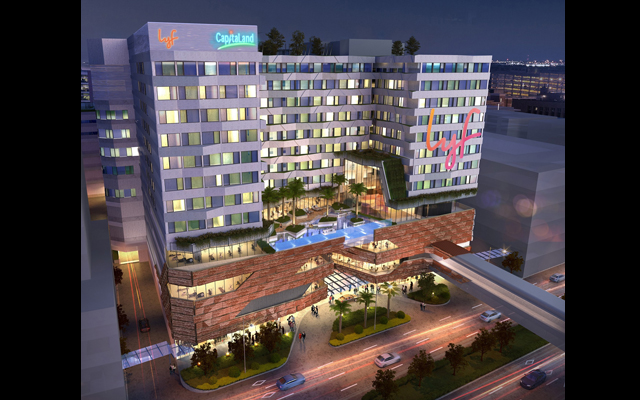
Ascott's lyf Funan Singapore

The Ascott has announced a S$170.3 million (US$125 million) investment to develop the Singapore flagship of its co-living, millennial targeted concept, lyf, scheduled for opening within the Funan integrated development in 2020.

Made through its serviced residence global fund with Qatar Investment Authority, the investment comprises S$90.5 million allocated to acquiring land and $$80 million to developing the concept.

Ascott’s lyf Funan Singapore

The nine-storey serviced residence will form part of Funan, located in Singapore’s City Hall area close to the CBD and attractions such as the National Gallery, comprising a mall and two office towers offering retail outlets and co-working spaces.

lyf Funan Singapore will offer 279 units and up to 412 rooms, spanning about 1.1ha in gross floor area. Unit types include Big Bed studio units and All-Together business suites ranging from three- to six-bedrooms. The business suites offer smart display screens for video conferencing and discussions while a large table doubles up as a collaborative working zone and dining area.

The property will offer Connect social zones such as co-working spaces and an arena for activities such as hackathons, talks and workshops, as well as the Bond social kitchen for guests to prepare meals and take cooking classes. Other facilities include a gymnasium and Wash & Hang laundromat, where guests can play a round of Foosball while waiting for their laundry.

The acquisition also cements Ascott’s fast-growing portfolio as a serviced residence operator in Singapore, with close to 2,000 units in 12 properties. Within a span of two months, the company has added about 1,000 units across four properties in Singapore; which includes securing a contract from Low Keng Huat (Singapore) to manage a 166-unit Citadines Balestier Singapore (opening in 2021), featuring studios and one-bedroom units, a swimming pool, gymnasium with a running track, social pavilion, children’s playground and barbeque pit.

This follows Ascott’s recent addition of the 240-unit lyf Farrer Park Singapore that was also awarded by Low Keng Huat, as well as a prime 299-unit serviced residence at CapitaLand’s landmark integrated development at Raffles Place. Both serviced residences are also slated to open in 2021.

Ascott is working towards its target of achieving 10,000 units under the lyf brand worldwide by 2020.

New hotels: Lexis Hibiscus Port Dickson, Waldorf Astoria Chengdu and more

0

The latest hotel openings and announcements made this week.

Lexis Hibiscus Port Dickson
The hibiscus-shaped property in Malaysia boasts 639 sea-facing pool villas, each with its own pool and steam room. Facilities include a spa, kids club, karaoke facility and a watersports centre. In addition, there are three restaurants, as well as a stretch called Hibiscus Walk that provides guests the opportunity to sample popular Malaysian cuisines. For functions and events, the sprawling resort has no less than 15 meeting spaces, including the Hibiscus Grand Ballroom that can seat up to 700 and the boardroom for 20 pax.

Waldorf Astoria Chengdu
Located in Chengdu Hi-Tech Zone, the 289-room Waldorf Astoria Chengdu is housed within the high-end in99 Plaza, a 190,000m2 mixed-use development. Guest rooms at the 52-storey, Art Deco property start from a spacious 50m2, each featuring the signature Waldorf Astoria bed, a walk-in closet, marble bathrooms with double vanities and a personal concierge cabinet. It is home to six restaurants and bars, a grand ballroom and five meeting rooms with a combined area of over 2,000m2, the Waldorf Astoria Spa, a 24-hour fitness centre and a 25m-long heated indoor pool.

Hotel On The Park
Resorts World Genting has reopened The Theme Park Hotel after a four-year renovation. Now called the Hotel On The Park, the hotel has retained all of its 448 rooms, featuring brighter colours and quirky spaces such as the 743m2 lobby with a stack of giant tea cups. Previously, most rooms could only fit two people, but there are now options for larger groups of four to six people, plus four honeymoon suites that are standalone units. Wi-Fi is complimentary, in addition to a grab-and-go F&B outlet Eatopia.

The Macau Roosevelt
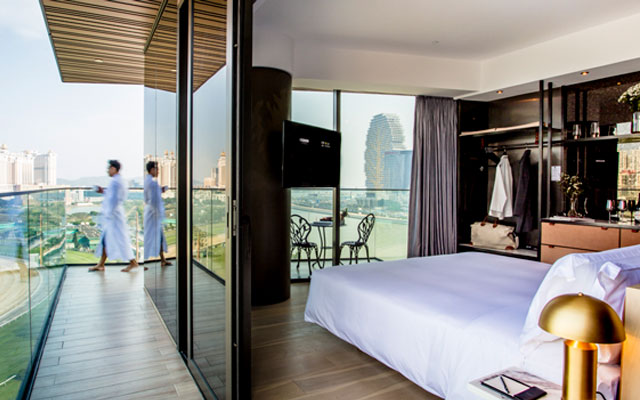
At the five-star Macau Roosevelt, the 368 guestrooms are inspired by Old Hollywood and its glamour – think ebony-lacquered burnt wood doors, polished bronze and carved Italian marble. Facilities include a restaurant, fitness centre and an open-air swimming pool overlooking Macau’s Jockey Club. The 12-storey hotel neighbours the Macau Jockey Club in the Taipa district, and is a short drive from the casinos and tourist attractions such as Coloane Village.

Marriott International opens five hotels in Japan
Marriott International has opened five hotels across Japan, offering more than 800 rooms in total.

The Karuizawa Marriott Hotel (pictured above) is located 70 minutes away from central Tokyo and offers 142 rooms, some of which feature forest views and private hot springs. There are dog-friendly cottages onsite as well. Facilities include a restaurant, three conference rooms, spa, fitness centre and a communal hot spring bath.

Nestled in the wooded hills of the Izu Peninsula is 128-room Izu Marriott Hotel Shuzenji, some of which with its private open-air baths. Facilities include a restaurant, a communal hot spring bath, fitness centre, golf and putting range, tennis courts, as well as two banquet halls.

Fuji Marriott Hotel Lake Yamanaka offers 105 rooms, some of which are Japanese tatami while the rest are Western-designed. Some rooms feature private hot spring baths and views of Mount Fuji as well. Facilities include a restaurant, private room for 40 guests, two conference rooms, a communal hot spring bath and tennis courts.

Located close to Kyoto, Lake Biwa Marriott Hotel offers 274 guestrooms, most of which face Japan’s largest lake. Facilities include a restaurant, a banquet hall for up to 500 guests, a communal hot spring bath, 1,000m2 gym, tennis and futsal courts, an indoor swimming pool and a planetarium with 166 seats.

Near the coast in Wakayama is Nanki-Shirahama Marriott Hotel, offering 182 Japanese and contemporary rooms. Facilities include a communal hot spring bath, outdoor swimming pool, and children’s zone.

Hilton goes into Timor-Leste

0

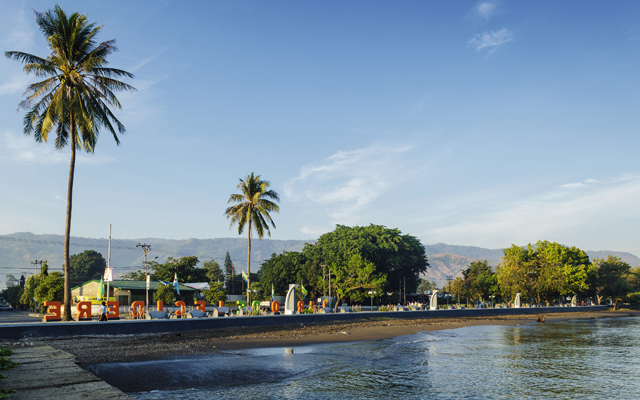
Timor-Leste is set to get its first internationally branded hotel with Hilton’s signing of Hilton Dili Palm Springs with Jackson Lay, CEO of The Lay Group.

Central Dili

Located in the capital city and main economic centre of Dili, the hotel will offer 140 rooms (60m2) and 10 suites (60m2), event and meeting spaces, an executive lounge, a signature restaurant, lobby bar, rooftop bar, fitness centre, spa and outdoor pool.

Construction has commenced for the hotel and is scheduled to complete in late 2018.


ITB Asia 2017 scores partnership with Korea Tourism Organization

0
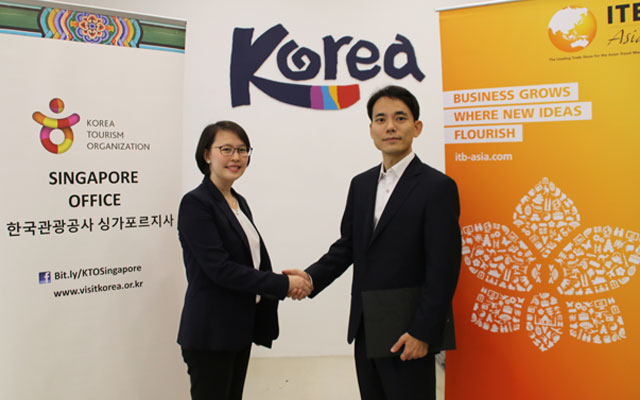
(From left) Messe Berlin (Singapore)'s Katrina Leung; and Korea Tourism Organisation (Singapore)'s Yoon Seung Hwan. Image credit: ITB Asia

For ITB Asia 2017, Messe Berlin (Singapore) has signed a memorandum of cooperation with the Korea Tourism Organization of Singapore (KTO), an agreement that is expected to bring more leisure, business events and corporate buyers to the show.

Said Yoon Seung Hwan, director of KTO: “Looking at global business trends, growth in corporate travel and MICE, it is clear that Asia will be the most strategic market for us in the next decade. Our partnership with ITB Asia will expand our presence and strengthen our proposition to the Asian and South-east Asian market.”

(From left) Messe Berlin (Singapore)’s Katrina Leung; and Korea Tourism Organisation (Singapore)’s Yoon Seung Hwan. Image credit: ITB Asia

Yoon added that the show offers “a great platform for us to reach a large number of participants”.

KTO, along with Seoul Tourism Organisation, Jeju Convention and Visitors Bureau and HanaTour Services, will have their respective booths at ITB Asia 2017.

Roxy-Pacific buys second hotel asset in Japan

0
Tenmabashi Grand Hotel Osaka

Singapore-based Roxy-Pacific Holdings has acquired its second hotel asset in Japan, Tenmabashi Grand Hotel Osaka, for three billion yen (US$27.2 million).

Upon completion of the acquisition in October 2017, the 154-room Tenmabashi Grand Hotel Osaka will be self-managed by the group’s Noku Roxy hospitality management arm, which currently operates Noku Kyoto in Japan.

Tenmabashi Grand Hotel Osaka

Chris Teo, managing director of Roxy-Pacific, commented: “Since its soft opening in April this year, Tenmabashi Grand Hotel Osaka has received warm reception due to the merits of its location and easy connectivity to public transportation.

“Our self-managed Noku Kyoto hotel has achieved high room rates and good yield – a testament of the effective business model that we hope to replicate in the Osaka hotel asset so as to bolster our recurring income streams for greater resilience.”

In the Noku Roxy hospitality brand asset pipeline are a 50-villa resort in the Maldives, and a separate resort in Phuket’s Chalong sub-district, which are planned for launch in the last quarter of 2017 and 2019 respectively.

Davidson returns to Alila, now GM of Solo property

0
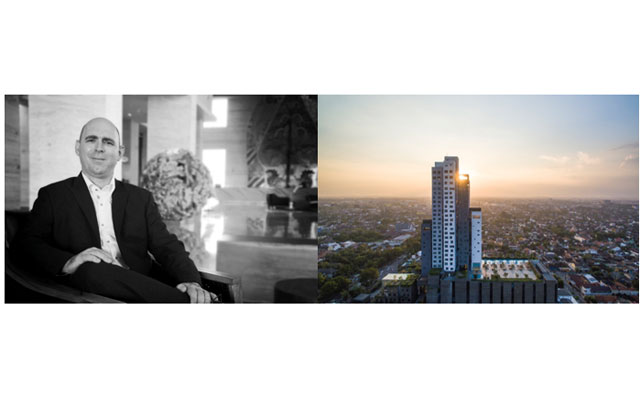
Alasdair Davidson

Alila Solo has appointed Alasdair Davidson as the hotel’s new general manager.

Davidson previously held senior executive positions at Alila Maldives and Alila Diwa Goa, followed by three years as general manager of Alila Ubud in Bali. The hospitality veteran has more than 20 years of international experience in the Maldives, India, Australia and Fiji.

Alasdair Davidson

Prior to rejoining Alila, he was the general manager of Odin Hospitality in Hokkaido.

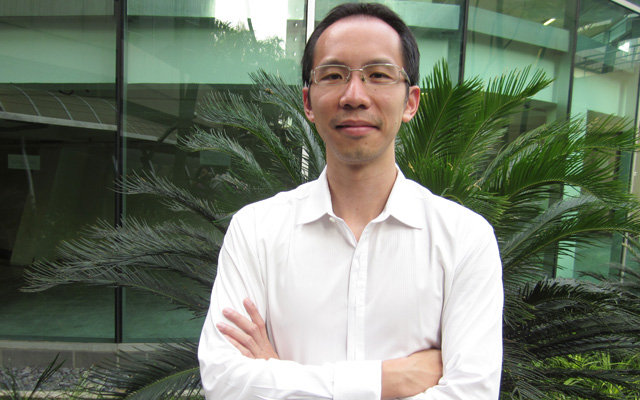
Nigel Wong, Director, Urban Rhythm Tours, Adventures and Travel

0

What are some of the challenges that Malaysia faces as a tourist destination?
Malaysia has many things to offer tourists but somehow the message is not getting through. While tourist numbers have increased over the years, they have not been exponential and there is still room for further growth. The challenge for the tourism industry is to promote the country as a fresh destination.

We are lagging behind our neighbours as legislature infrastructure is cumbersome, and not conducive in empowering the tourism industry to take a step forward. The tourism industry must be liberalised and licensing simplified to allow tour operators to compete on a level playing field with ride-sharing apps and hoteliers.

Another challenge is the lack of innovation among travel industry players. We must look at what our counterparts in other countries are doing so we can upgrade our product offerings and exceed theirs.

If I had my way to improve things, I would… focus a lot more on developing quality infrastructure such as connectivity and facilities to cater for business travellers, including dedicated MRT lines to Sepang International Circuit, Putrajaya and Cyberjaya. Sepang International Circuit has good facilities and holds races that attract international visitors, but it is not convenient to visit using public transport.

I would bring to the government’s attention the need to focus more on developing our eco attractions and provide funding for sustainable and viable eco-projects. We have plenty of gazetted sites that are under utilised and unsustainable because it is costly to maintain.
I would also like a call to action on our national treasure, Taman Negara National Park, which can be further improved through better facilities and conservation efforts.

A chance for change

0

In a morphing travel landscape, Singapore travel agencies say they need guidance and unity. Alas, strong leadership eludes them for now. But there’s a chance for change, reports Pamela Chow

The closure of GC Nanda & Sons shocked agents not only because it was a prominent agency that had operated for four decades but also because its managing director, Devinder Ohri, was leading the sector as president of the National Association of Travel Agents Singapore (NATAS).

That agents learnt of GC Nanda’s closure on May 30 only through the media, then officially in a NATAS circular on June 19 signed by Ohri as president, incensed some. A NATAS release three days later announcing Ohri was no longer president while Steven Ler had been appointed acting president and Simon Er as honorary treasurer only brought more questions, with Kay Swee Pin, president of the Singapore Outbound Travel Agents Association, a rival group, even calling it “deceitful”. Both Ler and Er had resigned as NATAS deputy president and honorary treasurer respectively between March and May.

“The president must be elected by shareholders… and if Steven Ler wants to assume the position, he must fight for it and not (have it) handed to him when he had already left the NATAS (executive committee),” Kay told TTG Asia.

In short, it was a circus. And even before news of Ohri’s departure had surfaced, “NATAS seemed to be plagued with leadership problems”, said Justine Koh, spokesperson for Chan Brothers Travel.

Stopgap
Ler’s appointment as acting president is a stopgap, to fulfil all the duties of the president until one is elected at NATAS’ next annual general meeting (AGM) scheduled for May 2018.

In response to queries from TTG Asia, Ismail Hussain, NATAS’ general manager,  surface transport & inbound tours said NATAS executive committee (exco) decided to invite and reappoint both Ler and Er at an emergency meeting on June 19.

“Given the trust and confidence from their colleagues in the exco, both were encouraged and committed to take on their roles and lead the association. We welcome them back and look forward to working them,” he said.

He added: “The next AGM will also be an election year. Members will be invited to nominate or be nominated for election into the exco for the next term of office 2018-2020. All positions in the exco will be opened for nominations.”

As NATAS undergoes a leadership overhaul, its members are left with hands wringing over challenges looming on the horizon. Agencies that TTG Asia spoke to expressed a need for guidance amid changing consumer behaviours that may leave traditional tour operators high and dry.

These changes are stimulated by the “emergence of more online direct sales (and) online travel companies with cutting-edge technology”, lamented Dynasty Travel’s spokesperson Alicia Seah.

Exacerbating the climate of uncertainty is the spectre of even more competition from new players. Many agents expect proposed changes to the Travel Agents Act and Regulation being tabled will actually make it easier for new entrants to come in. Examples: As part of a tiered licensing regime, entities that sell or arrange tours within Singapore without passenger-carrying conveyance, such as walking or bicycle tours, would be exempted from a travel agent licence. As well, entities selling or arranging tours without accommodation can apply for a restricted licence with a lower paid-up capital and net worth requirement.

“I actually think that there will be more travel companies opening than closing given the changes in licensing being discussed,” said Robin Yap, president, Travel Corporation Asia.

Another worry is the lack of talent and the need for the industry to get younger people to work in the trade, said Seah.

Strong NATAS needed
Having guidance from NATAS is crucial in these critical times, Seah added.

“We hope that the association can help travel agents stay ahead of competition from the ever-growing online travel sites, by continuing to build trust in people that travel agents can help better than a computer can,” she said.

To members outside NATAS exco, the current state of the association is worrying.

Said Koh: “High turnover or frequent changes at the top may be a sign of larger organisational issues. We are concerned about whether there is commitment and conviction to turn around NATAS’ financial position of severe loss for the past two years, and at the same time, look after the interests of all NATAS members.”

When asked why NATAS is having a hard time, Robert Khoo, its former CEO who led NATAS from 2000-2013, said: “A few difficult and unreasonable members with selfish intentions tried to bring the travel fairs down. The travel fair is the main source of income for NATAS.”

Yet, the role NATAS plays cannot be underestimated. For example, Singapore Tourism Board (STB) collaborates with NATAS to “formulate a Travel Agent Roadmap that seeks to build capabilities and enhance business sustainability through business transformation, technology and manpower”, said Ong Ling Lee, STB’s director, travel agents and tourist guides.

Chan Brothers’ Koh said: “It’s not rocket science but we’d like to see them (NATAS) go back to the basics of being a good leader. Qualities include listening with an open mind, gathering feedback and seeking advice on future decisions affecting members at large instead of upholding the image as the leader at all costs.”

Holiday Tours’ head of MICE and leisure, Cindy Loo, said that it is important for the association to “work closely with IATA, STB and other government bodies to help the travel trade ride through the changing environment, and in the course of doing so, make the industry more resilient to future challenges”.

Adding to the list, Seah urged that ideal leaders “must have a clear and unwavering focus on the association’s vision” and “be able to make difficult decisions in a timely manner”.

Meanwhile, she said the recent episode has had “no impact at all” on Dynasty Travel, and NATAS events are running “as usual”. The biannual NATAS Travel Fair will next be held on August 11-13.

“The industry needs to stay reconciled and united to brace the challenges ahead,” she urged. – Additional reporting by Raini Hamdi and Karen Yue


Timeline

May 2016 Elections held at NATAS Annual General Meeting (AGM); Devinder Ohri appointed president. Position of secretary-general vacated shortly after

March 2017
Ram Samtani appointed as secretary-general

March-May, date unknown
Deputy-president Steven Ler and honorary treasurer Simon Er resigned before AGM

May 30
GC Nanda & Sons voluntarily ceased its Travel Agent License under Singapore Tourism Board

June 19
Ohri announced GC Nanda & Sons’ voluntary cessation in NATAS circular

June 22 Official NATAS release announced Ohri is no longer president; Steven Ler became acting president

May 2018
Elections for new executive committee and new president to be held at NATAS AGM