TTG Asia
Asia/Singapore Thursday, 25th December 2025
Page 1610

Majestic Princess readies for inaugural Asian sailings

0

Princess Cruises’ star vessel, the Majestic Princess, will embark on the 49-day Silk Road Sea Route come May 21, sailing from Rome to Shanghai, its new homeport in China where it will begin its Asian programmes on July 11.

Cherry Wang, Princess Cruises general manager and vice president, China, believes that the 3,560-guest Majestic Princess will offer the ultimate cruise vacation for Chinese travellers with its extensive facilities, including the largest collection of retail shops among all Princess ships, and restaurants helmed by two Michelin-star chefs and stocked with wines from Yao Family Wines, a Napa Valley wine company owned by retired Chinese NBA star Yao Ming.


Majestic Princess

“Tailored specifically for the China market, Majestic Princess will expand its China-based season with new itineraries, plus extended-length options and new ports to explore,” Wang told TTG Asia.

Princess Cruises has also been investing its operations in China.

Arnold Donald, president and CEO of Carnival Corp, the mother company of Princess Cruises, said: “Princess Cruises has placed China foremost in the company’s deployment plans due to the market’s burgeoning economy and increasingly discerning travelers seeking a premium cruise vacation. I’m confident that China will rank among the largest source regions for cruises and Princess will continue to grow in this prosperous market.”

To better serve China’s savviest travellers, Princess Cruises runs the Master Council Program that calls upon a group of Chinese celebrities to work with the company to obtain insights on how to best deliver tailored luxury experiences for Chinese passengers.

According to Wang, Princess Cruises has established three homeports in China – Shanghai, Tianjin, and Xiamen – since entering the market in 2013. In 2016, the number of Chinese cruisers with the Princess Cruises brand had leapt by 131 per cent, and the company expects to see a 59 per cent growth in the market this year.
To catch Gen Zs, Le Pirate seeks new lands for its beach clubs

0

With already a trio of clubs open in Greater Bali – Nusa Ceningan, Gili Trawangan and Labuan Bajo – Indonesia beach club operator Le Pirate now has its sights cast on adding 20 new properties in the country and throughout Asia by 2020.

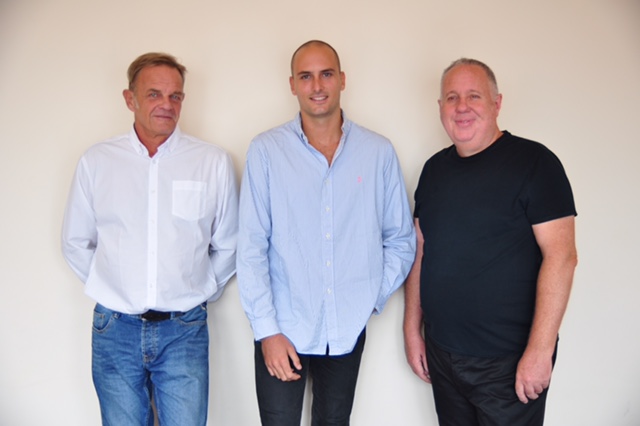
The brainchild of father-and-son team Fredo (of Ku De Ta fame) and Louka Taffin, Le Pirate has teamed up with Bill Barnett, founder of Phuket-based property consulting firm C9 Hotelworks, to grow the poshtel model beyond Indonesian shores to appeal to the millennial and Gen-Z travellers.


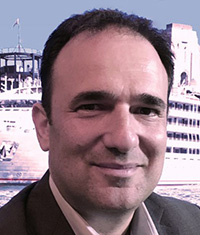
From left: Le Pirate’s Fredo Taffin and Louka Taffin; and C9 Hotelworks’ Bill Barnett

According to C9 Hotelworks’ most recent South-east Asia Hotel Market Trends Report, Indonesia’s inventory of poshtels skyrocketed last year with a 73 per cent year-on-year rise.

Barnett elaborated: “We are seeing poshtels across the archipelago shift outside of areas like Bali into more emerging locations like the Gilis, Flores, Rajah Ampat, and even cultural destinations like Malang. Our data shows just under 200 poshtel-type properties already operating in the country.”

Internationally, the development pipeline is focused on the Philippines, Sri Lanka and Myanmar. With Le Pirate International established in Singapore, the team is working on pushing out licensing and branding models, and engaging developers who want to enter the hotel business.

The social beach club and hotel brand also wants to make a shift towards floating beach club cruisers with its Explorer Cruises, a fleet of overnight island hopping boats.

“We wanted to take one of Indonesia’s key attributes – the spectacular ocean and numerous islands – and make them more accessible in a fun, authentic and natural way,” said Louka.

International hotel investments still blooming in Myanmar

0

While tourism growth in Myanmar has slowed since its initial hype, prospects continue to be bright as international hotel brands mushroom in the country, says Myanmar Tourism Marketing (MTM).

Su Su Tin, vice chairman at MTM, said: “There has been a surge in hotel investments by international brands in Myanmar since 2015 as the country holds the most potential tourist destination untapped in the region.”


Yangon

According to the World Travel and Tourism Council, Myanmar’s tourism sector created 1.4 million jobs in 2015, with a growth of 1.3 per cent estimated for 2016.

Since the new Myanmar government took over, 144 hotels have received their licence, according to MTM.

This September, South Korea’s Lotte Hotels will open it first outpost in Myanmar next to Inya Lake in Yangon, featuring 343 guestrooms and 315 serviced apartments.

Other hotels set to open this year include Hotel G Yangon by GCP Hospitality, which already owns the Strand Hotel in downtown Yangon; the 74-room Yangon Excelsior Hotel, a five-star hotel repurposed from a heritage building downtown; while Pan Pacific Hotels Group will debut in Myanmar with a hotel next to the Bogyoke Aung San Market.

AccorHotels Group is another company that has demonstrated investor confidence in Myanmar’s tourism market, with plans to open five new properties in the country by 2019.

Later this year, they will open a Pullman Hotel in Mandalay at the new Mingalar Mandalay complex, while another Pullman hotel is expected to open in Yangon in 2019.

The French hospitality group is also planning to open two new hotels in Shan State – one a new branch of the MGallery chain at Inle Lake this year, and the other, an Ibis Styles hotel in Muse, a major trade point near the Chinese border, next year.

AccorHotels also recently signed a contract with SC Capital Partners Group to rebrand the Micasa Hotel Apartments Yangon as Mercure Yangon Kaba Aye, near the Shwedagon Pagoda, offering 143 apartments and 40 deluxe rooms.

Su concluded: “We welcome quality hotel investments across the country to provide international standard accommodation and service. We also welcome healthy competitions in hotel industry to avoid overpricing due to shortage of hotel supply like in 2013-14.”

Scoot-Tigerair tickets now on Sabre

0

Sabre Corporation has announced a new global distribution partnership with Scoot-Tigerair, bringing the carrier’s fares and ancillary offerings to travel agents worldwide.


Narayan (left) with Sabre’s Trevor Spinks

With this deal, Scoot-Tigerair is now able to connect to 425,000 travel agents globally through the Sabre Travel Marketplace from this month.

“LCCs are the biggest growth drivers in the region. This trend is likely to continue as countries in the region experience rising incomes and a propensity for short- to mid-haul travel,” said Rakesh Narayanan, vice president of Supplier Commerce, Sabre Travel Network Asia Pacific.

Bid for these deals and support Thai hotel talent

0

The non-profit Phuket Hotels Association is holding an online silent auction featuring spectacular prizes donated by its island members, the proceeds of which will go into a scholarship fund aimed at developing Thai hotel talent and ultimately creating Thai hotel general managers and senior executives.

On May 13, it is organising a fund-raising event on the island but individuals across the globe can now participate by bidding for the prizes, which range from ultra villas in Phuket, hotel stays in posh properties in London, Toyko Sydney, Beijing, Shanghai, Hong Kong, Miami Beach, Hollywood, Melbourne and Niseko, etc. Two great examples of offers are a hotel stay at The Savoy in London and an seven-night multi-property adventure. The auction will close on May 12.

Today with over 60 of the islands hotels as members and headed to the magic number of 100, we have launched our education initiative. Our mission is paying it forward and reinvesting in Phuket’s most important asset, its human capital,” said Bill Barnett, managing director of C9 Hotelworks. “This is a great cause. As hoteliers too often we forget to put back into our industry. Now is the chance for change. Get online now and start bidding as the site closes on May 12.

To see the event auction items: https://phab.phukethotelsassociation.com/silent-auction/

To know more about the Phuket Hotels Association: https://www.phukethotelsassociation.com/

New CEOs for Carlson, Rezidor amid executive shuffle

0

The Rezidor Hotel Group and Carlson Hotels last Friday announced changes to its organisational structure with the creation of a global steering committee to provide overall strategic direction to both companies.

As part of the new structure, Federico González Tejera will leave his role as the global CEO of Carlson Hotels Group to become president & CEO of Rezidor. He will also serve as chairman of the global steering committee.

John Kidd, former president and chief operating officer of HNA Hospitality Group, will become CEO of Carlson Hotels.

Wolfgang Neumann, meanwhile, will depart as president & CEO of Rezidor and will now serve as a non‐executive director on the Rezidor board of directors.

Both Carlson Hotels and Rezidor will remain as independent entities, with each company continuing to be governed and led by its respective boards of directors and key executives, said both companies in a statement.

Charles Mobus, director of both the Rezidor and Carlson Hotels boards, said “this new strategic approach will enable both Rezidor and Carlson Hotels to deliver improved results by better capitalising on their existing relationship and maximising the potential of their combined international footprint”.

The committee will feature an equal number of representatives from both companies including Tejera and Kidd, as well as other executives from business units across Rezidor and Carlson.

Paris turns to emerging markets to make up for arrivals shortfall

0

Having lost 1.5 million visitors last year due to terror attacks, the city of lights and romance is out to get some love from emerging markets, with new sources such as Singapore and Indonesia primed to be among top five Asian markets in the next five years.

Describing 2016 as “a difficult year”, Francois Navarro, managing director of Paris Region Tourist Board, said his focus this year was to recover the 1.5 million arrivals loss by conquering new markets such as South-east Asia, South America, Mexico and Africa.

Japan and Italy remain “sensitive” to safety and security, however, other markets had recovered in the first two months of this year, claimed Navarro, who was in Thailand and Singapore last week to meet the media and trade.

China, South Korea and Japan are Paris region’s top three Asian sources. In five years, however, he predicted Singapore or Indonesia would be the second largest Asian market and Japan would be out of top five. Arrivals from Singapore rose to about 130,000 last year, from virtually nowhere five or six years ago.

Of the 1.8 million Asian arrivals Paris Region received, about one million alone were Chinese visitors whom Navarro said had returned after a 20 per cent decline last year. He believed there is still huge potential for more Chinese arrivals given the market’s size and a growing trend of FITs.

Navarro said the French government, realising the tourism sector’s contribution of 500,000 jobs and 21 billion euros (US$23 billion) to the economy, had moved the industry to be under the Ministry of Foreign Affairs from the Ministry of Economy and Finance three years ago.

This had enabled the French embassies worldwide to promote tourism and facilitates visa relaxation. Since then, Chinese travellers could get a visa in one day; last year, this was extended to Indonesians and, according to Atout France regional director ASEAN, Morad Tayebi, arrivals from Indonesia rose 70 per cent.

Navarro also urged the trade to educate clients on the new developments that make Paris even more “must-see”. Some examples include the newly redesigned Seine riverbanks; new spectacular architecture such as the Louis Vuitton Foundation by Frank Gehry and the Philharmonie de Paris by Jean Nouvel; and famous department stores such as Galeries Lafayette and Printemps, which are opened seven days a week effective three weeks ago.

Meanwhile, the French government, city of Paris and region of Paris have joined hands on a new eight million euros campaign, Feel Paris Region, in 15 markets. Thus far, it has been launched in Europe.

Paris is also bidding for Olympics 2024 and World Expo 2025.

For the Olympics, it is down to Paris and Los Angeles, the decision to be announced in Lima this September. Navarro believed Paris’ chances were good, as 2024 would mark exactly 100 year since Paris hosted the Olympics in 1924.

Tayebi could not resist a jibe at the US, saying the Olympics committee surely would be wondering if professional athletes from countries such as Iraq or Sudan would be allowed into Los Angeles.

Norwegian teams up with Alibaba to court China’s cruise market

0

Norwegian Cruise Line Holdings (NCLH) has partnered with Chinese e-commerce giant Alibaba Group to deliver a customised product for the local China market.

The two companies target to increase the awareness of a cruise vacation in China, and are working together to make it the preferred vacation choice among Chinese travellers – forecasted to be the industry’s second-largest market. As well, the companies will be collaborating to offer Alibaba customers with online-to-offline experiences at sea across the NCHL fleet.


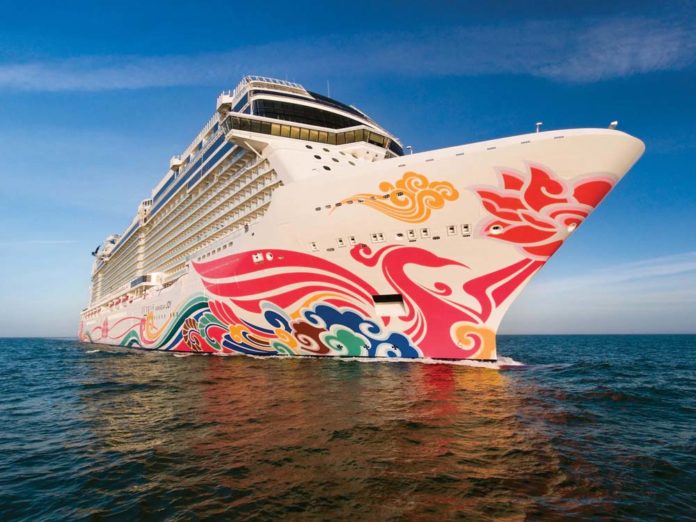
Norwegian Joy

This announcement comes as NCHL prepares to enter the Chinese cruise market with her 3,850-passenger Norwegian Joy, the company’s first purpose-built ship customised for the market. Among the ship’s highlights are the two-level Ferrari-branded racetrack, and virtual reality gaming experiences in its Galaxy Pavilion.

Earlier last month, NCHL took delivery of Norwegian Joy, which is currently repositioning from the shipyard in Germany to her Shanghai homeport, where her inauguration will take place on June 27.

As well, NCHL has made available six Asia sailings for 2017, departing from China, for booking. Itineraries range from three to six nights, and visit Japanese ports of call such as Nagasaki, Kochi, Miyazaki and Kitakyushu. Prices start from US$449 per person.

CLIA membership, accreditation now open to Malaysia, Indonesia agents

0

Cruise Lines International Association (CLIA) has now extended its membership and accreditation programme to travel agents from Indonesia and Malaysia, following a similar roll-out in India last month.

Membership benefits were introduced to over 100 Indonesian and Malaysian travel agents by CLIA’s head of training & development Peter Kollar during a cruise travel agent event hosted in Jakarta last week in conjunction with CLIA’s partner Singapore Tourism Bureau (STB).


Katz

Giving a taste of what CLIA offers in terms of training and development, Kollar also conducted a training session titled Cruise 101: Increasing Cruise Business and Overcoming Objections.

As well, CLIA’s global cruise accreditation programme gives travel agent members access to CLIA’s Learning Academy, which contains over 50 industry leading training modules covering aspects of the cruise industry from a front-line consultant perspective.

Kollar said: “Cruising has gained popularity rapidly in the Asian market and more cruise lines are deploying ships in this region. CLIA training is designed to assist agents to be equipped to meet the growing demand for cruise.”

The association’s partnership with STB will also see CLIA membership being introduced in Singapore later this month, Joel Katz, managing director CLIA Asia, said.

Indonesia homes in on homestays with new development scheme

0

In tandem with the its move to improve accessibility and increase seat capacity by two million this year, the Indonesian Ministry of Tourism has launched a homestay development programme to boost accommodation supply in the country.

Speaking at the Hotel Investment Conference Indonesia in Jakarta last week, Hiramsyah Thaib, leader of the Acceleration for the Development of Priority Tourism, Ministry of Tourism said: “We are developing connectivity into and within Indonesia, so we need to be prepared with the accommodation facilities, especially in the 10 ‘New Bali’ destinations, which we are focusing on.”


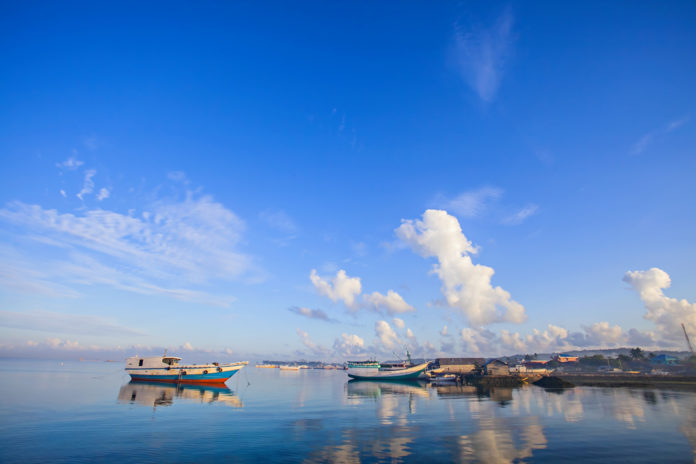
Wakatobi (pictured), one of the areas identified for development

The homestay model is chosen as it involves lesser investment, is quicker to build and will empower the community, according to Hiramsyah. “Besides, we will not be selling only rooms, but also the village tourism experience,” he said.

The government has also set up loan schemes for those interested in developing homestays.

The total development goal is 50,000 homestay accommodations by 2019, 30,000 of which are targeted in the 10 new development areas of Toba (North Sumatera), Tanjung Kelayang (Belitung), Tanjung Lesung (Banten), Kota Tua and Pulau Seribu (Jakarta), Borobudur and the surrounding areas (Jogjakarta-Solo-Semarang), Bromo-Tengger-Semeru (East Java), Labuan Bajo (Komodo, East Nusa Tenggara), Mandalika (Lombok, West Nusa Tenggara), Wakatobi (Southeast Sulawesi) and Morotai (North Maluku).

Asked about the targeted guest profiles that will sustain the livelihoods for such a huge number of homestays, Hiransyah said: “Today’s millennials look for alternatives to the (stereotype) accommodations, and they look for experiential stays. Glamping, for example, is trendy today.”

He emphasised that homestays do not necessarily mean cheap but rather unique accommodation options. Competitions for homestay designs were launched to ensure that the new lodgings boast local characteristics and meet international standards at the same time, he added.

Commenting on the plan, Bill Barnett, managing director of C9 Hotelworks, said: “Do not underestimate homestays. Look at Airbnb – it took them seven years to be as big as Hilton.”

He added that the new scheme is a good way to attract investors with small budgets to develop business for the first time in Indonesia’s new destinations.