
TTG Asia
Asia/Singapore Sunday, 18th January 2026
Page 1585

Archipelago International heads to Cuba in first foray outside Asia

0

Indonesia hotel management chain Archipelago International will foray outside of Asia for the first time when it opens the 438-room Grand Aston Varadero Resort in Cuba come 4Q2019.

It has entered into a partnership with Grupo de Turismo Gaviota to develop and manage the new five-star property in Varadero, a popular resort town that lies along the Peninsula de Hicacos off Cuba’s north coast, about an hour’s drive from Havana.

President & CEO of Archipelago International, John Flood, said: “We also look forward to working on further projects with the group and bringing our expertise and Asian hospitality concepts to the amazing island of Cuba.”

Archipelago International currently boasts a portfolio of over 125 hotels and 17,000 rooms, and has over 100 properties in the pipeline across Indonesia, the Philippines and Malaysia.

Malaysian tour operators with contracts to get tourism tax exemption

0

Clients of local inbound agents who have already signed contracts with overseas partners will be exempted from paying the tourism tax for the contracting period until March 31, 2018, announced Malaysia’s Ministry of Tourism and Culture (MOTAC).

This is a concession provided by the ministry to cushion the impact of the impending tourism tax, which will come into force on August 1, and reduce the chances of tour cancellations or reduction in group sizes.

To be eligible for the exemption, inbound agents are required to write to MOTAC with evidence of contracts and agreements.

Tourism and culture minister Mohamed Nazri Abdul Aziz also said that Malaysians staying at three-star and below properties will be exempted from paying the tourism tax.

The announcement comes in the wake of a meeting held earlier this week between Malaysian Inbound Tourism Association, Malaysia Tourism Council and Malaysia Chinese Tourism Association representatives with the minister as well as MOTAC officials to discuss concerns and issues raised by industry players related to the tourism tax.

Meanwhile, representatives from the state tourism ministries of Sabah and Sarawak agreed to defer the tax in their states until an implementation mechanism has been worked out, The Star reported.

Officials from both states agreed at the meeting that revenue from the tourism tax should be shared equally between Sabah, Sarawak and Peninsular Malaysia.

Sarawak’s tourism, culture, youth and sports minister, Abdul Karim Rahman Hamzah, said the best time to implement the tourism tax would be next year.

The tax rate is fixed at RM20 (US$4.70) per room per night for five-star accommodation; RM10 per room per night on four-star accommodation; RM5 per room per night on one-, two- and three-star accommodation; RM2.50 per room per night on one-, two- and three-Orchid as well as non-rated accommodation premises.

Why travel agents must make mobile commerce a priority

0

As mobile commerce reaches ever higher penetration levels than before, traditional travel agents need to be more adept at adopting mobile solutions to avoid trailing behind, urged Travelport president and CEO Gordon Wilson.

Speaking at a media breakfast event yesterday, Travelport forecasts that in the next three to four years, 70 per cent of all travel-related transactions will originate from mobile apps, said Wilson.

Wilson

He told TTG Asia: “(Traditional) travel agencies are still growing. There is a market for people who want the full service – those who are cash-rich but time-poor. (They may) want, however, to experience engagement with the agency on their mobile. It can become a supplement to the traditional way of doing things.”

A key market for agencies, Wilson offered, is the global ageing population, a market segment which values personal interaction and trust, and has higher spending power.

User experience is paramount in mobile commerce, posited Wilson, who shared that Travelport has been pushing for new functions that enhance customer service through constant mobile engagement.

These include augmented reality capabilities – where the user can receive personalised location-based alerts and notifications in airports – and integrating merchandising, loyalty programmes and corporate rates into the hotel booking space.

Earlier this week, Travelport launched Hotel Retail, a rate comparison tool for agents to deliver personalised customer experience. It will soon also pull in rates from other hotel aggregators.

Also in the pipeline is an in-app chatbot for Travelport Fusion, on which airlines can provide help to customers on the go. This is the platform’s next push into an “engagement economy”, said Ailsa Brown, recently appointed vice president Asia-Pacific of Travelport Digital.

AirAsia unveils new bundling options for corporate travellers

0

AirAsia is launching MyCorporate, a suite of three bundle options aimed at business travellers with a choice of Fare Only, Corporate Lite and Corporate Full Flex.

Companies signed up to MyCorporate will have access to an online booking system and reporting to keep track of corporate travelling expenses.


All add-ons are available for a fee for The Fare Only product, while The Corporate Lite bundle includes airfare, a complimentary meal, standard seat assignment and dedicated check-in counter. Guests can also change their flight once up to 24 hours before departure with no change fee.

The Corporate Full Flex bundle includes airfare; a complimentary meal; Hot Seat assignment; 20kg baggage allowance; dedicated check-in counter; XPress immigration and baggage; Premium Red Lounge access (only for departures from Kuala Lumpur’s KLIA2 airport); priority boarding and travel insurance (only for departures from Malaysia and Thailand); and unlimited flight changes up to two hours before departure with no change fee.

Corporate Full Flex guests will also be able to enjoy GoShow, which allows them to standby on an earlier flight on the same day, to the same destination, with no added fees or fare charges.

Bali springs new Padang Bay Harbor tax on passengers

0

Balinese authorities yesterday announced it will impose a new tax on passengers travelling from Bali’s Padang Bay Harbor to the Gili Islands, Lombok, Nusa Penida and Nusa Lembongan, just two days shy of the implementation date on July 8.

Ferry arriving at Padang Bai 

The fee, which can only be paid in cash prior to embarkation, is 60,000 rupiah (US$4.47) per pax for passengers heading to Gili and Lombok, and 50,000 rupiah (US$3.73) per pax for those leaving for Nusa Penida and Nusa Lembongan, according to an Asian Trails Indonesia email notifying partners of the change.

In the same email, the DMC also described the short notice of new tax regulation as regrettable.

New hotel openings: W Shanghai – the Bund, Park Hotel Farrer Park and more

0

The latest hotel openings and announcements made this week.

W Shanghai – The Bund
Positioned between the Suzhou Creek and Huangpu River on Shanghai’s North Bund, the recently-opened W Shanghai – the Bund has 374 guestrooms and suites. Facilities on-site include five F&B venues (includes a speakeasy), a swimming pool, spa, and gym. For meetings and events, there is more than 6,000m2 of space available, such as the Great Room – which boasts a 6.2m-high ceiling – or the 660m2 Mega Room.

Park Hotel Farrer Park
Park Hotel Farrer Park offers 300 guestrooms across five categories, of which all come complete with floor-to-ceiling windows and Appelles Apothecary-branded toiletries. Guests can make use of amenities such as the 24-hour fitness centre and a pool deck, or dine at the Thai restaurant, American-style gastrobar or speciality coffee stand. The 20-storey property is situated above Singapore’s Farrer Park MRT station, within walking distance from City Square Mall and the 24-hour Mustafa Centre.

Alila Yangshuo
Alila Hotels and Resorts has opened its second outpost in China, the Alila Yangshuo. Previously a working sugar mill, the Guilin property has now been converted to a resort of 117 rooms, suites and villas. Amenities include the all-day dining Sugar House Restaurant, 1969 Bar with an in-house rum distillery, Spa Alila with five treatment rooms, a gym, library, kids’ club and outdoor swimming pool. There is also an event space for up to 20 guests, and a private pier.

Travelodge Pattaya
Travelodge has debuted in Thailand with the 164-room Travelodge Pattaya, rebranded from a Premier Inn property. Standing a 10-minute walk from the beach in central Pattaya, rooms come with complimentary high-speed Wi-Fi, a flatscreen TV, fridge, and coffee- and tea-making facilities. A second property, the Travelodge Sukhumvit 11, formerly a Premier Inn too, will soon join the brand in 4Q2017. Both properties will each feature a restaurant, swimming pool and gym.

The Junei Hotel
Standing within the grounds of Kyoto’s Imperial Palace Gardens West is the three-storey Junei Hotel. This intimate new-build offers only eight rooms modelled after the traditional Kyoto-style wooden townhouse, with each capable of accommodating up to five guests. Each guestroom is furnished with a tatami-matted space, handcrafted pieces of furniture, a custom-made Shigaraki bathtub, and Serta beds or Kyoto Nishikawa futon mattresses.

Virgin flight to Hong Kong with Richard Branson

0

Virgin Australia on Wednesday launched a five-times weekly service from Melbourne to Hong Kong, marking the start of the airline’s expansion into Greater China.

Guests onboard the inaugural flight were treated to Cantonese lessons with Virgin Group founder Richard Branson, fortune cookies and a Hong Kong-inspired menu, in addition to egg tarts and Old Town Central walking guides at the boarding gate.


Branson carrying head of Bendigo dragon Yar Loong in a traditional lion dance procession to celebrate the launch of the new route

Branson was joined by other VIP guests such as Steven Ciobo, minister for trade, tourism and investment; John Borghetti, Virgin Australia group CEO and managing director; and John O’Sullivan, managing director of Tourism Australia.

Soon-to-open InterContinental Singapore Robertson Quay welcomes GM, DOSM

0

InterContinental Singapore Robertson Quay has appointed Mark Winterton as general manager ahead of its opening in September.

A seasoned hotelier with over 20 years of international experience, Winterton will also serve as area general manager for IHG Singapore.


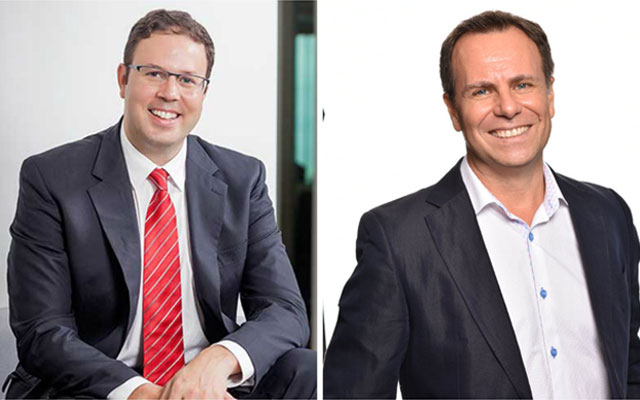
Mark Winterton (left) and Jessica Koh

He first started his career with IHG in 1995, but his first foray into Asia was in 2007 as general manager for Singapore’s Crowne Plaza Changi Airport. He then moved to Bangkok in November 2010 and helped with the rebranding of the Crowne Plaza Bangkok Lumpini Park.

Meanwhile, Jessica Koh has been named director of sales and marketing of the property.

With 14 years of hospitality experience under her belt, Koh first started her IHG career in Malaysia where she oversaw sales activities for the Crowne Plaza Mutiara Kuala Lumpur, alongside a portfolio of three Holiday Inn properties, while in a cluster position as assistant director of business development.

Following which, Koh relocated to Vietnam to assume the role of director of sales and marketing for InterContinental Asiana Saigon Hotel & Residence. While in Vietnam, she was part of multiple pre-opening teams such as the InterContinental Hanoi Landmark 72 and InterContinental Nha Trang.

Big data with a personal touch

0

In the age of Internet of Things, is data the holy grail for travel companies to win the personalisation war? Find out where the industry stands in using data, its struggles and what the future might hold

With rapid advancement in digital and mobile technology, more travel companies are awakening to the massive potential of using data to unlock possibilities in providing seamless, personalised customer experience.

Those who are able to leverage millions of travel data points will possess a “huge competitive advantage”, Hotelbeds’ managing director Carlos Muñoz told TTG Asia in a one-on-one interview during its MarketHub Asia event in Bangkok in May. Having access to such information will allow companies to manipulate the “emotional” aspects of travellers by shaping their customer behaviour and maximising their spending potential, he noted.

Earlier at the WTTC Global Summit in Bangkok in April, AirAsia CEO Tony Fernandes also played up the importance of data in the travel and tourism sector.

“The data explosion will decrease cost and increase revenue, and gives fantastic opportunities for airlines. That excites me tremendously,” he enthused.

But for travel to be personalised down to the individual level, data insights have to go beyond their current use and adaptation.

Even for Hotelbeds, a global bedbank with more than 136,000 hotels worldwide, Muñoz still sees significant gaps in harnessing the sheer volume of data available.

“Our clients have given us huge amount of data,” he shared. “We are using only five per cent of this data so there is a lot of improvement.”

Albert Pozo, president, Amadeus Asia-Pacific, added: “Data on its own will mean very little. We’ll also need systems that are clever and agile enough to integrate them and make sense of them – turning them into immediate, actionable insights… I think we’re only at the early stages of what could be a fully interconnected industry.”

The ability of data to transform the travel industry cannot be understated, although Pozo stressed that “it is not data itself that is the holy grail – but the analytical capabilities and technology we layer on top of it, and how well it is integrated into business processes. The possibilities are endless”.


It is not data itself that is the holy grail – but the analytical capabilities and technology we layer on top of it, and how well it is integrated into business processes. The possibilities are endless.
Albert Pozo, President, Amadeus Asia-Pacific

Swimming in a sea of data
Bangkok-based DMC Asian Trails has also caught up in the data riptide, having taken advantage of information on the behaviour of clients and consumers to form its marketing and business strategies.

E-commerce and marketing manager Niels Steeman told TTG Asia: “Asian Trails regularly uses analytic sources on our digital marketing channels, Google Analytics and other online applications to seek out trends and our success rate online. I believe that the availability of such data becomes an even more crucial part of the travel business.”

He added: “Looking back barely a decade ago when statistics were hardly available, we are now able to see the response of those showing interest in our products and how they read this. This mainly has been a positive feat with the shift from off to online marketing channels and the ongoing development in the analytics part.”

The digital revolution, however, also brings with it an explosive surge in the variety and quantity of data available, so much so that Steeman dubbed data analysis “a time-consuming and a speciality field”.

He elaborated: “The amount of data available is simply overwhelming and one cannot go and invest into additional resources unless you have a clear image of what you’re after.”

Trying to make sense of data is hardly unique to Asian Trails; even large OTA players like Rakuten Travel, one of the biggest hotel reservation websites in Japan, also see hurdles in effective data utilisation.

Said Hirofumi Haraguchi, vice manager, business strategy group at the OTA’s international sales department: “Data is very important for Rakuten, as we have a huge e-commerce marketplace in Japan with over 80 businesses in our portfolio. However, customer demands are very diversified today so we need to use data better. We’re not maximising the use of data yet, and finding skilled personnel to manipulate data into meaningful insights is a challenge.”

Noel Swain, COO of Ezeego1, deemed data analytics a “learning process” for the India-based OTA, which has put in place associates across various departments instead of a specific team to build a more complete insights picture.

But “the overload of data is quite real” and the challenge lies in figuring which of the immense data Ezeego receives to use, added Swain, but he foresees the company will get better at parsing information into useful insights in future.

Some industry players also share that current data insights are better catered to the B2C travel market, as B2B players still grapple with gleaning meaning from the vast sea of information available.

For B2B OTA Aviation Services Mongolia, currently in the early stages of developing a data analytics strategy, the uphill task lies in getting information from its agents about their end-consumers, according to CEO Margad Byambajav.

If unstructured sources of customer data could be better leveraged for his portal, he foresees being able to help agents narrow down hotel choices in a destination to offer more targeted and personalised recommendations for their clients.

It’s a similar story for Asian Trails, as Steeman sees data analytics “remaining very much focused on B2C/B2B2C channels than B2B channels”. Learning how to interpret available data and actively turn them into actionable insights and strategies may the biggest challenges for DMCs, he opined.

Not big but smart data
No one will be able to capture and analyse data from the future, but predictive analytics – i.e. applying the right statistical models to gain insights and find patterns in a vast amount of data – is getting the attention of more big data specialists and travel businesses alike.

Hotelbeds’ sales director Sam Turner spotlighted the accelerating pace of change in the digital world today. “By 2020 the world will produce 40 zettabytes, up from 0.1 zettabytes in 2001, a 400 times difference. It’s not the size (of data) but what you do with it,” he said, adding that the effective data analytics can improve profitability for companies. “The analytics journey in the new world is going to be the prescriptive way, instead of descriptive.”

Echoing Turner’s view, Hotelbeds’ marketing & communications director Gareth Matthews added that predictive analytics has many potential applications in the travel industry, such as making airport delay predictions by combining weather, flight and traveller information.

But the current biggest hurdle to personalised service for companies lies in the lack of resources connecting different data sets, say, between a user’s frequent flyer programme and social media profile, pointed out Ming Foong, managing director Greater China & online business group, Asia-Pacific at Travelport.

Looking ahead, merging predictive analytics with artificial intelligence (AI) and matching learning capabilities appear to excite many trade players and industry watchers.

Amadeus’ Pozo elaborated: “Combined with AI, travel companies can use data analytics to create highly-tailored offers based on customers’ needs and preferences. Past behaviours can obviously feed AI computers to predict future purchase actions. But deep learning algorithms can help travel companies make the most out of their customer’s online activities…AI will also bring customised suggestions during the trip based on a traveller’s profile, location, time, and many other parameters and data that algorithms will process. This will take us into the future of ultra-personalisation.”

At the same time, Pozo insisted on maintaining a careful balance against rising privacy concerns in the pursuit of getting more information from travellers.

“Some boundaries must be maintained and at all times we must respect and protect personal data and the need for privacy. If we take this for granted we risk losing the trust of customers. And above and beyond adhering to legislation, travel players must also be able to articulate ‘what’s the value?’ for getting travellers to share their data,” he cautioned.

But Steve Saxon, partner, McKinsey & Company, reminded the industry not to lose sight of people – the critical factor that determines the success of data utilisation. “We need to think not just about data but how to embed data within the company culture,” he said.

“The power of the people is more important than the power of data,” Saxon concluded.


This article was first published in TTG Asia July 2017 issue. To read more, please view our digital edition or click here to subscribe.

Marketing US as a friendly place

0

A new president throws a spanner in the works for Brand USA, which has been hard at work promoting the US as a welcoming and friendly destination to outsiders. The task has become even more important. Raini Hamdi talks to Chris Thompson, Brand USA president & CEO, about it*

Given that this is the first administration change since Brand USA started operations in 2011, how is it good and bad for you?
(President Trump) having convinced enough people in the country to elect him as president, then going into office against the established ways the government has run in the past, makes this election a little bit unique. As well, every president contemplates changes in policies. This president is focusing on policies that in many ways could have an impact on travel & tourism but what we’re dealing with is a perception issue vs the reality.


How so?
There has been a lot of conversations by the president and the members of his administration on proposed changes. But the reality is everything that has made the US an aspirational destination all these years – nothing of that has changed. As a matter of fact, the brands that deliver the product – the hotels, retail attractions and experiences – are finding new ways to innovate themselves; the people who deliver the experiences, i.e. the US citizens, open their arms to visitors. None of that has changed.

As you and I are talking today, nothing legally has changed about how anybody in the world has to acquire visas to visit the US. The only thing that has changed as it relates to entry policy, legally, is the electronics that you can carry onboard, i.e. the laptop travel policy which affects 10 countries in the Middle East. While the number of visitors from those countries is small, the countries are gateways for many visitors, from Asia or (elsewhere), to the US, and we do know that there has been an impact. But that’s the only thing that has legally changed.

What is the impact?
Based on indicators such as paid search, travel to the US has softened (since the election and new administration). Advanced bookings in some situations are down. Actual (figures) from the Department of Commerce are five to six months behind so until those actual numbers come in, what we have is anecdotal.

My colleagues and the industry were at ITB Berlin and many of the conversations they had with the leading operators and the travel trade in Germany showed that they were holding par to the prior year or were having a record year. Now that’s just one market, one indication. We also hear from partners. Arne (Sorenson, CEO of Marriott International), who is on our board, said they have not yet seen actual effect.

But no matter how any market is reacting to the political sentiments, the thing that has most affected our ability to attract year over year numbers from a lot of markets is currency exchange. The strong dollar has had a major impact on many of our major markets – Canada, Mexico and some of the European markets.

What can you do?
We’re planning to affect leisure travel as we’re at the front of the summer season which for many of our major destinations is a significant time for travel. Our newest campaign has been launched in 11 markets – Canada, Mexico, Brazil, Germany, France, the UK, Japan, South Korea, India, China and Australia.

When wallets are challenged, we need to show the value proposition.

How?
The campaign shows value proposition through 3Ps: possibilities, persona and proximity.

The first is about the US having awesome possibilities for our visitors. I’d say even with our mature markets, there is much they do not know than they do know.

Then we’re segmenting the market by persona, in three ways. One is through excitement, things that get your blood flowing, participatory or as a spectator. The second is living like a local; when I travel to a destination, I want to get to know the people, what makes them live there, what keeps them there. Then comes escape, that the US has the alternatives for whatever it is that you want to escape from, say, the day-to-day routine of your job.

The beauty of the US is the diversity, not just geographically, but in the experiences that you can enjoy. People can find alternative ways to enjoy the US and, historically, this has allowed us to overcome the strong dollar. This is why a big portion of the campaign is about proximity, showcasing what’s available within five hours of the gateway visitors arrive at, which in many cases many are not even familiar with.

Our campaign is social first, mostly digital, i.e. through online videos, paid search, etc, and it’s social centric – for instance, we’re inviting our friends from around the world to photograph themselves  in the middle of their US experiences and share that.

Is this one of your bigger campaigns, to address the perception vs reality issue?
It was already in the works prior to election, not designed at all to address the election, rather it’s our attempt to promote the nature of the destination, i.e. its diversity, the people who deliver the experiences and the US people as a whole. The whole foundation is a welcoming message, which does help to offset some of the uncertainties people may have on whether or not they are welcomed.

That, and what we’re doing in corporate communications, which is communicating accurate and timely policy changes to visa and entry policies, making sure people understand what has actually changed vs what has been talked about or contemplated, are both going to help us.

Is there a role for travel agent?
Absolutely. The way we market is direct to consumer, such as this campaign. The second way is through the relationships we have with the travel trade. Even in mature markets like Japan, there’s still a very active travel trade network that helps us facilitate travel to the US. We’ve been enjoying many visitors from Japan for years. A lot of those traditional visitors learn about the US through the travel trade and even though the Internet has enabled them to get first-hand information on their fingertips, a lot of them still use the travel trade.

The younger generation is probably slanting towards the Internet but many of them still use travel agents particularly if it’s the first time they are visiting the US, to guarantee the quality of the visit. They might do their own research but call the agents to facilitate the travel.

So the travel trade still plays a critical role. We have 13 offices worldwide and it is those offices on the ground that help us facilitate the relationships with the trade.

You talked about the friendly message. But the first impression people tend to get, i.e. at customs, is unfriendliness.

Hospitality and security aren’t mutually exclusive. How do you introduce hospitality into a process-oriented (patrol)? We’ve had those conversations. I’d say though it’s gotten better than five, 10 years ago.

A wish for president Trump?
Keep travel & tourism as a high priority, based on its contribution both economically and diplomatically. We know security is a real threat and the decisions they make are the ones we have to trust. And when policy is changed to protect our borders, it also makes for a more secure place for our visitors. But while we are against terrorism, we are all for legitimate travel too.

“It is important to note that the budget any administration presents is a statement of priorities – not a budget that is presented to Congress to vote on. The administration’s proposal serves as a way to outline the priorities of the administration, but it is ultimately up to the Congress to formalise and vote on a final budget,” Thompson said in an email to TTG Asia (http://bit.ly/2tQotey).

Brand USA was approved by Congress in 2010 and began operation in 2011.

* Editor’s Note:This interview was conducted in April during the WTTC Global Summit in Bangkok and before president Trump’s proposed fiscal budget for 2018 was issued. The budget called for the elimination of Brand USA, with its revenue made available to the US Customs and Border Protection. The matter is still uncertain.


This article was first published in TTG Asia July 2017 issue. To read more, please view our digital edition or click here to subscribe.