TTG Asia
Asia/Singapore Sunday, 21st December 2025
Page 1562

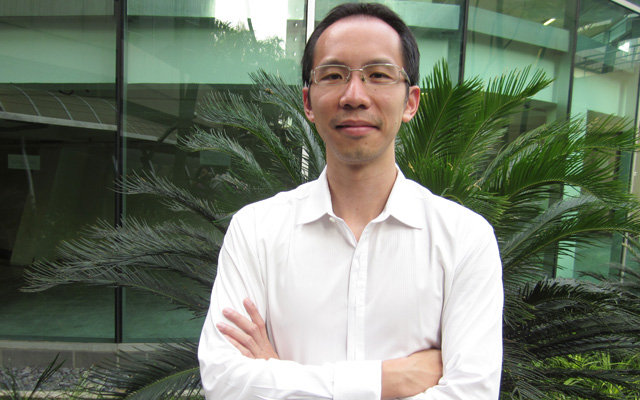
Nigel Wong, Director, Urban Rhythm Tours, Adventures and Travel

0

What are some of the challenges that Malaysia faces as a tourist destination?
Malaysia has many things to offer tourists but somehow the message is not getting through. While tourist numbers have increased over the years, they have not been exponential and there is still room for further growth. The challenge for the tourism industry is to promote the country as a fresh destination.

We are lagging behind our neighbours as legislature infrastructure is cumbersome, and not conducive in empowering the tourism industry to take a step forward. The tourism industry must be liberalised and licensing simplified to allow tour operators to compete on a level playing field with ride-sharing apps and hoteliers.

Another challenge is the lack of innovation among travel industry players. We must look at what our counterparts in other countries are doing so we can upgrade our product offerings and exceed theirs.

If I had my way to improve things, I would… focus a lot more on developing quality infrastructure such as connectivity and facilities to cater for business travellers, including dedicated MRT lines to Sepang International Circuit, Putrajaya and Cyberjaya. Sepang International Circuit has good facilities and holds races that attract international visitors, but it is not convenient to visit using public transport.

I would bring to the government’s attention the need to focus more on developing our eco attractions and provide funding for sustainable and viable eco-projects. We have plenty of gazetted sites that are under utilised and unsustainable because it is costly to maintain.
I would also like a call to action on our national treasure, Taman Negara National Park, which can be further improved through better facilities and conservation efforts.

A chance for change

0

In a morphing travel landscape, Singapore travel agencies say they need guidance and unity. Alas, strong leadership eludes them for now. But there’s a chance for change, reports Pamela Chow

The closure of GC Nanda & Sons shocked agents not only because it was a prominent agency that had operated for four decades but also because its managing director, Devinder Ohri, was leading the sector as president of the National Association of Travel Agents Singapore (NATAS).

That agents learnt of GC Nanda’s closure on May 30 only through the media, then officially in a NATAS circular on June 19 signed by Ohri as president, incensed some. A NATAS release three days later announcing Ohri was no longer president while Steven Ler had been appointed acting president and Simon Er as honorary treasurer only brought more questions, with Kay Swee Pin, president of the Singapore Outbound Travel Agents Association, a rival group, even calling it “deceitful”. Both Ler and Er had resigned as NATAS deputy president and honorary treasurer respectively between March and May.

“The president must be elected by shareholders… and if Steven Ler wants to assume the position, he must fight for it and not (have it) handed to him when he had already left the NATAS (executive committee),” Kay told TTG Asia.

In short, it was a circus. And even before news of Ohri’s departure had surfaced, “NATAS seemed to be plagued with leadership problems”, said Justine Koh, spokesperson for Chan Brothers Travel.

Stopgap
Ler’s appointment as acting president is a stopgap, to fulfil all the duties of the president until one is elected at NATAS’ next annual general meeting (AGM) scheduled for May 2018.

In response to queries from TTG Asia, Ismail Hussain, NATAS’ general manager,  surface transport & inbound tours said NATAS executive committee (exco) decided to invite and reappoint both Ler and Er at an emergency meeting on June 19.

“Given the trust and confidence from their colleagues in the exco, both were encouraged and committed to take on their roles and lead the association. We welcome them back and look forward to working them,” he said.

He added: “The next AGM will also be an election year. Members will be invited to nominate or be nominated for election into the exco for the next term of office 2018-2020. All positions in the exco will be opened for nominations.”

As NATAS undergoes a leadership overhaul, its members are left with hands wringing over challenges looming on the horizon. Agencies that TTG Asia spoke to expressed a need for guidance amid changing consumer behaviours that may leave traditional tour operators high and dry.

These changes are stimulated by the “emergence of more online direct sales (and) online travel companies with cutting-edge technology”, lamented Dynasty Travel’s spokesperson Alicia Seah.

Exacerbating the climate of uncertainty is the spectre of even more competition from new players. Many agents expect proposed changes to the Travel Agents Act and Regulation being tabled will actually make it easier for new entrants to come in. Examples: As part of a tiered licensing regime, entities that sell or arrange tours within Singapore without passenger-carrying conveyance, such as walking or bicycle tours, would be exempted from a travel agent licence. As well, entities selling or arranging tours without accommodation can apply for a restricted licence with a lower paid-up capital and net worth requirement.

“I actually think that there will be more travel companies opening than closing given the changes in licensing being discussed,” said Robin Yap, president, Travel Corporation Asia.

Another worry is the lack of talent and the need for the industry to get younger people to work in the trade, said Seah.

Strong NATAS needed
Having guidance from NATAS is crucial in these critical times, Seah added.

“We hope that the association can help travel agents stay ahead of competition from the ever-growing online travel sites, by continuing to build trust in people that travel agents can help better than a computer can,” she said.

To members outside NATAS exco, the current state of the association is worrying.

Said Koh: “High turnover or frequent changes at the top may be a sign of larger organisational issues. We are concerned about whether there is commitment and conviction to turn around NATAS’ financial position of severe loss for the past two years, and at the same time, look after the interests of all NATAS members.”

When asked why NATAS is having a hard time, Robert Khoo, its former CEO who led NATAS from 2000-2013, said: “A few difficult and unreasonable members with selfish intentions tried to bring the travel fairs down. The travel fair is the main source of income for NATAS.”

Yet, the role NATAS plays cannot be underestimated. For example, Singapore Tourism Board (STB) collaborates with NATAS to “formulate a Travel Agent Roadmap that seeks to build capabilities and enhance business sustainability through business transformation, technology and manpower”, said Ong Ling Lee, STB’s director, travel agents and tourist guides.

Chan Brothers’ Koh said: “It’s not rocket science but we’d like to see them (NATAS) go back to the basics of being a good leader. Qualities include listening with an open mind, gathering feedback and seeking advice on future decisions affecting members at large instead of upholding the image as the leader at all costs.”

Holiday Tours’ head of MICE and leisure, Cindy Loo, said that it is important for the association to “work closely with IATA, STB and other government bodies to help the travel trade ride through the changing environment, and in the course of doing so, make the industry more resilient to future challenges”.

Adding to the list, Seah urged that ideal leaders “must have a clear and unwavering focus on the association’s vision” and “be able to make difficult decisions in a timely manner”.

Meanwhile, she said the recent episode has had “no impact at all” on Dynasty Travel, and NATAS events are running “as usual”. The biannual NATAS Travel Fair will next be held on August 11-13.

“The industry needs to stay reconciled and united to brace the challenges ahead,” she urged. – Additional reporting by Raini Hamdi and Karen Yue


Timeline

May 2016 Elections held at NATAS Annual General Meeting (AGM); Devinder Ohri appointed president. Position of secretary-general vacated shortly after

March 2017
Ram Samtani appointed as secretary-general

March-May, date unknown
Deputy-president Steven Ler and honorary treasurer Simon Er resigned before AGM

May 30
GC Nanda & Sons voluntarily ceased its Travel Agent License under Singapore Tourism Board

June 19
Ohri announced GC Nanda & Sons’ voluntary cessation in NATAS circular

June 22 Official NATAS release announced Ohri is no longer president; Steven Ler became acting president

May 2018
Elections for new executive committee and new president to be held at NATAS AGM



Support from an old hand

0

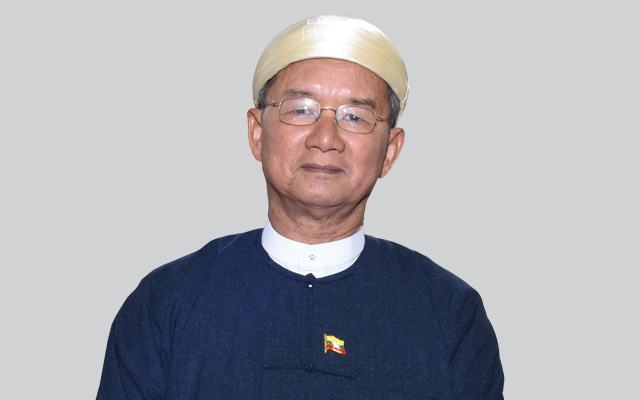
Expectations are high for Myanmar’s minister of hotels and tourism Ohn Maung, whose decades of practical experience as a hotelier and tour operator dates back to 1972 in his native Shan State. Xinyi Liang-Pholsena speaks to the veteran on how he intends to steer the fast-expanding tourism sector in the right direction

How did you get started in the tourism sector?

Tourists started visiting the Inle Lake area from 1972. As I grew up in missionary schools in Myanmar, I am quite fluent in speaking English so I became the local translator for the tourists. At that time, guests often overstayed on the lake and returned late for their transfers back to Taunggyi – the only place where tourists were supposed to spend the night – so they would ask me for a night’s stay. This led me to decide to open a small lodge for tourists who came back late from sightseeing.

On April 1, 1976, I opened Inle Inn in Nyaung Shwe, a small lodge with 14 rooms. In 1995, I helped the Pa O people build a hotel called Golden Island Cottages on the lake as tourism grew. Then, in 1996, Road to Mandalay started cruise operations on the Irrawaddy River between Bagan and Mandalay. I decided to build an upmarket hotel, Inle Princess Resort, which opened in 1998, to receive their clients visiting Inle Lake.

Since taking on this minister role, what initiatives have you spearheaded?
I’m currently developing more destinations, people-to-people contacts by establishing community-based tourism (CBT) with the help of NGOs and INGOs, as well as DMCs, who have been my friends since I started my career as a hotelier to promote the tourism industry by creating CBT villages as new destinations. So far, we have launched nine CBT projects and another five are on the way. A newly opened CBT project is Sor Lor Village in Chin State.

For ecotourism, Chin State is a more promising destination because of its pristine nature and rich indigenous culture. The islands of Mergui Archipelago will be developed as new destinations to attract investment for eco and marine tourism.

For all these destinations, we need to improve infrastructure development such as new hotels, road access, extension of runways of the existing airports, etc.

What is most important is to improve tourism services through capacity building such as hospitality management, and tour guide and travel agent training according to the ASEAN standards. In these destinations, there are already 20 information counters set up and six new counters will be added this year.

Are you happy with the progress so far?
Yes, I am very happy with the progress so far as my team from the Ministry of Hotels and Tourism, and the private sector have worked hand in hand to promote our country. An example is our cooperation with the private sector for ITB Berlin and other international trade shows.

Tourism development is one of the priorities of our NLD (National League for Democracy) government, which has continuously supported the tourism sector and even formed the National Tourism Development Committee, chaired by the vice president and comprising union ministers from related ministries.

Do you think Myanmar has been too liberal with hotel construction as there are signs of a room oversupply?
Tourism arrivals have increased from 1.6 million in 2012 to 2.9 million in 2016. Of course hotels are mushrooming across the country as tourism is increasing every year in tandem with the focus of the Myanmar Tourism Master Plan (2013-2020).

At present, we don’t have enough accommodation for incoming tourists during the peak season, so we need to build more hotels and prepare for the future increment of tourists. I don’t think Myanmar has been too liberal with hotel construction at the moment. For example, 12 new hotels will be built in Chin State in order to fulfil the accommodation needs of tourists visiting the destination.

You are a strong advocate for CBT. How do you balance growth with preservation of culture and the environment?
I believe that by developing CBT, I can increase the number of new destinations and let tourists have a chance to get in touch with the local people to share in their knowledge, understand their culture and improve the socio-economic well-being of the local communities.

I would like to bring development while preserving our culture, traditions and the environment to provide greater employment opportunities for all our people while sharing our rich culture diversity. We have developed codes of conduct for tourists, travel agents and locals with “do’s and don’t’s” booklets.

What other challenges are there for Myanmar tourism right now, and what needs to be done?
Myanmar tourism is on the right track. Challenges for Myanmar tourism right now are to build more infrastructure such as hotels, roads, etc, as I have mentioned. Most importantly, (we need) to train more tourism professionals and hotel management, and help the private sector expand their businesses efficiently by assisting them at travel shows with tourism promotion.

Do you think the recent negative coverage of Myanmar’s Rohingya crisis is affecting the country’s image on the global stage? Is an international destination campaign needed?
From the tourism development perspective, this issue does not significantly interfere with tourism development at local levels in Myanmar. We are doing international destination promotion now by participating in ITB Berlin*. We have more than 60 participants here at ITB Berlin as proof that Myanmar tourism is booming.

What do you hope to achieve by the end of your term?
I would like to see the tourism industry in Myanmar successfully achieve a new level of development with positive impacts and good results for the country and the people.

* Editor’s note: This interview was conducted in March during ITB Berlin

Why S’pore agents must unite

1

If a travel agent could not run his own business successfully, how could he lead the industry?

That must have occurred to a lot of members of the National Association of Travel Agents Singapore (NATAS) when they received the shocker that GC Nanda & Sons was exiting the trade. It had seen 40 years of operation, many of those years led by the soft-spoken, kindly Prem Paul Ohri, then by his son, Devinder Ohri, who was NATAS president from May 2016 until the agency’s recent demise.

To be fair, has it occurred to agents that a reason why GC Nanda closed could be that Ohri junior had spent a lot of time on NATAS volunteer work? Another reason of course was the changing industry. A source close to the agency said he was an administrator, whereas what’s needed as the industry changes fast and furious are rainmakers.

Whatever the reason, I can’t help feeling some revulsion at the criticisms hurled at NATAS in re-appointing office bearers who had left to lead the association until the next AGM, and for its current state of instability. It’s like shooting a lame dog.

There are two realities that Singapore agents should mull. The first is, few CEOs actually want to devote time and effort on volunteer work, especially when business is so demanding. Anyone who comes forward, provided he or she is not self-serving, therefore deserves all the support and compassion.

The second reality is agents are divided because of the two travel fairs, a major income earner for them and NATAS. This has to be resolved. It’s a pity a proposal to hold a joint fair as we reported in January came to naught.

The bigger interest must prevail and that is to ensure that travel agents can thrive in a continuously changing landscape. The travel agent sector in Singapore is actually far from dying. A figure of 104 closures in the first six months looks scary, but it’s nothing unusual from figures in the same period the past four years. The Singapore Tourism Board (STB), which regulates the sector, expects the number of agencies to remain constant at around 1,200 this year, as it has been for the past four years.

That means new agencies are always opening to replace closed ones. In two words, new competition, which will only increase if proposals for tiered licensing are approved. STB, keen to grow tourism, naturally wants to nurture innovative players with grants such as Experience Step-Up Fund and Business Improvement Fund while helping the sector transform itself through a Travel Agent Roadmap. It’s not easy though. Look at MISA Travel, once held as a role model for its online push but couldn’t sustain drive and is now gone after 23 years in operation.

Fact is, it can happen to you. That’s why the need for unity, stability and the spirit of cooperation and collaboration among Singapore agents has never been greater.

PATA Singapore, Malaysia chapters meet in Langkawi

0
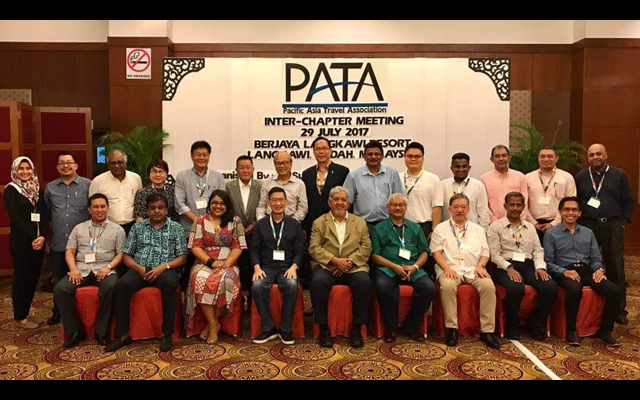
PATA inter-chapter meeting

Langkawi Development Authority (LADA) for the first time hosted the PATA Malaysia and Singapore Inter Chapter Meeting and Networking, held at Berjaya Langkawi Resort from July 28-31.

The aim was to provide an opportunity for the chapters to exchange updates; share best practices, success stories and upcoming plans; and explore avenues to enhance inter-chapter relationships through joint programmes.

PATA inter-chapter meeting

LADA CEO Azizan Noordin at the meeting also shared that beyond becoming a PATA member in January 2017, the organisation is considering establishing PATA Malaysia Chapter – Langkawi Chapter with the assistance from PATA. Other plans include setting up a 24-hour Crisis Management Centre in Langkawi, and securing eco-based events to further promote Geo Park and recycling/sustainability programme.

The three-day meeting also marked the series of events that will be organised as Tourism Malaysia and LADA prepare to host the PATA Travel Mart in Langkawi come September 2018

Aviation roundup: Jetstar Asia, Hong Kong Airlines and more

0

Jetstar launches two new routes to Thailand and Japan

From November 3, Jetstar Asia will be flying four times weekly from Singapore to Hat Yai in southern Thailand.

On Mondays and Sundays, flights will depart Singapore at 20.05 and arrive in Hat Yai at 20.35. Return flights will depart Hat Yai at 21.45 and arrive in Singapore at 00.25.

On Wednesdays, flights will depart Singapore at 19.30, and arrive in Hat Yai at 19.55. Return flights will depart Hat Yai at 20.35 and arrive in Singapore at 23.15.

On Fridays, flights will depart Singapore at 18.15, and arrive in Hat Yai at 18.45. Return flights will depart Hat Yai at 19.35 and arrive in Singapore at 22.05.

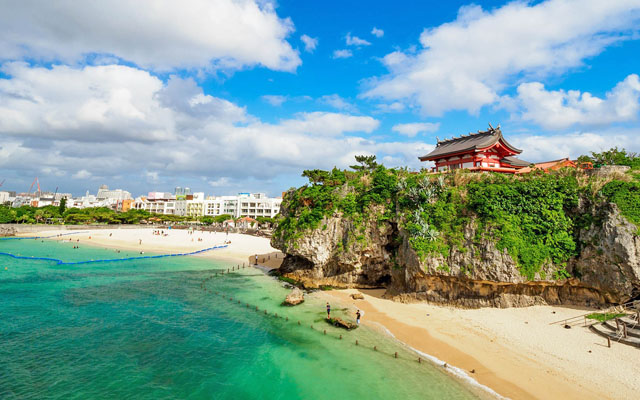
Jetstar Asia will begin thrice-weekly flights to Okinawa on November 17, and will be Singapore’s only scheduled connection to the Japanese island.

Utilising a 180-seater A320, the flight will take approximately five hours and 10 minutes. On Mondays, Fridays, and Sundays, the outbound flight from Singapore will depart at 02.20 and land at Okinawa’s Naha Airport at 08.30. The return flight will operate on the same days, departing Okinawa at 09.30, and arriving in Singapore at 13.40.


Hong Kong Airlines adds Los Angeles to network

Hong Kong Airlines will start non-stop services between Hong Kong and Los Angeles on December 18 on an Airbus A350.

From December 18, 2017 to January 15, 2018, HX068 will depart Hong Kong at 12.10, and arrive in Los Angeles at 08.55. The return flight will depart Los Angeles at 10.45 and arrive in Hong Kong at 18.20 the following day. This flight will operate only on Mondays, Wednesdays, Fridays and Sundays. From January 16, 2018 to March 10, 2018, the frequency will be updated to daily, but timings will be the same.

However, from March 11, 2018 to March 24, 2018, due to daylight savings, flights will depart Hong Kong at 12.10 and arrive in Los Angeles at 09.55. The return flight will depart Los Angeles at 11.45, and arrive in Hong Kong at 18.20 the following day.


Thai AirAsia introduces two Indian destinations
Thai AirAsia will launch four-times weekly services from Bangkok to the two Indian cities of Tiruchirappalli and Jaipur on September 28 and September 29 respectively.

FD0110 will depart Bangkok’s Don Muang Airport at 22.05, and arrive in Tiruchirappalli at 23.55. FD0111, the return flight, will depart Tiruchirappalli at 00.50 and arrive in Don Muang Airport at 06.10.

Meanwhile, FD0130 will depart Bangkok’s Don Muang Airport at 20.00 and arrive in Jaipur at 22.50. The return flight, FD0131, will depart Jaipur at 23.35 and arrive in Don Muang Airport at 05.20.


Qatar Airways adds new Australian destination
Qatar Airways has unveiled plans to launch flights to Canberra via Sydney in February 2018.

The airline’s second-daily Sydney flight will make its way on to Canberra, while return flights will be on a Canberra-Sydney-Doha routing. Flights will utilise a 358-seater Boeing 777-300 aircraft with 42 seats in business class and 316 seats in economy class.


Thai Lion Air heads to Changsha
Thai Lion Air will launch a new international service, connecting Chiang Rai in Thailand and Changsha in China, on August 10.

Utilising a 180-seater Boeing 737, flights will depart Chiang Rai at 20.30 and arrive in Changsha at 00.20 the following day. Return flights will depart Changsha at 01.15 and arrive in Chiang Rai at 03.15.

Shangri-La, SIA link arms for ASEAN 50 promotion

0
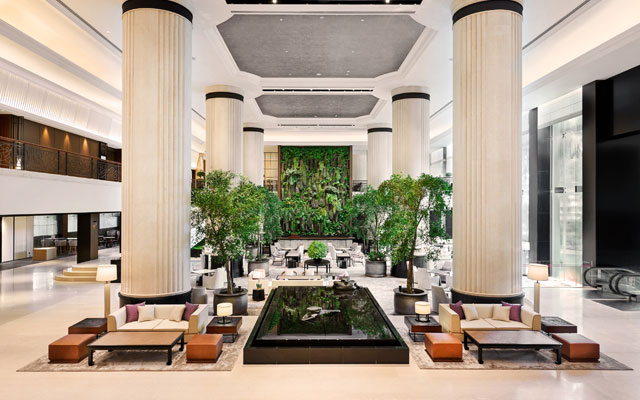
Shangri-La Singapore's Tower Wing lobby

Shangri-La Hotels and Resorts and Singapore Airlines have partnered to launch a regional travel campaign, ASEAN Is More – First Stop Singapore, in celebration of ASEAN’s 50th founding anniversary this year.

This promotion encompasses flight offers to destinations and hotel deals for any Shangri-La hotel or resort in Singapore, Malaysia, Indonesia, Myanmar and Thailand; Hotel Jen properties in Singapore and Malaysia; as well as Traders Hotel, Kuala Lumpur.

Shangri-La Singapore’s Tower Wing lobby

The ASEAN Is More Family Fun package includes accommodation for two adults and two children aged 11 years old and below; daily breakfast buffet; complimentary extra bed or sofa bed for one child; and complimentary daily dinner buffet for two adults and two children aged 11 years old and below with free-flow soft drinks, juices, beer and house wine at selected hotels.

Packages can be booked from August 1 to October 31, 2017, for stays until December 31, 2017.

Travellers can also take part in the ASEAN 50 Holiday Memory Match game, run from August 1 to October 31, 2017. Game participants score points by correctly matching all the cards in the shortest time and the accumulated scores will be displayed on a leaderboard here.

The top 10 fastest contestants will each win a four-day and three-night stay at Shangri-La Hotel, Singapore that includes a S$200 (US$147) dining credit at Nami Restaurant and Bar.

At the end of the game, participants are encouraged to submit their answer for the question, “What is your favourite ASEAN country and why?” to stand a chance of winning a 4D/3N holiday from their home country to Singapore. The prize includes a round-trip economy class air ticket on Singapore Airlines with accommodation in the newly refreshed Tower Wing of Shangri-La Hotel, Singapore.

For more information, please visit www.rediscovernew.shangri-la.com/asean-50/about/.

Okura signs Taichung hotel amid ambitious expansion plans

0
Artist impression of Okura Prestige Taichung

Okura Nikko Hotel Management, subsidiary of Japan’s Hotel Okura, will add a third Taiwan property to its portfolio come 2021, in addition to The Okura Prestige Taipei and the Hotel Royal Nikko Taipei.

Situated in a commercial complex of offices and hotels in the heart of Taichung, the Okura Prestige Taichung will feature about 250 rooms, Japanese and Chinese restaurants, an international all-day dining option, a sky lounge bar, spa, gym and outdoor pool.

Artist impression of Okura Prestige Taichung

The hotel is part of an ambitious undertaking to expand the group’s global portfolio to 100 properties either operating or in the pipeline, primarily in Asia, by 2020.

Eight properties have been planned in Asian metropolises outside Japan. Okura Hotels & Resorts is slated to launch in Cappadocia (Turkey) next year, and in Manila, Phnom Penh, Ho Chi Minh City and Yangon come 2020. In addition, Nikko Hotels International properties will open in Bangkok in 2018 and Haiphong (Vietnam) in 2020.

Myanmar’s Indawgyi Lake named UNESCO Biosphere Reserve

0
Indawgyi Lake

Indawgyi Lake in Myanmar’s Kachin State – the largest freshwater lake in the country and the third largest in South-east Asia – has been designated a Biosphere Reserve by UNESCO, the second in the country to get the recognition after Inle Lake in 2015.

Up till now, only the Phyu Ancient cities of Halin, Beikthano and Sri Ksetra are listed as UNESCO World Heritage Sites, a status given since 2014. Fourteen other sites in Myanmar, including Bagan and Mrauk U, are on the Tentative List.

Indawgyi Lake

Spanning an area of 133,715ha, the now Biosphere Reserve of Indawgyi Lake includes the lake and the surrounding wetlands and forest to a distance of about 15km.

Indawgyi Lake is home to more than 160 bird species – some of which are globally threatened – turtle species, endemic fish, mammals, reptiles and primates. Every year in the fall, migratory birds from as far as Siberia find solace around the area within Indawgyi Lake Wildlife Sanctuary.

Travel leaders optimistic for growth after Thailand’s strong first half

0
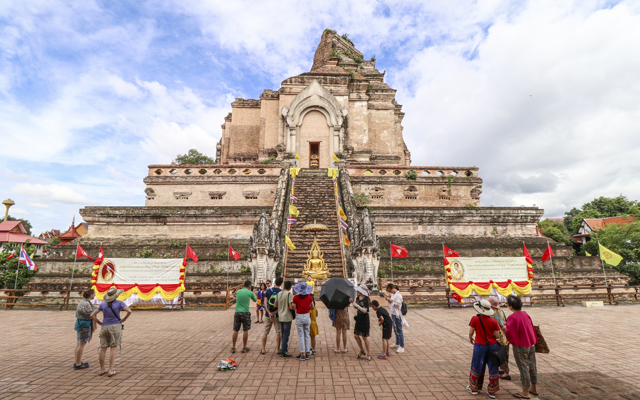
Tourists at Wat Jedi Luang, Chiang Mai

Industry players are hopeful that Thailand is on track to welcome over 35 million tourists in 2017, exceeding Tourism Authority of Thailand’s targeted 34 million.

Ittirit Kinglek, president of the Tourism Council of Thailand, expects 35.1 million tourists to the country this year, up 7.8 per cent from 2016, while tourism revenue is projected to increase 9.8 per cent to 1.8 trillion baht (US$54.6 billion).

Tourists at Wat Jedi Luang, Chiang Mai

With close to 17 million arrivals recorded for Thailand in 1H2017, Vichit Prakobgosol, president of the Association of Thai Travel Agents, told TTG Asia that signs are pointing towards better performance in the second half.

So far this year, tourists mostly came from Asia including China, South-east Asia, Japan, South Korea and India, each generally showing growth of around five-10 per cent over last year. Vietnam and South Korea saw larger increases of 20-30 per cent.

However, Vichit still has concerns such as tourist safety, accessibility, orderliness of tourist attractions and currency exchange movements.

“We hope to welcome more quality, long-staying tourists as well as distributing income to secondary provinces,” he added.

According to Ittirit, the confidence index of tour operators in Thailand for 3Q2017 will remain around the level observed in 2Q2017. At a score of 101, it is a normal level considering that the global economy is still in recession.