TTG Asia
Asia/Singapore Saturday, 11th April 2026
Page 1551

Yunnan cleans up its act

0

While an ongoing tourism industry clean-up in Yunnan has presented difficulties to tourism players used to the old ways of conducting business, they are also being nudged towards overhauling their tour formats to have a stronger focus on community-based tourism.

Despite seeing business dip since 22 new measures and regulations – which include prohibition of forced shopping, strict punishment for tourist fraud and stronger regulation of tour guides – were implemented in April this year, Turenyou Travel Service’s managing director Mo Xian said the move is a step in the right direction.
With the new measures, Yunnan now has a more transparent and orderly industry, which will benefit travel agencies, tour guides and tourists in the long run; Old Town of Lijiang pictured

Mo told TTG Asia that before the clampdown, Yunnan had the fifth most tour-related complaints in the country, but now ranks sixth from last.

Since the new measures have been implemented, some tourist-reliant shops have closed, travel agency operating licences have been revoked, and tour guides fined or stripped of their licences, he shared.

For many other tour companies in the province however, the government’s efforts have prompted a shift from sightseeing to local experiences – such as cultural immersion, educational programmes, themed packages and community-based tourism that involve meaningful interactions with ethnic minorities.

Mo admitted that his company used to conduct sightseeing trips, where tourists were taken on a touch-and-go culture tour, before being guided to shops.

“Retail was a main focus,” he recalled.

He has since transformed his business to cater to students and families on language and educational programmes, and hill tribe experiences.

Compared to before, when resources were focused on driving retail spending, he said they were now being channelled into leveraging tourism to sustain communities in Yunnan.

“These changes allow for diverse cultures to flourish, which in turn benefits the broader tourism industry and all of Yunnan,” he remarked.

And in Lijiang’s tourism hotspot Yu Long (Jade Dragon) Mountain, tour groups have markedly decreased since the clean-up, while FITs are on the rise, according to He Yun, sales manager at Li Jiang Yu Long Mountain Tourism Development office.

He said that rather than have the destination pander to tour groups, the office is now focused on investing in infrastructural development, as well as skills training for guides and other tourism professionals.

Langkawi heightens courtship of European travellers

0

Langkawi Development Authority (LADA) is stepping up efforts to grow arrivals from Europe, which had earlier been hit by Malaysia Airlines’ suspension of most of its routes to the region.

Its CEO, Azizan Noordin, said: “European arrivals (which make up 20 per cent of international visitors to the island) are important as they spend an average of seven to eight nights in Langkawi. The top three European markets to Langkawi are the UK, Germany and Scandinavia.”

More longhaul travellers from European region wanted by LADA; Langkawi SkyBridge pictured

To attract Scandinavian and Northern European travellers, the state tourism boards of Sabah and Sarawak, together with LADA and supported by inbound agents, will jointly promote packages at the upcoming Matka Nordic Travel Fair in Helsinki in January 2018.

Azizan’s rationale is that Sabah, Sarawak and Langkawi offer cultural and nature-based attractions that appeal to these markets. Langkawi is highlighting its beaches and islands; Sabah its dive sites and Kinabalu Park, a UNESCO World Heritage Site; and Sarawak the Mulu National Park, also a UNESCO World Heritage site.

The appeal of the multi-destination packages is further enhanced by AirAsia’s introduction of services between Kuching and Langkawi in August as well as existing domestic flights between Sabah and Sarawak.

Moreover, a reality television show, Differences Aside, produced by CNN in collaboration with Travel Leisure Channel (TLC) in Langkawi, is expected to be aired in 1Q2018. Shooting in Langkawi will start next month, said Azizan.

It will see participants from the US, the UK, Middle East, Kazakhstan, China, Australia, Japan and Malaysia participating in treasure-hunt type of activities that showcases Langkawi’s attractions such as abseiling and jet-skiing. “This will further promote Langkawi as an island destination to the world,” said Azizan.

Azizan said outbound agents he met at the recently concluded World Travel Market are showing keen interest to create Langkawi packages. He said LADA is also working with Tourism Malaysia overseas offices in Europe to host five groups of travel agents and media from the UK, Germany and Kazakhstan next month and in January 2018.

Such efforts are geared towards winning back European markets impacted when Malaysia Airlines slashed all its European routes, except to the UK, which it continues to fly twice daily.

Azizan said Tourism Malaysia and LADA work with many foreign airlines including Singapore Airlines, THAI, Turkish Airlines, Qatar Airways, Emirates and Etihad Airways on joint promotions to attract longhaul visitors.

A host of events has also been lined up for tourists in Langkawi this year-end holiday season. Among them are Oceanman Langkawi, an open water swimming competition happening on November 25, as well as two inaugural music festivals, (December 22 – 24) and Langkawi International Blues, Roots, ASEANA (December 29-31).

Malaysia proffers more lesser-known destinations to Chinese visitors

0

Encouraged by improved air links between Malaysia and China, Tourism Malaysia is stepping up efforts to tap tourist traffic from second- and third-tier Chinese cities while maintaining marketing efforts in the first-tier ones.

Tourism Malaysia’s chairman, Siew Ka Wei, told TTG Asia: “We believe travellers from second- and third-tier cities tend to stay longer and spend more in Malaysia compared with their counterparts from Beijing and Shanghai. However, their preferences for hotels and destinations tend (to be the same as those) from first-tier cities.”

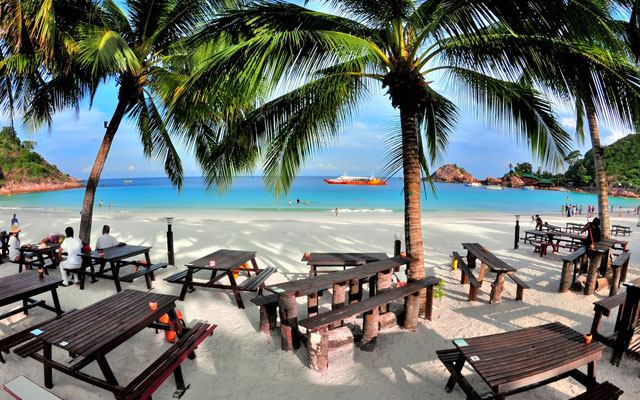
The Malaysian government is raising the profile of other beach destinations like Redang Island to visitors from China

He added: “Moving forward, we will need to identify their preferences and travel patterns so that strategic and targeted promotions can be implemented effectively. Promotional efforts in second- and third-tier cities will have to be intensified while we also look at strategic ways of improving air connectivity between these cities and Malaysia.”

China is Malaysia’s top mid-haul source market. Chinese arrivals for the first eight months of 2017 rose year-on-year by 8.3 per cent to reach 1.5 million.

Improved direct air access is benefiting various destinations such as Penang, Langkawi, Johor Bahru and Kota Kinabalu, as it allows Chinese travellers to go straight to their destination of choice, without having to go through the capital city, Kuala Lumpur.

This year, Malaysia Airlines launched new flights between Kota Kinabalu and Tianjin, while budget airline AirAsia commenced thrice-weekly flights between Langkawi and Shenzhen.

Siew said: “While Sabah, with its many islands ideal for snorkelling and diving, has been well promoted and preferred by Chinese tourists, we want to channel interest to other beach and island destinations such as Langkawi, Port Dickson and Redang Island.”

The new direct flights to Langkawi from Shenzhen and Guangzhou are helping the NTO fulfil part of this desire.

Tourism Malaysia is also reaching out to Chinese millennials by inviting key opinion leaders and social media influencers on fam trips to Malaysia, so that they can share their travel experiences with their followers online.

Siew added that promotions of travel packages are also conducted on online platforms such WeChat, Weibo and popular travel blogs in China, among others, in order to reach out to Chinese millennials who prefer to research and book their trips online.

“Chinese millennials love our beaches and islands, our local products, and our local cuisine and fruits such as durian,” he revealed.

According to a tourist profile prepared by Tourism Malaysia’s research division in 2015, the majority of Chinese visitors are between the ages of 35 and 44 years old. The FIT segment makes up 53.3 per cent of arrivals.

PayPal launches travel cancellation protection in S’pore

0

PayPal has partnered with Aon Singapore to offer free travel cancellation protection service to its Singapore users, its first in Asia-Pacific.

In cases when users are forced to cancel their trips, the service covers irrecoverable travel expenses capped at S$500 (US$368.90) a year. This applies to trip components including flight, car rental, hotel and Airbnb apartments, said Rahul Shinghal, general manager, PayPal South-east Asia.

PayPal wants to provide customers with additional protection for their travel plans at no additional cost

Users need only to activate this free service once to have their eligible travel-related purchases made via PayPal be protected.

According to the Singapore’s Department of Statistics, nearly 9.5 million outbound departures were made by Singapore residents in 2016, a 71 per cent increase from a decade ago.

A similar initiative was launched successfully in Europe earlier this year, namely in France, Germany, Italy and Spain. Over 250,000 users have activated the service since its roll out, according to PayPal.

Indonesia moves to dispel fears of Mt Agung

0

Following reports on Mt Agung eruption warnings, the Republic of Indonesia’s Ministry of Tourism is stepping up to address “misinformation” that has dented tourism business for the island of Bali.

The ministry’s director for Asia Pacific Tourism Promotions, Vinsensius Jemadu, told TTG Asia in an interview that since the initial reports on Mt Agung’s rumblings, Bali’s tourism numbers have dipped 15 to 20 per cent, especially between late-September and early-October.

Misreporting has caused a drop in visitors to Bali

He clarified: “The situation in Bali is not as dangerous as what has been reported in the media. Even if the worst had happened, it would only affect an area within the radius of 12km – most tourist destinations in Bali are located 70km to 75km from Mt Agung.”

Earlier this month, the Indonesian government lowered the volcano’s eruption status from “dangerous” to “alert”, and arrivals have “rebounded” since then, said Vinsensius.

Still, to prevent further misreporting, the ministry is employing a social media strategy to better communicate the island’s current situation.

He explained that this will be done via “viral” posts by the media and key opinion leaders.

The ministry is also intensifying cooperation with related ministries, local government bodies and local communities to enhance tourism services – such as evacuation procedures, travel incentives and other facilities – in case of emergency situations.

As inbound tourism becomes spotlighted as a national priority, the Indonesian government is also “aggressively promoting” other destinations as “new Balis”, to which Bali visitors can hop, Vinsensius said.

The new Balis Vinsensius referred to are 10 new destinations the ministry hopes to nurture. They are Lake Toba (North Sumatra), Tanjung Kelayang (Belitung), Tanjung Lesung (Banten), Kepulauan Seribu (Jakarta), Borobudur (Jogjakarta-Solo-Semarang, Central Java), Mount Bromo (East Java), Mandalika (Lombok), Komodo National Park (East Nusa Tenggara), Wakatobi National Park (Southeast Sulawesi) and Morotai (North Maluku).

Efforts include giving a Special Economic Zone status to places such as Tanjung Lesung, Mandalika and Morotai, to entice investors to develop infrastructure there.

Western Australia courts Chinese visitors with Ctrip deal

0

Ctrip has signed a strategic cooperation agreement with Tourism Western Australia, aimed at connecting Chinese travellers to the emerging destination.

Western Australia is seeing Chinese tourist numbers grow 6.9 per cent year-on-year, with a three-year growth average of 11.2 per cent. Ctrip’s data also shows that spending power is also on the rise. Chinese tourists spent 7.9 per cent more than last year, with a three-year average growth rate of 13.3 per cent.

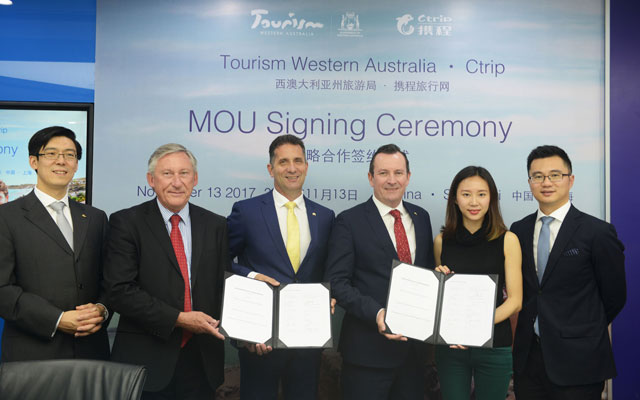
Minister of Tourism for Western Australia Paul Papalia (third from left) and premier of Western Australia Mark McGowan (third from right) stand with other Tourism Western Australia and Ctrip representatives

Tourism Western Australia is looking to strengthen collaboration and dialogue with partners in the Greater China region. By maximising investment, it is hoped that by 2020, Chinese visitors would reach the 100,000 mark and bring A$500 million (US$378.3 million) to the state.

Through the new partnership, Ctrip will support the expansion through innovative marketing initiatives such as live broadcasting, virtual tour managers and VR technology.

Ctrip is already working with more than 300 destination partners around the world.

Green lane created for Singapore agents to go high tech

0

The Singapore Tourism Board (STB) is developing a “green lane” to support the industry in technology adoption.

There has been a five-fold increase in the number of applications by Singapore agents for project funding to develop and adopt innovative technology solutions.

STB is taking steps to expedite travel agents’ adoption of technology

Following the STB-NATAS (National Association of Travel Agents Singapore) launch of the Tourism Innovation Challenge for Travel Agents in May, the initiative will now identify and pre-qualify a set of technology solutions for funding support that cover administrative solutions like human resources and accounting, and travel-agent specific solutions like booking and reservations systems.

The aim of the challenge is to catalyse the development of new technology solutions curated specially for travel agents, said Sim Ann, senior minister of state, Ministry of Culture, Community and Youth and Ministry of Trade and Industry.

Sim added: “Travel agents who wish to adopt pre-qualified technology solutions will be able to enjoy expedited funding approval and implement them more quickly.”

At Wednesday’s Travel Agents Industry Forum’s Technology Showcase, there were exhibitors with solutions supported through the challenge like AI applications and multi-source travel solutions provider Zumata, which is working with Amadeus, Expedia and insurance companies.

Circus Social, another candidate for the innovation challenge, is helping travel agents like Buffalo Tours, Quotient DMC, Tradewinds and Traveller DMC create “intelligent itinerary” products using predictive analytics to offer what inbound and outbound travellers want. It is a B2B and B2C subscription-based platform.

For travel agents offering seat-in-coach programmes, Drop Positioning Systems provides tour guides and tour group members Internet connectivity, live positioning and messaging capabilities, including for social media, for groups of up to 64 users.

Steven Ler, NATAS acting president and general manager, head of travel, UOB Travel, added: “Building on the momentum of the innovation challenge, NATAS will be developing a Travel Technology Challenge with key partners in 2H2018.

“We hope the challenge will result in even more solutions curated for the travel agent industry and proliferated by key partners throughout the industry.”

Sim told the forum Dynasty Travel was developing a mobile app, which prospective customers can use to book travel, provide reviews and feedback and contact the agency during emergencies.

Anywhr, a new online only entrant was cited as another example. Its online platform allows travellers to provide key parameters and preference like number of travellers, travel dates, recently visited cities and budget to create a customised trip. Travellers are told what to pack and only find out where they are going on the day of the departure.

Fujita Kanko forays into service apartments with Jakarta as first stop

0
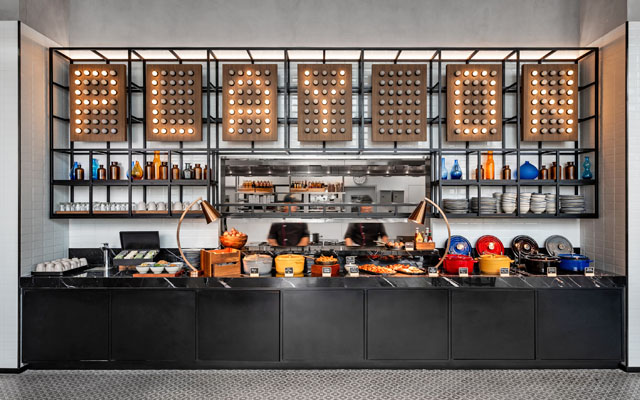
Fujito Kanko has made its first foray into the serviced apartment segment

Japan’s Fujita Kanko will foray into the serviced residences business with its first property scheduled to open in Greater Jakarta’s Cikarang in the fall of 2019.

“South-east Asia is a market that we’ve been eagerly watching, and we saw a big opportunity in Cikarang,” said Akira Segawa, president and CEO of Fujita Kanko. “We have built our expertise as a hospitality company for over 60 years, so expanding into the serviced apartment business is a natural extension of Fujita Kanko’s core offerings.”

Fujito Kanko has made its first foray into the serviced apartment segment

The serviced residence, yet to be branded, is expected to have 214 rooms in three-unit types for both single and family residents, suitable for business travellers and expats. Facilities will include a restaurant, gym, club lounge and Japanese-style spa with outdoor bath.

In a statement, the group said the property’s typical clientele is business people, especially those relocating from overseas.

Cikarang, approximately 35km east of Jakarta’s city centre, is known for its up-and-coming industrial developments, including Kota Jababeka, the largest industrial park in South-east Asia. The area is attracting a growing number of international companies setting up offices in Indonesia.

Fujita Kanko currently has six overseas offices in Asia: Shanghai, Seoul, Taipei, Bangkok, Yangon and Jakarta, which was opened in 2015 to promote its portfolio of over 70 Japanese properties, build international recognition for its businesses among travellers and other stakeholders, and develop local business.

Fujita Kanko is also growing its hotel footprint in Asia, with scheduled openings counting Hotel Gracery Asakusa and Hotel Gracery Seoul in 2018, and Hotel Gracery Taipei in 2019.

APAC villa rentals a US$390 million industry: Villa-Finder.com

0

The Asia-Pacific villa rental segment accounts for US$390 million of the global US$120 billion vacation rental market, according to a Villa-Finder.com analysis of Airbnb listings and Airdna data.

It estimates there are 9,000 villas for rent in Asia-Pacific, only about three-quarters of the total number of properties that are available full-time in Paris.

Villa rentals are on the uptick in Asia-Pacific

There are signs that this is on an uptrend, as Villa-Finder.com cites Statista research showing 18.3 per cent growth annually in the region.

David Chambat, CEO of the Villa-Finder.com, expects villa supply to develop beyond Bali, Koh Samui and Phuket, and spread all around the region.

He observed that with more investors building villas either for returns, or to prepare for retirement, countries like Vietnam, Myanmar, Laos, China and India are increasingly developing villa rental offers.

Moreover, Richie Lopez, managing director of White Rose Samui, predicted: “In Thailand, the competition is getting fierce which I think will drive the rates lower which will mean more bookings. The key country is China. It will be the market for the next five years.”

Meanwhile in Sri Lanka, Jack Eden, CEO of Eden Villas, is positive that tourism development will bring in more holiday home investors to the island. “These investors will in turn attract top agents seeking an alternative accommodation options for their clients, which will in turn fuel the rental market,” he said.

Klook partners JNTO in Hong Kong-specific campaign

0

Klook, a tours and activity booking platform, has partnered Japan National Tourism Organization (JNTO) to launch a series of marketing campaigns that promote a new travelling style in Japan called “Yurutabi” which highlights off-the-beaten-path experiences.

The joint campaign from Klook and JNTO features Hong Kong band ToNick in fun videos trying an all-you-can-drink sake tasting in Tokyo, dressing up as samurais, and participating in a sushi-making class in Osaka.

(From left) JNTO’s Hiroshi Yakumaru and Klook’s Eric Gnock Fah

Earlier in November 2017, Klook set up a local team in Japan to establish partnership with local service providers in order to cater to the growing demand.

Currently, Hong Kong-based Klook covers over 2,000 activities in Japan, partnering directly with major theme parks such as Universal Studios Japan, railways and local activities operators.

“Hong Kong has become one of the most important markets for Japanese tourism with a huge population of returning travelers annually,” commented Hiroshi Yakumaru, executive director of JNTO Hong Kong.

“Seeing this hot trend of digital and smart traveling, we believe that by joining hands with Klook, we can help more Hong Kong visitors explore not only the charm of Japanese cities but also local regions, and expect new trends to be created by enabling bookings of more unique activities and experiences.”

According to JNTO’s statistics on visitor arrivals in Japan, Hong Kong is ranked fourth globally claiming 7.6 per cent of the total number of overseas visitors. In 2016, close to 1.84 million visitors traveled from Hong Kong to Japan, with 20.7 per cent visiting 10 times or more.