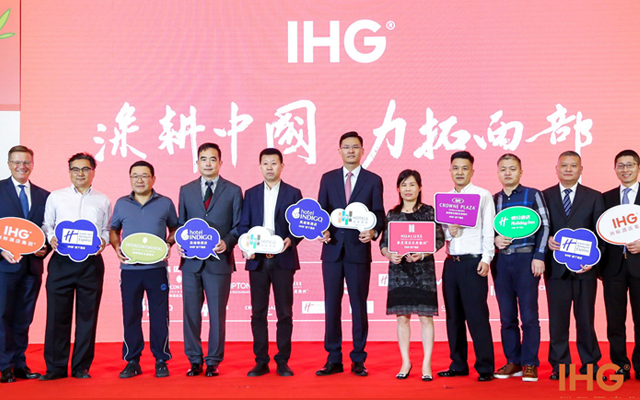
InterContinental Hotels Group (IHG) has signed 10 new deals under seven of its brands in western China.
The 10 hotels will sit under the InterContinental, Hualuxe, Crown Plaza, Hotel Indigo, Even and Holiday Inn brands, spanning the luxury, upscale and midscale segments.
Jolyon Bulley, CEO, IHG Greater China, commented that the signings are a reflection of the group’s “confidence and commitment to both the west and the entire Chinese market”.
IHG goes big in China with 10 hotels signed
The list of new properties includes:
InterContinental Chengdu Shawan, the third InterContinental hotel in Chengdu, Sichuan Province, will be located adjacent to a number of shopping malls within walking distance to the district government.
Hualuxe Guiyang Financial City will be located in the emerging northern Guiyang Financial City. Hualuxe Hotels & Resorts is the first-ever upscale international hotel brand designed specifically for Chinese consumers.
Crowne Plaza Mianyang High-Tech Zone will be situated on the main road of Mianyang City in Sichuan Province, known as the “Silicon Valley in Western China”. The hotel will be surrounded by international and local high-tech enterprises.
Hotel Indigo Puzhehei will be the first international branded hotel in the Puzhehei Scenic Area in Yunnan Province.
Hotel Indigo Jiuzhai will sit close to the entrance of Zhongzha Valley, west of the Jiuzhaigou Natural Reserve in Sichuan Province.
Even Hotel Chongqing Central Park will be located in Yubei District of Chongqing Province next to the Central Park. The hotel will boast convenient access to the Chongqing International Expo Centre, iconic city landmarks as well as Chongqing International Airport. The Even brand was first introduced to the Chinese market in October 2017.
Even Hotel Xi’an High-Tech Zone will take a prime location in the High-Tech Development Zone in Xi’an, Shaanxi Province, surrounded by Fortune 500 companies. The hotel will be located on the 32nd to 38th floors of a 200m-tall building.
Holiday Inn & Suites Lanzhou Centre is situated in Lanzhou Centre, a building in Lanzhou, Gansu Province. Lanzhou West Railway Station and Lanzhou Metro Line 1 (to be completed in December 2018) will both be within walking distance. It will also be the first extended-stay hotel in the city.
Holiday Inn Express Guilin High-Tech Zone will be located in the heart of the High-Tech Zone of Guilin, Guangxi Zhuang Autonomous Region.
Holiday Inn Express Meishan Dongpo in Meishan, Sichuan Province, will sit on higher floors of the landmark Chunxi Square. This project is signed under the Franchise Plus model that IHG tailored for its Holiday Inn Express brand in China, which will see IHG providing owners with more flexibility while assigning a general manager to the hotel.
IHG currently operates more than 330 hotels, over 100,000 rooms under a total of nine brands in Greater China. In IHG’s 2018 first quarter trading update, Greater China achieved another exceptional quarter with market leading RevPAR increase of 11 per cent, the company stated in a press release.
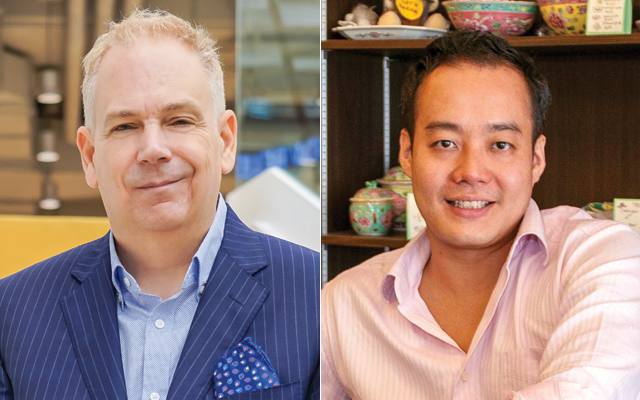
Hardy (left) and Wong make travel app recommendations
Hardy (left) and Wong make travel app recommendations
Mario Hardy, CEO, PATA:
“I travel an average of about 94 trips a year, and my travel calendar is planned a year in advance, sometimes even longer. Among the multitude of travel apps that I use, the one I’m most loyal to is TripIt as it allows me and my family to see from one screen all of my travel months in advance. I’ve granted access to my TripIt account to my personal assistant where she uploads all the bookings for each trip. This way I know in advance where I’ll be next, how I’ll get there and where I’ll be staying. I also connect my TripIt account to another app called App in the Air, which lets me know the average amount of trips and distance I cover in a single year.”
Clement Wong, CEO & founder, BeMyGuest:
Currency exchange is one of the biggest hassles for frequent travellers. Depending on your destination it can be difficult to find a trustworthy operator, and it can mean carrying around more cash in your wallet than you’re comfortable with. Resolut is great for saving dollars on bank fees while travelling, and shifting money from one account to the next is easy. It’s a multi-currency facility and tracking of your spending is very handy; it even works with cryptocurrencies. Should you lose your card while travelling you can freeze your account instantly, and you can unfreeze it again instantly when you find your card. Overall it’s a great way to avoid spending foreign exchange fees when on holidays and work trips.
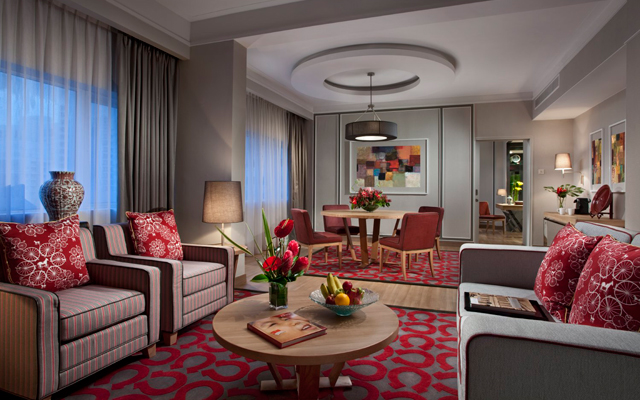
All six Millennium hotels in Singapore are participating in the deal
Millennium Hotels and Resorts (MHR) has introduced an extended stay package – Millennium Residence – for guests who stay at any one of the group’s six Singapore properties, on bookings made for seven to 21 nights.
For a minimum of seven nights’ stay, there will be 15 per off the flexible rate; as well as complimentary use of self-service launderette or 10 per cent off laundry & dry cleaning services; 10 per cent off on F&B across 13 restaurants throughout the six Singapore Hotels; 10 per cent off hotel restaurants, mini-bar & in-room dining; 10 per cent off on IDD calls; and 10 per cent off at the business centre.
All six Millennium hotels in Singapore are participating in the deal
For a minimum of 14 nights’ stay, it will be 20 per cent off the flexible rate, and 15 per cent off the same inclusions listed above. For a minimum of 21 nights, guests will be able to obtain 25 per cent off the flexible rate, and 20 per cent off everything else on the list above.
All Millennium Hotels in Singapore have allocated two floors to creating a dedicated space for long-stay guests. Millennium Residence rooms include daily housekeeping service, complimentary in-room coffee & tea making facilities, replenished daily; and complimentary Wi-Fi. Guests are also entitled to complimentary buffet breakfast for two persons throughout the duration of their stay.
All hotels also offer specially discounted self-parking rates and a free shuttle service to and from the hotel to designated locations.
The Millennium Residence package is available at any one of MHR’s six Singapore properties – Orchard Hotel Singapore, Grand Copthorne Waterfront Hotel Singapore, M Hotel Singapore, Studio M Hotel Singapore, M Social Singapore or Copthorne King’s Hotel Singapore.
The Millennium Residence offer is only applicable when booked via www.millenniumhotels.com from now until March 31, 2019, with minimum stay required. Terms and conditions apply.
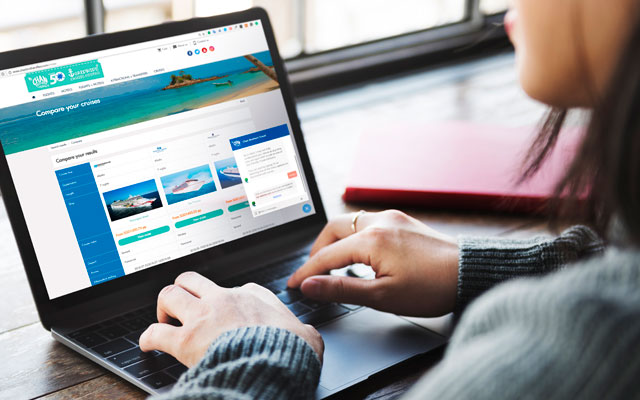
Chatbots were launched by Chan Brothers Travel to drive productivity
Amid technological advancement and changing consumer habits, more travel companies are turning to chatbots to rev up their customer service, allowing them to communicate with clients in real time and provide instant gratification.
Chatbots were launched by Chan Brothers Travel to drive productivity
Early-adopter Chan Brothers Travel introduced a Webchat system on its website end-2016 to increase productivity and alleviate the load on its hotlines, according to managing director Anthony Chan.
Said Chan: “With the enhancements of artificial intelligence (AI) chatbots, the platform (since November 2017) is now able to hold up to 65 per cent of the conversation with the customer before requiring human intervention, if at all. The productivity benefits continue even after the travel adviser steps into the conversation as multiple conversations are managed concurrently.
“Since its inception, chat conversions have contributed to between 10 and 15 per cent growth in our market share.”
Meanwhile, Contiki launched Tiki the travel bot earlier this year, which allows travel agents to suggest trips for users based on a classification of travel styles it developed earlier.
However, Contiki’s spokesperson said: “Tiki is not meant to replace a travel agent or any of our representatives. It is a pre-screening process for anyone who wants to research what travel styles we have and which exact trip they should be on.”
Others, like Dynasty Travel, instead opt for human-powered live chat for online enquiries and bookings, according to Alicia Seah, director of public relations and communications.
“Online customers who need to be connected with someone to answer their questions in real time and with precision can use Live Chat, which has the ability to provide convenient answers that the customers are looking for.”
While chatbots are available 24/7 and can be used to automate simple enquiries and tasks, staff are still needed to handle more complex questions.
“Chatbots can only respond to specific types of questions and still cannot fully replace humans. They are costly to implement and require time to allow machine learning before they can handle more complex questions,” Seah opined.
Customers tend to prefer face-to-face interaction when it comes to travel products, and they want to have well-informed discussions with travel consultants on their travel needs, she added.
Albert Ho, executive director, Citystate Travel, agreed and said the company did consider using chatbots but felt they was “not quite ready” to meet the needs of its “high-level corporate travel and MICE clients”.
For its cruising-focused leisure division, Ho said many customers are tech-savvy repeats who have developed good relationships with its consultants and prefer to talk to them about their trips.
Regardless, Seah and Ho said they may adopt chatbots as part of the customer service process down the road when they become more sophisticated, where the future AI can hold a conversation and provide more tailored responses.
Asia-Pacific received a record 636 million foreign arrivals in 2017, with the fastest-growing destinations being Vietnam, Turkey and Nepal, according to a report released yesterday by PATA.
Covering 47 destinations across the region with eight in the Americas, 15 in the Pacific and 24 across Asia, the PATA Annual Tourism Monitor 2018 Early Edition reviews foreign arrivals over the past five years.
Nepal is a fast-growing destination in terms of foreign arrivals; trekkers on their way to Everest Base Camp, Nepal pictured
PATA CEO Mario Hardy noted: “2017 was yet another record year for the aggregate volume of foreign arrivals into Asia-Pacific… 30 of the 47 destinations covered in this report showing annual growth in excess of five per cent – in fact 17 of these were in the double-digit growth range, with only a few showing contractions.”
Asia received the majority of arrivals into APAC in 2017 with a 72 per cent share, followed by the Americas with 24 per cent and the Pacific with the remaining four per cent.
Overall, the region received nearly 35 million more foreign arrivals in 2017 than it did one year earlier. Only four of the 47 destinations reported declines in their inbound foreign arrival numbers, ranging from 4,000 to nearly 3.9 million.
Intra-regional travel flows remained strong for most Asia-Pacific regions in 2017, with almost 94 per cent of the foreign arrivals into Asia originating from within the region itself. For the Americas, the intra-regional proportion of international travel was 78 per cent.
The Pacific went against this trend however, with less than one-third (32 per cent) of its foreign arrivals in 2017 originating from within the Pacific region; more than half (53 per cent) of the foreign arrivals into the Pacific in that year came from Asian origin markets.
In terms of supplier markets into Asia-Pacific in 2017, the vast majority of foreign arrivals came from Asia (62 per cent), followed by the Americas (18 per cent) and then Europe (12 per cent).
The Pacific supplied a little over two per cent of the total arrivals into Asia-Pacific in 2017, followed by Africa with less than one per cent. A significant proportion of arrivals (five per cent) came from origin markets that were unspecified.
There were 14 origin markets that each generated in excess of 10 million arrivals into Asia-Pacific in 2017.
Wanda Vista in Beijing is a Preferred member; in Phuket
Reclassifying their portfolios. Launching the right kind of loyalty programmes. Adding more resources in development and sales. These are busy days for CEOs of independent hotel groups who – far from being cowed by competition from the home-sharing economy or a slew of new soft brands launched by international hotel chains – are showing they love a good challenge. Have a look:
PREFERRED HOTELS & RESORTS
Preferred is 50 years old this year, but shows no signs of a mid-life crisis. A new female leadership will have none of it anyway.
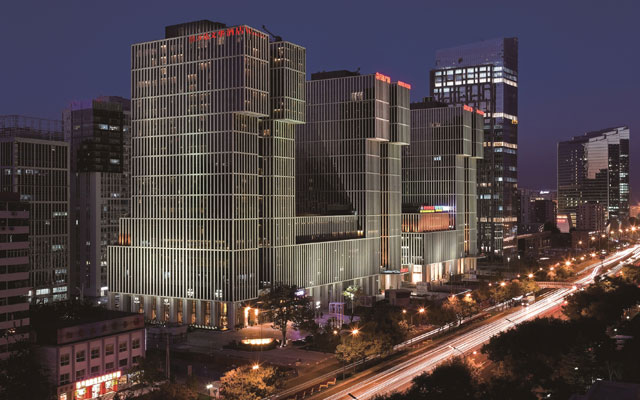
Wanda Vista in Beijing is a Preferred member
In March, the first non-Ueberroth president, Michelle Woodley, was named, along with a new chief marketing officer, Kristie Goshow, and a new executive vice president corporate communications & PR, Caroline Michaud. The move was designed to harness the skills sets in key functional areas of experts outside the family, said CEO Lindsey Ueberroth.
Preferred ended 2017 with a 22 per cent year-on-year increase in reservations revenue to US$1.4 billion, and the addition of 103 new properties, validating its rebranding in 2015, where each of its 650-plus member hotels was aligned with one of five collections: Legend, LVX, Lifestyle, Connect and Preferred Residences. The idea of the exercise, said Ueberroth, was to provide a more intuitive way for consumers to search and book their lodging based on the type of luxury experience they are seeking, rather than by the ‘brand/hotel type’ way that hard brands had taught them to do.
It has paid off, not just in the increased revenue and bigger membership, but by only serving to enhance the large degree of repetitive, indistinguishable products hotel chains have in their network.
“The process of reclassification allows traditional independent hotel groups to organise themselves into meaningful collections that make it easier for a consumer to understand their diverse portfolio without compromising on individual hotel personalities,” Ueberroth told TTG Asia.
“While it is a key advantage to offer a great deal of variety in accommodation choices, authentic experiences and unique global destinations, we must also be easy to sell and easy to buy, regardless of the member’s reason for travelling. Therefore, transparency in pricing and breadth of information on these hotel choices are paramount.”
To support the differentiation of brand collections and the audience they resonate with, its loyalty programme I Prefer was enhanced through the launch of a mobile app and exclusive member rates.
“These new offerings fuelled an 84 per cent increase in stays, more than 50,000 downloads for the I Prefer mobile app (available on iOS and Android), and more than US$8 million in member rate reservations revenue for participating hotels. To-date, I Prefer has more than 2.5 million members worldwide,” said Ueberroth.
Plans are to continue enhancing the benefits and offers for I Prefer members, and to further strengthen engagement with them. At press time, details are under wraps but Ueberroth emphasised two key phrases, “true loyalty” and “gratitude”.
She said: “The consumer has been educated to expect instant gratification due to the proliferation of rewards programmes in every aspect of their daily lives, from supermarkets to healthcare. In fact, most of us will receive benefits before we have actually demonstrated any loyalty to a brand.
“Consequently, loyalty programmes must work significantly harder to deliver on their true intent – brand loyalty – especially in the hotel space where the traditional ‘earn and burn points’ model isn’t as effective as it once was. Loyalty is fast becoming a singular focus that necessitates a reward framework based around the needs ‘of one’ rather than ‘the loyal community’.”
Preferred will also relaunch its website in the third quarter. This will include a dedicated section on Preferred Residences which, according to Ueberroth grew significantly in 2017 and now has 70 members.
WORLDHOTELS
In March, WorldHotels reclassified its 350 members into three collections, WorldHotels Distinctive, WorldHotels Elite and WorldHotels Luxury, from two collections previously, WorldHotels and WorldHotels Deluxe.
Distinctive covers upscale properties, Elite upper upscale and Luxury is, well, as the name says. In general, WorldHotels members became part of WorldHotels Distinctive while members that were WorldHotels Deluxe became part of WorldHotels Elite. The very best hotels became part of WorldHotels Luxury.
“The reclassification clarifies the market positioning of our collections, so our sales team can sell our hotels to our clients with greater confidence,” Geoff Andrew, CEO of WorldHotels, said.
“Therefore, travel agents as well as guests get a better understanding of the accommodations and the services they can expect before they book with WorldHotels.”
He added: “The creation of the new collections signals that we will be taking a more focused approach to the quality levels within each segment. Hotels that don’t meet our quality standards will obviously be addressed and given the opportunity to resolve these issues. If a hotel doesn’t improve its quality standards, it is possible that it will be excluded from its collection and the overall WorldHotels’ portfolio.
“As the brand continues to grow and expand, new properties will have to continue to adhere to the standards for each collection to maintain the integrity of each.”
So is WorldHotels shifting towards the high-end? Said Andrew: “WorldHotels has always been involved with luxury, high-end properties.
“The overall WorldHotels portfolio, however, ranges from upscale to luxury and we will continue to serve all of them. Because of the upper upscale and luxury portfolio of our sister company ALHI (Associated Luxury Hotels International), we do see an opportunity to grow within the high-end market. However, this does not mean we will be shifting solely towards the high-end.”
Since ALHI parent, Associated Luxury Hotels, acquired WorldHotels in February 2017, work on leveraging the two brands has been going on in earnest. ALHI handles global sales, particularly meetings & incentives, for its membership comprising more than 250 luxury hotels and resorts, primarily in the US. WorldHotels’ portfolio, on the other hand, comprises 350 properties, many outside the US.
Andrew said WorldHotels is leveraging the luxury aspect of ALHI to elevate the overall brand of WorldHotels. ALHI too has been generating leads of clients they can’t place in their own portfolio to WorldHotels.
“Between us, we have 150-odd sales people and 600 hotels. One of the things that we’re looking at is, what services can we add that will benefit both organisations and members?” he said.
WorldHotels is targeting a massive growth from its present 350 hotels to 500 properties within the next three years. Asia-Pacific is a clear target of growth, as seen in two key promotions in April, James Koh as regional vice president of hotel development Asia-Pacific, and Ganessan Suppiah as regional vice president of sales Asia-Pacific. Both have served WorldHotels for over 11 years.
Outside Asia-Pacific, a global director of travel industry partnerships, Tim Burke, has been hired, based in Dallas, along with a regional director of sales based in Los Angeles, Fernando Carranza.
“WorldHotels is currently making significant investments to enhance its service offerings for independent hotels including the expansion of its already extensive global sales and e-commerce force along with new additions to its development team,’ said Andrew.
A new global loyalty programme, The List, will also be launched this summer, emphasising instant benefits for guests, such as an arrival ritual and upgrades on availability, and harnessing the collective marketing resources of participating member hotels.
Andrew won’t give away the details, and only said: “Guests have a new set of expectations. They expect loyalty programmes to offer greater flexibility and personalisation; they are looking for individualised value and they want more than just points.”
He added: “In hospitality, loyalty programmes will see a lot of changes within the next years. The industry needs to redefine what hotel loyalty is in order to adapt to changing consumer behaviours and hotel (members) expectations. Today, independent hotels want loyalty programmes to help them drive more direct bookings and reduce their dependency on OTAs and other third parties.
“That is why WorldHotels has been rethinking how loyalty is recognised and rewarded and will introduce a new loyalty programme this summer.”
SMALL LUXURY HOTELS OF THE WORLD (SLH)
SLH launched a new look and feel in 2015, and was the first among independent hotel chains to reboot their loyalty plan to suit today’s needs. It launched Invited, which replaced Club of SLH, last October.
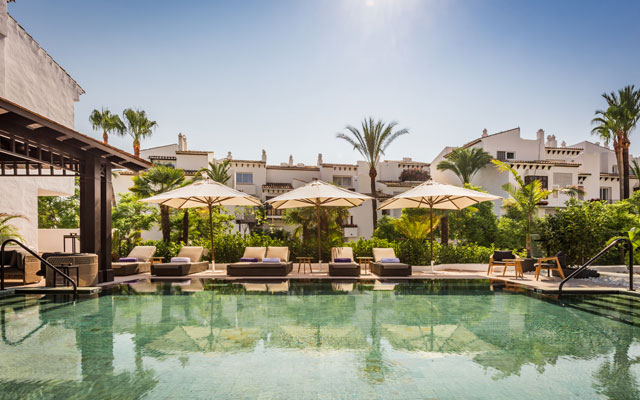
Nobu Hotel Marbella, one of SLH’s newest members
Invited does reflect the pivot indie hotel groups are trying to make, from the typical point-based redemptions for free nights or upgrades offered by big-name chains, to what SLH CEO Filip Boyen described as “being more responsive to distinctive experiences”.
Guests want immediate gratification and tailored communication, he said. Points accumulation is tedious. It’s the “basics” that now count.
“No one is interested in lounge access if they have to then pay for breakfast each morning at their hotel. Our members do not want points because it takes effort to work out meaningful value. What members want is simplicity and Invited delivers just that – the more a member stays, the better it gets with SLH,” Boyen pointed out.
Three new crucial Invited offerings are:
• Hotel benefits such as room upgrades and late check-outs which members see as extremely valuable remain, but are now implemented consistently across SLH’s 500-plus independently-owned hotels.
• New and more frequently awarded benefits such as reward night vouchers, birthday gifts, recommend a friend, and small luxuries to surprise guests.
• Members are recognised not only for the number or value of bookings that they make, but for their overall interaction with the brand.
SLH figures that the new loyalty programme will also give rich insights into 400,000-strong Invited members’ travel patterns which it wants to leverage to raise the booking conversion through “highly personalised emails” and more engagements with the brand. Ultimately this will lead to greater brand loyalty from members.
Like Preferred, SLH is reaping rewards of the initiatives taken since 2015.
Said Boyen: “I’m asked all the time now about how the big hotel chains launching soft brands has affected our business – frankly, it hasn’t.
“Business for us increased 16 per cent last year, and we added 57 new hotels in places like Dubai, Havana, Panama, the US, Rome and Japan. This year we have some really exciting new hotels joining the brand, including our second Nobu Hotel in Marbella, The Sukhothai Shanghai and 7 Secrets Resort and Wellness Retreat in Lombok, just to name a few.”
Boyen said SLH’s new look and feel was not just skin deep. “We also made quality a real focus for the business and now all our hotels are inspected every year – and hotels that fail these inspections must leave the brand. This way our guests know all SLH hotels, whether a modern city centre hotel, or a historic country retreat, meet our strict criteria.”
Brands seem to believe that product quality has the largest impact on loyalty, but their actions show otherwise
Asia-Pacific travel brands are driving loyalty by improving their product offering versus creating membership programmes, according to Expedia Affiliate Network (EAN) and Points’ new Travel Loyalty Report: A wake-up call for sleepwalking loyalty programmes.
Ariane Gorin, president, Expedia Partner Solutions, said: “Today’s savvy travellers are looking beyond price as they choose their preferred brands. To drive loyalty, travel companies need to look beyond existing solutions like discounting, vouchers and points schemes. Lasting loyalty will be won by companies who really tune in to consumer expectations, deliver a diverse product offering and invest in superior user experiences.”
Brands seem to believe that product quality has the largest impact on loyalty, but their actions show otherwise
Assessing the state of customer loyalty in the travel industry across multiple geographies and travel sectors, the study shows that despite widespread doubt in their efficacy, discounts and coupons remain the most popular tactic brands use. Sixty-one per cent of respondents admit to relying heavily on them, and the proportion is 72 per cent in Brazil alone.
Awarding points and miles is used by 52 per cent of respondents, and 82 per cent in the UK, the highest among markets surveyed.
In Asia-Pacific however, just 24 per cent of respondents are using points and miles to drive loyalty, while 26 per cent of are not offering a loyalty programme at all.
Globally, 71 per cent rate “quality of offering” as having the greatest impact on loyalty, while customer experience and an improved breadth of product and service offering are also valued above discounting methods.
Despite this, there seems to be a gap between insight and action, with only half of respondents saying they are actively working to improve their product range and customer experience, and even less (33 per cent) to improve their breadth of product and service offering.
Rather than an improved product, the majority of survey respondents cite external factors such as a stronger economy (70 per cent overall, 88 per cent in the UK and 71 per cent in China), increased marketing spend (72 per cent in the UK and 73 per cent in Japan) and changing customer demographics, as the key to their loyalty gains.
This is markedly different in Asia-Pacific, where over 50 per cent say that they expect loyalty to increase due to continual improvements in their product offering.
Even though new ideas like personalisation and gamification are believed to be effective, particularly by the airline industry, very few companies are doing it (30 per cent and 57 per cent, respectively). A higher percentage of Asia-Pacific countries cite gamification to be an effective method in driving customer loyalty, rising to a peak of 75 per cent in South Korea.
Recognition harmonises national and international standards
Thailand’s Sustainable Tourism Management Standard, published by Designated Areas for Sustainable Tourism Administration (DASTA) – a government agency under the Prime Minister’s Office – has become the first tourism-related standard in the country to receive the Global Sustainable Tourism Council (GSTC)-Recognized status.
Being GSTC-Recognized means that the sustainability standard has been reviewed by GSTC technical experts and the GSTC Accreditation Panel and deemed equivalent to the GSTC Criteria for sustainable tourism, without suggesting that the certification process is reliable.
Recognition harmonises national and international standards
Nalikatibhag Sangsnit, director-general of DASTA, said that the agency will be working towards achieving GSTC-Accredited status, which affirms that the certification process follows the highest international standards.
“By gaining GSTC-Recognized status, another step has been achieved in harmonising national sustainability standards, set by DASTA, with global sustainability standards, set by GSTC,” said Randy Durband, CEO of GSTC.
“This harmonisation provides clarity for the management and market-facing communication of the application of these standards. That message includes the inclusion of the four pillars of sustainability: sustainable management, social/community, cultural and environmental issues.”
To date, 10 destination standards, and 30 hotels and tour operators standards have achieved GSTC-Recognized status.
Best Western Hotels & Resorts has appointed Cyril Czerwonka as its new regional director of development – Asia.
Czerwonka joins Best Western’s Asia head office in Bangkok, where he will focus on seeking new hotel development opportunities for the company across the region.
He had his start in the hospitality industry with AccorHotels, focusing on Thailand, Cambodia, Laos, Malaysia and the Maldives. His hospitality experience also includes five years at The Ascott, where he was business development manager for Europe and North Africa.
Then in 2013, he joined Dusit International as assistant director of development for EMEA, based in the UAE.
mN'Organisation will be responsible for the French market
Diethelm Travel Group has appointed two companies in France and Turkey to serve as its representatives in the respective markets.
France-based mN’Organisation will be responsible for supporting the French-speaking markets across France, Belgium and Luxembourg.
mN’Organisation will be responsible for the French market
The company also has plans to further enhance its French-language capacity within operation and reservations levels to better connect with and serve this crucial market.
In Turkey, Opus Travel has been named the new Diethelm Travel Group representative. The relationship marks a move into the region which holds a number of high-value accounts and MICE opportunities.
The new representatives from both markets will report to Victor Mogilev, Diethelm Travel Group’s group director of sales, and work closely with the rest of the Diethelm Travel team implementing sales activities, identifying new market opportunities and representing the brand’s array of Asia travel products.