Hong Kong-based Galaxy Entertainment Group will pump nearly US$1 billion into the company
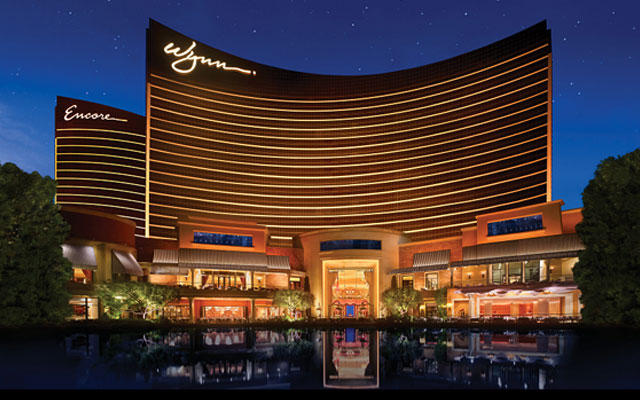
Wynn Resorts is no longer owned by founder Steve Wynn, with all shares in the company picked up by Macau’s Galaxy Entertainment Group and two of Wynn’s current investors.
Galaxy Entertainment Group has agreed to purchase 5.3 million primary shares of Wynn Resorts at a price of US$175 a share, resulting in US$927.5 million of gross proceeds to Wynn Resorts.
Hong Kong-based Galaxy Entertainment Group will pump nearly US$1 billion into the company
In addition, two long-term institutional investors, both investors in Wynn Resorts, have agreed to purchase the remaining eight million shares held by Steve Wynn, also at US$175 a share.
Galaxy Entertainment Group vice chairman Francis Lui said: “This is a unique opportunity to acquire an investment in a globally recognised entertainment corporation with high quality assets and a significant development pipeline.”
The announcement follows the settlement two weeks ago of long-standing litigation between Wynn Resorts and Universal Entertainment Corporation.
Singapore online insurer, Etiqa, has launched the city’s first free in-flight insurance service for travellers, which includes up to S$50,000 (US$38,005) in personal accident coverage and allows instantaneous travel claims encashment via PayNow.
It also introduced a flight delay add-on, priced at S$4, covering travellers for delays of three consecutive hours with claims of up to S$300.
All Singaporean outbound travellers are eligible for Etiqa’s travel insurance
“According to a survey conducted by the Singapore Tourism Board, about 10 per cent of consumers have never purchased travel insurance despite being aware of the importance of a policy,” said Sue Chi Kong, CEO of Etiqa Insurance Singapore.
According to FlightStats, 20,671 flights were cancelled and 177,352 delayed in Asia-Pacific alone during a 30-day period from February 10 to March 12, 2018. Globally, this number rises to over 60,000 flights cancelled, and over 630,000 flights delayed during the same period.
Last year, Etiqa processed more than 1,500 travel claims within one day following the launch of its straight-through claims processes in July 2017 – out of the 1,500, 17 per cent were processed due to travel delays. A real-time flight monitoring system was also implemented at the same time to enable auto-flight delay claims for its customers.
Claims are processed through eWallet on TiqConnect, Etiqa’s online portal that allows customers to manage their claims and policies. As a personal account for customers, the eWallet balance can be used to purchase new policies, renewals or encash claims. From March 19, existing customers can also enjoy instantaneous encashment via PayNow, along with the current encashment via IDEALRAPID (bank transfer).
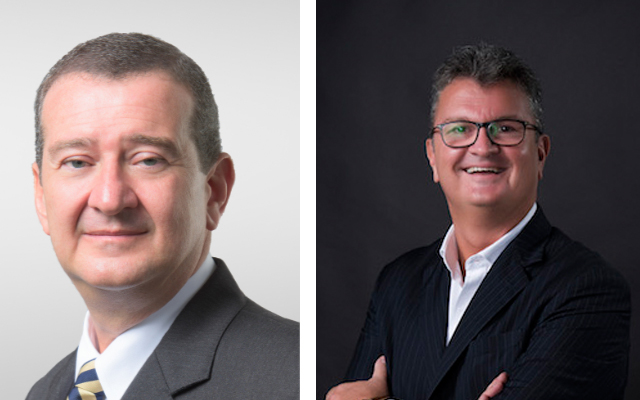
Singapore-based Next Story Group, formerly known as SilverNeedle Hospitality, has announced two senior executives hires to support its expansion, with Darren Edmonstone appointed as CEO of Next Hotels & Resorts and Andreas Flaig as group chief development officer.
As chief executive of Next Hotels & Resorts, Edmonstone will be responsible for driving highly customised guest offerings and delivering operational excellence across the Next, Sage, Country Comfort and other hotel brands within the group.
Edmonstone (left) and Flaig
Edmonstone joins the Next Story Group from Outrigger Resorts where he was the managing director, overseeing Asia-Pacific. Prior to Outrigger, he held key positions in the Peninsula Group.
The Australian native has acquired extensive expertise in operations, development, brand building and finance over the past 30 years within the hotel industry and has worked across the Asia-Pacific region.
As group chief development officer, Flaig will be accelerating the group’s growth on top of its existing pipeline of over 10 hotel and Kafnu properties in Bangalore, Colombo, Ho Chi Minh City, Melbourne, Mumbai and Sydney.
Flaig joins the group with over 25 years of depth in the hotel industry with a variety of experience ranging from development and technical services through corporate strategy and asset management to investments and acquisitions.
He has been responsible for driving profitable growth for a number of international hotel groups and hospitality franchises. Most recently Andreas held executive roles at Carlson Rezidor Hotel Group in Singapore, JLL Hotels and Hospitality based in China, and Aareal Bank in Germany.
Both Edmonstone and Flaig will be based in the Singapore headquarters of Next Story Group.
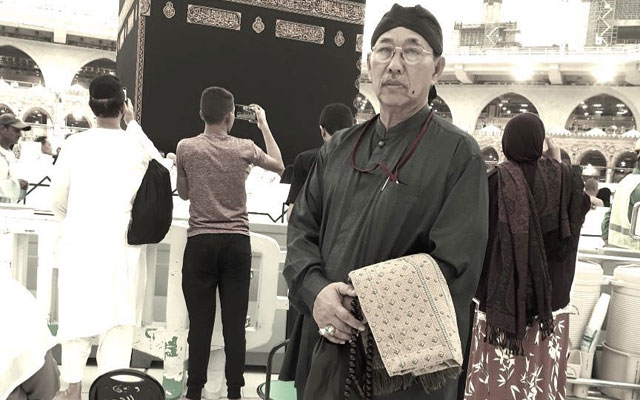
Abu Bakar Bin Osman. Photo credit: Abu Bakar Travel Services/Facebook
Director of Singapore’s Abu Bakar Travel Services, Haji Mohammad Abu Bakar Osman, was on March 20 killed in a bus accident during a Umrah trip to Mecca organised by his family-run travel agency.
He was the only fatality in the accident, which also left several injured, Singapore’s Straits Times reports.
The late Abu Bakar Bin Osman (photo credit: Facebook/Abu Bakar Travel Services)
Abu Bakar’s wife, Hajjah Fauziah Alias, 63, was reported to be in the intensive care unit of the King Faisal Hospital with two others.
Expressing his sympathies on Facebook, Singapore’s prime minister Lee Hsien Long said he was “deeply saddened” by the news.
“The Islamic Religious Council of Singapore (MUIS) is working together with the Singapore Ministry of Foreign Affairs to assist the next-of-kin of the deceased, as well as the injured and their families. My deepest sympathies to those involved in this accident.”
According to MUIS, the bus – which was carrying 31 passengers – met with an accident in the early hours of March 20.
Among the bus passengers were Singaporeans and Malaysians on an Umrah pilgrimage organised by Abu Bakar Travel Services. They were due to return home yesterday.
General manager of the hotel, Patrick Fiat, shows his appreciation for loyal staff
General manager of the hotel, Patrick Fiat (centre), shows his appreciation for loyal staff
At 44, Royal Plaza on Scott pays tribute to CEOs with 44 years of service.
Royal Plaza on Scotts (RP) last week celebrated its 44th birthday together with 16 “chief experience officers” (CEOs), who have dedicated 44 years of service to the hotel since its opening in 1974.
With an average age of 66 years old, these CEOs dedicated a significant part of their lives to RP. In fact, their combined experience adds up to 709 years, according to a press release.
To celebrate, CEOs are invited to RP’s birthday feast throughout the day with highlights such as mini croissants, deep-fried gyoza, roast lamb chops and sushi . There will also be a birthday cake, made of 108 mini chocolate and butter cupcakes, topped with whipped cream frosting.
Casino project introduces further concern among industry players
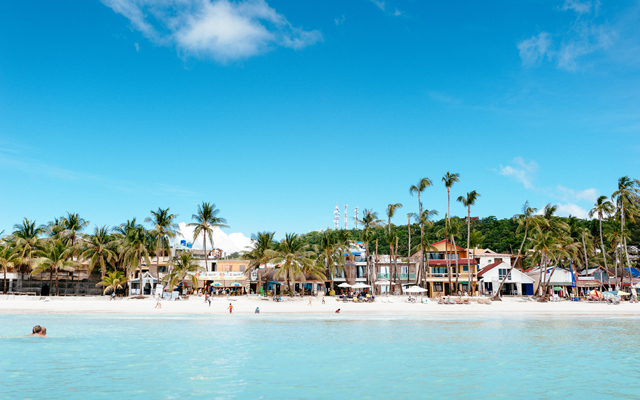
The travel trade is baulking at the consequences of allowing a multi-million dollar casino project in Boracay, approved by the Philippine government at the same time that it announced closing the island next month for rehabilitation from environmental problems caused by unbridled development.
While the industry’s current focus is taking care of the island’s rehabilitation and determining its real carrying capacity, “for years we have been calling for a moratorium on buildings” and adding more facilities “might not be to the best interest of Boracay”, Tourism Congress of the Philippines’ president Jojo Clemente said yesterday in a joint press conference by Boracay’s stakeholders who favour its rehabilitation but not its closure.
Casino project introduces further concern among industry players and observers alike
The industry expressed concern that Boracay is being stretched to its limits as the Philippine Amusement and Gaming Corp (PAGCOR) earlier this week approved the US$500 million casino to be built by Hong Kong-listed Galaxy Entertainment Group and its local partner Leisure & Resorts World Corporation, following the approval of another casino in 2014 as well as the mammoth 1,001-key Hotel 101 Resort-Boracay.
It is “ill-advised to spread the casino footprint” to Boracay, said Bill Barnett, managing director of hospitality and consulting firm C9 Hotelworks. “I’d be very concerned by the prospects of gaming on Boracay, as the sheer scale conflicts with environmental issues being faced”, he explained.
Teody Espallardo, Alta Briza Resort Boracay’s director of sales and marketing, surmised that the influx of tourists from China, now Boracay’s top foreign market source, could be the reason behind allowing casinos on the island. Many attempts to build casinos in the past were not allowed, said Espallardo, who previously worked with Pagcor for nine years.
An industry leader lamented the move as “surreal” and “double standard”. “The government is not even hiding the fact that they are opening casinos in the world-famous beach destination. We will be in Boracay for our entire lives but they (government officials) are up to six years only”, he stated, referring to the term of office of government in the Philippines.
Intas DMC managing director Sonia Lazo said casinos will likely translate into “a loss of tourists coming to Boracay” as her clients and source markets do not favour such gaming projects.
It’s the absence of proper regulations and policies that has led Boracay to its current state of demise, acknowledged Lazo. “If they plan this casino on the island, it would mean more responsibility, more governance and they need to double the effort (in governance),” she said.
“This call of closure of Boracay is a red flag that we’re not doing something right. It affects our image as a destination,” remarked Lazo.
Yoga and Ayurveda products can help disperse traffic from hotspots; pictured, meditation near Virupaksha temple in Hampi
India’s Ministry of Tourism is hoping to promote a new perception and better understanding of yoga and Ayurveda as a holistic way of life to attract more health-conscious, high-end travellers deeper into India.
In an interview with TTG Asia at the recent ITB Berlin, Alphons Kannanthanam, the minister of state for tourism, said: “There is already a strong fan base for yoga and Ayurveda, but there are misunderstandings that yoga is just a form of exercise and that Ayurveda is a spa treatment. If we are able to (correct) that misperception, we will be able to attract more health-conscious travellers to India and perhaps even more millennials, as this is a generation that greatly values a balanced way of life.”
Yoga and Ayurveda products can help disperse traffic from hotspots; pictured, meditation near Virupaksha temple in Hampi
B Venkatesh, senior general manager, inbound-sales, with Cox & Kings India, agrees, further explaining that yoga and Ayurveda on their own “can be practised anywhere in the world” but only when they are combined and recognised as a serious medical solution will they be strong magnets for health-conscious travellers.
Kannanthanam believes that yoga and Ayurveda will help drive international arrivals deeper into India, away from just the big cities, and bring much needed tourism spend to the rural communities. This is because “yoga and Ayurveda are often practised in quieter, rural districts”, he explained.
“Furthermore, as yoga and Ayurvedic retreats are often lengthy, running for a week or more, we will be able to keep travellers longer with us and have them spend more in the community for lodging, food, sightseeing and others,” he remarked.
The minister pointed out that these wellness retreats “don’t come cheap”, which fulfils India’s desire to attract higher yielding travel markets.
According to Biju George, director-overseas marketing, Somatheeram Ayurveda Group, a seven-night package inclusive of accommodation, treatments and full-board meals could cost from 875 euros (US$1,083) for a single standard room to 7,532 euros for a 14-night double deluxe suite.
Somatheeram Ayurveda Group is recognised as one of India’s leading Ayurveda specialist provider, offering five resorts in Kerala and treatments that are certified by the National Accreditation Board for Hospitals and Healthcare Providers.
Venkatesh noted that there are also ultra-luxury resorts in India that offer a combination of yoga and Ayurveda, such as Ananda in the Himalayas and Carnoustie Ayurveda & Wellness Resort, where treatments carry a hefty price tag of 9,000 euros and up per person for a week of stay and treatments.
“Wellness travellers are rarely price-sensitive, as their focus is on tuning their bodies and mind, and recovering from whatever that ails them,” he said.
While Cox & Kings India gets wellness demand from all over the world, Somatheeram Ayurveda Group sees Europe as its dominant market, making up 75 per cent of bookings.
Baby Mathew, chairman and managing director of Somatheeram Ayurveda Group, hopes to do more to court travellers from Asia where he has seen stronger interest in recent times.
“We will open our sixth resort this November, the five-star Somatheeram Amruth in Kerala. With more room inventory and treatment facilities, we will be better able to attract even more people,” Mathew said.
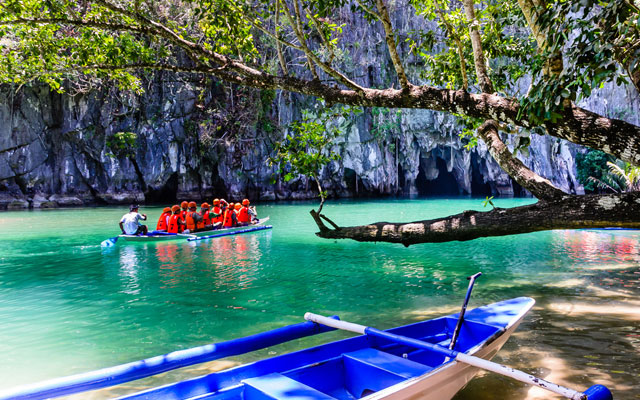
Tourists going on the Underground River boat tour in Palawan, Philippines
Arrivals into the Philippines crossed 1.4 million in the first two months of 2018 for the first time, up 16.2 per cent year-on-year, driven by growth in the Chinese tourist market, according to the Philippine Department of Tourism (DOT).
“The warming relations between the Philippines and China plus the Chinese New Year seven-day holiday strengthen the platform for us to jump-start our campaign of achieving 1.5 million Chinese arrivals for this year,” DOT secretary Wanda Tulfo-Teo said.
Tourists going on the Underground River boat tour in Palawan, Philippines
Chinese tourists recorded 256,880 arrivals, the most improved market at an impressive 56.4 per cent growth rate, next to South Korea at 354,700, which remains the country’s top tourist source market.
America came in third with 193,985, followed by Japan at 117,300 and Australia at 50,404.
Completing the top 12 markets are Canada, 48,191; Taiwan, 40,856; the UK, 33,554; Singapore, 28,117; Malaysia, 24,334; India, 23,064, and Hong Kong, 22,920.
Last year, the Philippines came in ninth in a ranking of top destinations for Chinese outbound tourists according to TravelChinaGuide, a leading Chinese travel agency.
Based on the 2018 Spring Festival Travel Forecast Report issued by Ctrip, China’s largest online travel provider, and the China Tourism Academy, the Philippines was also named the eighth most popular Chinese travel destination during the Chinese New Year.
Teo said the continued rise in the number of foreign guests bodes well for the higher targets set by the DOT amid controversy on the government’s plan to temporarily close Boracay to tourists and rehabilitate its drainage, sewerage and road systems to address water pollution, flooding and traffic problems.
Six Flags Entertainment Corporation, Riverside Investment Group and Turner Asia Pacific, are joining hands to bring Turner’s original, branded experiences to Six Flags parks throughout China.
The first addition is a dark ride themed after Tuzki, a Turner-owned rabbit IP that has become a household name in China, with millions of Tuzki emoticons exchanged through instant messaging apps each day.
The ride will join attractions at Six Flags Zhejiang and Six Flags Chongqing, scheduled to open in 2019 and 2020 respectively.
Rendering of the upcoming Six Flags in Zhejiang
Ricky Ow, president of Turner Asia Pacific, said: “This is the first time Tuzki’s loyal fans will be able to experience their favourite emoticon in such a tangible and authentic way.”
In addition to the ride, both parks will also feature Tuzki theming and new retail locations offering branded merchandise.
The agreement between Turner and Riverside Investment Group also allows for other Turner-owned IP from Cartoon Network’s portfolio of characters and shows to be featured inside Six Flags Kids World. The family-friendly park will be built adjacent to both Six Flags Zhejiang and Six Flags Chongqing.
One in 10 jobs globally can be traced to travel and tourism
One in five of all new jobs created globally in 2017 are attributable to travel and tourism, according to new research from the World Travel & Tourism Council (WTTC).
WTTC’s annual Economic Impact Research shows that the industry was responsible for the creation of seven million new jobs worldwide. Overall, travel and tourism accounted for one in 10 jobs globally.
The report also showed that 2017 was a bumper year for the sector which grew at 4.6 per cent, 50 per cent faster than the global economy as a whole (three per cent growth during 2017). Travel and tourism also showed stronger growth than all other sectors, including manufacturing (4.2 per cent), retail and wholesale (3.4 per cent), agriculture, forestry and fisheries (2.6 per cent) and financial services (2.5 per cent).
Asian countries continue to drive global tourism growth, with North-east Asia growing at 7.4 per cent and South-east Asia at 6.7 per cent. China leads the way at 9.8 per cent.
One in 10 jobs globally can be traced to travel and tourism
WTTC projects that over the next 10 years over one third of absolute GDP growth and nearly half of employment growth will be generated by China and India.
Europe’s performance was better than previously expected with 4.8 per cent growth as longhaul demand recovered, accompanied by strong intra-regional travel thanks to the strength of the European economy.
Meanwhile, Latin America showed a decline of 1.4 per cent in tourism GDP, largely a result of a contraction in international spend to the largest Latin American economy, Brazil, of 18.1 per cent compared to 2016, and compounded by the ongoing political and economic problems in Venezuela.
Gloria Guevara, WTTC president and CEO, said: “2017 was the best year on record for the travel & tourism sector. We have seen increased spending as a result of growing consumer confidence, both domestically and internationally, recovery in markets in North Africa and Europe previously impacted by terrorism and continued outbound growth from China and India. This is great news for the millions of people who depend on our sector for their livelihoods.”
Last year, direct, travel & tourism’s indirect and induced impact accounted for US$8.3 trillion contribution to global GDP (10.4 per cent); 313 million jobs; US$1.5 trillion exports (6.5 per cent of total exports, 28.8 per cent of global services exports); and US$882 billion investment (4.5 per cent of total investment).
Forecasts for 2018 suggest that growth will continue, albeit at a slower rate than in 2017 as a result of higher oil prices.