TTG Asia
Asia/Singapore Sunday, 14th December 2025
Page 1486

Year-end Special: TTG Asia’s hottest stories of the year

0

Hotelbeds buys way to bedbank dominance
Hotelbeds Group swoops in on its rival, Kuoni GTA, for an undisclosed price, which together with its recent acquisition of Tourico Holidays, will make it the dominant global B2B bedbanks player.

While the Tourico deal will strengthen its footprint in North America, the GTA buy will give Hotelbeds significant presence in the fast-growing Asia-Pacific and Middle East markets. GTA sells around 40,000 room nights per day online, and these are particularly sourced from fast-growing markets in Asia, the Middle East and Africa.

Hotelbeds Group was bought over from the TUI Group last year by a consortium led by Cinven and Canada Pension Plan Investment Board.

At the time, the new owners emphasised they were keen to consolidate the highly fragmented wholesale accommodation market.


Myanmar safe for travel: local trade
While areas such as Rakhine, Kachin and Northern Shan are off-limits, Myanmar Tourism Marketing circulated a map showing tourist hubs of Yangon, Mandalay, Bagan and Inle Lake within safe parameters.

Mount Popa in Myanmar

Edwin Briels, managing director of Khiri Travel Myanmar, said: “It is impossible to accidentally travel to a restricted area. I think Myanmar continues to be one of the safest places on earth to travel.”

However, an anonymous tour operator, said: “If the situation continues, we will see visitors for this high season drop. Also, travellers might not commit to a Myanmar trip next year in this booking peak.”


More than just honeymooners for Maldives
The Maldives needs to market to tourism segments beyond honeymooners and couples to give arrivals a boost, as the destination faces room oversupply and falling rates, industry players said at the inaugural Travel Trade Maldives show in July.


“Two years ago, a room in a five-star property in Maldives was sold from US$700 with breakfast. Now, five-star room rates start from US$500,” Suresh Dissanayake, corporate general manager – sales & marketing, Adaaran Resorts in the Maldives, said.

He added: “The Maldives should look at organising international sporting events and entertainment events using international celebrities to promote Maldives.”

As well, Haikal Idris, head of business development, Tripfez, suggested that the Maldives could also look at attracting Muslim tourists.

Meanwhile, Asian millennials are driving a boom in budget travel to the Maldives, with the islands located within a three-hour speedboat ride from Malé, the biggest beneficiary of this new market force.


IHG shocks with Asia HQ shift to Europe
InterContinental Hotels Group (IHG) announces the creation of a new mega operating region combining Europe, Middle East, Asia & Africa (EMEAA) based in the UK, effectively relegating the current regional office in Singapore covering AMEA (Asia, Middle East and Africa) to a subdivisional office.

This is the first major move by IHG’s new group CEO, Keith Barr, who rose to the top in July.

Given the challenges of managing Asia from Europe, Robert Williams, partner and head of hotels & hospitality Asia-Pacific, Withers Worldwide, said: “Strong and empowered management on the ground in Asia and a clear mandate for them to execute strategy will be key.”

Choe Peng Sum, CEO, Frasers Hospitality Group, is concerned that this spells to IHG-managed hotel owners a deprioritisation of Asia.

IHG’s Barr however assures that the EMEAA region will operate through strong subregional divisions based in locations including Singapore to keep business “close to hotel owners, guests and colleagues”.


JTB swoops in on Kuoni Travel Services
Hot on the heels of Thomas Cook India’s purchase of Kuoni Global Travel Services’ DMC network in Asia, Australia, the Middle East, Africa and the Americas, JTB Corporation has acquired all shares of Kuoni Global Travel Services for an undisclosed price.

The move is part of JTB Corporation’s ambitions to become a top global DMC, as the partnership is expected to strengthen the inbound business services and increase its market share in Europe. It will also support the expansion and strengthening of the global MICE services in Europe and the US markets, which is complementary to existing JTB MICE business.

Thomas Cook’s acquisition does not include Kuoni Destination Management Europe and Kuoni Destination Management US, which remain in the portfolio of Kuoni Global Travel Services.

Kuoni Global Travel Services said in a statement it will continue efforts to be a neutral land operator to work with many companies other than JTB, paying full attention to the protection of any sensitive information.


Cambodia finally gets tourism marketing body
A central tourism marketing and advertising council has been launched to help Cambodia achieve its target of seven million visitors by 2020.

Tourism minister Thong Khon said the council’s main aim is to promote Cambodia to the international market through campaigns and initiatives, and also encourage the private sector to market and advertise the destination.

Khon added that the tourism industry is a vital economic pillar for the country, with the seven million visitor target translating to an estimated revenue of US$5 billion, and more than one million direct jobs.

A five-year tourism masterplan has also been developed, focusing on the creation of new tourism products and keeping resorts and their surroundings clean.

Other elements include infrastructure development, promoting green resorts, building new roads to reach resorts, and increasing quality and manpower within the sector.


Liquor ban leaves Indian hotels high and dry
A ban on liquor sales at establishments within 500m of state and national highways, effective April 1, has struck a serious blow to India’s hotel industry.

Hotel sources said about 50 per cent of hotels in the country come under the ambit of the ban. This includes the Oberoi Gurgaon, Westin Mumbai, Le Meridien Kochi and Radisson Guwahati, to name a few.

The Federation of Hotel & Restaurant Association of India estimates it would result in the closure of more than 100,000 establishments and a loss to both states and the industry to the tune of 20,000 crore rupees (US$3.2 billion).

The impact on banquet business is expected to be massive. Sudesh Poddar, director, Nataraj Group of Hotels, said half of a hotel’s revenue comes through F&B sales. “We expect that 60-70 per cent of the banqueting business of hotels close to the highways will be gone,” he said.

S M Shervani, managing director of The Shervani Group, foresees many hotels will be forced to close down.

Hotel investments of the future

0

The industry has seen wave after wave of small and large investors, some seeing good results and others failing. It’s important to remember that the principle of investing in hotels remains the same – Right Time-Right Place.

Large corporations, pension funds, REITs, private equity, wealthy families and others have all invested in hotels and brands. While some have a short-term exit strategy, others have a longterm objective.

Angelini: travel is constantly evolving

In the past, the industry has also seen investors from countries and regions with ‘global aspirations’ such as Japan during the ’80s, the Middle East and lately from China:

– Japan’s hotel asset buying spree was carried out with too much debt and questionable company valuations, and all the investments in hotels incurred huge losses. A big lesson learned.

– Investors from the Middle East went after trophy assets (mostly done when the price of oil was very high) and in most cases overpaid for the assets. Will those properties and/or the investors face liquidity issues?

– Chinese investors also went after brands and prime properties and overpaid in some cases. Will they continue like this? Indications are that there are new capital controls and the Chinese government is cracking down on large deals/investments outside China. It must be noted that Chinese investors typically focus on the long term.

Looking towards a fascinating (or disturbing?) future, with our imagination at play, evolution just keeps getting faster with no signs of stopping. We now live in a world of smartphones, smart controls, beacons, virtual reality, 3D printing, cloud-based technology, facial recognition, infrared body scanners, mobile biometric cards and Bitcoin. It is also a world of more demanding guests and hotels, anxious lenders and fewer employees. (And we can’t forget the effects of climate change, natural disasters and rising sea levels.)

The hospitality industry is and will remain an integral and indispensable part of the worldwide market. Travel demand is expected to remain strong. A very large percentage of the population likes to travel, and they will always find the time and money to do so.

Travel itself, however, is changing, and trends in technology, science, energy and entertainment may change the hotel experience for travellers.

How will future travellers choose a destination and hotel? Are we anticipating what’s to come?
Under increasing cost pressure and the need to differentiate their product, hotel operators will have to explore everything that’s available in order to stand out. Technology has to be aligned with the hotel’s overall strategic positioning and with the competitive advantages of the brand. Again – are leaders anticipating all of this? Are they prepared for bold decisions, bold actions and serious budgets?

Will the traditional form of hospitality change? And what can we expect?
In all probability, we will have to plan to introduce virtual reality in many parts of the hotel, as well as 3D printers, artificial intelligence, morphing technology for special effects, gesture-controlled interactive walls, ubiquitous touchscreens, hyper connectivity, robofying cars, my travel avatar and much more.

Hotels will have to implement new systems to search, explore and book destinations and hotels (my travel avatar), as well as introduce DNA mobile and/or virtual payments. Multimodal systems complete with one step booking capabilities will become mainstream.

Longevity wellness programmes and neuro-dream (choose your own dream) are expected to become industry standards. Self-sustainable eco-hotels will also become an expectation. The continual desire for something different in food and beverage will continue, particularly in line with a balanced diet, creativity, attractive new concepts, less uniformity and more value.

Delivering a highly personalised and memorable hotel experience in the future will become increasingly challenging. Training programmes need to be intensified to prepare employees to perform multi-functional roles.

Markets are driven by consumers, and choice and better value is what they expect now and in the future. The hotel industry has traditionally valued longterm relationships and this value and practice should be strengthened.

The best competitive advantage, for any organisation, is to have things that cannot be copied by competitors, such as brand recognition, market position, quality standards/consistency and, most importantly, people and culture. Changes can be integrated as part of company culture in order to increase the value and competitiveness of a hospitality organisation.


This article was updated on January 10, 2018

New hotels: Mövenpick Resort & Spa Boracay, Aloft Jakarta Wahid Hasyim, and more

0

Mövenpick Resort & Spa Boracay
Mövenpick Hotels & Resorts has opened a new beachfront resort overlooking the Punta Bunga Cove on Boracay’s north-west coast. Offering 312 keys, the low-rise property is designed to blend with the natural environment. Aside from its 200m-long secluded private beach, the resort also boasts a 3,300m2 multi-level swimming pool, spa, fitness centre, seven F&B options from Italian to Korean, the Sol Marina Beach Club, and indoor and outdoor event venues. Families will be well catered to with connecting rooms and suite options, a children’s pool, kids’ club, and recently-launched Mövenpick Family Programme.


Aloft Jakarta Wahid Hasyim
The first Aloft-branded hotel in Indonesia features 180 urban and locally influenced design-led rooms. All rooms are furnished with Aloft’s beds, amenities by Bliss Spa, flatscreen TVs, and complimentary Wi-Fi. The brand’s signature W XYZSM Bar and re:mix Lounge will be present, as well as the Nook restaurant, Re:fuelSM by Aloft, the brand’s signature 24/7 grab and go eatery. Other facilities include a fitness centre, outdoor pool, and eight conference rooms.


Regent Chongqing
Regent Hotels Group has opened their second hotel in Chongqing, China, located within the Jiangbeizui CBD. The property features a total of 202 rooms and suites, each with views of the river and city skylines. This includes 136 deluxe rooms and 66 rooms and suites with complimentary access to Regent Club facilities. Recreational facilities include a gym, steam and sauna room, a 25m-long heated indoor pool, a spa with six treatment rooms and a reflexology lounge. Other amenities include three restaurants, two bars, and a ballroom and six function rooms for events.


Le Méridien Xi’an, Chanba
The first Le Méridien has opened in the ancient city of Xi’An with 291 guestrooms and suites. Each room is furnished with the signature Le Méridien bed, Malin+Goetz bathroom amenities, and boasts floor-to-ceiling windows. Amenities on-site include four F&B venues, an indoor swimming pool, health club, and an outdoor riverside jogging track. Meetings and functions can be hosted on the property’s 1,500m2 of available space, which includes six meeting rooms and a 700m2 Grand Ballroom. The hotel is approximately a 30 minute drive from Xi’an Xianyang International Airport and the famous Terracotta Warriors, or a 20 minute drive to the Bell Tower and Muslim Street.


Holiday Inn Express Suwon Ingye
A 14-storey new build, the 249-key Holiday Inn Express Suwon Ingye, has risen 30km south of Seoul’s capital. The Great Room dining area offers a free Express Start breakfast daily for guests, or they can choose a Grab & Go option instead. Meanwhile, a 24-hour gymnasium allows guests to maintain their fitness routine, offering a variety of machines in a large sun-lit studio, while when business calls, a dedicated meeting room is available and can seat up to 20 people boardroom-style. There’s also a coin-operated laundry room onsite.

Year-end Special: TTG Asia’s ‘Likes’ & ‘Dislikes’ of the year

0

LIKES

Curtains close on SeaWorld San Diego’s orca shows
SeaWorld San Diego in California has ended its long-running killer whale show in January, following years of outcry and criticism from celebrities and animal rights groups over such performance shows. The aquatic theme park has been featuring killer whale shows with Shamu in the first starring role back in the 1960s. SeaWorld stated they would transition to a more educational presentation, with a new show, Orca Encounter.

PPHG takes lead to foster inclusive hiring
In a tight labour market like Singapore, people with special needs remain an under-tapped manpower source but Pan Pacific Hotel Group (PPHG), together with a handful of corporate companies, is attempting to change that.

Earlier this year, Pan Pacific Hotel Singapore became the first hotel in the country to pilot SG Enable’s School-to-Work Transition Programme. Full-time roles have been identified for three of the four trainees who participated in the nine-month programme.

Designer hijab for AirAsia’s female pilots
In June, Muslim female pilots at AirAsia and AirAsia X were given a choice to don the white Naelofar Hijab, a product of the LCC’s collaboration with hijab brand Naelofar Hijab. According to AirAsia, its female pilots were involved throughout the design process to create a functional and comfortable headscarf suitable for their day-to-day operations, and prototypes underwent multiple wear testing before being rolled out. The end result was a hijab made of stretchable fabric, adorned with the Naelofar Hijab symbol created in Swarovski crystals.

Chiang Mai hotel aids elephant conservation
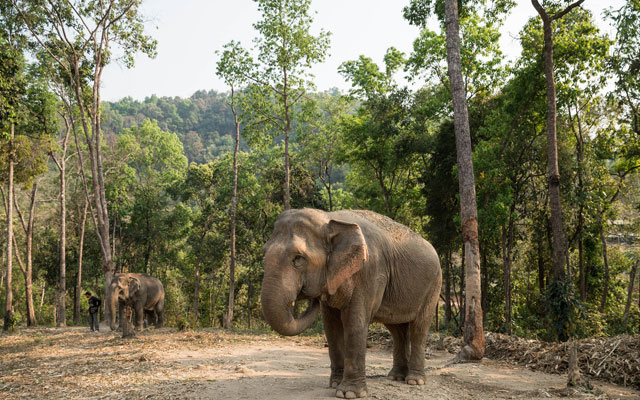
Marking a departure from the elephant trekking tours typically offered in northern Thailand, Akyra Manor Chiang Mai took to raising awareness of elephant conservation with its new Elephant Day Care Package, which involves a day trip to an elephant hospital operated by Friends of the Asian Elephant (FAE) for guests to develop a connection with these majestic creatures, and understand the medical and well-being treatments provided by FAE. This will be followed by a visit to Elephant Parade Land, where guests can visit an exhibition of decorated elephant statues in aid of elephant conservation.

Making travel accessible for all  
Kudos to Amadeus for taking the lead in pushing for awareness of accessible travel in its white paper that was launched in June. It is estimated that 15 per cent of the world population has some accessibility needs, and this is not restricted to those with mobility or disability issues, pointed out vice president industry affairs, Svend Leirvaag. It could simply be a condition or temporary needs, such as a two-metre-tall person who requires more legroom on a flight.

The travel technology giant hopes to advocate to the industry the commercial opportunities and social responsibilities that companies when it comes to inclusive travel, while encouraging suppliers to implement measures and standardisation in catering to this market segment, Amadeus executives told TTG Asia during an interview on the sidelines of the WTTC Global Summit in Bangkok.


DISLIKES

Dragging incident on United
Need we say more about the dragging incident on United Airlines that sparked global outrage? A doctor was violently dragged out of his seat on an overbooked flight from Chicago, with the entire process caught on video. But the troubles didn’t end there for CEO Oscar Munoz, who, already embattled with a public image crisis, at press time has to grapple with the death of a valuable giant rabbit named Simon after a long flight on the airline from London. Looks like misfortunes never come singly.

Fifth UK terror incident this year
Over 19 commuters were hospitalised after an explosion on the District line near London’s south-west Parsons Green station, the fifth in a string of terror-related incidents in the UK including the Westminster attack. Following the incident, which was claimed by the Islamic State, the UK terror threat level was raised to ‘critical’ then lowered back to ‘severe’.

Gulf-Qatar row weighs on air travel
Several Arab countries, including Saudi Arabia, the UAE, Egypt and Bahrain, as well as Yemen, Libya’s eastern-based government, and the Maldives in June announced the breaking of diplomatic ties with Qatar, accusing the tiny Gulf state of supporting extremism in the region.

The row affected air travel in the region, as Qatar Airways had suspended all flights to Saudi Arabia, the UAE, Bahrain and Egypt while Saudi Arabia, the UAE and Bahrain had closed all transport links by land, sea and air with the Qatari peninsula. Other airlines in the affected countries – including Emirates, Etihad Airways, Bahrain’s Gulf Air, flydubai and Air Arabia – also cancelled flights to and from Doha.

India feels pinch from cash crunch
To curb the flow of black money in the Indian economy, the Indian government on November 8, 2016, declared all currency in denominations of Rs500 (US$7.40) and Rs1,000 illegal tender, resulting in long queues outside banks and ATMs.
The Indian trade feared that business would be considerably affected if the cash crunch was not resolved soon, as foreign tour operators and tourists had raised concerns over the availability of Indian currency at ATMs and across hotel counters. As well, a number of historical monuments managed by Archaeological Survey of India accepted cash as the only mode of payment, which presented a challenge for tour operators when they booked for groups.

Imperative to protect struggling national carrier: Sri Lanka

0
Aviation minister says open skies freedom is important, but so is protecting national carrier

Sri Lanka is supportive of an open skies policy, but not at the expense of its struggling national carrier, the country’s aviation minister Nimal Siripala De Silva said at the ICAO international conference in Colombo on Monday.

De Silva explained that governments are compelled to step in to protect and assist the national carrier, and that this necessary intervention prevents them from fully freeing the air transport sector.

Aviation minister says open skies freedom is important, but so is protecting national carrier

Another government official, Civil Aviation Authority director general H.M.C. Nimalsiri also backed the controlled policy saying protection of the national carrier was imperative, particularly since it held tourism together when many foreign carriers exited from Sri Lanka during the 30-year war.

He said Sri Lanka plans to allow the third and fourth freedoms of the open skies policy, but for the moment will restrict fifth freedom – or the right to fly between two foreign countries on a flight originating or ending in one’s own country.

Among those pushing for deregulation, Udaya Nanayakkara, chairman of the state-owned Sri Lanka Promotion Bureau said there was a need to liberalise air services to attract more airlines which would automatically generate more tourist traffic.

He cited Dubai’s example of adopting an open skies policy prior to even establishing its own national carrier, and how that not only transformed the desert nation into a thriving tourism and business travel destination but also created one of the world most powerful airlines.

The national carrier has been suffering losses amounting to millions of dollars largely due to carry-forward debts under the tenure of the 2010-2015 government. It has cut vital routes to Europe, cancelled new aircraft agreements with Airbus and focusing more on Asia. Over the past 12 to 18 months the airline has been seeking a new management partner without any success.

Travelport launches PCI DSS Certification tool for agents

0
Helping agents of different sizes attain compliance

After travel players like Hong Kong’s WWPKG were recently targeted in hacking incidents, Travelport has announced the launch of an online PCI DSS (Payment Card Industry Data Security Standard) compliance referral service to help its customers businesses achieve PCI DSS certification.

The travel commerce company pointed out that fraud and hacking in the industry is on the rise, making it critical for companies to maintain a set of security standards when dealing with customers’ credit card information.

Helping agents of different sizes attain compliance

Furthermore, from March 2018, any IATA agent that accepts card transactions against its own merchant agreement or issues BSP card transactions is required to provide proof of PCI DSS compliance to IATA.

Travelport has hence partnered SecurityMetrics, a provider of data security and compliance for organisations worldwide, to offer the PCI DSS Certification programme.

As part of the programme, a multi-language tool will guide agency customers through a self-assessment process and enable them to achieve PCI DSS compliance, a requirement by the card industry for every business that touches card payments.

Level three and four category merchants – those processing fewer than one million card transactions annually – can already start their PCI DSS assessment online at http://info.securitymetrics.com/travelport-pcidss-compliance.

Enterprise level agents – level one and two merchants processing more than one million card transactions per brand scheme annually – can also benefit from more comprehensive assistance and creation of a bespoke compliance programme.

Further information on Travelport’s PCI DSS Certification Program can be found here: www.travelport.com/pcidsscompliance.

Work-for-hotel stay programme launched in Singapore

0
15 participating hotels in the city

Tertiary students and Singaporean jobseekers will soon be able to get work experience in a hotel in exchange for a staycation, the outcome of a collaboration between Singapore Tourism Board (STB), Singapore Hotel Association (SHA), and 15 hotels in the city.

The 10-day Work for a Stay programme is part of efforts to help the industry build a strong pipeline of talent and a future-ready workforce, while providing quality career opportunities for Singaporeans and Permanent Residents, according to an STB statement.

15 participating hotels in the city

Participants will be exposed to the day-to-day work operations and culture of the hotel industry in a way that allows them to better understand the job scope and skills required in the industry.

Their participation will span across functions such as housekeeping, front office, banquet, among others. Tasks can range from attending to guests’ ad-hoc requests to making special arrangements and preparations for events.

Additionally, participants will receive a training allowance and a one-night hotel stay upon completing the programme. Meals and uniforms will also be provided.

“We also felt that the concept of working for a staycation would appeal more to millennials, who treasure unique experiences,” added Ong Huey Hong, director of Hotels and Sector Manpower, STB.

STB’s Work for a Stay programme is supported by Workforce Singapore (WSG)’s Work Trial. Lynn Ng, group director of WSG’s Careers Connect Group stated the programme could help address missed matches in the labour market and connect jobseekers to hiring employers in the hospitality industry.

The Work for a Stay programme is also part of the Hotel Careers Campaign, which was launched in July 2017 by STB, SHA, Food, Drinks and Allied Workers Union and the hotel industry.

The programme runs from December 11, 2017 to March 30, 2018; and applications close on February 28, 2018. Interested applicants can visit http://workforahotel.sg/ to apply and find out more, or contact WSG’s Careers Connect.

Sustainability from an early adopter perspective

0

How did CSR come to be a part of the Banyan Tree ethos?
When we got involved in CSR in the 1980s, it wasn’t the buzzword it is today. It started two ways – one was my wife’s and my own academic inclinations. She did development sociology and I did economic development. So we were concerned about issues of poverty, rural sociology (and the like).

But even then it was just a general interest. What was visceral was me buying a piece of land in Phuket on impulse. It was a disused tin mine totally polluted by chemicals which I didn’t know about. It was while trying to rehabilitate that wasteland, which is now Laguna Phuket, that I learnt viscerally how tourism and development is a double-edged sword.

I’ve also subsequently seen it with other projects where people take a piece of forested land by the sea, clear the land and have the soil wash into the ocean and destroy the corals. Worse still you see social dislocation because you get these expensive luxury hotels charging for one room night what a villager would earn in one month.

But tourism can also uplift people in places where the areas for employment are small. So you get that sense of responsibility and realise CSR is no longer a nice-to-have, it has become a key moral value and lends purpose to what we do. We don’t have to bang our chest and say, ‘hey look at us’, because the history of Banyan Tree is all about that.

Speaking of which, so many are shouting about sustainability today. What’s your take?

If being CSR-progressive was a competitive advantage and we relied on it to be so then we would’ve lost a lot of it because everybody is doing it now. But I don’t see it that way. People should compete on price, product quality and innovation, but not on being more socially responsible. It’s a matter of the more the merrier.

One of the biggest problems today is (stockbrokers, activists, etc) saying companies focus so much on CSR when they should focus on making profits for shareholders. But this is the old paradigm.

By changing one word – from shareholders to stakeholders – you can change the entire shape of the business. With this small change we can be talking about maximising returns for the five key stakeholders – employees, customers, suppliers, the general community as well as shareholders.

It’s a good starting point for every institution to have that important discussion as to who their stakeholders are and what relative importance to ascribe to each. Hopefully we’ll have a new generation of business people who would (champion this business mindset).

What are some, maybe unexpected, payoffs of starting the way you did that are just beginning to materialise?

I think the main payoff is an intangible one. And that is – with all things being equal – I’ve discovered consumers like to express their values through their purchasing power. If you believe in a particular cause and a company does great things for it, you’re likely going to buy (from them over a company that doesn’t). But that’s not to say you would be willing to accept sub-standard or over-expensive product simply because it supports your causes.

We pay out all our service charges even in China, where every hotel company has succumbed to the owners and gives service charge back to them. We do this because we believe that’s the social contract between us and the associates. And we get it back through better performance.

More people are recognising in a world that’s increasingly cynical about companies that those that do adhere to certain values tend to be longer lasting, and I hope that’s true because we’ll continue doing what we’re doing.

How do these values continue being a part of the company today?

(Referencing shareholder vs stakeholder decision-making) associates (as stakeholders) still rank higher for us than some other companies, because being a service company we have to ensure associates are highly motivated so they can deliver good service.

For companies in city environments (where the overall populace is affluent), community may not rate so high. But because we are in locations where people are usually not so well-off, for us the importance of local community would generally rank higher than for other (companies).

But of course our hotel in Shanghai, for example, would rank community lower than one in Tibet.

Speaking of China, a ranking of most popular hotels for Chinese high net worth individuals ranked Banyan Tree fourth, really remarkable when up against much bigger hotel chains. What’s behind this success in China?

We opened in Lijiang over 10 years ago and caught a wave. Prior to this all the brands in China were Western, and ideas of luxury were all Greco-Roman, Spanish revival, copies (of what you’d see) in the West. We came in right when the Chinese educated consumers were starting to have some sense of cultural pride. We intentionally (stayed away from) big cities where the brand would get lost, so we chose Lijiang and said let’s stake our claim here, create a beautiful product here and hopefully stand up above the noise.

It’s amazing how Chinese architects have come up so quickly, now our design is a dime a dozen – but when we first did it it was a breath of fresh air. I recall party secretaries in local counties would be rushing here to have a look because they wanted to attract resorts to the location.

What then does a partner like Vanke bring to the table?

They, like AccorHotels, would bring the major projects in big cities.

Normally we wouldn’t get in there, but Accor has so many owner-partners who are in all the big cities who already have got ibis, Mercure, Novotel, etc, and would now would like to do a great city hotel or urban resort with over 200 keys. Accor can’t give them a brand – the highest they got is Pullman, they bought over Fairmont but that’s for 500-600 keys, they bought over Raffles but that’s for heritage hotels. That’s when we are brought to the table.

Any new products can we look forward to?

There’s quite a lot in the pipeline with AccorHotels, and they will be announced all in a row pretty shortly. We are in the midst of intensive negotiations.

Especially with Accor and Vanke we’ll be doing more mainstream hotels that you’d associate with maybe a Four Seasons, maybe 250-key city hotels.

We’ll also (continue doing) smaller and more edgy hotels, bearing some aspect of the Banyan Tree brand. It has to be profitable but will focus not so much on dollar contribution to the company, but how it contributes to the brand too.

The Anam’s artist home tours to paint guests a new picture of Vietnam

0
Artist Mai Lộc known for black-and-white photos of life in Vietnam

The Anam, which opened in Vietnam in late April, has launched new tours that shepherd guests into the galleries and homes of local artists.

As part of the seven-hour tour, art lovers are welcomed into the homes and galleries of acclaimed local artists otherwise inaccessible to tourists, and given a new perspective of Vietnam and its people through their art ranging from oil paintings and metalwork to sculpture and photography.

Tha Anam said one of the tour’s artists, Mai Lộc, epitomises Vietnam’s rapid transformation. With his photography journey starting with a camera gifted to him by a Norwegian couple he met as a miner, he had gone on to become a sought-after photographer whose images of Vietnam and its people have been exhibited globally.

The Water Flower by Mai Lộc, a photographer known for black-and-white photos of life in Vietnam

Other artists include painters Bùi Văn Quang; Trần Thị Bảo Trân and her husband Lưu Thành Quả; Nguyễn Hữu Bài; Ngô Đăng Hiệp; and Lê Huỳnh; as well as metalwork artist Bùi Trung Chínhand sculptor Đoàn Xuân Hùng.

To create the Nha Trang Art Tour providing “insider” knowledge about the destination, The Anam’s general manager Herbert Laubichler-Pichler enlisted Nguyễn Hồng Vân, who opened Nha Trang’s first art gallery called The Rainbow Gallery.

“Our part of Vietnam is famous for its beaches, its islands, its Cham towers and its seafood. It should be famous for its art, and we hope to help make that happen,” Laubichler-Pichler said.

The Nha Trang Art Tour is offered daily from 13.30 from The Anam and includes transfers, visits to the studios and homes with a guide and the ensuing dinner. It is priced from US$77 per person in a group of six. More information can be found at www.theanam.com.

In addition, from December 26-29, the resort will stage its inaugural ‘Garden and Sun Artist in Residence’. Artists will create works and chat with guests amid the resort’s gardens before the resulting artworks are displayed on December 29, 17.00 to 19.00 at Au Lac Ballroom with complimentary drinks and canapes.

Andaz Singapore

0

Location
Andaz Singapore’s design is the brainchild of interior architect André Fu (of The Upper House in Hong Kong), who was inspired by the vibrant alleys and shophouse atmosphere in the neighbouring districts of Kampong Glam, Little India, and Bras Basah Bugis. Beyond the design, one might find the hotel’s proximity to local haunts and cultural attractions a big sell point.

Room
There are 342 rooms and suites across four configurations, and they are all located from levels 26 to 37 of the DUO mixed-used development.

King suite

I stayed in the spacious 76m2 Andaz Suite King which had a bedroom and separate living room. The king-sized bed was the best seat in the house, as the bedroom was flooded with natural light – thanks to the floor-to-ceiling windows – and opened out to panoramic views of the harbour and city skyline.

Both spaces were painted with warm russet and mustard tones, and each came with faux shophouse doors and furnished with its own 55-inch flatscreen TV. The living room was where the plush grey sofa, minibar and Nespresso coffeemaker could be found. I was delighted to know that all in-house guests could enjoy all non-alcoholic drinks and snacks in the minibar!

Meanwhile, the bathroom had double sinks, a bathtub with a view, and a rainshower. There were also two separate toilets, as well as a massive closet – which I thought was generous but unnecessary.

If I were a weary traveller, it would be an absolute joy to return to this calm and comfy space I were to call home for a few days. I loved how the blueprint of a shophouse is cleverly incorporated within the luxurious suite, where the fluid space seemed to have no dead end. My only gripe was that the complimentary Wi-Fi was spotty in certain parts of the suite.

As a staycationer, the suite offered a respite from the humid weather and the hustle and bustle of the city. It was extremely difficult to leave such a relaxed space.

At point of writing, Andaz Singapore is only 70 per cent open, as the Large Suites and Presidential Suite were not yet ready.

F&B
There are four F&B venues: rooftop bar Mr Stork; steakhouse 665°F (opening December); Pandan cake and sandwich shop; and all-day dining venue Alley on 25. Alley on 25 is actually a diverse collection of five dining concepts split according to their different cooking methods – Auntie’s Wok and Steam, Icehaus, Plancha’Lah!, The Green Oven – and a bar.

It is worth noting that Andaz Singapore is so “hyper-local”, so much so that coffee and tea breaks for all meetings and events serve up renowned Swiss rolls from the nearby Rich and Good Cake Shop.

Other local companies Andaz Singapore works with are local label In Good Company for staff uniforms, Tiong Bahru Bakery for freshly-baked bread, and Neh Neh Pop for their signature chendol ice creams.

Facilities
There is an infinity pool on the 25th floor, which proffers a view of the sprawling cityscape below. It is open from 06.00 to 22.00.

Also on the 25th floor is the Sunroom, which essentially acts like a club room, providing complimentary water, tea, coffee and snacks to all in-house guests. From 16.00 to 18.00 daily, guests can also imbibe in complimentary red and white wine, or taste the Andaz Pale Ale crafted by local brewery Red Dot Microbrewery.

For gym rats, there is also a sizeable fitness centre decked out with cardio machines and free weights on the 38th floor; it is open 24 hours.

Andaz Singapore’s event and meetings portfolio include The Glasshouse ballroom, Garden Studio, and two smaller meeting rooms.

The Glasshouse boasts a 6.5m-high ceiling and floor-to-ceiling windows on three sides, allowing for an abundance of natural daylight. It comes with its own foyer and is the hotel’s main function venue which takes up to 320 pax banquet-style or 500 pax in a standing reception.

The second largest space is the Garden Studio, which comes with its own patio perfect for pre-dinner drinks or even a barbecue grill. This facility can take up to 120 pax banquet-style, or 220 for standing receptions.

Event planners who wish to book rooftop bar Mr Stork must also secure a back-up location downstairs in case of bad weather. Offering a bird’s-eye view of Singapore from all angles, Mr Stork can accommodate 200 pax cocktail-style and features high tables and tepees.

Service
Staff members I encountered were polite and helpful, and service was impeccable. The hotel is one of my most memorable stays to date.

Verdict
Absolutely delightful, and ranks highly as my favourite stay to date.

No. of rooms 342
Rates From S$370 (US$274)
Contact details
Tel: (65) 6408-1234
Website: https://singapore.andaz.hyatt.com/en/hotel/home.html