Best Western Hotels & Resorts has signed an MoU for a new upscale beach resort in Dong Hoi, the capital of Vietnam’s Quang Binh province, as it continues expanding to new parts of the country.
Ron Pohl, senior vice president and COO for Best Western Hotels & Resorts, said: “The signing of this exceptional hotel marks the latest phase of our brand’s expansion to premier beach destinations in Vietnam, following the signings of upscale resorts in Cam Ranh, Vung Tau and Phu Quoc.”
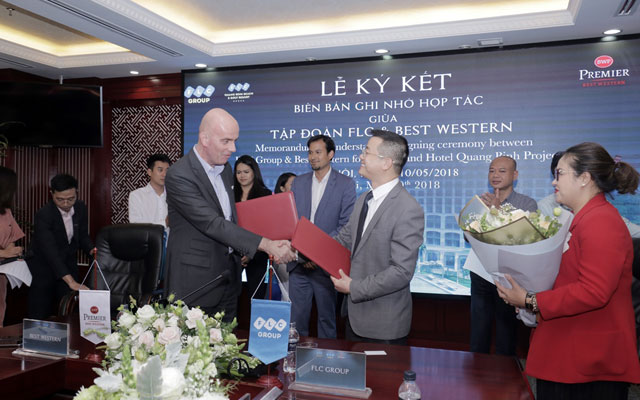
Best Western Hotels & Resorts’ Olivier Berrivin, and FLC Quang Binh One Member’s Tran Quang Huy at the MoU signing ceremony
“Best Western Premier Quang Binh is the latest in a series of major upscale properties for Best Western in Vietnam, which we have identified as a priority market… we are now bringing international hospitality to exciting new parts of the country,” added Olivier Berrivin, Best Western’s managing director of international operations – Asia.
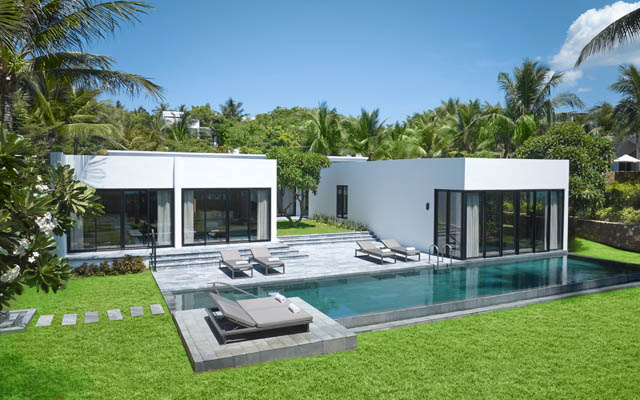
Scheduled to open in 2020, Best Western Premier Quang Binh will overlook the East Sea and feature will feature 501 rooms and suites, all equipped with bathrooms, workspaces and complimentary Wi-Fi.
Guests in the executive rooms and suites will be offered unlimited access to a beachfront lounge, where they can enjoy a series of exclusive services and privileges.
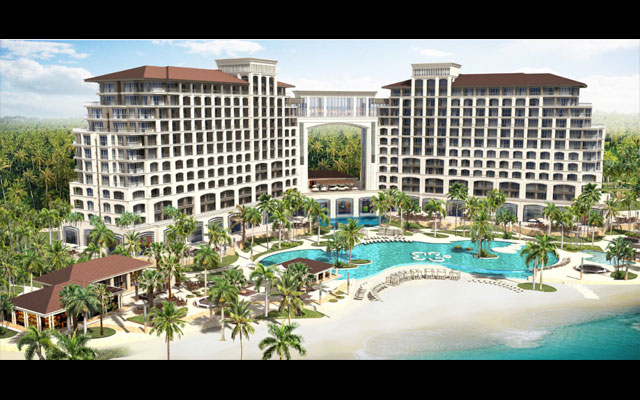
A rendering of Best Western Premier Quang Binh
Hotel facilities include a restaurant, outdoor infinity pools, a spa, children’s playground and gym. A business centre and meeting rooms will also be available for special events and corporate gatherings.
Developed by FLC Quang Binh One Member, Best Western Premier Quang Binh will feature two wings connected by a glass sky bridge. The hotel will form part of a major new development by FLC, which also includes a golf course, premium retail complex, restaurants, bars and a marina.
Dong Hoi is the gateway to Phong Nha-Ke Bang National Park, a UNESCO World Heritage-listed site that houses Son Doong, the world’s largest cave.
A new gateway to Phang Nga in Thailand is expected to open the destination up to a larger mainstream market, says C9 Hotelworks’ managing director, Bill Barnett.
“Without a doubt the biggest game changer going forward is the plan for a 60 billion baht (US$1.9 billion) airport in Khok Kloi Phang Nga. If it materialises, the travel time to the Khao Lak tourism area will be reduced to approximately one hour and in effect create a far broader mainstream tourism market,” Barnett remarked in the Khao Lak & Phang Nga Hotel Market Update June 2018.
In 2017, visitor arrivals to Phang Nga totalled 4.6 million
The destination is already seeing strong arrivals growth. According to C9, visitor arrivals in 2017 totalled about 4.6 million, with a five-year compound annual growth rate of 24 per cent, due to increasing airlift at the gateway Phuket International Airport.
And while Western European visitors are typically the main market feeder for Khao Lak, accounting for 65 per cent of total international guests, there has been increasing demand in the MICE segment, comprising weddings from Europe, India, and Australia together with incentives from Singapore and Hong Kong.
Looking at hotel supply, C9 reported a rebound from the slight drop in 2016, with 2017 seeing a six per cent increase in inventory to 12,623 keys.
While a majority of the existing hotels are concentrated in the Khao Lak centre area which includes Khuk Kak Beach (29 per cent), Nang Thong Beach (17 per cent) and Bang Niang Beach (11 per cent), locations have been expanded to other beaches such as Pak Weep Beach (10 per cent).
In addition, more developments are being pushed to Bangsak and the pipeline footprint is continuing to grow northwards, C9 observed.
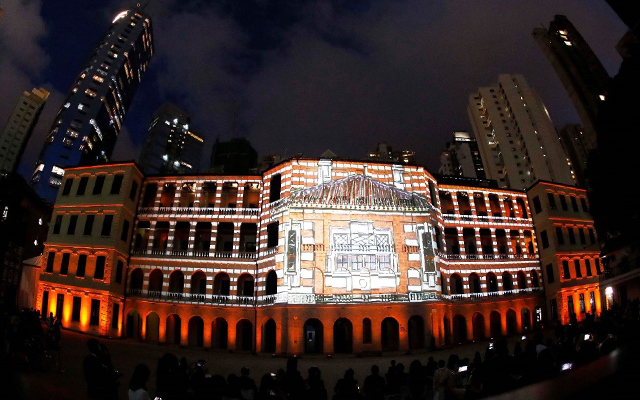
Hong Kong Jockey Club had spent 10 years pursuing the 'heritage-led conservation plan'
Hong Kong Jockey Club had spent 10 years pursuing the ‘heritage-led conservation plan’
A former police headquarters compound in Hong Kong has been transformed into a world-class heritage and arts hub, Tai Kwun, in what’s said to be the largest heritage revitalisation project ever undertaken in the city.
Led by the Hong Kong Jockey Club in partnership with the Hong Kong government, the revitalisation involved the conservation of the heritage buildings and the addition of two new buildings, JC Contemporary, a gallery building with a contemporary art space, and JC Cube, an auditorium building for performing arts, film screenings and educational events.
Comprising 16 historic buildings and outdoor spaces on a 13,600m2 site in the business heart of Hong Kong, Tai Kwun is home to three declared monuments, the former Central Police Station, Central Magistracy and Victoria Prison. The local colloquial name used by police officers and the public alike to refer to the city’s Central Police Station, have borne witness to over 170 years of Hong Kong history.
Kristin Colvile has been named CEO of SkyTeam, taking over from Perry Cantarutti who will be returning to Delta Air Lines to take up the role of senior vice president of alliances.
In her new position, Colvile has been tasked with building on the significant investment that SkyTeam has made into developing industry-leading technology. She will continue to focus on maximising the tools to enhance seamlessness for all members of the global airline alliance and their customers.
She has over 25 years’ experience in the industry and will be joining SkyTeam from Delta, where she has held leadership roles in numerous divisions of Delta Air Lines and Northwest Airlines since joining the company in 1993. Most recently, Kristin led Delta’s cargo enterprise.
Meanwhile, the IATA has announced that Qatar Airways Group chief executive, Akbar Al Baker, has assumed his duties as chairman of the IATA Board of Governors (BoG).
His term is effective one year from the conclusion of the 74th IATA Annual General Meeting in Sydney. Having served on the BoG since 2012, Akbar is the 77th chair and the first CEO from Qatar Airways to hold the position. He succeeds Goh Choon Phong, CEO of Singapore Airlines.
Carsten Spohr, chairman and CEO of Lufthansa, will serve as chairman of the BoG from June 2019, following Akbar’s term.
Service includes Wi-Fi connectivity for to up to 64 tourists via their guide's portable station, a directional finder device to locate specific tour members, and more
Singapore technological company Drop Positioning Systems has pioneered a connectivity service specially tailored to tour providers, with takers including JTB and local travel service provider Star Holiday Mart.
The Smart Tour Operator System is a mobile system for tour guides that aims to resolve connection issues faced by groups of tourists, which was one of the pain points expressed by tour operators, Drop’s director Laurence Lee told TTG Asia.
Service includes Wi-Fi connectivity for to up to 64 tourists via their guide’s portable station, a directional finder device to locate specific tour members, and more
The system has four capabilities. Tourists will be able to connect to a Wi-Fi network created by a Portable Base Station provided to the tour guide. Unlike the typical 4G Wi-Fi portable modem, which can only connect up to 10 devices at the same time, the Base Station connects as many as 64 tourists.
Secondly, with compact tourist paging devices handed out to each tourist, the tour guide can track their locations with a real-time map on the tour guide’s portable device. This is enabled by in-built long-range radio (LoRa), and is not dependent on external networks.
Tour guides can also use a directional finder device to locate specific tour members indoors without relying on global positioning systems, which are often less effective indoors.
Lastly, the long-range LoRa also enables the guide to broadcast messages to each tour member within an urban range of two kilometres and non-urban range of eight kilometres. This technology does not rely on cellular signals or Wi-Fi, ensuring tourists remain contactable even in remote areas.
“The industry was sorely lacking in emergency communication solutions – a way around the incessant Wi-Fi requests and to communicate with tour participants when there were no local data communications – (and) even the customisation of an all-encompassing GPS map interface was not available. These were all the main gaps we felt we could fill,” shared Lee.
Drop will be adopted by Star Holiday Mart, and is currently in talks with other tourism players.
Lee revealed: “Most of the travel industry suffers from a huge inertial pull to stay steeped in their traditional ways. Most are not ready to push forth with technology. Price is also a factor. The challenge to convince is very real.
He added: “I sincerely hope our solution can act as a catalyst for tour operators to implement more tech into their business models, because traditionalism would alienate them from the younger tech-savvy generation, who definitely demand a lot more tech-relevant enhancements.”
Drop started out in the hotel industry with innovations in manpower savings and boosting workflow efficiency. Its hospitality products, including Smart Luggage Tracking and Automatic Inventory Management, were awarded grants by the Singapore Tourism Board and will be piloted in eight hotels.
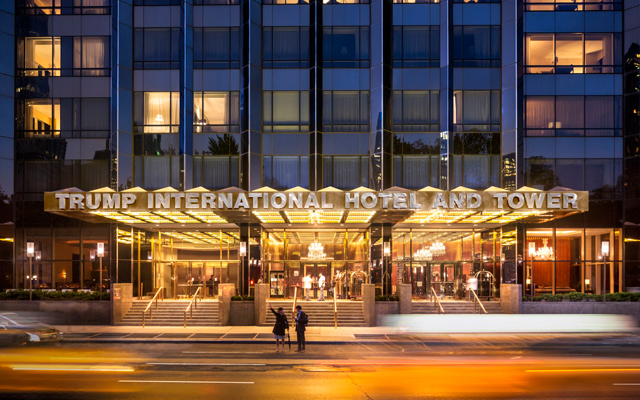
Business events and incentive groups, Asian travellers are among the segments growing for Trump Hotels
Trump’s presidency may have put Trump Hotels’ overseas expansion on hold, but the wheels for business growth are well in motion.
The group is currently readying for its Asia debut with two openings in Indonesia in the coming months, and there are plans afoot to target more of the business events and incentive segments.
“About four years ago, the goal was to have 30 Trump hotels (up from the current 11) by 2020. But with Trump’s presidency, the choice was made to not do any more developments outside the US to make sure there is no conflict of interest,” Andy Conklin, vice president of sales at Trump Hotels, told TTG Asia during the recent ILTM Asia Pacific.
Business events and incentive groups, Asian travellers are among the segments growing for Trump Hotels
“If a Trump hotel opens in Shanghai for example, people will wonder if it is for some (non-business) reason. The decision was a sacrifice, but also a safe play.”
Against this backdrop, several segments are coming into greater focus as growth drivers – Asian travellers, business event and incentive groups, as well as three- and four-star tiers with Trump Hotels planning to launch two new brands, American Idea and Scion.
“All of Asia has grown in the last two years. We first saw big growth on a small number, and now (there is) big growth on a much bigger number,” Conklin observed.
Deals for Trump Hotels’ first two Asian properties, signed before Trump’s presidency and expected to materialise soon in Indonesia’s Lido and Bali, are hence seen as milestones in the group’s strategy to build brand recognition among Asian travellers and attract them to its hotels around the world, said Conklin.
Following the announcement of a resort and residential development overlooking the south-west coast of Bali, the group has announced another partnership with Indonesia’s MNC Group, a rebrand of the existing Lido Lakes, for a property 65km south of Jakarta.
MNC Group president and CEO Bapak Hary Tanoesoedibjo shared in a press statement: “The area will be a 3,000ha integrated lifestyle resort destination, heralded by the completion of the Bogor-Sukabumi toll road – also developed by MNC Group – which will provide guests an opportunity to escape to this new destination.”
Trump Hotels will be involved in phase one of the 700ha Lido development which will include a six-star luxury resort, 18-hole Ernie Els championship golf course, Lifestyle Country Club, spa as well as a high-end residential offering including luxury villas and condominiums.
Business events and incentive groups make up another key growth segment, as Conklin told TTG Asia that “as a brand we are evolving more into a MICE and groups brand (compared to) four years ago”.
Conklin said recent developments, including the ones in Indonesia, are reflecting that ambition. Trump International Hotel Waikiki, the Trump hotel that traditionally sees the largest number of Asian guests, has just one meeting room, and Trump hotels in Las Vegas and New York are also more leisure-focused. In contrast, the group’s more recent openings have gone big on corporate-friendly facilities.
Conklin elaborated: “We spent US$250 million on four golf courses in Miami, where there’s over 1.1ha of meeting space. Our conversion project in Washington DC (only 1.5 years old) features 3,530m2 of meeting space, and the largest ballroom in the luxury set in DC. Our latest hotel, the year-old Trump International Hotel & Tower, Vancouver, is a small hotel with just 147 rooms, yet features 1,394m2 of meeting space.”
To drive interest, the group is planning to enhance its Trump Card programme to extend rewards beyond “transient guests” to individuals travelling in groups, be it for leisure or business. There are also plans to roll out planner privileges, which incentivises planners with free stays at participating hotels.
Marriott International has announced its vision for a transformed Sheraton Hotels and Resorts, with 25 per cent of Sheraton hotels worldwide having committed to renovations totalling an estimated US$500 million.
The company, which introduced its new Sheraton guestroom late last year, is showcasing its vision for Sheraton’s public spaces at the NYU International Hospitality Industry Investment Conference in New York.
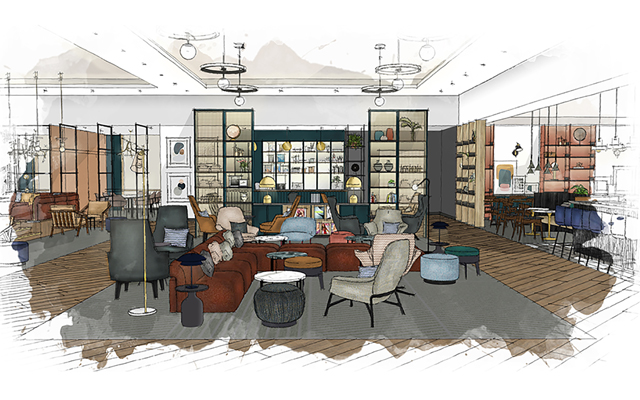
Sketch of the brand’s design foundation
Sheraton is the third largest brand in the Marriott portfolio, and the largest outside of North America in terms of room count.
“From the moment we closed the Starwood merger in late 2016, the revitalisation of Sheraton has been a top priority for our company,” said Arne Sorenson, president and CEO of Marriott International.
Reverting to its roots as the gathering place for locals and guests, Sheraton’s strategy will include collaborative venues, technology enabled designs, and a host who helps deliver an experience that is exclusive to Sheraton.
“We wanted to build on Sheraton’s legacy of sitting at the heart of communities across the globe, but also create a differentiated positioning and compelling proposition for our owners,” added Sorenson.
“This is the first time in years that the brand has been above competitive benchmark in both rate and occupancy,” said Tina Edmundson, global brand officer, Marriott International. “We have improved brand standards, increased group bookings, and ramped up our business engine over the last year as a first step in a multi-phase, multi-year plan, leveraging our experience in revitalising lodging brands.”
Since joining Marriott International as part of the acquisition of Starwood Hotels and Resorts in September 2016, Sheraton has exited 6,000 rooms with another 2,000 expected to depart by the end of the year. During the same period, 5,000 rooms have been signed to the portfolio.
According to Marriott, intent to recommend for the brand has already increased two points year-over-year and market share has grown for the first time in years.
Sheraton’s portfolio currently consists of nearly 450 open hotels with 80 additional projects in the pipeline in 72 countries and territories. By 2020, the brand’s footprint is expected to expand to 90 countries.
IATA has called for governments to facilitate the growth of global connectivity by avoiding creeping re-regulation, maintaining the integrity of global standards and addressing a capacity crisis.
The call came in the IATA Director General’s Report on the Air Transport Industry at the 74th IATA Annual General Meeting and World Air Transport Summit in Sydney.
“Smarter regulation needs to counter the trend of creeping re-regulation. Global standards must be maintained by the states that agreed them. And we need to find efficient solutions to the looming capacity crisis,” summarised Alexandre de Juniac, IATA’s director general and CEO.
IATA urging governments to defend global standards
A creeping trend of re-regulation puts the gains of deregulation – which began in 1978 and ignited the spread of air transport’s benefits – at risk. Citing regulatory actions from around the world, de Juniac noted that regulatory over-reach now includes attempts to prescriptively regulate passenger compensation, seat assignments, the ticket options that can be offered to consumers and prices charged for various ancillary services.
“Regulations must add value. In assessing that, regulators must recognise the power of competition and social media to safeguard consumer interests. Governments should not distort market effectiveness with regulations that second-guess what consumers really want,” said de Juniac.
This is the spirit of IATA’s “smarter regulation” campaign which asks governments to align with global standards, take into account industry input and analyse the costs of regulation against the benefits.
Calling for a “vigorous defence of global standards”, IATA provided examples of how standards have been sidelined, including India’s taxation of international tickets in contravention of ICAO resolutions, and states planning new environment taxes even as the ICAO-brokered Carbon Offsetting and Reduction Scheme for International Aviation (CORSIA) is about to commence as the global market-based measure for managing emissions.
Moreover, IATA highlighted that the Montreal Convention 1999 still has not been universally ratified nearly two decades after it was drafted. Its modernisations apply in only 130 states. There is also not 100 per cent compliance with Chicago Convention Annex 13 requirements for complete accident investigations. Of the approximately 1,000 accidents over the last decade only about 300 accident investigations have been concluded with published reports.
In addition, Annex 17 of the Chicago Convention sets baseline security requirements, and yet ICAO audits reveal that only 28 per cent of states meet them. Moreover, 37 per cent of states fail on resolutions of security concerns.
IATA is also urging governments to find sustainable solutions to ensure the infrastructure needed to meet growing demand for connectivity.
“We are in a capacity crisis. And we don’t see the required airport infrastructure investment to solve it. Governments struggle to build quickly. With cash-strapped finances, many are looking to the private sector for solutions. But be cautious. Expecting privatisation to be the magic solution is a wrong assumption,” warned de Juniac.
The privatisation of airport infrastructure has not lived up to airline expectations, IATA argued. “Privatised airports are definitely more expensive. But there is little difference in efficiency or investment levels compared to airports in public hands,” said the IATA chief.
The results of airport privatisations run counter to the results of airline privatisation which saw the cost of travel drop dramatically. Airlines do not accept that privatising airports must lead to higher costs. “How can making the transport infrastructure more expensive – which means less competitive – be a legitimate public policy objective?” challenged de Juniac.
While IATA research did not reveal a one-size-fits-all solution to ensure sufficient, fit-for-purpose and affordable airport infrastructure, it did point towards positive experiences for consumers and airlines with variations of corporatisation.
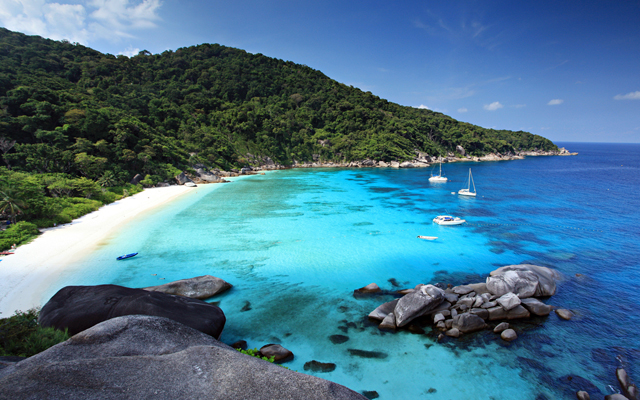
Similan Island not suitable for overnight stays due to lack of fresh water
Tourists will no longer be allowed to stay overnight on Similan Island in Thailand’s Phang Nga province, a move made to protect the marine resources in the area, the Bangkok Post reports.
The ban will kick in this October, when the island reopens to tourists after a rainy season closure beginning last month. Only day trips will be allowed on this island.
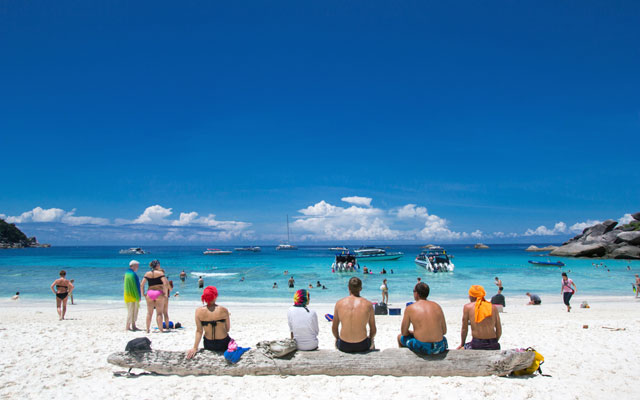
Tourists will only be allowed to visit the island on day-trips
According to the Bangkok Post article, the island is the only one of the Moo Koh Similan National Park’s nine islands that provides bungalows and camping grounds for visitors.
Most of these overnight stay facilities, which are operated by the state, have already been dismantled by the National Park Office of the National Park, Wildlife and Plant Conservation Department, department director Songtam Suksawang was quoted as saying by the Bangkok Post.
The article also reported that Songtam cited “concerns over the impact of wastewater from houses on the park’s environment” as a chief motivating factor behind the ban.
As more natural attractions come under strain from visitor influx, the Thai government has in recent months taken a more active approach to regulate numbers at popular islands in the south. Maya Bay is now temporarily closed for four months for rehabilitation.
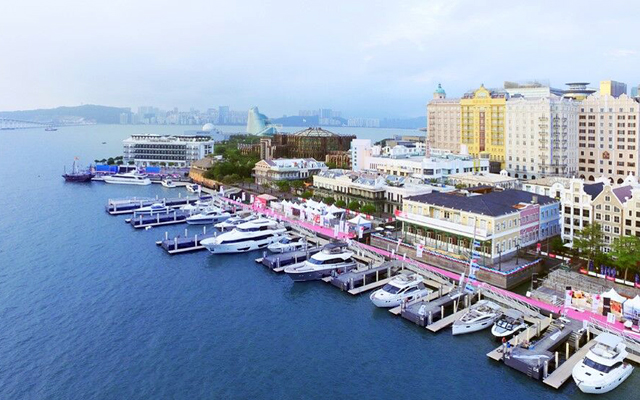
The congress takes place at the Macau Fisherman's Wharf this year
The Skål International Macau Club will host the 47th Skål Asia Area Congress under the theme of “gastronomy tourism” in Macau from June 21 to 24 this year.
Among the main highlights of the congress are the signing of an MoU between PATA and Skål International as well as talks by industry experts such as PATA CEO Mario Hardy, who will discuss “Setting the stage for Sustainable Tourism Development”, while Macao Government Tourist Office (MGTO) director Helena de Senna Fernandes will touch on “Macau, World Center of Tourism and Leisure” and Irene Lau “MICE in Macau”.
The congress takes place at the Macau Fisherman’s Wharf this year
As well, there will be a panel on tourism and gastronomy moderated by Cheng Wai Tong, deputy director of the MGTO. Speakers on the panel include Chattan Kunjara Na Ayudhya, deputy governor for policy and planning at Tourism Authority of Thailand; Fang Li, responsible for UNESCO Creative City of Gastronomy international cooperation of Shunde and deputy director of China-Europe International Hospitality School & Hotel Management Department of Shunde Polytechnic University.
The venue is located in a complex in Fisherman’s Wharf, boasting the largest and most flexible convention space in Macau Peninsula, and where the event’s official hotels Legend Palace and Harbourview are located.
This year’s gastronomy-themed congress also sees attention placed on the selection of menus and restaurants, with Vic’s Restaurant, Grand Coloane Hotel and MGM Cotai among the names featured.
This is the third time Macau has been chosen to host the event.