TTG Asia
Asia/Singapore Monday, 15th December 2025
Page 1484

Yangon heritage building reopens to public

0
Iconic building undergoing restoration, tours launched in the meantime

Tourists can now explore one of Myanmar’s most historical colonial buildings as Yangon’s iconic Secretariat opens to the public for the first time in decades.

Now high hopes are being pinned on the 120-year-old building becoming a major tourist draw to Yangon, with the launch of tours led by Asia Tours Myanmar while work gets underway on transforming the grounds into a cultural complex.

Iconic building undergoing restoration, tours launched in the meantime

Yangon Heritage Trust and Anawmar Art Group are in the midst of a restoration project to bring the building back to its former glory while preserving Yangon’s architectural heritage.

Slated for completion in 2019, the Secretariat will serve as a cultural complex, housing museums, galleries, event spaces, offices and a range of F&B outlets.

In the meantime, Asia Tours Myanmar has launched tours of the Secretariat, taking in the flagpole where the Myanmar flag was raised for the first time in 1948; and the Cenotaph and Martyrs’ room, where General Aung San was murdered. Tours will run four times a day, from Monday to Friday, and once on Saturdays.

Edwin Briels, general director of Khiri Myanmar, welcomed the move, claiming the Secretariat has the potential to become a major tourist attraction.

He added: “Apart from Shwedagon Pagoda, there are not many places to visit in Yangon that have such important historical and heritage significance.”

Said Briels: “I hope this leads to bigger opportunities for Yangon to offer a quality tourist site that can compete with the rest of South-east Asia.”

The Secretariat initially served as the centre of British administration during colonial times. It was also where Myanmar’s first independent government laws were drafted and where General Aung San and eight cabinet members were assassinated.

During the junta rule, military officials restricted public access and used the building as offices, until relocating to Nay Pyi Taw in 2005. Since then, the 6.47ha site has been left disused.

Indonesia pumps US$14.8m million into cross-border tourism promotion

0
About 250 cross the border separating Indonesia and Timor Leste everyday

To develop and promote cross-border tourism, the Indonesia Ministry of Tourism has set aside 200 billion rupiah (US$14.8 million) and prepared 214 events to be staged in 29 cross-border areas for 2018.

Speaking at the launch of the programme in Jakarta last Friday, Indonesia’s tourism minister, Arief Yahya, said: “In Indonesia, cross-border traffic is still small, at 20 per cent of total arrivals (or 3.2 million), of which, 90 per cent are to Riau Islands (Batam and Bintan particularly).”

In comparison, cross-border traffic makes up 93 per cent of total arrivals in the Netherlands, 65 per cent in Malaysia and 61 per cent in Singapore, according to Arief.

Indonesian border with Timor Leste

With the ministry targeting 3.6 million cross-border arrivals next year, Arief identified opportunities to grow cross-border traffic between Indonesia and countries such as Malaysia,Timor Leste, Singapore, Thailand, Vietnam, the Philippines, Australia, and Papua New Guinea.

While challenges such as the lack of facilities, infrastructure and lower purchasing power in many of the cross-border areas remain, Arief believed there are ways to get around these obstacles and create demand around the calendar of events the ministry is introducing.

Arief suggested, for example, to make products affordable; overcome the lack of accommodation with glamping facilities or caravans; and overcome the lack of Internet access by operating portable BTS.

He also reminded the audience, among whom were regency and district heads from cross-border areas, of the importance of millennials, who he said are eager to broadcast where they have been and what they have done on social media.

“I encourage the (regencies and districts) to create digital destinations, instagram-able destinations,” he said.

To stimulate the regents, he said: “I am budgeting another 100 billion rupiah (on top of the 200 billion rupiah for cross-border tourism) to support the regions which are into the development of digital destinations.”

Tours & activities sector grapples with context, not content

0

The tours & activities sector is grappling with not just content and distribution, but context, according to Douglas Quinby, senior vice president research, Phocuswright, in a presentation at a breakout session at Expedia Partners Conference 2017 in Las Vegas last week.

Quinby argued that it’s a lot harder for players in the sector, particular the online platforms, to know what to put in front of a customer in order to get his bookings, even if they already have a history with that customer.

Tours & activities segment a different ballgame than hotels

Unlike hotels, where guest preferences are finite – type of room, fitness centre use or not, etc – it is not easy to know what tours or activities a customer wants at any given time.

He or she might have booked a Broadway show and museum tickets on a romantic getaway in New York but his next visit to New York could be a business trip or a family trip with kids, where recommendations of Broadway shows or museums would be irrelevant. “So it’s not just content, but context. It’s so hard to make this work as efficiently as (segments such as air or hotels),” he said.

The sector is worth US$147 billion this year, a growth of nine per cent over last year, which is higher than global travel industry’s average of six per cent. This covers traveller spend on ground, events, attractions, activities and guide/host but not shopping and dining. “With due respect to hotels, tours & activities is why people travel – that’s why it’s travel’s next big thing,” he said.

It is at a stage where online travel booking in the US was in 2003. But Quinby believed it won’t take as long as 14 years for tours & activities to grow to the level online travel booking is today.

For that to happen, small and medium-sized players, which account for more than half of tours and activities suppliers, need to automate and make their inventory bookable, and use technology that will enable them to, say, base pricing on yardsticks such as historical and forecasted demand, not gut feel, he said.

Phocuswright’s survey shows the number of tour & activities suppliers globally that are using a third-party reservation system rose to 45 per cent last year, from just 14 per cent in 2011 when it first conducted the survey.

Meanwhile, distribution of tours & activities is becoming as complex and diverse as the supply landscape, he said. The field runs the gamut, from online sellers such as Viator and Klook; wholesalers/package tour operators such as TUI and Hotelbeds; attraction passes such as CityPass or Smart Destinations; points of sales such as concierge, hotels (not concierge), airlines, DMCs, local tour operators; and peer-to-peer platforms such as ToursbyLocals and myRealTrip.

Local tour operators are reselling other tour operators inventory, local attractions are selling tickets to bus operators, hotels are reselling tours (GTA, for example, has tied up with Bokun, using its content and technology to allow hotels to re-sell tours and activities). Marriott International invested in PlacePass in March this year, a meta-search platform for tours & activities, to give guests a complete travel experience, whether they are in planning mode or already staying at Marriott hotels. Quinby thought this is a good way out for chains to prevent a commoditisation of their loyalty programmes, as it opens up an array of experiences to members.

He believed with a lot of interest in the sector, including more investor funds (such as Klook’s US$60 million in Series C funding recently, led by Goldman Sachs), tours & activities will be professionalised as quickly as the alternative accommodations sector has.

Lodging’s final frontier – individual home owners providing supply – was “totally chaotic in 2008, the wild west of the lodging industry at the time”, he reminded. Then startups started to come in to help home owners professionalise.

“Hotels didn’t pay attention, or if they did, laugh it off. Now, 10 years later, I don’t think they are laughing. It (alternative accommodations) is now mainstream. How did that happen? Fundamentally, startups make them discoverable, beautiful to book…(and) bookable.”

Expedia tips voice as the biggest disrupter in travel

0
Okerstrom: Accelerating voice technology

Expedia Inc predicts that voice will trump over chatbots and artificial intelligence as the biggest disrupter in travel in the near term.

The company, which said it spends some US$1.3 billion a year on technology, demonstrated the use of its voice-activated hotel booking app, Alexa, at the Expedia Partner Conference last week, showing how a customer can use voice to search, book, pay for a hotel booking, check-in and access the room key from the home screen of the app.

Okerstrom: Accelerating voice technology

Arthur Chapin, Expedia’s senior vice president, global product & design, said the company is piloting the product in three properties in Denmark before rolling it out to partners in a couple of years.

Expedia’s CEO Mark Okerstrom, when asked by TTG Asia what will be the biggest disrupter and how he is prioritising technological innovations, said: “Voice is incredibly interesting.”

“The initial idea with mobile was that everyone’s going to take their desktop experience and put it on a mobile device, but we quickly learnt having a super computer (i.e. mobile) with you all the time changed things – 50-70 per cent of our mobile bookings came on the same day or next day and before we knew, we were able to target customers with offerings (such as) in-destination activities.

“We think about the type of queries made with voice, where people aren’t visually forced to take hotels, flights, etc – it’s much more free flowing. That’s the point where our multi-product capability becomes incredibly interesting, because (it resolves the questions) where can I go in three hours to get to a sunny place for my family, what’s available, what price, how can I bundle that together, can I book it?”

Okerstrom said a lot of the work that enables Expedia to take advantage voice, chatbots and artificial intelligence is largely in place now and the company is eager to accelerate the developments.

Expedia chairman Barry Diller, in a ‘fireside chat’ with Okerstrom on stage, also picked voice as the most disruptive technology in the next five years.

“It is possible that AI will be replacing so many functions but that’s going to take some time. Self-drive cars in the next few years? It’s crazy. I would be the last person driving that car. I really think that voice, near term, is going to have the most impact. You saw the demo – voice is going to change so many things, and it’s just at the beginning, but it’s adoption is going to be enormous and it’s going to affect a whole lot of things.”

Diller, when asked how he thinks future technology will affect livelihoods, said: “Like anything, there will be some (kind of creative) disruption. And out of that, is going to absolutely come all sorts of new things. Yes you can make these projections and say what will happen to the 800,000 truckers (truck drivers) when they don’t have to drive those trucks any longer? But I absolutely believe that there will be replacements in all sorts of areas that we can’t even conceive of. (Look at) the industrial revolution…we’ve been through these cycles so many times.”

There’s going to be disruption before there’s production. “It’s going to be disquieting for a lot of people depending on how old they are – there is the luck of timing in almost anything – but out of that will come such a bounty in so many areas,” he said.

Study shows social media obsession taking over travel

0

Nineteen per cent of travellers would rather travel with their smart phones than partners, with 15 per cent of men admitting to using dating apps out of town, among the findings of Hotels.com‘s Mobile Travel Tracker study.

Surveying 9,000 respondents across 30 countries, the Mobile Travel Tracker study highlighted a trend Hotels.com terms “travel bragging”, which has seen many eager to trade travel brags for ‘likes’ .

Travellers “brag” most with food snaps

The average traveller spends 62 minutes a day on social media on holiday, with Facebook (70 per cent) and Instagram (49 per cent) being the social channels of choice for travel bragging to friends at home.

When it comes to what travellers are bragging about on their trips, food snaps (57 per cent) come in tops, followed by photos of landmarks (56 per cent).

The study also revealed that travellers get more anxious when their phone runs out of battery (17 per cent) or when they lose Wi-Fi (eight per cent) than if they argue with their partner on a trip (five per cent).

Sometimes referred to as a generation of filter-loving, hot-headed and often love-drunk youths, 45 per cent of 18- to 29-year-olds surveyed admit they are not afraid to upload a picture with their loved ones on holiday.

The research however points out some gender differences, with women more likely to flaunt having a partner online (42 per cent), while men prefer posting snaps of “serene, drama-free cityscape” (38 per cent), according to Hotels.com.

Secure a booking at Michelin-listed nahm with COMO package

0

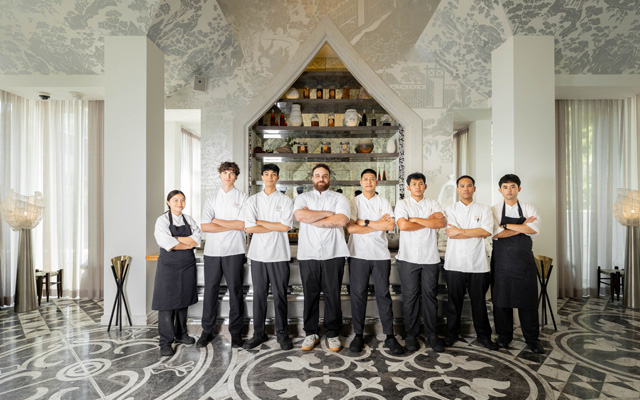
COMO Metropolitan Bangkok has launched stay-and-dine packages at nahm, which was this month awarded with one Michelin star in the inaugural Bangkok Michelin guide.

Nahm was this month awarded on Michelin star

The ‘nahm Experience’ package (double occupancy) includes a one-night stay in a Metropolitan Room; a guaranteed table at nahm for dinner and tasting menu; and breakfast at glow.

Packages are priced from 7,270 baht (US$223) for single occupancy to 9,770 baht for double occupancy. It represents a 10 per cent saving overall if guests were to book the room and the tasting menu for two separately.

Dishes include the King fish salad with pomelo, lemongrass and lime and the restaurant’s signature blue swimmer crab curry.

Expedia offers to lower commissions – strings attached

0
Ranque: two ways of lowering commissions

Expedia is holding out an olive branch to hotels, offering to lower commissions for the roomnights it generates, on the condition they reinvest the savings on its technology, marketing and data offerings.

Cyril Ranque, president, Expedia Lodging Partner Services, makes a case that this is a “two-sided” solution for both lodging partners and Expedia: hotels will be stronger if they invest on, say, marketing campaigns or tools to optimise their operations, and stronger hotels are the backbone of the Expedia content.

Ranque: two ways of lowering commissions

“The sustainability of our business model depends on the richness of our supply from the consumer standpoint. If supply is diversified and is of high quality, consumers will come. So it is important for us to build an ecosystem that allows any type of partner (small independents or big global chains) to be successful on our marketplace. Equipping them with tools – such as Rev+ (revenue management tool), ALICE to optimise operations, etc, the list is long – is actually in our longterm interest,” he said.

Ranque is responding to TTG Asia’s question on whether Expedia will lower commissions as a result of lower fixed costs achieved through growth over the years. He said one way is through a flat margin reduction. Compared to when it started in the US with a 25 per cent margin, Ranque said margins are now lower and “quite diversified” depending on markets and other factors.

The other way is agreeing with partners that the base compensation is lower, but “they guarantee us they will spend the money (savings) on dynamic products (from Expedia), such as data marketing technology when they need the exposure to get the business, so we would be making the same average compensation”.

“It’s a longterm strategy, you don’t move that overnight, but that’s really our intention,” Ranque said.

With Expedia bookings growth being under threat from factors such as the rise of alternative accommodations, or Google’s advancements into travel booking, Expedia clearly wish it could be done overnight. All of its leadership team chanted ‘Better Together’ at last week’s Expedia Partner Conference, the idea being hotels feedback to Expedia what ails them, Expedia tailors the solutions, hotels become more efficient and effective, the consumer travel experience becomes better, the travel product becomes more attractive, more bookings will follow and everyone wins.

The pitch – as persistent and incessant as Christmas jingles at this time of the year – follows the launch of Expedia Powered Technology last August, which reflects Expedia’s recognition it needed to move beyond being just a distribution channel into business solutions.

Expedia Powered Technology includes solutions such as Partner Loyalty Enrolment, which enables hotels to enlist and sign up users from Expedia sites for their loyalty programmes; MICE Booking Technology, which automates the booking process for small and medium-sized meetings so hotels will have more time to work on the large ones; Rev+, a revenue management tool; and ALICE (which stands for A Life-Improving Customer Experience), a software it invested in early last year which allows hotels to solve their operational pain points.

Myanmar tour operators advocate community interests

0

Communities must be kept at the heart of community-based tourism (CBT) projects if they are to thrive, said tour operators, as Myanmar announces three initiatives slated to open next year.

The Ministry of Hotels and Tourism revealed that it will work with communities in Ma Kyone Galet Salone, a sea gypsy village in Kawthaung, Don Nyaung Mhaing village in Myeik, and San Hlan village in Dawei to develop a range of tourism products.

CBT can be one of Myanmar’s tourism pillars, but needs to be managed well and sensitively

With Myanmar home to more than 135 ethnic groups, offering a diverse range of traditions, cultures and religions, and a swathe of remote villages giving a glimpse into village life, CBT has been earmarked as an important pillar to drive tourism while providing a sustainable form of income for impoverished communities.

Whin Eindray Wint Wah, director general of Pan Thu Kha Travels and Tours, said: “This is a good way to grow tourism in more rural areas, and there is a lot of potential. But it needs to be developed carefully, and with the communities.”

Edwin Briels, managing director of Khiri Myanmar, said CBT projects are a “good move” for Myanmar. However, efforts need to be made to ensure the tourist dollar benefits communities regardless.

He added carrying out marketing and receiving backing in the form of bookings is also essential. Said Briels: “A challenge is ensuring that high hopes created by a community are met in reality by sending enough paying customers to a project. On the flip side, balanced marketing of a project is very important to avoid disappointment among visitors, if the project is a simple or humble one.”

Bertie Lawson, managing director of Sampan Travel, said with CBT opportunities spanning the spectrum, it is necessary to ensure attractive products are developed.

Lawson said: “CBT can be done well, and it can be done badly. It is vital that all such projects are led by the communities themselves, and that they offer something authentic and of interest to tourists in Myanmar.”

Tourists in Singapore first to enjoy paperless tax refunds

0

Tourego, a mobile tax refund app and travel guide rolled into one, is being made available to tourists in Singapore.

Said to be the world’s first mobile tourist tax refund solution, Tourego migrates the current paper-based tax refund process onto the app, allowing users to receive and store their refund tickets in an e-wallet.

Tourego is also a travel companion that provides tourist users with the latest shopping, food and travel tips about Singapore. In addition, it has a shopping list function that recommends Tourego retailers as users put together their wishlist.

Already spanning more than 100 doors in Singapore, the Tourego retailer network coverage is expected to increase with more partner announcements expected in the coming months.

Singaporean entrepreneur, Tan Tie Wee, founder and CEO of Tourego, explained: “Tourego wants to be Singapore’s solution to the worldwide problem of tourists spending too much time at airports trying to get their tax refund. Our mobile app enhances the shopping experience for tourists, helps our retail partners improve their retail operations efficiency, and gain big data insights into the consumer behaviour of their tourist customers.”

Tourego is supported by government agencies including the Singapore Tourism Board, Infocomm Media Development Authority, SPRING Singapore; and approved by the Inland Revenue Authority of Singapore.

Launching in Singapore as its first market, the app is free to download, but is currently only available to non-Singaporeans (eligible tourists for tax refund) to register for an account.

Singapore Airshow 2018 to spotlight cybersecurity, autonomous vehicle

0

Cybersecurity, autonomous vehicles and emerging technologies will take the spotlight at the Singapore Airshow 2018.

The show, which will run from February 6-11, 2018, will see more than 1,000 participating companies from some 50 countries exhibiting the latest products and services in cybersecurity, unmanned aviation systems and more.

Leck: key aviation trends will be looked at in depth

“These key trends are what’s happening in the industry, which is why we singled them out for the Airshow,” said Chet Lam Leck, managing director of Experia Events, the organiser of Singapore Airshow.

He added that the exhibition and discussion forums can help expose visitors to product options and different viewpoints in the trade.

In particular, the entry of autonomous vehicles has generated “anxiety” in the industry, and the Airshow hopes to address these concerns, remarked Leck.

A new addition to the upcoming Airshow is What’s Next @ Singapore Airshow, a segment that brings in start-up companies to showcase and pitch their latest aviation innovations to interested investors and partners.

This new initiative will help introduce “new mindsets” in aviation, “expose exhibitors to what’s available out there for them to tap on” and educate entrepreneurs on the requirements of companies in the industry, explained Leck.

The Airshow will be held at Changi Exhibition Centre. In 2016, it drew 48,229 trade attendees from 143 countries and regions.