TTG Asia
Asia/Singapore Monday, 22nd December 2025
Page 1455

First Avani+ to rise in Luang Prabang

0
The Luang Prabang hotel will be the first property under Avani's new soft brand
The Luang Prabang hotel will be the first property under Avani’s new soft brand

Avani Hotels & Resorts is introducing a brand extension, Avani+, which will debut in Luang Prabang on March 1, 2018.

Avani+ properties will each have unique elements, whether it be in the architecture, design, location or otherwise.

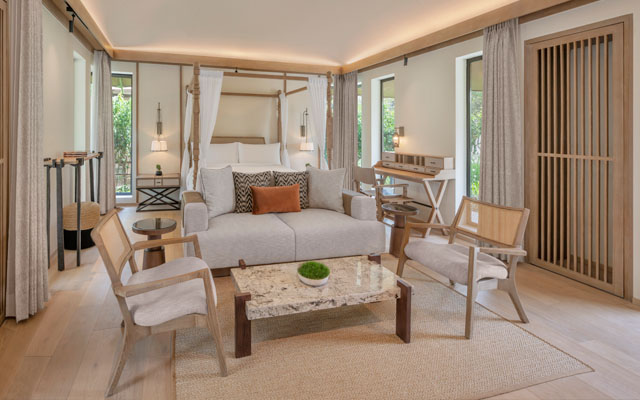
The Avani+ Luang Prabang will feature 53 rooms and suites, each with an open-plan feel as well as a balcony or terrace. Dining concepts will include specialty restaurants and rooftop or al fresco bar concepts.

Courtyard Room; the hotel offers a mix of courtyard and pool views

The hotel will also provide a “digital space experience for modern explorers”, offering insight into local culture, hotspots and travel tips about urban cities and, in some cases, off-the-beaten track destinations.

Avani+ Luang Prabang is situated in central Luang Prabang, near the Mekong River, Royal Palace and Night Market.

Launched in 2011, Avani currently operates over 3,800 keys in 15 countries across multiple regions and with a further 3,000 new keys in the pipeline.

Thai Airways back in red as passenger yields dip

0
Thai Airways reports loss, but RPK was up from previous year

Thai Airways International (THAI) and its subsidiaries posted a 29.8 per cent decline in operating profit to 2.9 billion baht (US$91 million), blaming an increase in fuel costs and a seven per cent fall in average passenger yield.

Total revenue was at 191 billion baht, up 11.4 billion baht, or 6.3 per cent, attributed in part to an increase in passengers and excess baggage revenue.

Thai Airways reports net loss of nearly 2.1 billion baht

Average cabin factor was 79.2 per cent, up from last year’s 73.4 per cent. This represents the highest in the last 10 years, with 24.6 million passengers carried, representing a 10.3 per cent from the previous year. In RPK terms, passenger traffic increased 14.7 per cent.

On the other hand, the airline reported total expenses of 189 billion baht, an increase of 12.6 billion (7.1 per cent), due in part to the rise in fuel expense by 4.9 billion (10.8 per cent).

Overall, the group reports net loss of nearly 2.1 billion baht, after taking into account one-time expenses, which it says were “mainly from the impairment of assets and aircraft and the loss on foreign currency exchange”.

Last year, the Rolls-Royce TRENT 1000 engines installed in THAI’s six Boeing 787-8 had issues with their turbine blades, an issue that affected other airlines too. Having to ground affected aircraft in order to send engines for overhaul resulted in increased cost and lost revenue from impacted schedules. However, THAI says it is in the process of negotiating compensation for such effects.

MATTA throws support behind Visit Malaysia Year 2020

0
Tan: necessary to get all industry players on board

The Malaysian Association of Tour and Travel Agents (MATTA) has set up a working committee to lend greater focus and momentum in line with Visit Malaysia Year (VMY) 2020, acknowledging the importance of industry support for the campaign’s success.

The working committee will look into overseas promotion, partnering overseas agents on packages, and working with online marketing influencers to create awareness on local destinations. Such efforts would also include collaboration with airlines and hoteliers to value-add holiday packages in the country.

Tan: necessary to get all industry players on board

MATTA president Tan Kok Liang said: “For a start, we are providing a pavilion for 29 of our members to participate in ITB Berlin Trade Show in Germany from March 7 to 11, leading sales missions to Xian and Zheng Zhou in China from March 12 to 16, and to Dhaka, Kolkata and Bhubaneswar in India and Bangladesh from March 18 to 24.”

Moreover, MATTA will facilitate the meeting of the European Travel Agents and Tour Operators Associations (ECTAA) in Malaysia come May 2018, and and the Outbound Tour Operators Association of India (OTOAI) in August.

“In line with the call by deputy prime minister Ahmad Zahid Hamidi to make VMY2020 a national mission, MATTA has stepped up another gear in collaboration with major international markets and lined up sales missions to China, India and UK/Europe, and cooperation with Asean countries.”

According to Tan, Visit Malaysia Years “had always recorded a tremendous boost in visitor arrivals, starting from 1990 and followed by those in 1994, 2007 and 2014”. He opined that VMY2020 will be no exception, while acknowledging that this would be “particularly challenging under the current business environment”.

Tan further remarked: “Making 2020 as the next Visit Malaysia Year has energised the local tourism industry. It is necessary to get all industry players to come on board to attract tourists and receive visitors.”

Nydegger named CEO of Switzerland Tourism

0

Martin Nydegger has been appointed CEO of Switzerland Tourism.

Nydegger has been a member of the executive board of Switzerland Tourism since 2008, in charge of business development. He had previously managed the NTO’s branch office in Amsterdam for three years.

Prior to joining Switzerland Tourism, he held a number of positions in the tourism sector, including as director of the Engadin/Scuol Tourism Board for six years.

Smart hotels on the rise in Singapore

0
Hotel innovation on the rise

Recent initiatives by the Singapore Tourism Board (STB) are spurring technology take-up in the hospitality sector at an unprecedented rate, with hotels in the city increasingly adopting new solutions ranging from service delivery automation to integrated mobile applications and virtual concierges.

With the revamping of Bayview Hotel into 30 Bencoolen, the hotel’s 131 guest rooms are now fitted with smart room control units that allow the operations team to monitor room statuses and be alerted by any room faults in real time.

Hotel innovation on the rise

Kevin Peeris, regional head, business development, Bayview International Hotels & Resorts, said: “(The use of technology) generates exciting opportunities to enhance productivity, increase effectiveness and create exceptional experiences for both staff and guests.”

Conrad Centennial Singapore uses eConnect, a similar system that “drastically reduces the time taken to solve issues by eliminating middle steps,” said Heinrich Grafe, the hotel’s general manager.

Both hotels are also looking at introducing automation to traditional hospitality processes.

Conrad Centennial Singapore is “exploring having a robot-operated linen distributor, which would ease the need for manpower in the housekeeping department”, Grafe said.

Peeris shared that 30 Bencoolen is looking out for solutions such as collaborative robots and robotic process automation.

Another area of technology the hotel is exploring, Peeris added, is integrated mobile applications.

Meanwhile, the 343-room Grand Park City Hall, scheduled to unveil the results of a revamp in 2H2018, is set to roll out fully-customised mobile application with functionalities such as mobile room bookings, room selection, mobile check-in, keyless entry and guest messaging.

A focus on technology and revamped rooms could deliver a “high-tech, high-touch” guest experience, said Elaine Heng, assistant director of marketing communications, Park Hotel Group.

Integrated app that allows keyless room entry

On a group level, the Park Hotel Group is also planning to pilot an Artificial Intelligence-powered Virtual Concierge Assistant (VCA), accessible on web and mobile starting next month. To be trialed on Park Hotel Alexandra’s website, VCA will be tasked with suggesting personalised recommendations and itineraries based on guest queries, as well as answering commonly asked questions.

VCA will be subsequently integrated onto social media platforms such as Facebook Messaging and rolled out groupwide in 2H2018.

M Social Singapore and Singapore’s two Hotel Jen properties employ autonomous service delivery robots, and the former also welcomed a robot that can cook eggs.

STB’s Ong Huey Hong, director, policy & planning group hotels & sector manpower, noted: “We have seen quite a lot of adoption (of robotics) in the last two to three years. Our first adoption was in 2015, and there was only one hotel that did a pilot. Now we have about 10 or 12 hotels committing or that have already adopted robotics.”

Hotels were initially concerned that robotics was “gimmicky”, but pilot programmes have since proven that robots can “enhance customer service and improve productivity”, Ong added.

With the rise of smart technology, STB and the Hotel Innovation Committee, led by the Singapore Hotel Association, will chart a roadmap for the hospitality industry to transform into “Smart Hotels” through the Smart Hotel Technology Roadmap.

This will identify the next-generation system capabilities such as facial recognition at check-in and payment wallets.

Philippines pushes harder for Chinese visitors

0
DOT sees direct flights as key to lifting Chinese arrival numbers

Never mind that it missed the one million mark for Chinese tourist arrivals in 2017, the Philppines’ Department of Tourism (DOT) is raising the bar this year with a target of 1.5 million arrivals, according to tourism secretary Wanda Tulfo-Teo.

Last year, a total of 968,447 Chinese visited the country, overtaking the Americans to become the second top source market, up 43.3 per from 675,663 the previous year, DOT said in a statement.

DOT sees direct flights as key to lifting Chinese arrival numbers

Teo said warming relations between the Duterte administration and the Chinese government, despite the Scarborough territorial dispute, bodes well for tourism numbers, as well as investments from mainland China.

For the first month of 2018, Chinese arrivals registered 111,344, representing a 29.6 per cent increase from the same period last year.

DOT-Shanghai tourism attaché Ireneo Reyes shared that accessibility will be priority in the destination’s drive for more Chinese visitors. Starting this year, a total of 5,180 seats per month will be added, and new direct flights to Cebu (adding 1,800 seats), Kalibo (3,183 seats) and Puerto Princesa (197 seats) are expected to bring more Chinese tourists to the country.

For the Chinese New Year period, a total of 2,937 seats were opened for the month of February from different Chinese cities including Guangzhou, Xiamen, Ningbo, Hangzhou, Nanjing, Wuxi and Tianjin.

“These direct and charter flights provide convenience that greatly affects tourist experience and influences potential tourist’s decision in choosing a destination. At the moment there are 11 airlines servicing direct, regular and charter, routes for 17 Chinese cities,” DOT-Beijing tourism attaché Tomasito Umali commented.

Aside from better air connectivity, DOT is also focusing on cruise tourism, as more Chinese cruise companies and charterers are including Philippine ports in their itineraries.

Cruise ships SuperStar Virgo and World Dream paved the way last year, and Costa Cruise Atlantis will this month begin a year-round deployment. Royal Caribbean Voyager and Ovation, each with capacity for 3,500 passengers, will call at the Philippines in June and July.

Local Chinese cruise lines including Diamond Exquisites and Taishan Cruise also are expected to visit the country this year.

“We are also preparing more choices for the Chinese market. We are now pushing Puerto Princesa, Davao and other destinations,” Teo said. Boracay, Cebu and Bohol were the favorite destinations of the Chinese travellers last year, according to the DOT Annual Visitor Sample Survey 2017.

DOT offices in Beijing and Shanghai also have plans to to go digital and work with key opinion leaders and OTAs, as well as advertise on popular social media platforms, WeChat, Weibo and Dian Pin.

The DOT is also encouraging more niche products such as English-as-Second-Language, MICE and dive segments.

Meanwhile, the visa-on-arrival policy for Chinese tour groups and the visa-free policy for Chinese nationals who hold valid visas to the US, Japan, Australia, Canada and Schengen States will continue to be in place.

Travelport to roll out fraud screening solution

0
Airline industry incurs losses of US$1 billion per year from payments made on stolen, compromised or fake credit cards, IATA says

Travelport has partnered ACI Worldwide, a provider of electronic banking and payment solutions, to launch an intelligent fraud control and settlement solution for its airline customers.

Named Travelport Authorize Plus, the solution enhances Travelport’s existing Card Payment Gateway by integrating with ACI’s ReD Shield platform. Part of the UP Payments Risk Management solution, ReD Shield delivers real-time, cloud-based multi-tiered fraud prevention for eCommerce merchants.

Airline industry incurs losses of US$1 billion per year from payments made on stolen, compromised or fake credit cards, IATA says

The integration will allow Travelport’s airline customers to track ticketing purchase processes right through to the completion of a journey. Additional features include the dynamic fraud screening of card payments used to purchase air tickets via Travelport-connected agents, the ability to flag and prevent ticket issuance, and detailed online management reports of all transactions and status.

According to IATA, the industry incurs losses of US$1 billion per year from fraudsters using stolen, compromised or fake credit card details to buy airline tickets.

Derek Sharp, senior vice president and managing director of air commerce, Travelport, commented: “The major advantage of combining Travelport Authorize Plus with ACI ReD Shield is that we have built a fully integrated solution, which applies fraud control management without the need for both our airline and agent customers to do any major development or change their workflow process of today.”

Bangkok Airways unveils plans for growth as it turns 50

0
Bangkok Airways reported nearly six million passenger movements last year

In its 50th year anniversary, Bangkok Airways will continue to focus on growing its Asian network while reaching out to new target markets around the world, with sights set on growing total revenue by 10 per cent this year.

Puttipong Prasarttong-Osoth, Bangkok Airways president, further shared that the airline expects passenger volume to increase by seven per cent in 2018, given an estimated load factor of 70 per cent.

In terms of its network strategy, the airline will continue to focus on “the most important destinations throughout Asia”, said Puttipong. For example, it is expected to commence Chiang Mai-Hanoi services from March 25 and Phuket-Yangon in 4Q2018.

Bangkok Airways reported nearly six million passenger movements last year

For Samui, the company plans to offer new charter services to high potential cities in China such as Xian and Changsha. In addition, the airline will step up frequency on popular domestic and international routes such as Bangkok-Phuket, which will be increased to 66 flights a week, Bangkok-Vientiane to 14 flights a week and Bangkok-Mandalay to 11 flights a week.

Bangkok Airways also plans to sign codeshares with another four to six carriers this year, adding to the 24 airline partners globally, including its latest, El Al Israel Airlines. Bangkok Airways also signed codeshare agreements with Xiamen Airlines, Thai Airways, Vietnam Airlines and Hong Kong Airlines last year.

“As for aircraft delivery plans, we currently have a total of 38 aircraft in our fleet. We are expecting to receive two Airbus A319 aircraft and we are planning to adjust our ATR72 fleet by removing six of our ATR72-500 and replacing them with the brand-new aircraft ATR72-600s which will continue the total number of 38 aircraft for 2018,” said Puttipong.

Among development plans are the addition of new international passenger lounges at Suvarnabhumi airport as well as the launch of a new version of the airline’s mobile application.

On the airline’s efforts in key markets, Varong Israsena Na Ayudhya – vice president-sales revealed: “This year, Bangkok Airways will concentrate on CMLV (Cambodia, Myanmar, Laos and Vietnam) as we foresee that these countries (will undergo) notable economic growth and high travel demand.”

Other target markets include those in China – especially Hong Kong, Guangzhou, Chengdu and Chongqing. Bangkok Airways currently operates Samui-Hong Kong, Samui-Chengdu, Samui-Guangzhou and Samui-Chongqing, and is planning to launch new charter services to Xi-An and Changsha in the near future.

“We still remain interested in other continents such as the Americas, South Africa and Europe, especially Russian-speaking countries such as Russia, Kazakhstan and Uzbekistan that project high spending power, has encouraged us to appoint sales representatives in these countries,” Varong said.

Meanwhile, the airline plans to increase its OTA revenue by 30 per cent. After signing an MoU with Expedia, the airline is now eyeing partnerships with more global OTAs as well as local ones in non-English speaking countries such as Spain and Russia.

In 2017, Bangkok Airways reported revenues of approximately 28.5 billion baht (US$909.5 million), up 6.5 per cent from the previous year, and 846.4 million baht in net profit. Number of passengers in 2017 also grew by five per cent to reach nearly six million.

CapitaLand touts Chongqing ‘crown jewel’ – a 300m skybridge

0
Artist impression of Raffles Hotel Chongqing, a 1.1 million-square-metre 'urban district'

In what CapitaLand hails as an engineering and architectural feat, Raffles City Chongqing’s 300m-long “horizontal skyscraper”, perched 400m above sea level, is set to become the world’s highest sky bridge linking the most number of towers when it opens next year.

The 10,000m2 accordion-shaped structure, named The Conservatory, will connect a total of six towers – four at its base and two adjacent towers by cantilever bridges – and house an observation deck, sky gardens, an infinity pool and an F&B zone.

Lucas Loh, CEO of CapitaLand China, added: “A highlight is the observation deck, which features an outdoor patio with see-through glass flooring – the tallest of its kind across the whole of west China for the best vantage point to enjoy views of the Yangtze River and Jialing River merging at Chaotianmen.”

Artist impression of Raffles Hotel Chongqing, a 1.1 million-square-metre ‘urban district’

No less brag-worthy, it seems, is the rest of the 1.1 million-square-metre, RMB24 billion (US$3.8 billion) Raffles City Chongqing, an urban district on Chaotianmen riverfront comprising a retail podium and eight skyscrapers for residential, office, serviced residence and hotel use. The complex is designed by starchitect Moshe Safdie.

Raffles City Chongqing is located at the confluence of Yangtze and Jialing rivers in Yuzhong District, next to the traditional Jie Fang Bei CBD. It is also fully integrated with a transport hub comprising a metro station, bus interchange, ferry terminal and cruise centre.

It is designed by starchitect Moshe Safdie, who drew inspiration from the region’s thousand years of waterway transportation culture to create an image of powerful sails upon the river for Raffles City Chongqing to symbolise the host city’s surging growth.

The development is CapitaLand’s eighth Raffles City development in China. The seven others in Beijing, Chengdu, Hangzhou, Ningbo, Shanghai (with two Raffles City developments) and Shenzhen are operational.

The Great Room gets bigger with second co-working location in Singapore

0
The Drawing Room, a space for mingling and dining

The Great Room, a hospitality-led co-working space, has expanded to its second location in Singapore – the CBD’s Centennial Tower.

Spanning 3,345m2 over two floors with a 360-degree wrap-around view of downtown Singapore, The Great Room says the opening is a response to strong demand for its first One George Street location, which launched in 2016.

The Great Room experience begins at The Drawing Room, which serves as a reception area housing the Bar and Café, and an event space for members to gather for evening cocktails and “large-scale fireside chats”.

The Drawing Room, a space for mingling and dining

A more intimate Club Lounge caters specially to The Great Room Business Club members, which The Great Room says provides access to a social and professional network.

The Circle brings to mind a private supper club, where deals are done around the design team’s interpretation of the modern bonfire. “Like-minded tribes” from eight to 80 pax can gather in a variety of meeting spaces – a 14-pax boardroom; Studio, for 16 pax; Parlour, for six pax; or study, also for six – whether for learning, meeting, impressing or entertaining.

Hot desks and hot offices are also available.

Dedicated office spaces

Co-founder and CEO, Jaelle Ang, said: “We wanted to create an all-encompassing work and play experience… This opening further cements our purpose to change the way people feel about going to work. Because beyond productivity, work is also about new conversations, connections, inspiration, contemplation and repose. It’s our job to design the perfect backdrop to the highlights of life happening.”

The Great Room will also have a business and cultural programme for members, focusing on growth across professional, personal, wellness, creativity and cultural development.

By end-2018, The Great Room expects to be serving a community of over 700 companies in technology, finance, lifestyle and media, across its seven locations in four cities, namely Bangkok, Hong Kong, Jakarta and Singapore.

Membership at The Great Room is tiered, starting from a basic fee of S$750 (US$569.80) for hot desk and hot office access. Other tiers include Dedicated Office memberships for as many as teams of 40 people; and Business Club memberships.

The Great Room at Centennial Tower opens from 0.900 to 18.00, Mondays to Fridays.