TTG Asia
Asia/Singapore Saturday, 27th December 2025
Page 1429

Hong Kong most expensive in APAC for business travel

0
Hong Kong

Hong Kong is now the most expensive location for business travellers, having overtaken Tokyo which drops to second spot, revealed the latest Daily Rates research published by ECA International.

Lee Quane, regional director – Asia for ECA International, said in a statement: “This change is mostly due to the overall price of business travel in Japan decreasing in dollar terms after the yen fell in value over the course of 2017. The cost of business travel in Hong Kong has remained unchanged from last year with the typical business trip now costing US$508 per day on average.”

Hong Kong is the most expensive location in APAC for business travel

However, the average cost of a business trip to Singapore has increased to US$479 per day, up from US$472 in 2016, which now puts the city state a joint third with Seoul for most expensive Asian location for business travel.

Quane said: “Hotel costs have risen slightly in the past 12 months, but the main reason for Singapore’s rise has been the increased cost of eating out in restaurants frequented by business travellers in the city over the past year.”

Meanwhile, the cheapest region for international business travel remains Malaysia, with Kuala Lumpur and Johor Bahru residing at the bottom of the rankings due to the continued weakness of the ringgit against major currencies.

“Although fellow ASEAN countries such as Indonesia, Thailand, Brunei and Cambodia have cities which rank amongst the cheapest in the region for business travel, the cost of business travel remains low in Malaysia. The cost of a business trip to Kuala Lumpur is less than half of what it is in Hong Kong,” said Quane.

Top 10 list of most expensive destinations in Asia for business travellers

The Thai cities that were included in the survey all saw a slight increase in business travel costs, with Bangkok moving into the top 50 for the first time. The average business trip to Thailand’s capital now costs US$278 a day.

Chinese cities have also seen an increase in cost for a standard business trip, with Shanghai now ranked as the ninth most expensive location for business travel in the region.

Over the past 12 months, it has become more costly for business travellers who visit Chinese cities as prices of goods and services commonly consumed by this segment has increased. Despite the increase, Shanghai is still cheaper than Hong Kong and Tokyo for business, and is over US$100 a day less expensive on average.

Japan to get its first MGallery this year in Kyoto

0

AccorHotels is expanding its luxury portfolio in Japan with the 144-room MGallery by Sofitel Kyoto, which is set to open in 4Q42018.

The new-build hotel will be located in the heart of Sanjo, one of Kyoto’s most popular dining and shopping precincts, offering guests access to nearby famous attractions including Yasaka-jinja Shrine and the famous geisha district of Gion. It is adjacent to Sanjo Kiehan Station and 15 minutes from the bullet train hub of Kyoto Station.

Yasaka-jinja Shrine in Kyoto

According to Patrick Basset, AccorHotels’ COO for Upper South-east and North-east Asia, the MGallery collection is one of the group’s fastest-growing upscale brands as travellers seek out boutique lifestyle hotels.

GCC’s robust hotel development a highlight at ATM 2018

0
Press: XXXX

The Arabian Travel Market (ATM) 2018, taking place at Dubai World Trade Centre from April 22-25, will see its biggest-ever hotel exhibition space, a reflection of the rapidly growing regional hospitality market and pipeline in the GCC.

The show will also feature 68 main hotel stand exhibitors, including eight new brands, over an area of more than 5,000m2, in addition to over 100 Middle East hotels featured alongside their respective national tourism organisations.

Press: GCC region is poised for further greater developments in 2018

Among the largest hotel stands are A.A.Al Moosa Enterprises UAE, owners of hotels operated by Hilton, Starwood, Marriott, Taj and Wyndham; Intercontinental Hotel Group; and the Middle East’s newest hotel group, Roda Hotels.

Simon Press, senior exhibition director of ATM, said: “The increase in hotel exhibition space in 2018 reflects the hundreds of new property and brand launches we have seen during the last 12 months.”

Data from STR confirms the total pipeline of rooms in the GCC currently stands at 152,551 across 518 properties. The leading contributors are the UAE with 73,981 rooms in the pipeline; Saudi Arabia with 64,015; and Oman with 8,823. In percentage terms the largest increase on existing stock will be seen in Saudi Arabia, which is on track to witness 123.7 per cent growth.

In celebration of its 25th year, ATM 2018 will host a series of seminar sessions looking back on the tourism revolution in the MENA region over the last quarter of a century, while exploring how the industry will shape up over the next 25 years.

The annual show has adopted responsible tourism – including sustainable travel trends – as its main theme and this will be integrated across all show verticals and activities.

ATM has also partnered with IHIF (International Hotel Investment Forum) organisers to deliver the inaugural Destination Investment Forum, whereas the second edition of the International Luxury Travel Market Arabia (ILTM) will also return on the first two days of the show.

Also debuting at this year’s event will be the ATM Student Conference – Career in Travel – a programme aimed at students and graduates with talks from guest speakers and travel industry leaders sharing more about the industry and potential career paths.

Agents face biggest struggle to convert browsing to booking

0
XXXX

As high as 92 per cent of all bookings in Asia-Pacific are abandoned at checkout, with travel agents in the region facing the biggest struggle to convert customers, as data from Ve Global – an advertising and marketing technology company headquartered in London – shows.

The findings, taken from over 58 million customer sessions between January 2017 to April 2018, show that 95.5 per cent of them abandon their online booking with agents in the region. Although performing better, hotels (90.4 per cent), airlines (91.6 per cent) and vehicle hire companies (88.9 per cent) are also failing to convert the majority of would-be bookers at the checkout phase. The most clinical sub-sector was reserved for the more low-cost options, with coach and ferry operators converting 20.2 per cent of active traffic into bookings.

Ve data reveals that a third of APAC customers complete travel bookings via their mobile and tablet devices, more so than any other region globally

In terms of countries, Australian travel companies do the best job in turning browsers into bookers with a relatively low 82 per cent abandonment rate. Japanese customers looked to be the hardest to convert with 93.8 per cent leaving their online baskets without completing a booking.

While abandonment still plagues the travel industry, the research did find Asia-Pacific customers are far more receptive to forms of re-marketing than their global counterparts. The region’s travel companies can expect to recover one online booking for every 18 re-marketing emails sent, compared with the 23 that European companies must send out on average.

The data also reveal customers in Asia-Pacific complete more online travel bookings using their mobile devices than in any other region globally. Almost a third (30 per cent) of all travel bookings made in the region were completed using a mobile or tablet device. This compares to 29 per cent of bookings in the US, 28 per cent in Europe and just 13 per cent in Latin America.

Jamie Pierre, managing director at Ve Global Asia-Pacific, based in Hong Kong, said in a statement: “Increasingly, APAC travel companies are allocating vast sums of their marketing spend to attracting customers online, only to lose them during the booking process.

“Although the causes of customer abandonment are varied, travel companies should pay close attention to the growing use of mobile devices in completing bookings and ensure they offer a multi-channel approach that meets the growing expectations of consumers.”

Malaysia inbound agents sweat to arrest declining Middle East arrivals

0
Arab tourists buying drinks along Petaling Street in Kuala Lumpur's Chinatown

Malaysian exhibitors at the upcoming Arabian Travel Market (ATM) are strategising how they can attract Middle East tourists especially during the upcoming summer travel season (June to August).

This is in light of Malaysia’s two largest Middle Eastern markets showing a double-digit decline in 2017 over 2016. Arrivals from UAE dropped 39.5 per cent to 8,555 tourists in 2017 while the largest market, Saudi Arabia, saw a 18.8 per cent decline to 100,549 tourists during the same period.

Arab tourists buying drinks along Petaling Street in Kuala Lumpur’s Chinatown

Ally Bhoonee, executive director of World Avenues, said: “We are talking to hoteliers in key destinations such as Kuala Lumpur, Penang and Langkawi to offer the same rates as they do other markets and not have a surcharge during the Middle East season, as the market has not been doing well over the last three years.”

Ally added that there was a need to stay competitive as this year will be challenging due to competition from regional destinations, as well as destinations within a six-hour flight time from the Middle East.

“Everyone is vying for this market as the Middle East travellers are known to be good spenders,” he opined.

Another operator, Noor M Ismail, general manager, Panorama Destination Malaysia, said that the company will be promoting new destinations such as Kota Kinabalu, Port Dickson and Ipoh, as well as the usual Kuala Lumpur, Penang and Langkawi.

“For families, we will be promoting theme parks in Sunway, Ipoh and Penang,” shared Noor.

As parent company Panorama Destination Indonesia will be exhibiting at ATM, it will be passing on leads and contacts to Panorama Destination Malaysia which commenced operations on April 1.

In addition, Panorama Destination Malaysia will be adapting to the working hours of the Middle East market so as to respond to enquiries quickly.

Sharing his rationale, Noor said: “Requests from agents are straightforward. They want a city and beach combination. If you reply quickly, you are likely to get the business.”

Meanwhile, with Qatar Airways’ new direct flights from Doha to Penang, Lexis Suites Penang director of sales and marketing, Mark De Souza, said he will propose to Qatar outbound agents at ATM to create itineraries that start in Penang and end in Kuala Lumpur.

Souza is also looking at creating special all-in-one 4D/3N packages targeted at the Middle East market combining transfers, round island tours and dinners at the hotel.

Philtoa tries to stem guides shortage, buys school to train them

0
XXXXX

The Philippine Tour Operators Association (Philtoa) will start offering sustainable training programme for tour guides in July/August 2018 to address the shortage and improve the quality of services offered.

The course syllabus comprises four levels of training – entry-level community tour guides, followed by the regional, national and international levels, shared Philtoa’s president Cesar Cruz.

The school will help expand Philtoa Academy’s repertoire in training the next generation of tourism professionals

Philtoa is currently finalising the purchase of a school in Las Pinas in metro Manila which will be used as a main training ground. The 1,400m2 site has an existing school which will be converted into a tourism training campus with simulated hotel rooms for entry-level skills. All future trainings and seminars under Philtoa Academy will be held in Las Pinas once the deal goes through.

“Eventually, we want to connect with Tesda (Technical Education and Skills Development Authority) (to obtain accreditation),” said Cruz.

Cruz also shared that scholarships will be offered to 20 students from the first batch of K to 12 students who graduated in March this year. K to 12 is the country’s new education programme from kindergarten to senior high school, which translates to 12 years of basic education. And as high school graduates are normally 18 years old, this prepares students for tertiary education and employment.

The training of tour guides will expand the activities of Philtoa Academy which has had ongoing seminars – covering topics such as costing and preparing tour packages, to twice a year actual operations for travel agency managers – for the past five years.

Three trends that will redefine travel: Sabre Labs

0

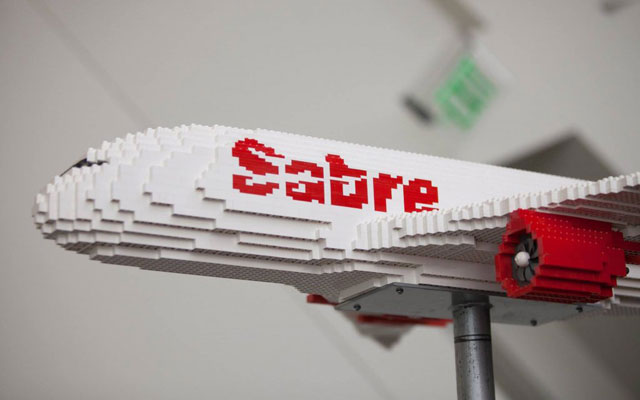
Automation, authenticity and blockchain are the three major technology trends that will impact travel over the next decade, reveals Sabre Labs 2018 Emerging Technology Report.

“Increasingly, people are coming to understand that the travel business is really a technology business,” said Philip Likens, director of Sabre Labs.

The future roles of automation, authenticity and blockchain in the evolving travel technology landscape

“Even the simplest journey generates huge amounts of data. Collecting, indexing and understanding that data – and how we apply that understanding to improve every traveller’s experience – is what will drive real innovation across the entire travel ecosystem.

“Whether it is A.I. and machine learning to automate and optimise tasks, the counter-intuitive ability to deliver authentic experiences digitally, or using new protocols (such as distributed ledgers) so a traveller can head to the airport and leave their wallet and ID at home – on purpose – technology is going to reshape the travel experience.”

Here’s a quick summary of the three major areas:

Automation
Automation is not a new idea. However, advancements in A.I. and machine learning offer the potential for step-changes in how we may be served in our digital environment. Awareness and cognitive capacity for machines suggest a huge range of opportunities for those serving the travel space to completely rethink when and what to sell, how to staff and operate their businesses, and how to anticipate and exceed their own customers’ needs.

Authenticity
In our current age, trust is in low supply – so authenticity and authentic experiences are more valuable than ever. At the same time, businesses increasingly need to rely on technology and digitisation to interact with their customers at scale. But is technology in tension with authenticity? Is digital the enemy of the real? And how can we reconcile augmented and virtual realities with authenticity?

Blockchain
Huge volatility in the price of cryptocurrencies has been dominating headlines but serve to overshadow the value in the underlying blockchain technology. Separating crypto hype from the actual potential of distributed ledger technology – which enable secure, “trustless” transactions to take place – can be hard to do. But there is significant promise for blockchain as it relates to travel, not the least of which is this: imagine heading off on a round-the-world trip without having to bring your passport or wallet.

Likens concluded: “Tomorrow’s travellers have a set of expectations fuelled by ubiquitous access to information, smooth transactional experiences, and increasingly personalised offers. There is tremendous opportunity for companies to begin thinking about how their brand can be agile enough to meaningfully interact with tomorrow’s travellers.

Blacklane expands reach to frequent flyers of Asian airlines

0
Blacklane is now Thai Airways' preferred airport transfer partner

Competition for chauffeured airport transfers intensifies as Blacklane continues to expand its reach to frequent flyers of Asian airlines, the latest being its tie-up with Thai Airways International.

Three million members of THAI’s Royal Orchid Plus can now can now earn two miles for every US dollar, euro or pound spent on Blacklane’s professional driver service.

Blacklane is now Thai Airways’ preferred airport transfer partner

Blacklane reaches more than 500 airports, 250 cities and 50 countries around the world. In Thailand, the company serves Bangkok, Chiang-Mai, Koh Samui, Pattaya and Phuket.

This is the fourth Asia-Pacific airline partnership for Blacklane. The others are Cathay Pacific’s Asia Miles, Malaysia Airlines’ Enrich and Singapore Airlines’ KrisFlyer.

Fairmont Hotels pop royal wedding deals

0
Fairmont Singapore's Anti:dote Lounge

To commemorate Prince Harry and Meghan Markle’s upcoming nuptials on May 19, Fairmont Hotels & Resorts has launched a series of property-specific offers, packages, and events.

In the Asia-Pacific, Fairmont Jakarta is planning a week-long wedding celebration starting May 14 comprising an afternoon tea menu, flower arrangement workshops, fashion shows and a live streaming viewing party on the Big Day.

Fairmont Singapore’s Anti:dote Lounge

Meanwhile, Fairmont Singapore will be hosting an exclusive daily Royal Afternoon Tea beginning May 14 at the Anti:dote Lounge. The afternoon tea will be presented in a white leather jewellery chest, with a choice of a royal-inspired cocktail – Queen’s Cup, Catherine or the Meghan.

Over in Shanghai, Fairmont Peace Hotel has created a Royal Wedding Package, complete with two nights in the Sassoon Presidential Suite, private set dinner and afternoon tea in the suite, spa treatments, royal attire, styling services and more.

For more details, please visit http://www.fairmont.com/meetings-weddings/weddings/.

TUI’s new fly-cruise plan may help reverse Europe downslide to Malaysia

0
Langkawi

TUI Group is initiating a new Fly & Cruise programme to Malaysia that may help reverse a decline in arrivals from key European markets and the country’s cruise tourism sector.

The programme, from December 20 until March 29, 2019, will see TUI offering direct flights to Langkawi, thereafter regional cruises out of Langkawi for its European customers.

Langkawi (pictured above) will be where TUI’s cruise ships will be homeporting

Passengers will arrive on three fortnightly flights on a 787 Dreamliner from three UK airports (Gatwick, Manchester and Birmingham) to Langkawi.

With TUI’s cruise ship homeporting in Langkawi, all passengers will spend at least one night in Langkawi before embarking on a 14-day itinerary which will include Penang, Port Klang and Malacca, as well as Singapore, Vietnam, Cambodia and Thailand.

The total potential capacity is expected to be about 7,200 passengers in the first year of operation, Tourism Malaysia said in a press statement.

Tourism Malaysia’s director-general, Mirza Mohammad Taiyab, said: “This initiative by TUI Group will strongly boost the visibility of Malaysia across all European source markets. At the same time, our position as an international transportation hub will increase and add value to our economy.”

“This initiative also supports the Visit Malaysia 2020 campaign that is projected to welcome 36 million tourists to Malaysia and register RM168 billion (US$43.3 billion) in tourist receipts for the country,” said Mirza.

Frank Vahldiek, director international partnerships of TUI Group said: “Our strategic priority is to drive growth in all-year destinations – and Asia is one of the key growth regions. Our European customers show an ever growing interest to visit countries such as Malaysia.

Currently, all three cruise companies of TUI – TUI Cruises, Hapag-Lloyd Cruises, and UK-based Marella Cruises – have now included Malaysia’s three ports-of-call including one homeport (Langkawi, Port Klang and Penang) in their programmes.

Another major development in 4Q2018 is the commencement of Germany’s Condor Air thrice-weekly services between Frankfurt and Kuala Lumpur, the only airline to service this route.

Both TUI’s Fly & Cruise programme and the new flights by Condor Air will hopefully arrest declining visitors numbers from major markets in Europe to Malaysia. Last year, arrivals from Germany declined by 15.7 per cent to 109,816 tourists over 2016, the UK dropped by 10.4 per cent to 358,818, while arrivals from Switzerland dipped 22 per cent to 20,775 tourists.