The PATA Recovery Advisory Group is calling attention to itself to help ensure members are aware it can help in times of crises; the 2015 Nepal earthquake pictured
With the frequency and severity of natural disasters occurring around the world, PATA is calling attention to its Recovery Advisory Group as an avenue affected destinations can look to for tourism recovery assistance.
According to PATA, the advisory group assists member destinations in identifying key challenges facing the sector and providing turnaround strategies during periods of sudden decline in tourism arrivals and earnings as a result of natural or man-made disasters.
The PATA Recovery Advisory Group is calling attention to itself to help ensure members are aware it can help in times of crises; the 2015 Nepal earthquake pictured
The members of the PATA Recovery Advisory Group are formed on a skill-based volunteering basis, leveraging the specialised experience and expertise of individual PATA members to spearhead recovery efforts in the fields of marketing, branding and media, budgeting and financing, and safety and security.
PATA says previous recovery efforts have been successful in such destinations as Nepal, after the devastating earthquake in April 2015, and following the Bali bombing incident in 2002.
“The effects of global warming have only increased the severity and frequency of devastating weather events around the world and we have already seen this take place in India, the US, Puerto Rico, Japan, Hong Kong, and Macau, China, to name a few. As PATA has often talked about the responsible development of travel and tourism in the Asia-Pacific region, it is our duty to provide assistance when needed,” said PATA CEO Mario Hardy.
“The PATA Recovery Advisory Group is in line with our activities on advocacy, human capital development and sustainability, but one which we would rather not have to call upon. Nevertheless, PATA will always continue to advocate responsible tourism development that benefits, rather than destroy, our communities.”
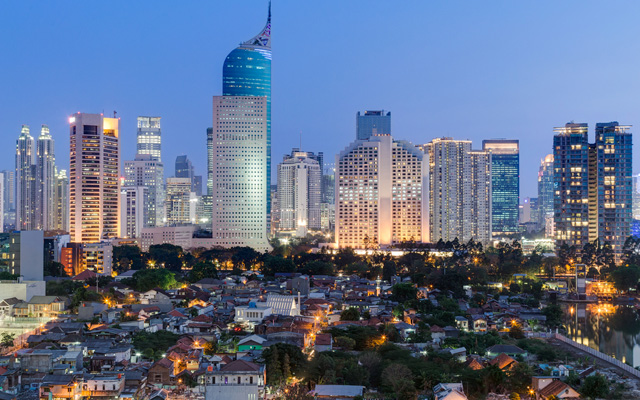
Cities with the largest construction pipeline in APAC include Jakarta (pictured), Seoul and Tokyo
In its fifth year of continuous growth, Asia-Pacific’s total construction pipeline, excluding China, is at an all-time high of 1,749 projects, or 369,045 rooms, according to a recent report by analyst Lodging Econometrics (LE).
Pipeline totals are up a remarkable 306% by rooms and 270% by projects from the cycle’s low of 473 projects (90,946 rooms) recorded in the first quarter of 2007 when LE first began tracking development in Asia.
Cities with the largest construction pipeline in APAC include Jakarta (pictured), Seoul and Tokyo
Countries in the region are facing strong economic headwinds. Economies are slowing and many currencies compared to the dollar are falling, adversely affecting real estate investment. According to LE, this suggests that the pipeline peak may soon be near.
At the end of the second quarter, projects currently under construction soared to a record high of 968 projects (215,523 rooms), as developers rushed to get their projects in the ground.
Projects scheduled to start construction in the next 12 months stand at 379 projects (74,556 rooms) and projects in the early planning stage stand at 402 projects (78,966 rooms).
The Asia-Pacific region had 173 new hotels (30,332 rooms) open in the first half of the year, with another 187 new hotels expected to open in the second half, bringing the total forecast for new hotel openings to 360 by the end of 2018. The LE forecast anticipates new hotel openings to continue ascending with 385 new hotels expected to open in 2019 and 399 in 2020.
Top countries in Asia-Pacific’s construction pipeline, excluding China, continue to be led by Indonesia with 394 projects (66,759 rooms). India follows with 214 projects (33,535 rooms), then Japan with 206 projects (41,146 rooms). Next are Thailand with 142 projects (34,381 rooms) and Malaysia with 140 projects (37,332 rooms), both Thailand and Malaysia show construction pipeline counts at all-time highs.
Cities in the Asia-Pacific region with the largest construction pipelines include Jakarta with 101 projects (19,325 rooms); Seoul with 80 projects (15,490 rooms); Tokyo with 67 projects (15,322 rooms); Kuala Lumpur with 57 projects (14,974 rooms); and Bangkok with 52 projects (11,975 rooms).
The top four franchise companies, accounting for 40% of guest rooms in the total construction pipeline, are AccorHotels with 223 projects (47,221 rooms) and Marriott International with 210 projects (48,325 rooms). InterContinental Hotels Group (IHG) with 147 projects (33,616 rooms) follows along with Hilton Worldwide’s 86 projects (18,997 rooms). Both IHG and Hilton show double-digit pipeline growth year-on-year and their counts are at record highs.
Top brands in Asia-Pacific’s construction pipeline, excluding China, include AccorHotels’ Ibis brands with 74 projects (14,811 rooms) and Novotel with 46 projects (10,765 rooms). Marriott International’s Courtyard has 30 projects (5,927 rooms) and Sheraton has 27 projects (6,560 rooms). IHG’s Holiday Inn has 58 projects (14,288 rooms) and Holiday Inn Express has 34 projects (6,968 rooms), while Hilton Worldwide’s DoubleTree has 31 projects (6,474 rooms) and the full-service Hilton Hotel & Resort has 27 projects (6,719 rooms). IHG’s Holiday Inn and Hilton’s DoubleTree and full-service Hilton Hotel brands are also at record highs.
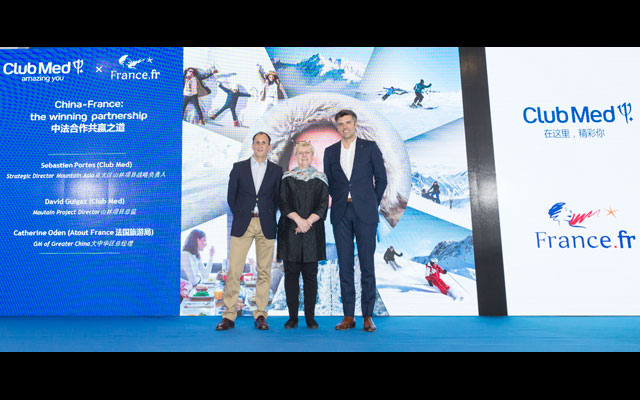
From left: Club Med's David Gulgaz; Atout France's Catherine Oden; and Club Med's Sebastien Portes
Club Med is collaborating with ski school, Ecole du Ski Francais (ESF), to deliver advanced skiing programmes to China’s winter sports enthusiasts seeking “a more professional and sophisticated level of instruction”.
With 73 years of experience across 230 ski schools in France, ESF has developed its own teaching method and offers different levels of instruction depending on age and ability. The teaching method will be adapted to Chinese needs and be delivered by Chinese instructors after training with ESF.
From left: Club Med’s David Gulgaz; Atout France’s Catherine Oden; and Club Med’s Sebastien Portes
Gino Andreetta, Club Med’s Greater China CEO, said: “The advanced teaching methods employed by ESF will no doubt attract more and more of China’s sophisticated young travellers to Club Med in China as they seek out the very best instructors and facilities, further helping to position the country as a regional leader in the skiing sector.”
Already with 21 ski resorts across five different countries, Club Med has plans to expand further in the winter sports sector. Having recently opened Club Med Tomamu in Hokkaido and Club Med Grand Massif Samones in the French Alps, Club Med is hoping to deepen its presence in the region by opening new resorts in Pyeongchang, South Korea, and Thaiwoo, China, both 2018 and 2022 Winter Olympics sites respectively.
Al Meroz Hotel, a halal hotel in Bangkok, is offering the 7D6N Martial Arts Package.
The package includes six-night accommodation on deluxe room inclusive of buffet breakfast; five days of Thai boxing lessons with twice-daily training; round-trip airport transfers and shuttle services to Thai boxing classes at LKT Muay Thai Gym; five meals of international buffet lunch at the hotel; and six meals of international buffet dinner at the hotel.
If a Thai boxing holiday up your alley, look no further
Other inclusions in the offer are a welcome drink; Wi-Fi in room and public areas; coffee and tea in room; late check-out till 16.00; and a 20 per cent discount on F&B at all the hotel’s outlets.
Guests can also use hotel facilities such as the swimming pool and public prayer room.
Valid until December 31, the package is priced at 31,900 baht net (US$983; single occupancy) and 41,900 baht (twin-sharing).
PHIST 2018 saw over 550 tourism professionals from around Asia head to the JW Marriott Mai Khao in Phuket, debate the key issues regarding island sustainability and agree to #fight4phuket
At the inaugural Phuket Hotels for Islands Sustaining Tourism Forum 2018 (PHIST), hotels and tourism groups pledged to establish a model for the sustainable development of Asian islands, with the focus currently on plastic usage and its purported detriments.
The pledge commits stakeholders to reducing, reusing and recycling single-use plastic in Phuket, with the goal of eventually eradicating them in all hotels, as well as to undertaking a youth community education programme to raise grassroots awareness of the problems surrounding plastic usage.
PHIST 2018
1 of 6
PHIST 2018 saw over 550 tourism professionals from around Asia head to the JW Marriott Mai Khao in Phuket, debate the key issues regarding island sustainability and agree to #fight4phuket
Deputy governor of Phuket Khun Prakob Wongmaneerung
C9 Hotelworks' Bill Barnett
From left: Phuket Hotels Association's Anthony Lark, and Greenview's Eric Ricuarte
From left: Six Senses Hotels Resorts Spas' Bernhard Bohnenberger; Thai Hotels Association's and Sukosol Hotels' Sukosol Nunbhakdi; Central Pattana's Wilaiporn Pitimanaaree; and Phuket Hotels Association's Anthony Lark
The PHIST tattoo
PHIST gathered over 550 delegates from countries including Thailand, Indonesia, the Philippines, Vietnam, Singapore and Hong Kong at the JW Marriott Mai Khao in Phuket to debate key issues.
At the Green Groove area, regional suppliers headlined an exhibition of Asia’s cutting-edge producers and inventors of sustainable products for the hospitality and tourism industries.
“We need to fight for Phuket. It is as simple as that. And we can’t do it alone. We need to do it together,” said Phuket Hotel Association president and managing director of Trisara, Anthony Lark.
“We have worked to build an inclusive coalition of public and private sector tourism groups who understand the critical need to act and think long term. We hope the Phuket Pledge will be a start and ultimately become a model for us and other islands regionally to come together for the sake of sustainable island tourism in Asia,” he added.
PHIST was opened by the deputy governor of Phuket, Prakob Wongmaneerung, and featured experts in their respective fields, focusing on marine and coastal tourism, sustainability, youth education and community tourism.
The event was co-organised by Phuket Hotels Association, C9 Hotelworks led by managing director Bill Barnett and Greenview CEO Eric Ricaurte, with support from tourism bodies including the Ministry of Sports and Tourism.
Wharf Hotels has appointed Stephen Antram as general manager of Marco Polo Shenzhen.
Prior to this appointment, Antram was the general manager of Intercontinental Beijing Beichen.
The experienced hotelier has over 40 years of knowledge in the hospitality industry, with over 25 years in Asia. He possesses a track record in operations management, business development and talent development across Europe and Asia with international luxury hotel companies.
Shane Christopher Ingram has been appointed as hotel manager for Hilton Garden Inn Jalan Tuanku Abdul Rahman North and Hilton Garden Inn Jalan Tuanku Abdul Rahman South.
Ingram most recently served as director of operations at Hilton Colombo Sri Lanka, where he began his hospitality career with, working in various departments such as housekeeping, the executive floor and the front office.
The 28-year hospitality veteran went on to hold various positions in Hilton, locally and internationally, such as a revenue manager in Hilton Colombo Sri Lanka, and later in Hilton Petaling Jaya as the director of business development and director of operations.
Wind shelter on the summit of Mt Wellington in Hobart city, Tasmania
With destination awareness maturing in Asian travel markets, Tourism Tasmania is looking to highlight winter experiences to the region’s travellers to grow low-season holiday demand.
Tourism Tasmania recently completed the Malaysia and Hong Kong legs of its Asian Tourism Mission, which is also taking the tourism promotion body to other markets including Singapore.
Wind shelter on the summit of Mt Wellington in Hobart city, Tasmania
Travel from Asia to Tasmania doubled in the last four years, surging from only 150,000 to 300,000 for this year.
Malaysia is among the top seven international arrival markets for Tasmania, after Asian markets such as China, Hong Kong and Singapore. From Malaysia, Tasmania has seen a 68 per cent year-on-year increase in total visitor nights to 364,000 nights for the year ending March 2018.
Meanwhile, the destination recorded 26,000 visitor arrivals from Hong Kong, up 25 per cent year-on-year.
Tourism Tasmania CEO John Fitzgerald told TTG Asia on the sidelines of the mission in Hong Kong last week: “The Hong Kong market has matured and so has its understanding of Tasmania. However, we want to work with market… to develop ways to entice people to travel in Tasmania’s snowy winter months. We need to determine how we can offer not just a totally different experience but also a contrasting seasonal one, attracting more travellers in low season.”
Playing up the destination’s winter appeal, Fitzgerald pointed out that Tasmania’s “pricing is more competitive than summer while at the same time, seafood and produce are at its best”.
Attractions include easy accessibility to wildlife, self-drive tours and gastronomy. Soft adventure attractions such as glamping is also on the rise, Fitzgerald shared.
Most of the 15 Tasmanian exhibitors involved in this mission, already successful in the summer months, are looking to supplement the success with better low season business.
Bridestowe Lavender Estate, already known for its flower season lasting two months in the summer, has created all-year-round tour experiences such as soap making classes, tea tasting, cooking and craft demonstrations.
Another seller, Shannon Wells, managing director of Par Avion Airlines of Tasmania, said the company was promoting a product launched this month – scenic flights over Freycinet Peninsula and Wineglass Bay, targeted at the Asian markets. The three-hour programme flies over the east coast and includes an exploration of the Maria Island National Park.
In Hong Kong, Alex Lee, general manager of Miramar Travel, acknowledged that “Tasmania’s winter is attractive and outside of the water sports, there are authentic activities like star gazing, fishing and outdoor BBQ”, in addition to being about 20 per cent cheaper on land compared to the summer season.
However, he pointed out: “The down side is the lack of direct access, and transit flights mean more cost for airfares.”
Still, new domestic flights from Adelaide (launched April 2018) and Perth (launched in September 2018) are boosting air capacity and providing access to Tasmania for international travellers.
Moreover, Hobart International Airport’s runway extension completed this April, allowing it to service widebody jets. The international terminal is scheduled for completion by December 2019, revealed Fitzgerald.
In Malaysia, Fitzgerald also shared that Tourism Tasmania is working to attract direct flights from South-east Asia, and is expected to be “a game changer” for the destination when that happens.
In terms of hospitality infrastructure, the Australian island will see at least 1,200 additional hotel beds in the next 18 months. International brands investing in the area include Marriott (165 rooms), Crowne Plaza (295 rooms) and Hyatt Centric (206 rooms).
Hong Kong now linked to China's high speed rail network
Following years of delay and cost overruns, the 26km rail link connecting Hong Kong to mainland China’s high-speed rail network was finally launched on Sunday.
With the Guangzhou-Shenzhen-Hong Kong Express Rail Link (XRL) now complete, travellers will be able to ride from Hong Kong to 44 destinations in mainland China destinations without changing trains, making the city an ideal starting point for multi-destination journeys through China.
1 of 5
Hong Kong now linked to China's high speed rail network
Inside West Kowloon Station
Outdoor space at West Kowloon Station
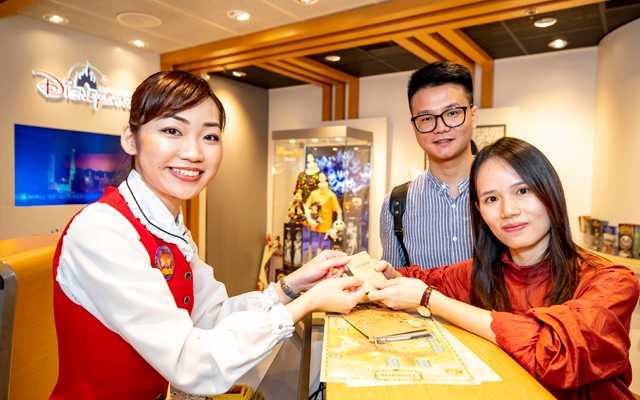
Hong Kong Disneyland Resort launched a new guest service centre at the arrival hall of West Kowloon Station
HKDL wants to ride on the enhanced connectivity from China to strengthen promotions to mainland Chinese visitors
In particular, the new rail link puts Hong Kong in easier reach of nine neighbouring cities in Guangdong province and heralds a major boost to tourism in the Greater Bay Area. With frequent direct high-speed trains linking Hong Kong to Shenzhen and Guangzhou in as little as 48 minutes, travelling within the Greater Bay Area will be faster and more convenient than before.
The Hong Kong section of the High Speed Rail network runs from West Kowloon Station. Visitors can enjoy views of iconic Victoria Harbour by walking along the Sky Corridor on the station’s rooftop.
The tourism hub of Tsim Sha Tsui ls is a short walk away from the station, which is also connected by public transport to neighbourhoods including Sham Shui Po in Kowloon, or Old Town Central on Hong Kong Island.
Directly outside the station is Hong Kong’s new arts and cultural hub, the West Kowloon Cultural District. The hub will soon offer visitors the opportunity to enjoy exhibitions, performances, and cultural events.
Capitalising on the increased connectivity from mainland cities, the Hong Kong Disneyland Resort (HKDL) opened a guest service centre at West Kowloon Station on the same day XRL commenced service.
Named the Magic Gateway, the disney centre will provide in-town check-in, baggage transfer and free shuttle bus service for guests with a reservation at any of the three Hong Kong Disneyland themed hotels.
Magic Gateway will also provide information on HKDL offers, and electronic park ticket purchase service.
Commented Samuel Lau, managing director of HKDL: “Last year, about 30 per cent of guests at the park came from the mainland. As the opening of the XRL Hong Kong section introduces more flexible and convenient transportation options, we are capturing the opportunity by strengthening the promotion of HKDL’s experiences and products to attract more guests from mainland China, especially from the cities along the national high-speed rail network such as Changsha, Wuhan and Fuzhou.”
Grab says the Uber app will continue to operate for two weeks, while Uber Eats will run until the end of May
The Competition and Consumer Commission of Singapore (CCCS) has issued fines and pro-competition directions to Grab and Uber, having found that their March merger has “led to a substantial lessening of competition in the provision of ride-hailing platform services in Singapore”.
After launching an investigation on March 30, and considering feedback from industry players, stakeholders and the public, CCCS found that the merger infringed section 54 of the Competition Act, and that “it will be difficult for potential new entrants to attain a sufficient network” and compete effectively against Grab without intervention.
Grab says the Uber app will continue to operate for two weeks, while Uber Eats will run until the end of May
In a statement, CCCS said it has received “numerous complaints” from riders and drivers on the increase in fares and commissions by Grab post-merger, such as via a decrease in amount and frequency of driver promotions and incentives. Grab also reduced the number of points earned by riders per dollar spent as part of its rewards scheme, and increase the points required for redemptions.
Overall, CCCS found that effective fares have increased between 10 and 15 per cent.
Moreover, Grab has imposed exclusivity obligations on taxi companies, car rental partners and some of its drivers, which have made it difficult for potential competitors to scale and expand in the market. According to CCCS, Grab now holds about 80 per cent market share.
To level the playing field for new players, CCCS has issued directions, including for Grab to remove exclusivity arrangements with drivers and taxi fleets, as well as to maintain its pre-merger pricing algorithm and driver commission.
The watchdog has also slapped financial penalties – around S$6.5 million (US$4.8 million) each on Grab and Uber – taking into account “the relevant turnovers of the parties, the nature, duration and seriousness of the infringement, aggravating and mitigating factors (such as whether the parties were cooperative)”.
CCCS said Grab and Uber were informed of potential penalties that come with anti-competitive mergers, and had the option to notify the transaction for clearance prior to completing the deal. The two however proceeded with the transaction and began the transfer of assets immediately, “thus rendering it practically impossible to restore the pre-transaction status quo”.