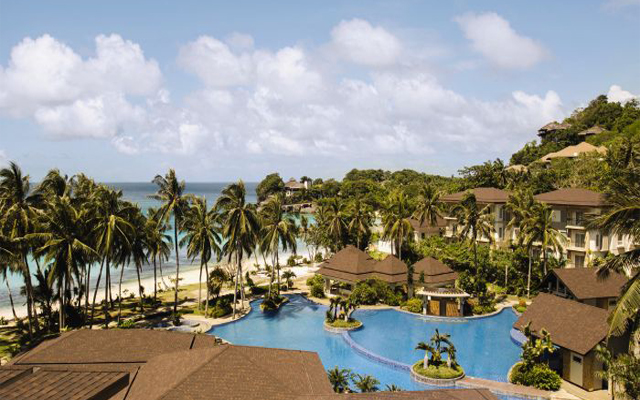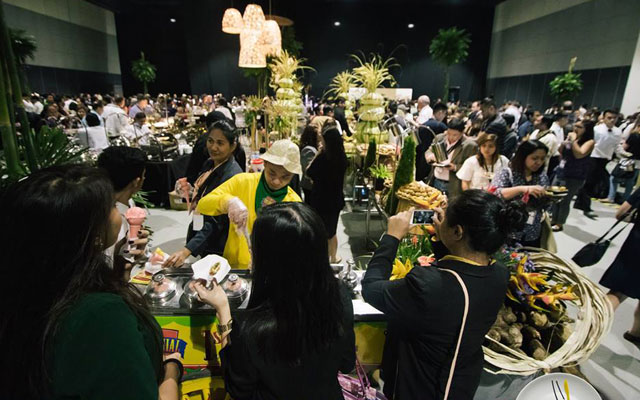
Peter Feran has been appointed general manager of Radisson Blu Resort Phu Quoc, slated to open this month as the brand’s first property in Vietnam.
The Australian brings more than 22 years of hospitality experience to the table, having been involved with the Radisson brand for the last 10 years, where he first started as rooms division manager at the former Radisson Playford Hotel & Suites, Adelaide.
In 2008, he was appointed hotel manager of Radisson Blu Plaza Hotel Sydney, followed by his first general manager role in 2010 at Radisson Hotel Brunei Darussalam. Following five years in Brunei, Peter moved to Thailand to take the reins at Radisson Blu Plaza Bangkok.
New terminal adds an enlarged departure and arrival area, allowing the airport to handle scheduled commercial flights
Seletar Airport’s new S$80 million (US$57 million) passenger terminal is set to be operational by end-2018.
Managed by Changi Airport Group, the new terminal building has a floor area of 10,000m2 – more than six times larger than the current terminal – and is expected to handle 700,000 passenger movements a year.
New terminal adds an enlarged departure and arrival area, allowing the airport to handle scheduled commercial flights
Associate general manager of Seletar Airport, Khoh Su Lim, said in a statement: “The new passenger terminal enables Seletar Airport to handle the expected growth of aviation activities in future.”
The new passenger terminal features an enlarged departure and arrival area, designed to handle scheduled commercial flights. The departure area will have four check-in counters, six immigration lanes, two security screening stations and a gate holdroom which can comfortably accommodate about 200 passengers.
The check-in, immigration and security screening counters are positioned in an intuitive straight route through the departure hall, enabling a quick boarding process for passengers.
The new terminal will also have a section for passengers travelling on chartered business flights and private jets, with its own waiting lounge area.
On the airside, there will be be three aircraft parking stands conveniently located next to the terminal. This allows passengers quick and efficient access to the aircraft, enabling greater operational efficiency and faster aircraft turnaround time.
As well, Firefly Airlines will shift its operations to Seletar Airport when the new terminal becomes operational. The low-cost subsidiary of Malaysia Airlines is currently operating 20 daily turboprop flights — to and from Subang, Ipoh and Kuantan — at Changi Airport.
SITA is in a position to work neutrally with multiple stakeholders to build the infrastructure
Aviation technology provider SITA has launched a industry research project to explore the potential of blockchain.
Barbara Dalibard, CEO, SITA, said: “Blockchain holds many promises but exploring these in individual organisations is not the most productive. As the technology company owned by airlines, SITA is in a position to work neutrally with multiple stakeholders to explore and test multi-enterprise applications. Through this collaborative innovation we will accelerate the learning for all.”
SITA is in a position to work neutrally with multiple stakeholders to build the infrastructure
One of the key benefits of blockchain technology is hence the ability to have multi-enterprise applications, SITA said in a statement. These work across multiple organisations locking data immutably into the blockchain rather than having individual applications running separately and exchanging data on a case-by-case basis, providing a “single source of truth” to all stakeholders.
Led and managed by SITA Lab, SITA’s technology research team, the Aviation Blockchain Sandbox will develop in three stages. To start, SITA is opening the FlightChain project to airlines and airports in September. FlightChain was SITA’s blockchain trial, with British Airways, Heathrow, Geneva Airport and Miami International Airport, using smart contracts for shared control of data.
For the second stage, SITA will work with organisations that wish to test smart contracts across a number of airline and airport operational use cases.
During the third stage of the research, which is expected to start in late 2018, SITA will enable participants to run their own node, allowing them to become more involved and to participate in the running of the network, including becoming custodians.
The Play Like an Animal zone encourages guests to stomp on light pads to bring projections to life
From this month until December, the Singapore Zoo will come alive at dusk with its latest nocturnal attraction – the Rainforest Lumina – a night walk unveiled in conjunction with its 45th anniversary.
The attraction is an illuminated one-kilometre-long trail decked out with interactive light, multimedia projections and sound installations, and covers about half of the zoo’s area. It is open from 19.30 to 00.00, with the last entry at 22.30.
The Play Like an Animal zone, where the projections hop along with participants
Rainforest Lumina is a collaboration between Wildlife Reserves Singapore and Moment Factory, a Canada-based multimedia entertainment company. It is the first Lumina instalment in South-east Asia, and the seventh in the world.
At a press event, Mike Barclay, group CEO of Mandai Park Holdings, called the Rainforest Lumina a “sizeable investment that was deliberated on for a long time”. While he declined to give the actual figure, Barclay did share that the Singapore Zoo had to “sell a lot of tickets to break even”.
Tickets cost S$22 (US$16) for adults, and S$16 for children ages three to 12.
Aside from spreading the message of wildlife conservation, Barclays shared that the Singapore Zoo presented an opportunity to activate the precinct after it closes at 18.00.
At the sing Like An Animal zone, the louder participants sing, the more colourful and elaborate the projection
“This is a wonderful way of showcasing the forest,” Barclays said. He also believes that this attraction would help to increase the zoo’s appeal to locals, as well as teenagers and adults.
He elaborated: “Many locals come to the zoo as kids, and after with their kids and grandchildren, but there are sections in between where we don’t get a lot of visitation. We are aware that there are certain segments where we don’t really have a strong appeal.”
When asked why this event runs from July to December only, as opposed to being a permanent attraction, Barclays shared: “We would like to keep it fresh as a scarcity product, where it won’t be around forever. If something is always there, people will put off visiting the space. We can run a season, take a step back, and see if it works. (If it does), we can assess how it went, and perhaps make a decision (in the future) to bring it back.”
While the walk doesn’t involve any interaction with live animals – which are moved back of house at night – visitors will have the chance to interact with eight virtual animals. These eight creatures – an orang-utan, flying fox, sloth, chameleon, otter, pangolin, hornbill and white tiger cub – appear in various exhibits.
There are 11 zones in total, a few of which are interactive. For instance, in the Sing Like An Animal zone, guests can sing (or hum, croak or yell) into a microphone, and the more sound made, the more vivid, colourful and elaborate the projection will be.
Other memorable zones along the trail included the countless dancing green fireflies, and a section dedicated to luminous stalks of flowers.
Marriott International has partnered the Greaton Group to introduce the Westin Hotels & Resorts brand to South Australia in 2022.
The Westin Adelaide is set to open as part of a redevelopment of the iconic Adelaide General Post Office building, located at the corner of King William and Flinders Streets, in the heart of Adelaide’s CBD.
A rendering of the upcoming Westin Adelaide
The hotel will feature 285 guestrooms, all offering views of the city skyline and Victoria Square, an all-day dining restaurant, tearoom, bar, gymnasium, resort-style outdoor swimming pool and spa. For functions, the hotel boasts more than 310m2 of meeting and event space, as well as a 24-hour business centre.
“Expanding the Westin brand into Adelaide is important strategically, as the city is enjoying great growth and development, which isn’t showing any signs of slowing down. Visitor numbers are at a record high and on track to increase by 5.1 per cent in the next 10 years,” said Sean Hunt, area vice president, Marriott International, Australia, New Zealand and the Pacific.
Richard Crawford, senior director development, Australia, New Zealand and Pacific, Marriott International, commented: “The brand is enjoying phenomenal growth across Australia, where it has developed a loyal following thanks to its unique positioning around wellness. The Westin Adelaide joins Marriott International’s growing presence in the Pacific, where we’re on track to have 50 open hotels by 2020.”
The Westin footprint is expected to double in Australia over the next five years with hotels opened in Sydney, Melbourne and Perth and forthcoming in Brisbane, Darwin and Coolum on the Sunshine Coast.
Total international arrivals into Europe grew by 6.1% in 1Q2018, led by 12.5% growth seen from longhaul markets, according to the Air Travellers’ Traffic Barometer produced by European Cities Marketing and ForwardKeys.
Eastern destinations are “still growing at incredible rates” and traditional destinations such as Rome make a comeback, the report summarised.
Istanbul (Hagia Sophia pictured) has jumped two percentage points to become third most popular longhaul destination
The top two destinations for longhaul travellers, London (18%) and Paris (16%), kept the same shares as in the previous quarter. Istanbul’s immense growth has led it to become the third top destination, with a share increase of two percentage points.
Overall, Seville jumped from a 18.2% increase in arrivals to 33.1%. New cities to the top 10 growing destinations compared to 4Q2017 include Rome, Budapest and Amsterdam, which mark a return to more traditional destinations.
Arrivals from most regions maintained growth rates above 10%. The Middle East (+18.1%) and Central & South America (+17.3%) are the regional markets leading in arrivals growth, while intra-European travel showed moderate growth.
The traveller profile of longhaul arrivals maintained a growing “leisure-related behaviour”, the study revealed. This is indicated by the larger pax per bookings growing the most, as well as lead times of greater than 120 days, increasing more than any other category.
In 2Q, although bookings for intra-European travel is seeing a decline of 3.6%, longhaul arrivals, ahead by 8.3%, are still making up for this.
The robust growth seen last quarter has slowed down, partly because the rebound from the terrorism-related crashes has ended. Istanbul (+50.5%) is again the most promising destinations in 2Q, appearing in both top 10 rankings by volume and by performance.
Swiss destinations Geneva and Zurich are new additions to the 10 fastest growing destinations in forward bookings, possibly thanks to the recent depreciation of the Swiss franc, making Switzerland a more affordable destination.
South Korean telecommunications company KT Corp and GS Retail have jointly launched their second virtual reality (VR) theme park VRIGHT, near the main gate of Konkuk University in eastern Seoul today.
The new park features some 30 new games, rides and immersive experiences in partnership with leading Korean game developers, including Smilegate and Appnori. Each activity or room will be priced from 5,000 won (US$4.50) to 49,000 won per use or hour.
This new VR park is KT Corp’s second venture
Koh Yoon-Jeon, chief of KT’s future business development unit, shared: “We will strengthen partnerships with content creators, simulator manufacturers and other small and medium-sized enterprises at home and abroad.”
VRIGHT combines KT’s latest information and communication technologies (ICT) – including fifth-generation (5G) networks, VR and augmented reality (AR) – with GS Retail’s expertise in operating offline retail spaces and its distribution business.
KT targets an annual revenue of 100 billion won for its VR business by 2020, when the country’s immersive media market is expected to hit one trillion won.
In March, KT and GS Retail opened their first joint venture VRIGHT in Sinchon, near Yonsei University in western Seoul. The two-floor theme park has attracted more than 18,000 visitors since it opened. The Sinchon park has offers VR room activities and attractions including “Special Force VR: Universal War,” a first-person shooting game, and HADO, a multi-player AR dodge ball game.
The telecommunications company is set to open more VRIGHT parks this year under its direct management. The company also plans to franchise its VR entertainment business next year, after developing a business model to sell its VR content and platforms to individual operators in both South Korea and overseas.
Banyan Tree Kuala Lumpur, Malaysia
Malaysia’s first Banyan Tree property has opened, occupying the top seven floors of the Banyan Tree Signatures Pavilion Kuala Lumpur Building. The five-star hotel features 55 rooms and suites ranging from 51m2 to 200m2 in size, with most rooms offering views of the city’s landmarks like the Petronas Twin Towers and Kuala Lumpur Tower. Guests will enjoy Banyan Tree’s signature aromatherapy essentials and chromotherapy shower in all room categories, while the suites are fitted with a private relaxation pool. Facilities include a covered open-air pool, gym, a spa, four dining concepts, as well as three boardrooms for meetings.
TreeHouse Villas Koh Yao, Thailand
Taking after its name, the adults-only resort in Thailand’s Koh Yao Noi features 25 Treehouse Villas, as well as six Beachfront Pool Villas and a 390m2 two-storey Hilltop Villa. The furnishings in each villa category varies, but each dwelling will feature typical mod-cons such as a king-sized bed, flatscreen TV and a private plunge pool. Resort facilities include a 400m-long private beach, a 170m2 main pool, spa, and an extensive list of indoor and outdoor activities ranging from Thai cooking classes to scuba diving trips to nearby islands. Guests can also make custom requests for in-villa dining, spa, yoga, or book excursions through reception.
The island of Koh Yao Noi is only accessible by boat, and the resort provides transfers from international airports or hotel in Phuket or mainland Krabi for a fee.
Club Med Joyview Anji, China
Nestled in a bamboo forest at the foot of the Lingfeng Mountains is the 301-key Club Med Joyview Anji. Guestrooms and suites feature a private balcony, from which a panoramic view of the bamboo forest can be had. The resort facilities include a spa, three F&B options, a library, a teahouse, kids’ club, KTV and mahjong rooms, plus outdoor activities like horseback riding and educational farming. For MICE groups, the resort is equipped with a 530m2 pillarless ballroom, and six multifunction rooms, and offers a selection of indoor and outdoor teambuilding activities.
Somerset Baitang Suzhou, China
Somerset Baitang Suzhou is located in the heart of the Suzhou Industrial Park – home to more than 2,000 MNCs – next to the CBD in the east of Jinji Lake. The 194-unit serviced residence comprises one- to four-bedroom apartments, and offers an array of facilities such as an indoor swimming pool, gym, restaurant, golf driving range, and sauna and steam rooms.
Sekercioglu: the new platform is not an OTA, but a partner to hotels
Former Shangri-La Hotels & Resorts’ executive vice president South-east Asia Cetin Sekercioglu has laid down his corporate suit and is developing an online platform that sells hotel ancillaries – room upgrades, lounge access, club room and suite promotions – a huge income stream for hotels, he says, but one they are neglecting.
Launching in the third quarter, Upgrading.cc will enable travellers to check for availability of upgrades and buy them online, whether it’s three months or a day before their arrival, by adding their hotel’s confirmed booking details into its app or website.
Sekercioglu: upselling opportunities untapped with hotels focused on Best Available Rates and OTAs
According to Sekercioglu, founder & CEO of Upgrading.cc, people do want upgrades, among them families that want to bond by staying together in a suite rather than two smaller separate rooms, honeymoon couples who want the VIP treatment that a club room or suite affords, or resort-goers or corporate travellers who see value in lounge access.
“Based on my experience, I’ve seen hotels generate incremental revenue from upgrades of US$1 million to US$1.5 million a year. From customers’ point-of-view, they get a better experience,” said Sekercioglu. “There is definitely demand for upgrades. Unfortunately, there’s not much focus by hotels on this area, so we are coming in to make up for the shortfall.”
Instead, hotels are focused on Best Available Rates and on OTAs, which sell the lowest room type, said Sekercioglu in an interview. Improvements in the check-in process, meanwhile, have unwittingly reduced the time or the chance for a front office staff to upsell.
“I don’t want to undermine the impact of upselling at front desk so far, which can be very big for some hotels. But given the advancements in technology, and that millennials, who will comprise 60-70 per cent of the market in three years’ time, want all their interactions on mobile, it will mean a further reduction of interaction with the guests at front desk in the future. Already, you can pick up your key from a kiosk at the lobby, open your door with an app – there is less opportunity for hotels to upsell at the front desk,” he pointed out.
Upgrading.cc claims it can potentially unlock upselling revenue gains of 40 per cent to 90 per cent depending on partnership tier
The front desk is the main area of upselling when a guest arrives. It can also be during reservations, but a guest might not get the best picture or deal, he said. “When you book online through Upgrading.cc, you can have a clear description of the upgrade, the benefits, the features, and you can book prior to arrival. Why go through the hassle of going through all that when you’ve just arrived at the front desk?,” Sekercioglu said.
The company is now in discussions with hotels to get them to come onboard, beginning with properties in South-east Asia and China, then Europe and the US. There is no joining or annual subscription fees, or training costs, which are typical of technology providers. Customers pay a 10 per cent fee to Upgrading.cc when the upgrade is confirmed and the balance 90 per cent is payable at the hotel upon arrival.
Upgrading.cc promises to unlock potential upselling revenue gains of 40 per cent to 90 per cent depending on three tiers of partnership, Tall (entry-level), Grande and Venti (Sekercioglu obviously loves coffee).
“We are not OTAs, we are partners. We do not sell room at lowest available rates. Our shared goal with our partners is to increase RevPAR via upgrading online. Ninety per cent of the upsold revenue is retained by partners,” said a statement on the website.
When asked if Shangri-La, which he had served for many years, would be a launch partner, he said: “We are exploring who should be the anchors…we have just started on July 1 and are focusing on hotels (and serviced apartments) to sign up first. We could handle 100,000 hotels if we want to, but we have to be selective. The inventory must comprise hotels that are well-maintained and can offer a great guest experience.”
He expects majority of the revenue will come from upgrades to a higher room category. As for club lounges, for most hotels, not more than 50 per cent are paid for; they are automatically given to the guest as part of the deal in booking a club room. “The occupancy of the club lounge may be 70 per cent but in reality, 50 per cent is stay, 20 per cent is paid,” he said, pointing out the potential to increase this ancillary revenue.
Sekercioglu introduced the first in-room delivery robotic technology in Asia-Pacific, created a Best Practices online platform for idea-sharing and digitised F&B loyalty programmes, among initiatives that generated incremental revenues of more than US$1 billion, according to a press release issued by the company.
Meanwhile, its senior executives include co-founder & chief technology officer Johnny Lee, managing director Ting Huong Tak, and director of business development Barry Chew.
Hotels generally have been slower than airlines in tapping the a la carte revenue. In the airline sector, carriers were expected to generate ancillary revenues of US$82.2 billion worldwide last year, a breathtaking 264 per cent increase from US$22.6 billion in 2010, according to IdeaWorksCompany, which create a la carte strategies for airlines and help them boost ancillary revenues.
Airlines have gone beyond selling Coca-Cola and more legroom onboard to, for example, packaging airline-airport-resort deals. Hotels?
The Chinese conglomerate mourns the loss of one of its founders while battling financial troubles
Wang Jian, co-founder and chairman of HNA Group, has passed away, the group announced on its website.
In an obituary, the group stated that Wang, age 57, died in an accident while on a business trip in Provence, France.
The Chinese conglomerate mourns the loss of one of its founders while battling financial troubles
Bloomberg quoted local law enforcement as saying that the executive’s death was not seen as suspicious.
The HNA Group had been on a buying spree in recent years – with purchases including Hilton and what was then known as Carlson Hotels – before dumping several of its assets in quick succession due to problems with debt.
Aviation technology provider SITA has launched a industry research project to explore the potential of blockchain.
Barbara Dalibard, CEO, SITA, said: “Blockchain holds many promises but exploring these in individual organisations is not the most productive. As the technology company owned by airlines, SITA is in a position to work neutrally with multiple stakeholders to explore and test multi-enterprise applications. Through this collaborative innovation we will accelerate the learning for all.”
One of the key benefits of blockchain technology is hence the ability to have multi-enterprise applications, SITA said in a statement. These work across multiple organisations locking data immutably into the blockchain rather than having individual applications running separately and exchanging data on a case-by-case basis, providing a “single source of truth” to all stakeholders.
Led and managed by SITA Lab, SITA’s technology research team, the Aviation Blockchain Sandbox will develop in three stages. To start, SITA is opening the FlightChain project to airlines and airports in September. FlightChain was SITA’s blockchain trial, with British Airways, Heathrow, Geneva Airport and Miami International Airport, using smart contracts for shared control of data.
For the second stage, SITA will work with organisations that wish to test smart contracts across a number of airline and airport operational use cases.
During the third stage of the research, which is expected to start in late 2018, SITA will enable participants to run their own node, allowing them to become more involved and to participate in the running of the network, including becoming custodians.