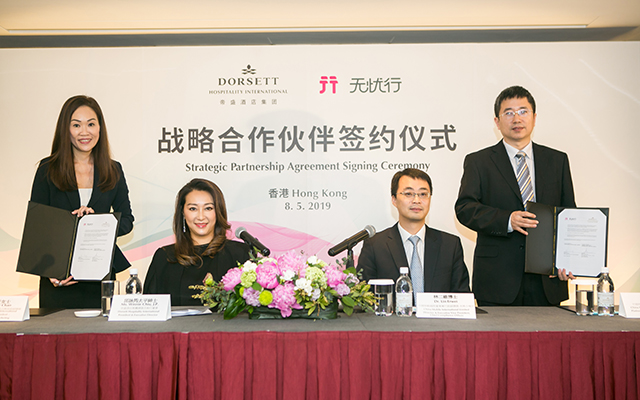
DHI's Winnie Chiu and JegoTrip's Ji Yong signing the partnership agreement
Dorsett Hospitality International (DHI) has entered into a strategic partnership with JegoTrip, an integrated digital travel platform developed by China Mobile International (CMI).
The cross-platform collaboration will act as a one-stop shop for travel related services such as communication, accommodation, entertainment and more for Chinese outbound travellers.
DHI’s Winnie Chiu and JegoTrip’s Ji Yong signing the partnership agreement
A key project from this partnership is the member-matching programme, offering JegoTrip VIP members a free membership upgrade to the next tier when they sign up for Dorsett’s loyalty programme, The Dorsett – Your Rewards.
The Dorsett – Your Rewards memberships come in four tiers – Basic, Silver, Gold and Platinum; and member benefits include room upgrades, free cancellation, 50 per cent off the room rate during birthday month, late check-out up to four hours, free breakfast and more.
The two companies are also in talks about four different projects under this partnership which includes booking Dorsett Hotels and managing them through the JegoTrip app; online and offline interoperability; integration of DHI accommodation and JegoTrip’s online travel products; and cross-marketing, where DHI will produce travel programmes and share it on the JegoTrip app.
Onyx Hospitality Group has appointed Paul Halford as general manager of the soon-to-open OZO Phuket at Kata Beach.
Halford joins Onyx with close to 20 years of hospitality industry experience at hotels and resorts in Australia, Vanuatu, Fiji and Thailand, including a 10-year tenure across multiple Radisson Hotel Group locations. Most recently, he was general manager of Park Plaza Bangkok Soi 18.
In his current role, Halford will lead the pre-opening and positioning of the brand-new Ozo in Phuket, scheduled to open in June 2019; the family-oriented resort will feature 255 rooms and suites.
This collaboration will benefit future hospitality students who will get to learn the ins and outs of the industry
Minor Hotels has established the Asian Institute of Hospitality Management in academic association with Switzerland’s Les Roches Global Hospitality Education, with the first campuses set to launch in Bangkok and Chonburi in September 2020 to support Thailand’s growing tourism industry.
“Our decision to partner with Les Roches stems partly from Minor Hotels’ rapid expansion, both domestically in Thailand and internationally – a growth spurt that sees us recruit over 6,000 additional staff members every year just to keep up with our expansion plan,” commented Dillip Rajakarier, CEO of Minor Hotels.
This collaboration will benefit future hospitality students who will get to learn the ins and outs of the industry
“It also ties in with our vision to set up a world-class Thai hospitality institute independent of any hotel brand to provide best-in-class bachelor’s degree education for real-world application, in the context of a fast-evolving business environment,” Rajakarier added.
The institute will offer certificates, diplomas and bachelor degrees in hospitality management in academic association with Les Roches, ranked among the world’s top three higher education institutions for hospitality and leisure management.
The Asian Institute of Hospitality Bachelor degree will be modelled after the Swiss education system and can be completed in seven semesters, or 3.5 years, combining classroom studies and practical training. Students who qualify will be offered opportunities to transfer to Les Roches campuses in Bluche, Switzerland and Marbella, Spain.
The institute will also offer development training for hotel industry professionals.
Minimum of three months for private housing rentals still applies
Minimum of three months for private housing rentals still applies
Singapore’s Urban Redevelopment Authority (URA) will not proceed with proposed changes to the rules for short-term stays, meaning the minimum stay duration of three months will continue to apply.
The decision was made after extensive consultations with different groups of stakeholders since 2015, announced URA in a press release.
Minimum of three months for private housing rentals still applies
A draft regulatory framework was proposed last April to allow owners at strata-titled developments to accommodate short-term stays if they have the consent of 80 per cent of the owners.
Under this framework, owners will also need to register their properties with URA, and observe an annual cap of 90 days per unit for short-term stays, among other requirements.
Results from a national survey commissioned by URA in the second half of 2018 showed the majority of more than 1,000 private homeowners were supportive of the proposed rules.
Only seven per cent expressed an intention to let out their homes or investment properties if short-term stays of less than three months were allowed in future.
Whether an OTA or travel management company, the focus for every business is more sales, greater efficiency and reduced costs. It’s a simple formula in a complex and highly competitive world, with competition continuing to turn up the heat. You’ve got to drive new business while at the same time keeping your existing customers happy without draining your resources.
The problem is, what may have kept customers with you 10 years ago no longer works today. New technologies have completely changed the way consumers behave and travel businesses have to adapt to stay relevant.
So, how do you increase profitability while maintaining customer loyalty? Here are three ways to ensure that you stay focused while operating in the best and most efficient way that maximises profitability and reduces poor time management.
Start by considering your sales funnel.
Provide an omnichannel touchpoint experience Holidays are about personalisation and building great experiences. Consumers now spend more time researching and seeking inspiration, and this is before they’ve even considered their destination. So, make the journey with you as consistent as possible. Start with live chat on your site. You’ll be able to respond immediately to any concerns, questions or doubts at the important the early stages of the sales funnel and build that relationship with them. Social channels and bricks and mortar branches should be an extension of the experience and the process must be seamless.
Offering services through multiple channels is complex, however, every customer is unique. They want to communicate across channels of their choice. Adobe made the point that every screen and customer interaction is an opportunity to connect and travellers are interacting with your brand 24/7 in all kinds of places. Your brand must believe in and focus on all channels.
Omni channel approach translate to big gains
A recent Gartner study found that integrating four or more digital channels outperforms single- or dual-channel campaigns by 300 per cent. That’s huge, but many brands still provide a very divided approach. A “single view” of customers that can be tracked across their journeys from start to finish whether online, mobile or email, enables travel businesses to offer a service and a product that resonates with travellers and customer segments. Data is used to identify opportunities to further improve the customer experience.
By connecting with travellers through so many channels, at various points in their journeys, allows brands to be part of a holiday experience as well as building trust and connections.
Providing useful and compelling content also maintains the dialogue throughout. Destination guides either at the booking process, in airports or at the hotel continues the connection throughout and maintains that single view. These value add-ons are also a great opportunity to upsell as travellers consider what they are going to do when they arrive at their destination
Videos, reviews and customer engagement Research company Forrester announced recently that 60 per cent of all traffic online comes from video. People who travel are an integral part of this process. They like to share their experience with friends and family with images and videos posted on social channels. This is great content and it’s capturing a wide audience.
Ask customers to share this with you by uploading on your website and social channels. You can encourage customers to leave their reviews by running a competition for the best safari or beach picture, then award a prize, give vouchers or a discount on their next holiday. Good reviews and images enable other travellers to get a clear idea of how the experience would be for them before making their choice.
Millions of people check reviews posted on OTAs and they want unbiased tips and advice.
So, make sure these are well managed. Take action on the negative comments and see them as ways to improve your services and better understand your market. It also helps to engage with your market and build relationships. Your brand may be working with the same customers for years because they trust you and know that they’ll get a great product.
This is what you want with all your customers, so keep them up to date with the latest deals, offers, hot spots to travel and so on. This will help them to find a travel product that fit them well. Good blog posts, local news channels and newspapers are also powerful tools you can use to engage your audience. Great customer reviews can improve your sales by five-fold
Can you automate parts of your business? Now let’s look internally. In the World Economic Forum report of 2017, it was estimated that by 2022 automation in travel and tourism will generate a value of around US$305 billion. The report adds that US$100 billion is expected to be transferred from traditional players to new competitors over the next few years. The message for companies throughout the travel sector is clear “stay ahead of the competition by embracing digital innovation and automation or risk being left behind.”
There has been a great deal of research into automation for the traveller too and it’s clear that today’s holidaymaker and explorer prefers tailored solutions according to their past preferences. However, while it may seem tempting to automate everything you can, it’s very wise to have a plan in place.
If we look at the post-booking process, for example, there are so many processes that take up valuable time and resources. Think client communication, queue management, ticketing, checking fare prices before and after the ticket has been issued and many more tasks performed by staff. All of these tasks are costly, resource heavy and expose the business to inefficiencies and missed revenue opportunities.
You may want to consider automating these processes. So, find the best automation tool and assign a team in charge of testing and implementing it gradually. Make sure that you fully understand the process you’re automating, evaluate the process and change it.
Help your team to adopt automation. While the system may be intuitive and versatile, automation technology which takes years to develop will only work as well as the people who use it.
Change for every travel business is not easy, but as an OTA and TMC, in order to compete, you must continue to evolve and improve. Listen to your customers, look at your workflows and consider how technology can help to improve the way you currently run your operation.
Dusit International has opened the Dusit Suites Hotel Ratchadamri, Bangkok – its first all-suite property – in the Baan Rajprasong building.
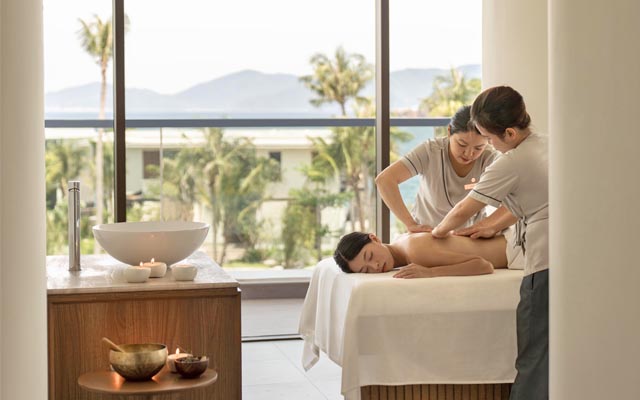
The rebranded property comprises 97 one- and two-bedroom suites. Each suite features contemporary Thai décor, an array of modern amenities, and two private balconies offering views of the cityscape or the Royal Bangkok Sports Club located just opposite.
One Bedroom Deluxe Suite
Facilities include a free-form swimming pool, a separate children’s pool, Jacuzzi, sauna, gym and a Dusit Gourmet outlet located on the ground floor.
Following the temporary closure of Dusit Thani Bangkok in January this year, Dusit introduced two new business units staffed by team members from its flagship hotel – Dusit Events, a high-end catering service for corporate, government and social events; and Dusit on Demand, an on-demand housekeeping, engineering, banqueting, and/or stewarding service for businesses based in Bangkok.
In 3Q2019, DTC will also launch Baan Dusit Thani, in a traditional Thai house on Soi Saladaeng in Bangkok’s Silom.
The old town of Xizhou (pictured) will be hosting part of the Mekong Tourism Forum 2019
This year’s edition of the Mekong Tourism Forum (MTF) will be held on May 28 and 29, hosted by the Ministry of Culture & Tourism of China (MCT) and the People’s Government of Yunnan Province in collaboration with the Mekong Tourism Coordinating Office (MTCO).
The two-day event will be held in Dali, and the heritage town of Xizhou in Yunnan in south-western China. The theme for this year is Tourism – a driver for cultural heritage preservation and poverty alleviation.
The old town of Xizhou (pictured) will be hosting part of the Mekong Tourism Forum 2019
The first day (May 28) will start off at the Dali Conference Centre, and feature the official opening, and MTF keynotes and sessions.
Mekong Tourism initiatives for the first day’s session include the launch of a new Mekong Trends Report on Responsible Tourism in the GMS (Greater Mekong Subregion), the introduction of the new Experience Mekong Collection website, and the screening of videos from the Mekong Mini Movie Festival campaign.
One of the two keynotes of MTF 2019 will be Brian Linden, the owner of Linden Centre hotel in Xizhou, looking at how sustainable tourism is shaping the industry development.
The afternoon keynote will be given by Mei Zhang, founder of travel company Wild China. The Dali native will take MTF 2019 delegates on her own personal journey of Yunnan, and relate the importance of connecting culture with tourism to achieve heritage preservation, poverty alleviation, and sustainability.
The day will close with a gala dinner hosted by the People’s Government of Yunnan at Dali International Hotel, next the conference centre.
The second day (May 29) will be hosted in the heritage town of Xizhou, located 20km north of Dali Old Town and part of the Dali Bai Autonomous Prefecture in north-western Yunnan.
In the spirit of showcasing sustainability and inclusivity, Jens Thraenhart, executive director of the MTCO, revealed that MTF’s cultural learning experiences will be held in small artisan businesses and lunches served in local restaurants.
Registrations for this year’s MTF are free of charge for travel and tourism professionals. In order to secure a place, delegates are asked to follow the online registration process, including submitting a valid Chinese visa.
For more information about the 2019 MTF, visit www.mekongtourismforum.org.
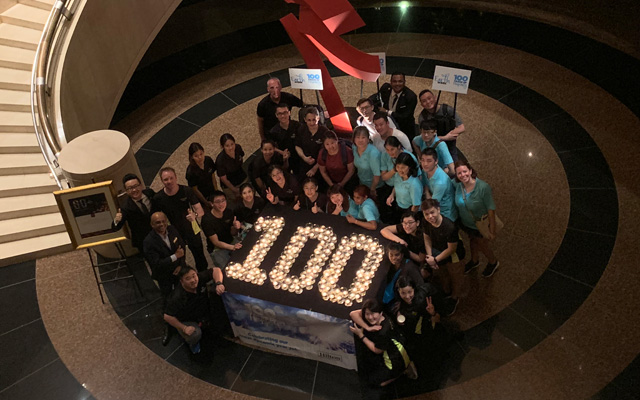
Trio of Hilton hotels coming together to observe Earth Hour
To celebrate the 100th anniversary of Hilton, three hotels in Singapore managed by the US hospitality group have committed to a year of giving back to the community.
Across the span of the year, more than 260 staff from the three hotels will volunteer over 800 hours through various partnerships with non-profit organisations and volunteer communities.
Trio of Hilton hotels coming together to observe Earth Hour
Conrad Centennial Singapore, Hilton Singapore and Hilton Garden Inn Singapore Serangoon have signed on to champion the initiatives ranging from community outreach to charity fund raising, and driving awareness on caring for the environment, in line with the company’s CSR mandate to reduce the company’s environmental footprint by half and double its social impact.
Efforts included a walkathon-clean up during the recent Earth Hour 2019 in March to raise awareness and drive change for nature. The joint walk started from Hilton Garden Inn Singapore Serangoon to Hilton Singapore and ended at Conrad Centennial Singapore. In addition, all non-essential lights at the three hotels were dimmed for over 100 minutes.
Moreover, 25 team members from Hilton Singapore will conduct a full-day refresh exercise for the home of a low-income family and take part in community activities of clean-ups at parks and beaches in Singapore.
The newest addition to the Hilton family, Hilton Garden Inn Singapore Serangoon, will be celebrating its second anniversary on June 1, 2019 by engaging Krishna’s Kitchen, a local soup kitchen to cook for its team members in return for a token donation that will go towards providing meals for the needy in Singapore.
Everything that we know about travel today, from driverless cars to navigating airports with the help of humanoid robots to big data anticipating our travel needs even before we know them, is a far cry from 1974, the year the first issue of TTG Asia was published.
Travel then was hardly the way we know it today. In 1974, Paris’ Charles de Gaulle Airport had just opened as the biggest airport in Europe; air travel was glamorous and people dressed up for their flights; while Bali, Bangkok or Shanghai did not register on travel radars yet.
The ensuing four decades have brought phenomenal changes to the world we live in – technologically, socially and economically. In these 45 years, TTG Asia has also remained at the centre of chronicling industry change, growing and developing into a leading travel trade publication.
As TTG Asia marks 45 years of publication, we’re commemorating this milestone with a special anniversary issue this month. We look at what make the travel and tourism industry great, and what will make it greater, putting the spotlight on how a new generation of leaders, companies and ideas will shape the future of the industry.
But the success of TTG Asia was not built by the company alone but by a community – i.e. you, the readers, whom this magazine was created for. Many industry members, past and present, old and new, for their part in shaping and contributing to the many vital and vibrant conversations over the past 45 years. Not to mention the advertisers who supported the magazine over the years, for without them there would not be a publication at all.
Indeed, it’s been a honour and pleasure to be part of the travel fraternity in Asia, and also be part of the this 45 years of influential and authoritative journalistic effort covering the regional travel trade.
We always felt that we have a role to fill in the Asian travel trade, by bringing the hottest topics in the industry to the fore and to share views that matter. When readers give feedback that the magazine helped them secure a business connection or informed them on a topic that aid them in running the business, it gives us a deep sense of satisfaction and pride.
No one can say for certain what the next 45 years will bring, but what we do know is that the pace of change isn’t slowing. Travel is at the cusp of an exciting, uncertain and fascinating moment in history.
With international tourist arrivals reaching 1.4 billion in 2018, the opportunities and challenges we face as travel business professionals and as citizens of the world have never been more important, more laden with responsibility, more brimming with potential.
We’re excited to be your guide and partner as we chart the future together.
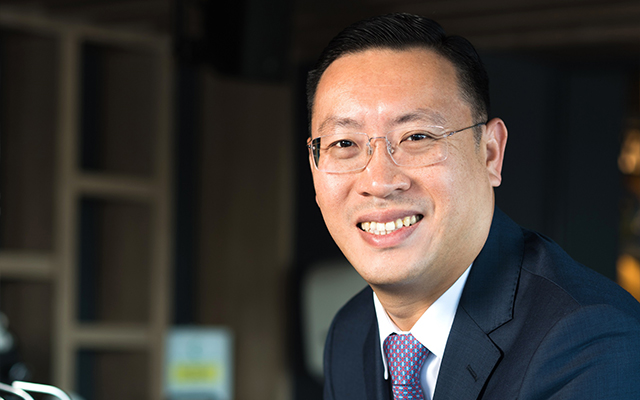
Kanit Sangmookda has been appointed as general manager of Le Méridien Kota Kinabalu, following his most recent role as general manager for Le Méridien Jakarta.
Born in Thailand, the hospitality veteran brings with him more than 19 years of experience, having worked in international chain hotels including Marriott International, Minor Hotel Group and former Starwood Hotels and Resorts.
Kanit began his hospitality career as a reservation agent in JW Marriott Hotel Bangkok. He was then appointed as director of revenue management at Bangkok Marriott Resorts & Spa and The Westin Kuala Lumpur, as well as the regional director of revenue management for Starwood Hotels & Resorts – South-east Asia. He then moved to Sabah, where he served as general manager of Four Points by Sheraton Sandakan for nearly three years.



 Whether an OTA or travel management company, the focus for every business is more sales, greater efficiency and reduced costs. It’s a simple formula in a complex and highly competitive world, with competition continuing to turn up the heat. You’ve got to drive new business while at the same time keeping your existing customers happy without draining your resources.