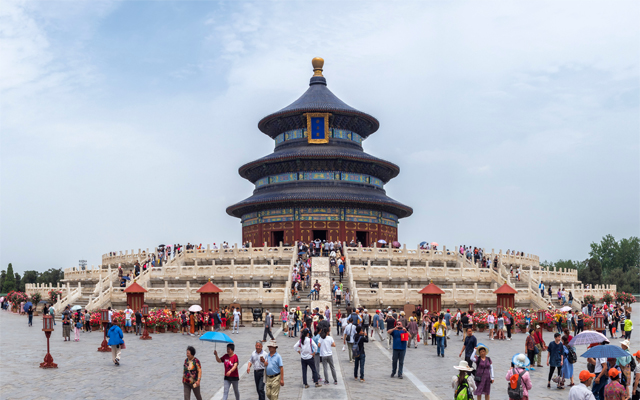
Tourists at the Temple of Heaven, one of Beijing's attractions
Beijing is aiming to further grow its inbound arrival numbers by dangling perks such as a seven-day transit visa-free policy, sales tax rebates and cash subventions for international MICE groups.
The aim this year is to further push foreign arrivals into China’s capital past last year’s four million, shared Zhang Hongyi, director, Beijing Municipal Culture and Tourism Bureau, at the sidelines of the recent PATA Annual Summit 2019 in Cebu City.
Tourists at the Temple of Heaven, one of Beijing’s attractions
While Zhang did not disclose the growth target this year, data from Beijing Municipal Bureau of Statistics indicated the four million arrivals last year was two per cent more than in 2017. Of the four million, 1.7 million hailed from Asia.
And although Beijing offers a 144-hour visa-free transit, this initiative is not well-known to international travellers. The policy, which has been implemented since December 28, 2017, indicates that foreign travellers from 53 countries who hold valid travel documents and air tickets for an onward journey to a third country, can make use of this visa-free transit.
Eight tours also have been created by the tourism administration for layover passengers – Imperial Cultural, Great Wall, Museum, Folk Craft Experience, Chinese Medicine, Culinary, Night Entertainment and Olympic Winter.
In addition, Beijing’s sales tax refund policy enables tourists, staying for less than six months, up to 11 per cent tax rebate at over 500 designated stores for purchases valued at RMB500 (US$72) or more.
On the international MICE front, China’s capital city also offers cash subvention, subject to several criteria, in addition providing assistance for pre-tour arrangements, city support letters and promotional materials.
When the Beijing Daxing International Airport – the city’s second airport – opens in September this year, it is expected to improve accessibility to China’s capital, said Zhang.
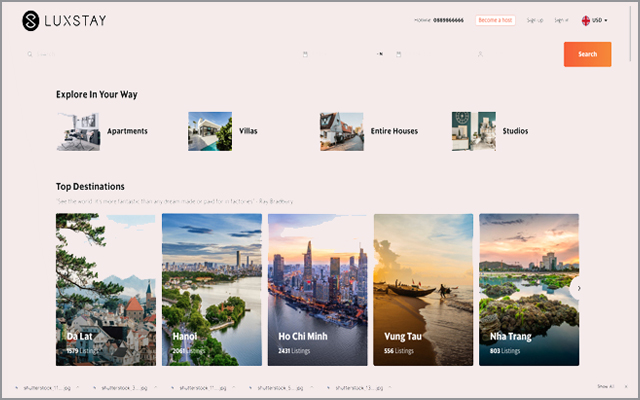
Vietnam-based tech startup Luxstay has completed its bridge round of funding with the participation of two new investors from South Korea – GS Home Shopping (GS Shop) and BonAngels – worth US$4.5 million.
Other top-tier capital investors for the home-sharing platform include CyberAgent Venture (Japan), Genesia Ventures (Japan), ESP Capital (Singapore), Founders Capital (Singapore), and Nextrans (South Korea).
A screenshot from the Luxstay website
Luxstay differentiates itself by focusing on premium products and domestic tourists, and is collaborating with local partners in countries with a large number of inbound tourists to Vietnam, such as South Korea and Japan.
GS Home Shopping, part of the GS Group, is South Korea’s foremost multimedia retailer, as well as a global leader in TV home shopping. Its Corporate Venture Capital arm is a global strategic investor, investing through fund as well as direct investments. Next, BonAngels is a venture capital fund that focuses on investing in early-stage companies startups in South Korea such as Woowa Brothers, Daily Hotels, and My Real Trip.
These investors will be important connections for Luxstay to other strategic partners and investors in South Korea to implement the company’s ambition and expand its scale.
After a two-year development, Luxstay is in the process of working with financial investors and strategic partners to deploy the next round of capital, looking at raising their Series A this year. The company is also targeting an annual turnover of over US$300 million in 2023, accounting for about 30 per cent of the market share.
According to the Vietnam National Administration of Tourism, Vietnam served about 80 million domestic and 15.6 million foreign tourists in 2018. In particular, there were 3.5 million South Korean tourists, a growth rate of 44 per cent since 2017 – the fastest ever, while the overall growth rate of foreign visitors is 20 per cent yearly. Total spending for tourism in 2018 amounted to US$25 billion, of which the accommodation sector accounted for 28 per cent, equivalent to about US$7 billion, and this is expected to increase to US$13 billion by 2025.
While the market of homesharing is still fairly new in Vietnam, the revenue from these short-term rental activities in 2018 amounts to over US$100 million (according to Statista reports), which signifies substantial growth yet is quite moderate compared to the total accommodation market of US$7 billion. In developed countries, homesharing accounts for 10 per cent to 20 per cent of the home-rental market. This shows a huge opportunity for this industry in Vietnam, which is expected to reach US$2 to US$4 billion in 2025.
Vietnam-headquartered Hai Au Aviation has inaugurated its latest route between Danang and Hue.
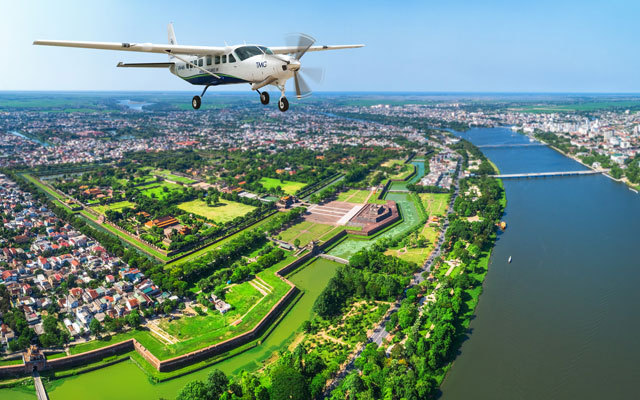
The new, daily, 40-minute flight between Danang International Airport and Phu Bai International Airport includes an aerial tour of the destination city. Passengers who book the new route can also choose scenic flights lasting 30 minutes over Danang or Hue only, taking in sights such as Danang’s Son Tra Peninsula and its 30km-long coastline as well as Hue’s Citadel, Imperial Enclosure, and coastal lagoons.
Hai Au Aviation’s flights include scenic tours over the destinations it flies to
The aircraft used for this route will be the 12-passenger Cessna Grand Caravan 208B-EX, a single-engine aeroplane.
To mark the commencement of this new service, Hai Au Aviation is offering 30 per cent off regular rates applicable to all scheduled transfer and scenic flights along this new route from now until September 30, 2019.
Apart from daily flights between Hanoi and Halong Bay, and Danang and Hue, Hai Au Aviation also offers charter flights to over 20 destinations in Vietnam.
Globally, wellness has emerged as one of the most popular ways to spruce up hospitality offerings, but the new Mövenpick BDMS Wellness Resort Bangkok wants to go a step further – by tapping world-class physicians and latest molecular science in its lifestyle and wellness destination resort proposition.
An urban retreat tucked among greenery in Bangkok’s Ploenchit area, the new 293-key destination spa resort is clearly leveraging its connection, with owner Bangkok Dusit Medical Services (BDMS), Thailand’s largest private hospital group that bought the former Swissôtel Nai Lert Park Bangkok in 2016.
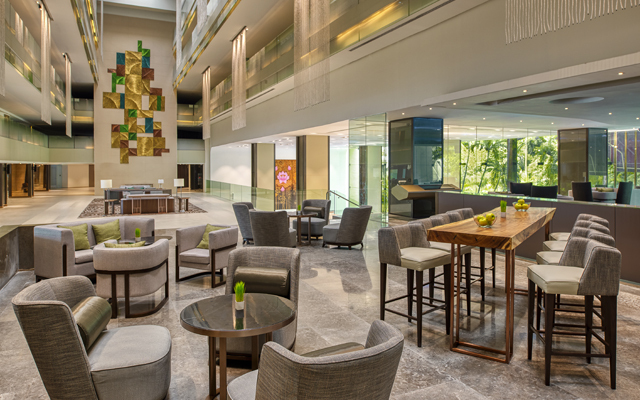
Movenpick BDMS Bangkok’s Lobby Bar
Speaking to TTG Asia ahead of the property’s soft opening on June 1, Mövenpick BDMS Wellness Resort Bangkok general manager, Bruno Huber, said that the resort’s access to doctors and medical experts, and its correspondingly body of knowledge and services in the field, are what distinguish it from other wellness properties in Thailand.
Mövenpick BDMS Wellness Resort Bangkok is conceived as a destination spa resort promoting long and healthy living, not unlike wellness resort titans such as Canyon Ranch in the US, Huber emphasised.
“We are not a hospital but a spa. It’s a hotel for healthy people, and we’re into prevention (of illnesses) and not fixing (them),” he stressed. “We have all the science behind it, as well as all the medical equipment.”
Next door, the BDMS Wellness Clinic – a purpose-designed wellness and illness prevention centre – offers a wide array of wellness treatments and illness prevention therapies, spanning health screening to chromosome/DNA testing to fertility programmes.
Movenpick BDMS Bangkok’s swimming pool
Furthermore, “explosive growth” in wellness tourism worldwide in the last decade makes it an opportune time to launch the Mövenpick wellness property in Bangkok, said Huber, especially as the Thai capital is already an established medical tourism hub in region and the Tourism Authority of Thailand is keen to develop the country’s wellness travel sector to the next level.
While retaining the structure of the former Swissôtel Nai Lert Park Hotel in which Mövenpick BDMS Wellness Resort Bangkok now resides, the rest of the low-rise modernist architecture has been given a major overhaul, featuring an airy lobby with plenty of natural light, tiered corridors and lush greenery surrounding the premises in its latest incarnation.
Guestrooms start from an expansive 42m2, with each room offering wellness amenities like mood lighting, yoga mats and bouncing balls, and there are plans to roll out vitamin C showers in the future.
Suites make up a significant ratio of the accommodation at 92 keys, of which 15 units feature Mövenpick’s “first in Asia” YouBed, a Swiss invention that allows adjustment of softness and hardness, according to Huber.
Established nutritionist Gabriela Kurz has been roped in as consultant to develop healthy, GMO-free menus for F&B offerings, as well as coffee breaks for corporate events.
Meanwhile, the resort has its eyes set on attracting health-conscious travellers seeking sanctuary-type accommodation in Bangkok, MICE market, corporates and embassies in the area, and long-stayers from the BDMS Wellness Clinic next door.
“We are also a convention hotel attached to such (wellness) facilities,” Huber pointed out.
The property boasts 2,000m2 of event spaces, including the Chamchuri Ballroom that can host up to 800 delegates, three meeting rooms that can be divisible into smaller rooms, and a host of function spaces across the property from private dining room in the all-day-dining Tamarind restaurant to outdoor receptions by the pool.
The hotel’s partnership with BDMS Wellness Clinic also gives it ready connections and access into the medical and pharmaceutical fields for MICE leads, although Huber stresses that the property is keen to court business events from all industries.
In the pipeline is a 780m2 spa, which will offer traditional Thai medicine using brand-new technology as well as non-invasive beauty treatments, and the signature restaurant – both of which are scheduled to launch with the resort’s grand opening this year-end.
Plaza Premium Group is targeting more than 40 new openings in China by 2024, looking to partnerships to navigate the cultural and regulatory challenges that come with penetrating the Chinese market.
Currently, the group manages two airport lounges in Beijing and six in Shanghai, in addition to the Aerotel airport hotel in Guangzhou.
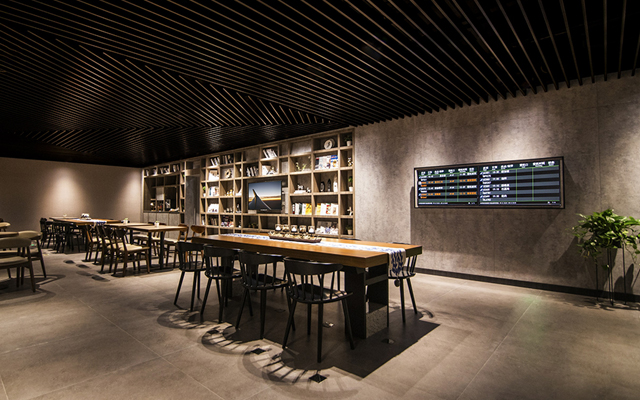
Aerotel Guangzhou’s Library Lounge
Business development director – China and regional general manager, Jenny Zhang, said: “China is a big market but it is not an easy one to enter. Even if you (have a foot in), it requires a lot of effort to maintain quality so collaboration with local partners like airlines and airports is a must.
“In next five years, we hope to spread our footprint to the top 10 airports in China.”
Projects in China typically take longer to materialise by about one to two years, due to entrenched culture and established systems, not to mention factors like regulations and politics, according to Zhang.
“As you know, airports are owned by government and therefore, we work mostly with large-scale, state-owned enterprises,” she said. This also means the group has to adopt a different, more flexible approach in China.
Acknowledging the difficulties for international players to enter the Chinese market, Zhang was quick to point out: “We are here to drive customer experience with premium services, not to replace existing operators. We hope to work together and blend in our ideas (and software). It is important to (introduce different products) to customers, which will make the pie bigger.”
With Shanghai a major hub, the group is in talks with Pudong International Airport for new opportunities such as VIP lounge management, given that some mainland airlines are seeking operators with international experience to uplift service quality, design and service flow.
It will also fly its Aerotel flag in the new Beijing Daxing International Airport, set to open in September 2019. Located at the Domestic Arrival Hall, the 929m2 Aerotel Beijing, scheduled to start welcoming visitors in October 2019, will feature a restaurant, private dining room, fitness area and two meeting rooms across two floors.
This is followed by an Aerotel in Qingdao, slated to open later this year. Plaza Premium has formed a joint venture company to manage a VIP lounge and an Aerotel in a relocated airport.
Elsewhere in China, Plaza Premium Group is also eyeing Wuhan and Chengdu in its expansion plans.
Zhang has high hopes for the new Aerotel concept in China. “In view of increasing demand for enhanced airport services and the distant location of big airports in China, Aerotel, which has rooms bookable by the hour, caters to passengers with early morning departures, late night arrivals and those in transit.”
This investment is part of the group’s global expansion, which includes a commitment to invest US$100 million into the China, India, Indonesia and US markets over the next two years.
When Yakov Slushtz lost his way during a hike with his wife, he also discovered the idea for WishTrip, a navigation app powered by user-generated trail content and recommendations.
“The seeds of WishTrip were sown when one of the founders and his wife got lost during a hike. They had tried to get reoriented by using (a navigation) app on their smartphones. But since that kind of GPS technology only works for marked roads, Waze couldn’t help them get back on track. Eventually, they found where they were going and it turned out not to be very far from where they were,” shared Uri Keren, chief revenue officer of WishTrip.
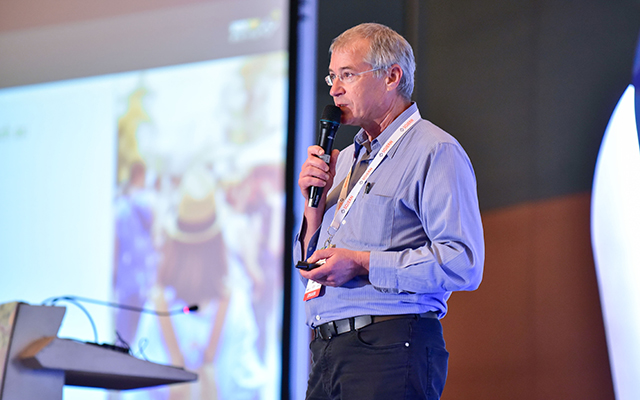
Uri Keren, CRO of WishTrip, speaking at an event
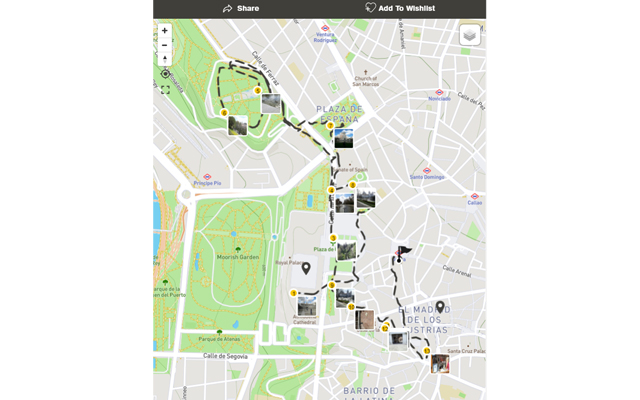
At its core, Wishtrip helps people record their travels. The startup brings content together on a single platform, enabling users to access trails and ideas shared by other travellers.
A year after it was founded, the WishTrip app now has over 500,000 users and more joining daily. Today, there are WishTrippers in over 80 countries who have created over 30,000 trails. “Part of this growth is being fuelled by the fact that WishTrip operates in 14 languages. This feature allows visitors to view content from tourists from around the world,” Keren said.
WishTrip fits right in with the habits and motivations of today’s always-connected travellers. “In an age when user-generated content on social media is having a growing influence on travel decisions (and as travellers seek brands they can trust), WishTrip’s interface allows users to instantly add images, videos and even voice narration to a trip that they are recording. The final completed album can also be shared with friends and family on social media,” Keren told TTG Asia.
While addressing the evolving needs of today’s travellers, WishTrip also hopes it can help create smart destinations that “strike a balance between positive economic, societal and environmental impact”. Indeed, more of today’s travellers are looking to deviate from well-trodden tourist paths, while destinations and local communities are also searching for solutions to alleviate crowding in popular tourist spots.
WishTrip can also help destinations with promotion and marketing in this Internet age
Despite the obvious FIT applications, Keren was quick to point out that the app’s use spans the travel ecosystem.
“For destinations, WishTrip provides a management platform to create, manage and promote their destinations, and offer interactive, explorable, multilingual information, points of interest, and tours & activities. For local tour operators, WishTrip provides a platform to create and promote self-guided city tours and treks in nature, and an app for their customers to explore these self-guided tours independently or with a local guide.”
In allowing travel businesses to promote self-guided city tours, WishTrip also offers opportunities for branded tour content.
“Once visitors arrive, WishTrip promotes its clients by branding any trails or images created by tourists while at a site with the client’s logo. This logo also appears when content is shared on social media,” said Keren.
Moreover, businesses can use the content generated by their WishTrip customers for marketing purposes. “In short, we make the experiences available to tourists in a destination more transparent and ‘real’, and help our customers promote their destination, engage with visitors, and leverage their current visitors for their marketing. “
Beyond that, the app can help tourism players enhance service delivery, including when it comes to tourists’ safety and security.
“WishTrip also makes it easier for destinations and attractions to keep their visitors safe, via navigation and communication tools that help keep tourists out of potentially dangerous areas. In addition, push notification and live chat features facilitate a constant flow of communication between visitors and the places they’re visiting.”
Having amassed a sizeable user base, WishTrip is making several enhancements to the app. Recently, its R&D team added features that now make it possible for WishTrip users to navigate to a site. And once they get to exactly where they want to be, another new feature enables WishTrippers to navigate and explore a site or on a trek.
Keren shared: “We are planning to expand our offerings to provide a shared economy module for self-guided tours and local experiences that will allow anyone to create, manage and promote self-guided tours.”
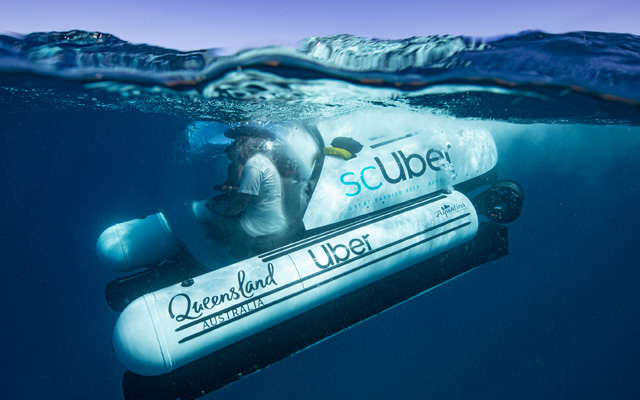
This underwater ride is the first of its kind and will offer an unfiltered lens at the Great Barrier Reef
Tourism Events Queensland is partnering Uber to launch scUber, the world’s first rideshare submarine experience, in the Great Barrier Reef.
scUber will also support the ongoing protection and conservation of the world’s largest coral reef system through Uber’s partnership with Citizens of the Great Barrier Reef.
This underwater ride is the first of its kind and will offer an unfiltered lens at the Great Barrier Reef
From May 27 to June 18, scUber will be available for a limited number of riders to request through the Uber app.
The scUber experience will be rolled out in Heron Island, off the coast of Gladstone in the Southern Great Barrier Reef region from May 27, before moving to the coast of Port Douglas in Cairns & the Great Barrier Reef region from June 9.
Priced at A$3,000 (US$2,073) for two riders, the experience includes:
– pickup and drop off from rider’s location with the Uber app;
– scenic helicopter ride to either Heron Island (for riders requesting from Gladstone) or the Quicksilver Cruises pontoon off the coast of Port Douglas (for riders requesting from Cairns, Port Douglas and Palm Cove);
– one hour ride in a scUber submarine;
– a half-day snorkel and tour of the Great Barrier Reef
Tourism Events Queensland’s CEO, Leanne Coddington, commented: “In late 2018, consumer research identified that exploring the Great Barrier Reef in a submarine was the most desired future travel experience sought by visitors. scUber makes this wish a reality and reaffirms Queensland tourism’s commitment to providing locals and visitors alike with truly remarkable ways to explore nature’s wonderland.”
Macau saw 182,000 visitors over the recent seven-day National Day Holiday period
The Hong Kong-Zhuhai-Macao Bridge (HZMB) has been bringing high-spending visitors to Macau, according to a recent study by Hong Kong-based marketing research firm CSG Research.
During the research period, visitors who travelled to Macau via the HZMB have spent MOP4,280 (US$530) per head on average, 32% (MOP1,038) more than those who arrived through sea ports (Macau and Taipa Ferry Terminals). In addition, visitors who arrived in Macau via the HZMB spent more than double (117%) on shopping, as well as 40% more on entertainment than those who travelled to Macau through sea ports.
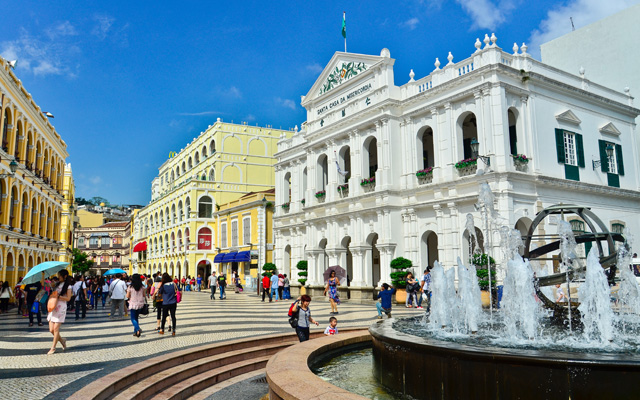
Visitors who travelled to Macau using the Hong Kong-Zhuhai-Macao Bridge have been found to spend more than those arriving at sea ports; historic centre of Macau with tourists pictured
According to the data from Macau’s Statistics and Census Service (DSEC), the total number of people who entered the HZMB daily stands at 15,836, bringing the total number of visitors to 1.5 million in 1Q2019, which was 14.1% among all Macau visitors (10.4 million). Those high-spending visitors who travel to Macau via the HZMB could potentially generate MOP 16.4 million in additional revenue.
In addition, due to easier access brought about by the HZMB since its opening in October 2018, the study also found that 78% of visitors who travelled via the bridge expressed their intention to visit Macau more frequently while only 32% who travel through sea ports would like to revisit Macau.
Moreover, while 37% of visitors who travelled via HZMB stated that they would stay longer in Macau, only 17% of those who entered Macau through sea ports stated the same intention.
Visitors who entered Macau via HZMB also travelled in larger groups, the study revealed. An average group size of 2.6 persons was recorded, much larger than the 2.2 persons per group of those arriving through sea ports. Furthermore, 38% of visitors who travelled via the bridge entered Macau in groups of three or more, compared with only 24% of those who travelled through sea ports.
Derek Yu, research director of CSG, commented: “The HZMB is yet to function to its full capacity, as it is presently limited to licensed vehicles only. But official data has already shown that visitors’ numbers surged with 21% yearly in 1Q2019. From our study, it is estimated that the potential contribution of the bridge to the Macau economy is MOP16.4 million per day.
“The increasing importance for these high-value visitors to shop and enjoy entertainment provides opportunities for Macau to establish itself as a destination which offers the best entertainment and world class shopping,” he added.
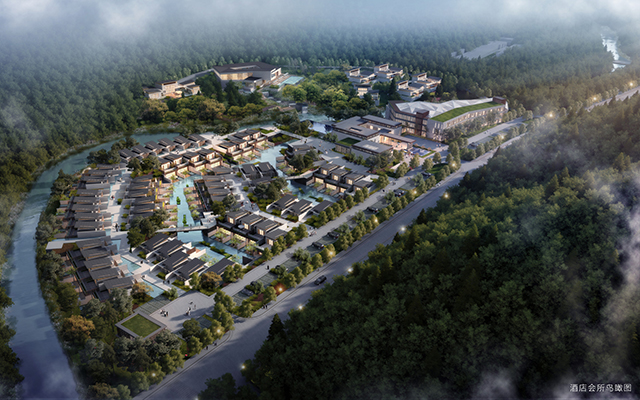
A rendering of the upcoming Dusit Thani Hot Springs Wugongshan
Thailand-based Dusit International has signed a hotel management agreement with Jiangxi Honglv Real Estate to manage Dusit Thani Hot Springs Resort Wugongshan, in China’s south-eastern province of Jiangxi.
Scheduled for a 2021 opening, the province’s first internationally-branded hot springs luxury resort will have 300 guestrooms and suites. The piece de resistance will be the outdoor and indoor hot springs providing a choice of therapeutic, aromatic, splash and foot reflexology pools.
A rendering of the upcoming Dusit Thani Hot Springs Wugongshan
Other facilities will include an all-day dining restaurant, a fully equipped gym, a swimming pool and a luxury spa.
The resort is approximately 30 minutes by car from Pingxiang High-Speed Train Station in the south-east of Pingxiang City, Jiangxi Province. Nanchang, the capital of Jiangxi Province, and Changsha, the capital of Hunan Province, can both be reached in one hour by high-speed train.
Represented in China by Dusit Fudu Hotels and Resorts, Dusit International currently operates six hotels in China and has 30 properties in the pipeline. Dusit recently signed hotel management agreements for Dusit Thani Longcheng, Changzhou, Jiangsu; and Dusit Thani Dali, Yunnan.
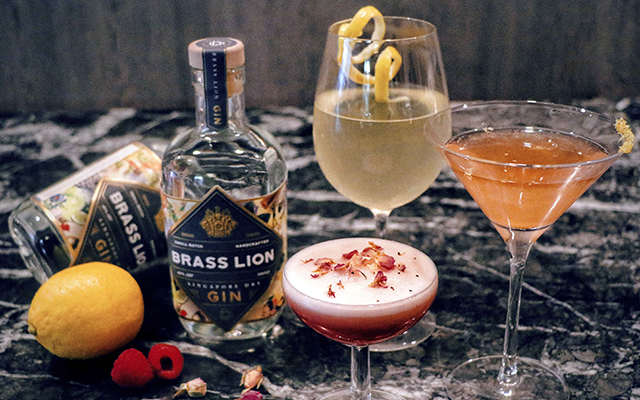
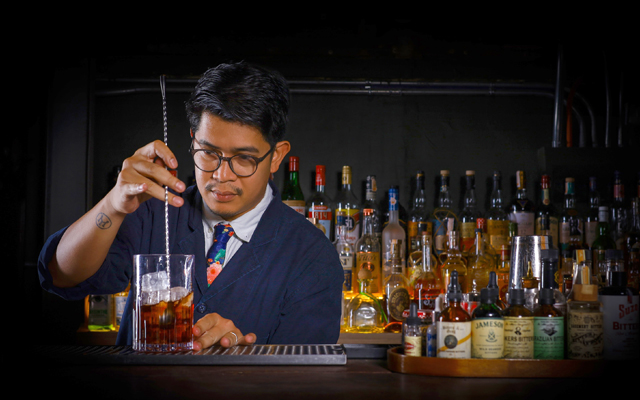
Brass Lion Distillery, Singapore’s first standalone micro-distiller
In celebration of World Gin Day on June 8, Oakwood Premier OUE
Singapore has collaborated with Brass Lion Distillery – Singapore’s first standalone micro-distillery – to launch a Oops, I’ve Ginned! Staycation Package.
Prices start from S$380++ (US$276) per night, and the package includes a stay in a one-bedroom serviced apartment; complimentary breakfast for two at SE7ENTH restaurant; a DIY cocktail kit comprising a full-sized bottle of Brass Lion Distillery’s Singapore Dry Gin and other ingredients for two; a guided tour of Brass Lion Distillery for two on Saturdays at 17.00; and complimentary Wi-Fi.
Brass Lion Distillery has collaborated with Oakwood for a staycation package
Guests may opt to have their names on the bottle to bring home as a keepsake, where the personalisation service comes at an extra cost.
To learn more about the tipple, guests may also join the guided tour to learn more about the distillery and its hand-crafted distillation process over a welcome cocktail. The craft spirits maker will also cap off the tour with a tasting flight of three different gin expressions. Transport to and from the distillery will be arranged by Oakwood.
In addition to this offer, The Bar at Oakwood Premier OUE Singapore has teamed up with Brass Lion Distillery to whip up three concoctions – Coco Clover, French 75, and BLD Martini – featuring the Singapore Dry Gin. Guests may also purchase bottles of the Singapore Dry Gin at S$108++ per bottle.
The Oops, I’ve Ginned! Staycation Package is available for stays from Saturday to Sunday from June 1 to December 1, 2019. Reservations can be made from now until November 20, 2019. Terms and conditions apply.