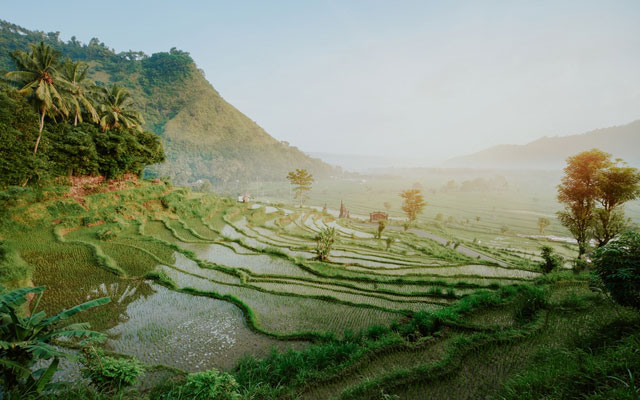
The year 2018 was a challenging year for Myanmar’s tourism sector as Western tourist arrivals continued its downward trend, but the trade is hopeful that 2019 will mark a turnaround as the year started on a positive note with foreign investments and arrivals on the up.
Myanmar Tourism Marketing reported 160,000 tourist arrivals in January 2019, a 20 per cent year-on-year increase. Not only did overseas tourist numbers increase, the number of domestic tourists visiting sites as Bagan, Kalaw or Inle Lake saw double-digit growth, leading to fully booked hotels during Myanmar’s holiday periods.
Tourists visiting Myanmar’s Inle Lake
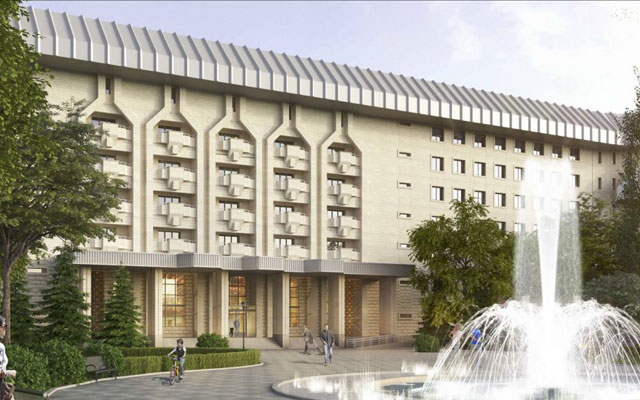
International brands such as Courtyard by Marriott and Sheraton are set to open in Yangon. Rosewood Hotels & Resorts has been appointed by Prime Residence to manage Rosewood Yangon, as the brand’s first property in Myanmar and seventh in Asia.
Meanwhile, in January, the American Society of Travel Advisors (ASTA) opened its newest chapter in Myanmar, along with plans to work on a variety of projects. These include a pavilion at the ASTA Global Convention in August and the Myanmar Road Show with activities including tourism education and training of US travel advisors.
Moreover, German wholesale company Metro this month announced its entry into Myanmar, allowing for greater trade engagements in the country that could contribute to economic growth in sectors such as agriculture, tourism and hospitality, said Philippe Palazzi, COO of Metro.
Also notably, the first Rakhine Investment Fair took place in Ngapali in February, where attempts were made to attract investors to join in the development of the state, especially its hotel and tourism sector. The fair was supported by the Myanmar Investment Commission and the Rakhine state government, and co-organised by Japan International Cooperation Agency (JICA) and the Japan External Trade Organization (JETRO).
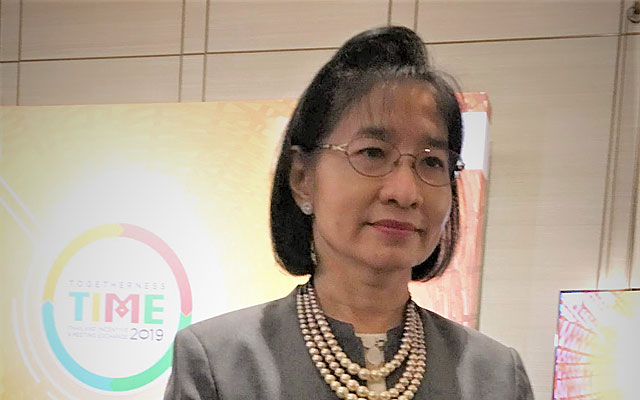
“As the last frontier of South-east Asia, Myanmar presents immense potential for foreign investment. And we continue to believe that tourism is a good way to connect people and to bring development and peace all over the country for any race or religion,” said May Myat Mon Win, chairperson of Myanmar Tourism Marketing.
The country adapted the foreign investment law late last year and made it possible for foreigners to buy 35 per cent of shares of a local company, with industry-specific examples including local guesthouse, restaurant, bar or hotel.
Thais may be bucking the tradition of returning to their hometowns for Songkran, according to Agoda.
The OTA says its booking data for the upcoming Songkran period shows Tokyo, Osaka, Seoul and Taipei taking up four of the top 10 spots.
Tokyo (pictured) took Bangkok’s crown in the ranking of Thai’s most booked destinations during Songkoran
This suggests a departure from the tradition of Thais returning to their hometowns to pay respect to their elders by pouring scented water onto their palms and visiting a temple to make merit, according to Agoda.
Agoda’s booking data show Tokyo usurping Bangkok as the most-booked Songkran destination, a title the Thai city held for at least the last two years.
Meanwhile, Thailand’s seaside destinations of Pattaya and Hua Hin held onto second and third destination for Thai travellers.
Fresh from a US$7 million Series B funding round, vacation rental startup AsiaYo is mapping an ambitious expansion in Asia that includes entering its first South-east Asian markets.
The Taiwanese startup completed its Series B, led by Alibaba Taiwan Entrepreneurs Fund and China Development Financial.
A screenshot from the AsiaYo website.
It has since announced its launch in Singapore and Malaysia in 2Q2019, in addition to plans to roll out a Japanese version of the online platform in 2H2019. AsiaYo currently manages over 60,000 listings in Taiwan, Japan, South Korea, Hong Kong and Thailand.
It is set to add more South Korean listings to its platform with its latest partnership with Yanolja, a unicorn that’s said to be the country’s largest accommodations booking platform.
The deal, which involves an exchange of listings between Yanolja and AsiaYo, adds to the latter’s stable of foreign tie-up including with Japan’s Rakuten Lifull Stay, Japan’s Neppan, Hong Kong Airlines, Taiwan’s KKday and Taiwan Host Association.
South Korea is a high growth market for tourism. The number of tourists between Taiwan and South Korea is increasing every year, with an estimated one million travelling each way.
With this partnership, AsiaYo estimates that the revenue from the Korean market will see double-digit growth this year.
In addition to the arrangements in North-east Asia, AsiaYo has been actively exploring the Chinese market, having set up an office in Beijing at the end of 2018. With Chinese tourists making over 30 million trips to Asia countries each year, the collaboration with Fliggy will attract more Chinese tourists to make reservations on AsiaYo for self-guided trips to various countries throughout Asia.
CK Cheng, founder and CEO at AsiaYo, said: “The biggest reason for naming the brand AsiaYo is that we wanted to be a cross-regional and cross-language platform from day one. I look forward to developing more listings from different countries and making use of a synergistic network to help travellers from all over the world find ideal accommodation easily, and to promote cultural exchanges as well as the local economy.”
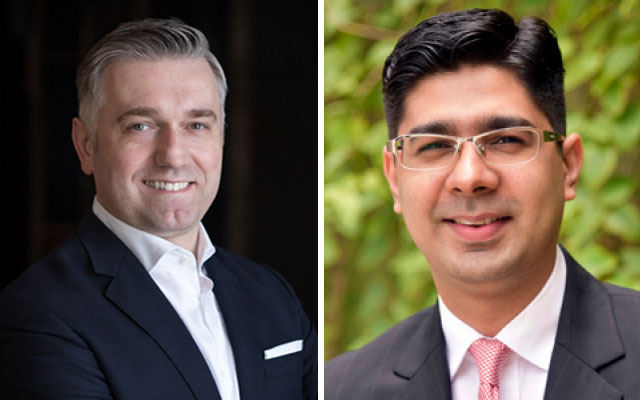
Le Méridien Singapore, Sentosa has appointed Rachael Harman as general manager.
With over two decades worth of hotel experience, Harman began her hotelier career with a F&B role at Sheraton on the Park, Sydney, before moving on to various roles at Sheraton Mirage Port Douglas, The Westin Melbourne and The Westin Auckland Lighter Quay.
In 2010, the Aussie moved to Malaysia to join The Westin Kuala Lumpur where during her six year stint, she was given key management positions including hotel manager and director of sales and marketing.
In her most recent role prior to her Singapore posting, Harman was general manager at Le Méridien Kota Kinabalu in Malaysia.
Major connectivity developments in Hong Kong have allowed travel trade players to better leverage tourism resources of the Greater Bay Area and China’s mainland cities to develop more multi-destination itineraries, seen as a strong draw for longhaul travellers.
Since the opening of the Hongkong-Zhuhai-Macau Bridge (HZMB) and the Hong Kong section of the Guangzhou-Shenzhen-Hong Kong High Speed Rail (HSR), the Hong Kong Tourism Board (HKTB) has been encouraging the travel trade to develop more tourism products featuring the Greater Bay Area.
Hong Kong West Kowloon High Speed Rail Station connects the city to Guangzhou and Shenzhen in southern China
A spokesperson from HKTB said: “Longhaul visitors to Hong Kong usually prefer multi-destination travel. According to the latest statistics, nearly 80 per cent of overnight visitors from Europe including Germany adopt multi-destination itineraries.
“The enhanced connections between Hong Kong and the mainland (brought about by the) new infrastructure will greatly enhance the city’s appeal to visitors from Europe, who are able to bundle Hong Kong with neighbouring mainland cities in their travel plans.”
At Four Seasons Hong Kong, regional director of marketing, Irene Tan, said: “Of the new infrastructure projects, the development of the cruise terminals and promotion of routes beginning and ending in Hong Kong have had the most noticeable benefit to date.”
Cruising demand is “definitely coming in” from Germany and other European markets, and hospitality players in Hong Kong could potentially benefit as couples opt to spend several days in the city pre- or post-cruise, she pointed out.
Moreover, while leisure travellers from Europe are still most interested in exploring the popular tourist cities in northern and central China – most accessible by plane – rail travel is expected to rise as an attractive alternative for those looking to explore China beyond the standard tourist routes, she remarked.
At Gray Line Tours, managing director Michael Wu is also optimistic that the new developments could stimulate the German-speaking markets, which he said have yet to return to their heyday since peaking a decade ago.
“The rail/road/cruise concept driven by the new infrastructural developments really give us new opportunities as well as a ‘twist’ to our tour products, especially to the Greater Bay Area. We can create multi-destination packages to woo Europeans. This not only strengthens the city’s role as a gateway to China but also helps us to get clients to stay longer.
“Trips starting and ending in Hong Kong offer new opportunities to take them to Foshan for handicrafts, Zhuhai for beaches and Guangzhou for culture. The loop covering Zhongshan, Zhuhai and Guangzhou sounds interesting. Europeans are interested in visiting more cities, and it’s easy to arrange a stopover of 10 days,” said Wu.
For Wu, the only stumbling block for now is that “there is no 144-hour transit visa access facilities at the HZMB and HSR stations in Hong Kong”. To get around this, the agency reminds travellers to apply for visas beforehand.
While infrastructural developments have created new opportunities to sell to longhaul markets, members of the trade point out that the benefits would take time to materialise.
HS Travel’s executive director Hazen Tang, for example, hasn’t seen any surge of demand from European markets.
He said: “It takes time for the market to digest new developments and products. However, I believe (they will be won over) in the long run as multi-destination (travel) is the direction to go.”
Meanwhile, ATI Travel’s managing director Richard Woss has not seen benefits on his business so far from the bridge, unless considering departures from Tuen Mun in north-west Hong Kong’s New Territories.
“It’s not time saving if I leave from downtown. I may take three hours to reach Macau if I count in transport to airport direction, queueing for shuttle and immigration, etc, unless one would like to experience the ride and beauty of the bridge. For the high-speed rail, there are some glitches like large-size luggage but it really shortens travelling time to China.”
Malaysia – more fun, longer stays
The opening of two new theme parks in Johor, the indoor MCM Studio and outdoor Desaru Coast Adventure Waterpark, has helped agents sell extended itineraries that include Malaysia’s southern region.
Adam Kamal, general manager at Tour East Malaysia, said Johor was previously a day trip option for families travelling to Singapore by land, or as for those travelling from Singapore to Kuala Lumpur.
The Kubarango in Sunway Lagoon
With the opening of both theme parks last year, it is now easier to promote Johor for one- or two-night stays, especially to Asian families. He said: “They could spend one day in Desaru and another day in Johor Bahru, visiting MCM Studio and other attractions in the city.”
Ally Bhoonee, executive director at World Avenues, is promoting Johor as a destination to Middle Eastern families, using the two new parks as a draw. “However, the main challenge is that the destination is not well-known to Middle Eastern travellers, who are more familiar with Kuala Lumpur, Resorts World Genting and Penang,” he said.
“There are other theme parks in Johor such as Legoland Malaysia Resort, Sanrio Hello Kitty Town and Angry Birds Activity Park, but those are for young children.
“However, MCM Studio and Desaru Coast Adventure Waterpark have opened the destination up to millennials and adults from Asia and Africa, which are also our core markets. Besides the theme park, there are also surrounding attractions that will make appeal to tourists from Asia and Africa such as shopping, soft adventure activities and food.”
Meanwhile, theme parks, new and old, are working to keep things fresh for visitors.
Arokia Das Anthony, director at Luxury Tours Malaysia, said theme parks are leveraging augmented and virtual reality experiences to stand out from the competition.
He pointed out: “Sunway Lagoon Theme Park in Sunway City, Petaling Jaya, is the oldest theme park in the Klang Valley but it remains relevant and popular as it caters to all ages and segments, including business events. Its Surf Beach, for example, is a popular venue for gala dinners and live concerts.
“(Sunway Lagoon) keeps up with times and constantly introduces new attractions and activities in line with current trends and festivities to make it a top-of-mind destination for theme park goers.
“(Their efforts) have made it easier for us to package Sunway Lagoon into our itineraries,” said Anthony. – S Puvaneswary
Hong Kong – ruled by duo
While Ocean Park Hong Kong and Hong Kong Disneyland (HKDL) remain the city’s key theme parks in the absence of new players, inbound agents are urging greater promotion of these two destinations in South-east Asian markets.
Holiday World Tours, managing director Paul Leung, noted that the new developments expected to open this year at both parks “are not huge” and may not be enough to attract new visitor sources or sustain traffic.
“After Ocean Park debuted its new hotel (Hong Kong Ocean Park Marriott Hotel) last year, the park doesn’t have many new facilities coming online this year,” said Leung. “Meanwhile, Hong Kong Disneyland suspended the fireworks at night and lost its charm.”
Likewise, W Travel, managing director, Wing Wong observed no big change on source of clients, explaining that new park additions appear to be driving more repeat visits.
Ocean Park plans to launch a ride enhancement, a new ride and a new animal exhibit in the fiscal year of 2019/20. The Lagoon area will also welcome additions including new light shows, a Thai restaurant and Neptune’s Restaurant.
Meanwhile, the long-awaited Water World will be introduced in 2019. Along with the new Ocean Park Marriott Hotel, these are expected to put the park in a better position to attract more visitors.
HKDL’s vice president for commercial strategy Edward Goh told TTG Asia: “We will present a new attraction almost every year under the ongoing multi-year expansion. This year, Ant-Man and The Wasp: Nano Battle! will debut on March 31, 2019. This will be the world’s first attraction featuring Marvel Super Heroes Ant-Man and the Wasp, and the first Marvel-themed attraction to feature a female superhero as a lead character, available only at HKDL. The attraction will appeal to guests of all ages and genders, especially young adults.”
On top of these enhancments, agents agreed that more overseas promotion is needed, especially in South-east Asian markets.
Leung further called for greater collaboration on package design within the industry. “(Without a push for) group tour business, industry cooperation is vital. This is especially true as OTAs compete head to head with us… Stakeholders such as hotels, airlines and attractions should create packages rather than depend (all on) inbound agents.” – Prudence Lui
Singapore – a virtual state of fun
While large-scale openings are rare in land-scarce Singapore, the nation has seen a slate of new technological additions to established parks, as well as smaller, contained attractions entering the scene.
Judy Lum, general manager of Diethelm Travel (Singapore), said such advancements in theme parks have “increased the product range” for families and young adults and that the “technology-driven activities are ahead of (Singapore’s) neighbours”.
In November last year, Korean virtual reality (VR) theme park HeadRock VR made its footprint in Singapore, opening 11 VR rides in Resorts World Sentosa. The rides span different concepts from adventure to horror, and will be updated every six months to a year.
“VR experience has become the new play culture all over the world. There is a demand for VR attractions for both tourists and locals,” said Park Hong Que, founder and CEO of Mediafront, the parent company of HeadRock VR.
Neighbouring attraction Universal Studios Singapore (USS) has been stepping up its game with seasonal events that employ VR and augmented reality (AR) technology.
For example, its TrollsTopia event – based on DreamWorks Animation’s movie Trolls – featured two immersive VR experiences where guests could play a music video game and create 3D virtual art. In a subsequent Jurassic World: Explore & Roar event, USS guests could interact with dinosaurs on a screen with the help of AR technology.
During last year’s Halloween Horror Nights 7 event, USS also employed AR in its queueing areas, where guests could use an app to scan real-world locations to uncover iconic horror characters on their phones and activate a game.
“It aided in storytelling behind each haunted house and kept guests occupied in the queue,” a Resorts World Sentosa spokesperson told TTG Asia.
“In this day and age, there is no running away from experimenting with new technology in creating memorable, fun experiences.”
As VR and AR rise in popularity, the technology must be relevantly employed, opined Lum. She said: “Most importantly, parks need to stay current and ahead with constant enhancements to sustain the interest of target markets. (Agencies) want to see quality, and not quantity.” – Pamela Chow
China – robust development
Theme park development is continuing to swell in China, with large-scale attractions by both local and foreign players opening at a rapid pace.
Chimelong Heng Qin Island
Industry sources indicated about 64 projects are in the pipeline and will be subsequently opened between 2019 and 2020. According to AECOM, China theme park visitation will reach 221 million, surpassing levels in the US.
Last November, Haichang Ocean Park inaugurated the Shanghai Haichang Ocean Park. Its Sanya Haichang Fantasy Town opened on January 20, 2019.
Their spokesperson noted: “This means more choices for visitors in Sanya, especially for visitors who spend the night in Haitang Bay area.”
Apart from plans to launch Qingyuan Chimelong Resort in late 2019 or early 2020, the Chimelong Group has also finetuned existing offers.
For instance, the second phase of Zhuhai Chimelong, including a new hotel and museum, is targeted to open in mid-2019, while a new circus entertainment centre will launch in Zhuhai in 2Q2019.
She said: “Agents can create a variety of packages to target different customers (including families).” Customised programmes for corporate and MICE customers, as well as for students, will also be rolled out.
Meanwhile, Wanda has mapped out an aggressive expansion plan for themed entertainment, hotels and resorts. For instance, the Guangzhou Wanda City is scheduled to open in 2019, featuring the biggest indoor ski facility in Southern China with four ski trails.
Century Holiday International Travel Group, deputy general manager, Kin Qin, believes there is more room for growth in the sector.
She said: “It’s because of our huge population and extensive territory. More establishments are opening up in second-tier cities riding on local culture or ancient tales. I hope to see these local brands find their positioning and direction, just like Chimelong Group’s successful marketing promotion in South-east Asia. They don’t have to be a Disneyland but must make sure to meet international standards in their facilities.
“I look forward to Universal Studio opening in Beijing as we haven’t had new attractions to sell the capital city for years. Theme parks provide opportunities to draw repeat visitors.” – Prudence Lui
Japan – land of plenty
Amid the flurry of developments in Japan’s theme park industry – including park enhancements and Chinese investment – tourism stakeholders remind that theme parks should retain a distinct concept and local elements to continue appealing to travellers.
In March, the Moomin Valley Park will open in Hanno, Saitama Prefecture to the north of Tokyo, allowing visitors to meet fairytale creatures from the books by Finnish illustrator Tove Jansson. A park extension offering a “Scandinavian lifestyle experience” opened in November.
Significant expansion work is also underway at Tokyo Disneyland, with US$656 million pumped into the Tomorrowland and Fantasyland zones, plus a Beauty and the Beast mini-land with a ride that uses next-generation animatronics.
Meanwhile, the Chinese owners of the Hamleys chain of toy stores have entered the Japan retail market with two large new stores, in Yokohama and Fukuoka, with merry-go-rounds, play spaces and gaming areas. The US$381.7 million project is a joint venture with Japanese video game firm Bandai Namco.
The operator of the Huis Ten Bosch theme park in Nagasaki Prefecture, southern Japan, has accepted an offer of investment from China’s Fosun Group. Domestic travel giant HIS will remain the largest shareholder in the park, but the Fosun Group is purchasing a 25 per cent share.
“New and better theme parks give us an opportunity to attract new customers to Japan, especially those who are interested in original Japanese content,” said Takashi Okamoto, head of inbound marketing strategy for travel giant JTB Corp, citing the Tokyo One Piece Tower and Studio Ghibli Museum as good examples of parks that appeal to foreign visitors.
“International theme parks like Universal Studios Japan (USJ) and the Disney parks are also popular with people from countries that do not have theme parks, while DisneySea and the new Nintendo Land that is to open at USJ in 2020 are expected to boost their popularity,” he said.
Okamoto stressed that key to sustaining growth in this sector is to continue to provide facilities “with a clear concept and featuring contents that can only be enjoyed in Japan”.
Similarly, Denis Morozov, manager of the inbound division of Tokyo-based JIC Travel Centre, said: “A park like the Studio Ghibli Museum or Edo Wonderland, which are unique to Japan, are incredibly popular especially with families.” – Julian Ryall
Thailand – lack of icons
Although Thailand saw the number of amusement parks soar in recent years, some industry sources say these local attractions still lack the selling power of international branded options available in regional rivals.
The Thai Amusement and Leisure Park Association (TAPA) reported that the surge in water parks in the past five years resulted in about 40 such facilities nationwide.
Pornthip Hirunkate, managing director of Destination Asia (Thailand), argued that the additional choice for tourist “helps extend the length of stay, especially among Asian repeat tourists”.
Adith Chairattananon, honorary secretary-general of the Association of Thai Travel Agents (ATTA), remarked that the high competition within Thailand’s theme park sector has been beneficial for tour operators and tourists.
Local theme parks “give the best value for money in Indochina”, according to TAPA president Wuthichai Luangamornlert .
Despite the sector’s expansion, Wuthichai observed that for tourists, theme parks were just an additional option on top of the country’s main selling points of culture, shopping and nature.
Adith pointed out that local parks cannot compete with international theme parks in the region, such as Legoland in Malaysia and Universal Studios in Singapore.
“We want world-class theme parks in Thailand. They will be power magnets to attract tourists and allow the creation of interesting tour packages,” said Adith.
This, however, could be a challenge, with Wuthichai noting that the heavy investment to bring international branded parks to Thailand is infeasible, given the country’s cap on ticket prices. – Chadamas Chinmaneevong
India – world-class parks needed
The recent emergence of theme parks in India is allowing agents to offer more than just cultural attractions, although many opine that theme parks in the country still lag behind their overseas counterparts.
“India is known as a tourist destination primarily for culture and heritage. However, new theme parks offer us an opportunity to provide other entertainment and recreation options to guests,” said Subash Goyal, chairman, STIC Travel Group.
Many in-mall themed attractions are opening in India. The Grand Venice Mall launched its entertainment and gaming zone – Mastiii Zone, featuring the first zip line ride of its kind in India.
Ski India, the indoor sci-fi themed Snow Park was also launched at DLF Mall of India, Noida, a ski resort replica offering ski rides, tubing, toboggan, bob sledge, penguin shows and a snow play area.
According to The Indian Association of Amusement Parks and Industries, the country’s amusement and theme park industry has been growing at a compounded annual growth rate of more than 17.5 per cent with annual revenue of approximately Rs17 billion (US$239 million), estimated to grow to at least Rs40 billion by 2020.
“Apart from Delhi NCR, the western Indian region has also seen the opening of good theme parks like Adlabs Imagica which is close to Novotel Imagica Khopoli, making it ideal for family holidays,” said Rajat Singhal, director, Leisure World Tours.
However, Singhal added that in terms of quality and scale, theme parks in India still lag behind those in Singapore and the UAE.
“We can’t compete in terms of theme parks. Our cultural and nature products will be the prime attraction for international travellers,” said Singhal. “If India has world-class theme parks like Disney World, it will be an added advantage for the Indian inbound segment,” added Goyal. – Rohit Kaul
Indonesia – wildlife over thrill rides
While theme parks are opening at a steady pace in Indonesia, amusement parks tend to be left out of tour programmes by the country’s major operators in favour of wildlife attractions.
In Jakarta, Ancol Dreamland has been continuously introducing new attractions, while the Jakarta Aquarium opened a couple of years ago.
Trans Property, which owns the Trans Studio Makassar and Bandung, is adding its third theme park in Cibubur in eastern Jakarta.
And in Batu, a small city in East Java, the Jawa Timur Park Group launched three Jatim Parks (named Jatim Parks 1, 2, 3). Jatim Park 3 recently saw the addition of the Dino Park, with 17 zones.
Meanwhile, Indonesia’s MNC Land, the developer of a 2,000ha leisure, entertainment and lifestyle MNC Lido City in Bogor, West Java has a new world-class theme park in the works. Among the attractions will be the favourite MNC TV’s animated programmes and movies.
Similarly, a Cartoon Network-branded park will soon open in Bali, while Mandalika Development in Lombok is also planning to add an internationally branded theme park.
However, many of the country’s theme parks are focusing on the huge domestic market and direct-to-consumer sales.
Renato Domini, CEO of Panorama Destination, said: “Theme parks attract travellers, but are not seen as a priority, (but a) value-add.”
Umberto Cadamuro, COO Inbound of Pacto, added: “The (top-performing parks) in our programmes are Taman Safari Indonesia and the Bali Bird Park. They have been able to (offer) an experience coupled with a high standard of animal care, with the first being suitable for any market and the second very popular in Europe. (The latter is) now becoming a must-visit in nearly all Indian tour operator programmes.” – Mimi Hudoyo
Diethelm's Kurz (left) and Christina Liew, the deputy chief minister and tourism minister of Sabah (photo credit: Diethelm Travel)
Diethelm Travel Group’s Malaysia office has entered into an MoU with the Sabah Tourism Board (STB) to increase joint marketing and promotion of Sabah in Malaysian Borneo to European markets.
Through the MoU, Diethelm Travel Kota Kinabalu will support STB in showcasing Sabah as a preferred destination to its European partners to encourage new and repeat visitors. New Sabah tours and excursions are also in development and will be available soon.
Diethelm’s Kurz (left) and Christina Liew, the deputy chief minister and tourism minister of Sabah (photo credit: Diethelm Travel)
According to Diethelm, Sabah – while rich in natural wonders, tribal culture, islands and wildlife – is still relatively new to European travellers.
“Malaysia is an ethnically, culturally and geographically diverse country, and nowhere is this more true than Sabah,” said Manfred Kurz, managing director of Diethelm Travel Malaysia. “We see incredible potential for further introducing Sabah to the European market. Between STB’s wealth of unique experiences and our vast network and direct marketing capabilities, we’re looking forward to inspiring a new wave of travellers to discover this magical destination.”
SIA to introduce greater wine selection and branded wellness cuisine, while extending option to pre-order meals to Premium Economy passengers
As full-service carriers continue to vie for market share in the face of low-cost competition, Singapore Airlines (SIA) looks to be on a mission to value add through in-flight dining and wellness experiences, announcing it will soon introduce an extensive selection of artisanal wine labels and new wellness cuisine by Como Shambhala.
Premium class customers can expect the widest selection of Burgundy wines in the skies, with 47 labels planned for rotation over a period of 18 months – a six-fold increase from 2018.
SIA to introduce greater wine selection and branded wellness cuisine, while extending option to pre-order meals to Premium Economy passengers
The introduction of these labels is made possible due to a new approach to sourcing wines, which saw SIA’s “wine consultants” personally visiting vineyards and wineries across different wine regions to taste and source for small-batch wines. This approach is in addition to what “the traditional way of procuring wines through tender requests”, SIA said in a statement.
According to the airline, this move will diversify its wine programme and provide greater variety for customers.
“By expanding the range of labels that SIA offers on board, we are able to ensure a well-planned rotation of wines to keep the palates of our frequent flyers continually excited. Customers can soon look forward to a new and exciting label delivered on board every two months,” said SIA’s divisional vice president inflight services and design, Betty Wong.
“During our wine consultants’ visits to the vineyards, we also actively sought out smaller maisons and domaines to bring them into the SIA family, thus allowing us to expand the depth and range of our offerings, and satisfy the rising demand for more exclusive Burgundy labels.”
The enhanced beverage programme was announced at yesterday’s World Gourmet Forum 2019, where SIA’s three wine consultants presented some of the wines that will be newly introduced on board in the coming year. This includes exclusive Grand Cru and Premier Cru labels from Faiveley, Benjamin Leroux, Domaine D’Ardhuy and Domaine de Montille.
SIA earlier this month announced it will introduce Como Shambhala’s wellness cuisine on selected flights in 2H2019. These dishes will feature seasonal ingredients. A new wellness menu featuring specially curated dishes will then be introduced across all classes, and co-developed dishes will progressively be made available in SIA’s Book the Cook service.
These latest initiatives are among the carrier’s recent efforts to enhance the passenger comfort experience. Since last year, SIA has teamed up with wellness brand Canyon Ranch to focus on wellness cuisines, rest and relaxation, and general well-being of passengers on board its three non-stop flights to the US.
At the forum yesterday, SIA also announced that Premium Economy Class customers will be able to pre-order main courses from its in-flight menu from May 1, 2019, a service that was first launched for its Suites, First Class and Business Class customers last year. With this new initiative, customers may pre-select their meal choices via the SIA website or mobile app anytime from three weeks before travel up to 24 hours before flight departure.
To give parents greater visibility and choices over the child meals in advance of travel, SIA will also enhance its Child Meal programme to enable parents to pre-order specific meals for their children from three different cuisine categories – Asian, Western and vegetarian. Parents can visit the airline’s website up to 24 hours before the day of travel to view and select the dishes planned for their flight.
Airbnb is offering compensation to guests affected by the "sudden" development
On the heels of its HotelTonight acquisition, Airbnb is reportedly in talks to invest around US$100-200 million in SoftBank-backed Indian hotel chain Oyo.
The acquisition is seen as a move by Airbnb to get a share of the hotel-booking business ahead of its planned IPO. Airbnb had also acquired French property management startup Luckey Homes last December, in addition to picking up a minority stake in co-working space startup The Wing.
Airbnb sees opportunity in India and its domestic market
According to reports, the investment is to help Airbnb to meet its growth goals in India and China.
Nathan Blecharczyk, Airbnb’s co-founder and chief strategy officer had earlier said that Airbnb sees robust growth in India, especially in the domestic market, referring to this as “the future opportunity”.
Oyo is currently in 259 Indian cities with 8,700 buildings and 173,000 rooms. Globally, it is present in more than 500 cities and 10 countries – India, China, Malaysia, Nepal, the UK, UAE, Indonesia, Saudi Arabia, the Philippines and Japan. India and China make up two of Oyo’s biggest markets.
If the talks materialise, Airbnb would join other investors in Oyo – SoftBank, Sequoia Capital and Grab, which contributed to a combined US$1.5 billion in funding for the Indian company – bringing it to a valuation of around US$5 billion. Last month, Oyo reportedly raised US$100 million from China’s ride-hailing giant Didi Chuxing. In December, it raised the same amount in a Series E round of funding from Grab.
FastGo, a Vietnamese car hailing application, is accelerating its South-east Asia expansion with plans to enter four more countries in the region, starting with Singapore this April.
The Lion City is the third country FastGo is officially launching in, after Vietnam and Myanmar. FastGo also has plans to make its application available in Indonesia, Thailand and the Philippines in 2019.
FastGo app will be available for use in Singapore on April 30
FastGo will officially open registrations to driver-partners in Singapore. The application will be available to customers from April 30, 2019.
The company in June 2018 started ride-hailing service in Vietnam after Uber withdrew from the South-east Asian market. In December 2018, in cooperation with Asia Sun Group, it launched its application in Yangon. FastGo is currently one of the top two ride-hailing applications in Vietnam, with nearly 60,000 driver partners in 10 provinces and cities.
Instead of collecting a commission fee from its driver-partners, the company charges a fixed daily subscription fee, tiered according to driver’s income.
In the Singapore market, FastGo expects to charge an amount lower than US$5 if the driver’s income is over US$30 per day. If the driver’s income is lower than US$30 per day, FastGo will not charge any service fee.
Another point of difference is that FastGo customers do not pay a surcharge during peak hours – although the application allows customers to use the Tip function when booking a ride, or choose Priority services.
FastGo expects this strategy to more swiftly attract driver-partners and customers at a low cost.
Nguyen Huu Tuat, founder and chairman FastGo, commented: “Despite of being a follower, FastGo’s model brings the best economic benefit to the drivers and customers. Any FastGo ride will always be cheaper than the others.”
What it saves in customer acquisition costs can then go into improving products and service quality, according to Nguyen.
Nguyen added that customers’ safety is “ensured with FastGo insurance package”.
FastGo’s three main ride-hailing service types are FastCar, FastTaxi and FastBike. In addition to those, the company is also preparing to launch FastExpress, FastCare and FastLend services.
The company is a member of NextTech Group, one of Vietnam’s leading Internet players in e-commerce, payment and logistics. In August 2018, the startup received a Series A investment from VinaCapital Ventures. The company is mobilising Series B investments to expand.