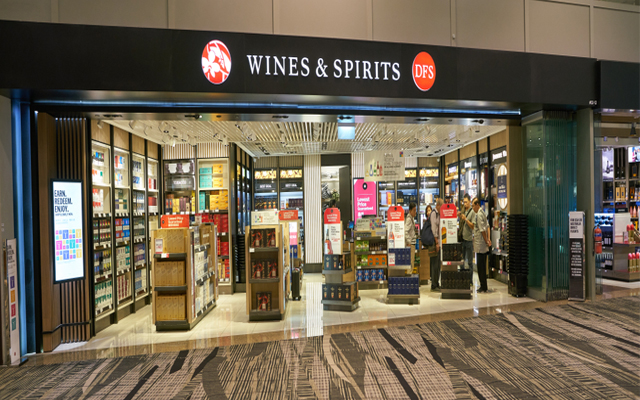
The DFS Group will be pulling out of Changi Airport’s liquor and tobacco business, after close to 40 years of operation, according to a report by The Straits Times.
Its duty-free stores will close in June 2020 to make way for a new tenant, said the report, as DFS did not bid in the new concession tender, which closed on Monday (August 26).
DFS to close Changi Airport liquor, tobacco stores
DFS, which is Changi’s biggest and oldest tenant, manages 18 liquor and tobacco stores at the airport, occupying more than 8,000m2 of retail space across the four terminals.
According to the report, three firms have submitted bids for the liquor and tobacco concession. They are The Shilla Duty Free of South Korea, which currently operates the perfume and cosmetics stores at Changi, another South Korean firm Lotte Duty Free and Gebr Heinemann of Germany.
The report also quoted DFS Group chairman and CEO Ed Brennan as saying in a statement: “Our decision not to bid was based on our unique understanding of the business environment as the current operator of this concession at Changi. Specifically, changing regulations concerning the sale of liquor and tobacco, against a global context of geopolitical uncertainty, meant that staying in Changi was not a financially viable option.”
A new tenant will be announced in November, said the report.
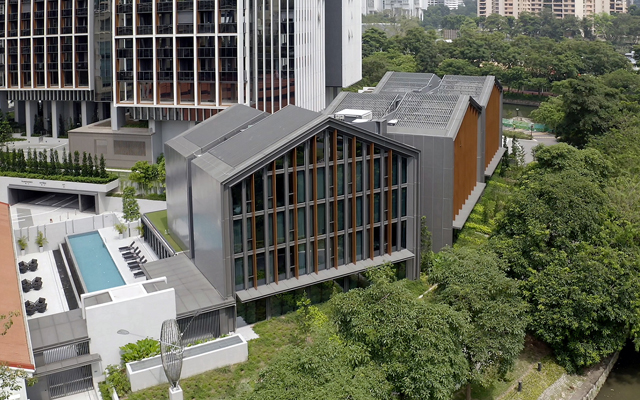
Six Senses Maxwell has unveiled five spa pods and two relaxation rooms, which will provide guests with a wellness sanctuary in the heart of Singapore’s city centre.
Located on the fourth floor of Six Senses Maxwell, the spa pods and relaxation rooms are decorated and furnished in line with the property’s signature 19th century aesthetics. Guests can look forward to both traditional and innovative wellness experiences from Six Senses Signature Massages to locally-inspired rituals, targeted therapies and functional fitness.
Six Senses Maxwell
1 of 3
Relaxation Room
Mani Pedi Room
Treatment Room
The boutique hotel is also debuting the Singapore-exclusive, locally-inspired wellness retreat experience featuring traditional Chinese medicine (TCM) and massage techniques. This 135-minute-long experience, priced at US$220++, starts with a consultation with seasoned practitioners from a local full-service TCM clinic followed by a conversation and wellness recommendations.
Following the consultation, a relaxing ritual with warm amethyst crystals reduces daily stress and tension starting with a back, neck and shoulders massage. The package also features an orchid-scented Himalayan salt scrub, a rose body mask and a lifting facial massage and a wellness lunch at either Yellow Pot Chinese Restaurant or Cook & Tras Social Library.
The 150-minute-long Cleansing Retreat experience, priced at US$258++, incorporates body and facial treatments infused with vitamin C, jasmine, green coffee and chilli to spring clean the whole system. This retreat also includes a detoxifying drink, yoga and a wellness lunch at either Yellow Pot Chinese Restaurant or Cook & Tras Social Library.
The spa pods at Six Senses Maxwell are open from 11.00 to 20.00 daily.
Travel marketing science company Adphorus has appointed William Chan as sales director, Asia-Pacific. He will be based in the company’s Singapore office.
The announcement comes on the heels of recent expansion by its parent company, Sojern, following rapid growth in Asia-Pacific. Adphorus, a Facebook and Instagram Marketing Partner, provides the technology and know-how to scale revenues through a scientific approach to travel advertising.
Chan brings with him significant digital experience having led sales teams across Asia-Pacific for companies like ada and AdParlor. He possesses extensive knowledge of the Facebook Marketing Partners ecosystem, and has helped companies execute Facebook ad campaigns at scale, reaching new audiences and optimising their campaigns to drive performance. During his time at ada, Chan used their first party telco data to improve client campaign metrics by up to 20 per cent across the board.
He also previously managed media sales at Electronic Arts in EMEA.
Malaysia is embarking on a comprehensive digitalisation journey to employ initiatives that will help develop its tourism industry through education, as well as the creation of smart eco-management of destinations.
Malaysia’s prime minister, Mahathir Mohamad, said in his keynote address at the World Tourism Conference in Kuala Lumpur on Monday that by “embracing” digitalisation, it will help the tourism industry to be “internationally-connected”, and provide data analytics of tourism futures while shortening the supply chain.
Malaysia is embracing digital technology to boost its tourism development
But for this to materialise, Mahathir pointed out that a new investment climate was necessary to cultivate an environment to enable the tourism industry to move forward.
“Investment in hard and soft infrastructure need to be balanced. National policies need to allow for investment incentives in more intangible products such as data acquisition, content creation and online platform presence,” he elaborated.
As part of the new National Tourism Policy (2021 to 2030), Malaysia will also be designating Special Tourism Investment Zones throughout the country, where incentives are being formulated to attract both hardware and technology-based investment in the tourism sector.
In addition, as part of the country’s National Ecotourism Plan 2016-2025, Malaysia is also developing cluster-based ecotourism destinations with special concession packages that inculcate the use of technology and smart eco-management of the destinations.
Mahathir added that the aim was for the country to become “The Capital of Smart Ecotourism Destination”, and reiterated that education of all stakeholders as well as travellers is needed to help develop a tourist sector that is “responsible, sustainable and inclusive”.
He said: “Industry stakeholders are now venturing more actively into the sharing economy, digital platforms, social media integration and big data analytics to customise tourism experience offerings to specific demographics across the globe.
“As tourists’ arrivals are forecasted to reach 1.8 billion people by 2030, we foresee a wider base of services being offered beyond the conventional tourism-focused activity, to include medical, filming, adventure sports, content development, religious activities, gaming and green technology.”
According to the World Economic Forum’s Digital Transformation initiatives, digitalisation in tourism is expected to contribute up to US$305 billion of value through increased profitability by 2025. It will also generate benefits valued at US$700 billion for businesses and wider society.
Often called the Hawaii of Japan, Okinawa is attracting a rising number of regional tourists, thanks to greater air connectivity driven by LCCs to the resort destination, according to a recent report by C9 Hotelworks.
Visitors to Okinawa hit a record 9.8 million last year, elevating the market to the likes of Asia’s twin icons of Bali and Phuket, the Okinawa Hotel Market Review revealed.
Okinawa is gaining popularity as a tourism destination among inbound travellers, with visitors to the island hitting a record 9.8 million last year
The demand was mainly driven by overseas source markets, which grew 14.2 per cent year-on-year compared to domestic arrivals of 1.2 per cent. This has pushed total market share of international travellers from 4.1 per cent in 2008 to 29.5 per cent in 2018, whereby the CAGR of total inbound visitors for the period averaged 6.4 per cent.
Nevertheless, those arriving from Japan still accounted for 76.8 per cent of guest nights in accommodation establishments on the island, as a majority of domestic travellers are Japanese from Tokyo, Osaka, Kobe, Fukuoka and Nagoya.
The report also said that the key catalysts of change driving increased tourism to the island are rising airlift, visa exemptions for a number of Asian countries like Thailand and favourable currency exchange rates to the Japanese yen.
International airlift is delivering more and more overseas travellers – In 2018, domestic routes supplied 71 per cent of the visitors to the destination. Traction has remained strong this year as year-to-date arrivals through May registered 4.6 per cent growth. Key overseas markets are South Korea, Hong Kong, Taiwan, China and the US.
Market-wide occupancy for hotels in the latest available data was 64 per cent with an average accommodation spend of around US$218 per person, per day. With over 36,000 hotels and ryokan keys, the current pipeline is showing 5,295 keys under development. Pipeline hotels are concentrated in outer islands (45 per cent), followed by south (26 per cent), central (16 per cent) and north (13 per cent) areas of the main island.
City hotels have the highest occupancy amongst all types of accommodation, with an average of 83 per cent last year. This is followed by business hotels with 77 per cent and resorts at 72 per cent.
The total average spend of visitors was 73,945 yen (US$702) per day, with international travellers having a higher spend at 100,265 yen over domestic tourists at 72,284 yen.
The average length of stay for visitors averaged 3.09 nights, with longer stays for international visitors at 3.42 nights and domestic at 2.95 nights.
“With demand on the rise, hotels are seeing improved performance in occupancy, while spending on accommodation has slightly declined as more non-traditional hotels are entering the market, such as condominium rentals and guesthouses,” said Bill Barnett, managing director, C9 Hotelworks.
He added: “Nevertheless, mainstream hotel operators remain positive on the prospect of performance going forward, despite stronger competition. Demand is expected to significantly increase with a second airport runway. However, the lack of labour in the industry is a major concern for existing and upcoming hotels.”
Key upcoming hotels, including Hilton and Four Seasons, reflect more global brands, said the report. The latter is being developed by Malaysia’s Berjaya Group, which is set to leverage the Four Seasons brand on a hotel residence component of the project.
Despite high development costs given pressure from the upcoming run-up to the 2020 Olympics, Okinawa’s resort trajectory remains strongly positive given that Naha Airport is expected to complete its second runway in 2020.
A cruise campaign has also stimulated growth of foreign tourist arrivals. Additional services will be launched at Motobu Port, Ishigaki Port and Hirara Port along with expansion plans.
With low interest rates in a stable marketplace, developers are increasingly looking to both Okinawa and the outer islands with rising interest, as the destination is poised to play on a broader global stage.
Chinese aviation data technology provider VariFlight is expanding its South-east Asia operations with the launch of a global brand dedicated to providing flight data and customised analytics to business partners.
Airsavvi, which fully inherits VariFlight’s aviation data intelligence on 1,279 airlines and 10,968 airports globally, aims to help travel businesses grow by building smarter data application capabilities. It also provides additional data on land-based transportation like high-speed railways and ride-hailing.
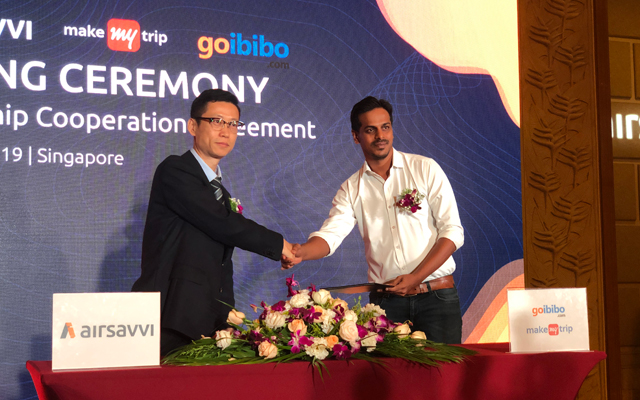
The launch of VariFlight’s new travel data intelligence arm Airsavvi also saw the signing of partnership between Airsavvi and its launch customer Indian OTA MakeMyTrip and its subsidiary Goibibo (From left: Airsavvi’s Jia Guo, MakeMyTrip’s Sharath)
Its railway coverage now spans China, Japan, Switzerland, Belgium, Germany, Spain, France, the UK, the Netherlands and Italy, for which it provides data on schedule changes, connections and travelling distance.
This comprehensive coverage of different types of travel data, along with the brand’s prominent algorithms and computing power, will provide data-driven and more insightful support for travel and transportation companies worldwide.
Zheng Hongfeng, founder and CEO of VariFlight, said at the launch ceremony: “It is the market that calls for a service like Airsavvi. As a tech company that has gone through the era of web 1.0 and mobile Internet, and now the era of AI and IoT, we have spotted the transition of market demands from simply integrating data into existing business processes to building a more intelligent and flexible capability to adapt to new business scenarios with the help of data. Airsavvi is designed to help build that capability.”
VariFlight’s vice president Simon Li told TTG Asia that although Airsavvi is already working with Chinese OTA Ctrip and Chinese ride-hailing giant DiDi, the new travel data intelligence company also aims to open dialogues with other ride-hailing companies in South-east Asia such as Grab.
“One of the challenges in the travel industry is that aviation is developing very quickly, but it is not the only sector doing so. It is becoming increasingly interconnected with the broader transport industry. We hope to increase our market share, and we are already seeing a lot of interest among our clients for this service,” he shared.
To complement its launch, Airsavvi signed a partnership with Indian OTA MakeMyTrip and its subsidiary Goibibo as their data provider.
Li explained: “Airsavvi will provide more personalised customer service to meet our business clients’ needs. A lot of data companies provide the standard products and solutions, but we want to be more individualised. We will have one dedicated solution manager for each business partner, providing 24/7 service to them.”
VariFlight will continue to operate its eponymous app that provides airline schedules, live flight statuses and real-time service data for airports and aircraft in China, covering over 94 per cent of global commercial flights.
Thailand’s Designated Areas for Sustainable Tourism Administration (DASTA) and ASEAN Tourism Association (ASEANTA) have signed a four-year MoU to widen efforts to benefit the local communities in sustainable tourism sites beyond Thailand to other South-east Asian nations.
The partnership also aims to further promote community-based tourism and accessible tourism for all by encouraging tourist attractions in South-east Asia to take part in sustainable and community-based tourism.
The ASEANTA-DASTA partnership was formalised with the MoU signing ceremony in Kuala Lumpur. From left: ASEANTA’s Sam Cheah and Mingkwan Metmowlee, and DASTA’s Taweebhong Wichaidit and Kesada Srisawasdi
The MoU was formalised with the signing between DASTA’s director-general Taweebhong Wichaidit and ASEANTA’s president Mingkwan Metmowlee on Monday at the 5th World Tourism Conference 2019 at Shangri-La Hotel Kuala Lumpur.
ASEANTA’s president Mingkwan said: “In November, TCEB together with ASEANTA plan to invite over 200 ASEANTA’s component members to Pattaya where the content will focus on best practices on sustainability and community-based tourism, focusing on the environment and community. ASEANTA also plans to organise with NTOs in (South-east Asia) to visit DASTA sites in Thailand.”
DASTA is a Thailand public organisation accountable to the Ministry of Tourism and Sports, with roles and responsibilities in sustainable tourism cooperation, through coordination for integrated administration of areas with valuable tourism resources and acting as an important driving force in the administration of the country’s tourism industry.
ASEANTA, a non-profit tourism association comprising both public and private tourism sector organisations in South-east Asia, counts the ASEAN Hotel & Restaurant Association, Federation of ASEAN Travel Associations, NTOs and airlines among its members.
Since last September, an eye-catching tram can often be spotted plying the streets between Western Market and Happy Valley Terminus. But unlike the iconic double-deckers cruising the streets of Hong Kong, this bespoke teakwood tram is actually a mobile social club and premium event venue.
The Circus Tram, which sees a regular roster of performances by young talents on board, is the brainchild of Alvin Yip, partner and curator-in-chief of local creative startup Circus. After initiating the idea to Hong Kong Tramways, Yip engaged a team of designers, architects, artists and curators to build the nostalgic vehicle with the tram company from scratch.
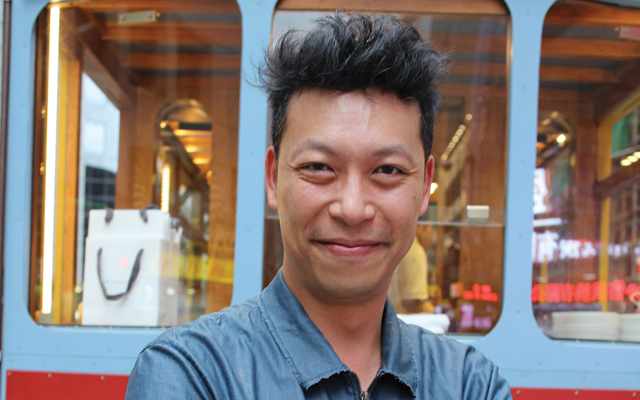
Alvin Yip was inspired by Hong Kong’s iconic 115-year tramways to launch the country’s first mobile social club Circus Tram (Photo Credit: Prudence Lui)
“We (thought of Hong Kong’s) iconic 115-year tramways as more than a transportation means, and first brought this notion to life in 2013 at a design festival called Detour. Fortunately, we successfully obtained a subsidy to produce four prototype trams and reimagined them as various mobile spaces – a library, restaurant and performing theatre,” Yip said.
He added: “Evolving from an academic research to a cultural and art experiment and now a new operation, the (most rewarding part) was being able to engage young designers and artists to work with experienced tram technicians, engineers and craftsmen. I am proud to say that our first Circus Tram is 100 per cent made in Hong Kong and by hand.”
From the outset, Yip wants to breathe new life into a beloved transport icon of Hong Kong by engaging the locals. He has also opened up the initiative to tourists by partnering with The Peninsula Hotels’ Peninsula Academy.
“Hotel guests interested in cultural experiences may charter the whole tram or join the two-hour ride through the Peninsula Hotels. Unlike ordinary sightseeing tram tours, we combine a unique range of onboard experiences like fortune telling, music and a magic performance. Even if a tour guide is deployed, we stress interactive conversations rather than mundane presentations,” Yip explained.
The posh tram interior boasts three lounges: Chatham House on the lower deck, and The Freudians and Darwin Gardens on the upper deck. The tram also boasts first-of-its-kind features, such as a modern electrical and mechanical system that can support lighting and sound systems for events, as well as a restroom.
The Circus Tram is also designed to accommodate artistic salons, concerts, cultural exchange, small business meetings, as well as private functions and receptions.
The launch of Circus Tram has added to Hong Kong’s growing array of iconic venues, opined Yip, offering inbound visitors and locals different possibilities to enjoy and appreciate the local culture.
“Our second and third trams are in the pipeline with more interesting ideas – they are not going to be the same,” he shared.
Airports and airlines hold enormous amounts of passenger data. By sharing it, they’ll be able to create and deliver the personalised experiences that customers demand.
Jewel Changi Airport’s spectacular opening has been headline news around the world. After four years of construction and S$1.7 billion (US$1.2 billion) in investment, Jewel is designed to make the airport a destination in its own right.
Tansey: airlines and airports need to work together to create a seamless passenger experience
Jewel raises the bar for future passenger experiences. However, to provide truly transformational, hyper-relevant and seamless travel experiences, the biggest challenge (and opportunity) centres on collaboration between airlines and airports.
Moving to the next level
The objective is to connect passengers to relevant experiences, services and information at each step of their journey. However, for this to happen, there needs to be a rethink. Relationships between airlines and airports have been fraught because of their complexity: the airport supplies services to each of the airlines that take off and land there but, at the same time, it’s also competing with them for a share of the customer wallet.
Friction over who “owns” passenger relationships is a key issue. Whether or not passengers consider themselves to be airport customers (and most don’t), that’s what they are from the moment they leave their car, through pre-boarding and on to the departure gate.
All this boils down to a central tension: who owns the data? Up to now, the argument has been that because airports own the Wi-Fi networks, they also own – by association – the data that flows through these channels.
Sharing data: the benefits
As with most complex and contentious relationships, communication is key. If airlines and airports want to create the seamless customer experiences that translate into passenger loyalty, collaborative data-sharing has to be the logical next step. Passengers, airports and airlines will all benefit.
Here are three examples:
• Single-token biometric-enabled self service
By partnering to implement biometric-enabled self service, airport, airlines and border control collaboration could make seamless travel through airports a reality. Whether from kerb to gate (with passengers enrolling at self-check-in kiosks in the terminal), or from couch to gate (enrolment at home through a mobile app), average passenger journey times through participating airport terminals could be cut by up to a third.
Heathrow Airport has launched one of the world’s largest self-service deployments which, when complete, will offer 275 bag drops and 370 boarding gates powered by biometrics. This could potentially mean smoother, faster journeys for 80 million passengers a year.
Meanwhile, Canada is testing the use of blockchain technology under the Known Traveller Digital Identity agreement to improve security and support the seamless flow of people across borders. This uses biometrics, cryptography and distributed ledger technology to enable travellers to share their information with authorities and travel providers ahead of travel to get hyper-personalised services.
• Turnaround management automation
Think about the wealth of operational data held by airlines, airports, ground handlers and the air traffic controller. If this could be integrated and accessed in real time, it would be possible to accurately predict an event’s on-time performance. This would translate to more efficient use of infrastructure and resources, fuel savings for airlines, reduced carbon footprints and an enhanced travel experience for passengers.
Gatwick Airport has launched AirTurn to manage aircraft turnaround times. This enables parties including handling and ramp agents, air traffic controllers and airlines to share information seamlessly during a turn. With intelligent technologies, including voice-activation and collaborative chat, deployed across smart devices, AirTurn works in real-time to coordinate activities and minimise any delays.
• Integrated baggage status tracking
Baggage problems can ruin the best travel experiences. Data sharing could make them a thing of the past. With a common platform integrating baggage data between airlines, the airport operator and its ground handling agents, real-time information would be available on the status of every item of luggage. This would optimise baggage operations and reduce the mishandling of baggage.
Helsinki Airport is pioneering developments in this space through a collaboration between the airport airlines and ground-handling companies. This looks ahead to providing seamless customer experiences and reducing the costs involved in tracing, retrieving and delivering missing or delayed baggage.
It’s all possible today
These examples illustrate that the technologies needed to deliver truly connected customer experiences are already available, together with the governance frameworks that are essential to support secure data-sharing between airlines and airports.
And this is just the beginning, with other initiatives pointing the way to future possibilities. Dubai International now operates a system for supervising operations and visualising aircraft flows in real time. By collecting data from Dubai Airports and its service partners, this will help to enable Airport Collaborative Decision Making and Total Airport Management, supporting smooth operations and improving the customer experience.
Meanwhile, Dublin Airport in Ireland now uses integrated data and advanced analytics to improve forecast accuracy, enable predictive security screening, reduce the risk of delays and help transferring passengers to connect with their flights on time. It also allows partners to plan for demand for their services, adding value for organisations including airlines, Irish Border Control and US Customs and Border Protection.
Airlines and airports can come together to share the data they hold, turning the dial on personalisation by delivering the hyper-relevant travel experiences their customers crave.
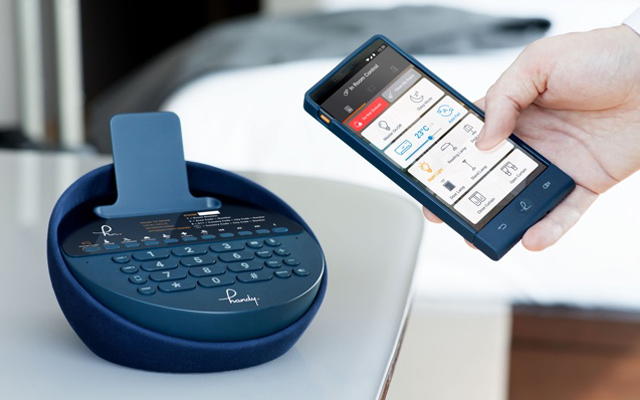
Hong Kong-based company Tink Labs, which equips hotels globally with in-room handsets for guests, is terminating its services in multiple markets following the cessation of operations, according to a South China Morning Post (SCMP) report.
The report said that the company recently informed hotels in certain countries, such as Morocco and Thailand, that it will no longer be supplying its Handy smartphone services and that cellular service to their devices will cease within hours.
Tink Labs is terminating its in-hotel smartphone services in most markets after it ended operations. Tink Labs has since rebranded under the name hi Inc. (Photo Credit: hi Inc.)
The company had also previously announced to employees internally in July that certain markets, such as China, Denmark, Indonesia, the Philippines and South Africa, will cease to have Handy services, said the report.
Handy, however, will continue to operate in its home market of Hong Kong, Singapore, as well as some hotels in the UK, according to emails and internal documents reviewed by the SCMP.
Hotels in Hong Kong and Singapore were informed that their contracts with Tink Labs were being reassigned to a separate entity, Blockone, said the report, adding that Blockone will also cease to provide its Handy devices for free to certain hotels in Hong Kong.
At one stage, Tink Labs had its Handy devices in 600,000 hotel rooms across more than 82 countries.
The company, which was set up in 2012 by Terence Kwok, became one of Hong Kong’s few start-ups to have commanded a valuation of more than US$1 billion.
Since its inception, Tink Labs has raised US$160 million in funding from investors, which included Lee Kai-fu’s Sinovation Ventures, Meitu founder and chairman Cai Wensheng and Foxconn subsidiary FIH Mobile.