TTG Asia
Asia/Singapore Thursday, 2nd April 2026
Page 1184

Sansiri takes up majority stake in Standard International

0
Amar Lalvani CEO of Standard International

Thai property developer Sansiri has picked up a majority stake in Standard International (SIH), the parent company of The Standard, as it seeks greater control in the rapid global expansion of the American boutique hotel brand.

The additional 21.76 per cent stake will be purchased through a US$40.5 million deal, which will see Sansiri’s shareholding in SIH growing from 37.26 per cent to 59.02 per cent, and SIH becoming a direct subsidiary of Sansiri as well as an indirect subsidiary, Sansiri’s CFO Wanchak Buranasiri announced in a statement.

Wanchak added: “Since Sansiri’s investment in SIH in November 2017, we have jointly taken part in developing a growth plan that capitalises on the positive global travel and lifestyle trends. The global hotel market is projected to double its growth rate with hotel revenues estimated to grow 7.8 per cent annually over the next five years. The lifestyle and boutique hotel segment, where The Standard is positioned, is the fastest growing segment within the industry.”

SIH CEO Amar Lalvani said that The Standard’s expansion coincides with shifting consumer preferences globally towards spending disposable income on experiences over goods. “Approximately 60 per cent of global millennials are in Asia. With those trends in mind, we have strategically situated ourselves to have over 90 per cent of our global pipeline outside of the US with approximately two-thirds of that in Asia,” he said.

According to Sansiri, both companies have aligned on an ambitious plan to grow The Standard footprint to 25 hotels across the world in the next five years, including four in Thailand, namely, Koh Samui, Phuket, Pattaya and Hua Hin. Other locations in the expansion plan include Milan, Paris, Lisbon, Bordeaux, Mexico City, Jakarta, Melbourne and Chicago.

In July, The Standard launched its first property outside the US with The Standard, London in the King’s Cross neighbourhood. Later this year, The Standard is set to open its first resort in Huruvalhi, the Maldives, following a revamp and rebrand of an existing hotel the company has already taken over.

AirAsia’s new KL-Belitung route rekindles island’s hope for more international tourists

0

The travel industry in Belitung Island is optimistic that AirAsia’s recently-announced service connecting the island to Kuala Lumpur will boost tourism to the Indonesian island paradise off the east coast of Sumatra, following its recent loss of a direct international connection from Singapore.

AirAsia’s direct Belitung-Kuala Lumpur service will launch on October 2, operating four times a week on Monday, Wednesday, Friday and Sunday using a 186-seat Airbus A320 jet.

Tourism players are hopeful that AirAsia’s new Kuala Lumpur-Belitung route will boost tourism to this hidden gem

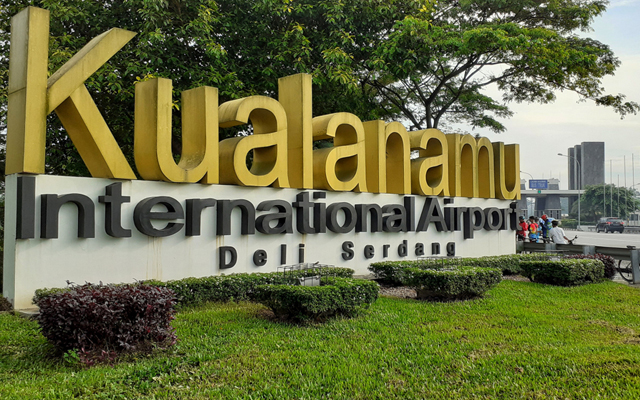
The flight will depart from Kuala Lumpur International Airport at 11:05 and land at H.A.S. Hanandjoeddin International Airport in Tanjung Pandan, Bangka Belitung, at 11:45. It will leave Belitung at 12:10 and arrive in Kuala Lumpur at 14:45.

AirAsia regional commercial head Amando Woo said in a statement: “Indonesia has more to offer than just Bali and Lombok. Belitung is a beautiful, amazing place with huge untapped tourism potential. We hope that with this new direct service, more and more people will be able to discover this hidden gem. The new route is also a testament to our firm commitment to support the Indonesian government in its efforts to develop 10 new priority tourism destinations.”

AirAsia was not the first airline to link Belitung and Malaysia though, according to Yudianto Evan Setiawan, owner of Bilitonesia Tour & Travel and Bangka Belitung chapter vice chairman of the Association of the Indonesian Tours and Travel Agencies (ASITA). A Sriwijaya Air plane was chartered two years ago to fly tourists from Belitung to Kuala Lumpur, and vice versa.

However, despite Belitung’s attractiveness, the island has previously drawn few visitors from Malaysia due to the costs involved in getting there, as travellers first have to transit in Jakarta, Yudianto stated.

But AirAsia’s under-an-hour, direct connection from Kuala Lumpur will now increase the appeal for Belitung, Yudianto said, adding that ASITA association members would push out more packages that showcase not only natural beauties like the Lengkuas Island, but also cultural attractions such as the Tanjung Kelayang Festival.

“Our target is not only Malaysian tourists. Kuala Lumpur is an international hub of AirAsia, so we expect more foreign tourists from other countries to visit Belitung through Malaysia,” Yudianto said.

He added: “What tourists look to do in Belitung is usually island hopping. However, we have many new tourist destinations that they might not know about. Hopefully, next year, Belitung could be declared as a UNESCO Global Geopark.”

Also welcoming AirAsia’s new Belitung service is Agus Suyatna, general manager of Hotel Santika Premiere Beach Resort Belitung, who noted that the absence of direct flights from Malaysia was a challenge in attracting foreign visitors.

Agus added that the hotel is already anticipating increased tourist footfall from this upcoming service by “preparing attractive packages, including hotel promotions such as special prices, cashbacks and bonuses”.

Sabre challenges US Justice Department’s lawsuit to block its Farelogix acquisition

0
The DOJ In effect, Sabre's deal to buy Farelogix allows it to "to eliminate a disruptive competitor that has introduced new technology to the travel industry and is poised to grow significantly," the DoJ argues.

Sabre Corporation will challenge the lawsuit filed by the US Department of Justice (DOJ) seeking to block the company’s planned acquisition of Farelogix.

Farelogix, an innovator in the airline technology space whose New Distribution Capability (NDC) technology is used by a number of airlines around the world, will bring capabilities to Sabre that will accelerate the delivery of the industry’s first end-to-end NDC-enabled solution for the retailing, distribution and fulfilment of travel.

The DOJ argues that the Sabre’s deal to buy Farelogix allows it to eliminate a competitor that has brought new technology to the travel industry; a screenshot from the Farelogix website

Sabre is confident of the pro-competitive nature of this transaction, that it will succeed in court, and that the transaction will ultimately be completed.

Sean Menke, president and CEO of Sabre, said: “Over the past two years, Sabre has embarked upon a strategy with an entirely new executive management team focused on evolving the underlying technology of the travel ecosystem we support. To meet travellers’ changing expectations while increasing profitability, airlines need a technology partner that is ready to deliver tomorrow’s technological solutions today.”

He added: “Together, Sabre and Farelogix will drive faster innovation in the dynamic, highly competitive airline technology space, helping airlines accelerate their growth and profitability while better serving travellers. We look forward to closing this transaction and to delivering the benefits it will enable for our airline and agency customers, corporations, and travellers.”

Sabre said in a statement that the DOJ’s claims lack a basis in reality and reflect a fundamental misunderstanding of the industry. “The DOJ claims that Sabre and Farelogix compete head to head for airline bookings in the US, but that claim misstates Farelogix’s role in the industry. Sabre and Farelogix offer complementary services, and this transaction is the continuation of an already successful collaboration between the two companies,” it said.

Sabre has committed to its airline customers and to the DOJ that for a period of time after the transaction, it will continue to offer Farelogix products at the same prices available today or lower, and to support and invest in those products at the same level or higher, added Sabre in its statement. In addition, Sabre has committed to offer to extend any existing Sabre GDS or Farelogix Open Connect contracts on the same terms, including price, for a period of at least three years.

“These commitments underscore that Sabre’s goal in acquiring Farelogix is to strengthen our ability to provide our airline and agency customers with the next-generation retailing, distribution, and fulfilment products and services they need,” said Menke.

Sabre and Farelogix have extended the termination date of their acquisition agreement to April 30, 2020, allowing time to resolve the challenge by the DOJ. Sabre will file its formal written response to the DOJ’s complaint in court at the appropriate time, said the company.

Thai Airways bans select MacBook Pros

0

Thai Airways International (THAI) has banned passengers from taking certain older generation 15-inch MacBook Pro laptops on board all flights or in checked baggage.

The ban follows the European Aviation Safety Agency’s announcement to prohibit the Apple model on all flights to and from the EU to ensure aircraft safety.

THAI has banned certain 15-inch MacBook Pro laptops in both checked and carry-on baggage

These devices were distributed by Apple between September 2015 and February 2017 and were recalled as faulty batteries in some of these laptops could overheat and pose a safety risk.

Similarly, the Civil Aviation Authority of Vietnam (CAAV) and US Federal Aviation Administration has also banned the recalled MacBook Pro laptops from all flights.

Passengers who bring or use the laptops on airplanes must switch them off and stop charging them and follow airlines’ guidelines, the CAAV said.

New hotels: X2 Bali Breakers Resort, ANA InterContinental Beppu Resort & Spa, and more

0

X2 Bali Breakers Resort, Indonesia
Cross Hotels & Resorts has made its debut in Indonesia with its latest 58-villa property situated near Balangan Surf Beach. Available in one-, two-, and three-bedroom configurations, villas range in size from 100m2 to 454m2. Regardless of configuration, all villas boast a private pool and sundeck, outdoor seating area, a 43-inch flatscreen TV, and Wi-Fi connectivity.

Facilities on-site include three main swimming pools (one of which is adults-only); four F&B outlets; outdoor fitness area; spa; as well as a wedding chapel with an adjacent lawn. Meanwhile, corporate planners may avail the 200m2 function room that can accommodate up to 150 people.

ANA InterContinental Beppu Resort & Spa, Japan
ANA InterContinental Beppu Resort & Spa, part of InterContinental Hotels Group, has opened in Oita Prefecture. Beppu’s first international luxury resort offers 89 guestrooms, where the Suites and Club Rooms come with private open-air baths on its terraces.

Amenities on-site include indoor and outdoor open air baths, spa, heated infinity pool, and the Elements – Atelier & Bar comprising a main dining room, a counter seating-only atelier, and a bar. The property also offers four nature-inspired meetings and events spaces.

Sheraton Manila, Philippines
Sheraton has opened in the Philippine capital, as part of the Resorts World Manila integrated complex. The 390-key property offers a range of accommodation, from two-level lofts to deluxe guestrooms with private gardens and jacuzzi. F&B options include all-day dining S Kitchen, Korean barbecue Oori, and a lounge; while leisure facilities include a gym, Shine Spa with six treatment rooms, heated outdoor pool, children’s pool and kids club.

Sheraton Manila is also the first in the country to boast a co-working space located in a hotel. The ColLab features six private rooms and a 415m2 common area good for product launches and networking events. This is in addition to its nine other meeting spaces, including a ballroom that can accommodate up to 570 people.

Travelodge Harbourfront Singapore
UK-headquartered hospitality brand Travelodge has launched its first hotel in the city, with the rebranding of the Bay Hotel to the Travelodge Harbourfront Singapore. The hotel will undergo a major refurbishment and rebranding programme to upgrade the current property into a 319-room hotel under the Travelodge brand. The refurbishment – conducted in phases over the next six months – will focus on the guestrooms, main public areas such as the lobby, as well as the all-day dining restaurant.

Scoot offers free bus transfers between Johor Bahru and Changi Airport

0

Scoot customers will be able to enjoy free bus transfers to and from Singapore Changi Airport and various locations in Johor Bahru, including the Johor Bahru Customs, Immigration and Quarantine Complex, Legoland, Medini Mall and Puteri Harbour, from now until March 31, 2020.

The daily bus transfer, operated 12 times daily by Transtar TS1 and six times daily by PBS783/TS6, will benefit Scoot customers from the Johor region by simplifying airport transfers and enhancing connectivity to their onward destination.

With this free service, customers can scoot to over 65 destinations from Singapore. They simply need to fill up a voucher that can be downloaded from Scoot’s website and submit it together with their Scoot boarding pass or e-ticket in hardcopy format when they board the shuttle bus.

Each flight departing from or arriving at Singapore Changi Airport will enable Scoot customers to take a one-way trip on the shuttle bus. Customers with return Scoot flight tickets will be entitled to a return bus transfer. The free shuttle bus service is valid one day before or after their Singapore flight departure and arrival dates.

The shuttle bus route map is as shown below:

More details on the free shuttle bus service and bus schedules can be found here.

Rex Loh assumes VP commercial position at Wyndham

0

Wyndham Hotels & Resorts has named Rex Loh vice president, commercial, overseeing the South-east Asia and Pacific Rim region.

In his new role, Loh will be responsible for leading and driving sales, marketing, revenue management and distribution efforts for Wyndham Hotels & Resorts in the region.

Loh has more than two decades of hospitality experience under his belt, and was previously cluster director of sales & marketing at Marriott International, where he oversaw JW Marriott Singapore South Beach, The St Regis Singapore and W Sentosa Cove.

Before that, he held leadership roles at InterContinental Hotels Group (IHG) including director, commercial – Asia and Australasia resorts, responsible for sales and marketing functions of 26 resorts in Thailand, Vietnam, the Maldives, Indonesia, Fiji, Mauritius and French Polynesia. Prior to IHG, Loh held director roles at hotels under luxury brands like Ritz Carlton and Shangri-La.

Grand Hyatt Hong Kong welcomes new EAM sales marketing

0

Grand Hyatt Hong Kong has appointed Charis Yim as executive assistant manager – sales and marketing.

In her new position, Yim will oversee and develop the sales & marketing division of the 542-room hotel, Hyatt’s first flagship Grand Hyatt hotel in Asia.

She joins Grand Hyatt from JW Marriott Hotel Hong Kong, where she held the position of director of marketing.

A seasoned hotelier with over 20 years of experience, Yim has held senior management roles at multiple luxury hotels in Hong Kong and Macau, including The Peninsula, InterContinental and Mandarin Oriental.

Making sustainable tourism work

0
Swimming with a whale shark

While there is no dearth of sustainable tourism initiatives, the overarching question is whether travel consumers and industry players are engaged enough to meet responsible travel in this age of mass tourism.

After all, awareness about responsible tourism, while growing, is still at a nascent stage. “We’re far from achieving the goals. A lot of work needs to be done,” PATA CEO Mario Hardy said at the sidelines of the PATA Annual Summit 2019 in Cebu.

Swimming with a whale shark

“We have to get together and get this fixed once and for all. We cannot continue to damage this beautiful planet,” Hardy pointed out.

Various organisations have been rolling out initiatives to address sustainability, one of the biggest challenges in travel and tourism. The UN has Sustainable Development Goals (SDG); WTTC recognises best tourism practices, among other projects; and last May, PATA published a report on how food waste and excess in tourism can be halved as part of its BUFFET Campaign.

American nonprofit Planet Happiness has initiated an online survey metric that measures the wellbeing of residents and communities in world heritage sites, including Ayutthaya and Sukhothai in Thailand; Bali, Borobudur and Komodo National Park in Indonesia; Hoi An in Vietnam; and Luang Prabang in Laos.

Planet Happiness co-founder and director Paul Rogers told TTG Asia that the objectives are to raise awareness about the need to identify alternative measures of development – apart from GDP – and to address overtourism through responsible and sustainable forms.

As more destinations worldwide grapple with overtourism, an industry refocus on destination management – rather then destination promotion – has emerged. This move is exemplified by Slovenia which is aligning its tourism branding along dimensions of sustainable development.

Brands should have a strong, authentic story hinged on the values of the destination, and be able to communicate the story well by creating products that are in line with the brand vision. “Branding is all about perception, which is something that will continue to change overtime,” emphasised Maja Pak, director general, Slovenian Tourist Board.

Arnel Yaptinchay, Kirschner Travel Manila general manager and Marine Wildlife Watch founder, said: “There are ways to manage a destination to achieve sustainability goals, starting with a sustainability frame work and criteria (e.g. Global Sustainable Tourism Standards), the appropriate policy and then its implementation.

“It becomes a bit tricky in sensitive natural sites, but that can be fully addressed with proper regulations to meet the goals of a conservation site, e.g. by limiting the visitor numbers.”

Curtailing visitor numbers and closing destinations to let them breathe from mass tourism are being carried out in certain key attractions in Thailand and the Philippines.

However, there are still quarters that equate sustainability only to the natural environment, neglecting other equally important aspects such as the locals’ wellbeing, sourcing of water and food, investing in learning, exploitation, etc.

Yaptinchay emphasised: “Sustainability in tourism is not only for natural sites – now mostly referred to as ecotourism – but is also much needed and relevant across all destinations or facilities, be it large cities, hotel chains, or cultural sites.

“Sustainability has to be built and grown from within so it inherently makes investments in local communities, the environment, people’s wellbeing, education of tourists, etc. relevant,” he stressed.

In fact, Asia Pacific Projects founder Narzalina Lim said that the SDGs are “very comprehensive and complex and not just focused on environmental sustainability, but also on ending poverty and inequality, reducing food waste, promoting responsible consumption and creating partnerships to achieve the SDGs, to name a few”.

“Hotels, resorts and other tourist facilities should be retrofitted to use renewable energy and rain water catchment facilities should be installed as water is getting scarcer. These may be expensive now but it will save owners a lot in energy and water consumption. New laws that require new buildings to conform with sustainable principles should be enacted,” Lim added.

She lamented the impact of neglecting other aspects of sustainability.

“While the environment is important, people are equally important too. As long as they remain poor and ignorant, excluded from the profits that big tourism players earn, they will continue to damage the environment and create social problems.”

Boracay is a clear example, said Lim. While the island’s 2017 tourism revenues hit 56.2 billion pesos (US$1.1 billion), 22.9 per cent of its residents and 21.2 per cent of residents in mainland Malay were poor. “This is unacceptable,” she stressed.

Lim is also unimpressed by Boracay’s six-month closure last year for rehabilitation, calling the move “just for show” and “not sustainable”.

Alluding to certain jerrybuilt structures and flooding in certain parts of Boracay after a four-hour downpour last May, Lim said: “One can see the results now. When the life of the inter-agency task force ends next year, what next? The re-elected mayor has vowed to go back to business as usual.”

PATA’s Hardy underscored the importance of educating both residents and tourists alike. Recalling his visit to western Samoa last year, he noted during a 45-minute ride from the airport that the country was “extremely clean, with not even a cigarette butt” on the streets.

The taxi driver told Hardy that over 20 years ago, an elderly widow took it upon herself to pick up the trash on the streets during her daily morning walks. Other adults and children in the village soon followed suit. The practice swiftly spread to other villages and this trash-picking tradition is still followed today.

It’s the same story with Yap Island, Hardy said. “It’s about educating the people to do this. People are proud of their land and environment so they clean up,” Hardy explained, adding that there’s no reason why that habit cannot be replicated in congested cities. “It is your responsibility to clean up your own mess. If you see someone throwing trash, tell him off. Others will follow your lead, and eventually, it will spread,” he said.

Lim wants due punishment for misbehaving tourists: “We should strictly enforce our rules and regulations. Those who don’t comply should be fined, arrested, or imposed with whatever sanctions so they know we mean business.”

Education is key for Yaptinchay,. “It is important for tourists to understand what they are visiting. This can be reinforced by making information available online in different languages, orienting and arming tour operators with the understanding, and putting up signages at the site itself.”

He added: “Most visitors want to make better choices when they travel. They just need to be presented with the ‘what’ and ‘how’ information. Of course, strict regulations that are enforced in an attraction or site (e.g. penalties for littering, proper attire in religious sites, ‘do not touch’ policy for wildlife) are part of the awareness raising process. Demand respect!”

Lim warned though that too many tourists in a fragile environment will never be sustainable, citing as an example the Philippines whose “attractions are in fragile islands or forests which cannot stand the impact of mass tourism.”

What can be done, Lim said, is to develop more beach destinations in mainland, as opposed to islands, to cater to mass tourism.

“The beaches may not be as beautiful as Boracay, etc. but the resorts can be designed in such a way that there are several pools, entertainment areas, shopping and dining that tourists need not look for a Boracay, Panglao, or Northern Palawan experience. These island destinations should have more upmarket, luxury accommodations – low volume, high yield.”

Tourism sustainability is a challenge in any sector and it still has a long way to go. But hopefully, it will become the norm in the near future.

Experienced duo join Mövenpick Resort & Spa Jimbaran Bali

0
From left: Chanelle Rose Garvey and Shelly Darcy

Mövenpick Resort & Spa Jimbaran Bali has appointed Chanelle Rose Garvey and Shelly Darcy to the positions of executive assistant manager and director of sales & marketing respectively.

From left: Chanelle Rose Garvey and Shelly Darcy

Hailing from Australia, Garvey comes to the resort with an extensive hospitality background, specifically in sales and marketing. She began her career working for branded hotels in Sydney and Melbourne, Australia. In 2006, Garvey joined Accor where she was tasked to head sales and marketing departments for a succession of Sofitel and Novotel properties in South-east Asia.

Meanwhile, Darcy is no stranger to Bali an she has worked exclusively in the island’s luxury hotel sector for almost a decade in the area of sales. Her career with Accor began in 2013 where she handled Sofitel Bali for six years.