TTG Asia
Asia/Singapore Wednesday, 8th April 2026
Page 1169

Over one million fake reviews blocked, reveals TripAdvisor transparency report

0

Over one million fake reviews were stopped from being displayed on TripAdvisor, out of the 66 million reviews submitted to the travel platform in 2018, revealed TripAdvisor in its first-ever Review Transparency Report.

The report, which analysed a full year’s worth of data on reviews submitted by the global travel community, made public details about its review moderation processes and the extent of fake review attempts targeted at the platform in 2018.

Over one million fake reviews were prevented from being displayed on TripAdvisor in 2018, revealed the travel platform in its inaugural Review Transparency Report

It also details the multi-pronged approach TripAdvisor takes to ensure reviews posted on its pages comply with the site’s guidelines. The report also provides a detailed breakdown of the proportion of reviews that were either blocked or removed.

Becky Foley, senior director of trust & safety at TripAdvisor, said: “Ensuring that TripAdvisor is a trusted platform for our users and listed businesses is a top priority. We’ve continued to make advancements to our industry-leading fraud detection efforts in recent years, but it’s a daily battle and we are far from complacent.

“While we are winning the fight against fake reviews on TripAdvisor, we can only protect our corner of the Internet. As long as other review platforms aren’t taking aggressive action, then fraudsters will continue to exploit and extort small businesses for cash. It is time other platforms like Google and Facebook stepped up to the plate to join us in tackling this problem head-on.”

Here are the key report findings:

66 million reviews were submitted to TripAdvisor in 2018 by the global travel community. Everyone was analysed using advanced fraud detection technology, and 2.7 million were subject to additional human assessment by content moderators.

4.7 per cent of all review submissions were rejected or removed by either TripAdvisor’s analysis technology or manually by the content moderation team. There are a number of reasons why TripAdvisor rejects or removes reviews, ranging from guideline violations to instances of review fraud.

2.1 per cent of all review submissions were determined to be fraudulent, but the vast majority (73 per cent) were blocked before they were ever posted. This equated to over one million fake reviews that were prevented from being displayed on TripAdvisor.

Fewer than one per cent of reviews were flagged by users or businesses for potentially violating TripAdvisor guidelines. TripAdvisor’s content moderation team reviewed most of these community reports within six hours of them being submitted.

Some 34,643 businesses were subject to a ranking penalty, which is a reduction of a property’s position within the popularity or traveller ranking. Ranking penalties are applied when a business is caught attempting to post fake reviews.

The report also described TripAdvisor’s efforts to catch paid reviewers. Paid reviewers are individuals or companies that try to sell “user” reviews to businesses listed on the site. Since 2015, TripAdvisor has stopped the activity of more than 75 websites that were caught trying to sell reviews, including one individual who was sentenced to nine months in prison by the Criminal Court of Lecce in Italy last year.

“Consumer reviews have become essential to millions of tourism activities around the world. It is progress, provided that, as recently recommended by the World Committee on Tourism Ethics, these reviews are reliable and unbiased,” said Pascal Lamy, chairman of the World Committee on Tourism Ethics at the World Tourism Organisation.

In addition to the release of moderation data for the first time, the 2019 Review Transparency Report highlighted a number of commitments TripAdvisor is making to protect the integrity of reviews on its platform, including continuing to improve systems to identify fraud and penalise the perpetrators, further investing in training for human moderation teams, pursuing partnerships with law enforcement authorities to support their efforts to tackle fake online reviews and building on transparency efforts by sharing more insights into TripAdvisor moderation processes and fraud investigations on the TripAdvisor Insights blog.

The full report can be read here.

GSTC, Planet Happiness seal alliance to promote tourism destination well-being

0

Planet Happiness and the Global Sustainable Tourism Council (GSTC) have signed an MoU to spread international awareness of destination well-being in tourism destination planning, focusing on strengthening sustainability standards in tourism and impact reporting in tourism destinations.

The two organisations will work together to promote mutual understanding of each other’s work among their members and partners. They will also engage on a range of topics related to the adoption of sustainability standards, especially in destination planning and sustainability reporting.

Planet Happiness partners GSTC to spread global awareness of destination well-being in tourism destination planning, which includes promoting the well-being of host communities (Photo Credit: Planet Happiness)

In an age of overtourism, Planet Happiness aims to show that measuring host well-being in tourism destinations is as important as counting GDP, profits, income and visitor numbers. It also provides a more rounded, inclusive and assured pathway to destination sustainability.

The Happiness Index survey, which is promoted by Planet Happiness, is currently available in 21 languages. It includes indicators for satisfaction with life, such as access to nature and arts, community engagement, standard of living, life-long learning and health.

“Its use allows destinations to engage host communities more directly in tourism planning,” said Paul Rogers, co-founder and director of Planet Happiness, a project of the NPO Happiness Alliance.

The partnership agreement also seeks to promote GSTC criteria in Planet Happiness’ project sites around the world. The criteria protect and sustain the world’s natural and cultural resources, while ensuring tourism meets its potential as a tool for conservation and poverty alleviation. The GSTC also acts as the international accreditation body for sustainable tourism certification.

GSTC’s CEO Randy Durband said that the long-term viability of tourism sites depended on the industry’s ability to improve the quality of life of host communities and engage local people more directly in tourism development issues.

Durband said that social issues are integral in the GSTC criteria, as are sustainable management elements that call for genuine public participation and consideration of community needs in tourism development and execution.

“We therefore welcome the addition to our membership of a Planet Happiness team that is putting great focus on many aspects of the community and the social side of sustainable tourism,” he said.

Malindo Air flags passenger data breech

0

Malaysia’s Malindo Air, a subsidiary of Indonesia’s Lion Group, said that it is investigating a massive data breach concerning its passengers.

The company’s in-house teams along with external data service providers, Amazon Web Services and its e-commerce partner GoQuo, are currently investigating into this breach, said the airline in a statement.

Malindo Air is investigating a massive passenger data breach

Malindo Air said that the company has put in adequate measures to ensure that the data of its passengers are not compromised, in line with the Malaysian Personal Data Protection Act 2010. The airline affirmed that it does not store any payment details of its customers in its servers and is compliant with the Payment Card Industry Data Security Standard.

The airline is in the midst of notifying the various authorities both locally and abroad including CyberSecurity Malaysia, said the company, adding that Malindo Air is also engaging with independent cybercrime consultants to investigate and report into this incident.

Malindor Air has also advised passengers who have Malindo Miles accounts to change their passwords if identical passwords have been used on their other services online.

Chiva-Som to reopen ahead of schedule after major revamp

0

Chiva-Som International Health Resort in Hua Hin will reopen its doors on October 15, 2019, ahead of the originally planned date of November 1, 2019, after a top-to-toe renovation – the first major works since its inauguration 24 years ago.

The first three stages of the refurbishment project, which is undertaken by architecture firm Designrealization Siam, involved the reworking of the accommodation and many of its facilities and public areas, while the current final chapter will see improvements to the health & wellness area, bathing pavilion, Niranlada Medi-Spa, and seaside restaurant Taste of Siam.

Chiva-Som will reopen ahead of schedule following a major revamp; new facilities include a spa area (above)

During the current phase of works, the health & wellness area is being uplifted with more natural light. Also, the spa and physiotherapy treatment rooms will see the addition of a new hydrotherapy suite and flotation chamber, whilst the bathing pavilion will incorporate a sunbed area, separate male and female changing rooms and a hydro pool delivering new hydrotherapy functions. The Niranlada Medi-Spa will also house a facial analysis room, various treatment rooms and a make-up room.

Lastly, the Taste of Siam restaurant is being reconfigured to accommodate additional seaside tables for up to 100 guests. The open kitchen will be brought indoors to create a casual, interactive dining experience, whilst an improved layout will offer guests uninterrupted sea views, come rain or shine.

Hilton names new VP for luxury & lifestyle in APAC

0

Hilton has appointed Nils-Arne Schroeder as vice president, luxury & lifestyle, Hilton, Asia-Pacific.

Based in Singapore, Schroeder will oversee all people, performance and product initiatives at a brand level, within Hilton’s portfolio of luxury and lifestyle brands, covering Waldorf Astoria Hotels & Resorts, LXR, Conrad Hotels & Resorts, and Canopy by Hilton.

In his new role, Schroeder will also be responsible for growing Hilton’s luxury and lifestyle portfolio in the Asia-Pacific region. He will oversee new and existing collaborations under the luxury and lifestyle portfolio, including the Waldorf Astoria and Aston Martin global partnership.

Schroeder succeeds Daniel Welk, who contributed significantly to growing and positioning Hilton’s luxury and lifestyle portfolio in Asia-Pacific.

With over 30 years of experience in the hospitality industry, Schroeder was most recently regional general manager for Indonesia.

In his 20 years with Hilton, Schroeder has assumed leadership roles in Hilton hotels across South Korea, China, Malaysia and Indonesia. He also played a key role in the opening of four Hilton hotels in Asia-Pacific, including Conrad Seoul.

Aviation roundup: SIA, AirAsia and LOT Polish Airlines

0

SIA to take over SilkAir’s Busan services

Singapore Airlines’ (SIA) regional wing, SilkAir, will transfer its services to Busan in South Korea to SIA, from October 28, 2019.

The transfer will enable SIA to boost seat capacity on the route by 76 per cent to meet growing travel demand.

SIA will operate flights to Busan four times per week, maintaining SilkAir’s current flight frequency, though that is still pending regulatory approvals.

The route will be served with an Airbus A330-300 aircraft, which has 30 business class and 255 economy class seats. The A330s can carry up to 123 more passengers per flight than SilkAir’s Boeing 737-800s, which currently serve the Singapore-Busan route.

AirAsia launches Bangkok-Varanasi direct flight

AirAsia heralds the year-end Buddhist pilgrimage season with the introduction of a direct flight between Bangkok’s Don Mueang and Varanasi, India, starting November 25, 2019.

The four-times weekly service will operate on Monday, Wednesday, Friday and Saturday. The outbound flight from Don Mueang takes off at 12.05 to arrive in Varanasi at 13.50, while the return flight will depart Varanasi at 14.20 and land in Don Mueang at 18.50.

LOT Polish Airlines connects Delhi to Warsaw

LOT Polish Airlines, the national carrier of Poland, has started five-times-weekly flights between Delhi and Warsaw, as part of its plans to further expand its footprint in Asia.

Using Boeing 787-9 Dreamliner, the eight-hour service takes off from Delhi at 11.15 with scheduled landing in Warsaw at 15.45. On the return, the outbound flight from Warsaw departs at 22.45 to land in Delhi at 09.15 the following day.

Wego partners STB to woo more GCC travellers to Singapore

0

Singapore- and Dubai-headquartered search engine Wego, which is the largest online travel marketplace in the Middle East and North Africa (MENA), has teamed up with Singapore Tourism Board (STB) Middle East to drive more GCC travellers to visit Singapore during the winter season.

The joint partnership aims to increase brand and destination awareness to Singapore, showcasing the unique experiences, events and all-year-round activities in the country, which attracted 18.5 million visitors in 2018.

Wego partners STB to drive more GCC travellers to visit Singapore during the winter season

Mamoun Hmedan, Wego’s managing director, MENA and India, said: “We saw a 34 per cent increase in the number of bookings to Singapore on our platform in 1H2019 compared to the same period in 2018. Through our partnership with STB, we aim to educate travellers and showcase Singapore’s unique offerings helping holiday makers plan and book their next trip.”

STB’s area director Middle East Beverly Au Yong believes that the NTO’s first collaboration with Wego in the Middle East will showcase the wide variety of specially curated experiences available for every passion tribe – foodie, explorer or action-seekers – in Singapore under the Passion Made Possible brand.

Vietravel to launch new airline in Vietnam come 2020

0

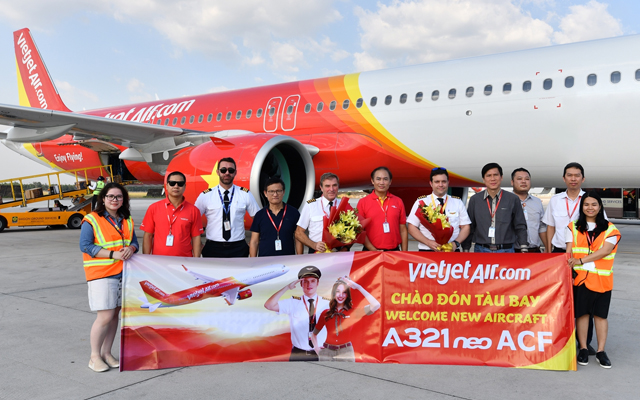
Vietnam’s Vietravel Airlines will begin operations next year, making it the sixth domestic airline to launch in one of the world’s fastest-growing aviation markets, according to a Reuters report.

Vietravel Airlines, owned by Vietnam’s tour operator Vietravel, will start with three to four leased planes and expects to place an order for Airbus SE or Boeing Co narrow-body jets at the Singapore Airshow in February, which will be scheduled for delivery within five years, chief executive Vu Duc Bien told Reuters in an interview.

Vietravel Airlines to launch new airline in Vietnam come 2020, making it the sixth domestic airline in an overly-saturated market

Vietnam’s aviation market has been sustaining a double-digit growth rate annually, leading to heightened competition between Vietnam’s airlines.

Last month, Vietnam’s largest firm Vingroup JSC applied for a license to launch an airline next year, after property and leisure firm FLC Group’s Bamboo Airways launched its inaugural flight in January to become the fifth Vietnamese airline in an already-crowded market.

Vietravel Airlines is said to be finalising procedures to obtain the licenses and certificates required to launch its maiden charter flight slated for next November, according to the Reuters report.

Bien also told Reuters that Vietravel Airlines will buy either Airbus’s A321neo or Boeing’s 737 aircraft. The carrier plans to operate three to four aircraft in the first year, which will be expanded to a fleet of six in the second year, eight to 10 within five years, and subsequently, 20 to 30.

The majority of the carrier’s proposed new services will be international flights, the airline chief added, with target markets including Japan, South Korea, South-east Asia, Australia and China.

Vietravel Airlines has raised VND700 billion (US$30 million) via a bond sale, and plans to sell up to 34 per cent stake in the company to domestic investors within a year of operations for future expansion plans, the report further quoted Bien as saying. Bien also shared that several local banks have expressed interest in funding the company’s aircraft purchases.

More travellers demand value, personalisation and digital solutions: Travelport

0

Travellers across the world are increasingly prioritising value over cost, demanding more autonomy over personalisation and using digital solutions to research and manage their trips, according to findings from Travelport’s Global Digital Traveler Research 2019.

The report, which surveyed 23,000 people from 20 countries, found that when booking a flight, value is a top priority for over four out of five (86%) travellers today with just one in five (18%) now booking solely on cost. This trend is apparent across all age groups led by baby boomers (91%) who prioritise value marginally more than younger generations.

Travellers worldwide prioritise value over cost and demand more autonomy over personalisation, finds Travelport

To find offers of value, travellers “nearly always” use a combination of travel review sites like TripAdvisor (42%), price comparison sites like Kayak.com (38%), recommendation sites like Kiwi.com (36%) and have conversations with travel consultants (31%).

But when shopping online, travellers have mounting frustrations as to knowing which companies they can trust (50%, up 6% from 2018), added the report. They are also frustrated by not knowing whether online reviews are genuine (50%) and the time required to find the right option (43%).

Travelport also found that travellers want more control and transparency when it comes to personalisation. Across all age categories, when booking a flight, travellers typically want to personalise their own experience (42%) through add-ons like extra legroom, additional baggage allowance and meal upgrades. One quarter (24%), however, prefer to receive branded offers, such as Flexi and Saver, which provide a basic level of personalisation.

When attempting to personalise their experience, however, a growing number of travellers are getting frustrated by not being able to understand what is included as standard (52%, up 12% from 2018) and not knowing what add-ons are available to them (56%).

Travellers are also increasingly frustrated by companies they regularly use not remembering their preferences (35%, up 4% from 2018). Frustration with this is most prevalent among Gen Y (39%).

Digital solutions are increasingly driving decision-making around travel bookings, Travelport also found. Nearly three quarters (71%) of travellers today consider it important whether an airline offers a good digital experience when booking a flight, up +3% from 2018. Over half (58%) also consider this when choosing accommodation, up +7% from 2018.

When researching a trip, three quarters (77%) of travellers have reviewed videos and photos posted by travel brands on social media, up 2% from 2018. One third (36%) of Gen Y travellers today “nearly always” do this in the research phase. Facebook is considered the most influential social media platform by all age groups except for Gen Z, which puts Instagram marginally ahead.

Nearly half of all travellers (48%) now believe augmented or virtual reality experiences would help them better plan their trips. Demand is greatest among Gen Y (61%) travellers, though still significant among all other age categories.

Travelport further found in its report that demand continues to rise for technologies that make travel easier to manage. Nearly half (45%) of travellers today get frustrated when they are unable to access their booking information round-the-clock on mobile devices, such as smartphones and smartwatches, up 9% from 2018. When it comes to age groups, frustration is particularly high among Gen Y (50%) and Gen Z (47%) travellers, but also maintained among others.

Nearly half (44%) of all travellers have now used voice search to help manage travel, with its use being greatest among Gen Y travellers (61%) and lowest among Baby Boomers (12%). One quarter (25%) of Gen Y travellers today “nearly always” use the technology for this use. When the technology is used by travellers, some of the most popular requests made are for information relating to the weather at their destinations (60%) and getting live traffic updates (54%).

Technology, however, can be as much a bane as a boon. Two fifths (42%) of travellers, for example, find not being able to speak to a human frustrating, up from 38% in 2018. This view was shared consistently across all age groups, though highest among baby boomers (43%).

Commenting on the research’s findings, Travelport’s chief customer and marketing officer, Fiona Shanley, said: “Travellers are consumers too and they want an experience from travel providers and travel agents that is as simple and engaging as the best retailers. Travelport’s latest global research shows that technology is key to this – from serving relevant and personalised offers to providing attractive propositions from trusted sources.”

SIA taps Sabre to enhance NDC offerings

0

Sabre Corporation has partnered Singapore Airlines (SIA) for the expansion of the carrier’s NDC programme, KrisConnect.

Effective November 2019, the collaboration will provide select Sabre connected agents in Singapore with the ability to access and book NDC content from the airline. As the programme continues to roll out across the region, all Sabre connected agents will have the ability to leverage KrisConnect.

Sabre partners SIA for the expansion of the carrier’s NDC programme, KrisConnect

SIA has been a member of Sabre’s Beyond NDC programme since 2018. The new KrisConnect programme, which will expand the airline’s digital distribution capabilities and enrich the customer experience, further establishes collaboration between both companies, said Sabre in a statement.

Under the KrisConnect programme, Sabre will provide travel agents with scalable, NDC-enabled offerings from SIA, and enable end-to-end workflows with rich, integrated content. With this launch, Sabre agencies will have access to a broader array of fares and a more tailored shopping experience via the Sabre agency point-of-sale, in addition to having access to new, KrisConnect-exclusive content categories, ancillary bundles, and third-party content.

Rakesh Narayanan, vice president, South Asia and Pacific, Sabre travel solutions airline sales, said: “With our scalable platform, we can transform the way air products are retailed, fuel product differentiation and optimise time-to-market to generate incremental revenue for the carrier.”