TTG Asia
Asia/Singapore Wednesday, 8th April 2026
Page 1168

Meet Greet, Accor’s new responsible economy brand

0

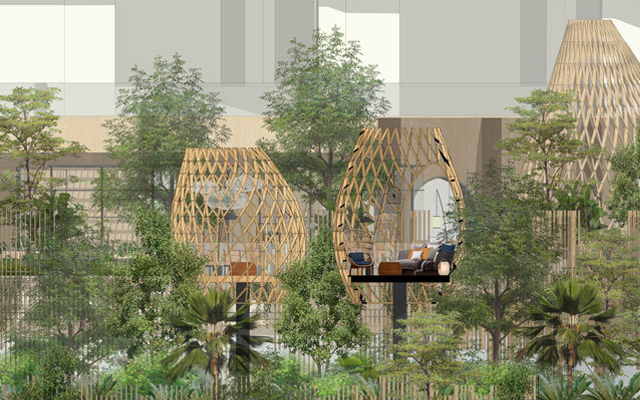
Accor has introduced Greet, touted as a new community-based, responsible and non-standardised economy brand that seeks to serve travellers looking to make a positive impact on the planet.

Created in early 2019, Greet was designed to meet growing demand among travellers for a high-quality and affordable hotel experience, while simultaneously seeking to add meaning to their purchases and reduce their impact on the planet, said Accor in a statement.

The Greet concept addresses this dual challenge through a flexible business model for partners, and a totally new hotel experience for customers, it added.

The brand was designed to serve consumers, partners and investors in search of an alternative adventure incorporating non-standardised hospitality, according to Accor, which claims that one of the brand’s key strengths is the freedom and great flexibility it offers to hotel owners under its banner.

The only guidelines are that greet hotels must include a number of the brand’s key features, including its logo in the common areas, a large table d’hôte for communal bonding, and ensuring that 20 per cent of rooms can accommodate between four and six people. Each greet hotel owner is also required to meet the following eco-friendly directives: Salvaging objects sourced via second-hand networks or from eco-responsible suppliers, upcycling unusual decorative items, and repurposing these objects.

Franck Gervais, AccorHotels’ CEO Europe, said: “With the launch of greet, our aim is simply to provide an ideal solution to independent hotel owners by offering a brand that combines the regeneration of existing hotel structures with cost control, both in terms of renovation and redevelopment of the spaces.”

An ecosystem has therefore been introduced to assist hotel owners in their policy of renovating and upgrading their assets, said the company, adding that partnerships with key organisations will enable each hotel to turn their approach to giving second chances into a reality.

Hence, Greet has joined forces with several leading charities, including Emmaüs, which will enable owners to source second-hand furniture and designs made using recycled items, as well as Valdelia – an eco-organisation providing a comprehensive solution to collect, recycle and re-use old furniture from all types of organisations – which will strengthen the connections with these networks. Another flagship partnership has also been launched with “L’atelier Consommateur & Citoyen”.

“These partnerships are essential as they help to turn our commitment to giving second chances into reality, both for our franchisee partners and our customers. greet is an inclusive brand, where the community genuinely plays a key role. We firmly believe that by working together, by creating synergies at both the national and local level, that we will be able to have a positive impact on our society,” Gervais said.

With the opening of its first Greet hotel in the heart of the Burgundy vineyards in April this year, Accor Group hopes to open 300 greet hotels throughout Europe by 2030, notably in Marseille, Lyon Perrache, Paris, St-Witz, Rennes, Bourges and St-Germain-en-Laye.

PATA adventure mart heads to Sabah next year

0

Sabah is keen to showcase its abundance of culture and nature offerings to the trade when the PATA Adventure Travel Conference and Mart 2020 (ATCM 2020) takes place in Kota Kinabalu, Sabah next year, announced Iskandar Mirza Mohd Yusof, senior director of corporate communication division – Tourism Malaysia, at PATA Travel Mart 2019 in Nur-sultan, Kazakhstan yesterday.

Marking the first time the ATCM is hosted in Malaysia, Iskandar is hopeful that the event will bring greater media publicity to Malaysia as a destination for adventure travel and sustainable tourism, while giving a boost to the Visit Malaysia 2020 campaign.

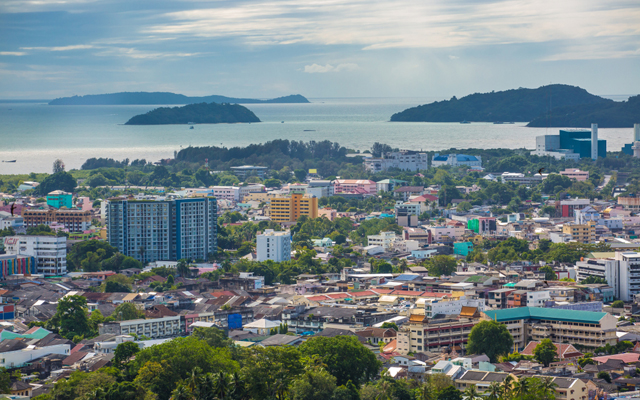
PATA Adventure Travel Conference and Mart 2020 will take place in Kota Kinabalu, Sabah next year (Pictured: Kota Kinabalu City Floating Mosque)

The three-day niche event, which will be held at the Sutera Harbour Resort from February 12-14, 2020, is hosted by Tourism Malaysia in partnership with Sabah Tourism Board and Malaysia Airlines.

Bringing together tourism professionals in adventure travel and responsible tourism, the one-day conference is designed to support PATA’s vision for the responsible development of tourism, while the one-day travel mart helps promote, build and strengthen business and networks for delegates.

Noredah Othman, general director – Sabah Tourism Board, shared that sustainability and conservation have always been top priorities for the state, with existing wildlife rehabilitation centres like Sepilok, as well as the government’s push to increase the number of marine national parks in the country.

Global air traffic growth keeps aircraft order high in the next 20 years: Airbus

0

Driven by global air traffic growth, Airbus has forecasted the number of passenger and freighter aircraft fleet will more than double to almost 48,000 worldwide by 2038. At present, there are nearly 23,000 commercial aircraft globally.

In its annual global market outlook, Airbus also predicted that traffic will grow at 4.3 per cent annually, resulting in a need for 550,000 new pilots and 640,000 new technicians.

Airbus forecasts need for over 39,000 new aircraft in the next 20 years

Of the forecasted 47,680 fleet needed by 2038, Airbus further breaks it down to 39,210 new jets and 8,470 existing ones.

By updating fleets with latest generation fuel efficient aircraft, Airbus said that it will largely contribute to the progressive decarbonisation of the air transport industry and the objective of carbon neutral growth from 2020 while connecting more people globally.

Reflecting today’s evolving aircraft technology, Airbus has simplified its segmentation to consider capacity, range and mission type. The new segmentation gives rise to a need for 39,210 new passenger and freighter aircraft, according to Airbus’ latest Global Market Forecast 2019-2038. Of these, 25,000 aircraft are for growth and 14,210 are to replace older models with newer ones offering superior efficiency.

Resilient to economic shocks, air traffic has more than doubled since 2000. It is increasingly playing a key role in connecting large population centres, particularly in emerging markets where the propensity to travel is amongst the world’s highest as cost or geography make alternatives impossible, said the firm.

Today, about a quarter of the world’s urban population is responsible for more than a quarter of global GDP, and given both are key growth drivers, Aviation Mega Cities will continue to power the global aviation network. Developments in superior fuel efficiency are further driving demand to replace existing less fuel efficient aircraft.

“The four per cent annual growth reflects the resilient nature of aviation, weathering short-term economic shocks and geo-political disturbances, ” said Christian Scherer, Airbus’ CCO and head of Airbus International. “Globally, commercial aviation stimulates GDP growth and supports 65 million livelihoods, demonstrating the immense benefits our business brings to all societies and global trade.”

Mandarin Oriental to open new hotel in Nanjing come 2022

0

Mandarin Oriental Hotel Group has signed a deal to manage a luxury hotel in Nanjing, the capital of Jiangsu Province in China.

Slated to open in 2022, Mandarin Oriental, Nanjing will be located on the Qinhuai River and in close proximity to popular tourist attractions, including the Gate of China, the Confucius Temple quarter and the Old East Gate.

Mandarin Oriental Hotel Group inks deal to manage a luxury hotel in Nanjing, set to open in 2022 (Pictured: Mandarin Oriental Hotel Group’s Paul Massot and Hongkong Land’s Ling Changfeng)

The 106-key hotel will feature a spa, an indoor swimming pool, a fitness centre, as well as three restaurants and bars, including an all-day dining option, a Chinese restaurant and a lobby lounge. There will also be a range of meeting facilities, including a large ballroom.

Mandarin Oriental, Nanjing will form part of a wider mixed-use development owned by Nanjing Shengxiangyuan Property Development, an affiliated company of Hongkong Land, in partnership with China Merchants Group and Country Garden Group.

In addition to the hotel, the development will comprise premium retail space and residential luxury homes.

New hotels: InterContinental Maldives Maamunagau Resort, Conrad Tianjin, and more

0

InterContinental Maldives Maamunagau Resort
Opened on September 1, 2019, InterContinental Maldives Maamunagau Resort is located on the Maamunagau island, at the southern tip of Raa Atoll. The island is located near Maldives’ only UNESCO World Biosphere Reserve and home to Hanifaru Bay, and is a 35-minute seaplane transfer from Male International Airport.

The property’s 81 beach, lagoon and overwater villas and residences are each equipped with their own private terrace and pool. The resort also features six gastronomic concepts including The Retreat, an adults-only enclave with a private bar and its own infinity pool; a signature AVI Spa with six overwater treatment villas; and a Planet Trekkers Kids Club.

The Prestige Hotel, Malaysia
The Prestige Hotel, an independent bespoke luxury hotel, has risen within the UNESCO World Heritage site of Georgetown. The 162-room hotel offers four room types: the standard deluxe room, the premier deluxe suite, the loft suite, and the deluxe trio room which features a smaller bedroom for a child travelling with parents, for additional privacy.

Other facilities include events pavilion and terrace, outdoor gazebos, an all-day dining restaurant, function rooms which can host indoor events for 110 guests; a rooftop infinity pool, and a fully-equipped gym. The hotel also features a dining and retail arcade that houses the Glasshouse Restaurant, San Francisco Coffee, a fine dining restaurant, local clothing brand, dessert café, florist and pharmacy, amongst others.

Conrad Tianjin, China
Conrad Tianjin has opened within the heart of the Nankai District, as part of the premier Luneng Ecological Zone. The hotel comprises 375 guestrooms, including 29 hotel suites. Conrad Tianjin also provides 50 one- to three-bedroom residences to cater to long-stay business travellers.

F&B options at the 10-storey hotel include an all-day dining restaurant Brasserie on G, Chinese restaurant Ying which also offers private dining rooms, the hotel’s signature restaurant Bam Bou, and bar lounge Cha.

Hotel facilities include a 24-hour fitness centre, a heated indoor pool, a kid’s pool and dedicated playroom, a 2,665m2 meeting space, a 1,068m2 grand ballroom which can accommodate up to 950 guests in a banquet setting, as well as nine flexible meeting rooms.

The Okura Tokyo
After four years of renovation work, the iconic Hotel Okura Tokyo has reopened as The Okura Tokyo, the new flagship hotel of Hotel Okura.

The new 508-key, 2.6ha luxury property houses two separate properties: The Okura Heritage, which offers “traditional luxury”, and The Okura Prestige, which offers “contemporary luxury”. The smaller of the two buildings is the 17-storey Okura Heritage Wing, which has its own reception and features 60m2 guestrooms. Facilities making its return are the Yamazato Japanese restaurant and the Chosho-an tea ceremony room.

The larger 41-storey Okura Prestige Tower houses 50m2 standard-size rooms and a duplex suite comprising a 730m2 living space with three bedrooms, a two-story-ceiling living room and event-ready theatre. Also, the bathroom of the master bedroom will feature a Ne-Yu bed bath and Utase-Yu waterfall bath.

Dining facilities include the hotel’s reborn teppanyaki restaurant, Sazanka; an all-day dining restaurant, Orchid; and Chinese restaurant Toh-Ka-Lin. As well, there is the Okura Fitness & Spa, and the Okura Museum of Art, originally established in 1917 as Japan’s first privately operated art museum. The Okura Prestige Tower is equipped with banquet facilities, including The Heian Room which boasts an AV system and can accommodate up to 2,000 people.

Discovering Bukit Bintang’s hidden side

0

Why
Jalan Bukit Bintang (Bukit Bintang Road) is one of the liveliest areas in the capital with a vibrant nightlife. This is where tourists come to shop, drink and dine. Despite being a frequent visitor to this area for business meetings and shopping, I seldom lingered to explore its offerings. But thanks to a good guide, I was introduced to new aspects of this vibrant city. What were once dingy, narrow alleys and timeworn buildings have now been transformed by Kuala Lumpur City Hall into artsy, Instagrammable spots.

One of the 70 exhibits, Rotated Room, at the newly-opened Museum of Illusions Kuala Lumpur

What
This walking tour is about 2.5km long, which makes it suitable for people of all ages. The meeting point is befittingly The Federal Kuala Lumpur, the city’s first international class hotel which was constructed for the Independence celebration in 1957 to house foreign dignitaries who had come to witness Malaysia gaining independence from British rule.

We took a lift up to the hotel’s 18th floor, which offered sweeping panoramic views of the city. Our tour guide, Jane Rai, pointed out historic buildings and shared stories of how the city’s predecessors built up business empires and contributed to the rapid growth of the city.

Following a leisurely stroll through modern shopping malls, where we also sampled authentic local food, we ventured out on the streets to admire the colourful backstreet murals and explore the area where the early settlers built their homes.

A highlight for me was the Museum of Illusions Kuala Lumpur, a new attraction in the city comprising more than 70 exhibits that play tricks on one’s eyes. One exhibit, The Ames Room, made my friend appear to shrink and swell before my eyes as she paced back and forth in the room.

How
This heritage walking tour is part of a series of ‘Kuala Lumpur Heritage Walks’ available that bring visitors to explore the old sections of the city. The evening walking tour, which is operated by inbound tour operator Going Places Tour, is conducted in English and runs from 16.00 to 19.30 daily, except Sundays.

It includes two food stops where guests can get a taste of authentic Malaysian dishes and local drinks. Both places cater to customers on gluten-free diets. The walk ends at Jalan Alor, famed for its local street food. Over here, Jane regaled us with fascinating tidbits of the road’s rich history, and we also glimpsed an insight into the daily lives of people who live and work in this area.

Verdict
Excellent tour on foot. The rich history and culture is brought to life by a knowledgeable and entertaining tour guide who is also extremely well-connected to the fabric of the city. Not only did the tour indulge all my five senses, it also acquainted me with places in the heart of Bukit Bintang that was completely off my radar.

Rate: RM300 per person (US$73)
Contact Email: info@kualalumpurheritagewalks.my

TAT rolls out campaign highlighting SE Asia’s pop culture

0

The Tourism Authority of Thailand (TAT) is promoting local cities with the launch of its latest Experiencing ASEAN Pop Culture campaign, which is also aimed at creating greater awareness of the authentic value of localised culture through pop culture lifestyle.

The campaign will highlight a variety of food, art, literature, music and sports in Thailand’s subsidiary cities, namely, Chiang Khong District in Chiang Rai, Sawankhalok District, Sukhothai and Laem Ngop District in Trat, as well as the neighbouring cities of Battambang in Cambodia and Mandalay in Myanmar.

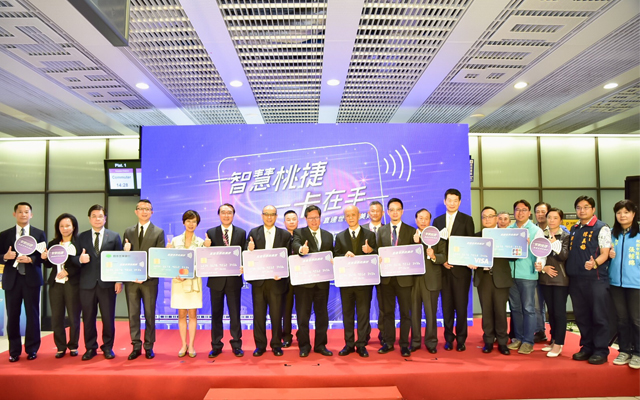
Gracing TAT’s launch of its latest Experiencing ASEAN Pop Culture campaign is (standing on stage) King Power Group’s Aroonroong Srivaddhanaprabha (3rd from right); deputy minister of tourism and sports Napintorn Srisunpang (4th from right) and TAT’s Klissada Ratanapruk (5th from right); alongside the ambassador’s representatives and the campaign’s participating artists

These cities will see artists from Vietnam, Cambodia, the Philippines and Thailand taking part in arts and cultural activities within designated areas to showcase the country’s national heritage.

Klissada Ratanapruk, TAT’s executive director, ASEAN South Asia and South Pacific Region, said that the campaign aims to “support secondary destinations” and “promote (Thailand’s) tourism industry among neighbouring countries”.

TAT believes that the campaign will not only promote inbound travel to South-east Asia but also provide a sustainable source of income for local communities, he added.

The project is supported by King Power International Group, Bangkok Airways, Beger Paints, Mercure Mandalay Hill Resort and BMW Thailand.

Adapting to the future

0

At the Sabre Technology Exchange in Las Vegas in July, Sabre unveiled a brand-new solution that promises to catapult the hospitality industry into an age of advanced retailing. The SynXis Intelligent Retailing tool, slated for an early-2020 launch, will enable hotels to sell not just room ancillaries, but also present a guest with highly targeted travel products in real time during the booking process.

These recommended products are determined through machine learning, based on a customer’s own preferences and the purchasing patterns of similar users. The menu is all-encompassing, ranging from couples’ massages and celebratory champagne to family ticket bundles and, notably, day tours and activities.

The result is a shopping and booking process that is personalised, dynamic and instantaneous. This development opens up possibilities for more players along the travel booking chain, but it also poses the uncomfortable implication that machines will soon know what tours and products a traveller will likely buy – faster and with more accuracy than a travel agent.

Sundar Narasimhan, senior vice president, Sabre Labs and Product Strategy Vision, declared that Sabre is casting a heavy focus on intelligent advanced retailing, and that SynXis Intelligent Retailing is one of the first concrete steps towards the goal of making it an industry-wide mainstay by 2025.

Time is running out
While the industry makes a gradual march towards intelligent retailing, the level of awareness among the travel agency community about its impact and the available digital strategies is still at a worrying low, expressed travel technology providers.

Solutions centred on IATA’s New Distribution Capability (NDC) standards and the Airline Tariff Publishing Company’s (ATPCO’s) New Generation Storefont (NGS) capability can allow agencies to sell unbundled air fares, products and ancillaries, thus enabling them to provide customers with a more customisable and flexible booking experience.

However, the magnitude of these benefits is lost on a concerning portion of agents. Rakesh Narayanan, Sabre’s vice president, regional general manager, South Asia and Pacific, travel solutions airline sales, stressed: “While Sabre is investing heavily in training and education for its community of agents, a lot of work still needs to be done to ensure that all industry players are up to date on NDC. At this stage, both travel suppliers and travel agencies have to become better acquainted with the complete benefits brought on by NDC, and how to make these opportunities a part of their strategy.”

Similarly, Rob Brown, global vice president and managing director of OTA business, Travelport, observed that although travel agencies have “strong motivations” to provide a smarter and faster retail experience, “the primary focus of many is still solely on converting website visitors to bookers, which already makes them fall behind the competition”.

And while airlines have been eager to board the NDC train, their efforts are still not being sufficiently matched by distributors. Jeff Lobl, managing director of global distribution for Delta Air Lines, lamented: “There are customers who prefer premium products – we see overwhelming numbers on our direct channels – but 99 per cent of agencies are dominated by the practice of showing the lowest fare first.

“But customers don’t always want that. The lowest fare is no longer as attractive a product as before, and offers can now be personalised and exciting. But if these cannot be displayed properly and customers can’t see it, then they’re not buying.”

In Asia, the chief reasons for slow industry take-up are a lack of Asia-specific outreach and the high cost of adopting such technology. General manager of Brunei-based Century Travel Centre, Foo CP, said that the degree of engagement between technology providers and travel agents leaves much to be desired, resulting in little awareness of options in the market.

He noted: “Attending more events (with technology providers) would be good to help us see what solutions there are (in the market).”

The benefits of NDC application programming interfaces (APIs) and NGS capabilities are still sinking in, but with the advent of intelligent retail, the agency community may no longer have the luxury of time. The ability to provide smart and dynamic travel retailing will soon be bestowed to hospitality players – and they may be quicker to the draw.

Already Langham Hotels in Hong Kong is working with Sabre to pilot the SynXis Intelligent Retailing tool this year, after which it will run on a test-and-learn phase for the next two quarters. By 2020, the solution will be released to the market, helping more hospitality players achieve “retailing beyond the room, or even without the room”, described Jeff Henley, manager, solutions consulting, Americas at Sabre Hospitality Solutions.

And even before hotels begin to roll out smarter in-destination offerings, the role of the travel agent – whether a travel designer, consultant, specialist or destination expert – has already come under threat. More OTAs now enable travellers to easily shop, plan and book innumerable permutations of transport and itinerary options with several clicks of the mouse.

“At the stage of booking, a new and growing OTA model is to deliver a competitive search response that includes multimodal itinerary combinations and connection points for one-way, roundtrip or multi-leg travel. The booking may consist of tickets from multiple suppliers and is a good way of increasing conversion among price-conscious travellers,” described Brown.

With such extensively autonomous travel planning available at their fingertips, customers would soon be increasingly inclined to skip the middleman altogether.

NDC, NGS critical lifelines
As more retailing solutions come online, NDC-enabled tools and NGS capabilities are fast becoming a critical lifebuoy for agencies to stay afloat. Mid-2019 has seen the tech juggernauts roll out a wave of NDC-enabled and NGS developments in attempts to ‘future-proof’ travel distributors.

In April, Sabre launched its first set of NDC APIs with United Airlines’ global flight network, which has been made available to its Beyond NDC agency partners via Sabre Red 360. Soon to follow in 2H2019 are scaled-up additional APIs that support voluntary and involuntary flight changes, refunds and voids.

Meanwhile, a month after the July launch of the Amadeus Travel API for travel agencies, Amadeus announced a retailing partnership with American Airlines and American Express Global Business Travel. The companies shared that American Express Global Business Travel has successfully processed live bookings of American Airlines’ NDC-enabled content by leveraging the new Amadeus Travel API, and the partnership aims to execute the API’s full functionality of end-to-end booking flow and servicing, which includes cancellations, exchanges and ancillaries.

Travelport has also pushed out the first phase of ATPCO’s NGS capability with multiple airlines and partners, including online booking tool WhereTo and global developer Travel Technology & Solutions. As the ATPCO standards continue to evolve, Travelport is working to enable exact comparisons across airlines’ full range of products, whether for online agencies, corporate booking tools or Travelport’s desktop solution for offline agencies, Smartpoint.

Displaying a full range of airline products and ancillaries may just be the first step, but it is critical for online agencies that wish to maintain their “advantaged position”, asserted Brown. He explained that it is “essential for OTAs to present travellers with the branded fare options available across multiple airlines”, as it would “eliminate the need for travellers to visit the websites of airlines and competing agencies to compare offers”.

He continued: “Our research shows that 73 per cent of travellers would rebook with an OTA if they could book the whole trip in one place. OTAs need to work more effectively to exploit this position.”

What agencies should do is immediately get acquainted with the ins and outs of NDC to understand how to maximise their mileage from it. Sabre’s Narayanan advised: “The first step for agents to familiarise themselves with what NDC is and isn’t, is to participate in industry-led sessions, such as the ones hosted by Sabre.

“Then, start an open dialogue with corporate customers so they know that you are proactively analysing the challenges and opportunities related to NDC. Also speak to airline (partners) and technology providers to understand how they plan to NDC-enable their processes and applications.”

Travelport’s Brown urged that agencies should also take a closer look at their data strategy and reconsider how they can add value to their travellers. Referring to advice Travelport offers to its agency partners, Brown stated: “Integrate closely with your data team, whether in-house or a third-party supplier. With the right data and analytics strategy, agencies can transcend the traditional travel agency business to offer much greater value for customers during every stage of their travel experience.”

Now, the question remains as to where the old-school travel advisor stands, and agents are exhibiting uncertainty about their future in this age of dynamic digital distribution.
Grace DeVita, vice president of Florida-based Post Haste Travel, said that while NDC-enabled content has allowed her to “do more and more for customers” and “add more value to my company and my clients”, she is also concerned about the changing expectations of customers.

“Our clients’ expectations are different now. They go on the websites and they see what’s out there, then they come back to us and say, ‘I can do this myself when I go online’. Even the big leisure agencies have the same issues,” she expressed.

Advisors acknowledge that change is imminent, although they do not know how. Jemima Leonard-Thomas, travel consultant, Carib-World Travel, said: “Everybody in travel knows that it’s part of our gig – our work is constantly changing. I’m not worried because we knew this was going to happen eventually, we just have to adapt to it.”

A balance of digital and physical
There may not be a clear answer in the crystal ball for now, but experts forecast a likely scenario where the successful agencies will marry technological strategy and human interaction. Furthermore, there will remain a segment of customers who would pay for personalised service from a travel designer, and a number of destinations that would require destination expertise and guidance.

Champa Magesh, vice president, Asia Pacific Retail Travel Channels, Amadeus, elaborated: “The entire retail travel agency business model has been about the human touch. The future of retail travel agencies in Asia Pacific (now) requires an optimal integration of human talent and technology enablers to deliver a personalised, frictionless and memorable experience, underpinned by an omni-channel customer service strategy.

“Successful retail travel agencies must combine technology enablers and human intelligence in a way that creates a convenient and cohesive experience no matter how, when or where a customer reaches out.”

This seamless booking experience extends even into an agency’s physical space, where a customer should be inspired to travel while enjoying a personalised planning session.
Magesh added: “Now it’s about combining the physical, digital and human. (Agencies) need some form of human interaction, but they also need to be omni-channel – working across multiple channels, online, mobile and brick-and-mortar.

“This is a tipping point; the time for change is now. ‘New Retail’ is the future – where physical spaces are used to inspire customers, regardless of whether they make their booking in store or online.”

Expedia signs deal to become Marriott’s exclusive global distributor

0

Expedia Group and Marriott International have signed a new agreement stipulating that Expedia Group will become the exclusive global optimised distributor of Marriott’s wholesale rates, availability and content to a network of global travel providers, from October 15, 2019.

With the launch of the optimised distributor model, Marriott is introducing changes to how it approaches the redistribution of the company’s wholesale rates and availability among third-party travel providers.

Expedia Group inks agreement to become Marriott International’s exclusive global optimised distributor

Through this agreement signed in April 2019, Marriott will tap Expedia Group’s technology and services to create a single gateway for the redistribution of Marriott’s wholesale inventory. The optimised distribution model, provided by Expedia Group’s B2B arm, Expedia Partner Solutions, will eliminate the complexity and inefficiency of today’s wholesale redistribution model for Marriott hotels, said the OTA in a statement.

This single gateway solution will also provide a consistent and reliable shopping experience for travellers, ensuring accurate display of hotel descriptions, room rates and fees through known and trusted third party travel providers, the company added.

Today’s wholesale distribution landscape is fragmented and complex, requiring hotels to navigate an intricate web of third-party redistributors and technology standards, said Expedia Group. It claims that this new solution unlocks Expedia Group’s technology through one point of access and uniform technology for all Marriott hotels worldwide, which will enable Marriott to more efficiently manage its wholesale redistribution.

Under this joint partnership, redistributors will no longer receive access to Marriott rates and inventory directly from Marriott but may contract with Expedia Partner Solutions to obtain access, provided such redistributors comply with Marriott’s distribution standards.

Tour operators who access wholesale rates from Marriott directly continue to have this option, in addition to leveraging Expedia Partner Solutions as the optimised distributor for Marriott International wholesale rates. For Marriott hotels, the new optimised distribution model will reduce the cost, complexity and consumer issues associated with the current redistribution marketplace, said Expedia Group.

Brian King, global officer of digital, distribution, revenue strategy & global sales, Marriott International, said that by tapping on Expedia Group’s technology, the hotel “can increase our reach to leisure travel providers while solving distribution challenges and improving profitability for our hotels around the world”.

Infrastructure development in Indonesia’s super priority destinations to complete by 2020

0

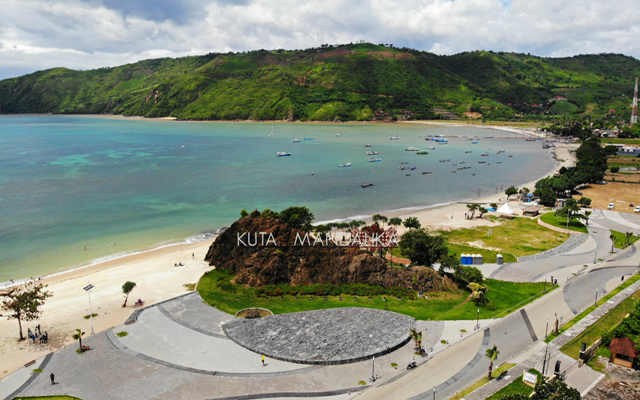
The Indonesian government has earmarked 9.4 trillion rupiah (US$668 million) for the development of basic utilities and supporting infrastructure in the five super priority destinations next year.

Of the total budget, Lake Toba has been allotted 2.2 trillion rupiah; the Borobudur area, 2.1 trillion; Labuan Bajo, 300 billion; Mandalika 1.9 trillion; and the remaining will go towards Likupang, the latest added development area in North Sulawesi.

Mandalika, an under-construction integrated resort area on the island of Lombok, is one of the five super priority destinations Indonesia’s government has earmarked for development (Pictured: Kuta Mandalika Beach in Lombok)

With the funding injection, Indonesian president Joko Widodo expects the development of the infrastructure to be finalised by 2020 so that private investors can start building facilities in those areas.

The government and relevant stakeholders are finalising the Integrated Tourism Master Plan for the super priority destinations.

In the meantime, the Indonesia Investment Coordinating Board (BKPM) also offers super deduction tax for investors in the destinations.

These latest developments were revealed at the third Coordination Meeting of Ministry of Tourism with Related Government Agencies 2019 in Jakarta last week.

Indonesia minister of tourism Arief Yahya said: “Basic utilities and basic infrastructure development is the government’s commitment to the investors. We have done the detailed engineering design and the critical success factor of each destination has been addressed.”

Arief elaborated that the critical success factors in the Borobudur area – which includes the Yogyakarta-Solo-Semarang triangle – are the construction of the new Yogyakarta International Airport, which is targeted to be fully operational by March 2020, and the development of a bypass road to Borobudur.

Over in Lombok, development works include the construction of the MotoGP Circuit in Mandalika, a bypass road between the Lombok International Airport and Mandalika, and an extension of the airport runway.

He said that with the new infrastructure in place, investors are expected to start developing facilities in those areas.

To attract more investors to inject money into those destinations in the meantime, BKPM’s deputy of planning Ikmal Lukman said: “BKPM offers investors the ease of direct investment in these special economic zones and the advantage of super deduction tax in talent development.”

Correction: This story has been updated to reflect the correct amount of money allocated to Labuan Bajo’s development. It should be 300 billion rupiah, not 6.3 trillion as earlier reported.