Thailand’s Dusit International has signed a long-term agreement with Vietnamese real estate developers General Technology Joint Stock Company to develop and operate Dusit Tu Hoa Palace, Hanoi, in the city’s Tay Ho District, at the northern end of the city’s West Lake.
Slated to open in 4Q2023, the 207-key upscale property will feature an all-day dining restaurant, a rooftop bar, meeting rooms, and a swimming pool.
Dusit Tu Hoa Palace, Hanoi is slated to open in 4Q2023
Currently, Dusit International’s property portfolio comprises 307 properties operating under six brands across 15 countries.
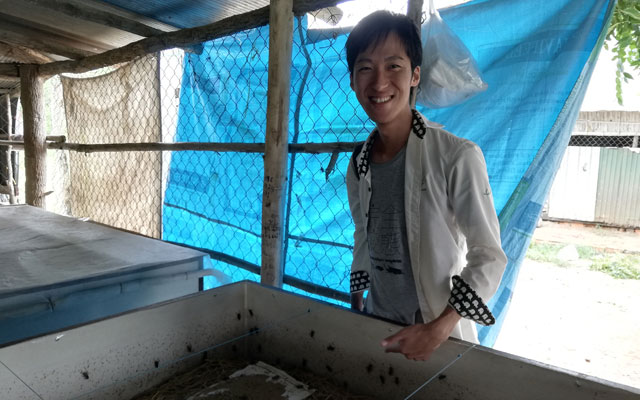
Japanese social entrepreneur Seiya Ashikari is using tourism as a tool to push Cambodia’s cricket farming industry.
In August 2018, the 24-year-old pressed pause mid-way through pursuing a biology PhD in Tokyo to volunteer on a cricket farming project in Cambodia.
Seiya Ashikari's cricket farm business
1 of 4
Ashikari at a cricket farm
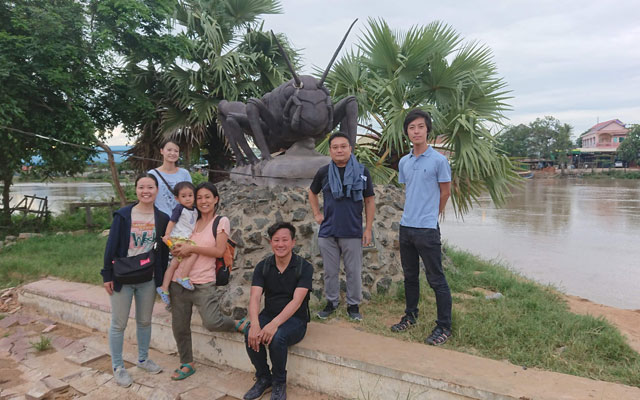
Kampong Thom tour
Kampong Thom tour
Cricket farm
Ashikari saw that growing the insects were a potential way to boost the income of farmers struggling to make ends meet cultivating traditional crops. He launched Ecologgie, helping train farmers and turn their produce into cricket-based protein powder and nutritious snacks.
The insects, which are easy to farm from the rural homes that dot the country and sold for about US$3/kg, are packed with protein – a missing ingredient from many local diets.
Now, Ashikari has launched one- and two-day cricket farming tours in Kampong Thom. The rural province is famed for its cricket farming and home to one of Ecologgie’s current two centres. The other is in Takeo.
Ashikari said: “I want visitors to learn about the cricket farming industry, and raise understanding about insects as a sustainable source of food protein in the future.”
In line with his philosophy of placing locals at the heart of his work, Ashikari’s tours are community-driven. While visitors get to see Ecologgie’s operations, grassroots cricket farmers also introduce guests to their work. Overnight guests stay with farmers in their home.
During trips into surrounding countryside, guests can see the critters in the wild. There is also the chance to accompany tarantula hunters as they head into the jungle in search of spiders.
They are caught using home-made, pronged sticks poked into spider holes. After coaxing out the arachnids, they are caught by hand, defanged and sold. Vendors then deep-fry them in garlic and chili, and sell them as tasty snacks.
Added Ashikari: “This is a great experience for people wanting to really learn about and experience local livelihoods in Cambodia. I wanted to create something different, while helping local communities.”
In 2019, Ashikari ran two tours. This year, he plans to push it as an add-on to Siem Reap trips, or to break up over-land travel between Siem Reap and Phnom Penh.
For details, contact seiya-ashikari@ecologgie.com.
Mövenpick Hotels & Resorts has appointed Brice Borin as general manager of Mövenpick Resort Cam Ranh, a new beachfront resort in Vietnam.
With more than 30 years of experience in the hospitality industry, Borin has taken on the role of general manager at a variety of hotels including Soori Bali, The Regent Phuket Cape Panwa and The Regent Maldives; and also oversaw the opening of three Anantara resorts.
Most recently, Brice spent two years with Mövenpick Hotels & Resorts, where he also served as the pre-opening general manager of Mӧvenpick Resort & Spa Kuredhivaru Maldives.
The recent toxic smog that engulfed Delhi and grabbed global headlines may not have had a dire impact on inbound arrivals to the country but have kept tourists away from the national capital, reported a number of Indian tour operators.
Some international tourists have also shelved their travel plans. “It is the peak travel season and the decline in New Delhi’s air quality has raised concerns among travellers but not to an alarming level. However, solo and business travellers are looking at postponing their business trips,” said Rohit Walter, brand leader, FCM Incoming.
Severe air pollution is stifling New Delhi’s tourism business
“Some foreign tourists are cancelling or shortening their stay in Delhi as hazardous smog envelops the capital, disrupting normal life and causing a spike in respiratory illnesses. Inbound tourism from Singapore and Japan have been majorly affected as they are very particular about their health,” added Walter.
Last November, air pollution in New Delhi and surrounding towns reached the worst levels so far in 2019. According to a few tour operators, many inbound travellers opted for alternative destinations in India to shun the smog in New Delhi.
“The inbound figures for October/November were higher than the previous years, meaning that whatever the media or foreign press said (about New Delhi’s air pollution) had very little impact on the inbound tourist arrival numbers,” said Subash Goyal, chairman, STIC Travel Group.
Foreign tourist arrivals in India for last October grew by 6.1 per cent to 944,233 from 890,223 in October 2018, according to statistics from India’s Ministry of Tourism.
“Tour operators change the itineraries to include South India and other parts of the country, and change the stay in Delhi to only a day. The Indian trade associations also created awareness in the market about the reduction in e-tourist visa fee to reduce any impact that the Delhi smog will have on inbound tourist arrivals,” added Goyal.
Tour operators also built up confidence among their foreign associates by informing them how it was business as usual in New Delhi, as well as the government’s initiatives to reduce the smog in the city.
“We keep our clients informed of events that have successfully taken place in Delhi during such periods. For instance, the India-Sri Lanka cricket match and the visit of German chancellor Angela Merkel were both conducted smoothly, indicating that the situation in Delhi was manageable. By convincing our foreign clients that this is a temporary phase as the Indian government is actively working on to sort out soon, we are able to take care of their confidence,” said Walter.
As part of the nation’s anti-pollution push, the Delhi government deployed environmental officers to stop garbage burning and also imposed restrictions on construction work in the capital city. An odd-even road rationing plan was also launched by the government to reduce air pollution and traffic congestion on Delhi’s roads.
“We have responded (to Delhi’s pollution crisis) by sending photographs of the clear skies to our overseas partners to instill confidence in them. Thanks to the rainfall, the smog cleared. Had it lasted longer then, yes, tourism would have been affected. We must ensure that both the Delhi government and the central government take care of crop burning in the next season, otherwise tourism can be affected,” said Goyal.
“If the spiralling pollution level in Delhi is not permanently addressed in the near future, inbound tourism arrivals to the country will take a beating,” said Arun Anand, managing director, Midtown Travel.
“Perception is key to tourism and international travellers may look at alternative tourist destinations if the pollution levels in Indian cities don’t go down.”
Destination and tourism marketers will need to play a critical role in correcting the vast amount of misinformation surrounding the ongoing Novel Coronavirus outbreak that is hurting travel and tourism businesses across Asia, urged Mario Hardy, CEO of the Pacific Asia Travel Association (PATA).
Speaking to TTG Asia, Hardy said the spread of falsehoods about the virus was his “biggest concern”, more than the outbreak itself as the former has the ability to trigger panic and cause more people than necessary to halt travel.
Hardy: Tourism marketers ought work to stem the spread of misinformation concerning the coronavirus
“There has been a lot of messages and content being shared online and on WhatsApp, mostly insane theories that look like the truth but are not. This is very worrying because people are relying on such information to make their travel decisions. We have been through some tough incidents that impact travel and tourism, like natural disasters, but somehow the spread of misinformation surrounding this outbreak is the worst I’ve seen,” Hardy said.
He urged travel and tourism colleagues to rely only on reputable organisations for authentic information and to play a part in sharing only verified information with customers.
An informed business approach is also essential, advised Hardy who pointed to data that will be released by ForwardKeys today to shed light on how the outbreak has impacted travel bookings. PATA itself will be releasing on February 4 its annual industry forecast, and projections will take the outbreak into account.
“We are planning to have a joint webinar with ForwardKeys very soon that will provide the industry with a platform to better understand the business impact of the outbreak,” he revealed.
When asked for his expectations on business outlook, Hardy said the “short-term will see a huge drop in arrival numbers due to significant cancellations while the long-term will have people adopting a wait-and-see approach”.
“The drop will be significant for Asia because many Asian destinations rely heavily on the China market. We have seen the same happening in the past, such as when there was SARS. However, we have also seen from past incidents that when the storm finally blows over, the recovery of arrivals often comes fast and heavily. We are a very resilient industry.”
Hardy opined that Asian destinations, which have experienced the SARS epidemic two decades ago, are far more prepared this round and will be able to limit the extent of damage to tourism. “Some may argue that the Chinese government was too slow in shutting down affected cities, but the fact is it has taken the bold measure to restrict movement and limit the spread of the virus. Elsewhere, Asian governments have also taken good measures to protect their citizens from infection,” he said.
In Thailand, where Hardy and the PATA headquarters are based, the private sector has joined government agencies in taking steps to ensure the well-being of the community. Citing examples, Hardy said office buildings and commercial establishments have made hand sanitisers easily accessible everywhere, and some have allocated staff in gloves to manage the elevator buttons “so that no one else has to touch the buttons”.
When asked how Asian destination and tourism marketers should adjust their communications in light of the situation, Hardy said this was not the time yet to resume selling destinations and products.
“People are still nervous, especially those who have lived through SARS. Their confidence and trust will be low for the next few months (as the outbreak continues to progress), so destination marketing messages will be lost on them. Destinations should continue what they are doing now – sharing timely information on the issue and providing assistance to the industry to allow them to reassure and protect guests,” he said.
Meanwhile, Hardy said the damage to tourism businesses from the sudden retreat of Chinese travellers provided yet another urgent reminder that destinations must not rely heavily on a single source market.
“While it is true that when the Chinese come, they come in large numbers, destinations need to diversify their source markets as well as tourism products so that they can attract a variety of travellers and minimise risks when problems happen.”
The coronavirus outbreak in China has caused a substantial setback in flight bookings for the Chinese New Year period, from January 10 to February 6, 2020, according to new data from ForwardKeys.
The Chinese New Year holiday season typically begins a fortnight before Golden Week; and travel reaches its peak just before Golden Week starts.
Coronavirus outbreak has caused a slump in Chinese tourism over the Chinese New Year period
This year, outbound travel reached a new peak and the season was on course to break all records, said ForwardKeys. However, on the week of January 20, the implementation of travel restrictions forced the last batch of Chinese holidaymakers to cancel their travel plans.
By January 26, a slew of cancellations had changed the picture dramatically. Although the vast majority had left before the travel restrictions took effect, the prospect of a record-breaking year was gone.
Up to January 19, outbound travel bookings from China (excluding Hong Kong and Taiwan, where political unrest has impacted travel) were 7.3% ahead, benchmarked against the equivalent period in 2019.
But a week later, as of January 26, when Wuhan airport was closed and the Chinese government stopped outbound tour groups from travelling, bookings for the Chinese holiday period were 6.8% behind.
The dramatic slowdown has affected travel to all parts of the world. Asia-Pacific, the region which attracts over 75% of Chinese New Year travellers, has been worst hit.
As of January 19, bookings were 1.3% behind where they were at the equivalent moment in 2019; a week later, they were 15.1% behind.
The deterioration seen for other global regions has been similar, but a little less severe. As of January 19, bookings to the Americas were 14.3% behind, while those to Africa and the Middle East were down 0.7%, and to Europe were 10.5% ahead. A week later, bookings to the Americas were 22.5% behind, while those to Africa and the Middle East plummeted 9.9%, and to Europe were 0.5% ahead.
China, as a destination, has also been severely affected by the coronavirus crisis. Up to January 19, inbound bookings for the Chinese New Year period were 4.5% ahead of where they were at the equivalent point last year. A week later, they were 7.2% behind.
The weakest origin market has been the Americas, where bookings fell from 0.4% ahead to 13.4% behind. Asia-Pacific, China’s largest source market, with a 65% share of visitors, has fallen from 6.0% ahead to 6.2% behind. A healthy growth in bookings from Africa & the Middle East has stalled from 10.9% ahead to 3.9% ahead and bookings from Europe have fallen from 1.0% ahead to 7.1% behind.
Olivier Ponti, vice president insights at ForwardKeys, commented: “China is now the world’s biggest and highest-spending outbound travel market, so the presence of Chinese visitors is eagerly anticipated by the tourism industry globally. The economic impact could have been worse if the coronavirus outbreak had struck a couple of weeks earlier.
“Fortunately, most Chinese holidaymakers managed to get away in time and as of now, we don’t see the collapse in travel to China spreading to other countries in the region. However, with the crisis evolving rapidly from day to day and a growing number of airlines cancelling flights to China, close monitoring is needed.”
Meanwhile, the WHO has announced today that the outbreak constitutes a global health emergency. Its director-general, Tedros Adhanom Ghebreyesus, told reporters in Geneva that “the main reason for the declaration is not because of what is happening in China but because of what is happening in other countries”.
Its concerns are mainly about what will happen if the virus spreads to countries with weak health systems, and that the purpose of the declaration is to help those countries.
Japan braces ; A Chinese tour group visiting Takayama pictured
Japan is bracing itself for a slump in tourism revenue as a result of the Wuhan coronavirus outbreak, as tourism businesses across the country are being hard hit with a wave of cancellations following the Chinese government’s ban on all outbound group travel on January 27.
Tokyo-based travel agency Kamone, which specialises in tours for Chinese travellers, has received more than 20,000 cancellations of package trips to Japan for trips up to February 10.
Japan braces for blow to tourism industry as Chinese tourists account for a third of the country’s total inbound visitors; a Chinese tour group visiting Takayama pictured
Elsewhere, Japan’s largest travel agent, JTB Corporation, has cancelled all tours in Japan during the Chinese New Year period that were requested by a Chinese company.
FIT travel from China is down, too, with travel agent H.I.S., tour bus operator Hato Bus, and hotel chains also reporting cancellations.
It is a heavy blow to Japan’s tourism sector as Chinese tourists account for a third of the country’s total 9.5 million inbound tourists annually. In 2019, Chinese tourists’ spending totalled US$16.3 billion, making China the biggest tourism market for Japan globally.
Chinese tourists were also the biggest shoppers last year, with an average spend of US$998 per person, according to the Japan Tourism Agency.
The spread of the virus, and subsequent travel restrictions in China, hence has sparked concern among departmental stores and shops in Japan still reeling from a domestic decline in spending as a result of an increase in consumption tax in 2019.
Meanwhile, Japanese tourists are also cancelling trips to China. JalPak, a package tour operator owned by Japan Airlines, has received fifty cancellations of trips to the country since news broke of the virus.
Xu trying his hand at batik painting, a traditional art in Malaysia at the MATTA event
The Malaysian Association of Tour and Travel Agents (MATTA) recently collaborated with the China Cultural Centre in Kuala Lumpur (CCCKL) to hold a Tourism Promotion and Business Matching Conference, bringing together more than 150 tourism industry players from both countries to clinch business deals and make full use of the latest development in the ever-evolving travel industry.
MATTA president Tan Kok Liang said in a release that the association “can play an influential and effective role in collaborating with China Cultural Centre in Kuala Lumpur to promote business exchanges and development between Chinese and Malaysian tour operators”.
Xu trying his hand at batik painting, a traditional art form in Malaysia, at the MATTA event
The one-day event, which was held on January 19 and in conjunction with the China-Malaysia Year of Culture and Tourism 2020, is designed to facilitate greater flow of tourists to both countries.
The conference was graced by Zhang Xu, vice minister of Ministry of Culture and Tourism of the People’s Republic of China, and Mohd Zamri Mat Zain, deputy secretary general (tourism) of Ministry of Tourism, Arts and Culture Malaysia.
Arrivals from China to Malaysia had been increasing from 1.6 million in 2014 to 2.9 million in 2018, and more than 3.2 million in 2019.
This year, Malaysia is targeting tourist arrivals from China to hit four million, on the back of visa exemptions of up to 15 days for Chinese tourists this year.
Tan opined: “The number of Malaysians travelling to China for business, holiday or visit will also increase this year, more so after the Chinese embassy in Kuala Lumpur (recently) announced a variety of visas to facilitate entry into China.”
However, in light of the mass cancellations for both inbound and outbound tours to and from China due to the restrictions imposed by the Chinese government, it remains to be seen if Malaysia will hit its target.
Industry stakeholders are particularly worried about the effect this will have on Visit Malaysia 2020, Tan said in a separate press statement.
But he remains optimistic that the tourism industry will bounce back from this crisis. “The tourism industry will certainly be impacted by lesser number of tourists from China, which is the world’s largest outbound market. But Malaysia has proven to be resilient as it has survived the SARS in 2003 and MERS in 2012,” Tan said.
Looking ahead, MATTA has proposed to the Ministry of Tourism, Arts and Culture (MOTAC) forward-looking recovery measures which include preparations to vigorously promote Malaysia to China once it is safe for Chinese tourists to travel and to harness the power of big data to implement smart strategies that can be applied immediately to keep the Malaysian tourism industry robust and flexible during this time of crisis.
Industry stakeholders are looking forward to further discussions with MOTAC on recovery plans and MATTA is already making plans to intensify its trade missions and promotions to China once the situation subsides.
Malaysian Inbound Tourism Association (MITA) will be meeting with the Ministry of Tourism, Arts and Culture today to propose a plan to assist Chinese tourists from Wuhan and surrounding areas who are currently stuck in Malaysia and unable to return home.
Hubei Province, where Wuhan is the capital city, has been locked down by the Chinese government in an effort to control the spread of the Novel Coronavirus.
Malaysian industry stakeholders plan to assist to bring home Chinese citizens stuck in Malaysia
MITA president Uzaidi Udani told TTG Asia that during its EXCO meeting on Wednesday (January 29), members had raised concerns about these stranded tourists and expressed hopes to help them return home.
He said: “Many tourists have come on the Electronic Travel Registration & Information (eNTRI) visa, which is valid for 15 days. We want to be proactive and highlight to the Ministry foreseeable issues that could arise once the visa expires.”
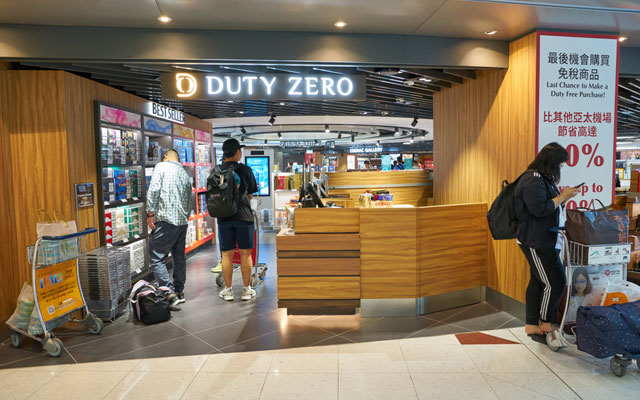
Duty free retail sector poised to take a tumble; duty free area in Hong Kong International Airport pictured
The escalation of the coronavirus outbreak could have a detrimental impact on global airport retail sales, which had been forecasted to reach US$48.2 billion in 2020, up 6.1 per cent on 2019, according to data and analytics company GlobalData.
Coronavirus has already dented retail and leisure spending across the Chinese New Year holiday due to consumers being encouraged, and in some cases forced, to stay in and avoid travel.
The airport retail sector is poised to take a tumble; duty free area in Hong Kong International Airport pictured
Honor Strachan, principal analyst at GlobalData, said: “The prevention of travel for Chinese consumers will impact the performance of airport retail worldwide. Over the last few years, airport retailers, especially those in Europe, have tailored their propositions, integrated Chinese payment solutions and invested in Mandarin-speaking staff to target Chinese passengers and maximise sales growth opportunities. If outbound tourism from China suffers as a result of coronavirus, airport operators and retailers must adapt their strategies to target other passengers.”
In response to the crisis, retailers are considering closing stores, with the China Duty Free Group closing its mall in Haitang Bay – impacting the Asia-Pacific duty free market in 2020.
Should foreign offices extend their advice of avoiding travel to the Hubei province to other regions, then passenger numbers and airports in tourism hubs such as Beijing, Shanghai, Chengdu and Xi’an will be negatively hit.
British Airways (BA) has suspended all direct flights to mainland China until January 31, although the BA website shows no direct flights to mainland China through January and February, while the likes of United Airlines and Cathay Pacific Airways have also cancelled selected flights to China.
Strachan added: “Asia-Pacific is forecast to be the fastest performing region for airport retail spend in 2020, with sales rising 8.4 per cent to US$21.7 billion – 45.1 per cent of the global channel. While this recent coronavirus outbreak cannot yet be compared to the impact of SARS, if the coronavirus continues to spread globally over the course of 2020, its impact on tourism and economies, particularly across Asia-Pacific, could be severe.”
In 2003, SARS caused tourism spend in China to collapse while visitor numbers to Thailand, Malaysia, Singapore and Hong Kong significantly dropped off, causing airlines to ground planes and reduce flight schedules.
However, the 2020 Olympic Games in Tokyo should provide a significant boost to airport retail in Japan, and also neighbouring countries as visitors tour the Asia-Pacific region, said GlobalData. As seen with previous Olympics, we would also expect to see a halo effect with 2021 and 2022 also benefiting from the games.
However, it added, controlling the spread and severity of coronavirus over the next two months is vital to ensure this event will still attract international visitors and achieve the forecasts produced pre-breakout.