Backyard Travel, an online boutique tour operator specialising in insider tours throughout Asia, has launched a new tour package offering an adventure into the northern islands, cities and rainforests of Malaysia.
The 12-day Jungles and Gems of Northern Malaysia tour begins in the foodie destination of Penang, with two days immersed in the colourful culture of George Town, a UNESCO World Heritage Site.
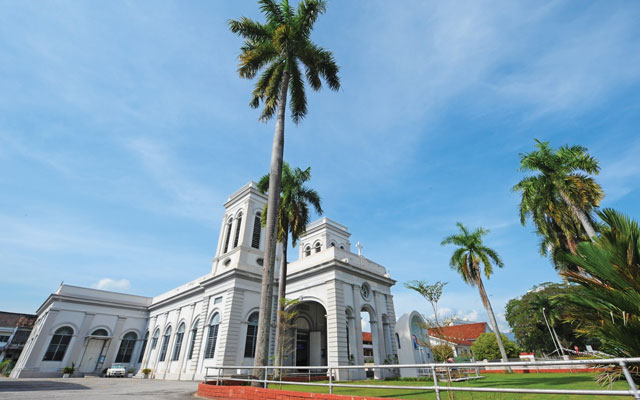
Backyard Travel launches 12-day Northern Malaysia tour, which includes a tour of George Town; Cathedral of the Assumption in George Town, Penang pictured
The itinerary also takes guests to Kuala Kangsar, the royal town of Perak, to explore the majestic sultan’s palace and visit local workshops; as well as Lenggong Valley, another UNESCO site, to experience cultural activities and an overnight homestay, as well as a night trek along the jungle trails of Belum Rainforest Rainforest.
The last four days of the tour will be spent relaxing on the shores of Malaysia’s beaches.
During the East-West Monsoon (from March to October), the journey continues to the remote and largely undeveloped Perhentian Islands in the Gulf of Thailand.
From October to March, in the dry, cool season, the tour heads to Langkawi in the Andaman Sea.
Backyard Travel general manager Trystan Trestchenkoff said: “Peninsula Malaysia is full of cultural and natural treasures to discover, yet it’s still quite unknown on a global scale. This tour provides a look at the little ‘hidden’ treasures of the region, from fascinating UNESCO sites to breathtaking tropical islands.”
Bangkok Airways has partnered AXA Insurance to roll out a new travel insurance scheme for passengers on the airline’s domestic and international flights.
Under the Bangkok Airways’ Protective Wing travel insurance plan, passengers will benefit from both outpatient and inpatient coverages, and will not be required to make advance payment for medical expenses at more than 39,000 hospitals and clinics worldwide.
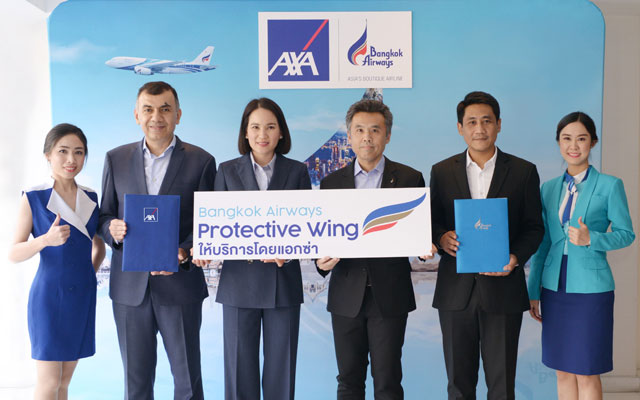
Bangkok Airways’ passengers can now be insured via the airline’s Protective Wing scheme
In addition to full airfare refund protection in case of flight cancellation, passengers will also be fully compensated for any loss or damage to their baggage and personal effects, including sports equipment and musical instruments, up to 20,000 baht (US$630) per policy.
Passengers can purchase the Protective Wing travel insurance plan while they are processing their booking, or after booking their flights at www.bangkokair.com.
Singapore’s flag carrier Singapore Airlines (SIA) has imposed a hiring freeze and is deliberating other measures, including asking staff to go on voluntary no-pay leave, reported The Straits Times (ST).
Following major flight cuts due to the Covid-19 epidemic which has choked Asia’s travel demand, the carrier is facing an excess manpower situation of more than 500 cabin crew members and some 50 pilots, said the report.
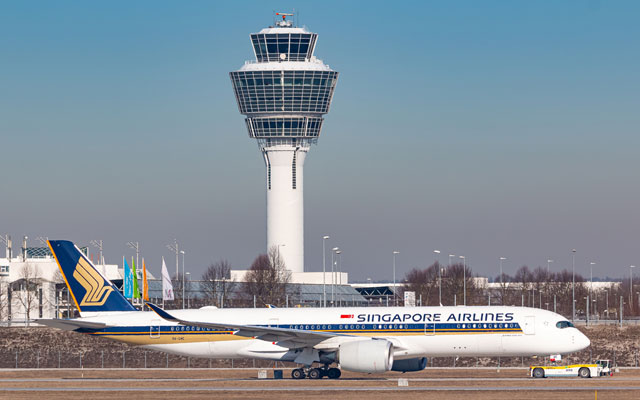
Singapore Airlines suspends hiring among other cost-cutting measures amid Covid-19
In response to queries from ST, SIA had said that amid Covid-19, “a general recruitment freeze has been implemented for all ground positions, and non-essential duty travel has been suspended”.
The airline also added that they are closely monitoring the situation and will not hesitate to take any additional measures if the need arises, but stressed that they will not do anything “that compromises the SIA Group’s long-term competitiveness”.
The report also quoted SIA CEO Goh Choon Phong as saying in a note to SIA staff on Tuesday that following the outbreak, the group – made up of SIA, SilkAir and budget carrier Scoot – has temporarily suspended more than 3,000 flights from February to end-May, which accounts for 9.9 per cent of the group’s scheduled capacity.
He further shared that the airline has also taken other cost-cutting measures, including the deferment of selected capital expenditure and tightening of discretionary operating expenditure.
Radisson Hotel Group will debut Radisson Riyadh in 4Q2020, a 471-key property that will be connected to King Khalid International Airport.
Various room types will be offered along with serviced apartments and villas.
Radisson Riyadh will rise in the capital of Saudi Arabia come 4Q2020
Facilities include an all-day dining restaurant, two specialty restaurants, an outdoor swimming pool, and indoor pool, separate fitness studios for men and women, a spa, and 2,600m2 of conference space.
In a press statement, Elie Younes, executive vice president & chief development officer, Radisson Hotel Group, said Saudi Arabia is one of the eight key focus countries for the group in EMEA.
“We align our plans along those of Saudi Arabia’s Vision 2030 which aims to significantly increase the contribution of tourism to the country’s economy,” said Younes.
Vietjet is offering 50 per cent discount on ticket fares for all its routes from now until February 29, 2020.
The promotional fares can be bought by applying the code “BOOKNOW50” to get 50 per cent discount on all domestic routes within Vietnam and Thailand, as well as international routes connecting Vietnam with destinations all over Asia, including Malaysia, India, Japan, South Korea, Indonesia, Taiwan, Singapore, Myanmar, and Cambodia.
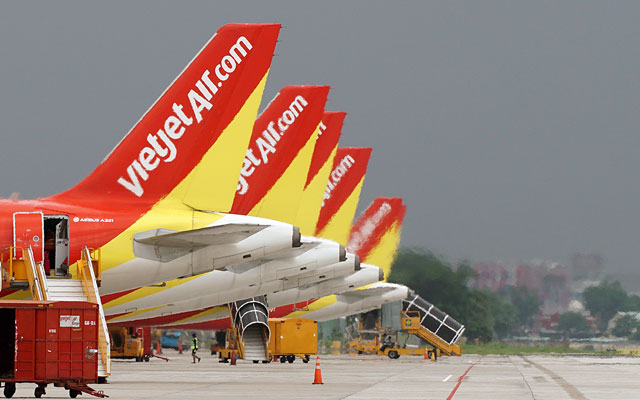
Vietjet offers half-price air tickets
The promotional tickets, which is applicable for travel from now till April 27, 2020, are available via Vietjet’s website, mobile app and Facebook page.
Bangkok-based Six Senses Hotels Resorts Spas has appointed Bryan Gabriel as CCO.
In his new role, Gabriel will oversee the group’s sales and marketing department, implementing the most effective ways and systems to support the brand’s expansion.
Having worked with InterContinental Hotels Group (IHG) for 15 years, Gabriel was most recently the head of commercial for America at IHG.
He has also served in a variety of other leadership roles with the hotel group, including the director of sales and marketing at InterContinental Jakarta, general manager of Hotel Indigo Hong Kong Island, and director of commercial for IHG South West Asia.
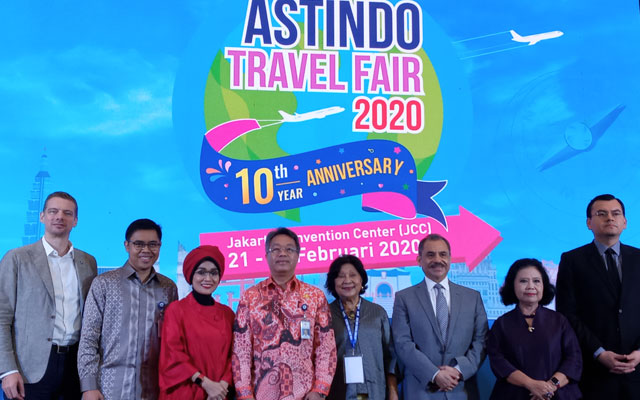
An array of attractively priced domestic tour packages were put up for sale at the 10th ASTINDO Travel Fair in Jakarta last weekend, all in a bid to encourage Indonesians to continue exploring and travelling amid the Covid-19 outbreak.
Some of the value deals available included a 3D2N Bali tour package by Santika Hotel and Citilink Airlines with subsidies from ASTINDO that went for just 2.3 million rupiah (US$168), and another to Yogyakarta for 1.6 million rupiah.
Tourism and Creative Economy Board’s Nia Niscaya (third from left), Ministry of Transportation’s Novi Rianto (fourth from left) and ASTINDO’s Elly Hutabarat (fifth from left) pose with sponsors at the opening ceremony of the 10th ASTINDO Travel Fair 2020 (Photo credit: Kurniawan Ulung)
Determined to keep prices affordable, Sjahrul Firdaus, director of operations of The Indonesian Travel Agents Association (ASTINDO), said the association had voluntarily offset the price difference in airline tickets when fares were higher on certain dates or schedules.
New tours were also created just in time for the travel fair. Zahra Tour launched a new golf package to Bandung, West Java, while Kanomas Tour crafted a celebrity tour in partnership with local artists such as comedian-presenter Indra Bekti.
Regional governments are also doing that part to entice domestic travellers. Belitung, for instance, is creating more festivals that locals can partake in.
Isyak Meirobie, vice-regent of Belitung, told TTG Asia that Chinese tourists made up 20 per cent of the destination’s total arrivals. To make up for the loss of Chinese tourists during the Covid-19 crisis, he will rely on festivals and experiences, such as batik- and ceramic-making courses and cooking classes, to draw travellers from across Indonesia.
The Pesona Bedulang Belitong Nusantara festival on February 29 is one such example.
“It will introduce the tradition of local wisdom-based bedulang (communal) eating to travellers,” Isyak explained.
To further spur domestic travel interest, ASTINDO’s secretary-general Pauline Suharno said bank partner BCA Bank doubled the value of its cash-back to one million rupiah this year for transactions made at the fair, in addition to offering zero interest installments and travel insurance for packages bought on the spot.
Nia Niscaya, deputy of marketing at the Tourism and Creative Economy Board, who attended the opening of the ASTINDO Travel Fair, is expecting at least 13 per cent decline in foreign visitorship to Indonesia as a result of the outbreak.
The push for domestic travel will not only help make up the arrival shortfall and bring about much needed local economic stimulation, Nia said it could also drive home the message to the world that Indonesia is safe and hence boost traveller confidence.
ASTINDO is upbeat about the travel fair’s performance, projecting a transaction value of up to 253 billion rupiah from the Jakarta edition alone. While official attendance figures are not yet available, the event had targeted 150,000 visitors who got to meet with 150 travel trade players, including 50 travel agents, 16 major international airlines, and NTOs from nine countries.
ASTINDO chairman Elly Hutabarat explained that the travel fair this year had fewer participating airlines and NTOs compared to 2018 because of a deliberate reduction in exhibiting slots for sellers that failed to perform last year.
“This fair is for selling, not branding,” Elly emphasised.
The ASTINDO Travel Fair was also held in Palembang last week, and will head to Padang, Bali, and Surabaya from March 6 to 8.
Accor has signed a global partnership with Visa to launch a new co-branded payment card which will leverage the latter’s global payment capabilities to provide enhanced payment experiences to ALL-Accor Live Limitless loyalty members.
Members who apply for the new ALL Visa card will be able to use it for everyday purchases where Visa is accepted.
Accor partners Visa to offer payment card for its loyalty programme members
Accor will be collaborating with Visa’s partner financial institutions and banks in key markets across Europe, North and South America, the Middle East and Asia-Pacific to issue the new ALL Visa card.
Members can earn tailored rewards based on customer preferences and boost their loyalty points when staying at an Accor property or when making purchases.
Sébastien Bazin, chairman and CEO of Accor, said: “This new initiative will provide unmatched benefits to our members and reinforce the success of our ALL loyalty programme by increasing our member base, driving additional engagement and giving each member incentives to stay with us more frequently and easily.”
Thailand’s Dusit International has signed a 1.6 billion peso (US$32 million) investment agreement with Philippine-listed infrastructure holding company Metro Pacific Investments Corporation (MPIC) to jointly develop and manage hospitality and residential properties in the Philippines.
Expected to be completed in June 2020, this joint investment is subject to approval from the Philippines Competition Commission.
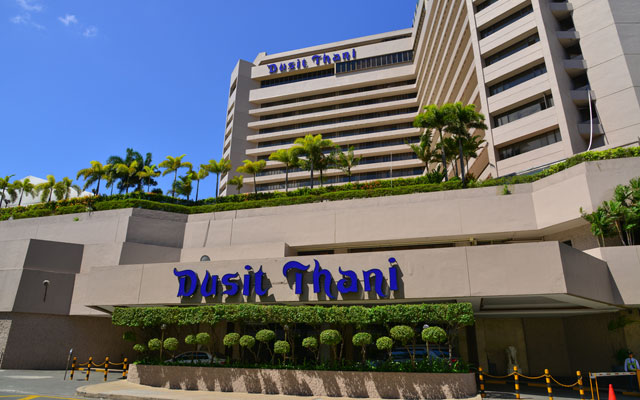
Dusit to expand footprint in the Philippines via a multi-million tie-up with Metro Pacific Investments Corporation; Dusit Thani Hotel in Manila, Philippines pictured
As per the investment agreement, the structure of which is expected to be in place by December 2020, Metro Vantage Properties, the real estate, hospitality, and tourism subsidiary of MPIC; and Dusit Philippines Corporation, a wholly-owned subsidiary of Dusit International, will jointly invest in two companies in the Philippines, namely, Metro Dusit (MDI) and Dusit Hospitality Management Corporation (DHM).
MDI will operate as a developer of real estate projects in the Philippines, particularly hotel and residential condominium projects, while DHM will provide management services in relation to these projects, as well as other projects developed in partnership with third-party business operators.
DHM will also manage all of Dusit’s existing properties in the Philippines.
The investment partnership is in line with Dusit’s three-pronged strategy for sustainable and profitable growth, which includes balance, expansion and diversification.
As part of the strategy, Dusit aims to expand its presence in established and emerging markets to achieve a 50-50 balance between domestic and international revenue by 2025.
“While we recognise the outbreak is currently impacting trade and business throughout Asia, our partnership with MPIC is a long-term investment scheduled to be in place at the end of the year, when we believe business as usual will be resumed,” said Suphajee Suthumpun, group CEO, Dusit International.
Dusit International’s property portfolio now comprises 307 properties operating under six brands across 14 countries.
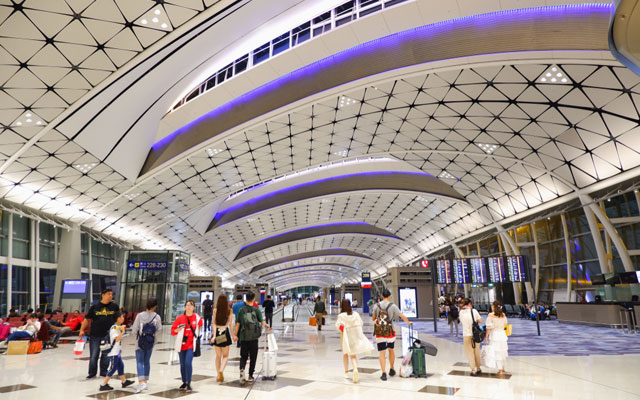
Hong Kong will be shutting its borders to all arrivals from South Korea from today, in response to a sudden spike in Covid-19 cases there which had South Korea raising its virus alert level to the highest red on Monday.
Travellers who have been to South Korea in the past 14 days will also be denied entry to the SAR.
Hong Kong bars all arrivals from South Korea over virus fears
Hong Kong residents returning from South Korea will be placed under medical surveillance for 14 days, while those returning from virus-hit cities including Daegu and North Gyeongsang will be placed under a 14-day quarantine at quarantine centres, public broadcaster RTHK reported.
South Korea now has more than 800 confirmed cases of the Covid-19, making it the most virus-hit country outside China.
The Hong Kong Security Bureau has also issued a Red Outbound Travel Alert on South Korea, with security secretary John Lee advising citizens against any non-essential travel to the country.