The travel setback caused by the coronavirus outbreak has now hit the world’s second largest outbound travel market, after China – the US, which saw outbound flight bookings stall by 19.3%, and to Asia-Pacific, 87.7%, according to a study by ForwardKeys.
In the five weeks following the imposition of travel restrictions on outbound travel from China (w/c January 20 – w/c February 17), there was a 19.3% decline in the number of bookings made for travel from the US.
US outbound flight bookings plunge by 19.3 per cent due to Covid-19
The majority of the decline has been caused by a collapse in bookings for travel to the Asia-Pacific region, down by 87.7%. In other words, relatively few people booked a flight from the US to the Asia-Pacific region in the past five weeks.
The setback in outbound bookings from the US during that time has not just affected the Asia-Pacific region; a similar but milder trend has affected other parts of the world too.
Bookings to Europe have fallen by 3.6%, and to the Americas, have fallen by 6.1%. However, bookings to Africa & the Middle East, which has only a small (6%) share of outbound US travel, have increased by 1.3%.
Breaking the world down into 15 different regional destinations, all have seen a drop in bookings from the US in the past five weeks, with the exception of North Africa, Sub Saharan Africa and Central America, which have seen their bookings rise by 17.9%, 4.4% and 2.1%, respectively.
In the order of least to worst affected, bookings were down as follows: to Western Europe by 1.7%, to Southern Europe by 2.8%, to North America by 3.3%, to South America by 3.4%, to the Middle East by 4.2%, to Northern Europe by 5.5%, to Central/Eastern Europe by 7.7%, to the Caribbean by 12.5%, to Oceania by 21.3%, to South Asia by 23.7% and to South-east Asia by 94.1%. In the case of North-east Asia, there were more cancellations than new bookings.
While the trend of the past five weeks is not encouraging, the outlook for the coming months, judging by the current state of bookings for March, April and May, is perhaps not as bad as might have been feared because a large proportion of long-haul bookings are made several months in advance.
As of February 25, total outbound bookings from the US are 8% behind where they were at the equivalent date last year. The majority of the lag is caused by a 37% slowdown in bookings to the Asia-Pacific region. Forward bookings to Africa & Middle East are 3.9% ahead, to Europe are flat (0.1% ahead) and to the Americas are 4.1% behind.
Olivier Ponti, vice president insights, ForwardKeys, said: “Now it’s not just China but the world’s second largest and second-highest spending outbound travel market, the US, which is stalling. For destinations, businesses in the travel industry and in luxury goods retail, which rely heavily on American and Chinese tourists, it is crucial to look carefully at travel data on an almost daily basis.
“With the high volatility of the market, the success of these businesses will depend on their ability to take action the moment things start to recover.”
Waterbom Bali, a waterpark in Indonesia, is pushing the sustainability envelope with its composting, recycling, and waste reduction efforts, as evidenced in its recently released annual sustainability report.
The report, which tracks the waterpark’s consumption of its waste materials, water, and energy throughout 2019, showed that the attraction has recycled 80 per cent of its waste material; saved 554,402 kWh of grid energy; become CO2 neutral and CFC-free; and conserved 54,000m³ of water, totalling to three million gallons of water.
Waterbom Bali doubles down on sustainability efforts
Essentially, this is equivalent to composting 141,776kg worth of waste material — or more than the weight of a Blue Whale; conserving enough energy to power The Statue of Liberty for three weeks; inflating the metric equivalent of 30 hot air balloons with water; and offsetting enough carbon emissions to plant 8,458 trees.
“Operating a waterpark across 3.8 hectares undoubtedly generates a lot of waste, whether it is from the water needed to operate our attractions, the energy needed to fuel the park, and the waste material that is created as a result of day-to-day operations. As a result, we have made a more conscious decision to minimise the impact we create in the beautiful island of Bali,” said Sayan Gulino, CEO of Waterbom Bali.
“Our collective efforts have enabled us to minimise our environmental impact, whether it is through composting, the use of renewable energy, or recycling water.”
By carefully sourcing materials used around the park and forming close bonds with suppliers, Waterbom Bali has recycled 230,030kg of its waste materials out of a total of 288,478kg (or 80 per cent of total waste generated).
Some 49 per cent of recycled materials goes back to feed its gardens as fertiliser through on-site composting, while 31 per cent is sent to a waste management operator that turns material into pig feed or is then traditionally recycled.
Furthermore, Waterbom Bali has been able to reduce its water usage through numerous water-saving strategies, including using efficient water appliances, recycling water for garden irrigation, reducing tap flow rates at its F&B outlets, and strategically placing the Lazy River at the heart of the waterpark with a closed loop filtration and circulation system that distributes water to various rides after it has been sand-filtered.
Lastly, Waterbom Bali’s energy consumption has been drastically reduced due to its various renewable energy efforts. From implementing the use of solar panels and LED bulbs to energy efficient pumps and CFC-free air conditioning units, all areas of the park have been built to minimise its energy consumption. This has also allowed the waterpark to save a total of 640.5 million rupiah (US$45,800) worth of energy per year.
Waterbom Bali’s sustainability initiatives don’t stop here. In 2020, the park aims to recycle 100 per cent of its organic waste within the park, rather than sending it to pig farms as fodder. This increases their recycling rates, composting process and also avoids organic material leakage.
The waterpark also targets to reduce its landfill rate by half, sending only 10 per cent or less of its waste to the landfill, advocating for further education on Bali’s waste and water management crisis, and leading by example in order to create an impactful systemic change within their park and spread the knowledge on sustainability with the wider industry.
Marriott International has signed an agreement with Continental Management, a member of the SKS Group Malaysia, to bring the Four Points by Sheraton brand to Desaru in Johor, Malaysia.
Under the agreement, SKS Group will refurbish and convert its existing 311-room Amansari Residence Desaru property to Four Points by Sheraton hotel.
Exterior rendering of Four Points by Sheraton Desaru
Slated to open in 2021, Four Points by Sheraton Desaru will be located close to Desaru’s attractions, including SKS City Mall, Desaru City Commercial Hub, as well as Desaru Coast, an amalgamation of an adventure waterpark and 45-hole championship golf course.
Khiri Travel has unveiled a host of flexible multi-generation tour options across seven destinations in South-east Asia offering a variety of experiences for parents, children and grandparents travelling together.
The seven itineraries range from six to 12 days in Thailand, Indonesia, Cambodia, Laos, Myanmar, Vietnam and Sri Lanka.
Khiri Travel launches new itineraries for multi-generational holidays offering an array of experiences, from culinary to canoeing activities
Khiri has produced brochures that allow travellers greater flexibility to customise their travels. The Thailand one, for instance, gives guests the choice between the beach destinations of Krabi or Khao Lak, or the national park of Khao Sok.
There are maps, “at-a-glance” highlights and symbols to show which activities are suitable for all three generations. The trips have options for parents and kids to, for example, ride e-bikes, while grandparents visit a museum or relax with a drink.
Khiri Travel CEO Herman Hoven said: “We’ve designed the vast majority of the 3G itineraries to be flexible, varied and inclusive. Families can gear up or down as they please.”
On the transport side, families can experience travel by bicycle, longtail boat, 4×4, train, tuk-tuk, plane, private car, or even a US army jeep in Vietnam.
Khiri also offers signature experiences such as meetings with Balinese royalty, tea planters and dance instructors in Sri Lanka, chefs and artists, and with a family in Vietnam who have been living in the same house for 18 generations.
Other attractions in the itineraries include Angkor Wat in Cambodia; the Grand Palace, Chinatown and Thonburi klongs (canals) in Bangkok; as well as the Buddhist cave-temple complexes of Sri Lanka.
The trip also includes a visit to an elephant rehabilitation camp, as well as a photo shoot for all three generations in Cambodia as a family memento.
By the time you read this, more than a month would have passed since news of the Covid-19 outbreak took over front pages and prime time.
I watched how it unfolded in Asia – general cluelessness at ASEAN Tourism Forum in mid-January gave way to curiosity a week later as the world realised how widespread the then-mysterious flu virus was in China’s Wuhan city. Later, as the Chinese New Year holidays approached and the Chinese government slapped a stop-sale order on all travel agencies in the country and suspended internal transportation services, travel and tourism players around Asia realised with horror what that meant to their business.
At press time, the industry is still struggling to make sense of the impact of the outbreak. Air capacities are being cut, cruise itineraries are being redrawn, new travel restrictions to Asian hot zones are emerging, tradeshows serving various industries are being postponed or cancelled. On top of all that, projections are being churned out every other day by research houses to warn us how the business could tumble further.
With all that you are hearing and reading, are you getting Covid-19 fatigue yet? Because I am.
As a journalist, God forbid I should ever feel exhausted over a hot issue that I need to track and report on. But as a human being, the headlines and projections are depressing, and the continued spread of fake and sensational news is frustrating. A lot of the content put out for our consumption encourages fear and unnecessary curtailing of travel and meetings.
The travel and tourism industry is often the first to suffer fallouts from negative events around the world, and when this industry falters it brings others like retail, F&B, and transportation down with it.
In Singapore where I reside, the local health authorities’ sharp efficiencies in identifying and tracing potential Covid-19 carriers have earned the city-state the unwanted honour of boasting one of the highest infection rates outside of China. Worried travellers have chosen to keep away, and multiple travel advisories have been posted against Singapore.
Many shops and restaurants have shortened their daily operating hours in response to poor patronage. The other day, an elderly taxi driver told me I was his third customer all morning; it was 10.00 then and he had started his shift at 06.00.
Fortunately, as a journalist and an editor, I can choose how TTG titles contribute to the conversation around Covid-19. While I cannot naively ignore industry developments as they occur, I can choose to balance the coverage with stories of resilience and recovery, and of organisations that provide support for their staff, vendors and others in the external community during these difficult times.
As the saying goes, life must go on. I will continue to meet and speak with any industry peer who desires the same, even as I pay greater attention to personal hygiene.
As the business fallout from the Covid-19 outbreak continues to unfold across Asia, destination marketers and industry stakeholders are choosing to focus their attention on immediate efforts needed to lift their peers from the doldrums.
Government-led financial assistance, fresh destination marketing campaigns aimed at domestic travellers and new source markets, as well as attractive travel deals are among the measures rolled out within short weeks. These followed the suspension of transportation networks and city lockdowns ordered by the Chinese government to contain the coronavirus.
While the bold move by the Chinese government succeeded in limiting transmissions beyond China’s borders, it also emphasised the severity of the outbreak and, along with a flurry of fake and sensational news surrounding the virus, frightened travellers elsewhere into rethinking their trips to Asia.
Travel analytics company ForwardKeys, which has been tracking the travel and tourism impact of the outbreak, noted in a February 12 update that forward-looking Chinese air bookings to Asia-Pacfic for the period of March 1 to April 30 is down by 58.3 per cent.
Weakened travel demand has pushed several major airlines based in the region to rework their flight schedule. Singapore Airlines and Qantas Airways have temporarily cut flights across its global and Asian network respectively up to May. Cathay Pacific Group reduced the overall passenger flight capacity on Cathay Pacific and Cathay Dragon by approximately 40 per cent for February and March, with potential for an extended reduction in April.
Top-level attention
As tourism players lose sleep over business losses, tourism authorities and industry leaders have sprung into action with recovery plans.
The Singapore government has set aside a war chest of S$4 billion (US$2.8 billion) this year to help stabilise her economy and tide workers and businesses through the economic slowdown.
Another S$800 million would also be set aside to support the tourism, aviation, retail, food services and point-to-point transport services sectors, which have been directly hit by the Covid-19 outbreak. The range of assistance is wide – financial subsidies to defray the cost of third-party professional cleaning fees incurred by hotels; licence fee waivers for hotels, travel agents and tourist guides; property tax rebates for various businesses; manpower redeployment programmes and staff training funds; a year-long temporary bridging loan programme for tourism businesses; and rebates on aircraft landing and parking charges.
Meanwhile, the Singapore Tourism Board is forming the Tourism Recovery Action Task Force (TRAC) to identify opportunities arising from the crisis, drive measures to instil confidence in the destination’s tourism establishments, as well as co-create and initiate recovery plans.
Across the border, the Malaysian government aims to release a stimulus package by either end-February or early-March. The package is expected to boost the economy and cushion the business fallout from the coronavirus outbreak.
Indonesian leaders, too, are coming up with ways to bring light to the local tourism industry. Minister of finance Sri Mulyani Indrawati had been worked with the Ministry of Transportation (MOT) and the Tourism Authority to formulate incentive programmes for hotels and airlines to stimulate travel, particularly within the country.
Budi Karya Sumadi, minister of transportation, hoped the proposed programme would have a positive impact on airfares and hotel rates, and allow the creation of attractively-priced bundle packages comprising flight and accommodation.
The programme was being reviewed by the MOT and Ministry of Tourism and Creative Economy at press time.
At the same time, Indonesia’s minister of tourism and creative economy and head of Tourism and Creative Economy Board, Wishnutama Kusubandio, is lobbying for some 30 airlines that have cancelled their services to China to reroute their flights to some of Indonesia’s favoured destinations.
Home remedies
For some South-east Asian destinations, their own massive population has emerged a possible saviour for their distressed tourism industry.
In February, the Philippine Travel Agencies Association (PTAA) pressed on with the country’s biggest consumer travel fair, the 27th Travel Tour Expo (TTE) 2020, despite a challenging tourism business landscape. Apart from dangling travel deals with the lowest prices ever seen in TTE’s history, PTAA also chose to leverage the star power of the 10 most-travelled Filipino celebrities, ranked based on their social media posting, to attract visitors.
PTAA president Ritchie Tuano said: “(Celebrities) do a lot to boost the visits to different locations. Their fans aspire to go where they go. They provide both the glamour factor and the reassurance that the place is safe to visit.”
The Philippines has continued to offer massive discounts to domestic travellers. More than 40 hotels and resorts around the country – and the number is growing – have agreed to cut room rates by up to 50 per cent in collaboration with the Department of Tourism, Tourism Promotions Board, Tourism Congress of the Philippines, Philippine Hotel Owners Association, Hotel and Sales Marketing Association, PTAA and Philippine Tour Operators Association. The offer will run until August.
Alongside this, Philippine Airlines, Cebu Pacific and Air Asia Philippines have agreed to a 20 to 30 per cent reduction in airfares.
These stimulants are unlikely to cover the tourism industry’s business losses, estimated at 40 billion pesos (US$784 million) from February to April. Nevertheless, it will soften the impact of losing China – the country’s second biggest source market – and other feeder markets, explained Tuano.
Malaysian Inbound Tourism Association (MITA) is looking to do the same, banking on a week-long e-travel fair in late March, with the date yet to be confirmed at press time, to help galvanise domestic travellers into supporting the local tourism industry.
MITA president Uzaidi Udanis said his team has negotiated with Malaysia’s airlines, hotels and attractions to offer discounts of up to 70 per cent during the travel fair.
An innovative measure and a first for the fair is the introduction ofdigital platforms to sell packages. MITA will also hold a physical fair in Kuala Lumpur after the e-fair has ended.
Likewise, Indonesia has launched the Visit Wonderful Indonesia (Viwi) Nusantara Shocking Deals 2020, an initiative led by several tourism industry associations to entice domestic travellers with special offers.
Indonesian government agencies and industry members are certain that motivating locals to explore their own backyard and encouraging government agencies and local companies to conduct meetings locally may just help to soften the outbreak’s blow on tourism business.
Echoing the strategic turn towards the domestic travel market is Rowena Baltazar, managing director of newly-formed A-List Travel Solutions in the Philippines. Baltazar shared that she was reaching out to Filipino travellers using social media.
After all, the country’s excess of 100 million domestic tourists have helped the Philippine travel trade to sail through tough times in the past. In terms of numbers, domestic tourists are more than twelve times that of foreign inbound tourists, which stand at just eight million.
Observing continued travel confidence among Malaysians Zenith Hotel Putrajaya in Malaysia is targeting the local market in the short term to make up for the shortfall in business, dangling attractive room rates and meeting packages to draw business.
Casting wider nets
Destination marketers, however, are convinced that one strategy – focusing on the domestic market – will not be sufficient. They are turning towards other major tourism source markets with untapped potential.
The Indonesian tourism ministry has said that Malaysia, Singapore, South Korea, Japan, Australia, Canada, and the US are all on its target list, while PTAA is diverting its marketing and promotions to India and the Middle East.
Bambang Sugiono, director of marketing and overseas promotion of Bali-based RD Tours, agrees that casting a wider net makes a safer approach. His business has been hard hit by the outbreak, given that 70 per cent of the approximately 5,000 inbound clients who had planned to visit Bali in February were from China.
Taking care of the family
As business slows down for hotels, hoteliers are wary that staff morale will also take a hit. This has led them to take steps to ensure the well-being of their team mates.
Renee Lim, assistant vice president, corporate communications of Banyan Tree Holdings, shared with TTG Asia that the group has formed a task force that involves corporate office management and property general managers, as well as town halls to educate, engage and reassure staff on the measures that will be taken during the Covid-19 outbreak.
Tony Cousens, general manager of Wyndham Hotel Group, Singapore, who oversees Days Hotel by Wyndham Singapore and Ramada by Wyndham Singapore at Zhongshan Park, is determined to ensure that their staff will “continue to feel busy and secure about their employment even as business slows down”.
On the other hand, he is also encouraging staff to make full use of the downtime to go on leave and “have a good rest”. The group will also conduct training for teams and individuals; reduce casual labour and redirect duties to full-time staff; assign housekeepers and maintenance teams to tasks that spruce up hotel facilities; and redeploy staff to assist with Wyndham’s hotel opening projects elsewhere.
Retrenchment is out of the question for Cousens, who shared that most of his staff have been with the two properties since they opened seven years ago.
“Letting go of staff now is not a solution. It will only bring short term savings, and when things are busy again, you will have a hard time recruiting,” he emphasised, adding that he has supportive owners who are equally protective of the team.
Virtual meetings emerge an option for some exhibitors
No immediate response from Messe Berlin on refunds
As debate within the industry heats up over Messe Berlin’s sudden decision on Friday evening – or early Saturday morning here in Asia – to axe its Berlin tradeshow, travel and tourism players who have had their sales and marketing plans at the event derailed are determined to carry on with their business activities as much as possible.
Messe Berlin cancelled ITB Berlin 2020 five days to showtime
Asian Trails, for instance, will be continuing with sales trips as planned.
Laurent Kuenzle, CEO of Asian Trails, told TTG Asia that his team typically conducts pre- and post-event sales trips to “as many of our key clients in Europe as possible”, and their time in Berlin is not limited to just the tradeshow.
“Since my entire team is already in Europe for a week, we will continue with our sales trips as scheduled. We also have some overseas clients who are already in Europe, and we will try to meet them as well if they do not cut their trips short,” Kuenzle said, adding that they are adapting their schedules to the new situation.
Hussein Mohd Said, director of MegaWaterSports Jetski Tours in Langkawi, had just arrived in Berlin when news of the cancellation reached his ears. He intends to use his time in the city to conduct sales visits to local agents who are selling Malaysia.
Singapore tour operator Oriental Travel and Tours will also be keeping to sales meeting plans in the city, and will be relying on instant messaging services to fix appointments, shared co-founder Jasmine Tan.
Kuenzle: Sales team is already in Europe, and will adjust schedules to adapt to the situation
The Safer Tourism breakfast seminar, co-sponsored by PATA, will proceed as planned on March 5. The event will be led by Peter E Tarlow, a world-renowned speaker and expert specialising in the impact of crime and terrorism on the tourism industry, event and tourism risk management, and tourism and economic development.
PATA CEO Mario Hardy said the cancellation of ITB Berlin “has no direct impact” on his association, as offsite meetings arranged earlier on will continue as planned.
As well, Kempinski Hotels will keep to its planned media breakfast event on March 4 at Hotel Adlon Kempinski Berlin.
Virtual alternatives
For Vox Group, virtual meet-ups will replace physical meetings. Its chief marketing office, John Boulding, went on social media on Saturday to propose a “face-to-face revival (of impacted business meetings) using Google Hangouts, Skype, Meet, etc.”
At press time, Boulding’s post on LinkedIn suggested that he would on Monday connect with partners Vox Group has appointments with at ITB Berlin, to reconfirm a virtual alternative.
Vox Group’s suggestion on LinkedIn to meet online drew many positive responses
Similarly, COTRI (China Outbound Tourism Research Institute) has also taken to social media to propose webinars to keep conversations going.
Nigel Wong, honorary secretary-general, Malaysian Association of Tour & Travel Agents (MATTA), agrees that going digital is a safe bet. “We will also encourage our members to focus more on digital marketing as this is an effective way to market, and does not require on-the-ground meetings,” he said.
An announcement that came too late
Industry players appear split in their opinion on whether Messe Berlin did the right thing to cancel the annual tradeshow – the first time it has done so in its 54-year history.
On social media, comments flew in from both sides. Those in support of the organiser’s decision said that it was a painful but responsible thing to do as the well-being of all event participants and Berlin residents were at stake.
Hardy, whose own association had just announced the cancellation of the PATA Annual Summit 2020 in Ras Al Khaimah from March 31 to April 3 out of consideration of the safety and well-being of it members, admitted that the decision on event continuity was a tough one to make.
“What I have learnt in the past few weeks is that the current situation is extremely volatile and dynamic, constantly evolving on a daily basis. Therefore, I do not think there is one simple answer to this question. Each situation needs to be analysed individually as there are a number of external factors in play. Are there a large number of active cases in the area? Are there any restrictions on entry to the destination or necessary quarantine requirements for the traveller on their return? What are people’s sentiments towards travelling or attending an event? Will you be able to gather sufficient attendance? These are just a few questions that we need to consider during the current situation,” he explained.
Wong told TTG Asia his organisation was “appreciative of the cancellation in light of the economic factors involved and safety concerns”, but acknowledged that the “cancellation of ITB Berlin is a blow to our European plans”.
Wong said 30 MATTA members were supposed to head to Berlin to engage with the trade and media.
“However, ITB Berlin is not the only European show. There will be other opportunities to promote to the European market. World Travel Mart for instance, is always on MATTA’s itinerary. This is a major show Malaysia will be participating in,” he added.
For those who oppose the cancellation, the common argument is that it runs counter to the travel trade’s persistent messaging that it is still safe to travel.
Luzi Matzig, chairman of Asian Trails, said: “The decision to cancel ITB was wrong. If we, the leaders in tourism, cancel our own industry events, we project a very negative image to our potential customers, tourists whom we would like to visit our own destinations in the future.”
“I believe that the global media hype has blown the Covid-19 problem out of proportion, which is a sorry state of affairs. It will take major recovery campaigns to get travel back to normal once the situation has improved, and I do hope that this will happen sooner rather than later.”
Agreeing, Umberto Cadamuro, COO inbound of Pacto, who was already in Europe when the news broke, said: “Why should tourists travel when stakeholders in the travel industry themselves are not doing so? This is the very negative message that this cancellation has sent (to the public).”
Whether or not Messe Berlin’s decision was right, most industry players agree that the decision to cancel ITB Berlin 2020 should have been made earlier. At just five days to showtime on March 4, many exhibitors and buyers, especially from faraway Asia, were already bound for the show. Sales and marketing materials had, as well, already been shipped up.
Several event planners TTG Asia spoke to suggested that a month’s notice of cancellation would be ideal.
Hardy said: “Each situation may be different, but I would say that generally more advanced notice is advisable, preferably at least a month before the event if at all possible.”
Untangling the mess
Sources have told TTG Asia that calls and emails to their point of contact at Messe Berlin for ITB Berlin 2020 have mostly gone unanswered. Some concerned participants have taken to Twitter to seek answers on refunds from the ITB team.
In a Twitter post on February 29, ITB Berlin said: “Due to the short notice of cancellation and the large number of exhibitors, we ask for your understanding that we will check these questions internally. This can take from 10 days to two weeks.”
Noorzaleha Baharudin, honorary secretary-general, Malaysia Tourism Council, said: “We now have to work on getting refunds for our flights and hotels on our own. We do not expect Messe Berlin to assist us on this. The hotel we were supposed to stay in is charging us a cancellation fee.”
Similarly, several Indonesian travel operators TTG Asia spoke to said that they now have to shoulder the losses incurred for the tickets and accommodation, as well as time and efforts prepping for the event.
Budi Susanta, corporate general manager, The Ubud Village Resort, who received the news about the cancellation upon his arrival in Munich on Saturday, said: “I consider myself lucky that I’m travelling with my owner so we can rearrange our trip plan and budget on the spot. However, many of the Indonesian delegates are staff whose budget are set before they even leave the country. Can you imagine that they now have to switch programmes while they are here? We don’t know whether we can get refunds for our hotels and flights.”
Umberto said that Messe Berlin’s last-minute cancellation of the tradeshow was “unacceptable”.
“(At press time,) we are unable to evaluate our losses since Messe Berlin has so far avoided to address the refund issues,” he said.
Jojo Clemente, president of both Rajah Tours and the Tourism Congress of the Philippines, said the Philippine Tourism Promotions Board, the marketing arm of the Department of Tourism, which has paid for a country pavilion at ITB Berlin 2020, will be writing to the organiser about refunds.
In a statement, Wishnutama Kusubandio, Indonesia’s minister of tourism and creative economy, said that the first batch of delegates who were participating in the show had arrived in Istanbul, Turkey for transit and were summoned home, while the second batch were scheduled to leave on Sunday.
“However, we respect the decision to cancel the event as protecting the public’s health and prevention measures are priorities (amid) the spread of the coronavirus,” he said. – Additional reporting by S Puvaneswary, Pamela Chow and Mimi Hudoyo
ITB Berlin 2020 has been cancelled due to the rapid spread of the Covid-19, said Messe Berlin in a press statement late Friday evening.
This is the first time in the show’s 54-year history that it has been cancelled – a move made by the organisers following recommendations by the Federal Ministry of Health and the Federal Ministry of Economics.
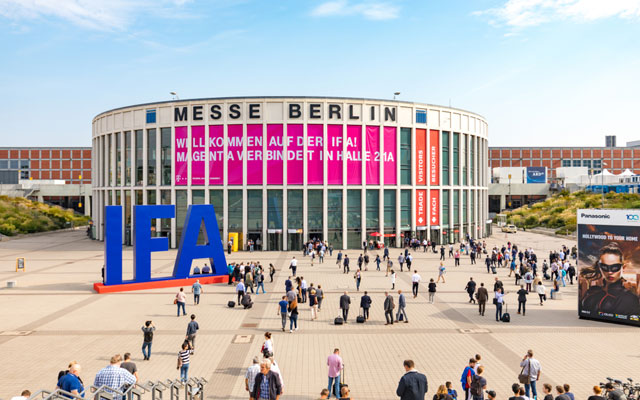
ITB Berlin 2020 has been cancelled five days to showtime; IFA trade fair at Messe Berlin 2019
Messe Berlin said in a statement that yesterday evening at 18.27 (local time), the health authority of the district of Charlottenburg-Wilmersdorf in Berlin imposed significantly tighter restrictions on holding the event, which was supposed to take place from March 4 to 8, that led to the show’s cancellation.
Among its requirements, the authority stipulated that each participant would need to prove to Messe Berlin that they were not from a designated risk area or had not been in contact with a person or persons from a risk area. It is “not possible” to fulfil those requirements, said the organisers.
Messe Berlin had for weeks made it known that a decision on holding or cancelling large-scale events would only be taken based on the recommendations or instructions of the relevant specialist authorities, as only they possess the necessary information and specialist knowledge required to draw the right conclusions.
Christian Göke, CEO of Messe Berlin GmbH, said: ”With more than 10,000 exhibitors from over 180 countries, ITB Berlin is extremely important for the world’s tourism industry. We take our responsibility for the health and safety of our visitors, exhibitors and employees very seriously. It is with a heavy heart that we must now come to terms with the cancellation of ITB Berlin 2020.”
Roger Brantsma is now the general manger of Hilton Tokyo, the brand’s flagship hotel in Japan.
He was most recently the general manager of Hilton Tokyo Bay, a post he has held since January 2017.
Brantsma brings to the role a wealth of experience, having spent over 20 years with Hilton Hotels and Resorts. He began his career in the F&B department in Hilton Amsterdam, before moving into roles like director of operations in Hilton Sharks Bay Resort, Hilton Phuket Resort & Spa, and Hilton Sydney.
His first general manager appointment was at Hilton Chennai in 2011, before he moved to New Zealand to the post of cluster general manager for Hilton Auckland and Hilton Lake Taupo.
The Malaysian government has announced a RM20 billion (US$4.74 billion) economic stimulus package to mitigate the economic impacts due to the Covid-19 outbreak.
Interim prime minister Mahathir Mohamad who unveiled the package yesterday (February 27) said it is anchored on three strategies, namely, mitigating the impact of Covid-19; spurring people-centric economic growth; and promoting quality investments.
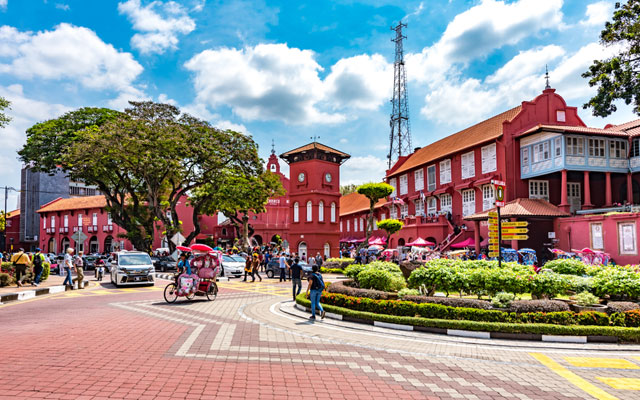
Malaysian tourism businesses will receive help to tide them through the Covid-19 crisis under the government’s economic stimulus package; Dutch Square in Malacca pictured
Several plans are in the pipeline to ensure that Malaysia’s economy continues to enjoy robust growth, he said.
Mahathir said that the most immediate economic impact of Covid-19 has been the sharp decline in tourist arrivals throughout the region, which has badly affected hotels, airlines, travel companies and the retail industry.
To ease the impact, the government will take a three-pronged approach – first, to ease the cash flow of affected businesses; second, to assist affected individuals; and third, to stimulate demand for travel and tourism.
The measures proposed by the government will span six months beginning April. These include allowing tourism businesses to defer monthly income tax instalment payments, and allowing companies affected by the outbreak to revise their profit estimates for 2020 with respect to monthly income tax instalment payments without penalty.
As well, a 15 per cent discount on monthly electricity bills will also be extended to hotels, travel agencies, airlines, shopping malls, conventions and exhibitions centres.
Additionally, hotels and travel-related companies will be exempted from paying Human Resource Development Fund levies, while hotels will be freed from the six per cent service tax between March and August 2020.
Furthermore, the government will provide financing facilities for affected companies, in the form of two platforms.
Firstly, Bank Negara Malaysia will provide a Special Relief facility worth RM2 billion, particularly in the form of working capital for Small Medium Enterprises at an interest rate of 3.75 per cent. Secondly, Bank Simpanan Nasional will allocate RM200 million in microcredit facility offering an interest rate of four per cent to affected businesses.
In addition, the approval process for existing loan funds will be further streamlined, such as Bank Pembangunan’s Tourism Infrastructure Fund of RM1.5 billion.
Mahathir added that all banks are required to provide financial relief in the form of payment moratorium comprising restructuring and rescheduling loans for affected businesses and individuals.
He also called on industry players to play their part – for hotels to offer discounts and shopping malls to reduce rentals to their tenants. Malaysia Airport Holdings will also provide rebates on rental for premises at the airport as well as landing and parking charges.
In light of how the tourism slump has negatively impacted tourism businesses, Mahathir shared that the government will give a one-off payment of RM600 each to taxi drivers, tourist bus drivers, tourist guides and registered trishaw drivers.
To stimulate the tourism industry, Mahathir said the government will introduce initiatives such as personal income tax relief of up to RM1,000 on expenditure related to domestic tourism. Secondly, Malaysians will be eligible for digital vouchers worth up to RM100 per person for domestic flights, rails and hotel accommodation.
Thirdly, the government will relax existing guidelines limiting the use of hotels by government agencies from March to August 2020.
Malaysian Association of Tour and Travel Agents (MATTA) president, KL Tan, said the economic stimulus package will provide a “breathing space (for tourism businesses) to consolidate and recover”.
“It exceeds the RM8.1 billion allocated (by the government) during the SARS crisis in 2003 and is more comprehensive, holistic and benefits not only the tourism industry but all Malaysians,” he added.
He suggested that the government should also consider a proposal by MATTA to allow visa-free entry to tourists from India as this will further boost the economy without any additional expenditure.