TTG Asia
Asia/Singapore Wednesday, 20th May 2026
Page 1136

Riding the experiential wave

0

What is experiential travel, and how is it different from earlier trends?
Dean Schreiber
CEO, Oakwood, and managing director,

Oakwood Asia Pacific

Schreiber: People have always wanted to travel and experience things; what did we call experiential travel before we labelled it experiential travel? I think we’ve just put a label on it, which is also fuelled by the fact that we have more access to information. We make decisions based on Instagram posts, Netflix, and even TV shows like Game of Thrones which lead to a surge in interest to visit Croatia.

Experiential travel has always been around, and as a hospitality company we’ve always wanted to promote living like a local, so I think it’s a bit of a hype.

Parin Mehta
Managing director, Asia Pacific
Airbnb Experiences

Mehta: This globally curious segment has always been around, but some important changes in the last few years – such as a greater demand for insider access, hospitality, and uniqueness – have really accelerated the experiential travel trend. This really boils down to the fact that people want to brag about what they’re doing and tell their friends about it, and I think we’ll see it accelerate even further in the coming years.

Dan Penner
Senior regional manager, Asia Pacific
TripAdvisor Experiences

Penner: When Viator started as an online tours and activities booking agency back in 1995, everyone thought we were crazy then [Editor’s note: TripAdvisor acquired Viator in 2014]. But suddenly experiential travel’s a very hot subject now, with so many changes over the years. As well, low-cost airlines are also making everything so much more accessible, allowing access to a diverse range of cities.

Is experiential travel a millennial trend, or do you see it playing out in other age groups?
Schreiber: We see business travellers extending his or her stay an extra day, to do something in the city. There’s also the possibility that spouses or families may join these bleisure travellers and experience the city together as well.

Mehta: We also see a lot of business travellers who will take on an extra evening or day to do something they are interested in. For example, I have a young family and don’t have a lot of time for myself, so every city I visit for work, I take a day off and learn a martial art. Whether it’s kendo in Japan or muay thai in Thailand, regardless, experiential travel can also mean mixing that business trip with an activity you’re passionate about.

Overall, the travellers who seek experiential travel is pretty broad, but I think a lot of things start with an early adopter segment like millennials. But generation Z is one of our fastest growing segments – at a rate of three times year-on-year – in Asia. And don’t discount generation Alpha.

Families will go on a trip together, and they take on an experience as a way to bond. Sometimes, the person who books the experience might not be the one who is most excited about it such as a grandparent or child.

What are you doing to ensure your company stays relevant as experiential travel becomes the norm?
Schreiber: Oakwood Premier OUE Singapore has launched a gin package to introduce guests to local gin. We also provide the gin in our cocktail cart and take it to the guest’s room, as well as organise distillery tours.

Mehta: Airbnb Experiences only started about three years ago with eight markets in Asia, but within 18 months we have quickly scaled to 300 markets.

The evolution we made recently was the move into categories. We recently launched a category around adventures, and another on animals, with more in the pipeline. As we get deeper into these categories moving forward, it’ll be more exciting for guests and hosts because it can help them connect over the same passions. An example would be a surf lesson with a world champion, or cooking with a renowned chef.

Also, we don’t have an experience where there is no human host. The human host is a vital part of it. One of the things we hear quite often from guests is sometimes they forget the activity that they did, but they always remember the host.

I think categories will be more helpful for people to take their existing passions and discover them online. And as more guests have great experiences and more hosts enjoy running these experiences, these categories will start to fuel themselves.

We put a lot of effort into localising a platform, and part of it has been the tapping of existing offline communities, and getting them to submit experiences and teach each other. We have a community of pro surfers in Bali who have invested in the platform and are helping each other out to be successful. The same goes for a number of cooking hosts in Tokyo and Kyoto.

Penner: We’re constantly evolving our website to stay relevant. We’re making ways to plan your trip online, share it with your friends, and get recommendations from your group. We’ve also introduced a tool to plan your trip more holistically – think flight, hotel, experiences.

We’ve also introduced more structured data, which helps us give customers what they want at the right time, (as well as make) use of mapping when it comes to planning a trip. We want to make sure our platform is relevant for the next 20 years.

What other experiential travel trends do you see among travellers today?
Schreiber: One of the things we’ve seen recently is that our travellers want to experience the local food culture. We’re seeing that the hospitality industry is moving away from in-house restaurants. It’s expensive to run a restaurant in a property, and this trend is good for us because we can be more focused on improving the customer experience, rather than (diverting resources) to F&B. We’re now offering more accessibility to the local food culture through food delivery companies, for example.

We are lucky to have a longer length of stay; our average length of stay around the globe is 45 days. So we have the chance to know our customer more intimately. We listen to them from the time they arrive. If somebody wants to find the best batik or taste the best chicken rice in town, we can always speak with them and tailor an experience for them.

Penner: Something we recently rolled out with was the ceasing of ticket sales to attractions with dolphin and whales in captivity. This is a response to what customers want, which is not seeing animals in captivity. Also, culinary tours is a massive mover for us, we’re in triple growth at the moment. We see a large interest in historical tours, private guiding, and sustainable products as well.

Mehta: One of the things we do is listen to our guests, understand what they want, so we’re able to launch new categories to fit what they want.

What have you noticed that travellers are doing more of nowadays?
Penner: Travellers are travelling differently. One difference is the lesser requests for packaged holidays, as people are becoming more comfortable with making bookings online, and travelling on their own. We’ve also noticed people making last-minute bookings, like waking up in their hotel room and deciding on the spot what they want to do on that day. Hence, we work closely with suppliers, to ensure that everything is bookable easily.

Mehta: I think people will look for more transformational travel. I recently interviewed a Chinese millennial guest who did 50 experiences on the Airbnb Experiences platform in the last year. And the reason why she was doing this was because she was dissatisfied with the formal education system and was looking to build an educational curriculum for herself. She did that by going around the world, and trying different experiences in different places with different experts.

I can see a trend – in the sense where people become more selfish when they travel – and really focus on their passions.

What key trends do you think will shape experiential travel in 2020?
Schreiber: I like the whole slow travel concept about trying to shift business out of the popular cities that are being destroyed by mass tourism. Slow travel is something as an industry we should probably encourage.

Penner: Sustainable travel is growing, and TripAdvisor is also featuring more of it on the platform.

Mehta: We’re seeing this increasing trend where travellers, aside from wanting something unique and differentiated, also want to do something with purpose and make a social impact. We’re seeing guests working with charities or NGOs, learn more about what they are doing, and support them by volunteering.

Google introduced several travel-related features such as flights and hotels. Do you think it will become a competitor in the future?
Schreiber: I think technology is a wonderful thing. Previously, you had to plan the whole process on how to get somewhere. Now you can open up Google Maps to find where that place is and get there quickly. Google just allows you to maximise your time and experience much more than we ever had before.

Mehta: I think the wider point here revolves around access and discovery, rather than any specific company. In the beginning we talked about the fact that experiential travel has been around for a while, but the tools are now in place for travellers to discover something that really appeals to them.

A few months ago, I had the opportunity to visit a garden in Tokyo, and as part of the experience, we cut bamboo for an hour with a samurai sword. Now this is something I would not be able to find even if I searched on a search engine for it, but it was because it jumped out at me while I was browsing through some of the experiences on Airbnb.
So I think anything that allows guests to use technology to find things that they might not have been able to find before, or even know existed, is very powerful.

Penner: The competition against various OTAs we have in Asia is incredible. We see Google as more of a partner at the moment, but of course you have to be wary of them.

A large part of the travel suppliers and operators in Asia-Pacific remain offline. How can you get them online?
Penner: It’s easier for us to get these people onboard because we are a reviews website too. Of course you’ve got to come up with a sales plan as well. We had initial challenges with the older-generation agencies, which we had to educate and ensure them we can help with their inventory management.

Mehta: It’s about putting the tools in place, and get existing offline communities excited to come online and build businesses for themselves. One area we’re really excited about is helping more members of society become economically active.

When you book the product which is actually offline, you get to connect with another human being. I think the real magic of Airbnb’s experiences is not necessarily the online products.

Most hosts we have on our platform are not suppliers or tour operators, they are everyday people who have their own lives. So I think we’ve still got a ton of opportunity to open up markets, even more so when you move from cities to rural areas.

Carl Volschenk joins Sheraton Grand Danang Resort as GM

0

Sheraton Grand Danang Resort has appointed Carl Volschenk as general manager.

Most recently the general manager of the Four Points by Sheraton Bangkok, the industry veteran started his career with Marriott International back in 2000 in Le Meridien Dubai Complex, and has over the past 19 years moved across a variety of sales & marketing and operations roles within the company.

Volschenk’s earlier assignments include the opening of the Four Points by Sheraton Complex in Dubai; the renovation of the Sheraton Oman; remodelling of the Plaza Athenee Bangkok, A Royal Meridien; as well as hotel manager in Le Meridien Bangkok.

GetMyBoat rental app poised to make a splash across Asia

0

GetMyBoat app, which allows watercraft owners to rent out their boats to vacationers, has expanded its Asian reach by including the Philippines in its growing list of boats for rent.

“Currently, we have over 500 boat rentals and water experiences available in the Philippines,” shared GetMyBoat marketing head Valerie Streif.

GetMyBoat rental app expands Asian reach with Philippines launch

As the world’s largest marketplace for boat rentals, yacht charters, and on-the-water experiences, the app offers an inventory of 130,000 boats in 9,300 destinations across 184 countries.

“We’ve gained a presence in several countries across Asia. 2019 has been the year where we’ve seen a significant increase in the amount of bookings and usage in the region,” Streif added.

“Demand across Asia is increasing. South Korea is growing very quickly, while Thailand, India, and Japan have been steadily growing on GetMyBoat, with demand coming from local and travelling consumers,” Streif said.

She explained that GetMyBoat can fill a gap in the Asian boat rental market. “Broadly speaking, we continue to aggregate what is a very fragmented marketplace for water sports experiences, island hopping, and boating. We continue to seek high-quality operators in locations of high demand. Ultimately, if you are travelling in Asia, there should be a simple way to book a boating experience anywhere you go.

“Booking boating or water sports experiences is still a widely varied process – the booking processes for the charter market, beach sports and fishing all have existed in silos. GetMyBoat fills the vast gap between every consumer in Asia and these niche experiences, by placing them in one marketplace, with a simple checkout and booking process. In the Philippines, we are hoping to make it easier for both tourists and local Filipinos all across the country to rent boats and try water experiences.”

Streif: Demand for watercraft rentals on the rise across Asia

Streif added that the online rental platform offers the full range of options for boats and water experiences, from stand-up paddleboard tours to scuba trips and captained motor yachts. However, she also stressed the need for creating demand for fresh and unique products.

“While we can dig into our data (on consumer demand), we also appreciate that we work in a ‘chicken and egg’ environment, that is, until we have a particular experience in a region, we won’t see demand for it. Sometimes, what appear to be the most unsuspecting tours in offbeat areas, turn out to be the most popular ones.”

Ormond Group’s two new brands debut in Kuala Lumpur

0
MoMo's Kuala Lumpur

Malaysia-based hospitality company Ormond Group, which owns the Tune Hotels brand, has launched two new brands in Kuala Lumpur – Ormond Hotels and Momo’s.

The Chow Kit – an Ormond Hotel and Momo’s Kuala Lumpur opened on December 1, and both properties are located adjacent to each other.

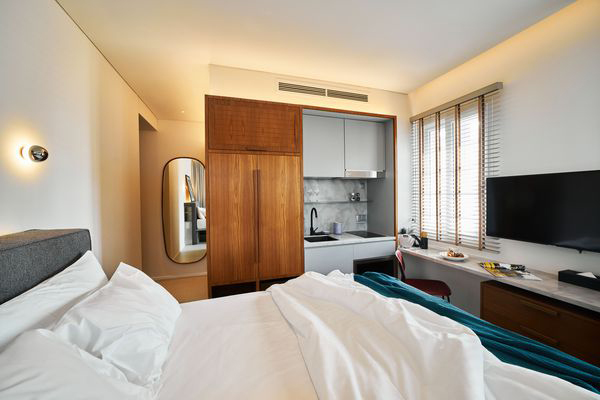
The Chow Kit – an Ormond Hotel boasts 113 rooms and suites ranging from 12m² to 38m², and epitomises the brand’s ethos of “luxury simplified” by providing all the hotel room essentials, said Ormond Group’s CEO Gareth Lim.

Next door, MoMo’s Kuala Lumpur is positioned as a social hotel brand with micro rooms and common spaces designed to encourage interaction, shared Lim.

Both brands also target different segments, with MoMo’s set to appeal to the millennials while Ormond Hotels eyeing the more affluent segments.

With hotels in Kuala Lumpur seeing an average occupancy rate of 60 per cent, Lim feels that it is an opportune time to open the two properties. He said: “You should know your niche and we don’t try to be everything to everyone.”

Opening rates for The Chow Kit – an Ormond Hotel start from RM238 (US$57) per night on a room-only basis, which is almost double the price of the 99-key MoMo’s Kuala Lumpur, which starts from RM130.

Three more Ormond-branded properties are in the pipeline – one in Dublin and another two set to open in Melbourne’s CBD by 2022.

Similar to the two properties in Kuala Lumpur, Ormond Melbourne and Momo’s Melbourne will be a dual-brand hotel located adjacent to one another, and will boast a total of 533 keys. It will be located within a shared podium that will also house an events centre and a host of F&B offerings.

TripAdvisor serves up Michelin restaurants – and bookings – in new partnership

0

Restaurants listed in the Michelin Guide will now have their ratings displayed on the TripAdvisor website and apps, while a selection of restaurants throughout Europe will also be bookable via its reservation service subsidiary TheFork, as part of a content and licensing partnership between the trio.

The partnership aims to offer diners “a complementary way to find their ideal dining experience, as well as improved access to a wider choice of high-quality restaurants around the world”.

Michelin Guide partners TripAdvisor to feature its restaurant listings on the online aggregator

All of the 14,000 restaurants selected by the Michelin Guide inspectors worldwide will be clearly identified with their ratings Star, Bib Gourmand and Plate distinctions on the TripAdvisor website and apps. Around 4,000 restaurants throughout Europe will also soon be accessible and bookable on TheFork, and on the digital Michelin Guide platform.

In addition, Michelin has signed an agreement to sell Bookatable to TheFork. This acquisition for an undisclosed sum allows TheFork to consolidate its existing markets and expand into five new countries, namely, the UK, Germany, Austria, Finland and Norway.

Under the deal, the 14,000 restaurants bookable on Bookatable will join the 67,000 already bookable on TheFork, creating the “largest online restaurant booking platform”, said the companies in a joint statement.

This strategic partnership between Michelin and TripAdvisor will offer “unprecedented visibility to the establishments listed in the Michelin Guide selections around the world”, said Scott Clark, member of the Michelin Group Executive Committee.

“By combining the Michelin Guide’s unique restaurant curation and selection criteria, with TripAdvisor’s comprehensive travel planning platform, we will be able to make the Michelin Guide’s selections accessible to a much larger number of diners around the world,” he added.

Consumers are now able to easily identify and book Michelin-selected restaurants on TheFork. In exchange, all TheFork restaurants partners will also be bookable on the Michelin Guide website and app.

Hilton weaves Tapestry Collection into APAC with Taipei, Christchurch signings

0

Hilton marked the launch of the Tapestry Collection by Hilton brand in Asia-Pacific with the signing of agreements to open two new hotels in Taipei and Christchurch – The Resonance Taipei, Tapestry Collection by Hilton and The Modern Christchurch, Tapestry Collection by Hilton.

Under a franchise agreement with Times Square International Stays, a subsidiary of Prince Housing & Development, The Resonance Taipei is slated to open at the end of 2020. Situated in the heart of Taipei’s city centre on East Zhongxiao Road, the 175-key hotel will feature on-site parking, a fitness centre and a Starbucks Coffee outlet.

A rendering of The Modern Christchurch, Tapestry Collection by Hilton, which will open in 3Q2021

The Modern Christchurch will open in 3Q2021, under a franchise agreement with Sarin Investments and in partnership with Tailorspace, part of the Ben Gough Family Office. Located in the heart of Christchurch’s CBD at 79 Hereford Street, the hotel will offer a restaurant and bar, fitness centre, and on-site parking.

Launched globally in 2017, Tapestry Collection by Hilton is a collection of more than 20 independent upscale hotels, each with its own unique style and personality.

PPHG adds Toronto to portfolio with hotel rebrand

0

Pan Pacific Hotels Group (PPHG) is stepping up its presence in North America with the rebranding of The Westin Prince Hotel in Toronto.

Located in North East Toronto, Pan Pacific Toronto offers 409 guestrooms and suites, with many overlooking the six hectares of greenery surrounding the hotel and the cityscape.

The Westin Prince Hotel in Toronto will be rebranded into Pan Pacific Toronto

Amenities on-site include Katsura Japanese restaurant; Seasons, the all-day diner; an outdoor heated pool; a tennis court; and a fitness centre with a whirlpool.

The hotel also features more than 2,780m² of meeting spaces including 18 meeting rooms and a ballroom which can hold up to 700 guests. Events are also possible on the greens outdoors.

Choe Peng Sum, CEO of PPHG, said: “We are delighted to fly the Pan Pacific flag in Toronto. As an international brand, Pan Pacific will bring to the hotel not only its guests from North America where we have four other hotels, we are also able to reach out to the Asia Pacific feeder markets where we have over 40 properties including Australia and China which are among the top five source markets into Canada.”

Pan Pacific Toronto is the fifth hotel for PPHG in North America, joining other hotels in Vancouver, Whistler in British Columbia and Seattle.

Keel laid for Dream Cruises’ second Global Class ship

0
Genting Hong Kong’s Lim Kok Thay announces the keel laying of Dream Cruises’ second Global Class ship

Dream Cruises marked the keel laying of its second Global Class ship on December 9, 2019 at MV Werften in Rostock, Germany.

The keel-laying ceremony for the 208,000 gross ton ship was attended by guests from the state and federal government, business leaders as well as media representatives from Germany and Asia, including Western-Pomerania’s economics minister Harry Glawe, Genting Hong Kong’s chairman and CEO Lim Kok Thay, deputy CEO Hui Lim, group president Colin Au, Genting Cruise Lines’ president Kent Zhu, Dream Cruises’ president Michael Goh and MV Werften’s CEO Peter Fetten.

All participants placed the traditional lucky coins on the keel block before the 95m high gantry crane lowered the 470 ton section into position.

Genting Hong Kong will be starting the design and building of the next series of Universal Class ships at MV Werften, with the first to be delivered at the end of 2022, according to Lim.

Aviation roundup: China Airlines, flydubai and more

0

China Airlines connects Taipei to Cebu

China Airlines will be launching a service from Taipei Taoyuan to Cebu starting March 29, 2020, with six flights each week.

Cebu will be the second destination in the Philippines after Manila to receive regular scheduled services as part of China Airlines’ long-term push to expand its network in South-east Asia.

Using a B737-800 aircraft, the Taipei (Taoyuan)-Cebu service will be operated every Monday, Wednesday, Thursday, Friday, Saturday and Sunday. Flights will depart Taipei (Taoyuan) at 07.40 and arrive in Cebu at 10.35, while the return flight will take off from Cebu at 11.35 and arrive in Taipei (Taoyuan) at 14.30.

flydubai lands in Yangon

Dubai-based airline flydubai celebrated its inaugural flight to Yangon on Wednesday, expanding its network to include South-east Asia.

The new daily Dubai-Yangon service is codeshared with Emirates and will operate from Terminal 3 at Dubai International starting December 10.

For bookings under the codeshare, Emirates passengers will receive complimentary meals and the Emirates checked baggage allowance on flights operated by flydubai in business and economy class.

Vietjet links Vietnam to Bali, Seoul and Taipei

To meet the rising travel demand in the year-end festive season, Vietjet will launch four more direct international services linking Dalat in southern Vietnam’s central highlands and Can Tho in south-western Vietnam to Seoul, Can Tho to Taipei, and Hanoi to Bali.

The Dalat–Seoul (Incheon) service will be operated four times per week, starting January 15, 2020. The flight departs Dalat at 17.10 and arrives in Seoul (Incheon) at 23.55, while the return flight takes off from Seoul (Incheon) at 02.30 and lands in Da Lat at 05.50.

The Can Tho–Seoul (Incheon) route will operate three times weekly, starting January 16, 2020. The flight departs Can Tho at 16.50 and arrives in Seoul (Incheon) at 23.55, while the return flight takes off from Seoul (Incheon) at 02.30 and lands in Can Tho at 06.20.

The Can Tho–Taipei route will operate four times weekly, starting January 10, 2020. The flight departs Can Tho at 12.40 and arrives in Taipei at 17.10, while the return flight takes off from Taipei at 18.10 and lands in Can Tho at 20.55.

The Hanoi–Bali route will operate daily, starting January 26, 2020. The flight departs Hanoi at 10.00 and arrives in Bali at 16.25, while the return flight takes off from Bali at 17.30 and lands in Hanoi at 21.55.

Qantas partners Air France-KLM to unlock frequent flyer benefits

Qantas has formed a new frequent flyer partnership with Air France-KLM Royal Dutch Airlines.

Qantas frequent flyers can now access reward seats, earn Qantas Points, and receive tier benefits across the entire Air France-KLM network.

They will also be able to fly to over 60 new destinations across Europe and Africa, including Biarritz, France; Dresden, Germany; Calvi, Corsica, France; and Bristol, the UK.

The partnership allows members to access reward seats and earn points on all fares across all Air France- and KLM-marketed flights globally. Frequent flyers with Gold status or higher will also be able to access tier benefits, including priority boarding, priority check-in and extra baggage allowance on any flights operated by Air France and KLM.

The agreement between Qantas Frequent Flyer and Flying Blue, the loyalty programme of Air France and KLM, means members will be able to earn points when they travel on eligible flights across each airline. They will also be able to redeem Qantas’ Classic Flight Reward seats across Air France and KLM’s economy and business cabins.

To earn Qantas Points with Air France or KLM, members simply need to enter their Qantas Frequent Flyer number when booking their next flight. Members can redeem available reward seats when they log in and select to “use points” when searching for flights on the Qantas website.

Qantas Points can be earned on all eligible booking classes, except on Air France and KLM’s codeshare flights operated by an airline other than Air France, KLM or Qantas, said the airline in a statement.

Heritance Negombo, Sri Lanka

0

Location
Frequently considered a transit point between Bandaranaike International Airport and Colombo, Negombo holds its own charm as a little seaside town. Heritance Negombo sits by the shore of the sweeping Browns Beach, a popular spot for both local merrymakers and tourists.

The property runs along main road Lewis Place, on a quieter stretch just around the corner to the busier Porutota Road, known as the backpackers’ belt for its hostels and bars.

Rooms
Heritance Negombo offers a total of 139 rooms, including four Junior Suites and one Presidential Suite. All rooms come with a private balcony overlooking the sweeping shore of the Laccadive Sea. The interiors are stylishly decorated with modern wooden furnishings and bright colours, reminiscing the hues of a tropical dawn.

Rooms also come with an open-air sink area, and separate toilet and shower areas, which allows for greater privacy and convenience for sharing guests.

I stayed in the Superior Deluxe room, which measures a comfortable 39m². A perk for all guests is one complimentary round from the mini-bar, which stocks two cans of local Lion Lager, a bottle of refreshing ginger ale, chocolate bars and crisps.

For guests who like waking up to a view, the Premium Room comes with a king bed facing the balcony and a view of the magnificent shore.

F&B
A total of six F&B outlets can be found in Heritance Negombo. I had breakfast and dinner buffet style at all-day dining restaurant Blue Tart, which offers a wide range of Sri Lankan cuisine, particularly curried dishes and delightful desserts.

A trio of restaurants – including a brunch spot and a bar – are situated right across the street in an open plaza, offering guests the option of a romantic alfresco meal under the stars.

Guests seeking a space to knock back a cold bottle while soaking in sunset views can head to the See Lounge on level two of the main hotel building. Floor-to-ceiling glass windows offer fantastic vistas of the shore and its roaring waves. The bar-style lounge serves canapés and a selection of à la carte dishes, and is the perfect place for a post-exploration wind down.

Facilities
The hotel stretches one kilometre from end to end, with its main guest facilities, including the lobby and a gym, situated near the middle. Facing the sea is a sprawling swimming pool, dotted with lounging spots across the width of the hotel.

Service
We were warmly greeted by attentive staff who also aided us at every turn, true to fabled Sri Lankan hospitality. Unfortunately, technical assistance fell short when my service request to fix a room leak was not attended to.

Verdict
Heritance Negombo is ideal for visitors who wish to relax in Negombo before exploring the rest of Sri Lanka. Its comfortable and modern design brings a subtle resort vibe that sets it apart from other beachfront properties in the country.

Number of rooms 139
Rates From US$94.50
Contact details
Tel: +94 112 308 408
Email: hn.ebiz.lk@aitkenspence.lk