TTG Asia
Asia/Singapore Sunday, 25th January 2026
Page 1135

Hotel investors emphasise private sector role in Indonesia’s tourism development

0

Hotel investors from the private sector are calling for the Indonesian government to be decisive in their list of destinations earmarked for tourism development and to engage the private sector in the planning process early on.

Speaking at the 7th Tourism, Hotel Investment & Networking Conference (THINC) in Bali last week, Budi Tirtawisata, group CEO of Panorama Group, said: “As travel players from the private sector, we believe in the future of tourism in Indonesia and the commitment of the government in the sector, but we need to see the roadmap on where we should go from here.

Lake Toba is among the 10 priority destinations the Indonesian government has earmarked for development

“In the beginning, the government set 16 priority destinations to develop, which was then reduced to 10. This was then refocused to four (and, most recently, five). As investors, we then ask, ‘So where should we invest now?'” he said.

Apart from that, Budi also highlighted other factors the government should consider, such as the source of investments, and whether the destination meets the investors’ requirements and will bring forth sustainable growth.

Meanwhile, Shirley Tan, CEO of Rajawali Property Group, noted that the challenges with the “10 New Balis” developments were that some destinations were more marketable than the others.

She pointed out the need for the government to cull feedback from the private sector early on during the master planning process in areas such as airport and connectivity to prioritise the government’s spending.

She added that there could be a disparity between the areas the government are earmarking their funds and which destinations the private sector will put money into immediately to develop them.

“The government needs to invest in the right infrastructure and in the right places where the private sector can immediately invest in. They need to get feedback from the private sector in terms of land arrangements because you cannot be trying to build new infrastructure and (automatically) expect the private sector to invest in them,” she said.

In response to the investors’ input, Hiramsyah Thaib, team leader, acceleration for the development of priority destinations, Ministry of Tourism, said that since the beginning of the Joko-Widodo administration, the government has picked 10 priority destinations for development.

“That does not change. The focus on four super priority destinations – Lake Toba, Borobudur, Labuan Bajo and Mandalika – is actually based on the needs of these places for huge government support on infrastructure development, and the areas covered are huge,” he said.

He added: “The Lake Toba area comprises eight regencies and they need major infrastructure development like airport and toll roads. The Borobudur development area covers Yogyakarta and Central Java, and a new airport is needed, and thus (the construction of) Yogyakarta International Airport.

“On the other hand, Wakatobi’s market, for example, is quite niche so massive infrastructure development is not needed, while Mt Bromo area is already well connected with Surabaya and Malang.”

He also explained that president Joko Widodo recently added Likupang, Manado, as the fifth super priority destination, after seeing North Sulawesi’s five-fold arrival growth in the last couple of years.

Hiramsyah also asserted that the current government has always engaged the private sector in the planning process. “We are currently setting up the Integrated Tourism Master Plan for the Super Priority Destinations and all the penta-helix stakeholders – the government, private sector, academicians, media and communities – are active participants in the process,” he said.

Hiramsyah refuted allegations that investors were reluctant to come in to these super priority destinations, despite the massive development works carried out by the government in those places.

“In Lake Toba area, seven investors have signed up for hotel projects worth a total of Rp6.1 trillion (US$435.7 million). The private sector will start developing when the basic infrastructure is ready,” he said.

He added: “President Jokowi has instructed us that all basic infrastructure in the super priority destinations must be ready by 2020.”

Deterred by HK crisis and South Korea’s stringent rules, Filipinos take ‘easy way out’ to other Asian countries

0

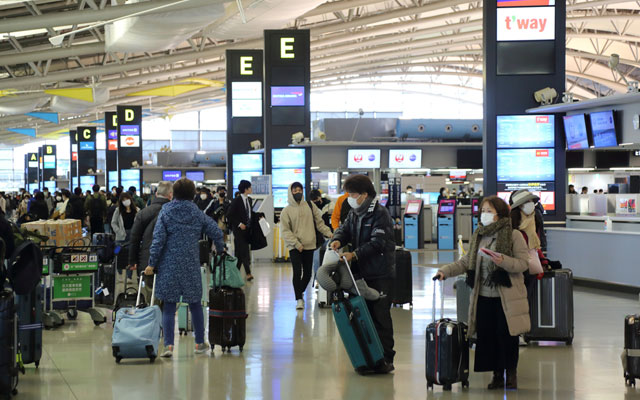
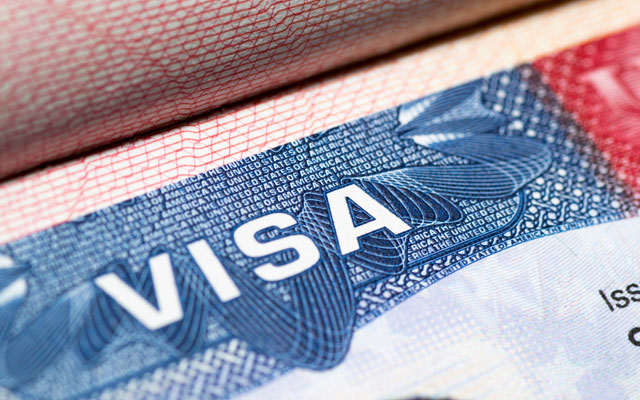
Destinations offering visa-free travel or easier visa procedures for Filipinos are winning over the outbound market from the Philippines.

Shunning Hong Kong which remains mired in prolonged protests, Filipinos are opting to travel to other visa-free Asian destinations, including Singapore, Thailand and Indonesia, said Rakso Travel’s team leader, international operations, Louise de Ocampo.

Countries offering visa-free travel or more fuss-free visa procedures for Filipinos are winning over the outbound market from the Philippines

“(Filipinos still opt for Asian destinations) because it’s easy to travel visa-free and the travel costs approximate what they would have incurred in Hong Kong,” said de Ocampo.

The unrest in Hong Kong has had a positive knock-on effect for other Asian countries as those who cancelled or postponed their Hong Kong trips opted to go to nearby destinations instead, said Jo Artille, project manager of Asian Travel Exchange, citing a recent case of a 50-pax tour group en-route to Hong Kong that was eventually diverted to Thailand.

The Marvels of Travel’s general manager Imelda Corpuz noted that Filipinos, even prior to the Hong Kong fiasco, were already flocking to Taiwan since it extended its visa-free offer to July 31, 2020.

Japan, which has made visa processing less tedious, is another popular destination among the Filipinos, said Corpuz, but not South Korea which has tightened visa rules.

Queenspoint Travel president Marlene Dado Jante said South Korea’s stricter visa requirements are a deterrent to Filipinos at a time when the country has a myriad of attractions that appeal to them. Instead, she added, many Filipinos have set their sights on emerging visa-free destinations like Cambodia, Vietnam and Myanmar.

Another travel consultant lamented that applying for a South Korean visa is akin to applying for a US or Schengen visa, as the process requires many documents, including income tax return, bank certification and employment certification.

But those having a platinum credit card issued by a specific bank can easily get a 10-year multiple entry visa, although trust is important as the applicant has to hand over their platinum credit card to the travel agency to assist with the visa application.

However, the embassy of South Korea in the Philippines has tightened visa screenings after detecting several cases of fake Japan visas and fake arrival stamps to Japan, as visa applicants tried to deceive the embassy that they have travelled to Japan.

The South Korean embassy recently announced that it will “not accept visa express applications anymore” and increased the visa processing period from seven to 10 working days for both first-time and frequent travellers due to an increase in the number of visa applicants.

Klook outlines global expansion plans; plans to double headcount by 2020

0

Fast-growing OTA Klook has unveiled an ambitious global expansion plan as it marks its fifth anniversary last week.

Klook currently offers over 100,000 things-to-do and services in more than 350 destinations through direct partnerships with local operators. It claims to be the most-searched travel activities and services company globally on Google since October 2018, and is expected to surpass 60 million annual trip bookings by this year.

Klook unveils its global expansion plans, including doubling its current headcount as well as deepening its roots in APAC and accelerating growth for European markets

Klook’s CEO and co-founder, Ethan Lin, said: “When we started the business five years ago, we faced a major roadblock due to the fragmentation of in-destination travel services. We’ve not only overcome the challenge, but also transformed the sector in the process through innovative digital solutions, collaboration with local tourism authorities, championing talents who share our vision, and empowering operators for a healthier and more diverse local tourism ecosystem.”

The company expects to expand its current workforce from 1,200 to over 2,500 across 30 offices by end 2020, as well as expand its global footprint by deepening its roots in Asia-Pacific and accelerating growth for European markets.

With its first few European outposts already set up in 2019, Klook aims to better serve European travellers with multiple languages, including French, Italian, Spanish, Russian, and German launching in the coming months.

Klook plans to innovate and elevate the digitisation of in-destination supply by optimising its operational procedures from booking and redemption to post-experience reviews. It also aims to equip individual operators with connectivity to AI-powered voice assistants including Actions on Google.

In addition to its current engineering hub in Shenzhen, Klook will expand its innovation capabilities to Singapore, with a focus on adopting connectivity integration and data science in the immediate future. Drawing from the rich pool of tech talents in South-east Asia, this dual-hub will allow Klook to glean more behavioural insights through data analytics to improve the experience for both customers and merchants.

As smooth and efficient transit is a key priority for modern travellers, Klook has introduced a standalone rail interface with easy-to-use and mobile-friendly features. Integral to its expansion plans in the transit sector, Klook aims to launch point-to-point train tickets and sought-after passes for the world’s major rail networks. Just last week, Klook launched China Rail on its platform, marking an important milestone for the company’s ongoing efforts to digitise complex rail systems.

As Japan is home to many of Klook’s popular destinations such as Tokyo, Osaka, and Kyoto, Klook has collaborated with local Japanese operators to increase its roster of attractions and things to do outside of the Tokyo metropolitan area by 600 per cent since 2016, including day tours to nearby attractions and cities including Mt Fuji, Hakone and Kamakura.

Most recently, Klook have formed a strategic partnership with West Japan Railway Company (JR-West) to attract South-east Asia’s growing FITs to western Japan, as part of its efforts to deepen key partnerships and diversify offerings in the country ahead of the 2020 global sporting event in Tokyo.

Tapping into the region’s vast opportunities, the two companies will collaborate to enhance the variety of travel activities, covering cities like Osaka, Hiroshima, Okayama, and more. The partnership caters to travellers’ growing desire to explore the country by rail and further boosts tourism in western Japan.

Oyo moves into upscale segment in India

0

Oyo Hotels & Homes, more associated as a budget and economy hospitality chain, will soon foray into the premium accommodation space when it opens its first upmarket business hotel in a 64-suite building near Ellis Bridge in Ahmedabad, India.

Aditya Ghosh, CEO, India & SA, Oyo Hotels & Homes, said that the upmarket segment holds a lot of potential for the company, with the global upscale and luxury hotel market predicted to witness tremendous growth.

He added that the Ahmedabad building set to become Oyo’s first business hotel will undergo “an exciting transformation to be completed later this year”, after which the hotel will officially open.

Oyo will open its first upmarket business hotel in a building near Ellis Bridge in Ahmedabad, India

Oyo will be working with several partner companies like Mountainia Developers, that will help acquire the assets, while Oyo will provide its brand technologies, marketing and revenue management services for the operations of the hotels.

Operating under the Oyo brand as a premium upmarket hotel, the upscale hotel will primarily cater to business travellers. It is located in the business centre of the city, in the vicinity of the airport and railway station, with the Sabarmati Ashram, Kankaria Lake and Jaldhara Water World within a five-kilometre radius of the hotel.

Rooms are categorised as deluxe, classic and presidential suites. For business travellers, the hotel offers facilities like breakfast spread, complimentary airport pickup, mini-fridge and tea coffee maker, valet parking, amongst others.

Other amenities include restaurants and coffee shops, a wellness centre that includes spa and gym facilities, as well as five banquet halls and boardrooms which will be operated under Oyo-owned brand Weddingz.in.

Study: US$33 billion opportunity market awaits airlines with connected cabins

0

Airlines that have successfully installed connected cabins have an immediate opportunity to win US$33 billion in market share from competitors, according to new economic modelling from the London School of Economics and Political Science (LSE) in association with Inmarsat.

“Sky High Economics – Chapter Three: Capitalising on Changing Passenger Behaviour in a Connected World” examines the global shift underway in passenger demographics, behaviours and attitudes to loyalty.

Airlines with connected cabins have a chance to win US$33 billion in market share from competitors: study

It underscores an immediate need for airlines to innovate in order to stay relevant in a competitive industry landscape, identifying US$33 billion in share shift accessible today for those developing the digital inflight experience that passengers are seeking. This opportunity equates to six per cent of the total annual commercial passenger aviation market.

Today, the airline industry is experiencing a period of exceptional change. By 2028, Generation Z is poised to become the largest group of air passengers in Asia-Pacific at over 450 million, surpassing the millennials by 41 per cent, said the report.

Paired with this demographic shift, digital disruption on the ground is driving expectations of inflight experience, and redefining attitudes to airline loyalty. According to the LSE research, millennials, which form the largest passenger group today, value loyalty less than any previous generations – a trend set to continue with younger generations.

The report utilises current IATA data and primary research including data from frequent flyer schemes, interviews with regulatory agencies, airlines and passengers.

Sky High Economics identifies a market of close to 450 million passengers worldwide, currently uncommitted to any airline loyalty programme, who would switch their allegiance in favour of an airline offering high-quality inflight Wi-Fi.

This forecast is modelled using data from frequent flyer schemes, which reveal a market split into active, engaged frequent flyers (13 per cent) and less engaged, brand-agnostic passengers (87 per cent). Less engaged travellers – many of whom are younger flyers with new expectations of travel – present the largest opportunity for airlines to take market share.

Today, 12 per cent of less engaged passengers are willing to switch allegiance to an airline that offers reliable Wi-Fi, worth US$33 billion in share shift for airlines already offering the service to take from competitors. This sum is predicted to grow to US$45 billion in the next decade, by which time Generation Z is expected to be the airline industry’s largest customer base.

Philip Balaam, president, Inmarsat Aviation, said: “Within the next two decades, Asia-Pacific will be driving most of global air passenger traffic. In a region where internet connectivity is increasingly becoming commonplace, we anticipate passengers will expect their on-the-ground habits and preferences to be replicated even when they are in the air.

“Whilst securing airline customer loyalty may seem more challenging than ever before, airlines can stay relevant and remain a preferred choice over its competitors by adapting to the needs of the vastly changing demographic of passengers. Offering high-bandwidth Wi-Fi will be key to satisfying the ‘always-on’ passengers of tomorrow,” he added.

“High-bandwidth Wi-Fi with consistent coverage is essential to meet the demands of data-hungry passengers. But adopting the technology is just the start. The real opportunity exists in making inflight Wi-Fi an enabler for tailored passenger experiences, enhancing loyalty while accessing new revenue streams.”

Krabi Airport introduces SITA’s passenger technology

0

Krabi Airport will be rolling out SITA’s passenger technology across all three terminals by 2022, as part of its development to become a regional aviation centre under Thailand’s Department of Airports’ four-year strategic plan.

The systems include AirportConnect Open, SITA’s common-use passenger processing (CUPPS) platform, alongside self-service check-in kiosks, at both domestic and international terminals.

Krabi Airport to roll out SITA’s passenger technology across all three terminals come 2022

According to the airport’s director, Attaporn Nuang-udom, Krabi is gaining popularity as a tourist destination, receiving more than four million visitors and over 30,000 flight departures from Krabi Airport last year.

He added: “This investment in common-use infrastructure provides greater flexibility to international airlines operating from Krabi Airport and optimises terminal facilities while improving the passenger experience at the airport. This strategic move is also aligned with our goal to uplift the image of the airport, upgrade its Airport Service Quality rating to international standards and keep abreast with new technology and future trends.”

Further development plans for Krabi Airport include the construction of Terminal 3 and the renovation of Terminals 1 and 2 to increase the capacity from 1,500 to 3,000 passengers per hour. Construction and expansion of aircraft parking bays to accommodate 40 aircraft are also in the plans.

The project to contract the CUPPS service and maintenance at Krabi Airport is undertaken by Samart Comtech in collaboration with global IT provider SITA. Samart Telcom has provided services to Suvarnabhumi International Airport since 2006. Since then, the services have been expanded to cover Phuket, Chiang Mai, Chiang Rai, Hat Yai, Don Muang airports, and most recently, Krabi Airport.

Art meets retail at K11 Musea in Hong Kong

0
K11 Musea

K11 Musea, a cultural-retail destination spanning 110ha on the Tsim Sha Tsui harbourfront, has opened its doors to the public.

The project is envisioned by the K11 Group to revitalise the vibrant Victoria Dockside neighbourhood while strengthening the district’s ambitions to be Hong Kong’s new art and design district.

“Our vision is to reinvigorate the district together with 100 creative powers hailing from different disciplines and cultures, to make K11 Musea the ‘Silicon Valley of Culture’ and inject art, architecture, design, sustainability and all forms of cultures into the new consumer’s daily life,” said Adrian Cheng, founder of K11 Group and executive vice-chairman of New World Development.

“K11 Musea is conceived as a space that inspires global millennials, and facilitates a broader discussion on the interconnectedness of creativity, culture and innovation,” he added.

The 10-storey complex will serve as a platform for artistic talents with a debut art collection featuring works from over 40 international and Hong Kong contemporary artists, under the direction of its founder Adrian Cheng.

Other highlights include the 186m2 Sunken Plaza amphitheatre featuring with interactive lighting and water features in the outdoor space, while a 35m-high grand atrium made up of 1,115m2 of hand-painted, hand-tamped aluminium panels is a dramatic feature indoors.

In addition, sustainability is central to the design of K11 Musea, which boasts top-level certified green building design, extensive greenery, rooftop urban farming for farm-to-table experiences at Nature Discovery Park and over 4,600m2 of living walls, and play areas such as Peacock Playground and Donut constructed by Danish playground specialist Monstrum.

Coming up, K11 Musea is slated to host the Asian debut of Festival de Cannes Film Week in Hong Kong from November 12 to 17, where six films from the Festival de Cannes 2019 will be presented, along with masterclasses and workshops.

Lovell takes mantle as GM of Hard Rock Hotel Desaru Coast

0

Hard Rock International has appointed Clinton Lovell as the general manager for its newest hotel in Malaysia – Hard Rock Hotel Desaru Coast.

With more than 20 years of hospitality industry experience, Lovell is responsible for the operations of the 365-room property, where he will develop and execute strategies to drive continued growth for the hotel and enhance operational efficiency.

Prior to joining Hard Rock Hotel Desaru Coast, Lovell most recently served as general manager at Avani Atrium Hotel Bangkok and previously Anantara Seminyak Bali Resort. Prior to that, he has almost a decade of general manager experience with Accor’s upscale hotels in Thailand under his belt.

One Farrer Hotel

0

Brought to you by One Farrer Hotel

An Award Winning Five-Star Urban Hotel

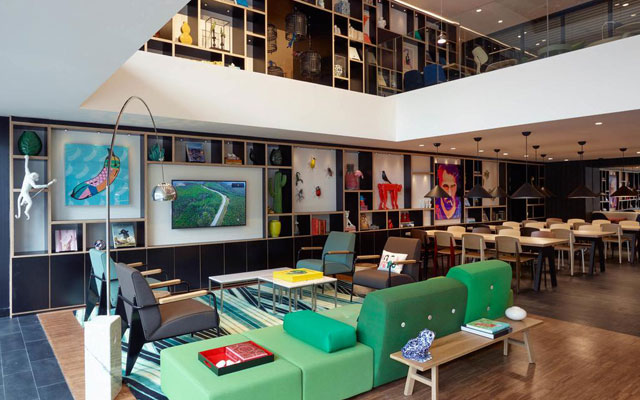
One Farrer Hotel is a five-star luxury hotel in Singapore in the Farrer Park district. An iconic beacon in Farrer Park called Connexion, the 243-guest room urban resort is designed for the discerning traveller and amalgamates innovative hospitality offerings with its distinctive presence within one of Singapore’s historic neighbourhoods. Further extending our ‘Total Lifestyle Environment’ is the campus-wide commissioned permanent art collection, featuring more than 700 pieces of original Greater Asia 3D and contemporary art by emerging and established artists from Singapore and around the region, located in each of its accommodations and public areas.

Defined by an intuitive approach towards lifestyle and hospitality, the urban resort embodies a ‘Hotels within a Hotel’ concept with three distinct hotel entities to serve the varied requirements of hotel residents. One Farrer Hotel consists of the Urban Hotel, Loft Apartments and Skyline Hotel & Sky Villas, which features modern and technology enabled contemporary chic accommodations.

The rooms at One Farrer Hotel are all enhanced by individually controlled in-room mood lighting, amenity services and temperature controls, with all rooms featuring ‘sleep well’ beds, generous-sized rain showers, ‘perfect view’ mirrors and 55-inch smart televisions that are utilised to view in-room dining menus as well as the in-room shopping catalogue. With a selection of over 300 products, residents can indulge in retail therapy in the comfort of their room. To further extend the in-room experience, the hotel’s mini bars and high speed WiFi are complimentary.

Hotel and city guests are able to indulge in a smorgasbord of local and international cuisine from the hotel’s 24-hour restaurant and lounge, Escape Restaurant & Lounge, which presents an open format interactive kitchen. With a capacity of 170 seats indoors and outdoors, guests can personally make their selections from the interactive kitchen or order from the complete a la carte menu. At Escape Restaurant & Lounge, the entire experience is integrated, presenting its patrons with a dining experience that engages more than the palate.

The perfect meeting of innovation, comfort and charm; One Farrer Hotel offers a myriad of distinctive event spaces for every occasion. The Grand Ballroom and Meeting Rooms feature a communications hub as its centre, equipped with high speed fiber optic video streaming capabilities complete with an added capability of broadcasting to a wider audience. Spanning over 698 square metres, the Grand Ballroom accommodates up to 700 guests. The hotel compound also offers a collection of inimitable event spaces to create memorable occasions for guests, including an air-conditioned marquee that seats up to 300 guests and offers the perfect setting for a party under the stars.

For more information on One Farrer Hotel, please visit www.onefarrer.com.

The changing face of Cambodia’s tourism

0

The world is hungering after a piece of the lucrative tourism pie in China amid Chinese’s growing appetite for outbound travel – and Cambodia is no different.

Cambodia’s aggressive pursuit of Chinese tourists has come at a cost to the country

According to minister of tourism Thong Khon, the country aims to attract about three million Chinese tourists annually by 2020. This will rise to five million by 2025 and eight million by 2030. And with the country welcoming more than two million Chinese visitors out of a total of 6.2 million in 2018 – a 67.2 per cent year-on-year increase – it looks on track to hitting its target.

However, the rapid-fire growth has come with dire consequences. In the last few years, the coastal town of Sihanoukville has undergone a swift transformation from beach getaway to casino city. Tourism players say it is no longer viable to sell the beach to international visitors, who skip Sihanoukville for the more well-rounded islands off the coast.

Mick Spencer, owner of Ana Travel in Sihanoukville, said: “The only tourists [in Sihanoukville] are Chinese casino tourists. There is nothing for local or international visitors to do and nowhere for them to go. The islands are the only reason to be going through the town.

“The town is forsaken and it will be several years before we understand what it will look like in the future, by which time I would expect the only visitors to be Asian gamblers and their families.”

Steve Lidgey, general manager of Travel Asia a la Carte, said losing the key beach destination in Cambodia, which he called an “essential part” of a Western holiday itinerary, has had a knock-on effect on the industry’s efforts to sell Cambodia as a standalone destination to long-haul visitors. While inbound tourists from Asia have grown in recent years, those from the West have fallen.

Said Lidgey: “I believe people are avoiding Cambodia altogether and choosing other destinations for longer tours. If there is no easily-accessible, friendly, value-for-money beach destination, then travellers will instead spend their beach time, and possibly their whole trip, in Vietnam or Thailand.”

A fall in visitors to Angkor Wat has triggered a response from the government, who blames Chinese zero-dollar tourism packages for the slump. The country’s top tourist draw welcomed 1.4 million foreign tourists in the first seven months of 2019, representing a 9.7 per cent year-on-year drop. In July, visitor numbers fell by 19.7 per cent to 149,269 foreigners.

While the country’s tourism players say the blame does not solely lie with zero-dollar tourism, they have welcomed the government’s pledge to crack down on the industry.

Said Spencer: “The government is starting to realise that zero-dollar tourism is a real thing, and local economies and businesses suffer as a result.”

Ronni Dalhoff, managing director of Diethelm Travel (Cambodia), lauded the government clampdown on zero-profit tourism, which he said makes up the bulk of Chinese arrivals.

In 2016, the Thai government stamped out zero-dollar tourism, estimating annual losses of US$2 billion in tax revenue. In the wake of the clampdown, three companies were closed, 2,155 buses were seized, and several arrests were made for money laundering and operating illegal tours.

Lidgey commented: “The hunt for large numbers and meeting targets by attracting the Chinese, and a surge in low-budget tour groups that take up space but ultimately leave little revenue for the Cambodian people, is an issue.”

However, Dalhoff notes that while it is the low-budget segment disrupting the market, there remains huge potential in higher-spending Chinese travellers – and that is where the focus should shift.

He said: “There are two very different types of tourism. Chinese zero-profit packages are massively different to the upscale Chinese market, which everyone is very interested in.”

Miles Gravett, general manager of Khiri Travel Cambodia, added: “There needs to be more focus on quality tourists, and not just from China. A lot of zero-dollar tours don’t benefit the local economy, and that’s something that needs changing.”

Industry players also claim the chase after Chinese tourists has led to other key source markets being neglected. Lidgey noted: “While there are plenty of opportunities to make business from middle-class Chinese who can afford to travel overseas, Cambodian tourism authorities need to be careful. The old adage ‘Don’t put all your eggs in one basket’ applies here.”

The latest figures from the Ministry of Tourism show that as of June, arrivals from European markets fell 5.6 per cent while those from the US market dropped 5.3 per cent. In contrast, Chinese visitors rose 38.7 per cent, with a 15.9 per cent increase in arrivals from Asia.

Added Lidgey: “If the new-found wealth in China doesn’t last, or people are forced to tighten their belts, then the Chinese will see more value for their money in travelling domestically.”

Gravett warned that if proper measures and governance are not put in place to regulate the development, parts of the country run the risk of becoming Chinese gambling destinations. He said: “Cambodia is a beautiful country with so much to offer. It always has been a cultural destination and if it starts becoming known as a cheap package destination with a focus on gambling, this is bad for Cambodia and bad for everyone’s business.”

But the influx of Chinese tourists has added value and helped fill rooms in high-end hotels. One luxury hotel in Siem Reap said the rise in high-end Chinese visitors saw them through this year’s “tough” low season. It has since pledged to step up its chase for affluent Chinese travellers.

Sofitel Phnom Penh Phokeethra has also seen a “huge spike” in Chinese visitors at the hotel for both business and leisure. Area general manager Charles-Henri Chevet noted that about 40 per cent of the hotel’s guests are Chinese. He added that the hotel has “harvested a positive impact” from the growth.

Across the board, hopes remain high that a clampdown on zero-profit tour packages and a shift of focus into more upmarket segments will help bolster the industry.

Said Dalhoff: “China is the fastest-growing market and it’s not wrong to focus on them, but we would also like more focus on the Western market, and for a divide to be made between zero-dollar tourism and higher-end tourism.”