TTG Asia
Asia/Singapore Friday, 23rd January 2026
Page 1101

Genting unveils Asia-friendly river cruise brand

0

Crystal International Asia, in collaboration with Crystal River Cruises, has introduced its new river cruise line experience on Crystal Mozart specifically targeted at guests from across China and Asia.

The experience will provide Asian-friendly features for the growing number of Asian guests who are interested in exploring the many wonders of Europe but feel more comfortable travelling with some of the comforts of home, said the company in a statement.
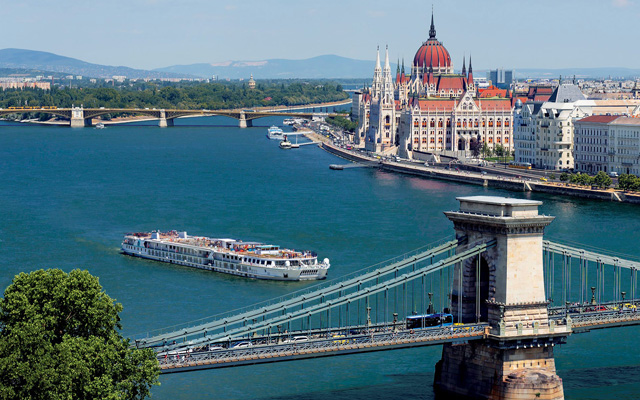
Crystal Mozart will feature Asian-friendly features

Michael Goh, president of Dream Cruises, and head of international sales for Genting Cruise Lines, said: “With the Asian cruise market currently enjoying unprecedented growth, our more experienced cruisers are looking for new and exciting destinations and adventures outside of local waters and Crystal Mozart is the ideal option for an intimate journey into the heart of Europe.”

Beginning March 2020, Crystal Mozart’s voyages will be anchored by the cities of Vienna, Austria and Budapest, Hungary and will feature a variety of six-, seven- and 10-night all-inclusive itineraries on the Danube River including special Christmastime Market cruises.

Crystal Mozart features private butler service in every room category, king-sized beds, ETRO amenities, robes and slippers, and flat-screen HD TVs. Additional features include farm-to-table cuisine in multiple, open-seating eateries: the Waterside Restaurant, Bistro cafés and the Vintage Room; as well as the Palm Court for entertainment and enrichment presentations.

As part of Crystal Mozart’s new focus on the Asian traveller, in addition to immersive experiences ashore, a host of new Asian-friendly features will provide “a comforting familiarity to guests from the region”.

Dedicated English and Chinese speaking butlers will be available to serve guests while Michelin-inspired cuisine featuring international and Asian cuisine will be served onboard. Shore experiences, which will be led by professional English and Chinese language tour guides, are designed to deepen the understanding of Europe’s landscapes, historic cities and quaint villages.

A highlight of every Crystal sailing is a complimentary live musical experience that captures the essence and cultural character of the region of each voyage. These “Signature Events” combine access to a landmark venue, such as Vienna’s famed Belvedere Palace, with a musical performance.

These new features will debut on board Crystal Mozart in 2020 when she plies the waterway of the Danube River.

Tourism industry more resilient than ever to crises: WTTC

0

The travel and tourism sector is more resilient than ever, with average recovery times having decreased from 26 months in 2001 to 10 months in 2018, the latest research by The World Travel & Tourism Council (WTTC) and Global Rescue revealed.

The findings from the report titled “Crisis Readiness: Are You Prepared and Risk Resilient to Safeguard Your People and Destinations?” analysed the impact of 90 crises between 2001 and 2018 at national and city levels, and examined the time to recovery as well as lost arrivals and lost visitor spending.

Tourism industry shows greater resilience to calamities, new study shows

Of the 90 crises analysed, 32 per cent were terrorism/security related, 13 per cent were disease/outbreaks; 19 per cent were political instability and 36 per cent were natural disasters.

Of the four crisis categories analysed, political instability proved the most challenging, with average recovery times of 22.2 months, and minimum 10 months; while terrorist or security related incidents have the shortest average recovery time of 11.5 months and minimum 2 months.

Additionally, the study also found that the average recovery times for natural disasters and disease outbreaks were 16.2 months, and minimum one month; and 19.4 months, and minimum 10 months respectively.

Public private partnerships and effective, transparent communications are critical for preparedness and prevention, the study concluded.

WTTC’s president & CEO Gloria Guevara said: “This comprehensive research shows just how resilient the travel and tourism sector truly is. While there is still work to be done, the data shows that recovery times have fallen significantly over the past two decades, and that major strides have been made. It is crucial that we continue to learn from previous incidents and continue to come together through public private partnerships to make a real difference in reducing both the economic and human impact.”

She added: “Political instability has proven to be the most challenging crisis to overcome, with the longest recovery times. However, through public private collaboration, effective communication and continued efforts that focus on preparedness and prevention, we can make a real difference in reducing both the economic and human impact.”

In the report, WTTC and Global Rescue offer recommendations on how destinations can mitigate the impact of a crisis, showcasing successful examples from the likes of Kenya, Mexico, Egypt, Hawaii and Japan. The report also highlights the importance of being prepared and the need for coordinated management to ensure a successful recovery.

The full report can be read here.

STB, SHA introduce new initiatives to transform hotels for sustainable growth

0

The Singapore Tourism Board (STB) and the Singapore Hotel Association (SHA) have launched a series of new initiatives focused on leveraging technology to foster business innovation and support job redesign efforts in the hotel industry.

These initiatives are designed to further boost productivity, which has grown 4.5 per cent in nominal terms annually since 2015, exceeding the 2020 target of two per cent set out in the Hotel Industry Transformation Map (ITM).

STB and SHA pushes out new initiatives to foster innovation and growth in the industry, including job redesign efforts to upgrade skills of employees to take on more value-added jobs

“We are pleased to share new and updated initiatives for hotel stakeholders to discover, adopt and benefit from. To transform the hotel industry and support our hotels to be more competitive and innovative for sustainable growth, we continue to work in close collaboration with industry partners to drive enhanced guest experiences via new solutions and initiatives. Even as we focus on the hardware, we are also invested in the software. The human aspect is at the heart of the business, and the
passion and skillset of hotel staff is what ultimately drives the industry,” remarked Tan Yen Nee, director, hotels and sector manpower, STB.

Towards a more seamless check-in experience

A new initiative, the E-Visitor Authentication (EVA) System will enable faster verification of guests’ stay validity, which will facilitate a seamless check-in experience for guests. Participating hotels can use facial recognition technology to authenticate their guests’ identities, and the guest data will be sent to the Immigration & Checkpoints Authority (ICA) to verify the validity of their stay. By eliminating the process of performing manual checks on travel documents, check-in time will be reduced by up to 70 per cent.

18 new solutions to drive productivity and better harness data

The second Hotel Innovation Challenge (HIC), which was organised by STB and SHA this April, yielded 18 new solutions that will be piloted by 18 participating hotels. These solutions were conceptualised in response to the HIC’s call for crowdsourced ideas to address key challenges and opportunities in housekeeping, human resources and data management.

Some examples include a manpower scheduling solution developed by SIMTech, an A*Star Research Institute, to effectively roster employees based on their skillsets and demand; Champs Industrial’s peelable cleaning formulation to reduce cleaning time and water consumption; and Samsotech’s integrated Customer Relationship Management solution to help aggregate guest information across several silo systems.

With two Innovation Challenges and one Innovation Pitch held over the past three years, a total of 39 solutions have been or are currently being developed. The Innovation Pitch is designed to seed high-level ideation for solutions to address housekeeping and F&B productivity challenges. 46 hotels in the industry have participated in the challenges on a pilot basis, with 13 hotels implementing the developed solutions thus far.

For example, four hotels in the Pan Pacific Hotels Group have adopted the AI-enabled asset performance management system for their heating, ventilation and air-conditioning (HVAC) while Mandarin Oriental Singapore has adopted a new inventory management system.

Guiding hotels towards customised transformation

Launched this year by the Hotel Innovation Committee (HIC) with the support of STB, the second edition of the Smart Hotel Technology Guide focuses on back-of house operations to drive productivity, and enhance both guest and employee experience. It proffers the vision of a smart hotel where back-end processes are streamlined and made more efficient by technology, thereby enabling hotel employees to focus on more value-added tasks for the organisation. The guide also features case studies of
hotels that have successfully implemented such innovative solutions.

Complementing the Smart Hotel Technology Guide is the newly launched Hotel Industry Digital Plan (IDP) by the HIC, with the support of STB and the Infocomm Media Development Authority. The IDP presents a full suite of hotel solutions that hotels can readily adopt at each stage of their business. These solutions are categorised into various stages of sophistication to help hotels enhance their digital capabilities and optimise operations, build a smart ecosystem with data-driven operations and drive intelligent businesses. The IDP includes illustrations on how hotels can incorporate STB’s technology resources, such as the Tourism Information and Services Hub, in their solutions to provide a seamless travel experience for the visitors.

Redesigning jobs and upskilling staff in the hotel industry

The hotel industry continues to be a source of good and fulfilling jobs for people of all ages and levels, thanks in part to job redesign efforts. Together with industry partners, concerted efforts have been made to improve HR practices and strengthen job attractiveness across the hotel industry.

Currently, more than a hundred hotels have pledged to implement job redesign under the Hotel Job Redesign Initiative. Developed and launched in May this year by Workforce Singapore (WSG) in partnership with STB and SHA and supported by the Food, Drinks and Allied Workers Union, the initiative encourages and enables hoteliers to create higher quality jobs and enhance job satisfaction for the hotel workforce by reviewing, optimising and adding value to existing jobs in their establishments.

To further support hotels in their job redesign efforts, WSG has also introduced the new Job Redesign Place-and-Train Programme for the Hotel Industry. The programme will help hotels train and upskill existing workers for redesigned job roles. Through the programme, hotels can receive up to 70 per cent of salary support for the training duration. Hotels are also encouraged to work with WSG to customise their training plans, which can comprise up to 100 per cent on-the-job training.

Webjets touts error-free hotel bookings through blockchain technology

0

Webjet, the owner of B2B accommodation provider WebBeds, has unveiled Rezchain, a new technology that enables users to eliminate costly discrepancies that occur in up to five per cent of hotel booking transactions.

The technology, pioneered in collaboration with Microsoft, makes use of blockchain, which also underpins cryptocurrencies. Rezchain is touted to be the first application of blockchain to verifying hotel reservations.

Hotels can now leverage on Rezchain verification technology to ensure error-free bookings

Approximately one in every three hotel bookings are amended in some way after the reservation was first made and one in every 10 bookings experience some kind of manual intervention, according to Webjet. Discrepancies typically occur in price, duration, booking status, currency, board basis or room type because the amendments were not recorded on the booking systems of all the relevant parties, be it the hotel, travel agent, tour operator or other online intermediary.

Typically, discrepancies between accommodation trading platforms go unnoticed until after the travel is completed, resulting in costly, time consuming and embarrassing invoice disputes that cause hotels and travel companies to lose out on expected revenues, said the company in a statement.

Rezchain, like a combined virtual handshake and early warning system, enables any two parties to verify that their hotel reservation data matches across both booking systems and, conveniently, no sophisticated IT integration is needed.

Rezchain receives a daily update of all bookings made or modified between two Rezchain connected parties. It then uses Smart Contracts and blockchain technology to highlight issues in data submitted, based on agreed matching criteria. When there is a discrepancy or mismatch, an email alert is triggered to tell both parties that they should take action to correct the records on one side or the other. If data is received for a new booking from only one party, Rezchain records that as an “incomplete” booking and notifies both sides that only one party has the booking recorded. A simple daily CSV file is all that is necessary to begin matching data and resolving booking issues.

Webjet’s managing director John Guscic said: “Settlement between hotel suppliers and travel partners can be a complex, time consuming and ultimately costly process. With multiple IT systems speaking different languages, mistakes are probable, and the default position is often to write off debts when the situation is not clear. For years, the industry considered it a cost of doing business. But, with Rezchain, it doesn’t have to be that way any longer.”

WebBeds says it has been trialing Rezchain with all of its brands successfully for several months. It is now being made available to any business in the travel industry that transacts over the internet via an XML interface. After an introductory 30-day free trial, the cost of using it will be a few cents per transaction.

Digitalisation key to connecting with Chinese luxury travellers

0

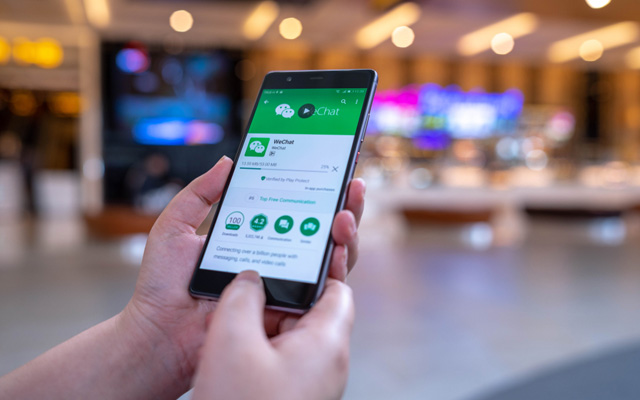
Reuter: Intelligence, in partnership with ILTM China, has released a new study looking at how travel and hospitality brands can master WeChat, build up their digital presence in China and stand out in a crowded marketplace by winning hearts and minds through creative content.

The importance of emotion and storytelling

Luxury travel brands cannot only focus on the capabilities of platforms available in China’s social media landscape, but must provoke connections beyond mere digital, elevating engagement and making emotional connections. According to the report, big content wins of recent years found success thanks to boldly presenting more meaningful storytelling that was based on Chinese cultural moments and issues.

Travel and hospitality brands need to build creative content on top of mastering technology like China’s super-app WeChat to connect with Chinese travellers: study

Breaking down marketing labels across sectors

Marketing labels such as aspirational, immersive and inspiring are also broken down within the report, which describes their true meaning in relation to the functionalities offered by WeChat, and how Red and Douyin are being best employed by savvy luxury brands. A view outside of travel and hospitality takes a look at how leading brands in other sectors such as fashion and beauty are winning with luxury Chinese consumers.

The report also examines the closed-loop functionality offered by WeChat, explaining how the big content wins by international brands in recent years have not only been about mastering the technology, but winning hearts and minds. These successes have been achieved through telling stories that provoke emotional connections.

UGC and interactivity key for younger consumers

For luxury brands, the WeChat superapp must still be the foundation of digital communications in China, while user-generated content (UGC) platforms such as Red and Douyin offer exciting new opportunities for innovative connections with affluent Chinese consumers.

On Douyin, they don’t only want to watch, they want to “give it a go” themselves and get involved in whatever’s viral. Although a luxury brand may want to appear slick, luxurious and on-brand elsewhere, Red is the place to go under the cover, beneath the surface and behind the scenes. Red users have seen flashy and slick corporate communications a million times and expect to be able to enter the real world of the brand and product in their own Red world.

The report is available for free download here.

Swiss-Belhotel plans foray into Thailand’s key cities

0

Swiss-Belhotel International will be making its debut in Thailand, as the company steps up its expansion plans in South-east Asia.

The Hong Kong-based hospitality company is currently in advanced negotiations with its partners for four new hotels in three key cities: Bangkok, Chiang Mai and Pattaya.

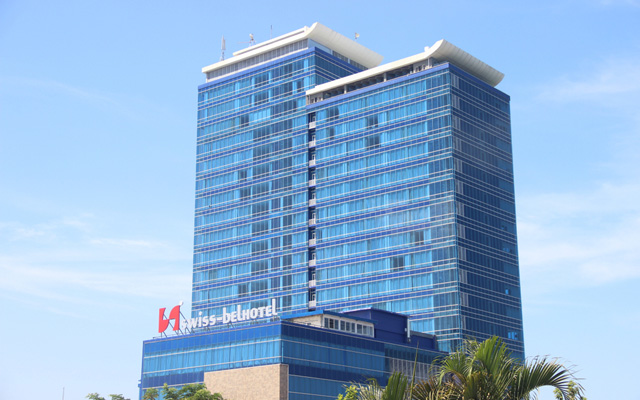
Swiss-Belhotel to make its foray into Thailand with four new hotels; Swiss-Belhotel Makassar, Indonesia pictured

Other established and emerging locations will also be considered in future, including cities and beach resorts, as Swiss-Belhotel International strives to build a nationwide portfolio, said the company in a statement.

By end 2020, the group expects to boost its global portfolio to 250 properties comprising approximately 25,000 rooms.

Swiss-Belhotel International currently has a collection of 145 hotels and resorts across 22 countries, either operating or in the pipeline. This includes properties in five of the ten ASEAN member states: Cambodia, Indonesia, Malaysia, the Philippines and Vietnam.

Aviation roundup: Vietjet, LOT Polish Airlines and more

0

Vietjet links up Danang with Singapore and Hong Kong

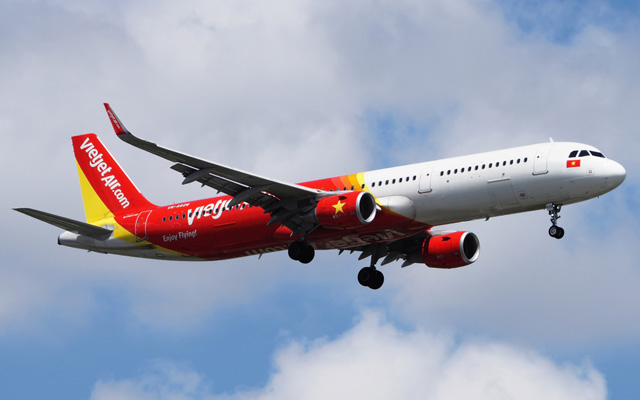
Vietjet will launch two international routes connecting Danang with Singapore and Hong Kong.

Launching on December 20, 2019, the Singapore-Danang route will operate daily return flights. The flight will depart Singapore at 10.50 and land in Danang at 12.30. The return flight will leave from Danang at 12.20 and arrive in Singapore at 15.55.

Also operating daily, the Hong Kong-Danang route will commence operations on December 12, 2019. The flight will depart Hong Kong at 17.20 and arrive in Danang at 18.05. Returning, the flight will depart from Danang at 12.45 and land in Hong Kong at 15.30.

LOT Polish to fly direct from Poland to Sri Lanka

LOT Polish Airlines has launched regular seasonal flights between Warsaw and Colombo. Using Boeing 787-9 Dreamliner, the route will be operated three times weekly until March 28.

LO69 will depart Warsaw at 14.25 and arrive in Colombo at 16.15 on Fridays, Wednesdays and Sundays, while return flight LO70 will take off from Colombo at 08.05 and land in Warsaw at 14.00 on Mondays, Thursdays and Saturdays.

IndiGo, Qatar Airways to announce strategic deal

Indian LCC IndiGo and Qatar Airways will make a strategic business announcement on Thursday, which media reports said would involve a codeshare agreement.

IndiGo shares, which rose as much as five per cent early in the day, pared those gains to trade up one per cent on Tuesday afternoon.

Qatar Airways has in the past shown interest in investing in IndiGo but the Indian airline has resisted, according to a Reuters report. However, Qatar Airways chief executive Akbar al-Baker has said that the airline was not looking at a stake purchase in IndiGo.

Sala Hospitality names group DOSM

0

Sala Hospitality Group has appointed Benjaporn Magroodtong as group director of sales & marketing, based at the company’s Bangkok headquarters.

A Thai national, Benjaporn was previously the company’s director of sales – a position she has held since July 2015. With 20 years of experience with brands such as JW Marriott and Anantara, she will now be tasked with developing and executing sales and domestic marketing, branding and advertising.

Experiential travel’s here to stay – and industry players rise to meet the tide

0
From left: TTG Asia’s Xinyi Liang-Pholsena; Oakwood’s Dean Schreiber; Airbnb Trips’ Parin Mehta; TripAdvisor Experiences’ Dan Penner during ‘The Rising Tide of Experiential Travel’ session at the inaugural SG Tourism Leaders Engagement Series

No longer a niche segment, experiential travel is now mainstream as technology, social media, and greater connectivity between places drive travellers to seek out deeper engagement or unique activities in the places they visit.

Such growing demand for immersive, customised travel has also given rise to serious business propositions for the travel and hospitality industries, shared panellists during ‘The Rising Tide of Experiential Travel’ session at yesterday’s inaugural SG Tourism Leaders Engagement Series, which was held at One Farrer Hotel.

From left: TTG Asia’s Xinyi Liang-Pholsena; Oakwood’s Dean Schreiber; Airbnb Trips’ Parin Mehta; TripAdvisor Experiences’ Dan Penner during ‘The Rising Tide of Experiential Travel’ session at the inaugural SG Tourism Leaders Engagement Series

Dean Schreiber, CEO, Oakwood, and managing director, Oakwood Asia Pacific attributed the rise in experiential tourism to better access to information, which allows travellers to make decisions based on Instagram posts or TV shows like Game of Thrones, with surging global interest to visit Croatia as a prime example.

Parin Mehta, managing director, Airbnb Trips, Asia Pacific remarked: “It really boils down to the fact that people want to brag about what they’re doing and tell their friends about it… I think we’ll see (experiential travel) accelerate even further in the coming years.”

“Low-cost airlines are also making everything so much more accessible, allowing access to a diverse range of cities,” added Dan Penner, senior regional manager, Asia Pacific, TripAdvisor Experiences.

As travellers become more “globally curious” by the day, the trio of travel industry leaders stressed the need for their businesses to continuously evolve to retain their competitive edge.

The growing interest in immersive travel has driven Airbnb Experiences – created about three years ago – to break down its tours into more refined categories such as Adventures and Animals, with more categories expected to be added to its growing portfolio.

“One of the things we do a lot is listen to our guests and understand what they want, and we’re able to then launch new categories that fit what they want,” Mehta noted. For instance, travellers can book a surfing lesson with a world champion, as well as cook a local meal with a renowned chef.

“We look for three things in hosts: insider access, quality, and the idea of hospitality or human connections. The human host is a vital part of (an Airbnb experience). Sometimes our guests forget the activities they did, but they always remember the host,” Mehta elaborated.

Oakwood earlier this year launched a gin package at Oakwood Premier OUE Singapore, enabling overseas guests to taste and learn about locally-distilled gin at the serviced apartment. At the same time, the increasing appetite among travellers “to experience the local food culture” has driven Oakwood to gradually “move away from restaurants” and serve up new ways of meeting guest needs, such as partnering food delivery options, Schreiber said.

“Now we can be more focused on the customer experience, rather than providing F&B. It’s all about being able to customise and personalise the experience for our guests, and responding to what the customers want,” Schreiber stated.

Likewise, Penner added that TripAdvisor Experiences’ recent sales ban on attractions with whales and dolphins in captivity is a clear response of how the travel giant is responding to customers’ changing preferences.

Meanwhile, TripAdvisor has in recent years evolved from a reviews site into a planning and sharing space for recommendations and ideas, Penner stated.

“We’re making ways to plan your trip online, share it with your friends, and get recommendations from your group. We’ve also introduced a tool to plan your trip more holistically – think flight, hotel, experiences,” he explained.

When asked whether he has noticed a growth in any other sector, Mehta pointed to the rise of responsible travel, where travellers seek purpose, such as volunteer with an NGO or charity.

As well, Schreiber expressed his desire for slow travel to take root among today’s travellers.

“The whole slow travel concept is about trying to shift a lot of the business out of the great cities that are being destroyed by mass tourism. Slow travel is something as an industry we should probably encourage,” he opined.

Changi Airport and Safdie Architects rubbish Qatar Airways chief’s copycat claims of Jewel

0

Qatar Airways CEO Akbar Al Baker has alleged that the design for Jewel Changi Airport was plagiarised from Qatar’s Hamad International Airport’s expansion, according to a report by The Straits Times.

During a recent unveiling of the expansion plans in Doha, Al Baker was quoted by the report as saying: “When I show you the images later (of the planned enhancements), you will realise that somebody copied our design, which was already on the table nearly six years ago… We had individuals from that country, I will not name it, that took our design and did it.

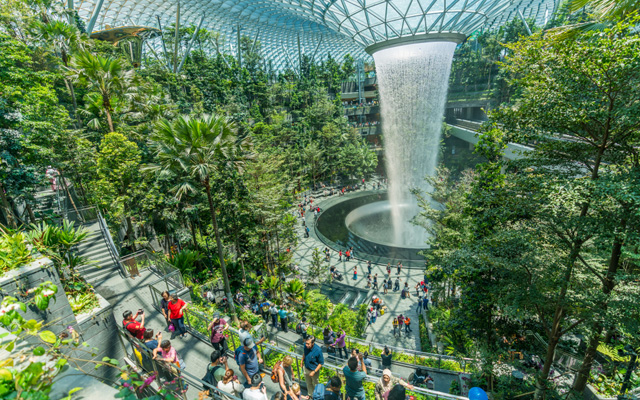
Changi Airport Group and Safdie Architects have hit back at allegations that Changi’s Jewel is a copycat design

Al Baker’s reference was immediately obvious — the expansion plans for Qatar’s Hamad International Airport feature an indoor waterfall and large gardens that bear a striking resemblance to Jewel Changi Airport’s offerings, said the report.

In response to the copycat allegation, Changi Airport Group’s chief executive Lee Seow Hiang told The Straits Times: “We value the originality and creativity of ideas as we innovate to elevate the Changi experience for all our visitors. We respect intellectual property rights and expect the same of all our partners.”

World-renowned Israeli-Canadian architect Moshe Safdie, who was the brainchild behind Jewel Changi Airport’s design that has received international acclaim since its April opening, has also hit back at the allegation, according to another Straits Times report.

Safdie was quoted by the report as saying: “We have been pursuing the concept of gardens as a focal point for the public realm for many decades. We have also explored the concept of harvesting the rain into internal rainfalls at Ben Gurion Airport (Israel) and Marina Bay Sands.”

“The success of these explorations have further inspired and led us to create a new icon in the Jewel that we see today – a new kind of urban place that celebrates the elements of nature and urban life.

“We are delighted that Jewel’s uniqueness and originality has been well-recognised by the international community and resulted in many wanting to emulate it.”