

The Pavilions marks Palawan Island for 2022 opening
Hong Kong-based The Pavilions Hotels & Resorts has signed its first property in the Philippines, and will plant its flag in El Nido, Palawan Island come 1Q2022.
The 96-key El Nido Beach & Spa Resort will be a pool-villa property occupying 10 hectares of beachfront estate, promising panoramic tropical ocean views, an adventure park, dive centre, waterfalls and adventure walks, a signature spa and wellness facilities, as well as unique dining experiences.
The group will offer its signature Curated Journeys bespoke travel itineraries at the new resort.
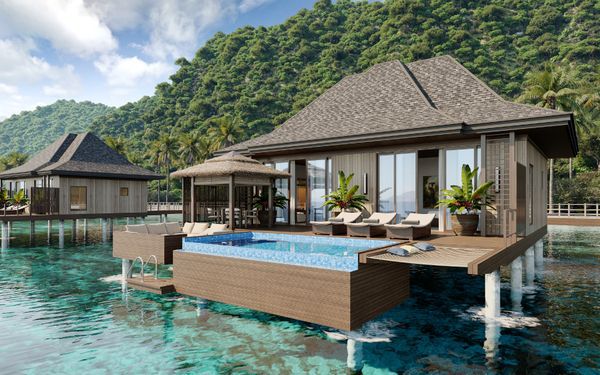
Accommodation options include one- and two-bedroom luxury villas, as well as 20 Maldivian-style over-water villas, each with a private plunge pool and direct access to the ocean and the house reef beneath.
Commenting on the development, Gordon Oldham, founder and owner of the boutique hotel group, said: “The new resort truly embodies our philosophy of delivering unique experiences to our guests. We’re also very excited to be the first international luxury resort brand in El Nido.”
Gemmalyn Crosby will lead the El Nido Beach & Spa Resort as president.
SIA to provide logistics backing for global pandemic response
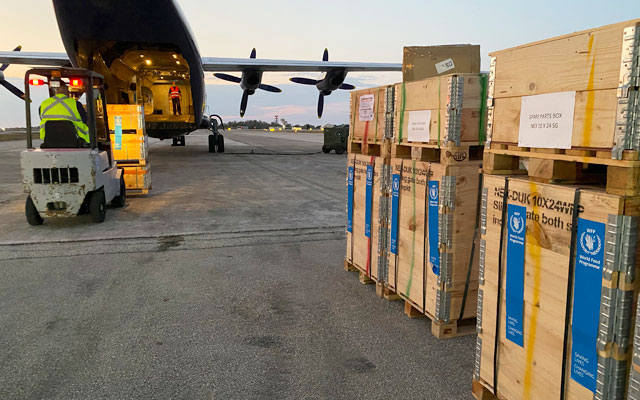
Singapore Airlines (SIA) and the non-profit Temasek Foundation are partnering with the World Food Programme (WFP) to transport essential medical supplies and other health and humanitarian items by air to points around the world needing Covid-19 recovery support.
The airline will make ad-hoc charter flights and freight space in its scheduled services available on a cost-recovery basis, with flight costs being covered by a contribution of up to US$6.5 million from the Temasek Foundation.
An estimated US$965 million is required to sustain WFP’s Common Services on behalf of the humanitarian and health community. Since commencing in May, WFP has managed more than 800 humanitarian flights to 159 countries, with enough cargo to fill 188 jumbo jets expected to require WFP transport in the coming weeks. However, only 21 per cent of the required funding has been received to-date. With additional support, WFP’s passenger and cargo flights are likely to grind to a halt at the end of this month.
“While demand for WFP Common Services grows every week, resources are stretched incredibly thin and additional support is urgently needed,” said Amer Daoudi, WFP’s Covid-19 corporate response director.
“We are very grateful to Singapore Airlines and Temasek Foundation for stepping up so we can continue delivering life-saving supplies to those who need them most.”
Where the heart is
As one of the region’s first destinations to relax pandemic-induced restrictions, Vietnam has been pushing domestic tourism following the lifting of social distancing measures from April 23.
At press time, social distancing measures were reinstated for some areas in the country such as Quang Nam province and Hanoi, while movement in and out of Da Nang has been restricted, due to the resurfacing of community transmission.
While domestic travel remained possible outside of Da Nang, Vietnam’s borders have stayed closed to international tourists. This has forced many operators to turn to the domestic market in the interim.
Alexander Leven, general manager, Asian Trails Vietnam, said while the business remains committed to its overseas partners, domestic and expat markets have represented new opportunities in recent months.
The company formed a new team with experience in the domestic field, and put in place a separate marketing strategy.
Leven observed that the approach used in attracting the traditional international markets cannot be applied to domestic expat travellers.
He said: “Their demands are very different. Under the current circumstances, expats’ reasons for wanting to travel as well as their travel style vary strongly from the longhaul clients we normally cater to.”
Established B2B inbound travel agency, Khiri Travel Vietnam, has chosen to stick with its business focus. General manager Nicholas Wade said to suddenly change direction would be “difficult”.
Nevertheless, he acknowledged: “We have certainly put more emphasis on our regional agents, as we predict and hope these will be the first (markets) that will be allowed back into Vietnam.”
He added that despite the expat market traditionally booking trips independently, Khiri has seen an uptick in interest in recent months.
Once focusing on only the international market, Luxperia, a collective of boutique operators, has made a welcome shift to the domestic travel market.
Linh Le, co-founder and principal, explained: “Luxperia initially wanted to offer outbound travel for Vietnamese and expat residents, so this has fast-tracked us to build clientele domestically now, in order to serve them internationally in the future.”
The collective has curated shorter packages and single-city stays to cater to domestic travellers. For the summer holidays, the company has secured a strong selection of twin-city bookings.
Besides availing of deals offered by local hotels, Luxperia is working with specialists such as NGO environmental organisations and wellness practitioners to develop unique travel packages.
“By doing this, it creates Luxperia’s point of difference as a (socially conscious), community-based and (environmentally conscious) luxury travel provider”, said Le.
Airlines have also been playing their part to fuel domestic travel demand. In May, a month after social distancing measures were relaxed, Vietnam Airlines and VietJet Air committed themselves to offering savings on tickets to drive domestic tourism.
Vietnam Airlines also has been expanding its network within the country, bringing the total number of domestic routes served and in the pipeline to more than 60 at press time.
The new and upcoming routes connect, among other cities, Hai Phong in the north with northwestern province Dien Bien and Da Lat with Hue, Thanh Hoa and Can Tho.
Meanwhile, Bamboo Airways added two routes on July 1, linking Thanh Hoa to Quy Nhon in the central province of Binh Dinh and Phu Quoc. Plans were also announced to add Hanoi-Con Dao flights.
Big lessons from big spenders
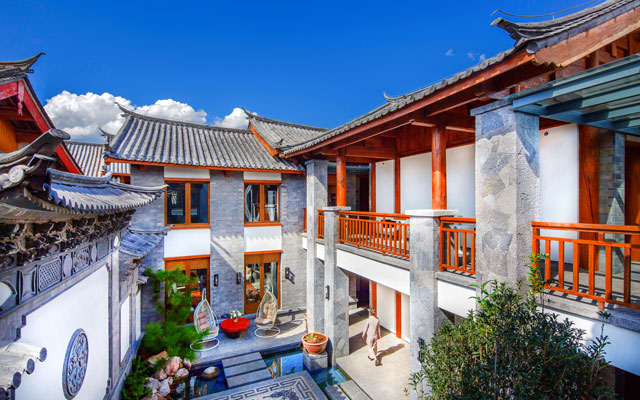
- China’s wealthy are leading hotel booking rebound since April
- Exotic domestic destinations are in favour
- Preference for nearby destinations will remain when overseas travel is allowed
China has enjoyed an outpouring of pent-up demand since hotels reopened in March, with big spenders lifting the country’s hospitality industry out of the doldrums.
Occupancy numbers across the board show healthy recovery – with some in the luxury segment shooting past 2019’s figures – with the inflection point being the Labour Day week in May, the country’s first major holiday.
Julian Hagger, executive vice president of The Lux Collective, told TTG Asia: “We started to experience meaningful demand in occupancy in the first week of May. Over the past two months, LUX* Tea Horse Road Lijiang and Benzilan in Yunnan reported occupancy levels surpassing those of 2019. Their forecasted occupancy is also expected to surpass 2019 for the rest of the calendar year.”
Initial signs of recovery came to Four Seasons Hotels and Resorts in as early as April, shared Catherine Scown, the group’s regional vice president, sales and hotel marketing, Asia Pacific.
“Domestic luxury travel is trending very strongly. Four Seasons Hotel Hangzhou was full over the May holidays and continues to enjoy healthy occupancies over the weekends. By and large, (our guests) are local residents in the cities that we operate in, as well as from nearby markets that are connected by train. For instance, at Four Seasons Hotel Guangzhou, two-thirds of our guests are from Guangdong province itself,” she noted.
From hotels to hosts
With the rapid return of guests, hotels in China are no longer just hotels. The new breed of eagle-eyed travellers is taking its discerning demand to brands that have redefined the hospitality experience.
LUX* Tea Horse Road Lijiang, for instance, has extended its function beyond a retreat and into a destination management company. The hotel hosts its guests’ entire journey by facilitating transportation, sightseeing and other arrangements, with its staff occupying more than one role.
Hagger described: “The guide may be our front office manager on one day, and on another day, a housekeeping team member may host the guest for dinner at a village home. These experiences are spontaneous, surprising and always delivered from the heart.”
The Lux Collective has also tailored a series of Collectable Experiences where guests can engage in unique activities that contribute to local communities. “This type of transformational travel is in high demand as we are seeing a shift in discerning guests wanting to experience greater adventure, immerse in the locale and, at the same time, use travel as a force for good,” observed Hagger.

For Kempinski Hotels in China, the group has taken on an advisory role in communicating essential and comprehensive traveller information, such as the nearest facilities where guests can take their Covid-19 test if needed, nearby hospitals, parts of the destination that are safe to travel to, existing travel bubbles, as well as tourist spots that are open.
“We’ve implemented many measures and promises to our customers in the way of benefits and value-added services. It’s important to be honest and realistic with the customer about what facilities we can or cannot provide,” stated Ilja Poepper, vice president sales & marketing Asia, Kempinski Hotel.
Renewed love for the far-flung
Traditionally popular urban destinations Shanghai and Beijing have bowed out to the more exotic reaches of the country.
Hagger shared that The Lux Collection properties in Yunnan have received a “predominant” share of younger couples and families during the school holidays, as travellers from cities such as Shanghai, Beijing and Chengdu “prefer to escape to exotic destinations that offer outdoor experiences and beautiful nature”.
By October this year, The Lux Collection will open four more hotels in Yunnan, and in 2021, it will add two retreats in Pu’er and Dali.
Four Seasons started to see initial signs of recovery in April, when there was “a clear demand for resort destinations such as Hangzhou that have more outdoor space”, observed Scown.
Meanwhile, the Kempinski group is seeing a rise in occupancy for its Jiangsu, Suzhou, Guiyang and Huizhou properties.
“After the second wave of Covid-19 in Beijing, (occupancy) dropped to the single digits. But (in June) Kempinski Hotel Huizhou achieved an average occupancy of 50 per cent because it’s a leisure destination, where it’s not too hot in the summer, and it’s still new for leisure travellers in China. Our numbers are bouncing back faster than we thought, so our forecast is more positive than expected,” remarked Poepper.
Lessons across borders
Mobility across China has been enabled by the state-mandated Health Code, under which travellers require a “green code” on apps like WeChat and Weibo in order to visit a different province or city. In the case of a second wave, such as in Beijing, residents travelling out of the city would be required to take a Covid-19 test that is valid for seven days in order to qualify for the green code.
However, the system could still use more fine-tuning. Poepper explained: “There have been people who took the test and were clear to (travel from Beijing) to Xi’an, but when they arrived, they still had to be quarantined for 10 days (without prior notice).
“People are travelling, but not as much as before. It depends on which area you are in, and how open the province is to travellers. Every city has its own rules. Not everything is equal.”
Four Seasons’ Scown opined that when regional demand slowly trickles back across Asia-Pacific, shorthaul travel will be the ruling choice for travellers.
She shared: “We saw that very clearly in China and all signs point to this trend being translated to broader Asia-Pacific. We see opportunities in generating trials from new markets as consumers consider local and regional travel plans over longhaul travel in 2020 and even through early 2021. Our properties are putting together experiences for travellers to rediscover the beauty of the destinations that are closer to home.”
In another instance, Shangri-la and Mandarin Oriental have formed an alliance to pool their marketing budgets and jointly promote luxury travel to the Hong Kong market.
As for when the global travel bridge could be crossed, Poepper impressed that the “earliest” for South-east Asia would be “hopefully during the Spring Festival” in April 2021.
Jetstar Asia resumes services to key SE Asia ports
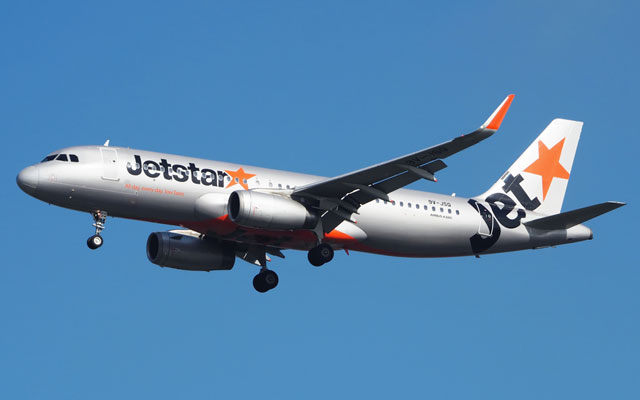
Singapore-based budget carrier Jetstar Asia will increase the number of services it operates to key South-east Asian ports, with the aim to create essential travel links and assist with freight in the region.
In addition to the current services to Bangkok, Kuala Lumpur and Manila, Jetstar Asia has reintroduced weekly services to Jakarta, Ho Chi Minh City and Penang since August 10. The airline will also run weekly services to Clark and Medan from the week commencing August 17. Two additional weekly services to Manila will also be operated from August 15.
These services, subject to regulatory approval, are only available to citizens and permanent residents who are returning home, or those with prior approval for travel. Customers must check with the relevant authorities to ensure they are eligible to travel.
All passengers will be required to wear a mask at all times, while crew members will don masks and PPE during the flight. From August 15, all passengers travelling to and from Manila are required to wear a face shield at all times during their journey.
Onboard services will be scaled back with only water being served during the flight. Passengers who have already pre-purchased meals or meal vouchers will be refunded for their purchase.
U by Uniworld targets Gen Z, foodie travellers
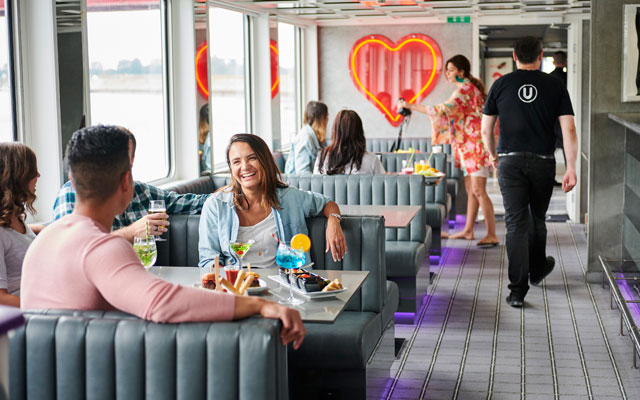
River cruise company U by Uniworld will be sailing into 2021 with a ramped-up focus on Gen Z and foodie travellers.
Part of the company’s new offerings on its European river cruises next year is GenZ on U, a family programme offering six select sailings exclusively for teens and their parents. These cruises will feature a designated onboard lounge for teens to hang with others their own age.
Other fun offerings will include karaoke contests, foosball tournaments, camping on the rooftop, trivia nights, projector movie nights on the rooftop, onboard pretzel demonstrations, and more.
Featured offshore excursions include a culture and food tour by bike through Antwerp’s neighbourhoods, kayaking through the canals of Ghent, yoga in the Wachau Valley vineyards, and a Viennese cooking class.
From July 24, 2021, U will also launch its first foodie-themed cruise, in collaboration with top food influencer Salvatore DiBenedetto, known as The GrubFather (@thegrubfather) who has over 215,000 Instagram followers.
On this Rolling on the Rhine cruise, guests will experience a specially curated menu, excursions, and onboard activities that were created by DiBenedetto and the U team first-hand. The itinerary includes a cooking demonstration with a local chef, a food and travel photography and business workshop led by DiBenedetto, sunset champagne sailing with a local DJ & Sax player, as well as offshore excursions co-hosted by The Grubfather to showcase his favourite spots in the cities.
Next year, U will also roll out a roster of new inclusions, such as beer and wine included at lunch and dinner, and roundtrip airport transfers. Every U sailing will also include three daily meals, two dedicated U Hosts with in-depth knowledge of the destinations, local DJ performances on the rooftop lounge, daily offshore excursions, ship-wide Wi-Fi and all gratuities. Guests can choose from a lineup of daily activities and events like rooftop sunrise yoga, mixology classes, paint and wine, and more.
“Our mission for 2021 is to re-connect and remind our guests why they love to travel. We’re introducing these unconventional experiences that align with our traveller’s playful and adventurous energy and will bring even more value to our sailings than before with our new inclusions,” said Ellen Bettridge, president and CEO of U by Uniworld.
“We’ve seen a huge uptick in interest for travellers seeking smaller cruise ships next year. We know our ship’s high guest to staff ratio, close proximity to shore, enhanced health and safety protocols, and less people onboard, will keep our guest’s minds at ease as we go into this new era of travel.”
Loy River Song takes maiden journey to Ayutthaya
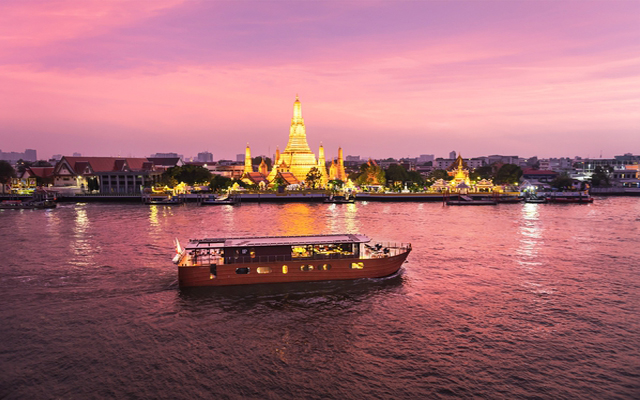
Luxury cruise company Loy Pela Voyages’ newest ship, Loy River Song, officially launched on the Chao Phraya River, charting a route from modern day Bangkok to Siam’s ancient capital of Ayutthaya.
Guests can choose from a collection of itineraries ranging from two days/one night to four days/three nights for the river cruise expedition.

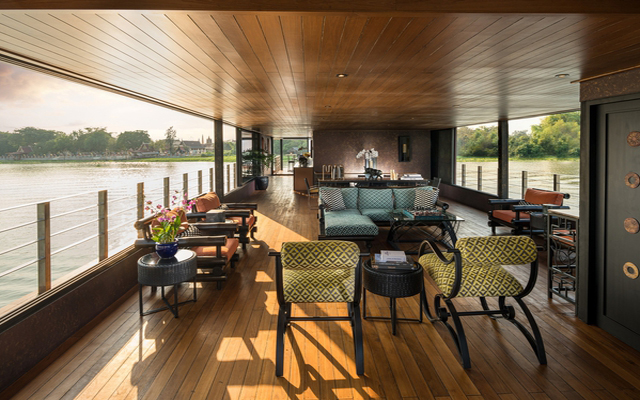
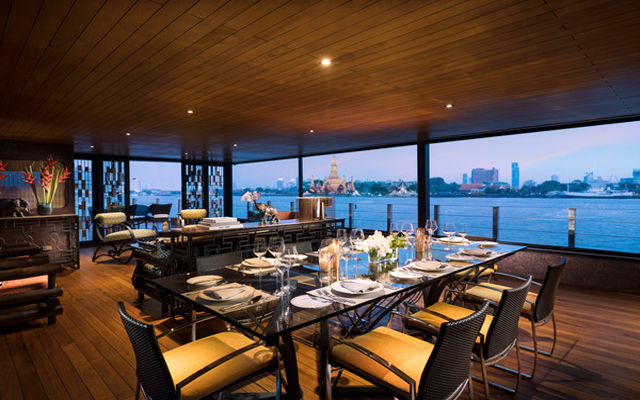
The four-cabin Loy River Song offers a mix of King and Queen cabins, ranging in size from 20 to 30m2. Comfortable sitting areas make for perfect reading nooks, while communal areas are designed to host sunrise yoga, Muay Thai demonstrations, traditional dance performances and other activities promoting cultural immersion. The open and airy main salon opens into the elegant dining room that seats up to eight people.
Guests on board Loy Pela are promised round-the-clock butler attention, exquisite meals prepared by a private chef and in-depth local knowledge courtesy of a resident tour guide.
Offshore itineraries include cycling excursions on Bang Kachao island and exploration of some of the region’s most spectacular temples. Guided excursions, some on foot, others by car or a traditional long-tail boat, place travellers in the very heart of old Siam.
The daily-changing menu features Royal Thai cuisine, European dishes, and Michelin-starred menu by Thai chef Thitid Tassanakajohn of Bangkok’s famed Le Du restaurant. Offerings include afternoon tea and sunset cocktails, as well as decadent brunch featuring Canadian lobsters, oyster bar and caviar paired with fine wines.
Loy River Song joins Loy Dream, a two-berth, century-old teak rice barge, as part of Loy Pela Voyages.
Prices for Loy River Song start at 208,250++ baht (US$6,690) per cabin for a three-day, two-night trip.
Malaysia’s first Kimpton to arrive in Kuala Lumpur
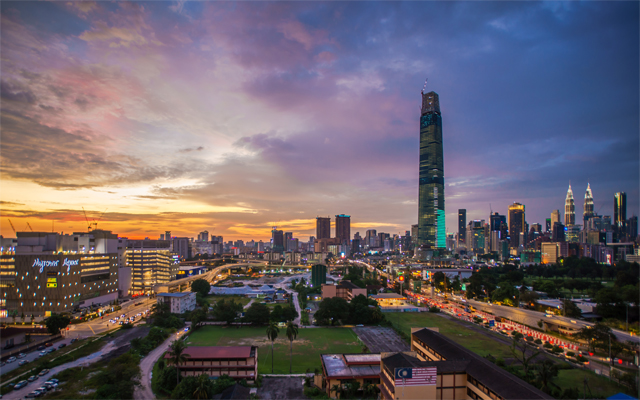
IHG has signed a management agreement with LQ Retail to open Malaysia’s first Kimpton Hotels & Restaurants in Kuala Lumpur come 2023.
The hotel will form part of The Exchange TRX, a 6.8ha mixed development comprising six residential towers, an office building, a retail mall, and a 4ha rooftop park.
LQ Retail is a joint venture between Australia-based property and infrastructure group Lendlease and Malaysia’s Ministry of Finance’s wholly-owned TRX City, the master developer of Malaysia’s upcoming international financial district, Tun Razak Exchange (TRX).
The 471-room Kimpton Kuala Lumpur will feature three F&B outlets including a rooftop bar and restaurant, as well as a deli-grocer café. Other amenities will include an outdoor rooftop swimming pool, a gym, as well as a range of meeting and event spaces.
San Francisco-based Kimpton Hotels & Restaurants currently operates more than 70 hotels and 85 restaurants, bars and lounges across the US, Canada, Europe, Caribbean and Greater China. In January 2015, Kimpton became part of the IHG family of hotel brands.
Onyx unveils story-driven brand Saffron Collection
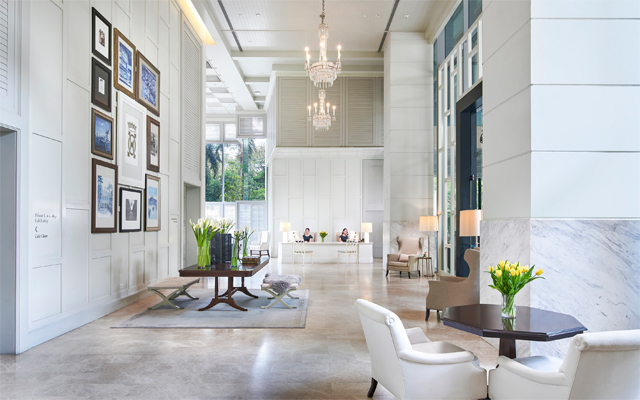
Bangkok-based Onyx Hospitality Group has launched a new hotel brand called Saffron Collection, which will offer a portfolio of “story-driven” boutique hotels and resorts.
Saffron Collection will initially be available in Hanoi, Penang, Bangkok and Aranyaprathet in Thailand, with plans for further expansion across the Asia-Pacific region.
Each Saffron Collection property will serve as “a timeless showcase of the continuous legacy of the landmarks, people or legends that made a lasting impact on the destination and neighbourhood”.
Oriental Residence Bangkok will be reintroduced as a Saffron Collection property by the end of 2020. Touted as a “modern-day interpretation” of the famed Oriental Hotel set on the banks of the Chao Phraya River, the property will feature 145 suites, a collection of function rooms and the French-inspired Cafe Claire.
As a new-build addition to the collection, The Five Residences Hanoi is slated to open in October 2020, and will feature design incorporating the five elements of nature as inspired by the Five Elements Mountains of Central Vietnam. Centrally located on Doi Can Street, the property will offer 116 rooms and suites, neo-Asian restaurant NAM and MAAI Spa.
This will be followed by the mid-2021 opening of The George in Penang, and the early 2022 opening of Indochina Hotel in Aranyaprathet, Thailand.
Located on Jalan Pinang, The George, Penang will be a new-build hotel offering 93 rooms and suites, as well as a restaurant and rooftop pool; while Indochina Hotel, Aranyaprathet will reopen as a 120-room property following an extension restoration of the historic institution.
Every Saffron Collection lobby will showcase a customised cocktail cabinet, offering a select list of mixology concoctions from the locality alongside one signature cocktail designed for each property.
“Saffron Collection is driven by our quest to create a distinctive portfolio of boutique hotels and resorts that appeal to guests who want to be immersed in the stories and legends of the places they visit,” said Douglas Martell, president and CEO, Onyx Hospitality Group.
“Each Saffron Collection property aims to create memorable experiences through locally-relevant design and sensitive integration into the past and present of a destination. For owners and investors, Saffron Collection is also our way of preserving the compelling moments in a family, a corporation or a building and area’s history, and reinterpreting them towards memorable experiences for our present and future travellers.”







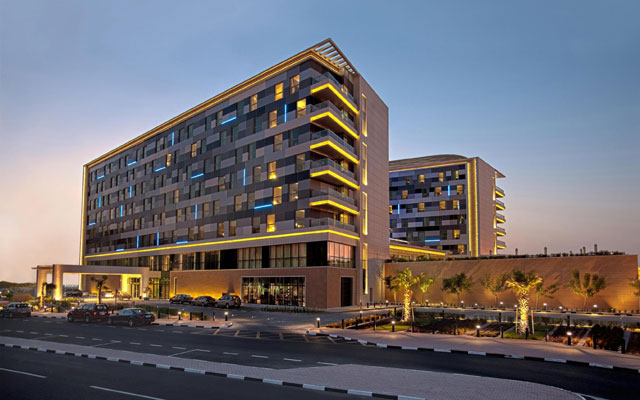
Hyatt Hotels Corporation will open its first Hyatt Regency branded hotel in Doha, Qatar this September 15, and is currently taking reservations.
Hyatt Regency Oryx Doha, the third Hyatt property in the Middle East, features 400 rooms and 12 luxury suites, a multitude of social spaces, several F&B concepts, as well as 1,000m2 of event facilities, including a state-of-the-art business centre, two ballrooms and 11 meeting and conference rooms.
It is located close to Hamad International Airport and a few minutes from the heart of the city, the palm-fringed corniche and Doha’s vibrant business district.
Srdjan Milekovic, senior vice president operations EAME, Hyatt, said in a press statement: “We believe that Hyatt Regency Oryx Doha will become a key destination in the city, satisfying the needs of on-the-go business travellers with an exemplary setting for meetings and leisure, and attracting local guests looking for modern dining experiences.”
The property will apply Hyatt’s multi-layered Global Care & Cleanliness Commitment to further enhance its operational guidance and resources around colleague and guest safety and peace of mind.