TTG Asia
Asia/Singapore Wednesday, 11th February 2026
Page 1029

Oakwood hires first female regional GM for Cambodia, Myanmar and Thailand

0

Oakwood has promoted Lina Abdullah to the role of regional general manager, Cambodia, Myanmar and Thailand.

This dual-role is in addition to her current position as general manager of Oakwood Hotel & Residence Sri Racha in Chonburi, Thailand.

In her new capacity, Abdullah will oversee a cluster of six operating properties in Thailand, as well as pre-opening projects in Cambodia and Myanmar, while maintaining the growth of Oakwood’s portfolio in these countries.

Abdullah began her Oakwood journey in March 2015, where she was tasked to manage the former Oakwood Residence Garden Towers Bangna, Bangkok, with her remit including the Bangna Convention Center and Food Camp by Oakwood. She went on to open Oakwood Hotel & Residence Sri Racha in 2017.

Prior to joining Oakwood, Abdullah was with Onyx Hospitality Group where she was the general manager responsible for opening the Amari Dhaka in Bangladesh in 2014.

She first began her hospitality career with an eight-year tenure at Marriott properties in Malaysia and the UK. While in the UK, she joined Thistle City Barbican in London as hotel manager before being promoted to acting general manager. Abdullah accepted her first general manager role at Holiday Inn Northampton West in Northampton, before venturing to the Middle East to open the Holiday Villa in Bahrain in the same capacity.

China’s hotel industry sprouts green shoots

0

Mainland China’s hotel industry is starting to bounce back from the scourge of the coronavirus, showing early signs of performance recovery that points towards the beginning of the return to normalcy.

Daily hotel occupancy in mainland China reached an absolute level of 31.8 per cent on March 28, up from a low of 7.4 per cent during the first week of February, according to preliminary data from STR. Additionally, opening rates have been significant in key markets across the region.

China’s hotel sector shows early signs of recovery; Shanghai skyline pictured

“We’re seeing green shoots in hotel occupancy figures, but we must stress that these are only early signs of a recovery that is likely to develop slowly,” said Christine Liu, STR’s regional manager for North Asia.

“Some of the demand stems from corporate travel, primarily within the same province, as well as small-scale meetings. Additionally, hotels are seeing business from those travellers quarantined after returning to China from other countries as well as those returning to cities for work. Overall, we’re seeing limited leisure business in city centres but a bit more recovery in that segment in surrounding suburbs.”

In Beijing, daily occupancy sat around 10 per cent for most of the first week of March, but climbed to as high as 21.6 per cent on March 28. Shanghai was as low as 11 per cent on March 1, but reached 28.6 per cent on March 28.

Among the key STR-defined markets for mainland China, the highest absolute occupancy levels have been seen in Xi’an (35.9 per cent on March 28) and Chengdu (35.6 per cent on March 28).

“Xi’an captured business from South Korea because of Samsung’s manufacturing factory in the tech zone – expatriates were able to relocate their families to Xi’an when the outbreak hit South Korea. Additionally, Xi’an is one of the redirect destinations for inbound flights scheduled to land in Beijing,” Liu said.

The occupancy trend line in Wuhan has taken a much different path. Occupancy in the city fell to as low as 7.5 per cent on January 23, jumped to a high of 72.7 per cent on March 7, and has since trended downward to 62.4 per cent on March 28.

“Wuhan saw an influx of hotel demand as medical workers entered the market, but some of that demand has tailed off as the situation becomes more stable,” Liu said.

In another positive sign for the industry, STR data showed that 87 per cent of the hotels in its mainland China sample are now open, after many had closed over the last two months.

Singapore shuts non-essential businesses in near-lockdown

0

Starting Tuesday, April 7, Singapore will lock down all non-essential businesses for at least one month, announced the city-state’s prime minister Lee Hsien Loong on Friday afternoon, in response to the total number of coronavirus cases in the country crossing the 1,000-mark.

Essential services that will remain open include food establishments, wet markets and supermarkets, clinics and hospitals, utilities, transport, and banking establishments. Also allowed to remain open are businesses in key economic sectors, including those part of a global supply chain, as long as employees go to work with safe distancing measures in place.

Singapore to lock down all non-essential businesses from next Tuesday

All other work premises must close, stated Lee, who encouraged staff to work from home and telecommute wherever possible.

The government will “make arrangements to look after” foreign workers who will not be able to work, he added.

Further support for businesses and households will be announced on Monday at a parliament session by deputy prime minister Heng Swee Kiat, including a new legislation that mandates landlords pass on property tax rebates in full to tenants, as well as relief from certain contractual obligations for businesses and individuals.

“Looking at the trend, unless we take further steps, things will gradually get worse or another big cluster will push things over the edge. To pre-empt escalating infections, we will impose significantly stricter measures to help reduce risk of a big outbreak occurring, and also help to gradually bring our numbers down,” explained Lee.

He shared that these stricter measures have been enacted after discussions with Singapore’s multi-ministry task force, and may eventually help improve the situation which would lead to the relaxing of some measures.

The announcement comes as the number of global coronavirus cases worldwide topped one million yesterday. In Singapore, the number hit 1,049 this week, including 49 new cases yesterday and a fifth death of an 89-year-old woman today with no history of travel to affected countries or regions.

“We used to see fewer than 10 new cases a day, but in the past two weeks, we have had more than 15 new cases daily. These were initially imported from overseas – mostly returning Singaporeans – but in the last week, we began to have more (locally transmitted) cases. Despite good contact tracing, nearly half of these came from places we don’t know where or from whom. This suggests there are more people out there who are infected but have not been identified, passing the virus unknowingly to others.”

Lee assured: “The next few weeks will be pivotal. Even with these stricter measures in place, the number of cases will quite likely go up in the next few days. Within a few weeks, we should be able to bring the numbers under control and bring numbers down to a more sustainable situation.”

Thailand’s Chonburi and Phuket order hotel closures

0
Five provinces in Thailand such as Phuket have issued closure directives; Phuket's skyline pictured

Thai provincial governments have toughened up measures to stem the spread of coronavirus in the country by ordering temporary hotel closures.

The Thai Hotels Association confirmed with TTG Asia that five provinces have issued closure directives to date, with the latest being Chonburi province, home to the city of Pattaya; and Phuket.

Five provinces in Thailand such as Phuket have issued closure directives; Phuket’s skyline pictured

Chonburi’s directive came into effect on April 2, while Phuket’s will commence on April 4. Both will remain in effect until further notice.

Under the directives, all licensed hotel businesses, apart from those which have been converted into field hospitals or quarantine centres, must close.

For Phuket, hotels with no guests must close immediately, whereas hotels with existing occupants must report their guests’ name and contact details to district officials who will follow up and detain any guests if they fall sick. Tourists who have already checked-in will be allowed to complete their stay, but hotels are not allowed to take in new guests. Those who breach these orders will be fined 100,000 baht (US$3,030) and/or jailed.

Other provinces that have earlier issued closure directives for hotels include Kanchanaburi, Chanthaburi and Phang Nga.

Affected hotels will be able to claim financial aid from the Thai Social Security Fund for their formally-employed, full-time staff.

These measures come as a nationwide curfew starts tonight barring all non-essential domestic movements between 22.00 and 04.00 until further notice.

Prime minister Prayut Chan-o-cha yesterday issued a directive blocking all travel to Thailand, including those by Thais, with immediate effect until April 15 to allow the nation time to prepare “state quarantine” facilities after more local infections were linked to imported cases.

Chiang Mai smog casts pall over businesses

0

Thailand’s northern region has been hit with toxic levels of air pollution due to forest fires on Wednesday, especially in the Chiang Mai province, with some areas being engulfed in air quality levels 12 times above safe levels.

La-Iad Bungsrithong, president of the Thai Hotels Association northern chapter, told TTG Asia: “The fires are very severe this year and burning on Doi Suthep mountain, which is inside the city of Chiang Mai, making it a huge issue.”

Chiang Mai’s air pollution hits dangerous levels; tourist walking in smoke pollution from forest fires in Chiang Mai, Thailand pictured 

She added that the poor air quality matters less now that everyone is forced to stay home due to the coronavirus pandemic, but stressed that when it comes to forest fires, the problem extends beyond Chiang Mai to other provinces.

“It doesn’t just affect Chiang Mai’s 25 districts. All our neighbouring provinces are fighting the same issue. As Chiang Mai is nestled in a valley, coupled with the dry air quality this year and fires burning within city limits, it’s created a more extreme hotspot than usual. But the fires have now been brought under control.”

Over the last few days, local news outlets have reported of unchecked fires still burning in the Mae Wong forest in Nakhon Sawan province, which is part of the lower north.

As of April 1, nine northern provinces were said to be experiencing very unsafe smog levels, with Nan bearing the brunt of it at 275 mcg. Chiang Mai’s levels stood at 119mcg-234mg.

Bungsrithong: Air pollution from forest fires affects areas in other Thai provinces beyond Chiang Mai

Kenneth Rimdahl, owner of Chiang Mai-based business Monsoon Tea Company, shared: “(The air quality in Chiang Mai) has gotten worse year by year; with more smoke and (fires burning) for longer periods of time. It affects tourism a lot; every year, we have less customers from Europe, America, Japan and South Korea during the smoke season.”

Rimdahl, who has been trying to solve the root cause of the fires by helping the farmers earn an income by keeping the forests intact instead of using slash-and-burn techniques, added that while Chinese customers have increased every year, forest burning is also getting worse year by year.

On April 1, the governor of Chiang Mai Province announced that travellers entering the province, including foreigners from every transport channel and Thai interprovincial travellers from Bangkok and the southern provinces of Phuket, Yala, Pattani, and Narathiwas would be required to serve a 14-day quarantine.

To date, Chiang Mai has reported 36 cases of Covid-19.

Philippines’ tourism sector urges government aid; plots recovery

0

Philippine tourism players are joining a chorus of travel businesses and bodies worldwide calling on government to suspend taxes and extend further relief to companies embroiled in financial turmoil due to Covid-19.

Philippine Travel Agencies Association (PTAA) president Ritchie Tuano said that as a third of the country enters its third week of lockdown with “grim and uncertain prospects on when the pandemic will be brought under control”, travel agents have proposed to the Department of Tourism (DoT) a list of recommendations for their survival and medium-term recovery.

Tourism businesses in the Philippines cry for government help amid Covid-19; Manila in the Philippines pictured

The list includes “supplemental and wider coverage of government-provided financial grants and assistance from this month (April) up to at least end-2020” to avoid layoffs and business closures in an industry where the majority are SMEs, said Tuano.

PTAA said in a statement that while government remedial measures such as flexible work arrangement and financial assistance through the Covid-19 adjustment measure programme are a big help to employees, they are “certainly not adequate to ensure the survival of travel agents” after the lockdown.

“Business owners are anxious and greatly concerned on how to keep their businesses afloat for the near and immediate term, (having to continue paying for) overhead expenses with little to zero sales coming in,” it added.

In addition, PATA Philippine Chapter chair Bob Zozobrado said that nine associations, including PTAA, that met last month had also requested the DoT for financial assistance for displaced and underemployed workers, which has now been taken care of by the Department of Labor and Employment’s financial assistance programme.

Zozobrado further shared that they also appealed to the DoT for tax holidays or concessions for employers and employees, which the DoT will discuss with the Department of Finance.

In the meantime, Philippine tourism players are hardly resting on their laurels, and are using the downtime to prep for when the market revives.

Bella Calleja, new country manager of Rida International Travel and Tourism, promoting mainly the United Arab Emirates, said: “We are not really expecting to recover this year because even the Expo 2020 in Dubai is cancelled and we are its ticketing agent.

“But our team is focusing on recovery (next year). We have released some packages valid from September onwards and we are hoping that things would improve by next year.”

Calleja added that the agency is turning to online marketing to remain in the public eye and give hope to its agents. “We are doing webinars; our local offices are preparing the presentations and we are inviting agents to join us. We also have plans to partner with NTOs,” she said.

Furthermore, Zozobrado said that tourism players are in the midst of reconnecting with contacts formed through international events or on their travels to “further solidify our market base for when we re-start our marketing efforts” when travel rebounds.

SriLankan Airlines implements pay cut

0

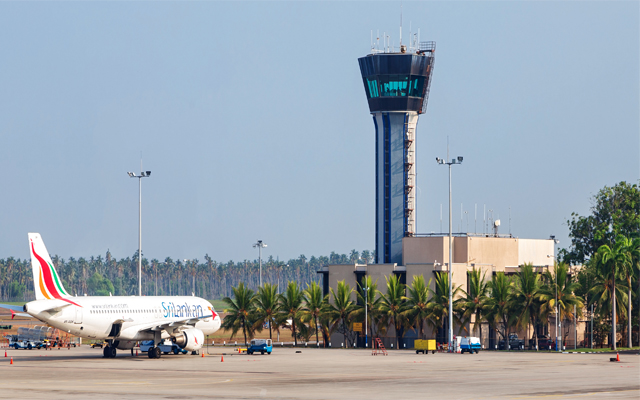
SriLankan Airlines is effecting a pay cut for all staff as it suspends all flights from April 8 to April 21, in response to extensive travel restrictions imposed by many destinations.

In a statement on Thursday, the national carrier said the mandatory salary reductions will range from 2.5 per cent to 25 per cent for a period of three months.

SriLankan Airlines staff will take a pay cut ranging from 2.5 per cent to 25 per cent

It will also freeze all salary increments scheduled for 2020 and withhold remuneration for its board of directors.

Over the past two weeks, the national carrier has been operating only flights out of Colombo to London, Melbourne and Tokyo for stranded travellers and those in transit in Sri Lanka. These will cease too, leaving only cargo and emergency flights required by the government.

Airline chairman Ashok Pathirage was quoted in a local news website as saying that the company has funds to operate for the next three to four months.

“Our stakeholder (the government) has committed to support us. We have effected cost cutting measures and we are managing with bare minimum costs to pass through this difficult period,” he had said.

PATA unveils crisis resources to support tourism players

0

PATA’s April 2 launch of its Crisis Resource Center and Tourism Recovery Monitor marks its inclusive strategy to “protect tourism” by extending help to all tourism planners and decision makers and not just its members.

Incoming-chairman Soon-Hwa Wong, who led the Expert Task Force behind the recovery monitor, said PATA is a “trusted source” and industry members do not have to waste time validating the “infodemic”.

PATA’s Crisis Resource Center and Tourism Recovery Monitor will make critical information easily available to tourism players

By getting onboard “experts and partners to share valuable data, content and trends of leading tourism indicators to help us spot green shoots as soon as they start to appear” is necessary for post-crisis recovery”, Wong commented.

Wong stressed: “Timing is everything especially when it relates to the execution of recovery efforts. Moving too early could result in a complete waste of resources, while moving too late could risk being one of the last off the starting block.”

Wong: information will help tourism businesses time their recovery move

On why China is a critical pillar in the recovery monitor, which includes aviation, hospitality, market analysis and insights, and organisations and associations, Wong noted that it is important to recognise it is “the biggest market and will continue to be an important market” even amid concerns that the industry was over-reliant on it.

“When the green shoots show, competition will be at the highest. Everyone at the starting block will be desperate and hungry,” he pointed out, adding that PATA will be encouraging more experts and partners to come onboard to help prepare the industry for recovery.

As for the resource centre, it will house all efforts across the globe by governments that have and are providing aid, relief and support for industry stakeholders. PATA aims to establish a long-term resource centre that will come in handy when help is needed during future crises.

SG travel companies diversify for survival

0

The current economic climate may present the least attractive time to launch new businesses, especially in the travel and tourism space, but two tourism companies in Singapore have chosen to dive into new areas of specialisation.

Outbound tour specialist EU Holidays is now developing an inbound arm in response to a rising trend for city tours and staycations, according to director Wong Yew Hoong. He revealed plans to promote inbound tours and hotel stays to locals, relying on short videos highlighting local attractions on social media to reach out to potential customers.

Yeow: “opportune” time to grow a blockchain travel club

The company will also be putting up travel merchandise for sale to support operational costs at its premises.

Also embracing a new business concept is James Yeow, chairman, OMT group of companies. He described this period as “opportune” in growing travel club Blockchain in Travel by OMT – a strategic partnership inked between the group and China blockchain data sharing platform Changyou Travel Alliance.

Members use Changyou Travel Coin – a cryptocurrency – to pay for travel packages, as well as a variety of local and overseas merchant products and services that the group is growing.

With the absence of third-party intermediaries, Yeow shared travellers can expect a reduction of 15 to 25 per cent in travel costs, delivering “a win-win situation for both consumer and business.”

“Blockchain technology will revolutionise the travel industry, as decentralising the booking marketplace allows service providers to connect with customers directly and they (customers) stand to gain from the transparent nature of prices and potential fees, creating a better experience,” Yeow explained.

Accor creates €70m fund to help staff and partners affected by Covid-19

0
Accor's Paris head office showing love to the world

French hospitality group Accor has unveiled a €70 million (US$76 million) ALL Heartist Fund to assist its most vulnerable staff, partners and medical workers impacted by Covid-19.

This amount has been withdrawn from the Accor’s Board of Directors proposal for a 2019 dividend payment of €280 million, after consultation with the Group’s main shareholders JinJiang International, Qatar Investment Authority, Kingdom Holding Company and Harris Associates.

Accor’s Paris head office showing love to the world

The fund will assist the Group’s 300,000 employees, and will be pledged towards their Covid-19-related hospital expenses, for those who do not have social security or medical insurance; furloughed employees suffering great financial distress; and individual partners facing financial difficulty. In addition, the Group will further deploy its solidarity initiatives to support frontline healthcare professionals and non-profit organisations.

Sébastien Bazin, chairman and CEO of Accor, commented: “Welcoming, protecting and taking care of others is at the very heart of what we do. In light of the urgency and the scale of the situation, we have decided to act in an immediate and meaningful way, in the spirit of our values and commitments. Through this impactful gesture, we wish to express our solidarity and gratitude to all those demonstrating courage and selflessness during this crisis. On behalf of the Board, I would like to thank the Group’s main shareholders. Without them, the ALL Heartist Fund would not have been possible.”

This decision has received unanimous support from the Board members, who collectively decided to reduce their attendance fees by 20 per cent to the benefit the Fund. Additionally, Bazin will forego 25 per cent of its compensation during the crisis. The cash equivalent will also be contributed to the Fund.

Across the Group, mitigation measures that have been implemented since February include travel bans, hiring freezes, reduced schedules and/or furloughing for 75 per cent of global head office teams for 2Q resulting in a minimum €60 million reduction in G&A expenses for 2020; as well as reviewed its recurring investment plan for 2020 resulting in a €60 million reduction in capital expenditures.

The Group is further streamlining all other costs (e.g. sales, marketing, IT), in line with lower systemwide revenues. Accor also shared that it has more than €2.5 billion in cash on hand and an undrawn revolving credit facility of €1.2 billion, thanks to its recent asset-light transformation and cash preservation strategy.

Today, more than half Accor branded hotels worldwide are closed, likely over two-thirds in the coming weeks. One piece of good news is the confirmation of initial recovery of the Chinese hotel market, with mild improvements in occupancy and F&B activity.

“I also want to pay a special tribute to the Accor teams around the world. They are facing the current crisis with admirable courage, dedication and professionalism. As our industry is going through tough times, we have to make tough decisions, but Accor has a strong balance sheet which will enable it to withstand this crisis and emerge with strength during the recovery period. I am confident that Accor will soon rediscover the road to growth,” Bazin added.