Female hand holding smartphone with Airbnb application. Airbnb is an online marketplace and hospitality service, enabling people to lease or rent short-term lodging
Airbnb has hailed the Malaysian government’s efforts to provide financial relief for tourism businesses affected by the pandemic, and proposed that these incentives be extended to short-term rental accommodation hosts.
These incentives include the postponement of tax instalment payments to affected businesses in the tourism sector, a RM1 billion (US$233.7 million) Penjana tourism financing (PTF) facility to finance transformation initiatives in the sector, a one-off RM600 payment and RM1,000 tax relief for domestic tourism expenses, and digital vouchers of up to RM100 to all Malaysians for domestic tourism purposes to be enabled for Airbnb bookings.
Airbnb fights for the Malaysian government to grant incentives to hosts on its platform
Airbnb head of public policy (South-east Asia), Mich Goh, said in a press statement: “Airbnb has proposed to the Malaysian government several policy recommendations for consideration to help everyday people and small business operators whose financial security has been put at risk by the Covid-19 epidemic.”
Goh said that as many affected Airbnb hosts rely on booking income to help pay their mortgages, the government should also consider extending the moratorium on loan repayments at least until December.
Airbnb had also proposed that the one-off cash assistance given to e-hailing drivers, be extended to Airbnb hosts.
Goh added that Airbnb was committed to supporting the government in weathering the Covid-19 pandemic. She said: “Since the start of the global pandemic, we activated our extenuating circumstances policy globally, allowing guests and hosts to cancel reservations penalty-free.”
Businessman holding the word Recovery split over two puzzle pieces in his hands conceptual of overcoming challenges and finding solutions leading to a recovery in the business.
PATA is joining forces with the Asian Development Bank (ADB) to expand its Crisis Resource Center (CRC) to further aid the recovery of the Asia-Pacific travel and tourism industry.
PATA chief of staff, Trevor Weltman, said: “Timely, accurate, and useful information is the need of the moment for our members as they manage their recovery from Covid-19. The generous support we received from ADB has allowed us to invest in bringing these essential tools to our region at this critical time.
PATA joins forces with Asian Development Bank to expand its Crisis Resource Center
“As 65 per cent of PATA members polled had no crisis plans pre-Covid, the CRC will be a permanent offer from PATA going forward to continue meeting their evolving needs for crisis preparedness, management and recovery from this crisis, and beyond.”
The PATA Crisis Resource Center and Tourism Recover Monitor was launched in April 2020, to provide updated information and tourism indicators from around the world. The new CRC will officially be launched on July 14, 2020.
CRC’s aim is “to lead, coordinate and sustain a comprehensive world-class digital resource for crisis response, management, and recovery for the Asia-Pacific travel industry,” PATA said in a statement.
PATA believed that Asia-Pacific will lead global tourism’s recovery from Covid-19, as both an inbound destination as well as a source market.
As part of the expansion, PATA has formed a CRC advisory team to help provide further content and development of online toolkits and resources for industry stakeholders to navigate their way through the crisis.
Despite being experts of Hong Kong’s best tourism offerings, the city-state’s DMCs are finding the switch to serve the domestic market – the only available source of potential tourism income now – a tough one to make.
Momentous Asia Travel & Events, which organises meetings, incentives, tours and events in Hong Kong for overseas groups, has turned its business attention to the local staycation market, tapping on supportive clients based in Hong Kong.
Some Hong Kong DMCs move to promote domestic travel, as inbound tourism remains at a standstill, while others are resisting the switch and instead preparing for the return of international travellers
Despite scoring a few bookings, mostly for short breaks in local hotels, general manager, Doris Lam, told TTG Asia that “it is not easy for DMCs doing inbound business to make adjustments overnight” because “it takes years for a DMC to build up its branding in a market and its clientele base”.
However, with international inbound corporate business cut off by border restrictions during the pandemic, Momentous is left without much choice.
“We are exploring some special local itineraries and, hopefully, we will be able to get a few more bookings in the future,” Lam said, adding that the downtime is also spent on upgrading the company’s online conference registration system for improved protection when international conference can resume as well as to source for fresh destination inspiration.
Struggle to make the switch to cater to a local clientele: Lam
Fellow DMC, Discova, which specialises in international leisure inbound to Hong Kong, supporting its branch offices worldwide, has resisted the domestic market switch.
Country manager for China and Hong Kong, Sandy Ho, opined that an “abrupt switch to domestic leisure in such short time without carrying out research and marketing study” is folly.
“If borders were to reopened in the next few months, we have to get ready for new business. My staff have been busy with new product development, rate renegotiation with our partners, and back-end safety audit,” Ho said, adding that her team is also keeping busy with a soon-to-launch reservation system.
For Ivy Sung, CEO of Faces of Hong Kong, the ROI from serving the domestic leisure marketing is too minimal for the business switch to make sense.
On the other hand, Liberty Hong Kong is all for a change in business model, and is tapping on the government’s Green Lifestyle Local Tour Incentive Scheme which grants travel agencies a cash incentive for organising tours that encourage the public to get close to nature and practise green lifestyles.
Aimed to trigger local economic revival and relaunch the tourism industry, the scheme dishes out incentives of HK$200 (US$25.80) for every tour participant the travel agency gets. Each travel agency can apply for cash incentives for up to 1,000 tour participants.
Liberty Hong Kong’s managing director, Portia Hau, acknowledged the difficulty in luring domestic travellers since Hong Kong is small and easily accessible.
To stand out, itineraries must be unusual and “value for money”, Hau said.
Hau’s team is promoting customised, upscale and in-depth tours via social media and within own social circles between this month and December 2020.
While the Green Lifestyle Local Tour Incentive Scheme does little to cover costs, Hau said getting some business in through the green tours “are good to keep the ball rolling and let our staff earn some money”.
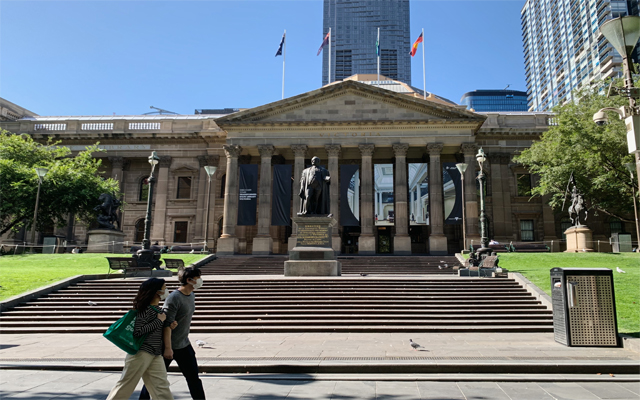
CBD Lockdown, Shopping for essential while passing by State Library Victoria.
Melbourne authorities have locked down the city for a second time after the emergence of 191 new cases overnight – its biggest daily increase since the crisis began – according to a Channel NewsAsia report.
State premier Daniel Andrews said the lockdown would begin at midnight on Wednesday and last at least six weeks. The new restrictions are expected to affect about five million people.
Melbourne has imposed a six-week lockdown after a rise in virus cases, raising fears of a second wave; people walking past State Library Victoria during lockdown in April pictured
Most school students will return to remote learning, while restaurants and cafes will be limited to serving takeaway food.
Although the lockdown covers the Melbourne metropolitan area, the entire state of Victoria will effectively be sealed off from the rest of the country from Tuesday midnight, as state borders are closed.
Roughly 3,000 people were also locked in their homes last weekend after a cluster emerged in a high-rise public housing estate. There are now 69 infections linked to the estate.
Australia has recorded almost 9,000 cases of Covid-19 and 106 deaths from the virus.
Almost all new daily cases are being detected in Melbourne, while other regions are enjoying relaxed restrictions after largely curbing the spread.
Royal Caribbean Group (RCG) has teamed up with Norwegian Cruise Line Holdings (NCLH) to assemble a panel of leading health experts who will oversee the development of enhanced health and safety protocols for cruise lines.
The Healthy Sail Panel is co-chaired by former Utah state governor Mike Leavitt, who also served as secretary of the US Department Health and Human Services; and Scott Gottlieb, former commissioner of the US Food and Drug Administration.
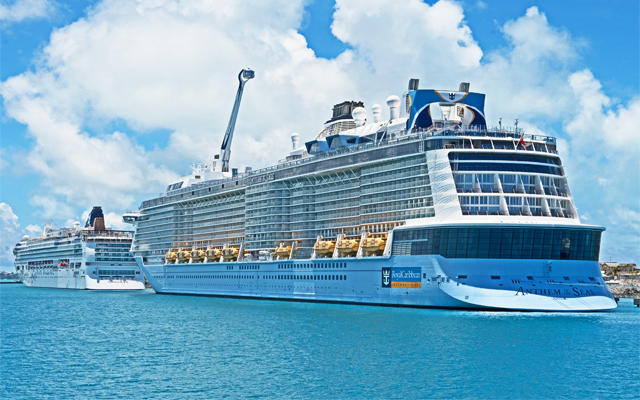
Royal Caribbean (pictured), Norwegian set up expert panel to develop health protocols for cruise lines, as it works to rebuild cruising’s reputation amid Covid-19
The duo will work alongside top experts in public health, infectious disease, biosecurity, hospitality and maritime operations to develop Covid-19 public health protocols for cruise lines to safely resume operations.
The expert panel has been working for nearly a month and will offer its initial recommendations by the end of August, according to a press release. The cruise lines said in the release that its work will be “open source” and could be freely adopted by any company or industry that would benefit from the group’s scientific and medical insights.
RCG chairman and CEO, Richard Fain, said: “This unprecedented disease requires us to develop unprecedented standards in health and safety. Bringing aboard these respected experts to guide us forward demonstrates our commitment to protecting our guests, our crews and the communities we visit.”
NCLH president and CEO, Frank Del Rio, added: “We compete for the vacationing consumer’s business every day, but we never compete on health and safety standards. While the cruise industry has always had rigorous health standards, the unique challenges posed by Covid-19 provide an opportunity to raise the bar even higher.”
Fain and Del Rio said they initiated the panel to assure the plans they will submit to the US Centers for Disease Control and Prevention and other regulators apply the best available public health, science and engineering insights. The work of the panel will be shared with the entire industry and regulators.
Hotels in Dubai may have missed out on energy savings worth AED1.5 million (US$408,441), according to a research conducted by UAE-based technology and sustainability-driven facilities management company Farnek.
The study involved 12 four- and five-star hotels and relied on hotel energy data as well as Hotel Optimizer, an online performance tracking tool for measuring and benchmarking energy, water and waste.
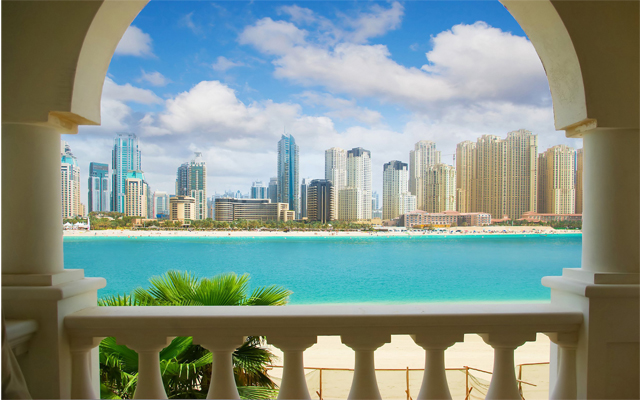
Dubai hotels missed out on huge cost savings in energy bills, according to a recent study; Dubai cityscape pictured
The study revealed that for the three-month period between March and May this year, compared with the same period last year, Dubai hotels may have each missed out on an opportunity to save at least AED80,000 in energy costs and to reduce their carbon emissions by 74 tonnes in the process.
Findings were presented to key hospitality figures during a recent webinar hosted by leading sustainability experts from Farnek, the Swiss Business Council and Earth Matters Consulting.
Markus Oberlin, CEO, Farnek, said: “The hotel industry has faced significant challenges since the outbreak of the coronavirus, not least with airlines grounded, Expo 2020 postponed, low oil prices, social restrictions and low consumer confidence. Therefore, it is vitally important that hotels make the most of any cost savings wherever possible and the first step as always, is to identify the opportunities.”
Farnek noted that the average occupancy of the 12 surveyed hotels stood at 25 per cent during March to May 2020, compared to 73 per cent in the same period last year. Energy consumption for the 12 hotels had fallen to 23,000 MWh compared to last year’s 32,000 MWh during the research period.
Nadia Ibrahim, head of consultancy at Farnek, commented: “According to our calculations, had these hotels put an effective energy management strategy into practice, they could have reduced their consumption to 19,000 MWh with a saving of 4,000 MWh or 17.4 per cent. That’s equivalent to a saving of AED1.45 million, plus it would have reduced their combined carbon emissions by 1,350 tonnes.”
Following international best practice, Farnek’s strategy to manage energy consumption includes strategic guestroom deployment, chiller and ventilation optimisation, occupancy-based set point adjustments and fan controls.
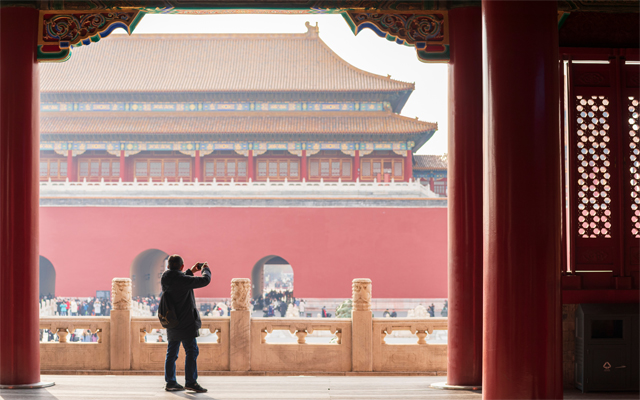
Tourists visiting ancient chinese architecture. historic buildings Imperial Palace, the forbidden city with blue sky in Beijing, China
Chinese travellers display a strong desire to resume travel this year, with most preferring to travel domestically further afield due to uncertainty around the pandemic overseas, according to a recent Ctrip survey.
The 2H2020 Travel Sentiment Survey by Ctrip’s Tourism Big Data Lab, which polled several thousand Ctrip.com users hailing from more than 50 cities across China, showed that 82.6 per cent of respondents are keen to travel in 2H2020. Of these, 80 per cent signalled preference for longer-distance travel between provinces.
Most Chinese travellers willing to increase or maintain their travel expenditure on their next trip: Ctrip survey; a tourist visiting the Forbidden City in Beijing, China pictured
Similarly, 80.2 per cent of participants in a recent study by the China Tourism Academy (CTA) said they intend to travel in 3Q2020, marking a recovery of approximately 90 per cent compared to 2019 figures.
Ctrip’s Tourism Big Data Lab researcher Peng Liang said in a press release that pent-up market demand in 1H2020 will be progressively released in 2H2020, should the pandemic die out and cross-province travel open up. According to CTA, the travel market is likely to have a U-shaped recovery this year.
This bodes well for tourism companies and employees, especially as summer vacation and holidays such as Mid-Autumn Festival and National Day near.
Domestic travel reigns supreme
More than half of respondents (57.1 per cent) indicated that they would contemplate going on more domestic trips if outbound travel does not recover in the rest of 2020.
In line with summer holidays and the National Day holiday, results indicated that the peak travel periods will be July, October and August; with 43.1 per cent, 42.6 per cent and 41.9 per cent of respondents preferring these months, respectively.
Western provinces and Hainan province (which is near Hong Kong and Macau) are expected to become choice destinations. In fact, Yunnan, Hainan and Sichuan emerged as the top three most popular destinations. They were followed by – in order of popularity – Xinjiang, Tibet, Shaanxi, Guizhou, Shanghai, Chongqing, Beijing, Zhejiang, Jiangsu, Hunan, Guangdong and Shandong.
For domestic travel, particularly longer-distance travel within the country, most travellers favoured FIT trips (61.5 per cent) or group tours (51.6 per cent). Meanwhile, 25.6 per cent and 19.4 per cent of respondents indicated interest in customised tours and self-drive trips, respectively.
These trip type preferences were also reflected in Ctrip’s recent bookings, with the three most popular product types being FIT, intra-province group travel, and customised tours. Concurrently, car rental numbers were shown to have recovered to 2019 levels.
Meanwhile, a significantly higher proportion of participants in the CTA study indicated interest in self-drive trips (40 per cent), with the same percentage indicating a preference for trips to scenic destinations.
Departments of cultural and tourism across various destinations in China have also been pushing for plans to revive cross-province group tours, said a spokesperson from the CTA. These plans are set to be rolled out once market conditions are favourable.
Most to spend within RMB 5,000 to 10,000 per trip
Interestingly, a significant majority (70 per cent) of respondents said they intended to increase or maintain their travel expenditure.
Nearly 40 per cent of respondents indicated that they would set aside RMB5,000 (US$711) to RMB10,000 per trip, making it the most popular travel budget range in the survey. This was followed by a budget of more than RMB10,000 a trip, the choice of approximately 30 per cent of respondents.
Meanwhile, around three per cent of respondents said they would be willing to fork out RMB50,000 or more per trip.
OTAs most popular booking channel
While OTAs such as Ctrip were the most popular travel booking channel among survey respondents (45.3 per cent said they would make bookings via OTAs), 43 per cent of respondents said they would make travel reservations through traditional brick-and-mortar agencies.
Meanwhile, booking via offline retail presence of OTAs has emerged as a significant trend in recent years. This was reflected in the survey, with 41.9 per cent of respondents saying they would book through this channel.
– Translated by Angela Teo; this article was first published in TTG China
China’s tourism platform company LN Holdings has partnered Chinese air taxi maker EHang Holdings to turn LN Garden Hotel Nansha in Guangzhou into the world’s first urban air mobility (UAM) themed hotel.
The hotel will offer air tourism experiences to guests through aerial sightseeing, traveller transportation, air logistics, aerial media light shows, intelligent exhibitions and education.
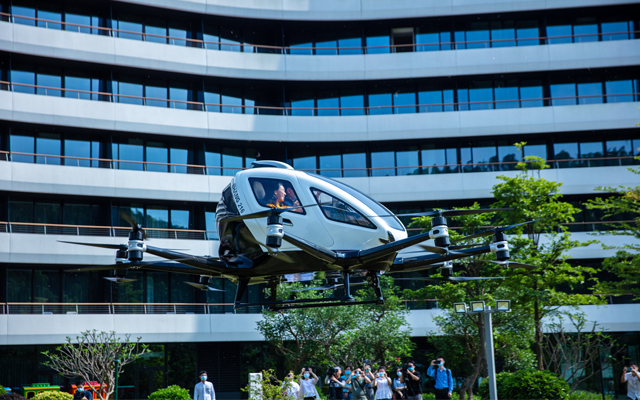
LN Garden Hotel Nansha’s guests can enjoy an aerial tour of the hotel in EHang’s passenger drone
“We can fulfil guests’ travel demands in the air and on the ground by combining intelligent technology with exceptional tourist experiences. Eventually, we will provide new products and services across different sectors, business categories and regions in the country,” said Liang Lingfeng, general manager of LN Group and chairman of LN Holdings.
As part of the collaboration, EHang 216 AAV (autonomous aviation vehicle) services will be introduced at LN Garden Hotel Nansha, making it the world’s first hotel to offer such guest experiences. Guests will have the chance to enjoy aerial sightseeing in the two-seater passenger-grade AAV, as they cruise above the hotel grounds and its natural surrounds.
The hotel’s Ehang 216 AAV new service routes and packages will be announced at a later date.
This cross-sector collaboration paves the way for the integrated operation of air mobility solutions in the tourism industry, while establishing Guangzhou as China’s first and the world’s leading UAM smart city, according to Hu Huazhi, founder, chairman and CEO of EHang.
Lotte Hotels & Resorts, South Korea’s largest hotel group, has embarked on a long-term partnership with Sabre Corporation to increase its visibility in global markets.
Under the agreement, the luxury hotel chain will be connected to nearly 900,000 travel agents across multiple GDSes and more than 600 online channels across the globe, through the GDS connectivity solution powered by Sabre Hospitality Solutions’ SynXis platform.
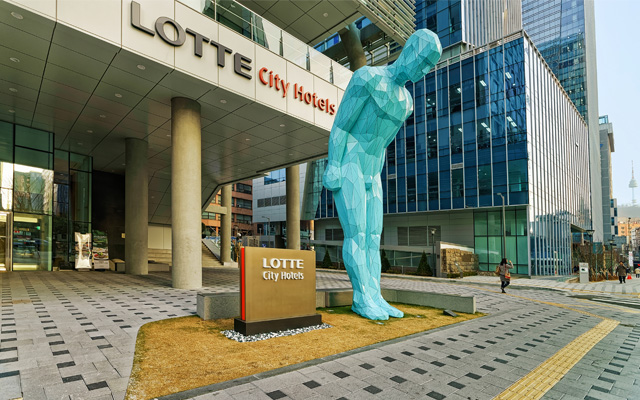
Lotte inks deal with Sabre to grow its global footprint; Lotte City Hotel Myeongdong in Seoul, South Korea pictured
Partnering with Sabre will heighten Lotte’s visibility to travellers worldwide, making it easier for travel agents to find content and book hotel stays and ancillaries using the hotel group’s unique private label chain code, LL, on Sabre’s GDS system. Lotte will migrate more than half of its hotels to the SynXis platform, starting from this year.
Frank Trampert, managing director and chief commercial officer, EMEA & APAC, Sabre Hospitality Solutions, said: ”With this announcement, we are empowering a new distribution strategy for Lotte, enabling increased exposure to global markets in line with their far-reaching expansion plans. Additionally, our solutions will enable Lotte to further grow brand awareness in new and existing markets, manage their portfolio revenue, provide future strategy planning opportunities and refine their distribution strategies to support their exciting business goals.”
Lotte has 20 properties in South Korea as well as hotels in the US, Russia, Japan, Vietnam, Myanmar and Uzbekistan, and its latest hotel in Seattle will be its 32nd opening.
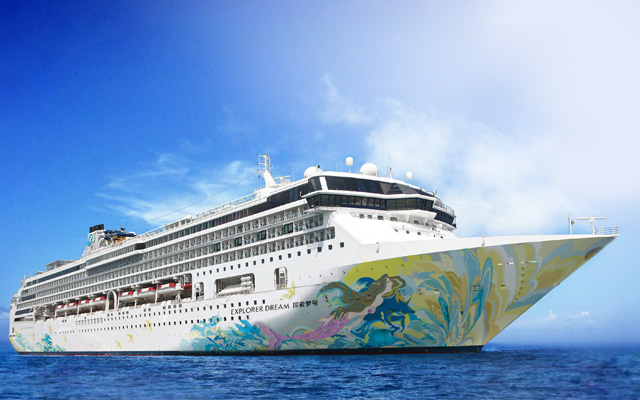
Genting Cruise Lines (GCL) has revealed that Dream Cruises’ Explorer Dream is the world’s first cruise ship to receive the Certification in Infection Prevention for the Maritime industry (CIP-M) by global healthcare and classification body DNV GL.
The CIP-M certification of Explorer Dream comes ahead of the cruise ship’s resumption of sailings in Taiwan from July 26, 2020.
Explorer Dream receives DNV GL’s infection prevention certificate as it prepares to resume Taiwan sailings
Explorer Dream will homeport in Keelung to operate a series of round-trip cruises, including a two-, three- and four-night itinerary to Penghu, Matsu and Kinmen islands, as well as Hualien in Taiwan.
Dream Cruises will be the first cruise line in the world to begin sailing after the global cruise industry was shut down due to the pandemic.
The CIP-M certification programme, which utilises DNV GL’s expertise in infection risk management, is paving the way in introducing new safety and preventive measures tailored for the maritime industry.
GCL said in a press statement that CIP-M “is based on proven hospital standards and measures against infection risk and further tailored for cruise ships by experts from various fields including the maritime industry”.
The cruise company said that it is working with DNV GL to get CIP-M certification for all its other cruise ships “in the near future”.