


APAC hotel pipeline remains robust through Q2
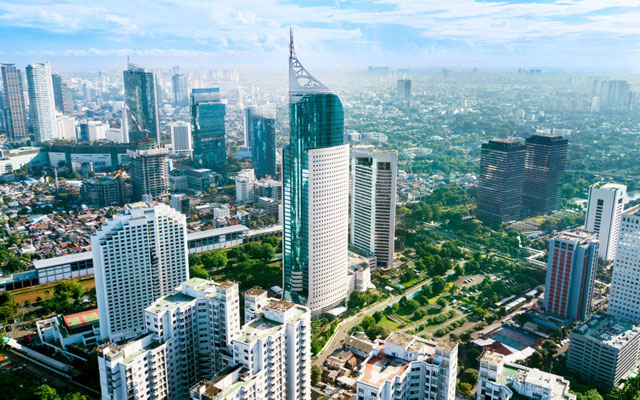
While Covid-19 has dealt a hammer blow to the hospitality industry, the Asia-Pacific hotel construction pipeline, excluding China, shows continued growth in 2Q2020, according to a recent report by Lodging Econometrics (LE).
Asia Pacific’s total construction pipeline, excluding China, grew to 1,906 projects and 404,520 rooms, up six per cent and three per cent respectively, year-over-year.
Currently, the region has 996 projects – a cyclical peak for the region – and 225,734 rooms under construction. As well, 415 projects with 82,122 rooms are scheduled to start construction in the next 12 months; while 495 projects with a combined 96,664 rooms are in the early planning stage, up a remarkable 19 per cent by projects and 12 per cent by rooms year-over-year.
Additionally, during 2Q2020, the Asia-Pacific region, excluding China, saw 39 new hotels accounting for 8,863 rooms open.
Countries with the largest pipelines in Asia-Pacific, excluding China, are led by Indonesia with 345 projects (56,373 rooms), followed by India with 263 projects (35,839 rooms), and Japan with 243 projects (46,852 rooms). These three countries account for 45 per cent of the projects in the Asia-Pacific, excluding China, total pipeline. Next are Australia with 179 projects (33,672 rooms), and Vietnam with 157 projects (62,085 rooms).
Asia-Pacific cities with the largest construction pipelines are led by Jakarta, Indonesia with 78 projects (13,508 rooms); followed by Seoul, South Korea with 67 projects (13,233 rooms); and Tokyo, Japan with 59 projects (14,216 rooms). Next are Kuala Lumpur, Malaysia with 50 projects (13,325 rooms) and Bangkok, Thailand with 50 projects (12,711 rooms).
The top four franchise companies in the region are: Marriott International, at an all-time high, with 294 projects (63,558 rooms); AccorHotels with 214 projects (45,407 rooms); InterContinental Hotels Group (IHG) with 160 projects (33,721 rooms); and Hilton Worldwide, also at an all-time high, with 99 projects (22,797 rooms).
Top brands in Asia-Pacific’s construction pipeline, excluding China, are Marriott International’s Fairfield Inn with 51 projects (7,495 rooms) and Courtyard with 40 projects (8,295 rooms), both at record highs by project count. AccorHotels’ Ibis brands have 46 projects (9,080 rooms), and Novotel has 41 projects (9,973 rooms).
IHG’s top brands are Holiday Inn with 58 projects (12,100 rooms) and Holiday Inn Express with 30 projects (6,063 rooms). This is followed closely by IHG’s InterContinental Hotels, having record high counts, with 21 projects (4,986 rooms).
Hilton Worldwide’s top brands include Hilton Hotel & Resort, at a record high, with 34 projects (9,464 rooms); and DoubleTree by Hilton with 32 projects (6,446 rooms). Additionally, Hilton’s Garden Inn brand has hit a record high this quarter with 22 projects (4,560 rooms).
As Asia-Pacific was among the world’s first regions to successfully control the spread of Covid-19, this allowed for hotel construction to gradually restart at the end of April, causing only slight delays to project timelines.
Analysts at LE reported that while the region has begun to see a resurgence of Covid-19 in some areas, it has not had a significant impact on hotel development and most developers are optimistic that projects will continue as planned.
Vietnam goes big on green tours

Vietnam National Administration of Tourism (VNAT) have joined hands with Vietnam Tourism Advisory Board (TAB) and Swiss Sustainable Tourism Programme (SSTP) to launch a new section on the national tourism website collating the country’s best sustainable tourism options.
Users visiting the Green Travel section of the website will find articles dedicated to best practices for responsible travellers, guides on following Vietnamese customs and local etiquette, and pieces highlighting the country’s lesser-known destinations.
To ease travellers’ search for sustainable tourism providers in Vietnam, the webpage features a catalog of reputable businesses across the country. Visitors can look up ethical, eco-friendly tours; find sustainable accommodations; and discover souvenirs that preserve Vietnamese culture and support local communities.
The section also offers hand-drawn infographics on sustainable travel in Vietnam, and in-depth stories for those interested in Vietnam’s ethnic minorities and traditional craft villages. A collection of leading tour operators offering sustainable experiences is also included.
In order to ensure the listed companies are standout examples of practicing socially and environmentally sustainable tourism, TAB sought the expertise of SSTP consultants to research the contents of the Green Travel section in accordance with the sustainability criteria established by SSTP for the tourism industry in Vietnam.
Tourism officials said the Green Travel section represents progress, and is a first step in Vietnam’s endeavours to support sustainable travel businesses and assist responsible travellers coming to Vietnam.
Over the coming months, the national tourism website will debut videos showcasing the country’s best sustainable tourism assets and outstanding experiences, and will host giveaways for sustainable Vietnamese products and holidays on its official social media channels.
Travel giant duo align to revive SE Asia’s travel scene
Following its tie-up with China’s Trip.com Group, AirAsia.com has partnered with Agoda to offer travellers access to a wider multi-product selection, providing greater choice and convenience.
Designed to spur travel activity in South-east Asia, the collaboration includes travel bundles, membership privileges as well as joint product marketing. Under the partnership, AirAsia.com will add over 600,000 Agoda properties to its inventory.
AirAsia.com users can now enjoy a more seamless ‘browse-to-buy’ experience on the website, and book their flights and hotels through Snap, the airline’s new flight and hotel combo booking platform.
Agoda CEO John Brown said: “The public’s appetite for travel is still strong, and we believe that our collaboration with AirAsia will help take the hassle out of travel by helping travellers to easily find great value deals as they venture out again. Equally important is the wider impact of this initiative between two of South-east Asia’s well-known and highly regarded travel brands, on the confidence of accommodation partners, hospitality providers and related aviation industry players.
“It’s imperative we work innovatively with our partners to find solutions and do our part to stimulate demand and help the wider travel and tourism industry.”
Qantas International CEO departs airline

Qantas International CEO, Tino La Spina, will leave the group as the airline braces for what is likely to be an extended grounding of international flights at least until mid-2021 in light of the Covid-19 crisis.
La Spina’s responsibilities will transfer to Qantas Domestic head Andrew David when he departs on September 1, Qantas said in a statement on Monday.
The change will see David taking on functional responsibility for Qantas International, in addition to his existing responsibility for Qantas Domestic and Qantas Freight. He will report to group CEO Alan Joyce.
Joyce said: “The Covid crisis is forcing us to rethink our business at every level. It’s increasingly clear that our international flights will be grounded until at least mid-2021 and it will take years for activity to return to what it was before. Under those circumstances, we’ve made the decision to consolidate the domestic and international business units under a single divisional CEO.
La Spina, who became CEO of International just over 12 months ago, was formerly Qantas CFO, and has spent 14 years with the airline.
Trips that matter
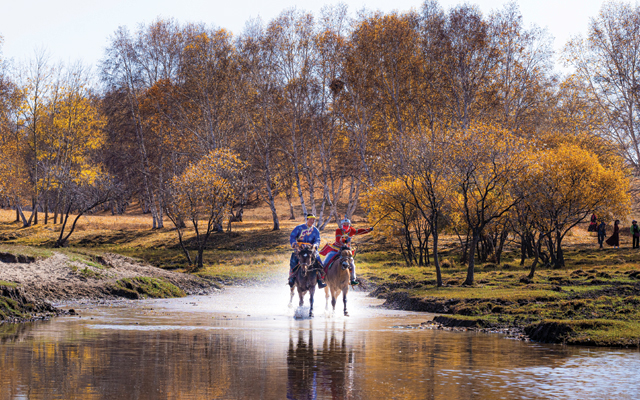
Transformational travel was slated to be the new buzz-word in the luxury market pre-pandemic. But even with the travel freeze today, experts predict that demand will soar once tourism resumes, fuelled by greater keenness among high-end travellers on curated magical experiences away from the crowds.
Christopher Lund, head of hotels at Colliers International, said there would be a huge shift in focus to itineraries that go the extra mile in allowing travellers to escape and have meaningful experiences.
destination experience in demand today
He noted: “There will be much more of a focus on experiences. Holidays where travellers can take something away, especially around eco-tourism, wellness and conservation, as these all conform with the social distancing that has now become the norm.”
Pre-pandemic, Asia’s luxury tourism players had already been going the extra mile to curate experiences that money cannot buy. From accompanying a private butler to his village, to helping plant coral reefs and meditating with monks, ultra-wealthy travellers no longer mind roughing it if it means securing an extra-special experience that pushes personal growth.
Andreas Grosskinsky, general manager at Destination Asia Indonesia, said for the last decade, luxury travel has been moving into the experiential arena, with more high-end travellers willing to splash out to enjoy authentic local experiences in style. That has changed with the pandemic, with guests becoming more willing than ever to trade in traditional luxury comforts for an incredible once-in-a-lifetime transformational experience.
Grosskinsky noted that “it’s taken some time to educate travel consultants on this”.
Tim Cordon, Radisson Hotel Group’s area senior vice president, agreed that transformational experiences will be in high demand, and that hotels and travel companies should work together to make the most of this trend.
Curating bespoke experiences for high-end guests is high on the agenda at The Pavilions Hotels and Resorts, which crafts a range of Curated Journeys for guests, covering a range of niches, including culinary, adventure, recreation, wellness and family.
Simona Chimenti, general manager at The Pavilions Bali, said: “The big next step is somewhere in between experiential and transformational travel. Guests want to mix with locals and get a real feeling of local life. It’s still luxury but there’s an emphasis on experiences. I call it laidback luxury.”
She added the desires of luxury travellers are changing from simply seeking five-star accommodation and high-end restaurants and transport, to experiencing each destination and the lives of the people who call it home.
Noted Chimenti: “The definition of luxury is shifting, it used to be about sitting in a golden cage and not going outside. Today, people are more interested in genuine service and creating memories to take back home and less about that standard luxury version.”
For example, The Pavilions Himalayas customises hikes for guests to meet monks at a monastery. At other properties in Asia, guests can go with their private butler back to his/her home village, and join a horse whisperer for a horseback adventure across Mongolia’s plains.
Chimenti said: “We really want to capture the essence of a destination and offer something that goes off the traditional beaten path.”
Climate change concerns are also shaping the transformational travel trend, with high-end clients wanting to leave as little impact on the environment as possible while helping to create a better world during their stay – another area Lund expects to see an uptick in demand within the luxury arena.
Five-star resort The Datai Langkawi gives transformational experiences an environmental twist. Located in a remote alcove at the foot of a 10 million-year-old rainforest, the resort has recruited naturalists and marine biologists to curate a series of nature-based experiences.
Spokesperson Celine Maginel said luxury travellers now sought more than the usual “bling bling”, and the property could inject something extra from its presence among nature and biodiversity.
The resort works with local NGOs and involves guests in conservation and community work. This includes helping to transport coral from onsite nurseries and joining local artists in upcycling waste.
Rascal Voyages has also tapped into the conservation movement, curating transformational experiences onboard its exclusive floating villas while embracing the shift away from traditional luxury.
CEO Stephen Ebsworth said: “We’re trying to move away from privilege and stuffiness.
“Exclusive, private, remote experiences that are close to nature will be well positioned for luxury travel in the near future.”
As part of offerings, Rascal Voyages operates bespoke exploration cruises that team up with environmental NGO Conservation International to deliver unforgettable experiences with three of the world’s best marine biologists. Guests can help to tag sea turtles, follow their migration path, and help marine biologists with their work.
During the first five exploration cruises, 25 new species of fish and a walking shark were discovered. Guests can even get to name any species they find.
Said Ebsworth: “By very definition, travel should be submerging visitors in an experience and be educational. People want to learn something and take that away.”
Singapore partially eases travel restrictions for general travel
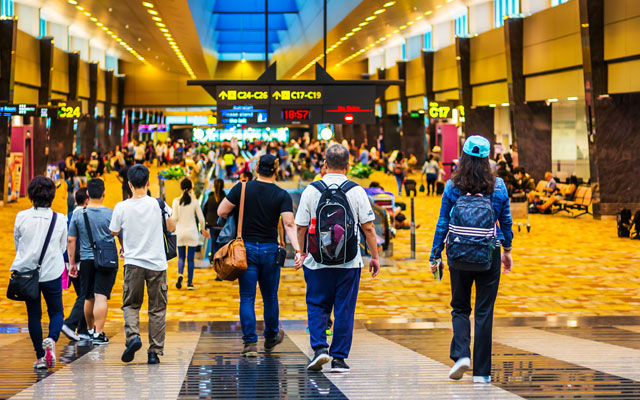
General travel, including leisure, to New Zealand and Brunei, will soon be allowed for Singaporeans, as the city-state’s multi-ministerial Covid-19 task force relaxes border restrictions from September 1.
At the same time, travellers entering Singapore from either Brunei or New Zealand will not need to serve a stay-home notice upon arrival, provided they had remained in the country two weeks prior to their trip and were able to secure an air travel pass between seven and 30 days ahead of their intended date of entry into Singapore. They will also need to clear a Covid-19 test upon arrival at Singapore Changi Airport.
Singapore’s Ministry of Health said in a release that travellers needing Covid-19 treatment while in Singapore would have to bear their medical bills.
Stay-home notice for travellers coming in from low-risk countries and regions, such as Australia (excluding the state of Victoria), China, Macau, Malaysia, Taiwan and Vietnam, will also be cut from two weeks to one. A Covid-19 test will be conducted towards the end of the stay-home notice.
The latest announcement represents a further easing of border restrictions set up since the Covid-19 outbreak to curb cross-border transmissions.
Singapore currently allows essential travel between Malaysia and some Chinese provinces, and is in discussion with Japan on a business travel green lane.
Education minister Lawrence Wong, who co-chairs the task force, said on Friday that Singapore remains cautious with her reopening strategy, and decisions will be based on “evidence and our risk assessment in these different countries”.
Wong also noted that while outbound restrictions have been relaxed on Singapore’s part, Singaporeans looking to head to Brunei and New Zealand for leisure would need clearance from the two countries.
He shared that Singapore is in talks with Brunei and New Zealand to work out reciprocal arrangements for travellers.
Gregg Wafelbakker, general manager, Asia, Tourism New Zealand, told TTG Asia earlier this month that New Zealand tourism officials were exploring options for safe travel zones with the Singapore government.
Following the multi-ministerial Covid-19 task force’s decision, Singapore Airlines (SIA) Group issued a statement to express support. It noted that the “recovery of air travel and airfreight is a necessary catalyst for the recovery of global trade and economies severely impacted by Covid-19”.
“Today’s announcement is an important step towards the gradual rebuilding of the Singapore air hub. The SIA Group will continue to work closely with the Singapore government and all stakeholders to support this,” the statement noted.
SIA Group emphasised that health and safety for all its stakeholders remain a priority. To that end, in-flight product offerings and end-to-end service delivery have been modified to take in health and safety measures.
“The SIA Group will continue to closely monitor the demand for international air travel, and be nimble and flexible in adjusting our capacity to match this,” it added.
Alibaba’s revenue soars on back of e-commerce, cloud computing demand

China’s Alibaba Group posted strong revenue growth in the quarter ending June, largely driven by its core commerce and cloud computing businesses, with revenue swelling 34 per cent year-over-year to US$21.8 billion.
The company’s domestic commerce business has also fully recovered to pre-Covid-19 levels across the board, while cloud computing revenue grew 59 per cent year-over-year, said Maggie Wu, CFO of Alibaba Group.

Net income attributable to ordinary shareholders was US$6.7 billion, up 124 per cent year-over-year, mainly due to a net gain arising from the increase in the market prices of its equity investments in publicly-traded companies.
“Alibaba delivered excellent results this past quarter. We were well positioned to capture growth from the ongoing digital transformation, which has been accelerated by the pandemic, in both consumption and enterprise operations,” said Daniel Zhang, chairman and CEO of Alibaba Group.
“We mobilised our entire digital infrastructure to support the economic recovery of businesses across a wide range of sectors, while broadening and diversifying our consumer base by addressing their changing preferences in a post-Covid-19 environment.”
The company reported core commerce revenue of US$18.9 billion, up 34 per cent year-over-year, with continued rapid growth and increased penetration in less-developed areas. Revenue from the China commerce retail business was US$14.3 billion), up 34 per cent year-over-year, marking a strong recovery compared to the March 2020 quarter.
The number of annual active consumers on Alibaba’s China retail marketplaces reached 742 million, an increase of 16 million from the 12-month period ended March 31, 2020. Meanwhile, mobile monthly active users on its China retail marketplaces hit 874 million in June 2020, an increase of 28 million as compared to the previous quarter.
Lazada, Alibaba’s South-east Asia e-commerce business, achieved over 100 per cent quarterly order growth, reflecting strong consumer demand in the general merchandise, FMCG and electronics categories.
Revenue from the cloud computing business was US$1.7 billion, up 59 per cent year-over-year due to increased revenue contributions from the public and hybrid cloud businesses. According to an IDC report in July 2020, Alibaba Cloud was the largest public cloud service provider in China, as measured by market share for IaaS (Infrastructure as a Service) as well as PaaS (Platform as a Service) for the quarter ended March 31, 2020.
Hotel JAL City makes its way to Fukuoka

Okura Nikko Hotel Management will open the Hotel JAL City Fukuoka Tenjin come 2021, marking its third property in the city dubbed “Japan’s gateway to Asia”.
Slated to open in 2021, the Hotel JAL City Fukuoka Tenjin will be located in the central Tenjin district of Fukuoka, and managed by Fukuoka Tenjin Hotel Management GK.
The property will offer 280 guestrooms, ranging from 25m2 in size, as well as all-day dining facilities. It is currently under construction, and is expected to be completed by January 2021.
Based on Hotel JAL City’s brand concept of “smart simplicity”, the new hotel will provide check-in and check-out and room key functionality by means of guests’ smartphones. It will also address customer needs with a wide range of tailored services.
Time to rethink elephant tourism
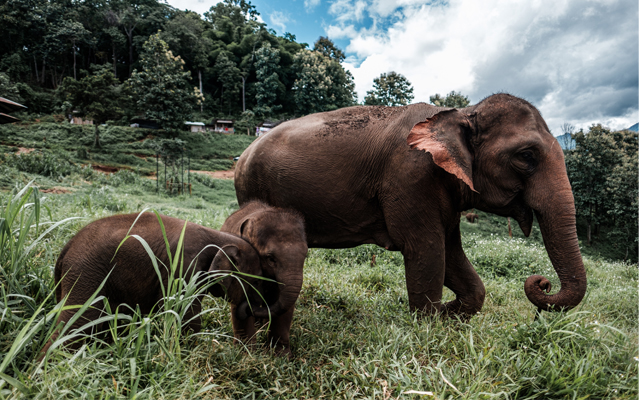
With global tourism remaining at a standstill, now’s an opportune time for tour operators who play an important role in shaping the future and vision of elephant tourism in South-east Asia, to rethink their approach to the industry, according to the founder of an elephant camp audit company.
Ingrid Suter, co-founder at Asian Captive Elephants Standards (ACES), which audits camps across Thailand, Laos, and Indonesia, said that there was enough scientific evidence to support the promotion of elephant tourism and that tour operators should educate themselves on the topic of captive elephant management with academic literature and resources.
She urged tour operators not to be intimidated by “emotional people warriors” who will condemn, attack and target supporters of elephant camps that does riding or bathing activities with its mammal residents. She said that critics of such camps “will simply not accept or probably won’t even read the academic papers (supporting elephant tourism).”
Speaking at a webinar organised by PATA, entitled Tour Operators for Elephants: Standards for the New Tourism, Suter said that elephant tourism was popular in South-east Asia before Covid-19, and she believes it will continue to be popular post-pandemic, thus, tour operators need to play their part to boost the industry’s sustainability.
She, however, warned tour operators against performing self-audits of non-accredited elephant camps and then recommending these camps to guests, as such reviews would likely be superficial, excluding back of house assessments to give a true picture of the goings-on at the camp.
Instead, they should team up with an elephant camp and recommend that the operators apply for an ACES evaluation. “We can tell them what they need to do to get their standards raised high enough to meet our strict requirements,” Suter said. Tour operators should “have confidence in our integrity and professionalism, and that we have examined all aspects of elephant welfare and management,” she added.
Tour operators who choose an ACES-accredited camp for their tour groups can be assured that those camps are doing good, and are assisting elephants, mahouts and local communities through tourism.






The Indian government’s biggest repatriation operation dubbed Vande Bharat Mission, which is being operated by Air India, has created a deep rift between the national carrier and Indian travel agents.
The national carrier has been warning consumers through its social media platforms against purchasing tickets from travel agents, which it said are overpriced as compared to rates published on Air India’s website.
In retaliation, travel agents have termed the move as meddling between their relationship with clients.
In a strongly worded letter addressed to India’s civil aviation minister and AirIndia’s chairman and managing director earlier this month, the Travel Agents Association of India (TAAI), which represents over 2,500 travel agent companies, asked the airline to withdraw such social media posts.
“The airline should inform consumers of any malpractices and manipulations if (they are) happening, but it should also understand that the agents and customers have a direct relationship, and for any additional services provided, the former can levy a charge,” it read.
Air India’s hostility towards travel agents came after a few were found to have sold air tickets issued under the Vande Bharat Mission at a high premium. In a social media post, the airline said that it had suspended transactions through three New Delhi-based travel agents – Air View Services, Real Fly Tour & Travels and Friends Ticketing Hub – over malpractices.
Since then, Air India has blocked travel agents on select routes, citing complaints of overcharging by consumers.
However, travel agents pointed out that a few black sheep in the market should not ruin the name of the entire community, most of whom have been working ethically.
“We are strictly against any unethical practices in the business. However, at a time when airlines are offering no commissions to the travel agents, it is within our right to charge a transaction fee or a consultancy fee,” said Naveen Manchanda, president, Indian Association of Travel and Tourism Experts.
A section of the travel agents also rued a lack of clarity in the distribution of air tickets under the Vande Bharat Mission initiative.
Pradip Lulla, acting president, Travel Agents Federation of India, said: “About 90 per cent of air ticket sales in India is still through IATA agents – both offline and online. Whenever the booking window opens and we (travel agents) try to book a ticket through GDS or Air India’s website, the message we get mostly is that they have been sold out.”
Correction: An earlier version of this article misquoted Lulla as saying that Air India should conduct an investigation to ensure that seats are allocated to agencies, and not booked out by the IATA fraternity. That is incorrect, and Lulla meant that an investigation should be done to ensure seats are available to all IATA travel agents, and not just a select few.