TTG Asia
Asia/Singapore Monday, 22nd December 2025
Page 1019

Arival chief calls on Google, Facebook to step up and support small tour and activity advertisers

0
Arival CEO Douglas Quinby calls on Google and Facebook to carry forward advertising credit to help tourism businesses stay afloat during the Covid-19 crisis

The head of Arival, the global research authority of the tour, activity and attraction sector, has called on Google and Facebook to take the long view and help their tourism advertisers who are trying to survive the business fallout of the pandemic.

Douglas Quinby said Facebook’s March 17 announcement of a US$100 million initiative to help small businesses was “a welcome but small first step on a long journey”.

Arival CEO Douglas Quinby calls on Google and Facebook to carry forward advertising credit to help tourism businesses stay afloat during the Covid-19 crisis

“Google and Facebook have become incredibly important partners to the travel industry worldwide. They have profited handsomely from the risk-taking of these enterprises over the past decade,” he said.

“Now it’s time for them to step up and pay it forward by crediting the accounts of these at-risk advertisers (for future advertising).”

Arival said the sector, valued at US$254 billion in 2019 and with one million tour, activity and attraction operators worldwide, is now in deep crisis.

According to an Arival study of nearly 600 tour, activity and attraction operators worldwide, conducted between March 9 and 13, 2020, 28 per cent of operators surveyed are at risk of business failure within three months; 46 per cent are at risk of failure if travel does not begin to recover within six months; 37 per cent of total 2020 bookings have been cancelled; 73 per cent of operators report a decline in 2020 bookings vs 2019; and the average decline is 52 per cent.

The sector is comprised mostly of small businesses, micro-entrepreneurs and part-time operators. Most have started within the past five years. Arival’s research shows that 86 per cent of operators generated less than US$250,000 in gross sales in 2019.

By comparison, Google and Facebook are two of the largest companies in the world, generating combined advertising revenues of US$204 billion in 2019.

Crediting the accounts of all tour and activity operators, attractions, experience hosts, ground transfer providers, and third-party resellers for advertising spend on their platforms for the period of January 15 to March 15, 2020 “would be a much needed step to help many small operators get back on their feet when travel demand begins to return”, urged Quinby.

Arival has launched a petition to make the point, calling on operators, distributors, technology companies and all individuals working in tours, activities, attractions and experiences to sign their name. Arival will present the petition to representatives of Google and Facebook.

Meanwhile, Quinby will present findings from Arival’s study as well as the impact of coronavirus on tours, attractions and activities in a live online event on March 31.

The company has also launched Arival Online, a series of live online events through April to help tour, activity and attraction operators weather the unprecedented times and prepare their business for the future.

Trip.com donates one million masks

0
Trip.com Group donated face masks to various countries like Canada (pictured) with words of encouragement

Trip.com Group will be donating one million surgical masks to support the fight against the Covid-19 pandemic.

Led by the company’s co-founder and chairman of the board James Liang, the initiative has as of March 18 seen the delivery and allocation of surgical mask supplies to Japan, South Korea, Canada, and France, among others.

Trip.com Group donated face masks to various countries like Canada (pictured) with words of encouragement

Liang said in a press statement that “it is crucial at this moment in the global fight against the epidemic that all countries come together and support each other, to secure a victory for humanity”.

The move to donate masks is the latest in a series of actions taken by the online travel services provider to counter the impact of the pandemic.

As the situation continues to develop, the company has provided daily updates on travel restrictions via its platforms, and extended the scope of its cancellation policies to include medical workers as well as those unable to travel due to restrictions and infection.

Liang hopes that his company’s donation would motivate others to do the same.

“We are faced with a great challenge, but amid these hardships, we’ve learnt that we are all part of a larger entity, and we’re all in this together. We are moved by Trip.com Group’s generosity in, of its own volition, extending its support,” said Canadian ambassador to China Dominic Barton.

Air capacity to China slashed by 80%: ForwardKeys

0
Covid-19 has cut flight capacity to China by 80 per cent

Four-fifths of flight capacity between China and the rest of the world has been cut back due to the Covid-19 outbreak, according to a new report by ForwardKeys.

In response to emergency government regulations put in place to contain the virus outbreak in China, seat cancellations began in early February and by the third week of the month, only 20 per cent of seats remained in service.

Covid-19 has cut flight capacity to China by 80 per cent

Looking at the different regions of the world, Asia has experienced the greatest impact in terms of the total number of seats lost, at around 5.4 million in March.

In percentage terms, travel to North America is worst affected: American, United, Delta, and Air Canada cancelled all their flights to mainland China; and Chinese carriers cut their capacity by 70 per cent.

Between China and Europe, over 2,500 flights have been axed in March: the three major Chinese carriers cut capacity by 69 per cent; while BA, Lufthansa and Finnair ceased their services completely.

Qantas and Air New Zealand also stopped flying to China, which left only about 200 flights in March to Oceania, provided by Chinese airlines.

Capacity between China and the Middle East & Africa is also substantially down but less in both percentage and absolute numbers. Most flight suspensions are currently due to remain in force until March 28, the end of the winter season.

During the third week of March, 72 destinations in 38 countries had direct air links to China, which is around a third of the pre-crisis level, according to China’s Civil Aviation Authority.

Olivier Ponti, vice president insights, ForwardKeys, said: “At the start of the year, we were looking at another year of healthy growth in air travel from China. But now, we are witnessing the grounding of aircraft on an unprecedented scale. The loss in seats is more than the entire outbound market from the five Nordic countries combined.”

New hotels: Six Senses Bumthang, Mövenpick Resort Waverly Phu Quoc, and more

0

Six Senses Bumthang, Bhutan
This is the fifth and final lodge to open under the Six Senses Bhutan umbrella. In total there are eight suites with balconies and views of the forest valley, as well as a 2,422 two-bedroom villa. Tongtshang, or Pine Forest, the lodge’s restaurant with an al fresco area, features local dishes such as buckwheat and barley are combined with seasonal ingredients. A traditional dotsho hot stone bath or the Bhutanese-inspired signature Hingsangsa Zoni bathing ritual can also be arranged for guests.

Activities the property can arrange include half- and full-day treks to the valley’s most important Buddhist pilgrimage sites, hiking and biking through fields lined with prayer flags, visits to local villages, a palace tour, archery lessons and mushroom foraging. There is also a stop at the Red Panda brewery for a taste of locally brewed barley beer.

Mövenpick Resort Waverly Phu Quoc & Mövenpick Residences Phu Quoc, Vietnam
Mövenpick Hotels & Resorts has opened a resort complex – comprising the Mövenpick Resort Waverly Phu Quoc and Mövenpick Residences Phu Quoc – along Phu Quoc’s Ong Lang Beach.

Mövenpick Resort Waverly Phu Quoc features 305 guestrooms, and rooms range from the lead-in 35m2 to the 72m2 Junior Suite. Meanwhile, the adjacent Mövenpick Residences Phu Quoc offers 329 apartment-style residences with kitchenettes and 79 pool villas.

Complex amenities include a beach club, four F&B options, kids’ club, six swimming pools, Elements Fitness Center complete with a yoga studio, and the Elements Spa & Salon featuring 15 treatment rooms, a sauna and a jacuzzi. Event planners may avail the 720m2 Coral Ballroom with a 6.8m-high ceiling and a 324m2 foyer that can hold up to 860 guests.

Swiss-Belinn Cikarang, Indonesia
The three-star property in Jababeka, Cikarang offers 138 rooms and suites. Facilities on-site include the all-day dining restaurant Swiss-Bistro; Hanatomi Izakaya which serves Japanese cuisine; a rooftop swimming pool; a kid’s pool; sauna; and fitness centre. There are also seven meeting rooms and a ballroom on-site, available for a range of events from training seminars up to gala dinners for up to 500 guests. Nearby attractions include Lippo Cikarang Mall, Waterboom Lippo Cikarang, and the Puri Nirwana Waterpark.

Novotel Sriracha & Koh Si Chang Marina Bay, Thailand
This 275-room hotel comprises the main Ocean Building in Sriracha and Island Building on Koh Si Chang. The main hotel building in Sriracha comprises 235 rooms is now open, while another 40 guestrooms and 16 villas will open on Koh Si Chang soon. There are two restaurants and three bars on-site, aside from other facilities such as a 24-hour fitness centre, seafront swimming pool, spa, kids room, and Premier Lounge for guests staying in the Premier Deluxe rooms and suites.

For events, Novotel Sriracha features five meeting and event spaces that can host up to 250 guests, while Koh Si Chang has a 50m2 room that can host up to 30 guests. A private pier and speedboat services will also be made available to shuttle guests between the two locations.

Tourism players step forth with relief for stranded travellers

0

As travellers find their trips upended almost overnight as border closures and city lockdowns are announced across the world over recent days to curb the spread of the Covid-19 pandemic, travel players are finding that their business reflexes are being called to the test.

Travel agents in destinations across the region most affected by tough government restrictions on people mobility are fighting against time and limited resources to get their customers home or onward to their next destination, while others in the travel and tourism supply chain have devised friendlier compensation means to soften the heartache of disrupted trips.

Cambodia

Cambodia’s tourism players have been working around the clock to help clients impacted by the swathe of sudden travel restrictions.

From Tuesday, Cambodia banned visitors from Italy, Germany, Spain, France and the US from entering the country for 30 days.

Ronni Dalhoff, managing director of Diethelm Travel Cambodia, said staff have been working tirelessly to ensure clients are kept informed and necessary changes are implemented.

He said: “My team went to work on Saturday and compiled a list of (affected customers). When our agents in Europe came to work on Monday, they had a complete overview of people they had to contact.”

The company also flew clients in the middle of programmes home and has cancelled all itineraries for free until April 30.

Steve Lidgey, general manager of Asia a la Carte Travel, currently has 16 German travellers in Cambodia, who have received government advice to return home.

He said: “It seems they prefer Cambodia and are scared more of Germany. This is very complicated as they need to leave soon.”

Many guests from Germany and Australia due to arrive from Vietnam are no longer able to cross the border. The Australian government has also issued an advice to return, so they will fly back from Vietnam.

Sophear Mom Sreat, founder of Sophiya Travel & Tours, said staff have been keeping clients up-to-date and remain on standby to answer any queries. – Marissa Carruthers

Malaysia

Malaysian hotels are allowed to continue limited operations, and serve guests who have checked in before March 18, during the nationwide movement control order which kicked in yesterday until March 31.

As well, hotels’ F&B services are limited to room service, and all other facilities and services are to remain closed during the lockdown period.

Agents shared with TTG Asia that the majority of overseas travellers opted to cut short their holidays in Malaysia and leave the country before the movement control order came into force as there were fears of travel restrictions, airline disruptions and cancellation of services.

Adam Kamal, general manager, Suka Travel, said that the first day of the movement control order had resulted in many cancellations and rescheduling of flights due to low capacity.

He said: “We had a few guests from Asian countries who were affected yesterday but our team managed to sort out their departures.”

An inbound agent, Yap Sook Ling, managing director, Asian Overland Services Tours & Travel, said she had a group of 15 Swiss tourists who decided to cut short their holiday in Malaysia upon hearing the news, and sought to return to Switzerland.

She said they initially wanted to depart via Singapore but local authorities had imposed travel restrictions on the Swiss, even for transit passengers. As such, her company was now helping the group get back home via Bangkok.

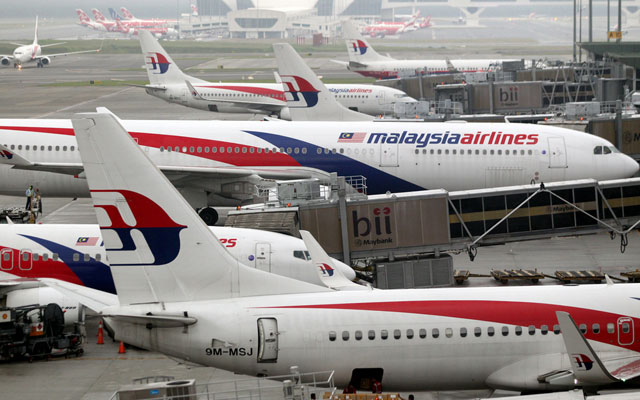
Travel problems are compounded due to the reduction of flight frequencies and cancellations. Group CEO of Malaysia Airlines Izham Ismail recently issued a press statement stating that the national carrier has also significantly reduced its overall network. International flights to India are also suspended between March 17-31, 2020, and the Philippines between March 21-31, 2020, following the respective governments’ ban on travel to and from Malaysia.

Prior to the order, Malaysia Airlines had already suspended services to Saudi Arabia, South Korea, as well as Beijing Daxing and Kota Kinabalu to Shanghai, due to border controls and reduced capacity to Australia and New Zealand resulting from the self-isolation policy of the two countries.

“The situation has been rather fluid these past two days since we have had to make last-minute cancellations to abide by the restrictions. The uncoordinated approach has posed great challenges to our operations, but we are doing our best to re-route passengers via reallocation onto other carriers. This is an added cost to our operations,” he said.

Izham added: “We are also adjusting our low-load flights by cancelling and merging them to manage costs while managing our customers’ expectations. To date, we have cancelled more than 4,000 flights.

“Our Global Contact Centre has been bearing the brunt of this situation with the number of calls peaking at 25,000 daily and up to 2,000 emails daily in the past three weeks.” – S Puvaneswary

The Philippines

Getting stranded in the Philippines can be daunting as tourist destinations are scattered among islands reachable by one or two flights from Manila, with the problem exacerbated by fluid lockdown regulations.

Following Luzon’s lockdown, tourism players got drawn to the personal Facebook account of Jojo Clemente, president of Rajah Tours and Tourism Congress of the Philippines (TCP), as his close coordination with the Department of Tourism (DoT) enabled him to advise and share vital information in helping tourists caught in the island’s lockdown.

Clemente gave round-the-clock changes in air routes, hotel closures, additional destinations that have also locked down, and instant updates on inter-agency meetings. Travel agents consulted with him to ask for the latest information and developments, as well as to verify facts.

When air routes to Manila were shut and flights redirected, Clemente asked travel consultants to give the location of stranded tourists in order to mount recovery flights with the domestic airlines and the military.

The government initially gave foreign tourists three days to leave the Philippines, but DoT was able to persuade officials to let tourists leave during the one-month lockdown, as reported on Clemente’s Facebook account.

“It’s par for the course,” he said, on how social media can help in troubled times.

On the other hand, Irine Maliwanag, owner of IM Active Travel and Business Events, noted that she has to assure passengers with pending airline refunds that “we are not closing shop”.

She suggested that Cebu Pacific should give “immediate refunds to people with cancelled bookings, as a result of the lockdown, instead of having them call a hotline which is difficult to get connected to”.

Immediate refunds need not go through certain processes and verification, Maliwanag said, as it can be done with additional scripting in the airline’s system as long as there are records of the passengers who made the booking, their identification cards and other information that they can trace online. – Rosa Ocampo

Singapore

Travel players are rolling out measures to compensate travellers for changes to their bookings. For customers who have booked a tour departing between March 16 to Apr 30, G Adventures is offering 110 per cent travel credit for all land services, including pre or post nights and transfers, for the next two years.

Travellers who had departed on tours before March 16 and who now wish to return home early, can opt to leave the tour with a pro-rata travel credit for the remaining days of the land portion of the trip.

G Adventures’s director of emerging markets, Bryce Young, said: “It is a difficult, but necessary, decision. The safety and security of our travellers and staff is our top priority and this is a precautionary measure to protect our people at this time. The situation surrounding Ciovid-19 is rapidly evolving; governmental rules and regulations around travel and entry requirements are changing frequently and we may yet have to make changes or suspend tours beyond May 1, 2020.”

Diethelm Travel (Singapore) is working closely with suppliers, agents and clients to ensure a smooth return for travellers whose journeys have been interrupted.

Judy Lum, its director, shared: “For those who are already in Asia but are unable to continue their holiday due to travel advisories and entry regulations, we will contact the clients in-resort and liaise with their travel agents back home to re-route or re-issue air tickets for their onward journey.”

Singapore’s low-cost airline Scoot has taken the initiative to launch a self-service refund system to circumnavigate the decision of countries in the region, such as the Philippines, to cease business operations during this period.

“Due to the rapidly developing situation and high call volumes, customers have been experiencing longer than usual wait times with our call centres. Recognising that the volume would only grow and we needed to alleviate the stress on our customers, we mobilised our backend teams to create a self-service portal for eligible customers to submit their refund requests online at their convenience,” explained a Scoot spokesperson.

The portal launched on Tuesday, and as of 17.00 that same day more than 12,000 refund requests have been submitted and more than 2,000 customers have received their refunds. – Pamela Chow

Malaysia allows hotels to go on, with limited operations

0

Hotels and accommodations in Malaysia have been included in the list of essential services under the nationwide movement control order which kicked in yesterday until March 31, but they will have to adhere to a set of guidelines in their operations during the lockdown period.

This is in accordance with a federal gazette issued by the Attorney-General’s Chambers today. The new regulations, known as the Prevention and Control of Infectious Diseases (Measures Within the Infected Local Areas) Regulations 2020, will take effect from today until March 31.

Malaysian hotels still allowed to operate partially during Covid-19 lockdown

As the priority is to contain Covid-19, the movement of people will be restricted. Hotels are to limit their services to only guests who have already checked in before March 18, while F&B services are limited to in-room dining. All other facilities and services of the hotel are to remain closed.

Hotels are also allowed to operate with skeleton staff on-site during this two-week period for critical needs such as security and engineering.

Kamaruddin Baharin, president, Malaysian Association of Hotels, said in a statement: “We are aware that many are confused with the situation and directives from the government, given that they have such short notice to prepare. But our advice is to look at the bigger picture and focus on containing the spread before the situation worsens. We should all do our part to stop people from moving unnecessarily at times like this.”

Malaysia reported 120 new Covid-19 cases on March 17, including its first two fatalities, raising the tally of infections in the country to 673.

Online communication tools keep business dialogues going for travel players

0

Web-conferencing and instant messaging tools are seeing greater usage among travel and tourism trade players who are determined to keep business dialogue alive as the appeal of face-to-face meetings diminish against a backdrop of Covid-19 infection fears.

Sheryl Lim, founder of Singapore-based travel agency Travel Wander, found herself turning to online presentations to keep her regular clientele informed on new adventure tours and destinations as well as reach out to potential new customers.

Businesses turn to digital communication tools to continue operations remotely amid Covid-19

“Our usual marketing efforts involve conducting product presentations at specific venues but as soon as Covid-19 happened, people started to refrain from going out or meeting other people,” Lim recalled.

“We were in a fix because as a small company, we cannot stop moving and must keep up our marketing efforts. Out of sight, out of mind, as the saying goes, so we must maintain contact with our customers and the marketplace now so that when travel confidence returns, they will consider Travel Wander for their travel planning.”

With print or radio ads priced out of her budget, she turned to web-conferencing tools.

“The travel planning business is a very personal one, where clients prefer meeting face-to-face. But the pandemic has presented us with an unusual situation, and webinars are a good solution that enables us to keep up with sales and marketing communications,” she said.

Travel Wander conducted its first presentation two weeks ago, focusing on the joy of active holidays. The content, delivered through slides and a narration, explained what active holidays were all about, and dispelled myths around such tours. Six people attended it. A week later, a webinar on Sarawak drew 10 people.

Lim has planned a third on Kazakhstan this week, and aims to conduct a weekly session and is working on improving the format to facilitate conversations. The webinars are promoted to regular clients who then spread the word within their social circle.

The product webinars have allowed Lim to determine which destinations were more popular, based on webinar sign-up performance.

For other travel companies that are already utilising web-conferencing, the current pandemic has underscored the value of this mode of communications.

Adam Kamal, general manager of Malaysia’s Suka Travel, said his team is now working remotely from home, relying on WhatsApp video conferencing to address urgent matters, on top of their usual web-conferences with overseas suppliers and outstation agents.

The remote work arrangement was necessary as the government had on Monday evening issued an order to temporarily shutter businesses and restrict movement to fight against Covid-19.

Adam said he introduced and encouraged web-conferencing when he joined the agency last November, and applauded the convenience and cost savings it offers.

“Web-conferencing allows our partners to pull up documents, charts and pictures as they speak. (It also) saves time and costs as we can do meetings virtually. If it were face-to-face meetings, we would have to rent space to hold a seminar and pay for light refreshments,” he said.

Bayu Buana Travel Services Indonesia, which now has 50 per cent of its staff working from home, is encouraging continued reliance on web-conferencing tools to keep dialogues open with airline partners and clients during these trying times.

Agustinus Pake Seko, president director of Bayu Buana Travel Services Indonesia, said his team is familiar with web-conferencing, as there are regular online global meetings with BCD Travel, which the company is part of.

Laurens: companies are waking up to the benefits of digital transformation amid Covid-19 

Laurens van den Oever, CMO at research firm ForwardKeys, opined that the “one good thing to come out of the coronavirus” is the emphasis on the value of “how to be savvier with our digital offerings, such as travel alerts, impact reports and newsletters”.

“In every business, you need to invest in the necessary tools and equipment for your team. Different time zones, cultural barriers, epidemics and pandemics should not impede the running of your business nor throw you into the Dark Ages,” Oever said.

The ForwardKeys team relies on a suite of communication services, such as Zoom, Slack, WhatsApp and webinars/web information sessions for internal interaction, and Zoom mostly by its analysts to connect with external clients.

“These have helped us a lot (in maintaining business communications, especially now) with all the travel limitations and tradeshow cancellations due to the (outbreak),” he added. – Additional reporting by S Puvaneswary and Mimi Hudoyo

Indonesia to suspend visa-free policy, expands ban

0

The Indonesian government has suspended the visa exemption policy for a short-stay visit, visa on arrival, and diplomatic/service visa-free facilities for all countries for a period of one month, starting March 20, to further curb the spread of Covid-19.

In addition, the government has denied entry or transit in Indonesia for visitors who have travelled to Iran, Italy, Vatican, Spain, France, Germany, Switzerland and UK in the last 14 days. Earlier measures taken for visitors from China, and South Korea’s Daegu city and Gyeongsang province remain in effect.

Indonesia to suspend visa-free and visa-on-arrival policies for one month

Retno Marsudi, Indonesia’s minister of foreign affairs, announced yesterday: “All foreigners/ travellers who wish to visit Indonesia must obtain a visa from Indonesian missions in accordance with the purpose of their visit. Upon permission, applicants must provide a health certificate issued by relevant health authorities in their respective countries.”

Upon arrival at an Indonesian airport, all visitors must complete and submit a Health Alert Card to the Port Health Authority.

“Should the travel history indicate that the person has travelled to the countries above in the last 14 days, such a person may be refused entry to Indonesia. For Indonesian citizens who have travelled to the countries above, additional screening shall be carried out by the Port Health Authority upon arrival.”

A 14-day observation in a government facility will be applied if the additional screening shows initial symptoms of Covid-19, otherwise, returning Indonesians are strongly recommended to have 14-day self-quarantine.

Travellers holding a Short Visit Pass which may have expired and who are already in Indonesia may request for an extension.

Entire Luzon island now on lockdown

0

The entire Luzon island in northern Philippines – not just Metro Manila – is on a month-long lockdown which began on March 17, following the sharp increase in the number of confirmed Covid-19 cases in the Philippines.

The enhanced community quarantine measures now includes strict home quarantine for all households; suspension of mass public transport facilities and limited use of private vehicles; restricted land, air and sea travel; as well as temporary closure of establishments like malls and gaming; among other restrictions. Outbound passengers have also been given three days to leave.

Luzon island has been placed on a month-long lockdown; aerial view of Port of Manila at Manila Bay in Luzon island pictured

Hotels and similar establishments are also to remain closed during the lockdown, the Department of Tourism (DoT) said yesterday, except those with foreign guests that have existing bookings as of March 17; those with long-staying guests; and those accommodating employees from exempted establishments.

However, foreign tourists, overseas Filipino workers, and visiting Filipinos will be allowed to leave any time during the Luzon lockdown provided they travel only to the airport within 24 hours of their departure time, the DoT added.

Tourist destinations in Luzon apart from Metro Manila include Tagaytay, Batangas, Clark, Zambales, Baguio, Sagada, Batanes, and Ilocos and Bicol regions.

But since the previous community quarantine was announced in Metro Manila on Monday – which didn’t include home quarantine and the suspension of mass public transport then – destinations like Visayas and Mindanao have followed suit.

As the situation becomes more dire with 142 confirmed Covid-19 cases, majority of which are in Luzon, the Tourism Congress of the Philippines (TCP) has listed seven additional recommendations to ensure the industry’s survival, one of the sectors hardest hit by the pandemic.

On March 6, TCP had already proposed to the DoT fiscal and other measures to help the tourism sector. On March 13, TCP’s president Jojo Clemente added six more proposals.

These additional recommendations are a minimum six-month moratorium on bank loan payment, credit card payments and corporate income tax fee reduction for accredited tourism industry stakeholders, subject to review of prevailing business conditions; grants, low-interest loans, subsidies and so on for tourism industry workers who will lose their jobs; and suspend for a minimum of one month the payments for water, electricity and Internet; office rental; and value-added tax on basic commodities.

Taiwan bans all foreigners amid spike in imported cases

0

Taiwan has indefinitely banned the entry of all foreign visitors, excluding foreign resident permit holders and diplomats, from midnight on Wednesday as part of Covid-19 countermeasures, following a sudden surge in imported cases.

The new restrictions exclude foreign resident permit holders and diplomats, but all people entering Taiwan will have to serve a 14-day home quarantine.

Most foreign visitors will not be allowed to enter Taiwan starting today

The government has also urged its citizens to avoid any non-essential travel.

Taiwan has been lauded by health experts for its successful efforts to stem the spread of the virus since early January, but it is now seeing a sudden spike in cases to 77, mostly from people returning to the island from other countries, especially Europe.