TTG Asia
Asia/Singapore Friday, 16th January 2026
Page 1017

Pushing for change

0

CrescentRating has been sharing insights on the Muslim travel market for the last 11 years. What would be the organisation’s proudest milestones?
We have contributed a few things to the tourism and hospitality industry over the years, specifically in improving the understanding of halal travel in the marketplace. It is very satisfying to see that in the last few years, the marketplace has started to embrace Muslim travellers.

One of the achievements we’ve been very happy with is our partnership with MasterCard (to jointly produce the annual Mastercard-CrescentRating Global Muslim Travel Index), which started in 2015.
CrescentRating did not start off wanting to do research; we just wanted to rate Muslim-friendly hotels. But we realised that without real data and intelligence, it was hard to convince people with our words.

Fast forward today, we’re the leading voice on halal travel intelligence.

We have just released our Mastercard-CrescentRating Halal Travel Frontier 2020 report (in January).

In a couple of weeks, we will release another report that will consolidate all the tools we have developed, and make them available to the trade.

Has CrescentRating been able to resolve the common pain points for Muslim travellers when they visit non-Organization of Islamic Cooperation (OIC) destinations?
The pain points for Muslim travellers have remained largely the same, especially when it comes to travelling in a non-OIC.

There is still a lack of halal restaurants in these destinations; in hotels, there is either a lack of halal food or there are very limited halal food options on the menu.

On the bright side, however, the situation has improved a lot over recent years, particularly in Taiwan, Japan, South Korea and Hong Kong.

There are more than 100 halal restaurants in Taiwan today, whereas there were probably only a handful five or more years ago.

While the number of halal restaurants have gone up in some non-OIC destinations, there remains the challenge of credibility. There are two credibility issues Muslim travellers face with halal restaurant claims – one, the claim is incorrect and made due to ignorance, as the restaurant operator doesn’t truly understand what being halal means and requires; two, the claim is a deliberate falsehood.

Can CrescentRating help to tackle this challenge?
Yes, we can. Our solution is to focus on education. We need to educate restaurants – in fact, as many stakeholders in the tourism and hospitality industry as possible – what halal means through our CR Academy.

Our second solution is to encourage restaurant operators to get external validation by approaching their local halal authority, or use our rating system which we have employed in destinations such as Taiwan.

Beyond restaurants, tourism and hospitality industry stakeholders can reference our faith-based services needs model, which we upgraded last year.

There are four areas within the Need to Have advisory (Halal Food Service, Salaath Prayer Facilities, Water Friendly Washrooms, and No Islamophobia), and three of them are relevant to hotels.

You cited Taiwan, Japan, South Korea and Hong Kong as examples of destinations that have done well in welcoming Muslim travellers today. It is interesting that they are all in North Asia. Are there no shining examples in South-east Asia, where there are sizeable local Muslim communities and should therefore be naturally welcoming?
It is a misconception that destinations with a Muslim population are ready for halal tourism.

Take Jordon as an example. It is a Muslim-majority country (and an OIC member) but its tourism industry was established for the last 20 to 30 years to serve travellers from Europe and Japan – big source markets at that time – and not Muslim travellers.

Understanding what a Muslim does does not translate into knowing how to treat and welcome Muslim travellers.

I like to think that because Taiwan and Japan, for instance, have such little understanding of Muslims at the beginning that they tried their very best to study halal needs and be as hospitable as possible.

How does Singapore fare? Muslims make up the third largest religious group in the population.
CrescentRating has a few projects going with the Singapore Tourism Board (STB). One of them coming up soon is a 44-page guide book that details halal dining offerings in Singapore, hidden cultural activities and local Malay entrepreneurs and business owners that travellers can discover.

I also got to speak at ASEAN Tourism Forum this year in Brunei about halal travel trends, at the invitation of STB.

I’ve told STB that Singapore has the potential to be a more welcoming destination for Muslim travellers, and one of the things it can do is to leverage Singapore’s Muslim family assets to attract this segment of travellers.

Clearly, CrescentRating has done a lot to improve the world for Muslim travellers and guide destinations towards this lucrative travel sector. But I’m sure you have more up your sleeves.
Yes, well, we are looking at doing a few more things (laughs).

First, we will continue to produce more and more data on halal tourism and make them public to improve awareness and deepen knowledge.

We are also hoping to produce the CrescentRating Playbook – that’s the working title – and have it contain as many insights as possible to help the tourism and hospitality industry find their way around halal tourism.

Second on our list is to work with even more destinations to help them better cater to Muslim travellers. We have projects with Uzbekistan, which is an up-and-coming destination; South Africa, where we have a partnership going for some time now; and Hong Kong, where we have just started but need to take things slow due to the (Covid-19) outbreak.

Thirdly, we are improving our CR Academy. We have an online programme on now for hotels and restaurants, but we hope to expand it to serve more sectors of the industry.
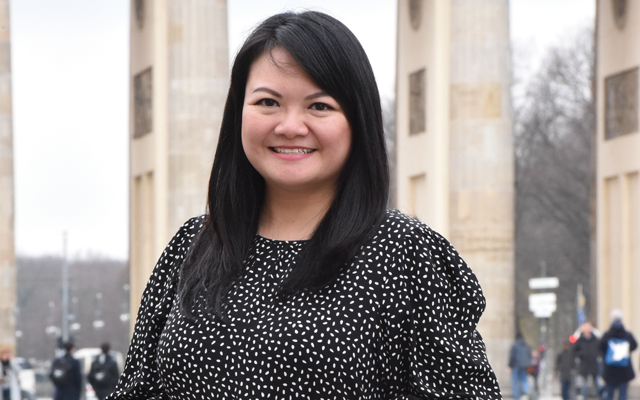
An industry with heart: Poor in business for now but rich in generosity

0

As Covid-19 continues to wreak havoc on the world and our lives, travel has become such a dirty word.

The act of travel now is regarded as an act of defiance and selfishness, never mind the purpose. How dare you not stay home!

The travel and tourism industry is greedy, for continuing to promote staycations, vacations, and encouraging customers to only postpone their trips instead of just refunding their hard-earned money.

So the public say, from behind the safety of their mobile devices and desktops.

For those not in the travel and tourism industry, it must be hard for them to imagine the struggles people employed within are facing.

World Travel and Tourism Council has estimated that one million travel and tourism jobs are being lost daily around the world. That’s one million people suddenly faced with no source of income for only God knows how long. Many of them may not even find another job soon enough because many other industries and businesses are struggling too.

Despite a painful present and an uncertain future, many travel and tourism companies have chosen to protect their staff by resisting retrenchment for as long as their resources last, with or without government handouts.

Many have also chosen to demonstrate selflessness and grace by volunteering time and resources to help their country and community in the battle against the pandemic.

Airlines have been helping to transport medical devices and supplies, and even healthcare workers, to places in need.

Hotels, resorts and convention centres have – and some ready to do so now – converted their facilities into isolation centres or temporary homes for frontline healthcare workers who are afraid to go home to their family.

The travel and tourism community, as I know it, is hardly greedy and selfish. We seek humour in tough situations and we reach out to lift one another, even if we are competitors in the business.

When Singapore had a shortage of masks and hand sanitisers early on in the outbreak, my friend Daniel Tan, who runs a culinary school for tourists in Singapore, delivered a fabric mask and sanitiser – both of which he made himself, catching me right before my trip to ITB Berlin. Just in case I needed them, he told me.

When cruises everywhere were hard hit by bad publicity around infections onboard, the Royal Carribean Cruises team in Singapore visited agents and media partners with little gifts of snacks and cheerful notes to lift the mood.

They didn’t have to, but they did.

These are stories that need to get out more in the mainstream media, to remind the world of the human side of the travel and tourism industry. And when the crisis is over, this industry is more than ready to get back to its job of helping people create beautiful memories as well as broaden their mind and heart to different cultures and environments.

PATA officers and executive board to take extended term

0

PATA officers and the Executive Board will have their term extended until the next Annual General Meeting (AGM) in Leshan, China from September 3 to 6, 2020.

This comes as the the 69th Annual General Meeting, initially planned to be held alongside the PATA Annual Summit in Ras Al Khaimah this May, was postponed to March 23-26, 2021.

PATA officers and the Executive Board will have their term extended until this September

Along with the decision, the PATA board has also confirmed that the term of elected PATA officers will be extended for an 18-month period from September 2020 to May 2022.

As well, CEO Mario Hardy has agreed to extend his term until May 31, 2021, to continue providing leadership to the association in these challenging times. The search for a new CEO will begin this September.

The association has made provisions for the AGM to be held online should the Leshan meetings also fail to take place.

Booking.com, Expedia and Trip.com face competition law breach probe

0

Three major OTAs, namely, Booking.com, Expedia.com, and Trip.com, have agreed to remove parity clauses in their contracts with accommodation providers that hinder market competition and deprive consumers of choice, following a probe by Hong Kong’s competition watchdog.

The Competition Commission (CC) said in a statement that these clauses require accommodation providers in Hong Kong to always give the OTAs the same or better terms than those they offer in all other sales channels, with regards to clauses on room prices, conditions and/or availability.

Expedia is one of three major OTAs found to have breached competition law by Hong Kong’s competition watchdog

The CC also said that in turn, this may have the potential effect of reducing the incentive of OTAs to offer lower commission rates in the first place. As a consequence, buyers of accommodation services, such as hotel guests, may not benefit from lower and more varied room rates.

It added that these clauses may potentially soften competition among OTAs, as well as hinder entry and expansion by new or smaller OTAs, depriving consumers of the benefits of effective competition.

In response to the CC’s investigation, the three travel conglomerates have proposed to remove those clauses of concerns in their existing and future contracts with accommodation providers.

Although the watchdog deems the proposed commitments as “appropriate to address its concerns and it, therefore, proposes to accept them”, on Tuesday, it launched a public consultation on the proposed commitments.

The commission said that it will consider all representations received by the deadline, which will be posted on its website, before making its decision on whether to accept the proposed commitments.

Accor pushes out staycation deals across Singapore

0

Accor Singapore has rolled out a host of new staycation offers in several of its properties across the island nation.

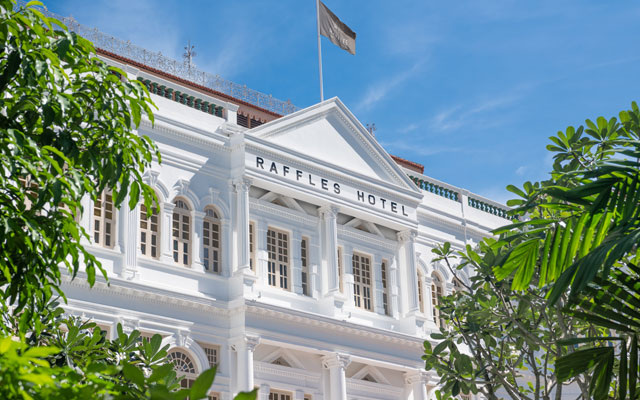
The “suite life” at Raffles
Soak in the lush greenery of the gardens at Raffles Singapore on your weekend retreat to a spacious suite at S$795++ (US$554++) and enjoy a complimentary second night stay. Package includes an upgrade to Courtyard Suite, late check-out at 4pm, daily breakfast for two at Tiffin Room, $100 nett dining credit at Raffles-operated restaurants and bars, Raffles Spa and Raffles Boutique, a history tour with the Resident Historian, as well as a 15 per cent discount at Raffles-operated restaurants and bars, Raffles Spa, Raffles Boutique and the Floral Boutique by Raffles.

A sanctuary retreat at Sofitel Singapore Sentosa Resort & Spa
Escape the hustle and bustle of the city and while away on a weekend sanctuary at Sofitel Singapore Resort & Spa from S$388++ per room night. Indulge in the finest wines and a curated meal with a night stay in the resort’s Luxury Room, followed by a massage at So Spa to complete your weekend escapade.

A weekend getaway at Swissôtel Merchant Court
Enjoy your weekend getaway with your family at Swissôtel Merchant Court Singapore with rates starting from $185++ per night, available every weekend on Fridays, Saturdays and Sundays. The offer includes daily buffet breakfast for two, 20 per cent off dining at the hotel’s outlets, 15 per cent off a la carte spa treatments at Pürovel Spa & Sport, late check-out till 3pm, and complimentary Internet access.

Satisfy your cravings at Ibis Singapore Novena
ibis Singapore Novena is offering a complimentary local dish – options include laksa, chicken satay, beef kway teow and nasi goreng – at the hotel’s restaurant Oopen Pasta & Grill per guest per stay, with rates starting from $162++ per room per night for two.

Relax & recharge at Novotel Singapore on Stevens
Relax and recharge in the lush urban paradise at Novotel Singapore on Stevens from $180++ per night with daily breakfast for two and complimentary access to the National Orchid Garden at the UNESCO Heritage Site, Singapore Botanic Gardens. The offer also includes complimentary Wi-Fi access, complimentary shuttle bus service to and from Orchard Road, 24-hour room service and a 24-hour laundromat.

For a full list of all staycation deals at Accor branded properties, visit https://all.accor.com.

Sri Sutra Travel to debut new online booking platforms for multiple parties

0

Malaysia-based Sri Sutra Travel is set to launch this May a series of booking platforms aimed to help government bodies, corporate organisations, commercial businesses and travel trade in their travel product acquisition.

Known as GovBizTravel, CorporateBizTravel, SMEBizTravel and B2BTravelSolutions respectively, these platforms will utilise a cutting edge travel solution powered by TravelCompute, which is Sutra Group’s in-house one-stop travel technology solution provider.

Syed: all platforms sit on one system, which makes navigation easy for users

The B2BTravelSolution platform acts as a ‘travel office box’ on a platform for the travel trade. A user will be able to use the platform for airline ticketing, hotel reservations, tour package purchases as well as all other related travel arrangements. Included within the platform is a user-friendly back office system.

The GovBizTravel booking platform will cater solely to government ministries and authorities, and will make available three payment options for users – via warrant, local order or credit card.

The CorporateBizTravel platform and the SMEBizTravel platform have basic features of an online booking engine where users are able to book and purchase air tickets, hotel stays, airport transfers, car rental and ancillary services such as visas, baggage insurance and travel insurance among others, all on a single platform without leaving the booking page.

The CorporateBizTravel platform, however, will boast extended features such as traveller profiling, travel approvals, travel policies and detailed analytics and reporting.

Syed Razif Al-Yahya, group managing director and CEO at Sutra Group of Companies, shared: “These platforms are uniquely different in comparison to what is out there, as all required travel arrangements are solely created within one (system). The user does not need to navigate to other platforms (which reduces) confusion and delays.”

The platform itself is a creation of Octraves Technology, which is within the SUTRA Group of Companies, built in-house and is managed by its chief architect and engineers.

APTRA urges governments in APAC to aid travel retail

0

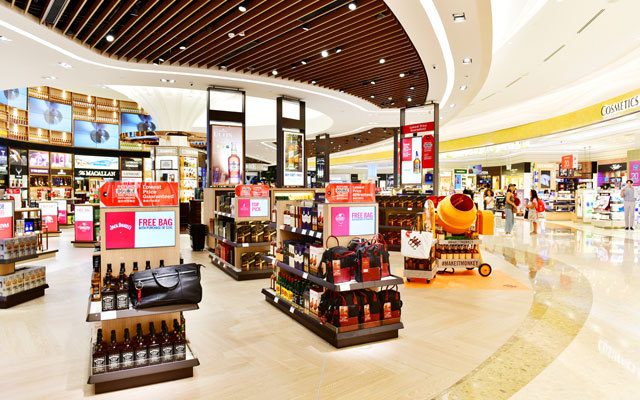
The US$36 billion duty free and travel retail industry in Asia-Pacific, which employs some 320,000 people across the region, is at risk of being overlooked by politicians as they craft coronavirus relief packages for the wider tourism ecosystem, argued the Asia Pacific Travel Retail Association (APTRA).

In a statement, the APTRA called on governments in over 45 countries across the region to support these local and frontline employees in the region by including the duty free and travel retail industry in the same financial rescue packages as airlines, airports and maritime industries.

320,000 jobs in duty free and travel retailing are at risk

The duty free and travel retail industry in Asia-Pacific contributes nearly US$15 billion to GDP across the region, according to a report released by APTRA and The Duty Free World Council in October 2019.

Airport retail and commercial services, including F&B, account for up to 60 per cent commercial income for airport owners, outpacing aeronautical revenue streams. It is “the most significant direct contributor to the investment in Asia-Pacific’s aviation infrastructure and ongoing development of world-class national gateways, the region’s hubs to the world”, noted APTRA.

APTRA president Grant Fleming said: “The dynamics of duty free and travel retailing are intrinsically linked to the aviation and maritime industries, and its viability is entirely dependent on the return in passenger traffic. This means 320,000 jobs are at risk that could be safeguarded if governments extend financial support packages to the industry.

“The travel ecosystem is multifaceted and, beyond airports, the duty free and travel retail industry integrates deeply with the region’s vital tourism market – directly with operators such as airport retailers, airlines, cruise-lines and downtown shopping malls, and also indirectly with everything from hotels to travel agents and tour guides.

“We are calling on over 45 governments across the region to recognise the unique economic contribution of the entire travel retail industry and to prioritise support packages to our channel and the many that are, and will be, affected financially by Covid-19.”

Spending drought threatens travel agencies

0

The coronavirus pandemic adding on to the global economic woes has impeded travel, severely impacting consumer spending for 2020, and posing critical risks to travel agencies given that financial performance is tied to the direct spending of consumers, according to GlobalData.

Last year saw US$1.9 trillion spent on outbound global travel, with travel intermediation accounting for US$166 billion, which is equivalent to 8.7 per cent of global expenditure, according to GlobalData’s latest figures.

The fall of consumer spending in the wake of the coronavirus threatens the viability of travel businesses

More was spent on transportation (US$472 billion), retail (US$461 billion) and accommodation (US$325 billion), but lack of expenditure across these sectors will have a roundhouse effect on travel intermediaries.

Johanna Bonhill-Smith, travel and tourism analyst at GlobalData, said: “Companies with a steady financial performance, operating through a multi-branded strategy and high cash reserves, are more likely to survive in this war-like period. But ultimately, lack of consumer spending is the greatest threat faced by all travel intermediaries and travel sectors.

“Travel intermediaries act as the direct link in the chain of distribution between a company and the consumer base working in tangent with airlines, hoteliers, cruise operators and insurance providers. Therefore, the financial performance and downfall of any travel-related sector will have a dramatic effect on intermediaries.”

As numerous operators now seek additional credit to stay afloat, companies with steadier financial performance are more likely to receive credit, said GlobalData in a statement.

Travel players that also operate through a multi-branded strategy are likely to encounter quicker financial recovery due to servicing of a wider market base. Additionally, those with a higher operating cash reserve are better placed to outlast the effects of an exogenous event such as Covid-19.

Bonhill-Smith concluded: “Despite a significant drop in share prices amid the lack of demand, OTAs such as Expedia, Booking Holdings and Lastminute.com are likely to be in a better position (to survive the Covid-19 crisis). Traditional in-store travel agencies such as TUI and Hays Travel, however, will face greater challenges in a post-Covid-19 world as more customers opt for an online booking platform over face-to-face interaction.

“As travel restrictions continue to impose on the freedom of movement, the slump on consumer spending is not likely to lift anytime soon. It does remain clear, however, that the travel marketplace will be a lot less crowded as all companies struggle, with many on the verge of collapse.”

New hotels: The Royal Park Hotel Iconic Osaka Midosuji, Sindhorn Midtown Hotel Bangkok and more

0

The Royal Park Hotel Iconic Osaka Midosuji, Japan
Royal Park Hotels and Resorts has opened its second hotel in Osaka, located in the brand-new OBIC Midosuji building in the CBD. There are 352 guestrooms within, starting from the 21m2 Comfort Double right up to the 102.5m2 Suite. Amenities on-site include two gyms, and all-day dining restaurant The Blink on the 15th floor. The executive lounge on the 25th floor also offers meeting facilities with complimentary two-hour usage.

Sindhorn Midtown Hotel Bangkok, Thailand
The flagship property of Thai-inspired hospitality brand Siam Sindhorn has opened in Bangkok’s Langsuan neighbourhood. Spread across two towers are 344 hotel rooms and suites, alongside 49 serviced residences. Facilities include two F&B offerings, the Horizon Pool on the 18th level, and the fitness centre on the 19th level.

Lemon Tree Hotel, Thimphu, Bhutan
India-headquartered Lemon Tree Hotels has opened its second international property in Bhutan. Built in the traditional Bhutanese architecture style, the hotel stands on Changlam street in Thimphu, and features 27 rooms. Other amenities include Citrus Cafe, a multicuisine restaurant with an al fresco dining area; Slounge bar; and fitness centre.

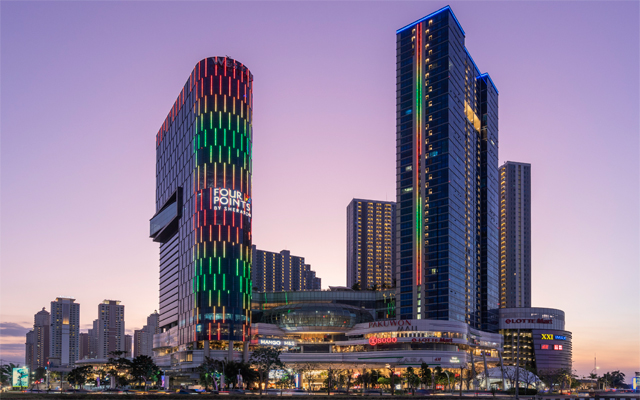
Four Points by Sheraton Surabaya, Pakuwon Indah, Indonesia
This four-star hotel in Surabaya offers 317 rooms across four room categories – Deluxe Rooms, Premium Deluxe Rooms, Junior Suite Rooms and Premium Suite Rooms. The property is connected with both Pakuwon Mall and The Westin Surabaya, where the latter offers more than 8,600m2 of meeting space across 21 function spaces. Facilities include two swimming pools and the Djaman Doeloe Resto & Bar.

Thai hospitality staff locked out of government wage aid by absence of hotel closure directive

0
  • Thailand’s lockdown has snuffed out hotel business but hotels are denied an order to shutter
  • Without a hotel closure order, full-time staff are blocked from accessing their Thai Social Security Fund
  • Government’s other wage support has limited scope and is oversubscribed

Thailand has set clear lockdown policies in all provinces to combat the spread of Covid-19, but the same cannot be said of the authorities’ decision on hotel closure. Without a firm official directive for all hotels to close, millions of hotel employees will be left with no governmental support in this crisis.

According to the Thai Hotels Association (THA), of the 32,564 hotels registered in Thailand, some 95 per cent, or 30,936, expect to have zero revenue in April when they temporarily stop operations due to the lockdown.

Thai Hotels Association estimates that 95 per cent of the 32,564 hotels registered in Thailand will have zero revenue in April

Phuket is the latest tourism magnet to close all entry and exit points from April 10 to 30, or further notice.

Unless hotels are ordered to shutter, full-time, formal hotel employees will be ineligible for financial aid from the Thai Social Security Fund (SSF). The only other exception to access this fund is when their employers have physical contact with an infected individual, in which case they are entitled to receive 50 per cent of their monthly salaries up to a maximum of 7,500 baht (US$226) for no more than 180 days.

“THA had a discussion with the Labour Ministry last week, but failed to achieve the goal of protecting our workers,” Surapong Techaruvichit, THA adviser, told the Bangkok Post. “Operators in each province have to help themselves by urging their governors to officially approve the closure of hotels in order to get SSF payment for affected employees.”

Some 1.63 million workers in the hotel business, particularly the more vulnerable 978,252 minimum-wage employees, are now likely to be left without any governmental support despite their regular monetary contributions to the SSF. The Thai social security programme is funded by monthly deductions of 10 per cent from a worker’s salary, with the employer and employee paying half each.

Pattamon: government restrictions have dismembered hotels, leaving them with only rooms

“Now we are forced to weigh how long we can carry on and carry our staff, who are like family, along with us. We think it’s about time the government issues some subsidies for hospitality businesses,” lamented Pattamon Mekavarakul, vice president of five-star Cape Dara Resort Pattaya.

According to Gavin Vongkusolkit, a board director of The Erawan Group, one of Thailand’s largest hotel investment companies with over 6,100 rooms in 56 properties, the unfolding crisis may force hotels to be closed for nine months or longer.

“Most of our hotels are already closed. As a big group, we have the financial resources to weather through this crisis. In any case, given the apparent effectiveness of the Stay Home campaign, we think we might be able to reopen sooner than initially anticipated,” Gavin told TTG Asia.

He added, in his capacity as the owner of the independent 58-room boutique hotel Ad Lib Bangkok, that the situation is much different for smaller hotels. “Smaller hotels with limited access to funding will have to figure out a different solution,” he said.

Assistance oversubscribed
The government’s offer to support contract workers, entrepreneurs and freelancers outside the social security coverage, with 5,000 baht monthly payouts for April, May and June, has attracted 21.7 million applicants since the application opened on March 28.

While the Ministry of Finance had only expected 3.5 million applications, it made a decision early this week to grant eligibility to nine million of those applicants. This will cost the ministry 135 billion baht.

“The state has enacted measures to support those in the informal economy – I don’t have anything against that, but it is not fair to businesses like ours that have been contributing to the SSF for years and now receive nothing in return,” Pattamon told TTG Asia.

“We were forced by the government to close our fitness centres, spas and and restaurants. We aren’t allowed to host events. They cut off our arms and legs – and left us with only rooms,” she said.

“As a five-star hotel, if even one client books with us we have to maintain our gold standard which means we have to provide the full staff and facilities, which is very costly. That’s why (the closure order) matters to us, and many in THA are sharing this message on Facebook and social media. We hope this will reach the ears of the government,” she added.

Save one, save all
La-iad Bungsrithong, president, THA northern chapter, stressed that all chapters in every region of Thailand have been calling out for the government to support the local hospitality industry. As one of the mainstays of the country’s economy, supporting it could help ensure a quicker rebound for Thailand after the crisis.

La-iad: a trying time for the entire tourism industry

“What’s important at this moment, is achieving clarity for hospitality businesses about how these financial aid measures will be applicable to them, and exactly which categories of handouts will specifically apply to hospitality workers. That isn’t clear now. Meanwhile, we have to come alongside all our members and support them because this is a very trying time for the entire tourism industry,” said La-iad, who is also general manager of RatiLanna Riverside Spa Resort, Chiang Mai.

The sentiment that the Thai government needs to look after the hospitality industry more was shared late last year in a press conference by hospitality veteran Pramookpisitt Achariyachai, founder of Phuket’s first hotel chain Kata Group.

“I feel that the government needs to pay even closer attention to the hospitality industry than it is doing. It’s one of Thailand’s key industries, but the government seems to pay attention only when it wants to boost the economy. Other times, we are mainly forgotten.”

THA has asked members to look after the welfare of workers by, for example, offering them accommodation and meals, but it is hard for operators to keep up their support as nobody knows how long the crisis will last, said Surapong. – Additional reporting by Nophol Techaphangam