

ForwardKeys taps OAG to track airline capacity changes

Travel analytics firm ForwardKeys has enhanced its flight data capabilities through a new long-term partnership with global flight information provider OAG.
Under the agreement, OAG will provide ForwardKeys with a weekly feed of the latest worldwide airline schedules, a daily feed of schedule changes to understand volatility better, a daily feed of flight status data to track flight cancellations worldwide, and improved modelling and identification of aircraft configurations used on specific routes.
This will enable ForwardKeys to provide even more accurate data on airline seat capacity to its clients, amid the rapidly evolving Covid situation, the company said in a statement.
Olivier Jager, CEO and co-founder of ForwardKeys, said: “Seat capacity and schedule data is a core, strategic asset for ForwardKeys. It is not only a dataset that is consumed directly by a significant number of clients via our online platforms and offline reports, but it is also used extensively in the company and is a key component for our algorithm to model and generate total air market estimates.
“After careful consideration and analysis of OAG’s data, our team collectively agreed that this was an appropriate and timely change to make as we strive to continuously improve.”
The new data files will be available to ForwardKeys clients via its flagship online subscription tool ForwardKeys Nexus, as well as through the company’s offline reports, API web services or flat-file deliveries. The new dataset will also appear in new products and services that ForwardKeys bring to the market, according to Jager.
New hotels: Sindhorn Kempinski Hotel Bangkok, Mercure Kyoto Station, and more
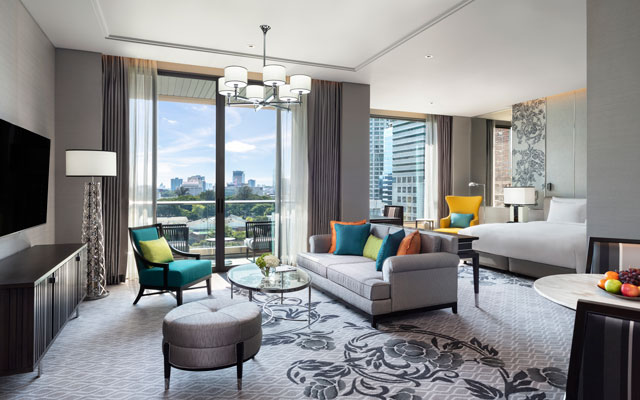
Sindhorn Kempinski Hotel Bangkok, Thailand
Set in Sindhorn Village, the green and upscale residential expansion to Lumphini Park, Sindhorn Kempinski Hotel Bangkok has debuted its 285 rooms and suites, including the three-bedroom Sindhorn Royal Suite, as part of the next phase of the hotel’s opening process. Room sizes start at 66m², with each room boasting floor-to-ceiling windows, alongside its own private balcony seating.
New amenities include a 25m² infinity swimming pool; and the newest stage of Sindhorn Wellness by Resense, with the hammam and the thermal area, with its sauna, bio sauna, steam room, cold room, micro-salt inhalation room, rasul mud room, experience showers and infrared tepidarium relaxation beds. These facilities join the fitness, yoga and Pilates studios, which had opened earlier. On-site F&B venues include a bar with a cigar lounge, a lobby lounge, as well as an all-day restaurant with an open kitchen and a garden terrace.
Each of the hotel meeting and event rooms boast natural daylight and an outdoor balcony. There are five flexible venues spanning a total 268m² indoors, and an outdoor garden venue covering 436m², available to host corporate meetings and an assortment of events.

Mercure Kyoto Station, Japan
Situated just minutes from JR Kyoto Station, Mercure Kyoto Station boasts 225 guestrooms, ranging from 23-34m² with design elements including motifs from the Heian period – a nod to the ancient history for which Kyoto is renowned. Trattoria M Kyoto, a live kitchen-style bistro restaurant and bar, will offer all-day dining. Guests can also unwind in the underground lounge, which will feature original furniture from the Heian period and books providing insights into the ancient traditions of Japan.

Fairfield by Marriott hotels, Japan
Fairfield by Marriott will double its footprint in Japan with the opening of eight hotels across four prefectures by year-end. The new hotels are located at roadside ‘Michi-no-Eki’ destinations inspired by rural landscape, mountains and historic sites.
Six properties have opened their doors this month: Fairfield by Marriott Gifu Seiryu Satoyama Park (85 rooms), Fairfield by Marriott Gifu Mino (54 rooms), Fairfield by Marriott Tochigi Utsunomiya (87 rooms), Fairfield by Marriott Kyoto Kyotamba (75 rooms), Fairfield by Marriott Gifu Gujo (87 rooms), and Fairfield by Marriott Mie Mihama (63 rooms). Soon to follow is Fairfield by Marriott Tochigi Motegi (52 rooms) in November, and Fairfield by Marriott Kyoto Miyazu (93 rooms) in December.
All eight hotels feature a lounge with a relaxed seating area, with each guestroom averaging about 25m². The hotels also offer fast complimentary Wi-Fi, and optional breakfast takeaway in bento boxes.
This latest string of openings is part of Marriott International’s Trip Base initiative, a project seeking to revitalise local sightseeing spots by opening hotels alongside ‘Michi-no-Eki’ roadside stations, designed to provide comfortable stopover rest facilities for road trip travellers in Japan.
Asian airlines enjoy runway success with new, creative ventures
• Continued freeze on foreign travel forces airlines to innovate and unlock new revenue streams
• Sales for sightseeing tours, virtual reality flight experiences soar on back of pent-up travel demand
• From pyjamas to fried dough fritters, no product is off-limits for airlines desperate to generate some cash
As the fate of international tourism worldwide remains up in the air, Asian airlines have been spreading their wings into new revenue sources in a desperate bid to stay afloat.
From F&B initiatives to sightseeing flights that go nowhere, novel ideas spun up by airlines keep staff working, homebound travellers engaged, and cash tills ringing.
Next destination: Homebound
As the concept of sightseeing tours in the skies takes off in Asia, more airlines are seeing it as a runway for revenue growth, pencilling in additional dates or throwing in complementary perks around these no-destination flights to pique pent-up wanderlust – and pandemic-weary consumers are lapping it all up.
Airlines like All Nippon Airways, EVA Air, and Qantas have sold out flights that take off and land at the same airport, satisfying the travel urge of frequent flyers and homebound travellers, as the majority of borders across the globe remain sealed.
As the latest carrier to hop on the trend, Hong Kong Airlines (HKA) is set to operate a 1.5-hour sunset flight from Hong Kong to Hong Kong. Dubbed Embrace “Home” Kong flight, the October 24 service also aims to support local businesses and artists.
All 100 tickets for the joy flight sold out within 30 minutes, and a spokesperson from HKA told TTG Asia that due to the “overwhelming demand”, the airline may consider launching similar flights “in the very near future”.

Using an Airbus A320 aircraft, the flight will fly within 200 nautical miles from Hong Kong over the South China seas. Starting from HK$852 (US$110) for one or two passengers and HK$1,188 for a party of three, the airfare includes HK$600 in cash vouchers, which can be used to purchase air tickets from HKA or products from the airline’s wholly-owned subsidiary HKA Holidays.
An add-on staycation at Novotel Citygate Hong Kong priced at HK$1,288 is also available for purchase for ticket-holders, which includes a one-night stay in a standard room plus dinner and breakfast buffet for two adults.
To help struggling local agents, an undisclosed number of tickets to the sunset flight were sold at appointed travel agencies. A tie-up with inflight caterer, Gate Gourmet, will provide snack boxes to all participants. Customers can also redeem a dining discount at aviation-themed restaurant, The Galley by Café Proud Wings.
A lucky draw on that day will dangle prizes including luxe staycations, restaurant vouchers, an experience in the airline’s flight simulator, as well as an airfare and accommodation package for two in Bangkok from HKA Holidays.
Through this initiative, the airline also aims to promote local art and culture, through the sale of special travel memorabilia designed by four local artists, alongside take-home souvenirs featuring their work for all participants.
Over in South Korea, Asiana Airlines will conduct scenic flights over four resort areas including Jeju island for 310 passengers over two days – October 24 and 25. Using A380 airplanes, the flight experience will include an in-flight meal and amenity kit. Discount coupons for domestic routes are built into the fare, ranging from 250,000 won (US$175) to 305,000 won.
Tickets for these flights to nowhere sold out within hours, according to The Korea Herald – and they aren’t the only faux flights to sell like hotcakes.
Qantas Airways’ seven-hour scenic flight over Australia’s Outback and Great Barrier Reef in October was the fastest-selling flight in the airline’s history. All 134 tickets on the Boeing 787 were snapped up in 10 minutes, with passengers forking out between A$787 (US$579) and A$3,787 for the joyride.
Similarly, all 120 tickets to Tigerair Taiwan’s sightseeing flight from Taipei that circled over Jeju in September sold out within four minutes. The airfare, costing NT$6,888 (US$240), includes a one-year voucher for round-trip tickets from Taiwan to South Korea, which can be used after Covid-19 travel bans are lifted.
The record-holder for fastest-sold sightseeing flights, though, is Taiwanese start-up carrier Starlux Airlines. In early August, Starlux unveiled its first “pretending to go abroad” flight piloted by its chairman, and all 188 tickets for the 3.5-hour trip over the Taiwan-controlled Pratas Islands in the northern part of the South China Sea flew off the shelves in just 30 seconds. Tickets went for NT$4,221 (US$147) each.
Changing the game, upping the ante
Grounded passengers who are unable to fly abroad, are also opting to fly past the moon instead. In conjunction with the Mid-Autumn Festival, Chinese budget carrier Spring Airlines offered around 100 moon-viewing flights from September 26 to 28, giving travellers the chance to get a close-up view of the supermoon lunar eclipse, reported CNN. Keeping festival traditions alive, activities such as writing couplets, giving out mooncakes, and guessing lantern riddles were also carried out during the flights.
Likewise, EVA Air and Starlux have also launched moon-gazing flights in early October, allowing passengers to catch glimpses of the moon in its full glory.
EVA Air took over 300 passengers on a Boeing 787 Dreamliner to view the moon for NT$5,888 in economy class, with a window seat going for NT$1,000 more. Tickets for business class cost NT$7,888 each.
Pre-boarding, passengers were serenaded by a string quartet from the airline’s own symphony orchestra who played moon-themed classics such as Fly Me to the Moon and The Moon Represents My Heart. Passengers who shared the same name as the Chinese moon goddess, Chang’e, were gifted with a Dreamliner model.
Promising to bring passengers on a journey “closest to the moon”, the Starlux Fly to the Moon flights included a Michelin-starred meal in each NT$5,888-priced ticket.
The airline has since chalked up more than a dozen flights to nowhere, with most of the flights being scooped up within 10 minutes, Katie Chao, a spokesperson for Starlux, told the Times. Aiming to up the luxe ante on these no-destination flights, the airline has been bundling flight packages with hotel stays, she added.
For Taiwan’s flag carrier China Airlines, its flights to nowhere were paired with flight attendant lessons for kids. In August, the carrier started conducting morning camps at its Taoyuan headquarters which saw participating children playing the roles of cabin crew and serving passengers in a mock cabin. This was followed by a two-hour sightseeing flight over the island, which also flew into Japanese airspace.
Also looking to engage families with kids, Singapore Airlines (SIA) is offering behind-the-scenes tours of its training facilities over the November school holidays. Visitors will gain insights into the airline’s 70-year history, with the opportunity to interact with the crew. Admission tickets, which include an in-flight meal and goodie bag, are priced at S$30 (US$22) for adults, and S$15 for children aged three to 12.
Several activities are also available as add-ons, including a junior cabin crew experience (S$88), a full flight simulator ride (S$500 for up to three participants in a 30-minute session), a wine appreciation experience (S$38), and a grooming workshop which includes a Lancôme makeup palette (S$88).
Ready for virtual take-off
There are even opportunities for grounded travellers to enjoy the thrill of take-off, without even leaving the ground.
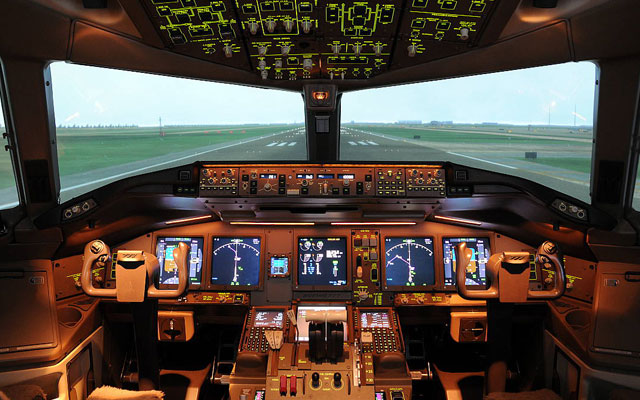
This month, the debt-ridden Thai Airways International (THAI) opened access to its Airbus and Boeing flight simulators, offering budding pilots and aviation fans the chance to play pretend pilot. Customers can hop into a mock cockpit of their choice from four aircraft models – the Airbus A380, Boeing 777-300ER, Boeing 747-400, and Boeing 737-400 – and be able to use the flight training devices.
Pilots and co-pilots will accommodate customers throughout the entire session, with prices ranging from 12,000 baht (US$385) for a half-hour session for two users to 36,000 baht for a 90-minute experience for a trio.
The simulators are normally reserved for the training of pilots employed by THAI and those from overseas, and have only opened to the public for the first time as part of the THAI Flying Experience & Beyond project, which also includes plans to conduct sightseeing flights around the country, reported the Bangkok Post.

Non-airline companies are joining the game too. Tokyo-based First Airlines offers virtual travel experiences in a mock airline cabin, where guests are served in-flight meals by staff dressed as flight attendants, while ‘touring’ famous sites through virtual reality headsets.
While the entertainment company has been in operation since 2017, the take-up rates for the 6,580 yen (US$62), 110-minute flight simulation has doubled amid Covid-19 as Japanese holidaymakers turn to virtual reality for a taste of travel, Reuters reported.
Selling everything from airplane food to pyjamas
To recreate the experience of in-flight dining, SIA turned its A380 double-decker superjumbo aircraft into a pop-up restaurant which will host diners over the next two weekends. More seats and dates were added after tickets for the original two seatings were snapped up within 30 minutes.
Diners can savour the airline’s signature dishes, or familiar favourites from its Peranakan menu, at the pop-up Restaurant A380@Changi. Prices range from S$50 (US$37) and S$90 for a three-course meal in economy and premium economy class, to S$300 for a four-course meal in business class and S$600 in suites. Each meal comes with two complimentary alcoholic drinks and free flow of other beverages.

Other highlights include a heritage showcase of the airline’s cabin crew uniforms through the years, an exclusive pre-lunch tour of the A380’s private access areas including the cockpit, alongside limited-edition souvenirs.
For those who prefer home-delivered airline meals, SIA@Home lets customers enjoy first class and business class meals in the comfort of their own home, for the starting price of S$448 and S$288, respectively. Ten menus are on offer, with limited-edition dining ware and amenities included in select packages.
For a taste of the ultra-luxe dining experience, customers can also book a private chef who will reheat, plate and serve the meal for them in their homes.
SIA’s pop-up eatery follows THAI’s move in September to transform its cafeteria at its Bangkok base into an airplane-themed restaurant, complete with aircraft seats and cabin crew serving in-flight meals on trays.
The Thai flag carrier, which is undergoing debt restructuring, has also started selling its own version of fried dough sticks at the airline’s five food outlets in Bangkok. The dough fritters are a hit, reportedly raking in 10 million baht in monthly sales, prompting plans for a franchise, reported the Bangkok Post.
When it comes to airlines peddling stuff for added cash flow amid the travel slump, nothing seems off-limits. In August, Starlux launched a limited-edition biscuit set dubbed Starbox, which came in a case shaped like an air freight container used on the airline’s Airbus A321neo planes. All 1,500 Starboxes, each priced at NT$1,780, sold out within 35 minutes. Buoyed by the success, the airline released a second edition of the gift box early last month.

After Qantas was forced to retire its Boeing 747 fleet six months early due to the pandemic’s impact on air travel, it sought to make a quick buck by peddling the bar carts salvaged from the jumbos. A total of 1,000 “well-travelled” bar carts which were up for sale came stocked with alcohol, sweet treats, business class amenity kits and pyjamas, and a first-class Sheridan throw.
Offering customers a chance “to own a piece of aviation history”, the carrier claims that “each cart has travelled the world, from London and Los Angeles to Singapore and Santiago”, with each averaging around 2,000 flights. Priced at A$974.70 for a half-cart, and A$1,474.70 (US$1,038.74) for a full-size cart with double the items, the catering carts quickly sold out.
The Australian airline in August had also turned its excess stock of in-flight perks typically bestowed upon premium passengers into 10,000 care packs, slapped a A$25 price tag on each one, and put them up for sale online. All packs sold out within a few hours. Besides the airline’s highly coveted business class pyjamas, the kits also contained tea bags, Tim Tams, hand cream, and smoked almonds.
Earlier this month, Qantas sold off more 747 memorabilia – including emergency exit signs, phone handsets and a galley control unit – via a charity auction, with the resulting funds donated to the Royal Institute of Deaf and Blind Children.
Cathay Pacific shuts regional airline, axes 8,500 jobs
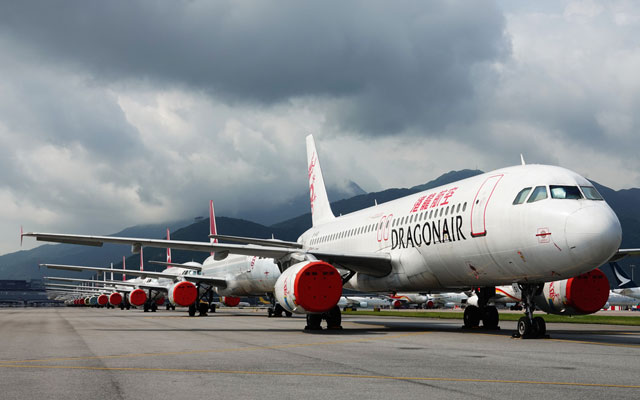
Cathay Pacific will cease the operations of its regional subsidiary Cathay Dragon after three decades with immediate effect, as part of a wider restructuring in response to the ongoing pandemic travel slump.
The Hong Kong airline said that it plans to seek regulatory approval to continue operating a majority of the routes offered by Cathay Dragon, mainly through its wholly-owned subsidiary HK Express.
At the same time, Cathay will also cut 8,500 jobs, or nearly a quarter of its workforce across the entire group. About 5,300 employees based at its headquarters in Hong Kong and another 600 elsewhere will likely lose their jobs, while 2,600 unfilled positions will also be cut, it said in a statement.
Hong Kong-based cabin and cockpit crew members will be asked to agree to changes in their conditions of service to match remuneration more closely to productivity. Executive pay cuts will continue throughout 2021 and a third voluntary Special Leave Scheme for non-flying employees will be introduced for the first half of next year.
The airline said it will offer severance packages that “go well beyond statutory requirements”. It will also be extending medical benefits and staff travel entitlements, as well as providing counselling and job transition support services.
Cathay Pacific CEO Augustus Tang said: “The global pandemic continues to have a devastating impact on aviation and the hard truth is we must fundamentally restructure the group to survive. We have to do this to protect as many jobs as possible, and meet our responsibilities to the Hong Kong aviation hub and our customers.
“We have taken every possible action to avoid job losses up to this point. We have scaled back capacity to match demand, deferred new aircraft deliveries, suspended non-essential spend, implemented a recruitment freeze, executive pay cuts and two rounds of Special Leave Schemes.
“But in spite of these efforts, we continue to burn HK$1.5-2 billion cash per month. This is simply unsustainable. The changes announced today will reduce our cash burn by about HK$500 million per month.” Nothing that recovery will be slow, Tang said the airline expects to operate below 50 per cent of 2019 passenger capacity for the entire of next year.
OTAs capture ripe demand as travel returns
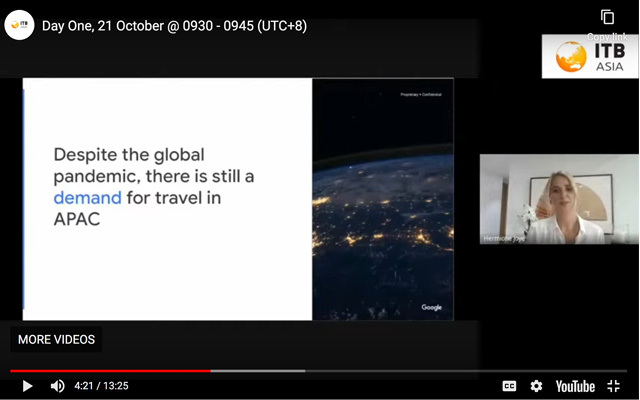
More consumers are gravitating towards OTAs as contactless transactions and information transparency race to the fore of the Covid-19 world, edging businesses towards the ever-increasing need for digitisation.
Since the onset of the pandemic, there has been an “acceleration of preference towards OTA” platforms, described Hermione Joye, sector lead, travel and vertical search APAC, Google. For instance, Chinese consumers have more than doubled their bookings via OTAs during the Covid-19 period, posting a marked shift away from direct sellers.

“This is because (OTAs) clearly articulated what was happening around China when it came to travel restrictions and opportunities, as well as what they were doing for safety measures,” said Joye.
Speaking at a keynote session at ITB Asia 2020 Virtual on October 21, Joye stressed the importance for companies to improve their digital presence, as the modern traveller is “incredibly digitised” and will be partial to platforms that can create a personalised booking experience.
Success also hinges on adapting and responding to new needs quickly; an approach that has helped airlines secure increased direct traffic. Joye advised businesses to create new strategies based on how each market is currently adapting to the pandemic.
In addition, she urged businesses to provide consumers with relevant and current information clearly. “You need to improve your digital user interface – make sure it’s seamless and end-to-end – and make sure the consumers really understand the safety programmes, so that they feel comfortable booking with you.”
The need to instill trust and traveller confidence through messaging and tourism content is also emphasised by fellow keynote presenter Angel Llull Mancas, vice president & managing director, Asia Pacific with Booking.com.
Mancas emphasised flexible cancellation policies to give travellers’ piece of mind, as “we cannot predict when the next wave will come or how borders will react”.
Some travel trends to note, according to Mancas, include last minute bookings as well as bookings for future travel dates; and a growing preference for locations that are less populated as well as nature-based attractions such as beaches and mountainous areas. In response to these trends, Booking.com has improved on its search functions to make it more intuitive for users to find their preferred holiday locations.
He also foresees that remote working may result in a new type of customers in the years to come. These are people who choose not to work from home, but from an alternative setting, such as a beach or restaurant, where they can stay connected to their colleagues through Wi-Fi. – Additional reporting by S Puvaneswary
PATA overhauls its corporate governance
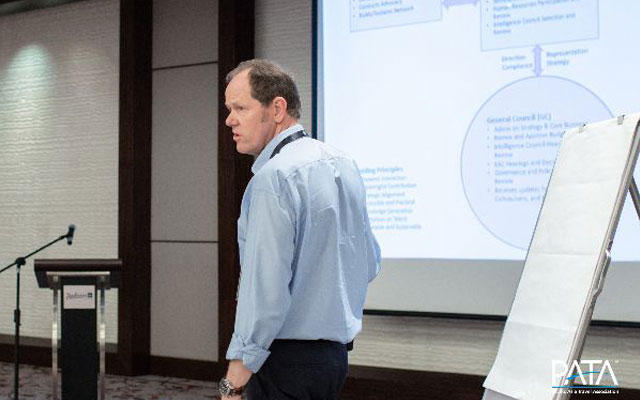
The Pacific Asia Travel Association (PATA) has made significant changes to the design of its organisational governance at the recent Board Meeting and Annual General Meeting held on October 12 and 14, respectively.
The major changes are a shift from an appointed Board to an elected Board by all members that is also substantially reduced in size, in addition to a reduced and fully elected Executive Board.
A feature of the new design is a shift from an expansive array of committees to Expert Task Forces (ETFs), which draw upon the deep knowledge and experience within the PATA network to address issues of interest to the Association and the industry. The ETFs are established to focus on a specific task within a specified time-frame and disband upon completion. New ETFs will be formed on new issues as they arise.
The goal is to enable the active engagement of members in dynamic and meaningful activities that support PATA’s purpose of facilitating the responsible development of travel and tourism in the Asia Pacific region.
Over the past year, three pilot ETFs have been formed. Two ETFs helped frame and facilitate the development of the PATA Crisis Resource Center and Tourism Recovery Monitor, both designed to support members through the challenges of the Covid-19 pandemic and assist towards recovery. A new ETF is currently in process to help envision the future of PATA in a post-Covid-19 environment to maximise benefits for current and future members of the Association.
The new structure is also designed to enable a voice for all members. The ETFs along with the Board, Executive Board, and Management initiatives will encourage greater member engagement through ‘micro-volunteering’ by facilitating ‘bite-sized’ feedback on issues that matter to members, while assuring the agenda remains relevant, timely, dynamic, engaging, and beneficial for all industry stakeholders.
PATA will retain a balance of public and private sector members in the new design, but the changes will enable broader participation of members to facilitate greater equity and diversity in all aspects of governance and operation.
This change in organisational governance has been in the works over the last three years, during which PATA reviewed leading organisational models and consulted with a wide range of experts to create a design that modifies and refines the Association for more efficient outcomes and engaged participation.
Discova takes educational travel online

Destination specialist Discova has launched a range of Virtual Educational Travel programmes to allow schools to proceed with their experiential and overseas exchanges during the travel downtime, with one group already confirmed for November.
Utilising video conferencing platforms like Zoom and Adobe Connect, depending on the customers’ preference, the programmes will invite student groups from around the world to interact in real time with South-east Asia-based expert hosts to appreciate new languages, learn new skills and immerse in a new culture.
Highly customisable, the programmes include Virtual Student Exchanges, where students will have real-time interactions with peers and experts to experience culture differences; Virtual Workshops that impart new skills; Virtual Tours by a locally-based expert guide; and Virtual Trainings that are conducted in partnerships with universities in South-east Asia.
Eileen Yee, general manager of Discova Educational Travel, told TTG Asia that the virtual products were created in response to customer demand.
“Some of our travel partners and regular clients, including schools and universities in Singapore and Australia, are looking for alternative ways to offer learning and training experiences to their students through engagement with communities and experts from another country at a time when physical travel is not possible,” Yee said.
Currently, Discova is working on a virtual training programme for nursing students in Australia who will learn remotely for credits as part of their university curriculum, through interaction with peers, teachers and professional experts from a Vietnam-based university.
Yee said live learning experiences are prioritised over pre-recorded sessions to encourage engagement and interaction. Discova will work with the participating school to ensure that all needed materials are sourced for and ready ahead of the virtual activity.
“We operate our programmes ourselves and identify every local stakeholder involved in our virtual initiatives, from the local university/school we partner with to the local expert guides and hosts. As we have been operating educational programmes in South-east Asia for more than 12 years, we have developed long-term partnerships with local educational authorities, social enterprises, communities, NGOs and other experts,” she said.
Interest from schools, universities and travel partners is strong, and Discova is now in advance stages of negotiation with some customers.
The Educational Travel programmes are part of the company’s long-standing commitment to responsible tourism.
Yee said: “We ensure that our initiatives are beneficial to everyone involved, from the participating students to the destination-based hosts and communities. All our virtual and physical educational programmes follow Discova’s robust Health and Safety standards and Child Protection policy.”
“Thanks to our new virtual initiatives, we are able to continue to support our local communities and our expert guides’ livelihoods during these challenging times for tourism- dependent economies in particular.”
While Yee recognises the value of physical educational travel, she said the virtual programmes would remain in Discova’s offerings even after international borders reopen and physical travel resumes.
“Remote experiential learning can provide a complementary experience that many will want to take advantage of,” she said.
STB, Airbnb Experiences partner to unlock new ways for global travellers to discover Singapore
Airbnb Experiences and the Singapore Tourism Board (STB) have signed a two-year MoU to co-promote and grow a range of unique, authentic tourism experiences hosted by locals on the Airbnb Experiences platform.
This agreement comprises three strategic pillars, namely, development of Singapore Experiences in the new tourism landscape; co-marketing of destination Singapore to stay top-of-mind among global audiences; as well as facilitating data and knowledge exchange to enable effective recovery.
Virtual tourism experiences have rapidly surfaced as one of the key digital commodities for the global travel and hospitality industry as the Covid-19 pandemic impacts businesses and livelihoods. Through the MoU, Airbnb Experiences and STB will join hands to showcase the range of unique and authentic Singapore Online Experiences on the Airbnb platform, through a variety of creative channels to stay top-of-mind to travellers worldwide.
To kick off this partnership, the two organisations have developed and launched Singapore Virtual Trips, a collection of Online Experiences hosted by Singapore tourism industry partners and featured on a dedicated landing page on the Airbnb platform. This first-of-kind destination page will also provide compelling Singapore destination content, offering international travellers an opportunity to explore the country virtually during this challenging period.
Singapore Virtual Trips features a wide array of unique Online Experiences, including a sustainability-themed tour at Gardens by the Bay’s Cloud Forest, a virtual visit to Peranakan home museum The Intan with owner Alvin Yapp, an interactive bingo tour of the one-north tech precinct by Monster Day Tours, and a behind-the-scenes peek into the rich history of the Old Kallang Airport with Jerome Lim, founder of heritage website The Long and Winding Road. More tourism industry partners are expected to join this initiative following this first wave of Online Experiences.
This partnership will encourage Singapore tourism businesses to take their products online and pivot towards innovative hybrid business models, as the industry reimagines the future of tourism, said STB in a release.
In the future, both parties will also collaborate to onboard unique and authentic in-person Airbnb Experiences across various categories, including dining, nature, wellness, and the arts. Aimed at the long-term development of the Singapore Experiences sector, both parties will work with local tourism industry partners to continuously offer differentiated and fresh experiences to travellers.
The partnership will thus help local entrepreneurs leverage the economic benefits of experience-driven travel, by providing them with opportunities to share their passions and interests and connecting them with travellers who are interested in Singapore.
Given ongoing international travel restrictions, the partnership also aims to capture audience interest for Singapore to remain top-of-mind as a destination among consumers worldwide, leveraging both Airbnb Experiences and STB’s strong brand images and global reach.
Under the partnership, both parties will jointly produce a lineup of co-branded content featuring destination Singapore and Airbnb Experiences, to be served across their respective platforms and channels. STB and Airbnb Experiences also plan to make such content available to travel industry partners via STB’s Tourism Information and Services Hub. These efforts are especially critical in driving effective recovery as international travel restrictions ease, said STB.
In addition, both parties will work towards extending destination information, tools, and benefits to Airbnb Experiences guests – such as exclusive offers unlocked through sign-ups for the Visit Singapore app.
Airbnb Experiences and STB will also mutually share insights and best practices to grow experience offerings in Singapore and aid in strategic tourism development and recovery.
To kick-start this, Airbnb Experiences has invited STB to access their City Portal, a data-sharing platform built exclusively for governments and tourism organisations to equip them with travel insights and other relevant resources. STB said that data and knowledge exchange will help both parties onboard more targeted Singapore Experiences, refining tourism products and services in this new environment through a deeper understanding of the evolving traveller profile.
Asian tourism players see unequal recovery

While domestic travel interest is rising in Asia where the Covid-19 pandemic is coming under better control, demand has not been equal for all destinations and suppliers.
Yap Lip Seng, CEO, Malaysian Association of Hotels, told TTG Asia that only selected destinations in Malaysia are seeing a return in tourism business.
“Islands and beach resort destinations are gaining momentum from pent-up demand while main cities are still suffering with high dependency on international arrivals,” Yap said.
The same observations were shared by Jeff Redl, managing director of Diethelm Travel Vietnam, who noted that beach hotels in Vietnam “were recording almost full occupancy (from) Fridays to Sundays”, while city hotels continue to struggle with “extremely low occupancy”.
Demand is also heavily dependent on accessibility, where self-drive possibilities can influence domestic holiday decisions.
“Travellers are avoiding flights where possible,” said Yap.
Supporting the observation, Boon Kwee Lim, CEO of Dusit Hotels and Resorts, shared that his hotels in Chiang Mai and Phuket – most accessible by a short flight – are seeing low occupancies despite price reductions. On the other hand, his property in Korat, a three-hour drive from Bangkok, is frequently booked out at normal room prices post-lockdown.
Amid an ocean of travel offers now, domestic travellers have become even more price-sensitive, noted Suyin Lee, managing director of Discova. “We continue to see price as the key decision factor and we notice that travellers have an appetite now to try new destinations if the price is attractive.”
To spread domestic travel across more parts of a country, Yap suggested that industry stakeholders provide motivation for locals to “revisit older destinations not only based on attractions (there), but also experiences and stories it offers to travellers”.
He added: “Strategies can be mapped to recreate experiences of the same destinations with the help of complementing products such as seasonal events and features.”
It is also important that destination openings are paired with quality hotel development, advised Tunku-Iskandar Tunku-Abdullah, group executive chairman at Melewar Group and former president of the Malaysian Association of Tour and Travel Agents.
He said: “In Malaysia, there are some new destinations, or destinations putting a twist to current offerings through off-the-beaten-track activities and attractions. However, they are not well developed on the hotel and resort side, and as such are not seeing as much demand as expected.”
Meanwhile, industry players continue to support government intervention in domestic tourism promotion, particularly in the form of travel vouchers. Japan, Singapore and Malaysia are among the few countries in Asia with ongoing government-issued travel subsidies. – Additional reporting by Anne Somanas
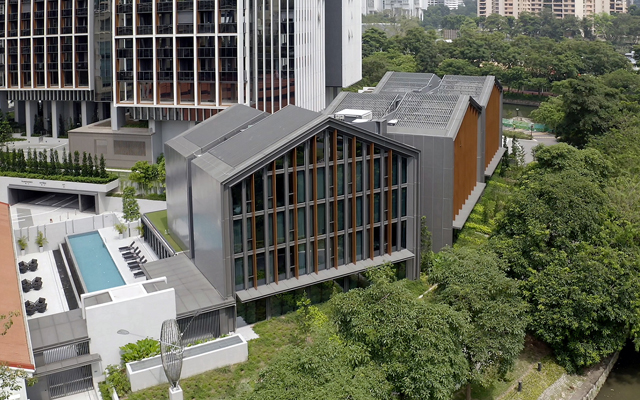







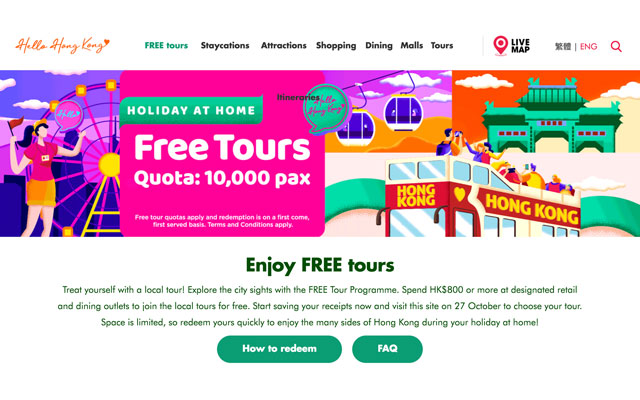
Residents in Hong Kong are eligible to join a free local tour by spending at least HK$800 (US$103) at brick-and-mortar retail and dining outlets in the city, under a new initiative by the Hong Kong Tourism Board (HKTB).
The launch of the Free Tour programme follows the government’s announcement to exempt local tours from social distancing restrictions – a move that HKTB said will “pave the way for the resumption of travel”.
All travel agencies participating in the Free Tour programme need to register their tours with the Travel Industry Council of Hong Kong (TIC). In addition, they are obligated to sign the Anti-epidemic Undertakings for Local Tours, devised by the TIC to guarantee appropriate epidemic prevention measures are carried out during the free local tours.
The new scheme is part of the second phase of HKTB’s Holiday at Home campaign, launched in mid-June to encourage local residents to be tourists in their own city. Phase one saw a series of offers rolled out to stimulate domestic consumption in the travel, hotel, dining and retail sectors.
In the second phase of the campaign, the Free Tour programme aims to boost the local economy by giving free Hong Kong tours to local residents.
Since October 20, local residents can start collecting machine-printed receipts after shopping and eating at brick-and-mortar retailers and dining outlets. A maximum of two receipts with a minimum spend of HK$800 can be redeemed for each tour.
Details of the various free tours on offer, and how to redeem them, will be available on the campaign website from October 27. Eligible local residents can contact the corresponding travel agencies to sign up for their preferred tours. In the first stage of the programme, a total of 10,000 seats will be available on a first-come, first-served basis.
The free local tours will kickstart from November 1, and run for two months. Participants can choose from about 50 immersive tours designed by various local travel agencies. A tour guide, return transportation, one meal and basic insurance are included in all tours, each lasting at least half-a-day. Participants will visit at least two points of interest, including social media “check-in” hotspots and unique Hong Kong attractions.