TTG Asia
Asia/Singapore Saturday, 11th April 2026
Page 991

Big lessons from big spenders

0
  • China’s wealthy are leading hotel booking rebound since April
  • Exotic domestic destinations are in favour
  • Preference for nearby destinations will remain when overseas travel is allowed

China has enjoyed an outpouring of pent-up demand since hotels reopened in March, with big spenders lifting the country’s hospitality industry out of the doldrums.

Occupancy numbers across the board show healthy recovery – with some in the luxury segment shooting past 2019’s figures – with the inflection point being the Labour Day week in May, the country’s first major holiday.
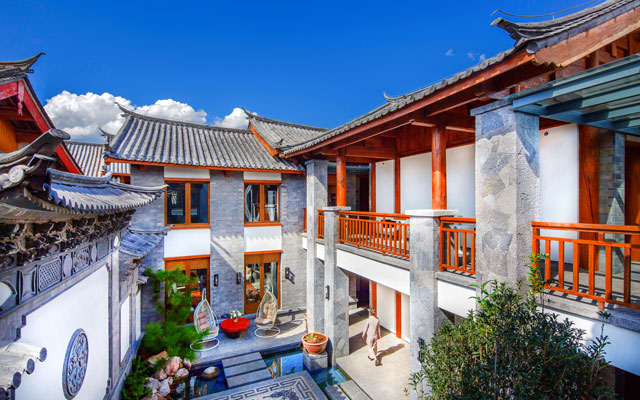
LUX* Tea Horse Road Lijiang is doing better now than in 2019

Julian Hagger, executive vice president of The Lux Collective, told TTG Asia: “We started to experience meaningful demand in occupancy in the first week of May. Over the past two months, LUX* Tea Horse Road Lijiang and Benzilan in Yunnan reported occupancy levels surpassing those of 2019. Their forecasted occupancy is also expected to surpass 2019 for the rest of the calendar year.”

Initial signs of recovery came to Four Seasons Hotels and Resorts in as early as April, shared Catherine Scown, the group’s regional vice president, sales and hotel marketing, Asia Pacific.

“Domestic luxury travel is trending very strongly. Four Seasons Hotel Hangzhou was full over the May holidays and continues to enjoy healthy occupancies over the weekends. By and large, (our guests) are local residents in the cities that we operate in, as well as from nearby markets that are connected by train. For instance, at Four Seasons Hotel Guangzhou, two-thirds of our guests are from Guangdong province itself,” she noted.

From hotels to hosts
With the rapid return of guests, hotels in China are no longer just hotels. The new breed of eagle-eyed travellers is taking its discerning demand to brands that have redefined the hospitality experience.

LUX* Tea Horse Road Lijiang, for instance, has extended its function beyond a retreat and into a destination management company. The hotel hosts its guests’ entire journey by facilitating transportation, sightseeing and other arrangements, with its staff occupying more than one role.

Hagger described: “The guide may be our front office manager on one day, and on another day, a housekeeping team member may host the guest for dinner at a village home. These experiences are spontaneous, surprising and always delivered from the heart.”

The Lux Collective has also tailored a series of Collectable Experiences where guests can engage in unique activities that contribute to local communities. “This type of transformational travel is in high demand as we are seeing a shift in discerning guests wanting to experience greater adventure, immerse in the locale and, at the same time, use travel as a force for good,” observed Hagger.

Poepper: hotels must now be a communicator of essential traveller information

For Kempinski Hotels in China, the group has taken on an advisory role in communicating essential and comprehensive traveller information, such as the nearest facilities where guests can take their Covid-19 test if needed, nearby hospitals, parts of the destination that are safe to travel to, existing travel bubbles, as well as tourist spots that are open.

“We’ve implemented many measures and promises to our customers in the way of benefits and value-added services. It’s important to be honest and realistic with the customer about what facilities we can or cannot provide,” stated Ilja Poepper, vice president sales & marketing Asia, Kempinski Hotel.

Renewed love for the far-flung
Traditionally popular urban destinations Shanghai and Beijing have bowed out to the more exotic reaches of the country.

Hagger shared that The Lux Collection properties in Yunnan have received a “predominant” share of younger couples and families during the school holidays, as travellers from cities such as Shanghai, Beijing and Chengdu “prefer to escape to exotic destinations that offer outdoor experiences and beautiful nature”.

By October this year, The Lux Collection will open four more hotels in Yunnan, and in 2021, it will add two retreats in Pu’er and Dali.

Four Seasons started to see initial signs of recovery in April, when there was “a clear demand for resort destinations such as Hangzhou that have more outdoor space”, observed Scown.

Meanwhile, the Kempinski group is seeing a rise in occupancy for its Jiangsu, Suzhou, Guiyang and Huizhou properties.

“After the second wave of Covid-19 in Beijing, (occupancy) dropped to the single digits. But (in June) Kempinski Hotel Huizhou achieved an average occupancy of 50 per cent because it’s a leisure destination, where it’s not too hot in the summer, and it’s still new for leisure travellers in China. Our numbers are bouncing back faster than we thought, so our forecast is more positive than expected,” remarked Poepper.

Lessons across borders
Mobility across China has been enabled by the state-mandated Health Code, under which travellers require a “green code” on apps like WeChat and Weibo in order to visit a different province or city. In the case of a second wave, such as in Beijing, residents travelling out of the city would be required to take a Covid-19 test that is valid for seven days in order to qualify for the green code.

However, the system could still use more fine-tuning. Poepper explained: “There have been people who took the test and were clear to (travel from Beijing) to Xi’an, but when they arrived, they still had to be quarantined for 10 days (without prior notice).

“People are travelling, but not as much as before. It depends on which area you are in, and how open the province is to travellers. Every city has its own rules. Not everything is equal.”

Four Seasons’ Scown opined that when regional demand slowly trickles back across Asia-Pacific, shorthaul travel will be the ruling choice for travellers.

She shared: “We saw that very clearly in China and all signs point to this trend being translated to broader Asia-Pacific. We see opportunities in generating trials from new markets as consumers consider local and regional travel plans over longhaul travel in 2020 and even through early 2021. Our properties are putting together experiences for travellers to rediscover the beauty of the destinations that are closer to home.”

In another instance, Shangri-la and Mandarin Oriental have formed an alliance to pool their marketing budgets and jointly promote luxury travel to the Hong Kong market.

As for when the global travel bridge could be crossed, Poepper impressed that the “earliest” for South-east Asia would be “hopefully during the Spring Festival” in April 2021.
Jetstar Asia resumes services to key SE Asia ports

0

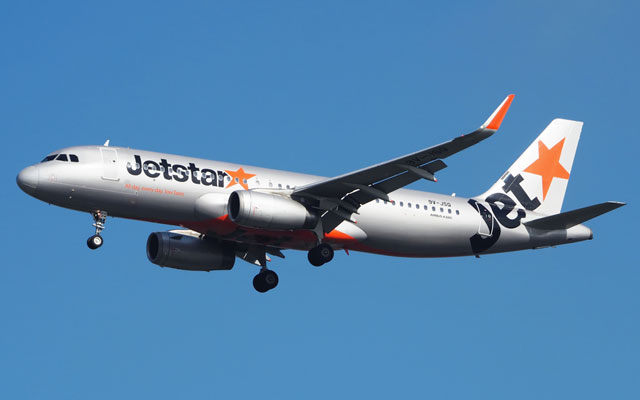
Singapore-based budget carrier Jetstar Asia will increase the number of services it operates to key South-east Asian ports, with the aim to create essential travel links and assist with freight in the region.

Jetstar Asia increases services to key South-east Asia ports

In addition to the current services to Bangkok, Kuala Lumpur and Manila, Jetstar Asia has reintroduced weekly services to Jakarta, Ho Chi Minh City and Penang since August 10. The airline will also run weekly services to Clark and Medan from the week commencing August 17. Two additional weekly services to Manila will also be operated from August 15.

Jetstar Asia Services Screenshot.png

These services, subject to regulatory approval, are only available to citizens and permanent residents who are returning home, or those with prior approval for travel. Customers must check with the relevant authorities to ensure they are eligible to travel.

All passengers will be required to wear a mask at all times, while crew members will don masks and PPE during the flight. From August 15, all passengers travelling to and from Manila are required to wear a face shield at all times during their journey.

Onboard services will be scaled back with only water being served during the flight. Passengers who have already pre-purchased meals or meal vouchers will be refunded for their purchase.

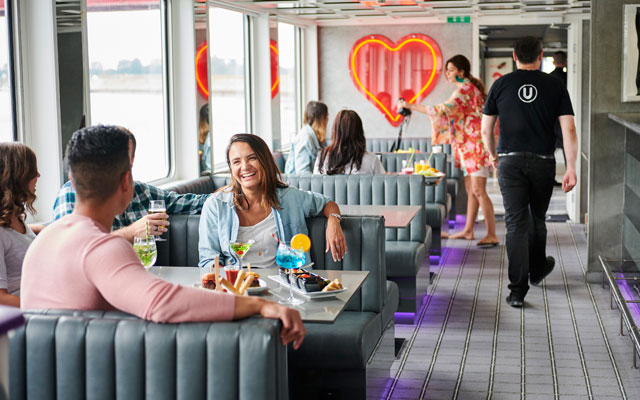
U by Uniworld targets Gen Z, foodie travellers

0

Loy River Song takes maiden journey to Ayutthaya

0
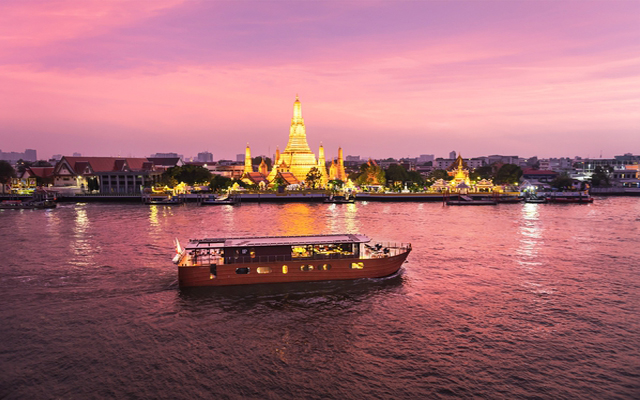
Loy River Song sailing past Wat Arun

Luxury cruise company Loy Pela Voyages’ newest ship, Loy River Song, officially launched on the Chao Phraya River, charting a route from modern day Bangkok to Siam’s ancient capital of Ayutthaya.

Guests can choose from a collection of itineraries ranging from two days/one night to four days/three nights for the river cruise expedition.

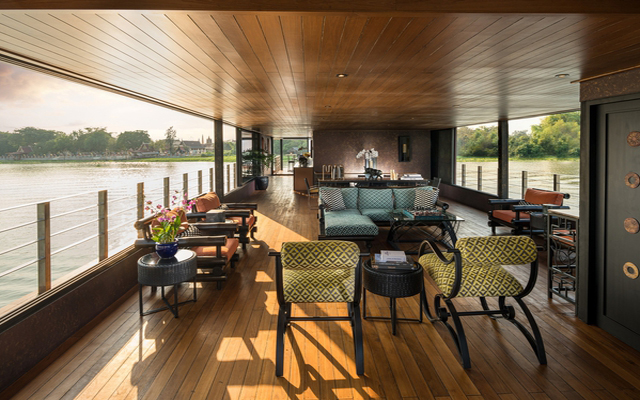
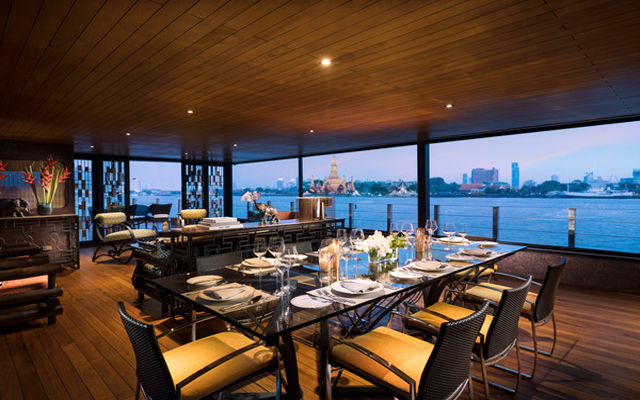
The four-cabin Loy River Song offers a mix of King and Queen cabins, ranging in size from 20 to 30m2. Comfortable sitting areas make for perfect reading nooks, while communal areas are designed to host sunrise yoga, Muay Thai demonstrations, traditional dance performances and other activities promoting cultural immersion. The open and airy main salon opens into the elegant dining room that seats up to eight people.

Guests on board Loy Pela are promised round-the-clock butler attention, exquisite meals prepared by a private chef and in-depth local knowledge courtesy of a resident tour guide.

Offshore itineraries include cycling excursions on Bang Kachao island and exploration of some of the region’s most spectacular temples. Guided excursions, some on foot, others by car or a traditional long-tail boat, place travellers in the very heart of old Siam.

The daily-changing menu features Royal Thai cuisine, European dishes, and Michelin-starred menu by Thai chef Thitid Tassanakajohn of Bangkok’s famed Le Du restaurant. Offerings include afternoon tea and sunset cocktails, as well as decadent brunch featuring Canadian lobsters, oyster bar and caviar paired with fine wines.

Loy River Song joins Loy Dream, a two-berth, century-old teak rice barge, as part of Loy Pela Voyages.

Prices for Loy River Song start at 208,250++ baht (US$6,690) per cabin for a three-day, two-night trip.

Malaysia’s first Kimpton to arrive in Kuala Lumpur

0
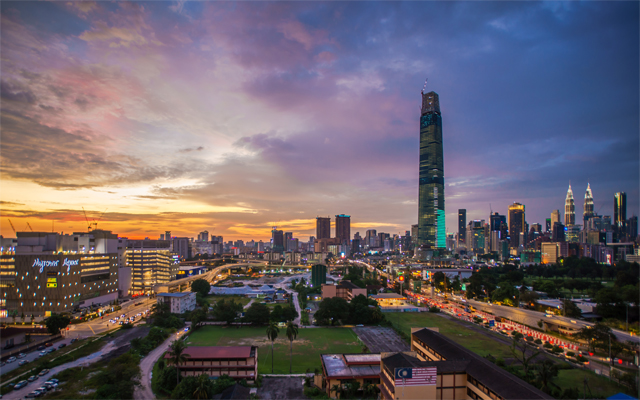
Sunset view of TRX Exchange 106. The Exchange 106 is a new skyscraper under construction in Tun Razak Exchange, Kuala Lumpur.

IHG has signed a management agreement with LQ Retail to open Malaysia’s first Kimpton Hotels & Restaurants in Kuala Lumpur come 2023.

The hotel will form part of The Exchange TRX, a 6.8ha mixed development comprising six residential towers, an office building, a retail mall, and a 4ha rooftop park.

Malaysia’s first Kimpton Hotels & Restaurants will be situated in the Tun Razak Exchange area, a new financial district currently being developed in Kuala Lumpur

LQ Retail is a joint venture between Australia-based property and infrastructure group Lendlease and Malaysia’s Ministry of Finance’s wholly-owned TRX City, the master developer of Malaysia’s upcoming international financial district, Tun Razak Exchange (TRX).

The 471-room Kimpton Kuala Lumpur will feature three F&B outlets including a rooftop bar and restaurant, as well as a deli-grocer café. Other amenities will include an outdoor rooftop swimming pool, a gym, as well as a range of meeting and event spaces.

San Francisco-based Kimpton Hotels & Restaurants currently operates more than 70 hotels and 85 restaurants, bars and lounges across the US, Canada, Europe, Caribbean and Greater China. In January 2015, Kimpton became part of the IHG family of hotel brands.

Onyx unveils story-driven brand Saffron Collection

0
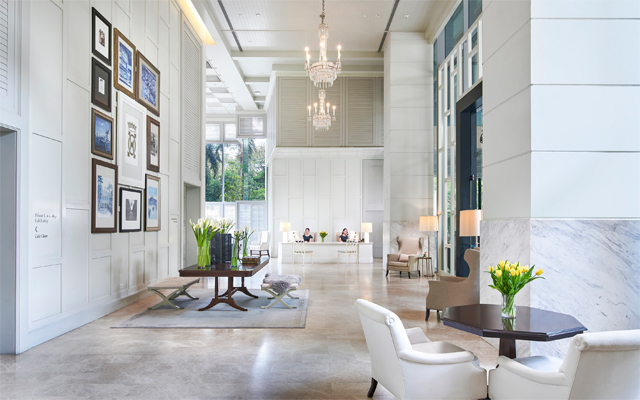
Oriental Residence Bangkok Lobby

Bangkok-based Onyx Hospitality Group has launched a new hotel brand called Saffron Collection, which will offer a portfolio of “story-driven” boutique hotels and resorts.

Saffron Collection will initially be available in Hanoi, Penang, Bangkok and Aranyaprathet in Thailand, with plans for further expansion across the Asia-Pacific region.

Oriental Residence Bangkok, to be reintroduced as a Saffron Collection property, is a modern-day interpretation of the historic Oriental Hotel along the Chao Phraya River

Each Saffron Collection property will serve as “a timeless showcase of the continuous legacy of the landmarks, people or legends that made a lasting impact on the destination and neighbourhood”.

Oriental Residence Bangkok will be reintroduced as a Saffron Collection property by the end of 2020. Touted as a “modern-day interpretation” of the famed Oriental Hotel set on the banks of the Chao Phraya River, the property will feature 145 suites, a collection of function rooms and the French-inspired Cafe Claire.

As a new-build addition to the collection, The Five Residences Hanoi is slated to open in October 2020, and will feature design incorporating the five elements of nature as inspired by the Five Elements Mountains of Central Vietnam. Centrally located on Doi Can Street, the property will offer 116 rooms and suites, neo-Asian restaurant NAM and MAAI Spa.

This will be followed by the mid-2021 opening of The George in Penang, and the early 2022 opening of Indochina Hotel in Aranyaprathet, Thailand.

Located on Jalan Pinang, The George, Penang will be a new-build hotel offering 93 rooms and suites, as well as a restaurant and rooftop pool; while Indochina Hotel, Aranyaprathet will reopen as a 120-room property following an extension restoration of the historic institution.

Every Saffron Collection lobby will showcase a customised cocktail cabinet, offering a select list of mixology concoctions from the locality alongside one signature cocktail designed for each property.

“Saffron Collection is driven by our quest to create a distinctive portfolio of boutique hotels and resorts that appeal to guests who want to be immersed in the stories and legends of the places they visit,” said Douglas Martell, president and CEO, Onyx Hospitality Group.

“Each Saffron Collection property aims to create memorable experiences through locally-relevant design and sensitive integration into the past and present of a destination. For owners and investors, Saffron Collection is also our way of preserving the compelling moments in a family, a corporation or a building and area’s history, and reinterpreting them towards memorable experiences for our present and future travellers.”

Qatar Airways returns to Adelaide

0

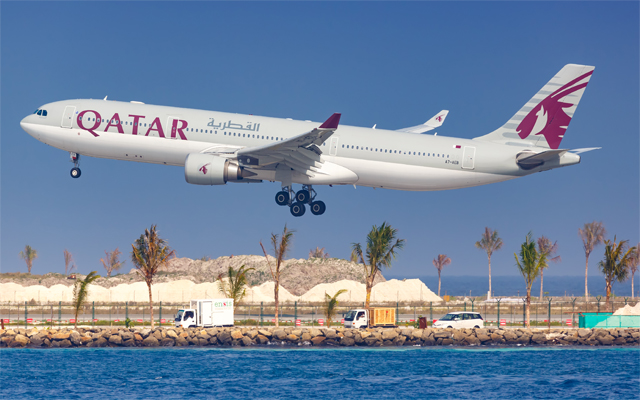
Qatar Airways will be resuming its services to Adelaide with twice-weekly flights, starting from August 16, 2020.

The South Australian capital will become the airline’s fifth destination in Australia to resume flights, bringing the total number of passenger flights operated by Qatar Airways per week to Australia to 23.

Qatar Airways becomes sole international airline to service five major Australian cities, with flights resuming to Adelaide

The Middle Eastern airline currently operates three weekly flights to Brisbane, four weekly flights to Perth, daily flights to Melbourne, and daily flights to Sydney.

The twice-weekly service to Adelaide will be operated by the airline’s fuel-efficient Airbus A350-900, offering 36 seats in business class and 247 seats in economy class.

The airline recently made the decision to ground its fleet of Airbus A380s, and instead operate its full fleet of Airbus A350 and Boeing 787 aircraft, as they are more environmentally and commercially sustainable.

Khiri Travel Myanmar restructuring underway

0

Khiri Travel Myanmar will be restructuring after its joint venture partner in Myanmar, Edwin Briels, decided to exit the partnership after nine years.

Since 2011, Khiri Travel Myanmar has been a joint venture between Briels, Aung Min Thein and Khiri Travel. Khiri Travel in Myanmar will now adjust internally, while continuing to provide a full range of DMC services in the country.

Khiri Travel Myanmar to undergo restructuring following Edwin Briels’ exit from the partnership 

Briels said that Covid was the catalyst for the decision. “I want to continue telling unique stories of Myanmar and creating experiences with niche products such as Lalay Lodge, biking adventures and others,” he said.

Prior to Covid, Khiri Travel Myanmar had more than 30 staff and handled over 3,000 visitors in 2019.

Khiri Travel CEO Herman Hoven said that the company would ensure that any bookings tour operators and clients have with Khiri will be fulfilled, or postponed due to Covid without cost penalty, if needed.

“Khiri Travel Myanmar is very much open, ready and looking forward to once again delivering signature Myanmar experiences to travellers when international travel returns,” said Hoven, adding that the DMC will continue to work with Briels on ad-hoc projects.

Any queries can be sent to Hoven or sales.myanmar@Khiri.com.

TAT deputy governor dashes hopes of 2020 reopening for Thailand’s international borders

0

Thailand is unlikely to reopen its borders to international leisure visitors this year, predicted a deputy governor of the Tourism Authority of Thailand (TAT).

Speaking at a webinar hosted by Mekong Tourism Coordinating Office and TravelMole, Chattan Kunjara Na Ayudhya, deputy governor for international marketing at TAT, said that there has been no talk of or timeline issued for reopening the country to inbound or outbound leisure travel during weekly Covid-19 national meetings.

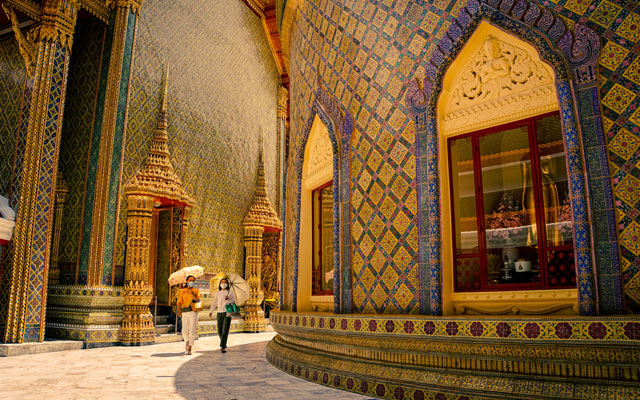
Thailand’s tourism players eye inbound tourism plan, in lieu of travel bubbles, to prop up tourism; tourists wearing face masks while visiting Wat Ratchabophit in Bangkok, Thailand pictured 

He added that as part of the government’s “very, very cautious” approach to reopening borders, he does not expect Thailand to welcome leisure visitors until 2021.

Noted Ayudhya: “I see no signal from the government that the country will open this year. That’s putting lot of pressure on the tourism industry. The Christmas period, usually the high season, is in jeopardy and I’m looking horribly even to Chinese New Year in February, which is an iffy proposition at best now. Unfortunately, this is not a rosy picture.”

He added that discussions over creating travel bubbles have also been halted. Said Ayudhya: “Last month, there was talk about forming travel bubbles. That talk has not continued so far because of outbreaks in many of the countries we were hoping to get tourists from, unfortunately, including Vietnam.”

However, the list of groups allowed into Thailand under strict measures has been expanded from diplomats, UN officials, as well as business people and investors who have an agreement with the government to include film crews and exhibition personnel.

This is only applicable to visitors from Japan, South Korea, Singapore, China and Hong Kong. Every arrival must spend 14 days in quarantine.

Thailand will also open up to select countries for medical tourism.

Ayudhya added plans are being mooted for when safe bubbles can be formed for leisure travel, with a proposal that all visitors spend a minimum of 30 days in the country. This would be in designated areas – probably islands, such as Koh Samui or Phuket.

“Currently, this is not moving forward as the government is taking a wait-and-see attitude. They want to see how the current groups of foreigners, such as film crews and diplomats, do first. There is still a lot of nervousness,” he said.

With uncertainties surrounding the reopening of borders to international travel, Thai tourism operators are proposing a new inbound tourism plan, called Safe and Sealed, to replace travel bubbles, reported the Bangkok Post.

The scheme is designed to help tourism businesses tide through and avoid layoffs this year, should Thai borders remain shut to international visitors.

During a joint meeting of the Tourism and Sports Ministry and the private sector chaired by tourism minister Phiphat Ratchakitprakarn, tourism-related groups proposed to allow tourists to enter Thailand in 4Q, said the report. As compared to the travel bubble scheme, the plan envisages safer, more flexible screening procedures for many countries, it added.

Under the plan, explained Vichit, only visitors from cities with a record of zero infections for at least a 30-day window will be selected, and they will be able to travel and stay in designated hotels and provinces. Other safety protocols will include a Covid-free certificate 72 hours before flights, as well as insurance and swab tests.

The report also quoted Vichit Prakobgosol, president of the Association of Thai Travel Agents, as saying that although Thailand has started allowing entry for certain group of foreigners, the tally will be below 100,000, which is inadequate to buoy the tourism industry.

The new inbound plan is expected to draw at least 500,000 tourists to Thailand and generate 50 billion baht in revenue, according to the report.

TAT governor Yuthasak Supasorn said Phiphat will forward the proposal to related organisations, said the report. According to Yuthasak, the tourism sector employed four million workers pre-Covid, but with businesses having zero revenue over the past six months, unemployment in the sector could grow to 2.5 million.

Bintan Lagoon Resort shuts down for good

0

Bintan Lagoon Resort (BLR), the largest integrated resort in Bintan Regency, Riau Islands has decided to cease operations, after sustaining losses over the past two years.

The resort’s financial woes were worsened due to the impact from Covid-19, with CNBC Indonesia indicating that the property had filed for bankruptcy.

Bintan Lagoon Resort stops operations after 26 years

The written closure plan was submitted to the Bintan Regency Employment Agency on July 31, 2020.

Indra Hidayat, head of Bintan Employment Agency, was quoted by Indonesia’s Antara News Agency as saying that his party has dispatched a team to review BLR’s closure plan. “We also provide guidelines on matters that need to be fulfilled by BLR in order to close their business,” he added.

Some 500 staff will lose their jobs with the closure. Indra shared that he would oversee the process of layoffs for BLR employees, especially in ensuring the company fulfil its contractual obligations to employees in accordance with applicable labour laws.

TTG Asia did not receive a response from BLR by press time.

Edit: The original posting overlooked an attribution to CNBC Indonesia for the bankruptcy report.